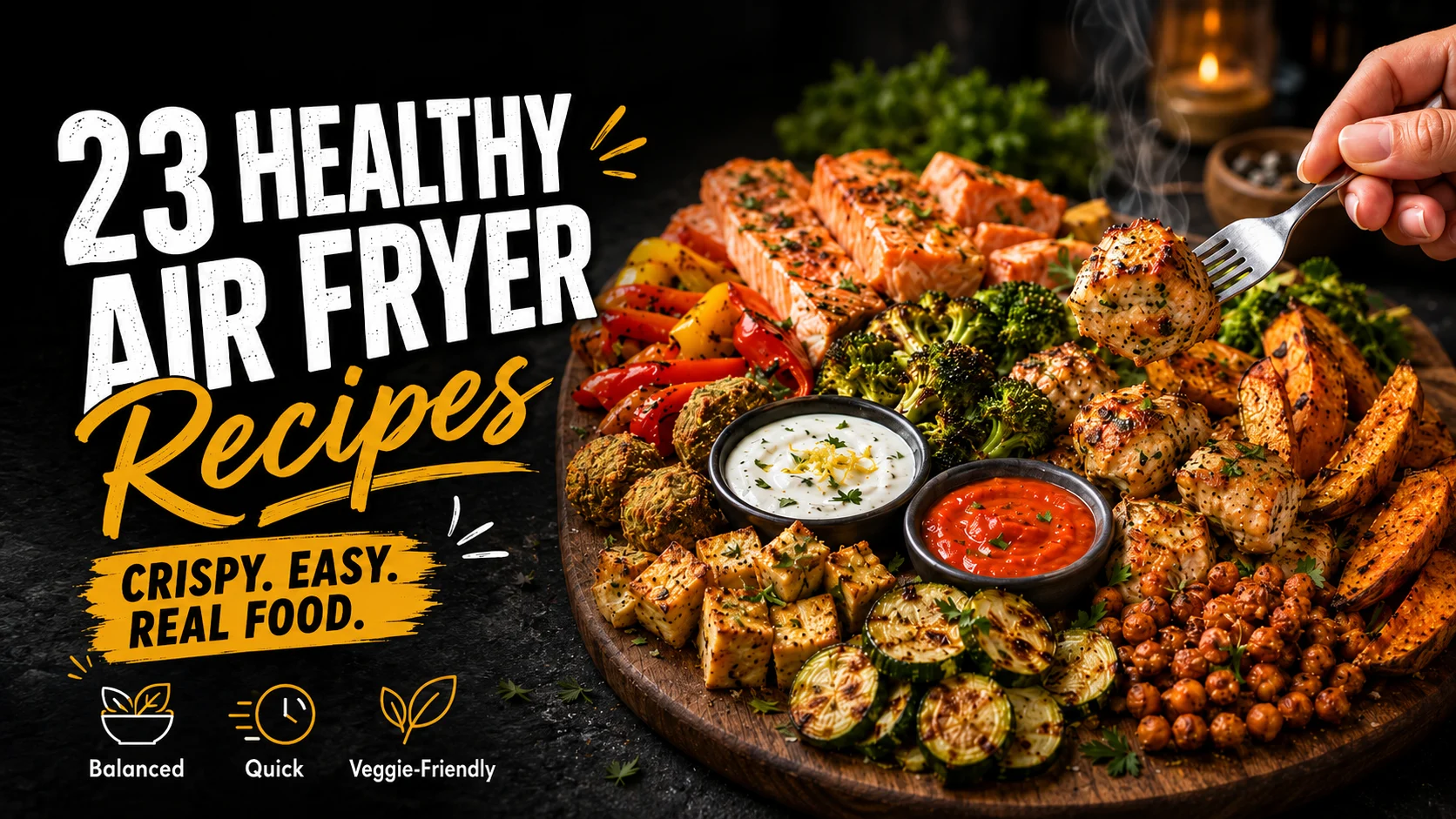

An air fryer becomes far more useful when it moves beyond frozen fries and reheated snacks. It can cook vegetables quickly, brown lean proteins, crisp tofu, roast chickpeas and turn simple ingredients into weeknight meals without heating a full-size oven. The real advantage is convenience combined with intense circulating heat, which can create browned surfaces while keeping the cooking process relatively compact.
That does not automatically make everything cooked in an air fryer healthy. The ingredients, amount of added oil, sauces, sodium, serving size and what you eat alongside the food still determine the nutritional character of the meal. The recipes below lean toward vegetables, legumes, seafood, lean poultry and straightforward seasonings instead of treating the appliance itself as a shortcut to good nutrition.
You also do not need elaborate ingredients to get worthwhile results. Several of these meals use ordinary supermarket staples, and many can be adjusted around vegetables or seasonings that are already in the refrigerator. If you regularly need very fast dinners beyond air frying, a 15-minute vegetable curry or cauliflower fried rice can fill the same practical role on nights when another cooking method makes more sense.
What Makes an Air Fryer Recipe a Healthier Choice?
The word “healthy” becomes more useful when it describes the whole meal rather than one appliance. A basket filled with vegetables, chickpeas, tofu or lightly seasoned chicken can fit naturally into an everyday eating pattern, while heavily breaded foods covered in rich sauces remain heavily breaded foods regardless of how the exterior was crisped. Air frying is best viewed as a cooking technique that can make certain nutritious ingredients more appealing and convenient.
The broader Dietary Guidelines emphasize dietary patterns built around nutrient-dense foods rather than defining health through a single cooking method. That is the approach used throughout this collection. Vegetables appear frequently, proteins are generally straightforward, and the recipes leave room for whole grains, salads, fruit, yogurt-based sauces or other foods that make the final plate feel complete.
Cooking safety still matters when the meal contains poultry, seafood or other temperature-sensitive foods. Air fryers vary in power, basket design and food capacity, so the clock should never replace checking whether the food is properly cooked. The official safe minimum internal temperatures are worth following whenever you prepare meat, poultry, seafood or leftovers.
Quick Guide to the 23 Recipes
The table is meant to help you choose according to the ingredient you already have and the amount of cooking energy you have that day. Temperatures and times are starting points because basket size, food thickness and appliance performance can shift the result. Check food early the first time you prepare a recipe, then keep your own preferred timing for future batches.
| Recipe | Main ingredient | Approximate cooking time | Best use |
|---|---|---|---|
| Lemon Herb Chicken Breast | Chicken breast | 12-16 minutes | Weeknight dinner |
| Greek Yogurt Chicken Bites | Chicken | 10-14 minutes | Bowls and salads |
| Chicken Fajita Peppers | Chicken and peppers | 12-15 minutes | Fast family dinner |
| Herbed Turkey Meatballs | Ground turkey | 10-14 minutes | Meal prep |
| Mustard Herb Chicken Thighs | Chicken thighs | 14-18 minutes | Dinner |
| Chicken Zucchini Patties | Chicken and zucchini | 10-14 minutes | Lunch or dinner |
| Lemon Dill Salmon | Salmon | 7-10 minutes | Quick dinner |
| Chili Lime Shrimp | Shrimp | 6-8 minutes | Tacos and bowls |
| Herbed Cod | Cod | 8-11 minutes | Light dinner |
| Tuna Oat Patties | Canned tuna | 8-10 minutes | Pantry meal |
| Crispy Tofu and Broccoli | Tofu | 12-16 minutes | Plant-based dinner |
| Chickpea Cauliflower Bites | Cauliflower | 12-15 minutes | Lunch or snack |
| Spinach Stuffed Mushrooms | Portobello mushrooms | 10-13 minutes | Vegetarian dinner |
| Sweet Potato Bean Quesadillas | Sweet potato and beans | 6-9 minutes | Fast lunch |
| Easy Herb Falafel | Chickpeas | 12-15 minutes | Bowls and wraps |
| Parmesan Zucchini Rounds | Zucchini | 8-10 minutes | Vegetable side |
| Eggplant Tomato Stacks | Eggplant | 12-16 minutes | Vegetarian meal |
| Vegetable Egg Cups | Eggs and vegetables | 8-12 minutes | Breakfast |
| Banana Oat Breakfast Cups | Oats and banana | 10-13 minutes | Breakfast |
| Cinnamon Apples | Apples | 10-14 minutes | Dessert or breakfast |
| Smoky Crispy Chickpeas | Chickpeas | 12-17 minutes | Snack and topping |
| Garlic Edamame | Edamame | 7-10 minutes | Protein-rich snack |
| Sweet Potato Wedges | Sweet potato | 15-20 minutes | Side dish |
Healthy Air Fryer Chicken and Turkey Recipes
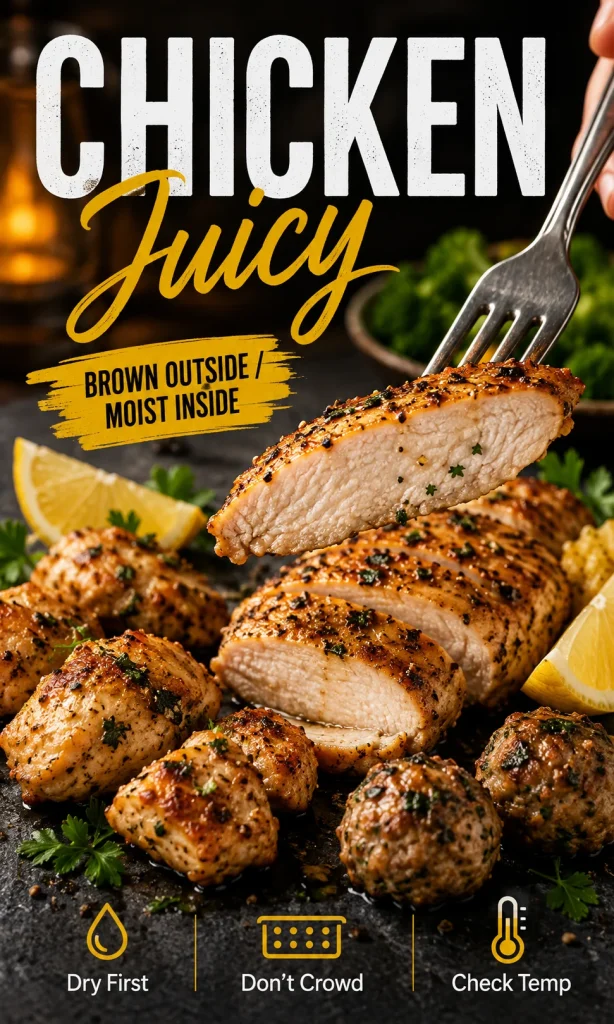
Chicken works particularly well in an air fryer because moving hot air can brown the outside quickly while relatively small portions cook through. The biggest mistake is continuing to cook until the exterior looks substantially darker even though the center is already done, which can turn lean meat dry. Thickness matters more than the recipe clock, so use temperature as the final check rather than relying exclusively on minutes.
1. Lemon Herb Air Fryer Chicken Breast
Coat two medium chicken breasts lightly with olive oil, lemon zest, black pepper, garlic, oregano and a modest pinch of salt, then let the seasoning sit while the air fryer heats to about 375°F. Air fry for approximately 12 to 16 minutes, turning once, although particularly thick breasts may require longer and thin pieces may finish sooner. Let the chicken rest before slicing and confirm that the thickest portion has reached the recommended safe temperature for poultry.
This chicken is intentionally simple because it is meant to become part of several meals rather than dominate one elaborate dinner. Slice it over a large salad, put it beside roasted vegetables and brown rice, or refrigerate properly cooked leftovers for another meal. Lemon and herbs provide plenty of aroma without requiring a heavy finishing sauce.
2. Greek Yogurt Chicken Bites
Cut boneless chicken into evenly sized pieces and coat them with plain Greek yogurt, lemon juice, minced garlic, oregano, paprika and black pepper. Shake off excessive marinade before arranging the pieces in a single layer, then cook around 390°F for approximately 10 to 14 minutes while turning or shaking them during cooking. Check the largest pieces for safe doneness because small cubes can brown rapidly while a crowded basket can slow cooking.
The yogurt coating gives the seasoning something to cling to and encourages a lightly browned surface without requiring a thick breading. These bites work well with cucumber, tomato, whole grains or a spoonful of yogurt-based sauce. If you prefer making skewered chicken outside the air fryer, the flavor direction also pairs naturally with this Greek chicken kebab marinade.
3. Air Fryer Chicken Fajita Peppers
Slice chicken breast, red pepper, green pepper and onion into strips that are reasonably similar in thickness, then toss them lightly with olive oil, cumin, smoked paprika, garlic and black pepper. Cook around 390°F for approximately 12 to 15 minutes, shaking the basket several times so vegetables at the edges do not take all of the heat. Make sure the chicken reaches a safe internal temperature before serving because color alone is an unreliable measure of doneness.
Serve the mixture in warm tortillas, over rice or inside a salad bowl with tomato, avocado and lime. The peppers and onions provide enough moisture and sweetness that the meal does not require a large amount of oil. For meal prep, keep the cooked filling separate from tortillas or leafy ingredients until you are ready to eat.
4. Herbed Air Fryer Turkey Meatballs
Combine lean ground turkey with finely chopped onion, parsley, garlic, black pepper, an egg and enough rolled oats or breadcrumbs to hold the mixture together without making it dense. Shape evenly sized meatballs with damp hands and cook them around 380°F for approximately 10 to 14 minutes, turning once if your basket browns strongly from below. Ground poultry should be checked at the center for a safe internal temperature rather than judged from exterior browning.
These meatballs are especially useful because one batch can move between several meals without tasting repetitive. Serve them with tomato sauce and vegetables for dinner, slice them into a whole-grain wrap for lunch, or pair them with a yogurt-herb sauce and crunchy salad. Make a few slightly smaller meatballs if you want them to cook more rapidly, but keep the size consistent within each batch.
5. Mustard Herb Chicken Thighs
Mix Dijon mustard with a small amount of olive oil, thyme, garlic, black pepper and lemon juice, then coat boneless skinless chicken thighs evenly. Arrange them with enough space for air to circulate and cook around 380°F for approximately 14 to 18 minutes, turning once during cooking. Check the thickest section for safe poultry temperature before resting the meat for several minutes.
Chicken thighs are forgiving because they contain more natural fat than breast meat, which makes them useful when you dislike dry air-fried chicken. Pair them with green beans, carrots, cabbage or another vegetable that brings freshness and volume to the plate. The mustard mixture creates enough intensity that a separate creamy sauce is usually unnecessary.
6. Chicken and Zucchini Patties
Combine ground chicken with grated zucchini that has been squeezed thoroughly to remove excess water, then mix in garlic, parsley, black pepper and a small amount of breadcrumbs or oats. Form the mixture into relatively thin patties and air fry around 375°F for approximately 10 to 14 minutes, carefully turning them once if needed. Because these contain raw poultry, verify safe internal temperature in the center before serving.
Removing water from the zucchini is the step that decides whether the patties brown properly or remain soft and fragile. Serve them with tomato salad, yogurt sauce or vegetables rather than burying the crisp exterior under a wet sauce immediately. They can also be made smaller and served inside lettuce cups for an easy lunch.
Healthy Air Fryer Seafood Recipes
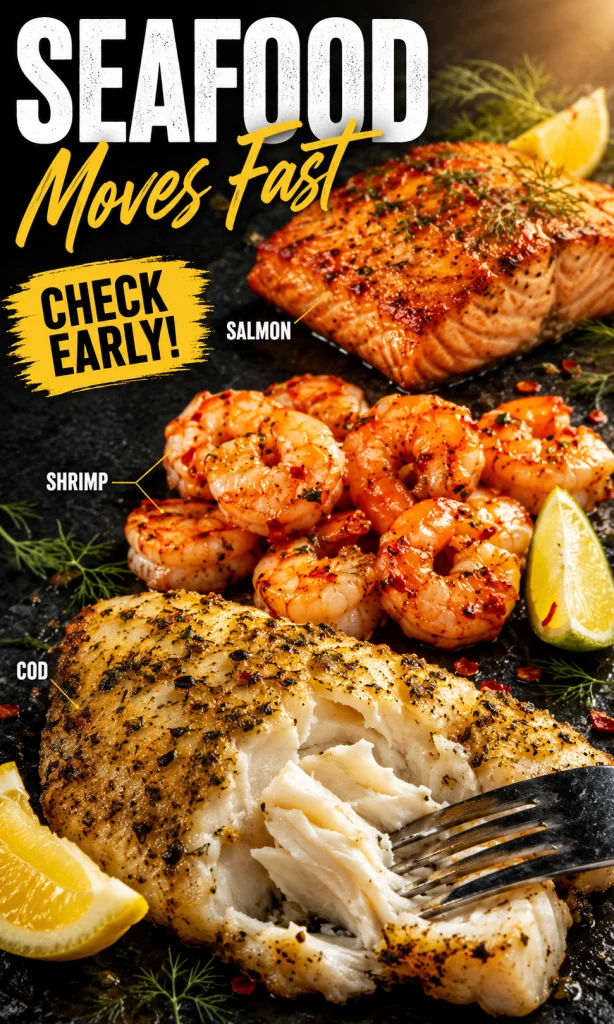
Seafood needs a slightly different strategy because many fillets and shrimp cook much faster than poultry. The air fryer can be excellent for seafood when you check early, but leaving a thin fish fillet for several unnecessary minutes can dry it quickly. Keep similar sizes together and use the actual condition of the seafood as your guide.
7. Lemon Dill Air Fryer Salmon
Brush salmon lightly with olive oil and season it with lemon zest, dill, garlic, black pepper and a modest amount of salt. Air fry around 400°F for approximately 7 to 10 minutes depending on thickness, checking earlier if the fillet is particularly thin. Follow appropriate seafood temperature guidance and remove the salmon once it is safely cooked rather than leaving it in the basket solely to create more browning.
Serve the salmon with asparagus, broccoli, green beans or a grain-and-vegetable bowl. Lemon added after cooking keeps the flavor bright without soaking the surface before it has a chance to brown. If the salmon has skin, placing the skin side down generally makes handling easier.
8. Chili Lime Air Fryer Shrimp
Pat peeled shrimp dry and toss them with lime zest, chili powder, cumin, garlic and a very small amount of oil. Cook around 390°F for roughly 6 to 8 minutes, shaking once, while watching closely because smaller shrimp can finish earlier. The shrimp should be safely cooked throughout without becoming tightly curled and rubbery from excessive heat.
Use them over cabbage slaw, inside tacos, beside rice or as the protein on top of a large salad. Add fresh lime after cooking so the citrus remains sharp and aromatic. This is one of the quickest recipes in the collection and works particularly well when dinner needs to happen before you are tempted to order something.
9. Tomato Herb Air Fryer Cod
Pat cod portions dry and spread a thin coating of crushed tomato, garlic and herbs over the top, then finish with a light scattering of whole-grain crumbs if you want additional texture. Cook around 390°F for approximately 8 to 11 minutes depending on the thickness of the fillets. Check doneness according to safe seafood guidance because fish thickness varies considerably even when the pieces look similar from above.
The tomato topping protects part of the surface while the exposed edges develop light color. Pair the cod with leafy vegetables, roasted zucchini or a modest serving of potatoes for a straightforward dinner. Keep the tomato layer thin because too much wet topping works against the dry circulating heat that makes the appliance useful.
10. Air Fryer Tuna Oat Patties
Mix drained canned tuna with an egg, chopped spring onion, parsley, black pepper, lemon zest and rolled oats, then allow the mixture to sit for several minutes so the oats absorb moisture. Shape compact patties and cook around 375°F for approximately 8 to 10 minutes, turning carefully once they have firmed. Because canned tuna is already cooked, the objective is to heat the mixture thoroughly, set the egg and build a lightly crisp exterior.
These patties are useful on days when the refrigerator looks empty but the pantry still has enough to make lunch. Serve them with cucumber, tomato and leafy greens, or tuck one into a whole-grain pita with yogurt and herbs. Their texture is better when the mixture is moist enough to hold together but not so wet that the patties slump in the basket.
Healthy Vegetarian Air Fryer Recipes
Purpose: Teach airflow using the same appetizing advertising language.
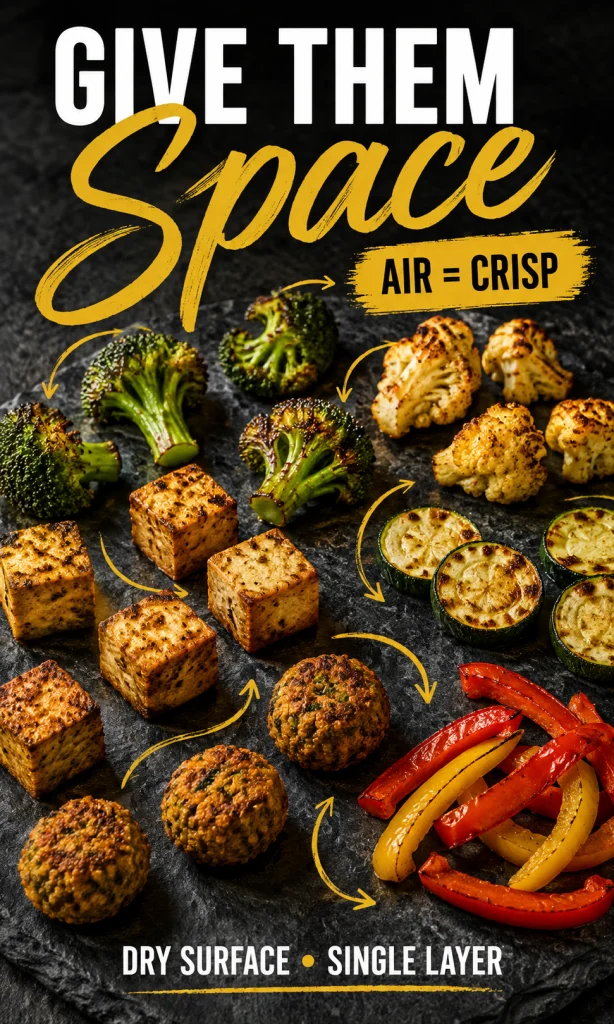
Vegetables often become far more appealing once their edges brown and their surface moisture drops. The air fryer can provide that effect quickly, although overcrowding works against it because steam becomes trapped between pieces. Cook in batches when necessary instead of turning one overloaded basket into a miniature steaming chamber.
11. Crispy Tofu and Broccoli
Press firm or extra-firm tofu to remove excess water, cube it and toss it gently with broccoli florets, garlic, black pepper, a small amount of low-sodium soy sauce and a light coating of oil. Cook around 390°F for approximately 12 to 16 minutes while shaking the basket several times so different surfaces meet the hot moving air. Add a small amount of sesame, spring onion or fresh lime after cooking rather than drowning the crisp pieces in sauce.
Drying the tofu properly makes a noticeable difference because excess surface moisture delays browning. Serve the mixture with brown rice, noodles or a large portion of other vegetables depending on how substantial you want the meal to be. If you like a stronger sauce, add it at the table so the tofu stays crisp until serving.
12. Chickpea Cauliflower Bites
Toss small cauliflower florets with mashed chickpeas, smoked paprika, garlic, cumin and enough beaten egg or chickpea flour mixture to help a light coating adhere. Form loose bite-sized clusters or cook the coated florets individually around 390°F for approximately 12 to 15 minutes, turning or shaking as needed. Give the pieces breathing room because the crisp exterior develops far better when steam can escape.
Serve the bites with a lemony yogurt or tahini sauce and a crunchy salad. They also work inside wraps when you want the satisfying structure of a fried filling without relying on a heavily breaded center. Keep the dipping sauce separate until eating so the texture survives the trip from basket to plate.
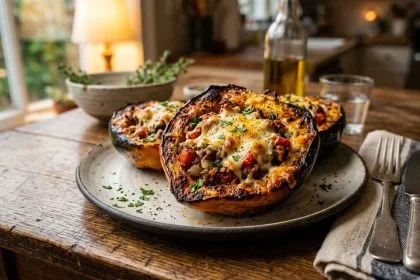
13. Spinach Stuffed Portobello Mushrooms
Remove the stems from large portobello mushrooms and fill the caps with chopped spinach, garlic, herbs and a moderate amount of ricotta, cottage cheese or another mild cheese. Cook around 370°F for approximately 10 to 13 minutes until the mushroom is tender and the filling is hot and lightly browned. Large mushrooms release water as they cook, so avoid overfilling the basket and allow moisture to escape.
Serve one large mushroom beside a grain salad or roasted vegetables for a simple vegetarian dinner. Smaller caps can become appetizers, although the cooking time will change substantially. Seasoning the filling well is more effective than adding a heavy sauce after cooking because the mushroom already brings plenty of moisture.
14. Sweet Potato and Black Bean Quesadillas
Spread a thin layer of mashed cooked sweet potato over a whole-grain tortilla and add black beans, chopped peppers, cumin and a modest amount of grated cheese. Fold the tortilla firmly, secure it appropriately so the circulating air cannot lift the top, and cook around 370°F for approximately 6 to 9 minutes until the exterior is crisp and the filling is hot. Check the quesadilla early because thin tortillas can brown rapidly around exposed edges.
Serve with tomato salsa, shredded cabbage and avocado for a more substantial plate. The sweet potato gives the filling body while the beans provide protein and fiber without requiring a large amount of cheese. This is also a good way to use leftover roasted sweet potato instead of starting an entirely new meal from scratch.
15. Easy Air Fryer Herb Falafel
Blend chickpeas with parsley, coriander, onion, garlic, cumin and enough chickpea flour to form a mixture that holds its shape without becoming pasty. Form small patties, brush or spray them lightly with oil, then air fry around 375°F for approximately 12 to 15 minutes while turning once. Give them enough room for the edges to dry and brown instead of arranging them so tightly that their sides remain soft.
Serve falafel with chopped cucumber, tomato, leafy greens and a tahini or yogurt dressing. The patties can also be tucked into a whole-grain pita, although leaving the salad and sauce separate until serving protects the texture. If your mixture feels loose before cooking, chilling it briefly is usually more helpful than adding a large amount of dry binder.
16. Parmesan Zucchini Rounds
Slice zucchini into thick rounds and blot the surface well before adding black pepper, garlic, herbs and a light coating of finely grated Parmesan. Arrange the rounds in a single layer and air fry around 390°F for approximately 8 to 10 minutes until the edges color and the centers remain tender. Very thin slices can become limp before they brown, so slightly thicker pieces usually give a better contrast.
This works as a vegetable side rather than pretending zucchini is nutritionally identical to fries. Serve it beside chicken, fish, beans or another main protein, and add lemon after cooking for brightness. If you need another quick vegetable-centered dinner instead, cauliflower fried rice provides a different texture with similarly practical ingredients.
17. Eggplant and Tomato Air Fryer Stacks
Slice eggplant into rounds, season lightly and air fry the pieces around 380°F until they begin to soften and brown, which commonly takes about 8 to 10 minutes depending on thickness. Add a small spoonful of thick tomato sauce and a little mozzarella or Parmesan, then return the rounds for several minutes until the topping is hot. Using thick sauce rather than watery tomato puree helps prevent the eggplant surface from becoming soggy.
Stack two or three rounds on the plate with fresh basil and a large salad for a light vegetarian meal. You can also leave them unstacked and serve them as a side dish beside beans or whole grains. The goal is a tender center with a browned edge rather than an eggplant slice buried beneath an excessive layer of cheese.
Healthy Air Fryer Breakfasts and Snacks
Purpose: Expand the user’s perception of what an air fryer can do.
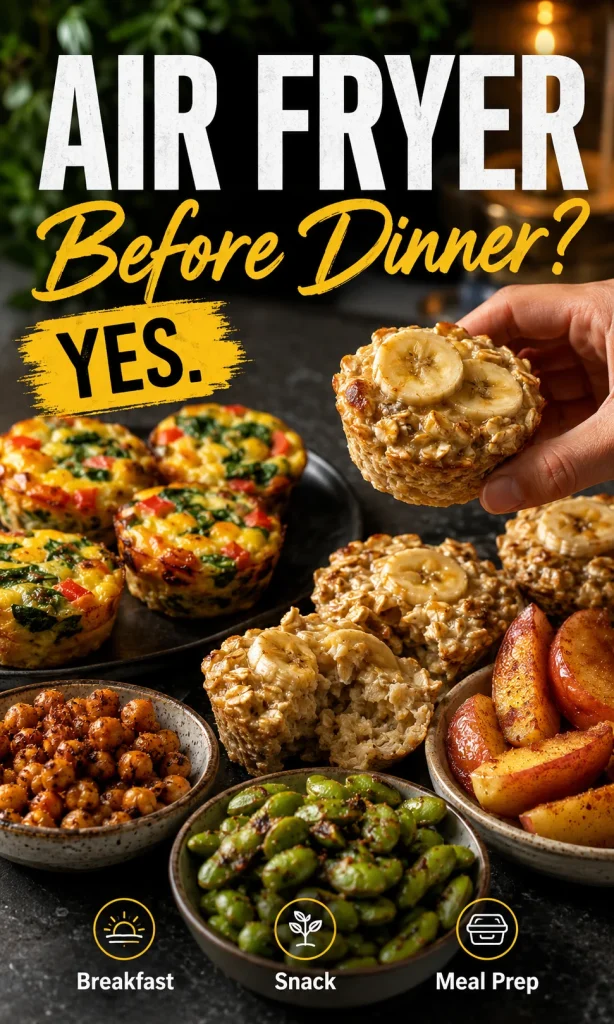
Breakfast and snacks are where the appliance can quietly become useful every day rather than occasionally. Small batches cook quickly, and the basket is well suited to ingredients that benefit from a toasted or roasted surface. The recipes below keep added sugar and heavy coatings modest so the main ingredients still determine the character of the food.
18. Air Fryer Vegetable Egg Cups
Whisk eggs with chopped spinach, diced pepper, spring onion and black pepper, then divide the mixture among air-fryer-safe silicone cups without filling them to the rim. Cook at a moderate temperature, roughly 320°F to 330°F, for approximately 8 to 12 minutes until the centers are fully set. Exact timing depends heavily on cup size and appliance design, so check the middle before removing them.
These cups work particularly well for breakfast meal prep because vegetables can be changed according to what needs using. Mushrooms should be chopped finely, while watery vegetables benefit from being cooked or drained first so the egg mixture does not become diluted. Serve them with fruit, whole-grain toast or another substantial side when breakfast needs to carry you through the morning.
19. Banana Oat Breakfast Cups
Mash a ripe banana with rolled oats, cinnamon, milk and an egg, then spoon the mixture into small silicone cups suitable for your appliance. Air fry around 330°F for approximately 10 to 13 minutes until the tops are lightly browned and the centers are set. Add berries, chopped nuts or seeds according to preference, but avoid packing the cups so densely that the middle stays wet.
These cups rely on banana for much of their sweetness and can be prepared without turning breakfast into a dessert. They are especially convenient when you want something portable that still includes whole grains and fruit. Let them cool enough to firm before removing them from the molds because the structure improves as the steam settles.
20. Cinnamon Air Fryer Apples
Cut firm apples into wedges and toss them with cinnamon, a small amount of oil or melted butter and, if needed, only a modest amount of sweetener. Cook around 350°F for approximately 10 to 14 minutes, shaking once, until the edges begin to brown while the slices remain intact. Softer apple varieties may cook faster, so check texture before the wedges collapse into puree.
Serve the apples with plain yogurt and chopped nuts for breakfast or as a warm dessert after dinner. The cinnamon and browning create enough aroma that excessive sugar is rarely necessary. A small batch also makes a useful topping for oats instead of reaching for a heavily sweetened packaged topping.
21. Smoky Crispy Chickpeas
Drain and rinse canned chickpeas, dry them extremely well and toss them with a small amount of olive oil, smoked paprika, cumin and black pepper. Air fry around 390°F for approximately 12 to 17 minutes, shaking several times and watching closely near the end because the transition from crisp to overdone can happen quickly. Let them cool uncovered so steam can escape rather than softening the exterior immediately.
Eat them as a snack or use them as a crunchy topping for salads, soups and grain bowls. Their best texture is usually achieved by drying the chickpeas thoroughly before cooking rather than compensating with more oil. Seasoning can be changed easily, which makes one basic technique useful across several meals.
22. Garlic Air Fryer Edamame
Toss thawed or frozen shelled edamame with garlic, black pepper and a very light coating of oil, then arrange it in a shallow layer. Cook around 390°F for approximately 7 to 10 minutes, shaking several times until the exterior begins to blister and some pieces develop browned spots. Because moisture levels vary between frozen products, watch the final few minutes instead of assuming every batch will finish simultaneously.
Edamame makes a convenient snack because it brings protein and fiber while still providing the roasted texture people often want from snack food. Add lemon, chili flakes or sesame after cooking according to the rest of the meal. It can also be scattered over salads or rice bowls while still warm.
23. Paprika Sweet Potato Wedges With Yogurt Dip
Cut sweet potatoes into evenly sized wedges and toss them with a small amount of olive oil, paprika, garlic and black pepper. Cook around 380°F for approximately 15 to 20 minutes, turning or shaking several times until the edges brown and the centers become tender. Avoid piling the wedges deeply because crowded sweet potatoes steam against one another and lose the dry surface needed for good browning.
Serve them with plain Greek yogurt mixed with lemon and herbs instead of relying automatically on a rich commercial dip. Sweet potatoes work particularly well here because the natural sweetness becomes more noticeable as the exterior browns. The result is still a potato-based side, so pair it with vegetables and protein when you want a more complete meal.
Why Your Air Fryer Food Sometimes Comes Out Soggy
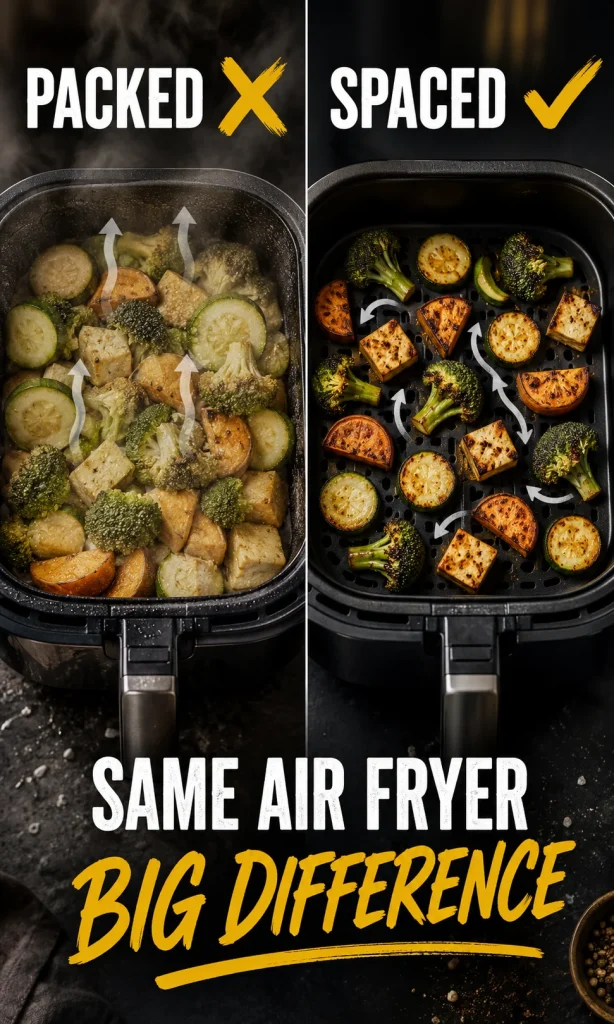
Purpose: One of the strongest informational images in the article.
Overcrowding is one of the most common causes because circulating hot air cannot reach the wet surfaces trapped between tightly packed pieces. Moisture continues escaping from the food, but instead of being carried away efficiently, it lingers around neighboring pieces and softens the exterior. Two smaller batches can therefore produce a noticeably better result than one basket loaded to maximum physical capacity.
Surface moisture creates the same problem before cooking even begins. Tofu, shrimp, chickpeas, zucchini and many other foods brown more effectively when unnecessary moisture has been removed first. Patting, draining or pressing an ingredient can matter as much as adding another seasoning because browning cannot progress efficiently while the surface is still busy shedding water.
The final mistake happens after cooking when crisp food is immediately sealed inside a container. Steam leaving the hot interior condenses against the container and migrates back into the surface. Give food a short period of open airflow before packing it, particularly if crispness is an important part of the recipe.
Do You Need Oil in an Air Fryer?
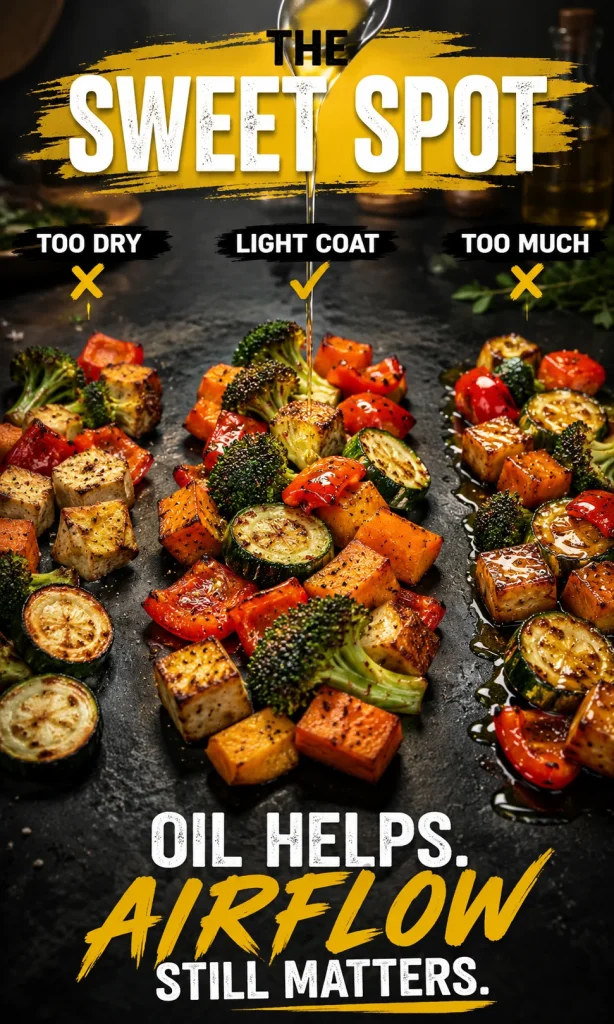
Many foods benefit from a small amount because oil helps seasoning adhere, promotes surface browning and changes the way the exterior feels in the mouth. That does not mean the ingredient needs to be visibly soaked. A light coating distributed across the surface is often enough for vegetables, chickpeas and lean proteins.
Some foods already contain enough natural fat or moisture that additional oil can be reduced further. Salmon and chicken thighs, for example, behave differently from dry chickpeas or raw potatoes, so there is little value in imposing one fixed oil quantity on every ingredient. Learn what the particular food needs rather than treating a spray bottle as a compulsory step.
Oil also cannot correct poor airflow. Adding more oil to an overcrowded basket usually produces greasy, unevenly browned food instead of crisp food. Spacing, surface dryness, appropriate heat and timing work together, and changing only the amount of oil rarely fixes the underlying cooking problem.
How to Turn These Recipes Into Complete Meals
Start with the air-fried ingredient and ask what is still missing from the plate. Chicken, salmon, tofu or turkey meatballs already provide a clear protein center, so the next move may be adding vegetables and a whole grain. Vegetable recipes such as zucchini rounds or sweet potato wedges need a protein partner if they are being promoted from side dish to dinner.
Sauces can make repeated ingredients feel different without forcing you to learn an entirely new recipe each night. Yogurt with lemon and herbs works with chicken, salmon, falafel and sweet potatoes, while tomato-based sauces pair comfortably with eggplant, turkey meatballs and vegetables. Keep particularly wet sauces separate until serving when maintaining crispness matters.
Meal planning becomes easier when one ingredient can serve more than one purpose. Cook extra lemon chicken for tomorrow’s salad, make additional chickpeas for a crunchy topping, or turn leftover air-fried vegetables into a grain bowl. When you want a completely different plant-based option rather than another air-fryer meal, quick vegan enchiladas with sweet potato sauce can extend the same vegetable-forward approach into a more substantial dinner.
Frequently Asked Questions About Healthy Air Fryer Recipes
Is air frying actually healthier than deep frying?
Air frying can prepare many foods with substantially less added cooking oil than immersing the same food in a deep fryer, but the final nutritional value still depends on what you cook and what you add to it. Air-fried vegetables, fish or lightly seasoned chicken create a very different meal from heavily breaded processed foods covered in rich sauces. It is more accurate to judge the entire recipe and eating pattern than to label every air-fried food healthy automatically.
What are the healthiest foods to cook in an air fryer?
Vegetables, beans, chickpeas, tofu, seafood and lean poultry are particularly useful starting points because they can form the foundation of balanced meals rather than functioning only as snacks. The circulating heat can make these foods more appealing by creating browning and crisp edges with relatively simple preparation. The rest of the meal still matters, so combine them with vegetables, whole grains, fruit or other foods appropriate to your needs.
Can I cook vegetables and chicken together in the air fryer?
You can when the pieces have compatible cooking times and there is enough basket space, but raw poultry makes temperature control especially important. Chicken should reach its safe internal temperature, while the vegetables should remain properly cooked rather than being burned simply because the meat needed longer. When the timings differ substantially, begin the slower ingredient first or cook the components separately and combine them at the end.
Why does my healthy air fryer food never get crispy?
Too much surface moisture, overcrowding, insufficient heat and wet sauces added too early are common reasons. Dry ingredients where appropriate, leave spaces for circulating air and avoid burying the food beneath sauce before its surface has browned. Crispness also fades after cooking when hot food is immediately enclosed and the escaping steam is trapped against the exterior.
Do I need to preheat an air fryer for these recipes?
Preheating requirements vary between appliance designs, so the manufacturer’s instructions should take priority for your particular model. Starting with a hot basket can improve predictability for short-cooking foods, while some appliances reach cooking temperature so quickly that a lengthy separate preheat adds little value. The first batch is useful for learning how your particular air fryer behaves, after which you can adjust the recipe timing more confidently.
Can I make these air fryer recipes for meal prep?
Chicken, turkey meatballs, tofu, salmon, egg cups and several vegetable recipes can fit meal-prep routines when they are cooked, cooled, refrigerated and reheated safely. Foods prized mainly for crispness may soften in storage because moisture redistributes while they sit in a container. Keep wet sauces separate and reheat only the amount you intend to eat when preserving texture is important.
A Better Way to Use Your Air Fryer Every Week
The best air fryer recipe is rarely the one with the longest ingredient list or the most dramatic coating. It is the recipe you can repeat on an ordinary Tuesday using ingredients that already fit the way you want to eat. A few dependable techniques for chicken, vegetables, seafood, tofu and legumes can be more valuable than dozens of complicated recipes that require a special shopping trip every time.
Start with two or three recipes from this collection rather than attempting to master all 23 at once. Learn how your basket handles moisture, how quickly your appliance browns food and which portion sizes leave enough room for effective airflow. Once those variables become familiar, adapting seasonings and ingredients becomes much easier.
Most importantly, treat the air fryer as one cooking method within a broader kitchen rather than forcing every meal through it. Sometimes roasted vegetables will be convenient, sometimes a 15-minute vegetable curry will make more sense, and sometimes the quickest dinner will use ingredients that are already cooked. The strongest routine is the one that gives you several dependable paths to a satisfying meal instead of making one appliance responsible for everything.