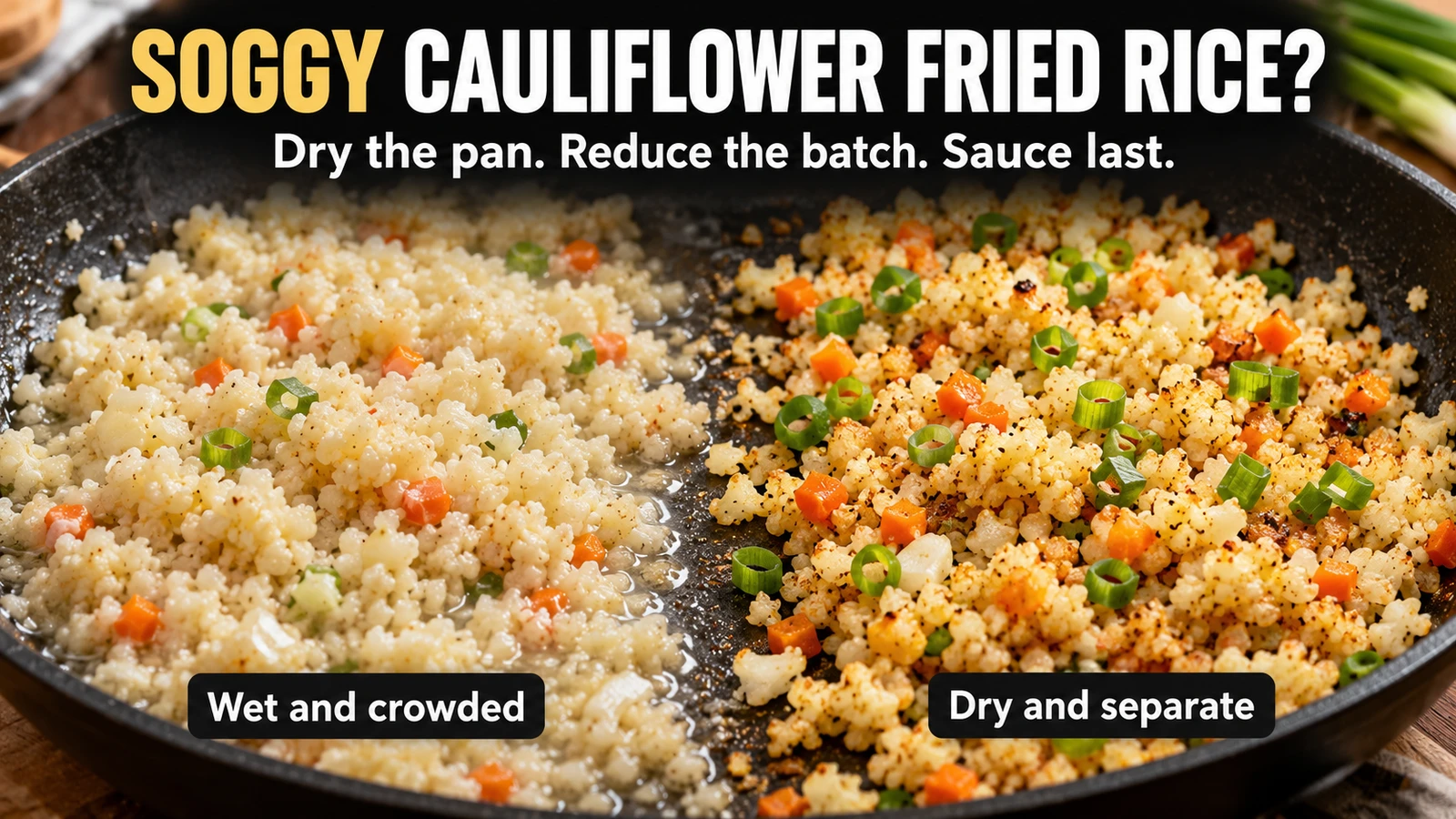
Cauliflower fried rice gets soggy when the vegetable releases water faster than the pan can evaporate it. A crowded skillet, wet frozen pieces and sauce added too early can keep the batch steaming. Remove the lid, reduce the amount in the pan and check whether the pieces are still firm enough to rescue.
Is the batch wet, or already mushy?
Push a spoonful aside and look at the exposed pan base. A puddle points to excess liquid; pieces that smear under the spoon point to lost structure. Both can happen together, but drying only deals with the water.
Swipe horizontally to compare on smaller screens.
| What you see | Likely problem | What to do |
|---|---|---|
| Liquid collects around firm pieces | More water than the pan can evaporate | Remove the lid, split the batch and stop adding sauce. |
| Soft pieces smear into a mash | Overprocessing or prolonged cooking | Stop chasing crispness; use the softer texture if the food was handled safely. |
| Dry pieces stay pale | Limited contact or insufficient surface heat | Allow brief contact with the pan; light browning is optional. |
| Dark sauce but no toasted edges | Sauce color is being mistaken for browning | Judge moisture and firmness before color. |
| Scorched patches beside wet piles | Uneven contact or excessive heat | Reduce heat, redistribute the batch and remove burnt material. |
What the pan is actually doing
Riced cauliflower is cut vegetable tissue, so it releases moisture as it heats. A mound traps that moisture between the pieces and restricts contact with the skillet. Turning up the burner cannot fully compensate for a deep layer.
Surface water also delays the higher temperatures that encourage rapid browning. The Exploratorium’s explanation of sweating and sautéing shows how moisture and cooking conditions change the result. Oil helps cooking and flavor, but it does not remove a puddle.
Fresh, frozen and ready-riced cauliflower
Fresh cauliflower gives you more control over preparation and grain size. Dry washed florets before processing, and inspect ready-riced packs for pooled moisture or deteriorating pieces. Buying it already chopped saves preparation time but does not remove the need to check its condition.
Frozen cauliflower can work, although its pieces may soften and release liquid readily. University of Minnesota Extension explains that ice crystals damage plant cell walls, changing the texture after thawing. Products differ, so check the bag’s cooking instructions rather than assuming every frozen brand behaves identically.
Swipe horizontally to compare on smaller screens.
| Starting condition | Preparation | Pan checkpoint |
|---|---|---|
| Fresh and dry | Rice dry florets in small batches | Keep the layer shallow and watch for released liquid. |
| Fresh but wet after washing | Blot before ricing; avoid adding wash water | Do not season while puddles remain. |
| Frozen, loose pieces | Follow the pack instructions; use a manageable batch | Let released water evaporate without a lid. |
| Thawed and visibly wet | Thaw in the refrigerator, drain and gently blot | Expect a softer result; avoid extra cooking just for color. |
| Already cooked leftovers | Check cooling and storage history first | Reheat thoroughly; drying alone is not a safety test. |
Grain size: pearls, not paste
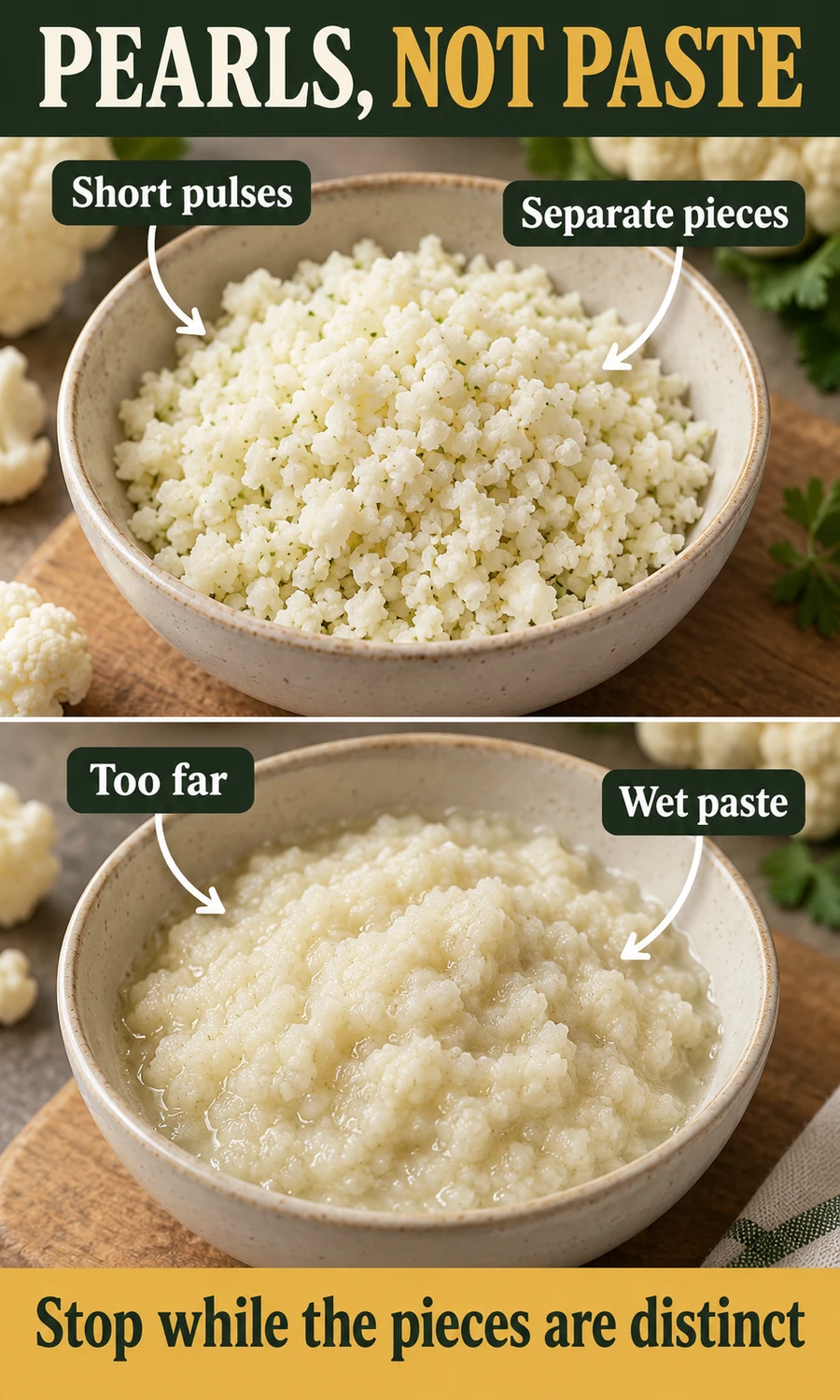
Pulse the food processor briefly, then check before running it again. Aim for small, separate pieces roughly comparable to cooked rice; finely pulverized cauliflower loses that distinct bite. A coarse box grater gives more control over each pass, while a processor handles larger quantities if you work in batches.
The drying step: watch the water, not a fixed timer
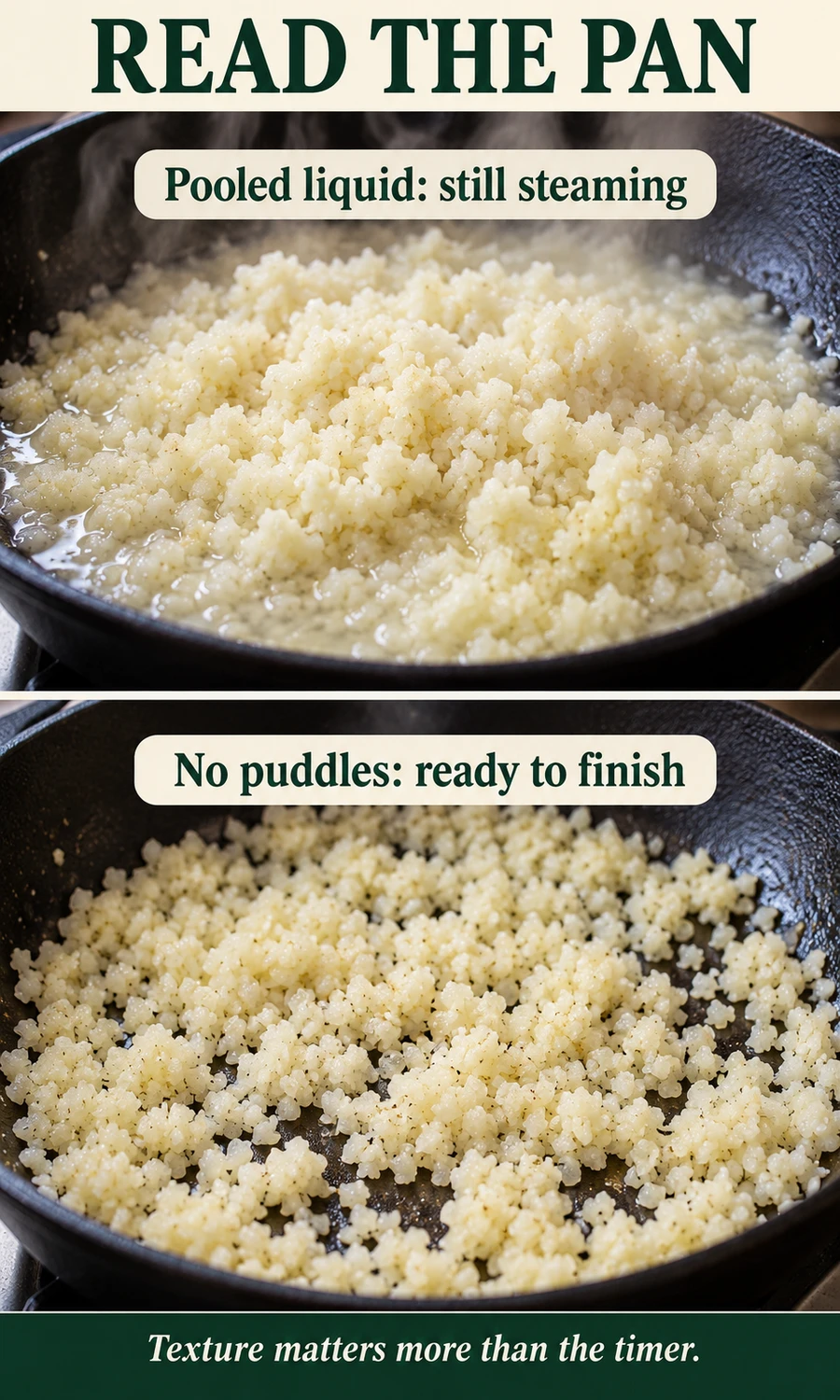
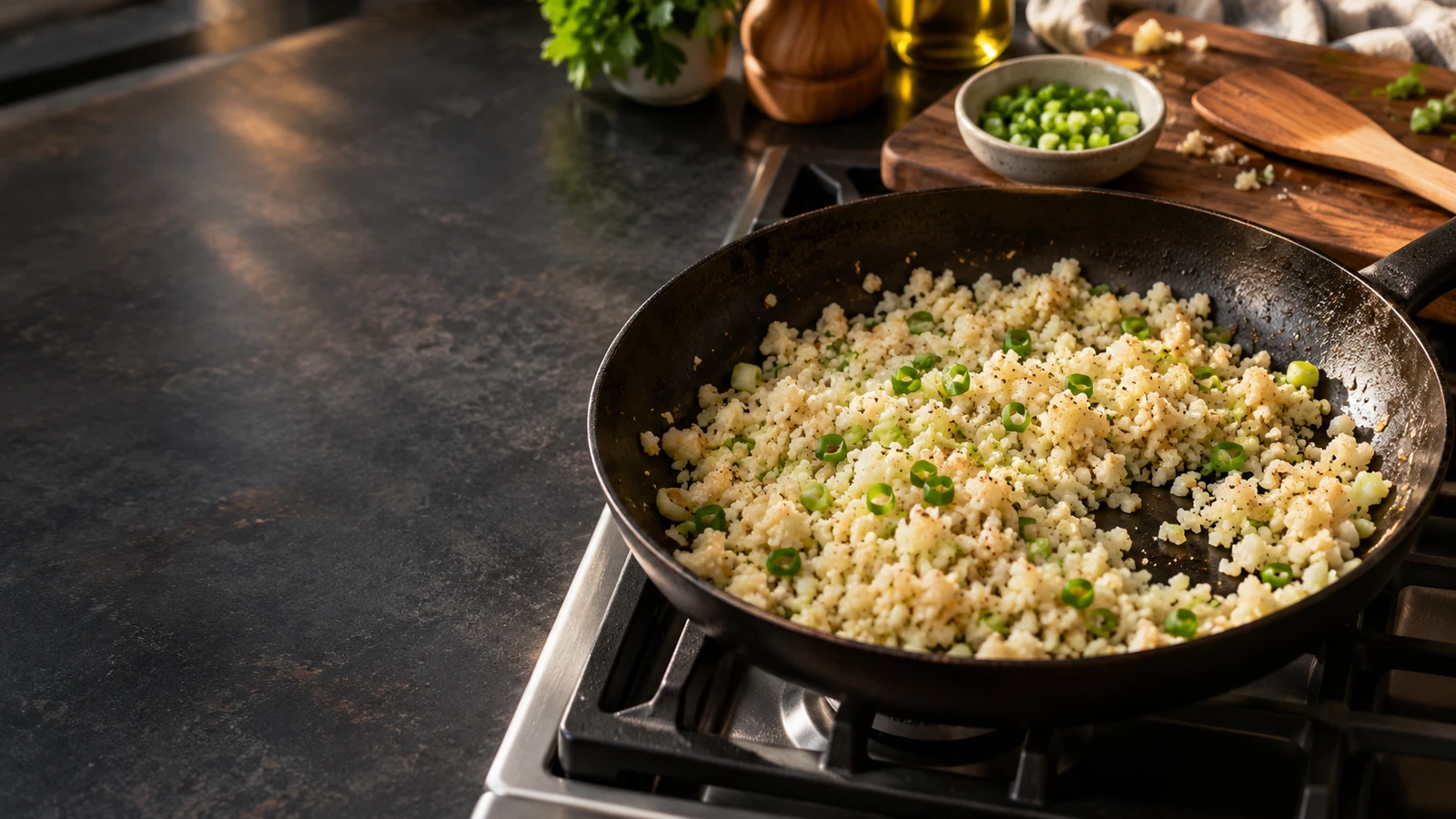
Choose a broad skillet and use an amount that spreads into a shallow layer. For an illustrative starting setup, try about 200 g in a 28 cm skillet, then reduce the batch if liquid persists; that amount is a practical starting point rather than a tested capacity limit. Keep the pan uncovered and stir enough to prevent scorching while moisture escapes.
Use medium-high heat within your cookware’s limits, and reduce it if the pieces catch before the water clears. A suitable nonstick skillet may handle a brief, food-loaded drying stage, while stainless steel often needs a small amount of oil to reduce sticking; never heat an empty nonstick pan aggressively. Move on when a spatula exposes a base without pooled liquid and the pieces remain tender with a little bite, rather than waiting for a promised five- or seven-minute mark.
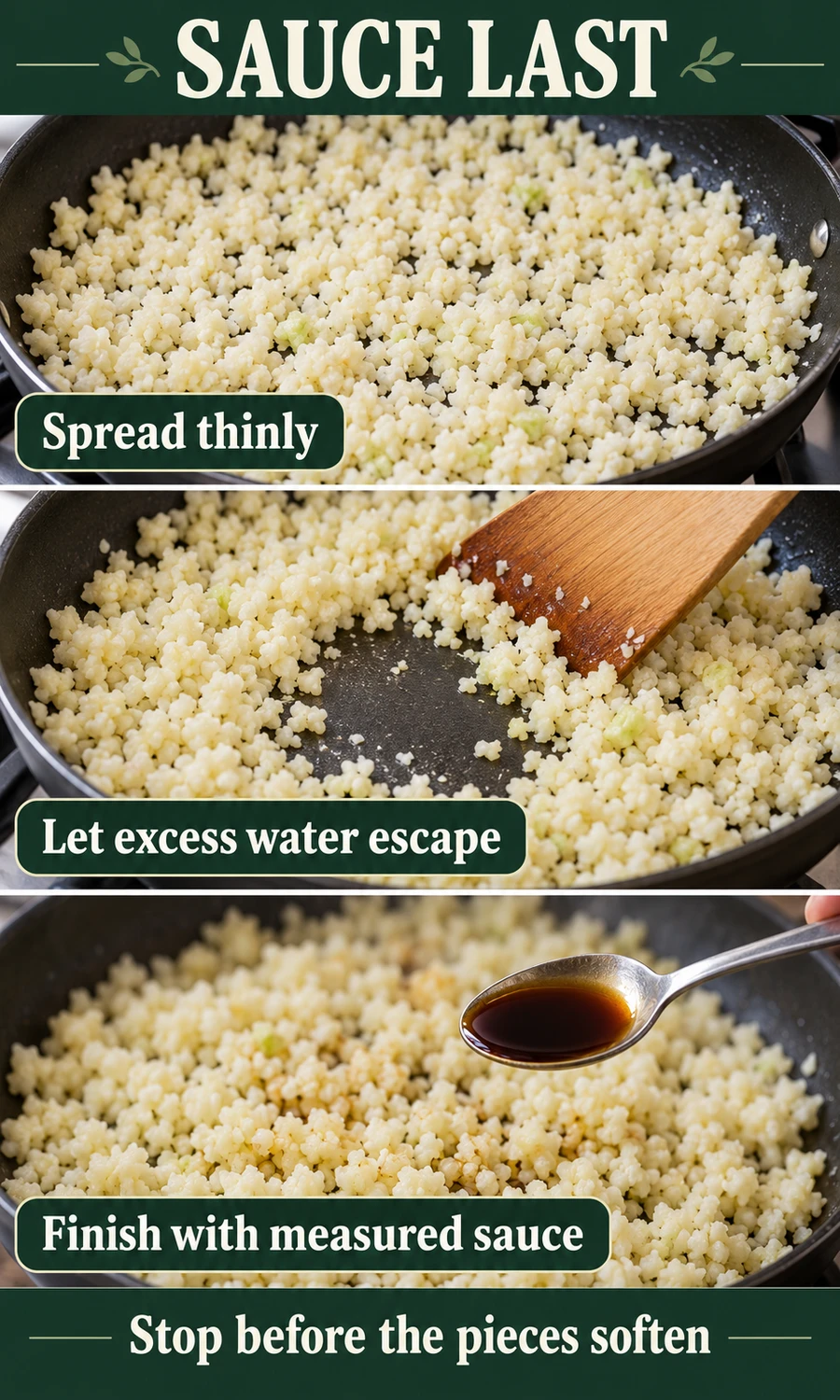
Once the excess water has gone, add a little cooking oil if needed and return separately cooked vegetables or protein. Add sauce in a small measured amount, toss and check before adding more. If the pan becomes wet again, pause seasoning and let that liquid reduce without cooking the cauliflower into a mash.
- Prepare separately: cook moisture-heavy mushrooms or frozen vegetables before combining them with the cauliflower.
- Keep delicate aromatics out of a long drying stage: add garlic and ginger with oil near the finish so they are less likely to burn.
- Finish protein properly: use safely cooked additions; a dry pan or brown surface does not confirm meat or egg doneness.
- Taste at the end: sauce can already supply salt, and concentrating a heavily seasoned batch can make it too salty.
Four mistakes that put water back into the pan
A lid returns condensation to the food, so remove it for the drying stage. A large batch lowers the useful cooking surface per piece, while additional wet vegetables can restart steaming after the cauliflower has dried. These problems are easier to prevent by preparing additions separately and combining smaller batches at the end.
Early seasoning can complicate moisture control, especially when the seasoning is a water-based sauce. Salt can encourage moisture to leave vegetable tissue, but an early pinch does not automatically ruin a batch; pan capacity and total liquid still matter. When troubleshooting, delay extra salt and soy sauce so you can see what the cauliflower itself is doing.
If it is already soggy: the recovery sequence
For a freshly cooked, properly handled batch whose pieces remain firm, remove half to a clean plate and spread the remainder. Let visible liquid evaporate, stirring and checking for sticking, then repeat with the reserved portion. Combine only after both portions have reached the texture you want, and add no more sauce until you taste them.
If the pieces are already soft, stop trying to brown them into separate grains. More cooking can leave you with scorched paste and less food, even though the pan eventually looks dry. You can accept a softer vegetable side when handling was safe, but texture changes never establish food safety.
Use Dry Pan Rescue for your next step
Choose your starting cauliflower, the condition of the pieces and what is happening in the skillet. Dry Pan Rescue uses those observations to suggest a recovery order and a stopping point without inventing a success score. Its printable sheet keeps your chosen conditions and the recommended actions together at the stove.
Dry Pan Rescue
Find the next step for a wet pan of cauliflower fried rice.
A wet batch and an overcooked batch need different responses. Use the pan’s condition to choose a recovery sequence; this experience cannot verify food safety or guarantee crispness.
Choose the pan conditions, then show your next steps.
Reheating and storage: separate texture from safety
Refrigerate promptly in shallow containers and keep the refrigerator at 4°C/40°F or below. The FDA’s chilling guidance sets a two-hour limit, reduced to one hour above 32°C/90°F. Discard food with an uncertain unsafe storage history; normal smell cannot prove it is safe.
For properly chilled cooked leftovers, follow USDA leftover guidance: use within three to four days and reheat to 74°C/165°F throughout. A small uncovered skillet batch can release moisture, while microwave reheating needs stirring and temperature checks to address cold spots. Stop cooking once reheating is complete rather than pursuing color at the expense of texture.
Questions about soggy cauliflower fried rice
Why is my cauliflower rice mushy?
The pieces may have been processed too finely, cooked too long or left steaming in a crowded pan. Reducing excess water can help a wet batch, but it cannot rebuild cauliflower that has softened into a paste. Check how the pieces feel before deciding to keep frying.
Can frozen cauliflower rice be used for fried rice?
Yes, but manage the liquid it releases and follow the package’s cooking directions. If your chosen method uses thawed cauliflower, thaw it in the refrigerator, drain it and gently blot excess moisture. Cook a shallow batch and expect some products to finish softer than fresh cauliflower.
Should I squeeze cauliflower rice in a towel?
Gentle pressing can remove moisture from wet thawed cauliflower, but dry fresh pieces do not automatically need squeezing. Use a clean food-contact cloth and do not handle hot cauliflower with bare hands. Hard squeezing can crush delicate pieces, so stop before the texture becomes compacted.
Why does it smell like cauliflower when I fry it?
A cabbage-like aroma can come from the cauliflower itself and can be more noticeable during prolonged cooking. Shorter cooking with good moisture control may produce a milder result, but no seasoning method guarantees that the vegetable flavor disappears. Sour odors, slime or questionable storage are reasons to discard it rather than disguise it.
Why will my cauliflower fried rice not brown?
Visible liquid keeps the surface wet, while constant movement and a crowded skillet limit sustained contact. Reduce excess water and allow brief contact within the pan’s safe heat range. Dry, tender cauliflower can still be a good result without deep browning.
Can I rescue leftover cauliflower fried rice?
Only consider reheating when the batch was cooked, cooled and stored properly. Moisture reduction can improve texture, but it cannot make mishandled leftovers safe. Use the storage and reheating limits above, and discard the batch if its handling history is uncertain.
Before the next batch
- Dry the starting cauliflower and preserve separate pieces.
- Use a shallow uncovered batch and cook wet additions separately.
- Check for pooled water before adding sauce, and stop before the pieces turn soft.
- Treat questionable storage as a discard decision, not a texture problem.