

Over the past few months, discussions about bloating have quietly resurfaced across social media, online forums, and community groups. What started as casual complaints has turned into a recurring pattern – people describing uncomfortable fullness, stomach pressure, and digestive heaviness after eating foods they have consumed for years.
What makes this situation concerning is not the food itself.
It is the frequency, repetition, and dismissal of symptoms.
Bloating is often normalized. Many people believe it is just part of eating, stress, or aging. In reality, frequent bloating is the digestive system’s way of signaling that something is not being processed efficiently.
This article explains why a common food can trigger bloating, how digestion changes over time, and what you can do before the problem escalates.
WHAT PEOPLE ARE EXPERIENCING

People reporting bloating linked to everyday foods often describe similar patterns:
- A visibly swollen stomach after meals
- Tightness or pressure around the abdomen
- Excessive gas or discomfort
- Fatigue after eating
- Feeling “heavy” even after small portions
What stands out is that many of these individuals do not feel sick in the traditional sense. There is no sharp pain, fever, or illness. Instead, the discomfort is subtle but persistent.
This makes bloating easy to ignore.
However, when these symptoms repeat daily or weekly, they indicate a digestive efficiency issue, not a one-off reaction.
Why Bloating Often Appears “Suddenly”
One of the biggest misconceptions about food-related bloating is that it happens instantly.
In reality, bloating usually builds up gradually.
Your digestive system is adaptive. It compensates for small inefficiencies for a long time. When those compensations are no longer enough, symptoms finally become noticeable.
This is why someone may eat the same food for years without issue, then suddenly feel bloated.
Common contributing factors include:
- Slower digestion with age
- Changes in gut bacteria
- Increased stress levels
- Poor eating timing
- Reduced enzyme production
This distinction matters – and it’s explained in detail in our food fundamentals guide.
To understand why bloating keeps returning, you need to first understand how digestion actually works. Without that foundation, symptoms are often misunderstood or ignored.
The Role of Fermentation in Bloating
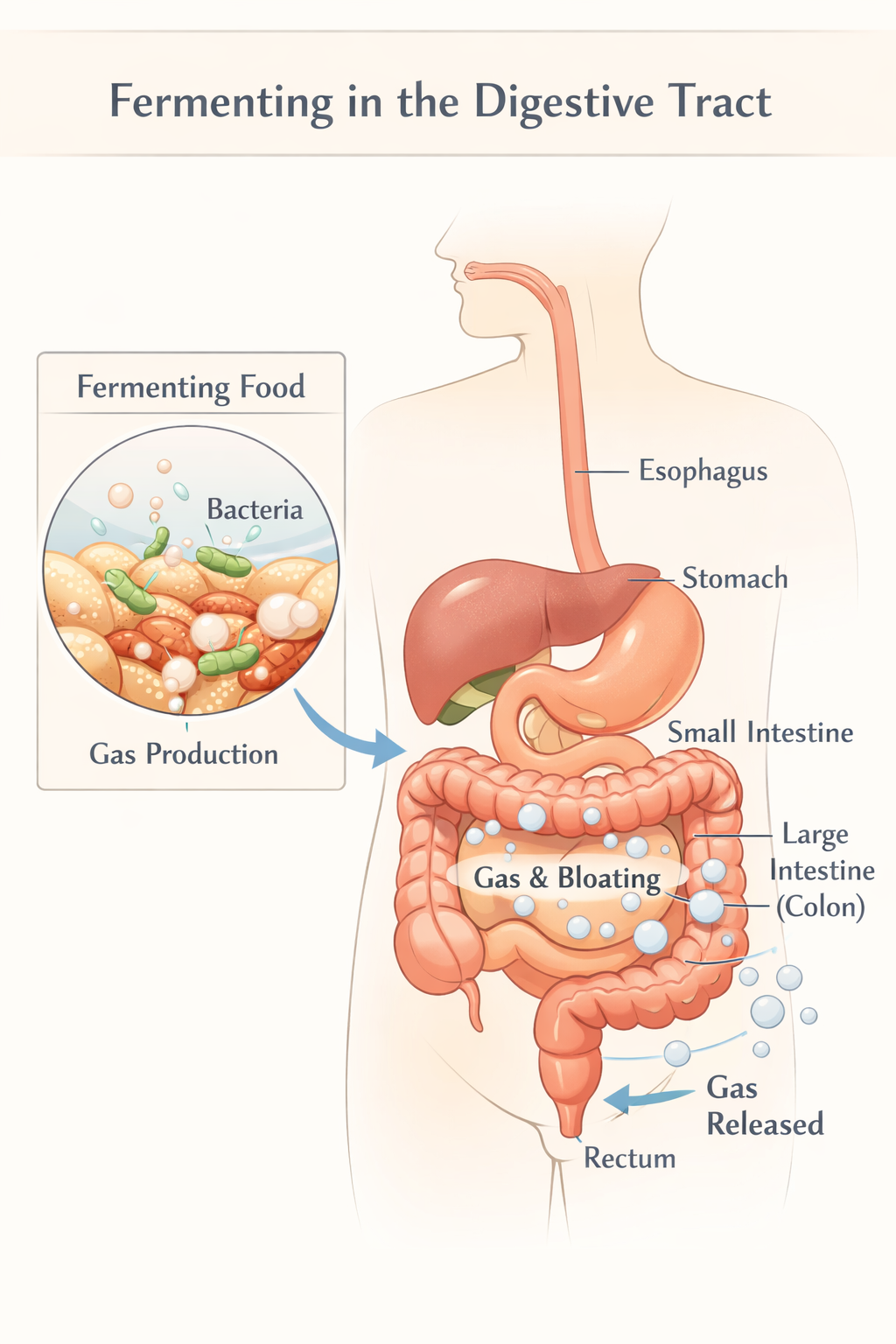
Many common foods are fermentable.
This means they are broken down by gut bacteria rather than fully digested in the small intestine. During fermentation, gas is produced. When this process happens excessively or inefficiently, bloating occurs.
Fermentation itself is not bad.
The problem starts when:
- Food sits too long in the gut
- Gut bacteria are imbalanced
- Meals are eaten too quickly
- Portions are too large for current digestive capacity
In such cases, even familiar foods can trigger uncomfortable reactions.
Why Bloating Is Worse at Night
A pattern many people notice is bloating becoming worse in the evening.
There are several reasons for this:
- Digestion naturally slows later in the day
- Physical movement decreases after dinner
- Larger meals are often consumed at night
- Stress accumulates throughout the day
As digestion slows, gas production becomes more noticeable. This is why bloating that seems mild during lunch can feel severe after dinner.
Ignoring this pattern often leads to worsening symptoms over time.
Digestive discomfort is often the body’s early feedback system. Ignoring repeated bloating signals can allow minor issues to become long-term habits.
The Part Most People Miss Entirely
Many people focus on what they eat, but not how often or in what condition they eat it.
Repeated exposure to foods that are difficult to digest can gradually overwhelm the digestive system. The gut does not “fail” overnight. It becomes less efficient through constant strain.
This is covered deeply in Foods That Commonly Cause Bloating.
Understanding these patterns helps prevent long-term digestive discomfort instead of repeatedly treating symptoms.
Why Viral Food Warnings Feel Confusing
Social media often presents food issues in extremes:
- “This food is toxic”
- “Everyone should stop eating this”
- “Doctors are hiding the truth”
These claims create fear but offer little clarity.
In reality, digestion is individual. A food that causes bloating for one person may be harmless for another. The key factor is not fear – it is awareness.
Professional nutrition and digestive health advice focuses on patterns, not absolutes.
What You Should Do Instead of Eliminating Everything
One of the biggest mistakes people make is immediately cutting out multiple foods.
This often leads to:
- Nutritional imbalance
- Increased anxiety around eating
- Difficulty identifying the real trigger
A more effective approach includes:
- Observe patterns
Track meals and symptoms for one to two weeks. - Reduce portion size temporarily
Smaller portions reduce digestive strain. - Eat slower
Chewing thoroughly improves digestion significantly. - Avoid late-night heavy meals
Give your digestive system time to rest. - Reintroduce foods mindfully
Notice how your body responds.
Bloating is feedback, not a failure.
A Real Case Many People Relate To

A working professional experienced daily bloating after dinner for several months. Medical tests showed nothing abnormal. Assuming it was stress, she ignored the symptoms.
After tracking her meals, she noticed bloating occurred consistently after eating the same common food in the evening. Reducing portion size and changing meal timing improved symptoms within two weeks.
The food itself was not dangerous.
The issue was repetition without recovery.
This scenario is far more common than most people realize.
When Bloating Should Not Be Ignored
Occasional bloating is normal.
However, it should not be ignored if it is:
- Frequent
- Progressively worsening
- Accompanied by pain
- Affecting sleep or daily comfort
Persistent digestive discomfort is a sign that your gut needs attention, not suppression.
Final Thoughts
Most digestive issues do not begin dramatically.
They develop quietly, meal by meal, habit by habit.
Listening to early signals allows for small adjustments instead of major interventions later. Understanding digestion is not about fear. It is about long-term comfort, balance, and awareness.
The goal is not to avoid food.
The goal is to eat in a way your body can handle consistently.
FAQ
Does bloating always mean food intolerance?
No. Bloating can result from digestion speed, stress levels, gut bacteria balance, portion size, or eating habits. Food intolerance is only one of several possible causes.
Why does bloating happen even with healthy food?
Even nutrient-dense foods can ferment in the gut or digest slowly, particularly when consumed in large portions or late in the day. Fiber-rich foods commonly contribute to temporary bloating.
Should I completely stop eating foods that cause bloating?
Not necessarily. Adjusting portion size, meal timing, preparation methods, or frequency often reduces symptoms without needing full elimination.
How long should I observe symptoms before changing diet?
Tracking symptoms for one to two weeks is typically enough to identify consistent patterns or triggers before making structured dietary changes.