

Refrigerator Condensation Is Usually a Moisture Stability Problem
Many people assume refrigerators automatically keep food dry and stable.
In reality, refrigerators constantly manage shifting temperature and humidity conditions.
This creates a hidden environmental cycle inside the appliance.
Cold air, warm air exposure, trapped humidity, and airflow restriction continuously interact with each other.
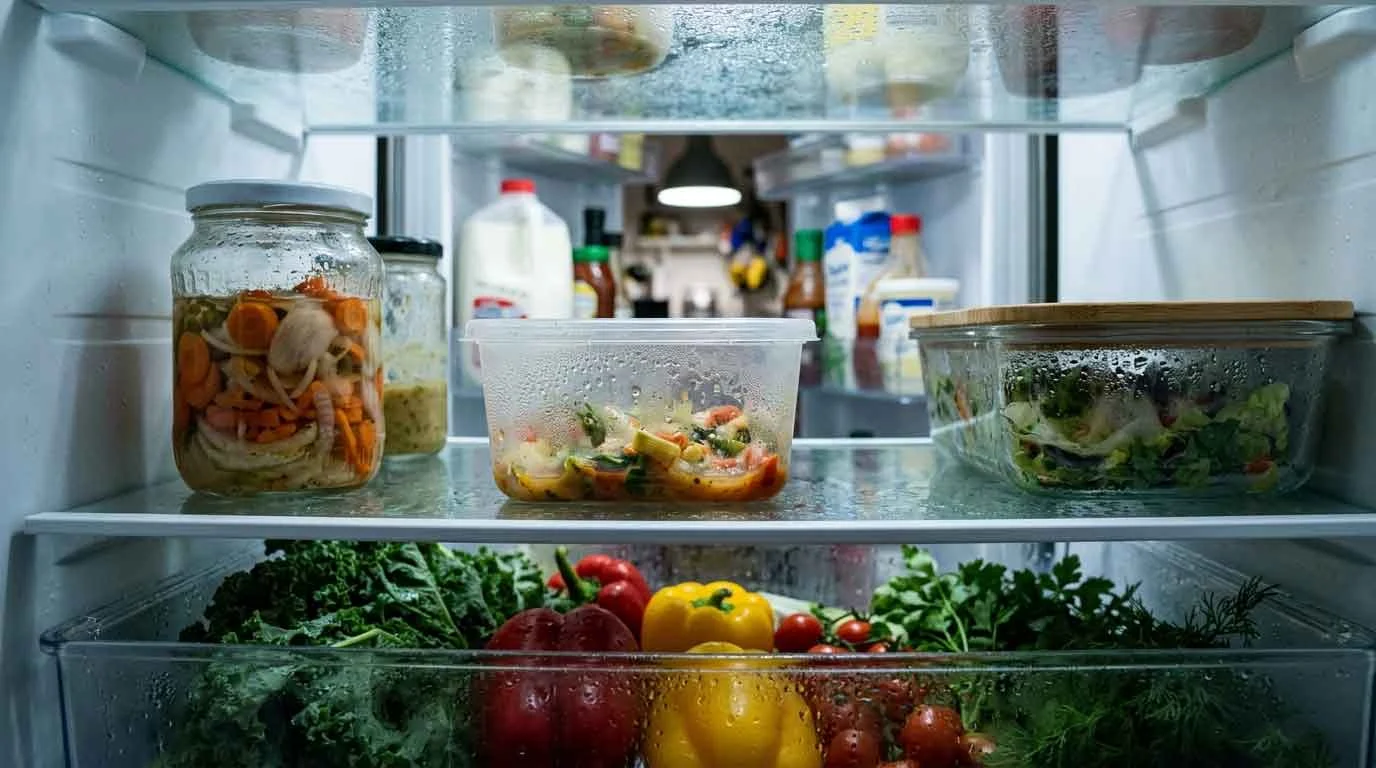
When moisture in the air touches colder surfaces, condensation forms.
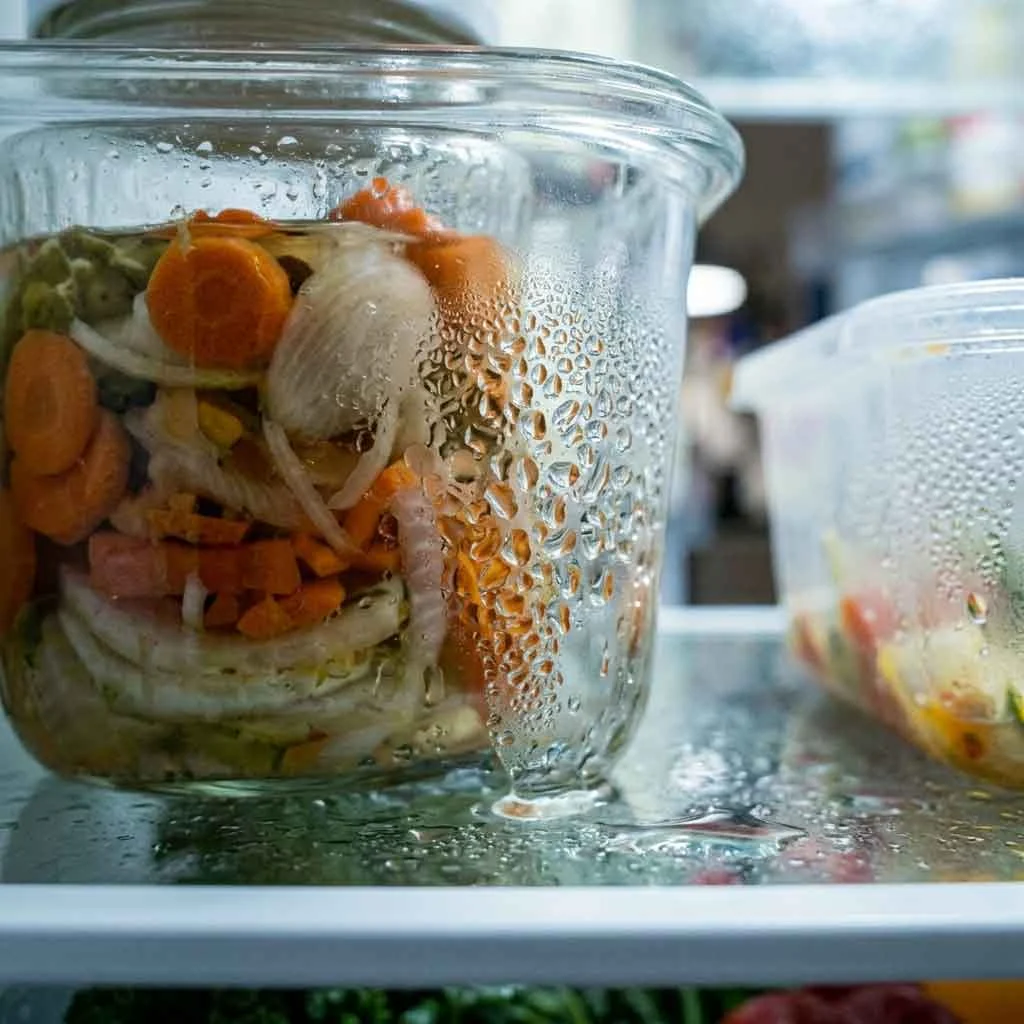
This is why refrigerators often develop:
- water droplets
- damp containers
- wet produce surfaces
- foggy packaging
- moisture buildup on shelves
The refrigerator itself is not necessarily malfunctioning.
The problem is often environmental instability happening inside a closed cooling space.
Warm Air Exposure Is One of the Biggest Causes
Every time a refrigerator door opens, warm external air enters the cooling environment.
Warm air naturally contains moisture.
When that humid air suddenly contacts colder refrigerator surfaces, the moisture condenses into liquid water.
This process becomes worse when:
- the refrigerator door opens frequently
- food is placed inside while still warm
- airflow is blocked
- containers trap humidity
- refrigerator compartments are overcrowded
The moisture may appear small initially. Sometimes it looks like nothing more than a few droplets on the lid of a container or a damp patch near the back wall of the fridge.
That small sign matters because it shows the refrigerator environment is cycling between warm exposure and cold recovery. Food sitting in that zone keeps experiencing the same moisture shift again and again.
However, repeated exposure gradually destabilizes the entire storage environment.
Why Frequently Opened Refrigerators Spoil Food Faster
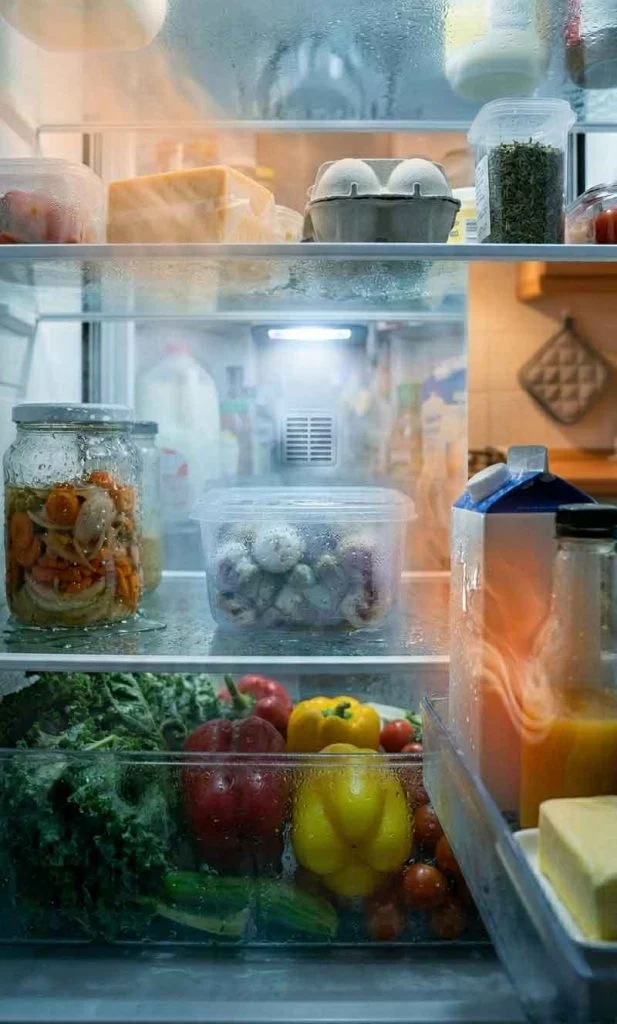
A refrigerator does not stay perfectly stable throughout the day.
Every opening creates a small environmental interruption.
Warm air enters. Cold air escapes. Moisture shifts. Then the appliance has to cool the space again.
If this happens once or twice, the effect may be minor.
When it happens repeatedly, the refrigerator begins creating small condensation cycles around sensitive foods.
This is why food near the front of the shelf or inside the door compartment may age faster than food stored deeper inside.
The food is not only being kept cold.
It is being repeatedly warmed slightly, cooled again, and exposed to new humidity.
That repeated rewarming cycle can affect:
- leafy greens
- mushrooms
- berries
- cut fruit
- meal-prep containers
- cooked leftovers
The difference may not show immediately.
After several days, the food may feel wetter, softer, or less fresh than expected.
Sealed Containers Can Quietly Trap Excess Humidity
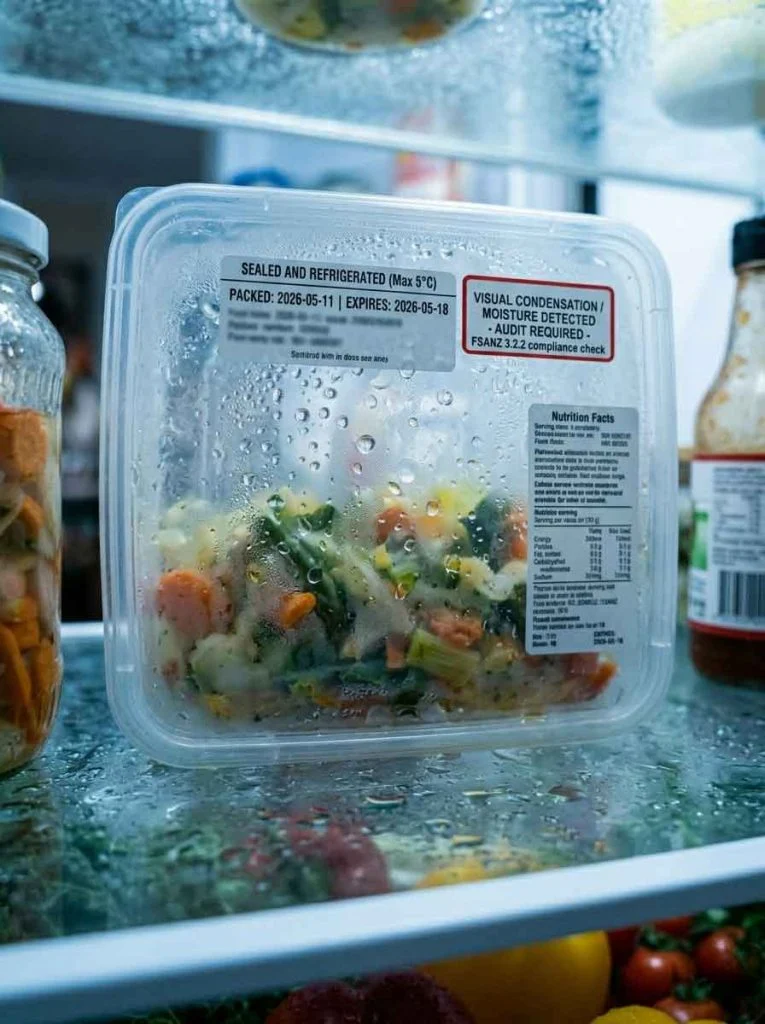
People often believe airtight containers always preserve food better.
Sometimes they do.
But in many situations, sealed storage traps evaporating moisture around the food itself.
This creates a miniature humidity chamber.
Inside the container:
- evaporation increases
- airflow decreases
- condensation accumulates
- surface moisture remains trapped
Foods with high water content become especially vulnerable.
This includes:
- mushrooms
- leafy vegetables
- berries
- cut fruit
- cooked leftovers
The problem is not simply cold temperature.
It is moisture imbalance combined with poor ventilation.
Condensation Accelerates Food Breakdown Faster Than People Expect
Moisture itself is not automatically dangerous.
The problem begins when prolonged surface moisture destabilizes food structure.
Wet conditions increase the likelihood of:
- bacterial growth
- texture breakdown
- slime formation
- odor development
- cellular collapse
This is why foods sometimes become spoiled even before visible mold appears.
The deterioration process often starts microscopically.
Excess moisture weakens structural stability long before dramatic visual spoilage becomes obvious.
This is one reason many foods show texture changes before visible rot becomes easy to recognize.
Refrigerator Airflow Matters More Than Most People Realize
Many refrigerators cool unevenly.
Some sections become colder and wetter than others.
Poor airflow creates localized humidity pockets where condensation accumulates repeatedly.
Several conditions worsen airflow problems:
| Airflow Issue | Result |
|---|---|
| Overcrowded shelves | Cold air circulation weakens |
| Blocked vents | Moisture accumulates faster |
| Tight packaging | Humidity remains trapped |
| Large warm food items | Temperature destabilizes |
| Poor organization | Uneven cooling develops |
Stable airflow is often more important than extremely cold temperatures alone.
Every Refrigerator Shelf Behaves Like a Different Environment
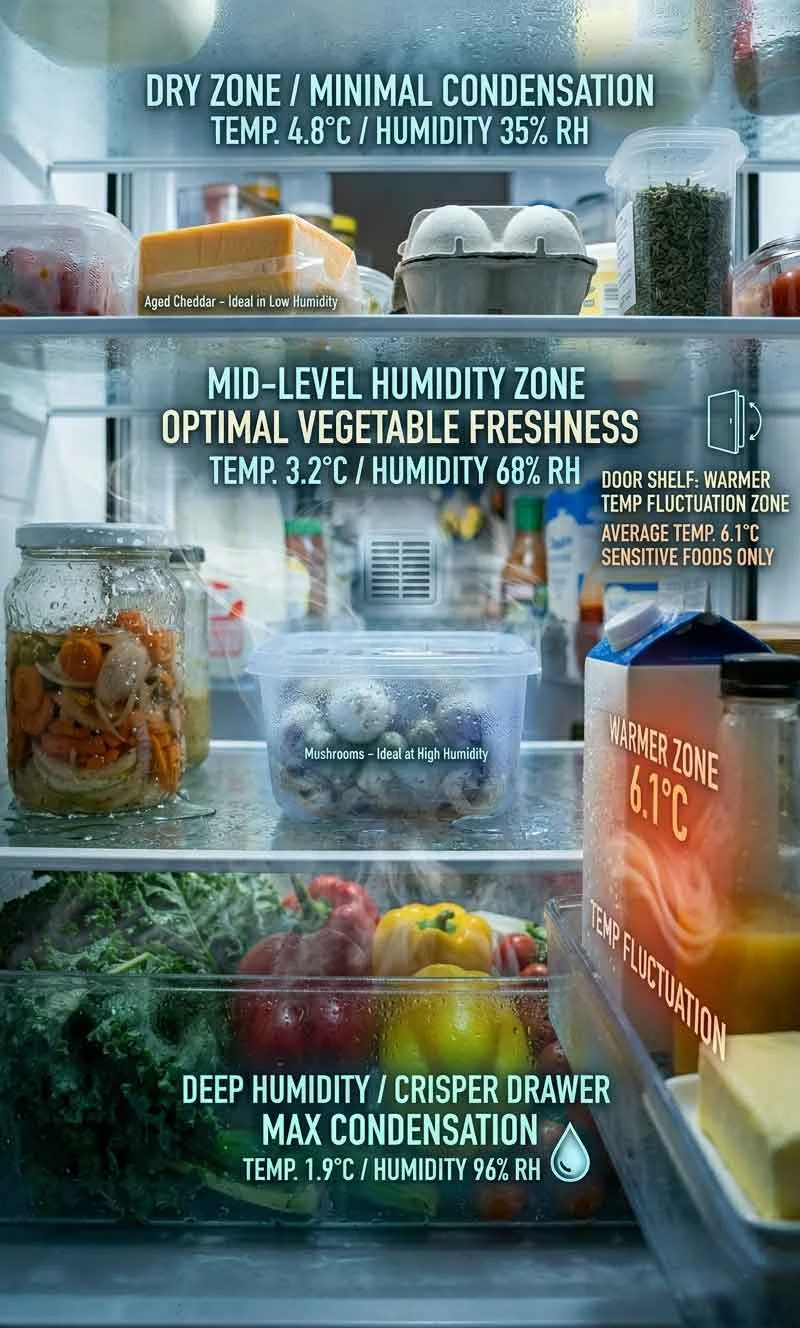
Many people imagine refrigerators as single uniform cooling spaces.
In reality, different areas inside the refrigerator behave like separate environmental zones.
The back wall is usually colder.
The vegetable drawer often traps more humidity.
The refrigerator door experiences the most temperature fluctuation because it is exposed every time the appliance opens.
Upper shelves, lower shelves, tightly packed areas, and open airflow areas all create slightly different storage conditions.
This means the same food can age differently depending on where it is placed.
Two mushroom containers stored in separate sections of the same refrigerator may deteriorate at completely different speeds.
This hidden environmental variation creates what can be described as refrigerator microclimates.
These small environmental differences quietly influence:
- surface moisture
- texture stability
- condensation accumulation
- bacterial activity
- odor development
- air circulation
Many recurring food spoilage problems are not caused by the refrigerator itself alone.
They are caused by unstable environmental pockets forming repeatedly inside specific areas.
Why Vegetables and Mushrooms Become Wet So Easily
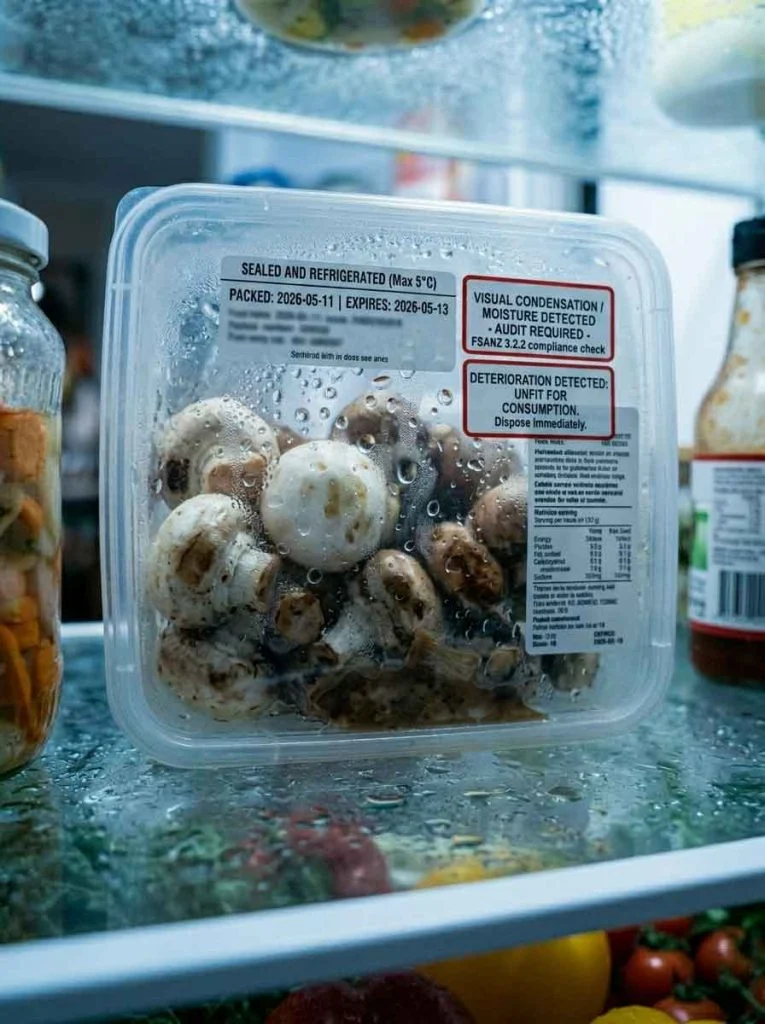
Fresh produce naturally releases moisture over time.
This process continues even inside refrigerators.
Vegetables and mushrooms are biologically active after harvest.
They still undergo gradual respiration and water release.
When moisture cannot escape properly, condensation begins forming around the food surface.
This is one reason mushrooms spoil rapidly in unstable humidity conditions.
Foods with delicate cellular structures respond especially aggressively to trapped moisture.
Paper Storage Sometimes Helps Reduce Moisture Problems
Some Refrigerators Create More Condensation Than Others
Not all refrigerators behave the same way.
Condensation levels may increase because of:
- weak door seals
- unstable cooling cycles
- excessive opening frequency
- humid climate conditions
- overloaded compartments
- blocked airflow vents
In humid regions, refrigerators work harder to manage environmental moisture.
This sometimes creates repeated condensation cycles throughout the day.
The issue becomes even more noticeable when external weather conditions remain warm and humid continuously.
Why Some Refrigerators Feel Dry While Still Creating Moisture Problems
Not every moisture problem looks obvious.
Some refrigerators feel cold and dry when you open the door, yet food inside still becomes damp, sticky, or unstable after a few days.
This happens because moisture does not always stay visible as large water droplets.
Sometimes humidity moves through the refrigerator in small cycles.
Food releases moisture. Cold surfaces pull that moisture out of the air. Containers trap part of it. Then the refrigerator door opens, warm air enters, and the cycle begins again.
The result is a quiet moisture loop that can affect food before the refrigerator looks visibly wet.
This invisible moisture problem is especially common around:
- sealed produce bags
- plastic food containers
- back-wall storage zones
- vegetable drawers
- overcrowded shelves
That is why food can spoil faster even when the refrigerator appears clean, cold, and normal.
The issue is not always visible water. Often, it is repeated humidity movement around the food surface.
Paper Storage Sometimes Helps Reduce Moisture Problems
Certain foods perform better in breathable storage environments.
Paper absorbs some excess humidity while still allowing airflow.
This reduces:
- trapped condensation
- direct surface wetness
- moisture pooling
- slime development
This is why some people store mushrooms or herbs inside paper bags rather than sealed plastic packaging.
The goal is environmental balance rather than complete isolation.
Cold Temperature Alone Does Not Prevent Spoilage
A major misunderstanding is believing cold temperatures automatically stop deterioration.
Refrigeration mainly slows biological activity.
It does not eliminate:
- moisture instability
- bacterial presence
- texture degradation
- condensation cycles
Food can still deteriorate significantly if the storage environment remains wet and unstable.
This explains why some refrigerated foods spoil surprisingly fast despite being kept cold continuously.
Condensation Often Becomes a Chain Reaction
Once moisture begins accumulating repeatedly, the refrigerator environment becomes increasingly unstable.
Wet surfaces encourage further condensation formation.
Containers become damp.
Food surfaces remain moist longer.
Temperature fluctuations become amplified.
The problem gradually compounds over time.
This is why some refrigerators seem to develop recurring moisture problems even after cleaning.
The underlying environmental conditions may still remain unresolved.