

Introduction: Dryness Is a Texture Problem, Not a Flavor Problem
Air frying is often promoted as a cleaner, lighter alternative to traditional frying. Yet many people notice the same issue – food looks crisp but feels dry.
This dryness is not caused by missing seasoning or poor ingredients. It happens because air frying changes how moisture leaves food, and how structure sets under fast-moving heat.
This article explains why air-fried food feels dry, what actually happens during cooking, and how understanding food behavior helps you predict texture outcomes.
1️⃣ Air Frying Uses Aggressive Surface Dehydration
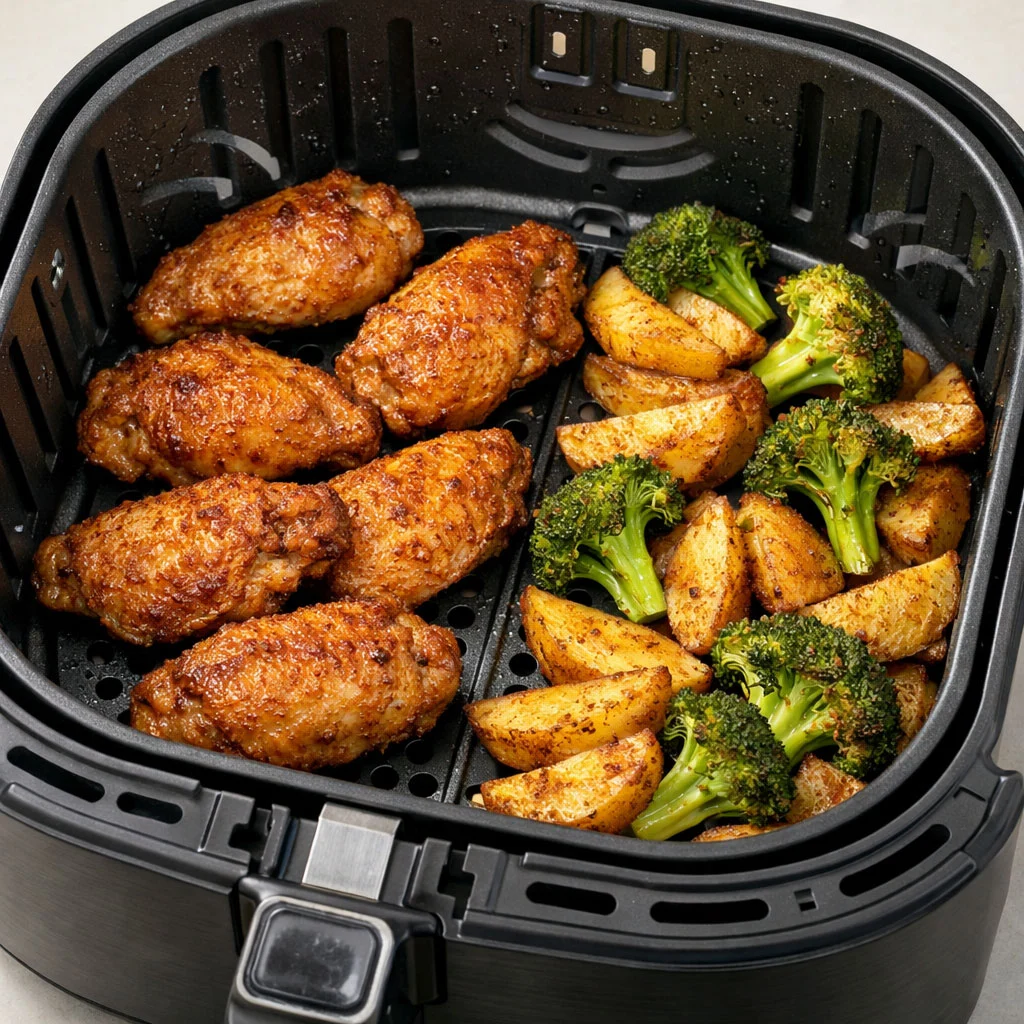
Air frying works by blasting food with rapidly circulating hot air.
This causes:
- Very fast surface moisture loss
- Early crust formation
- Limited protection for internal water
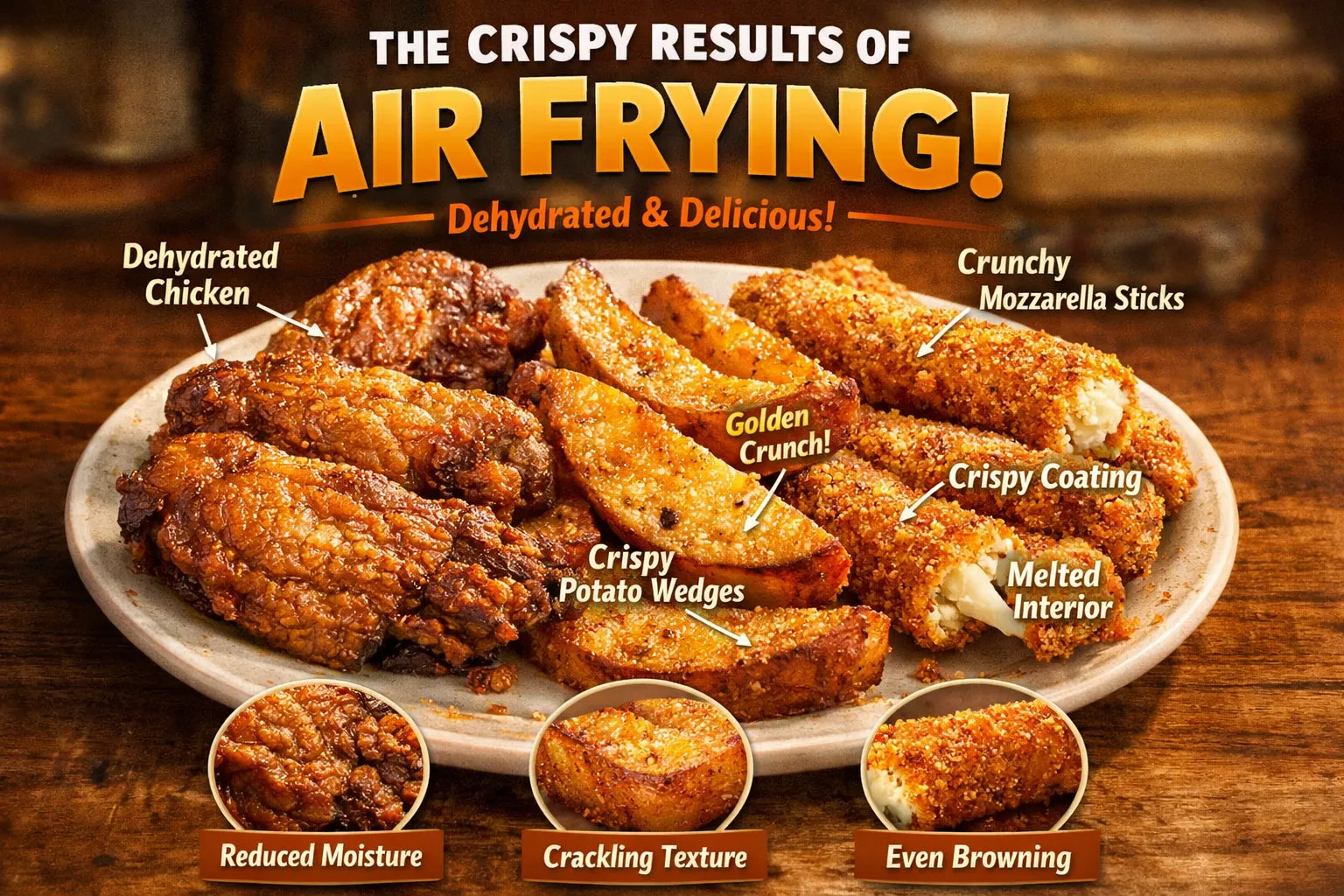
Unlike deep frying, where oil coats the surface and slows dehydration, air frying removes moisture directly into the air.
The result is food that firms up quickly on the outside before the inside has time to adjust.
Dryness begins at the surface – not the center.
2️⃣ No Oil Barrier Means Faster Moisture Escape
Oil plays an important structural role in traditional frying.
Oil:
- Coats the surface
- Slows evaporation
- Softens mouthfeel
Air frying removes that barrier.
Without oil:
- Moisture escapes faster
- Proteins tighten earlier
- Texture sets harder
This is why air-fried food often feels structurally dry, even when internal temperature is correct.
This rapid moisture loss follows the same principles explained in how different cooking methods change texture, where heat direction and airflow reshape structure.
3️⃣ Fast Crisping Creates Imbalance
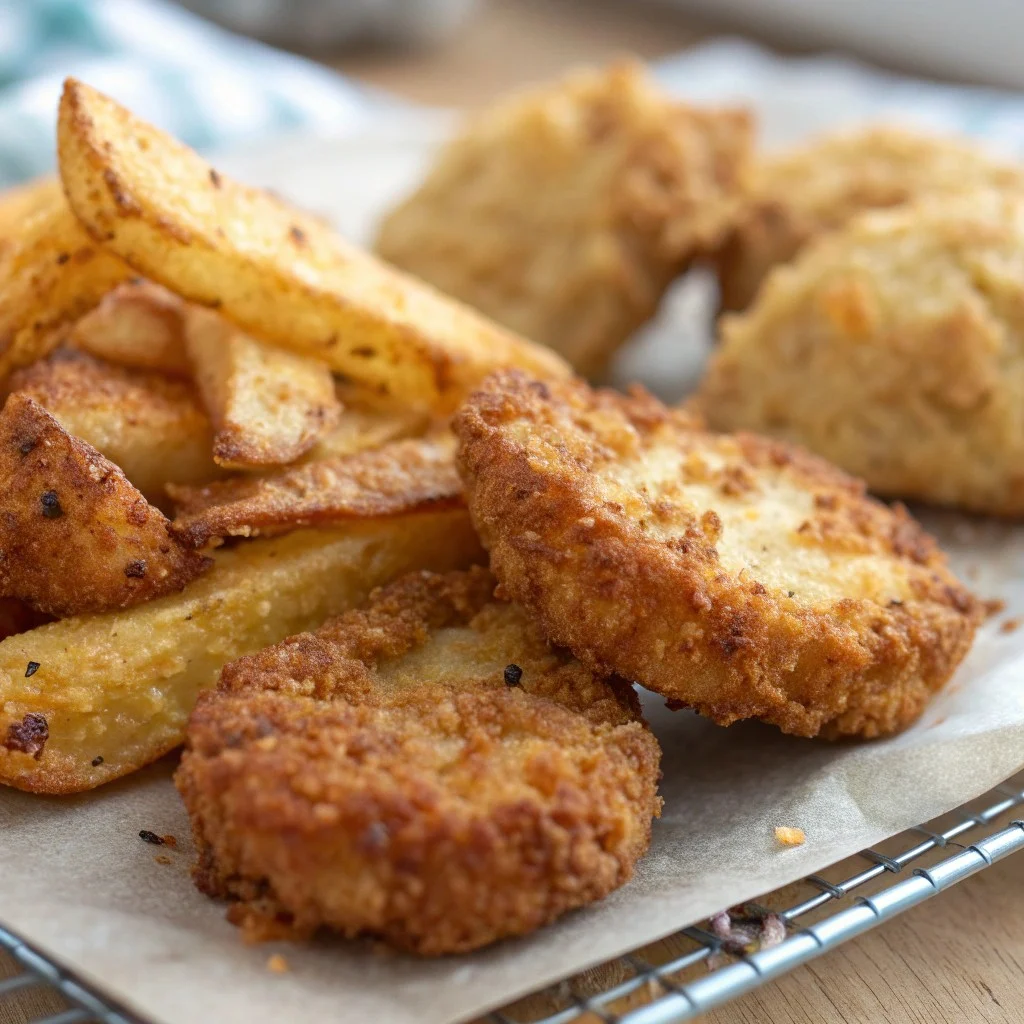
Air frying creates crispness too early.
When the surface hardens quickly:
- Interior moisture has less time to redistribute
- Fibers tighten unevenly
- The eating experience feels rigid
This creates a mismatch:
- Crisp exterior
- Under-adapted interior
Balanced crispiness requires controlled timing, not speed.
4️⃣ Lean Foods Are the Most Affected
Lean foods suffer the most in air fryers.
Examples:
- Chicken breast
- Fish fillets
- Vegetables with low fat
Because these foods lack internal fat:
- They lose moisture faster
- They feel dry sooner
- Small timing errors matter more
Air frying magnifies the weaknesses of lean ingredients.
This is especially noticeable with lean protein, which is why air-fried chicken breast often mirrors the same moisture loss explained in why chicken breast dries out so easily.
5️⃣ Dryness Can Exist Even When Food Is “Cooked Correctly”
One of the most confusing aspects of air-fried food is that it can be:
- Fully cooked
- Safe to eat
- Properly browned
…and still feel dry.
This happens because internal doneness and surface texture are not the same thing.
Air frying often:
- Reaches internal temperature quickly
- Removes surface moisture aggressively
- Sets structure before fibers relax
So even when food is technically done, the eating experience feels rigid rather than tender.
Dryness here is structural, not thermal.
6️⃣ Reheating Makes Air-Fried Food Worse
Air-fried food rarely improves after reheating.
Why:
- The surface is already dehydrated
- Reheating removes remaining internal moisture
- Structure hardens further instead of softening
Unlike oil-fried food, which can regain some softness through fat redistribution, air-fried food has no buffer.
This is why leftover air-fried meals often feel:
- Chalky
- Stiff
- Less satisfying than when fresh
7️⃣ Crispiness vs Dryness Is About Timing
Crispiness and dryness sit very close together.
The difference is timing.
- Crispiness forms when surface moisture leaves at the right moment
- Dryness forms when moisture loss continues too long
Air frying shortens this window dramatically.
Small timing errors create large texture penalties.
This is why air frying rewards attention and punishes delay.
This narrow window explains why surface crispiness feels rewarding but extended dehydration reduces enjoyment, as explored in why crispy food feels more satisfying.
8️⃣ Ingredient Choice Determines Air-Frying Success
Air frying works best for foods that:
- Contain internal fat
- Have natural moisture buffering
- Can tolerate rapid surface setting
Examples:
- Chicken thighs (better than breast)
- Potatoes with oil coating
- Breaded items with internal contrast
Foods that lack fat or moisture struggle because there is nothing to slow dehydration.
Air frying does not fail – the ingredient does.
9️⃣ Air Frying Is a Precision Method, Not a Shortcut
Air fryers are often marketed as fast and forgiving.
In reality, they are:
- Fast
- Dry
- Unforgiving
They reward:
- Exact timing
- Proper portion spacing
- Moisture awareness
Once treated as a precision method instead of a shortcut, air frying becomes predictable rather than disappointing.
🧠 Summary
Air-fried food feels dry because rapid hot air removes surface moisture faster than structure can adapt. Without oil to slow evaporation, lean foods lose moisture quickly and harden early. Crispiness depends on precise timing, while dryness results from continued dehydration beyond that window.
FAQ
Why does air-fried food feel dry even when fully cooked?
Because doneness and moisture retention are different. Air frying removes surface moisture aggressively, creating dryness even at correct internal temperature.
Is air frying worse than baking?
Not worse – just faster. The speed of moisture loss makes timing more critical.
Why does reheated air-fried food feel chalky?
Because reheating removes remaining internal moisture from an already dehydrated structure.
Which foods work best in an air fryer?
Foods with internal fat or added oil perform better because moisture loss is slowed.