

Introduction: Satisfaction Is About Structure, Not Calories
Boiled food is often described as clean, light, or healthy — yet many people feel it is less satisfying than fried food, even when portions and ingredients are similar.
This difference is not psychological preference alone.
It is rooted in texture, moisture behavior, and sensory feedback.
Boiling and frying move heat and moisture in opposite ways. Those differences directly shape how full, complete, and enjoyable a meal feels.
This article explains why boiled food feels less satisfying than fried food by examining how structure, contrast, and sensory signals are formed during cooking.
1️⃣ Boiling Traps Moisture and Removes Resistance
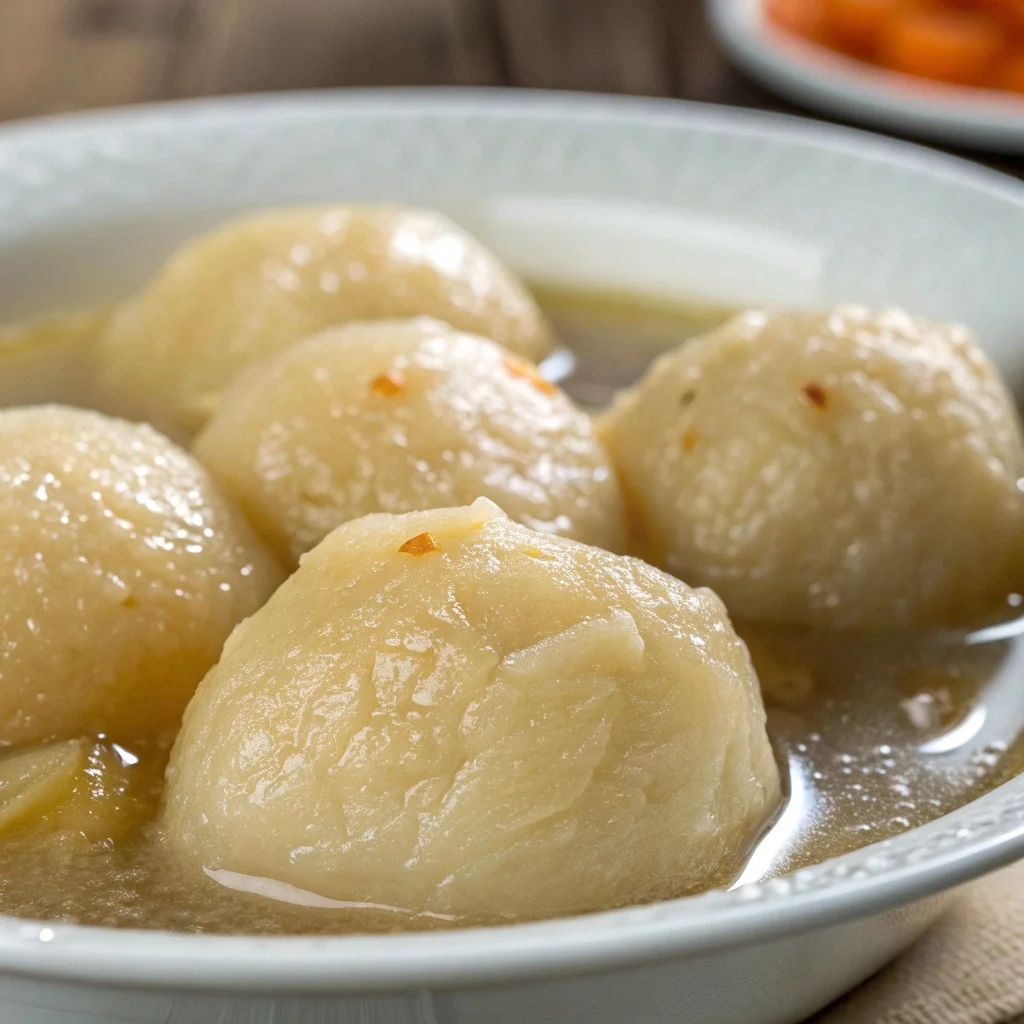
Boiling cooks food by surrounding it with water.
This causes:
- Minimal moisture loss
- Weak surface setting
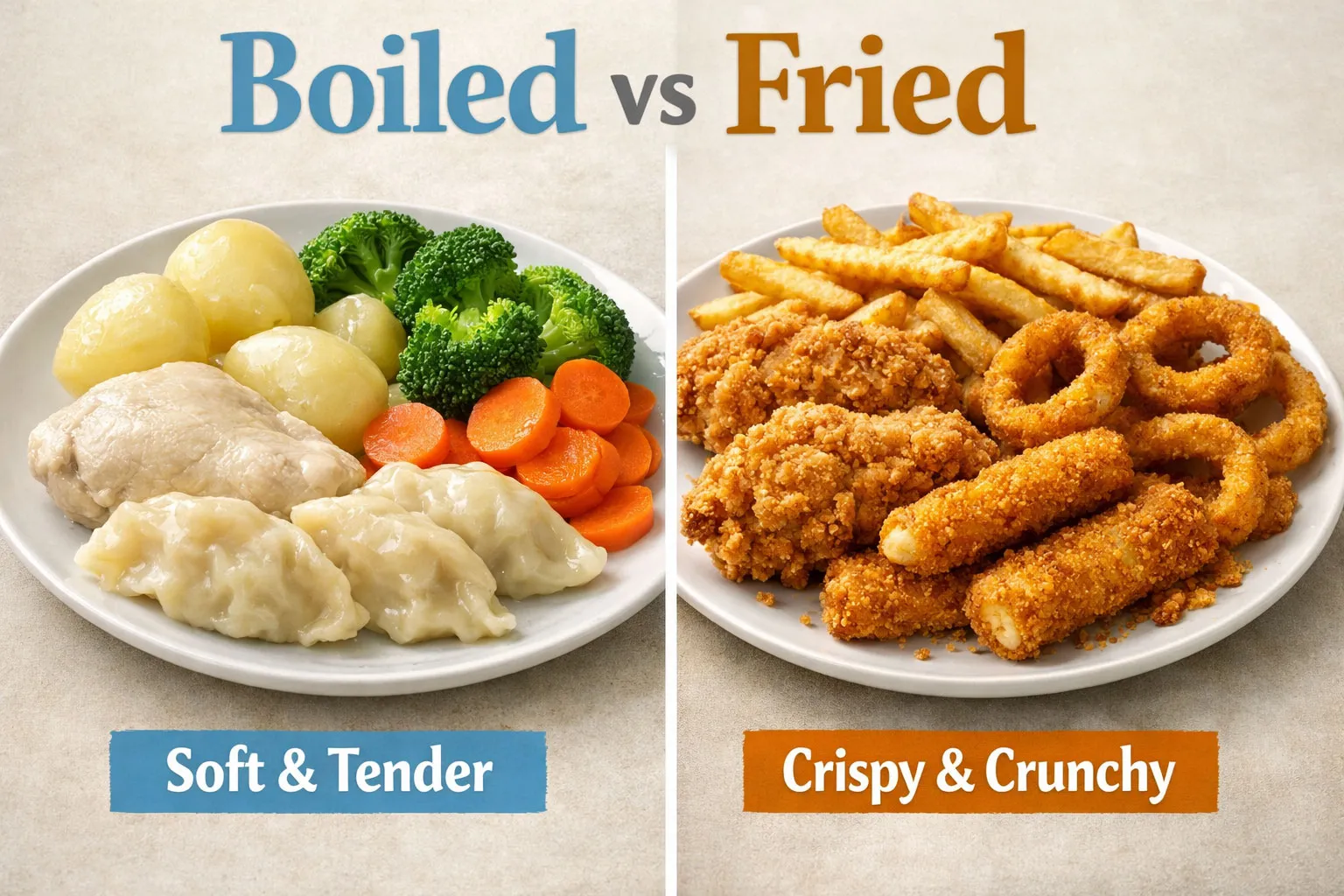
- Softening without structure
Because water prevents dehydration, the surface never firms up. Without resistance at the bite point, chewing requires less effort and delivers weaker sensory feedback.
The result is food that feels soft but incomplete.
2️⃣ Frying Creates Structure Through Controlled Moisture Loss
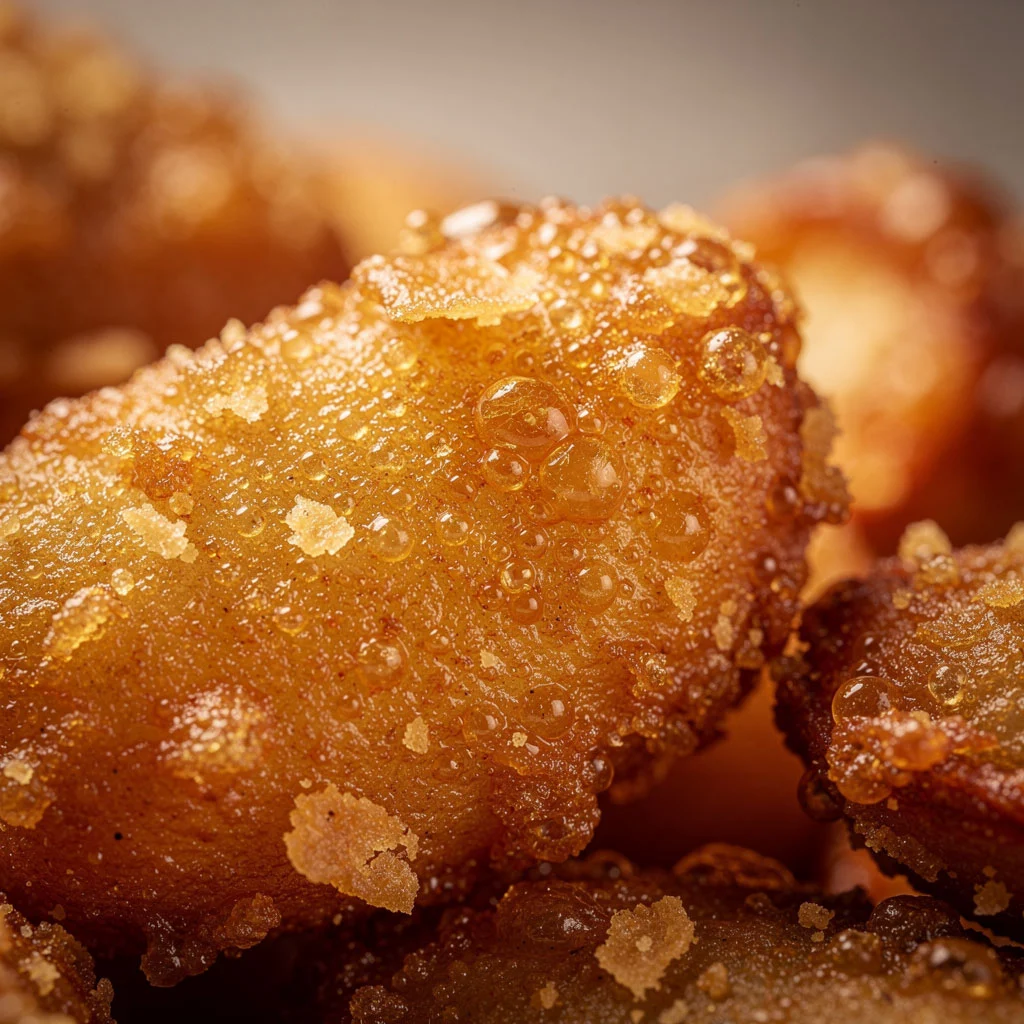
Frying exposes food to high surface heat, often with oil acting as a buffer.
This leads to:
- Surface dehydration
- Early structure formation
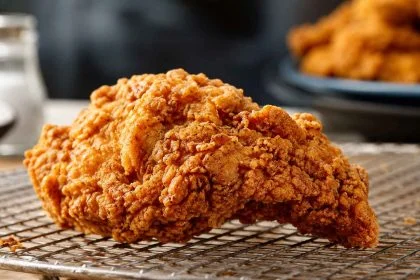
- Crisp or firm exteriors
Unlike boiling, frying creates contrast:
- Firm outside
- Softer inside
This contrast is essential for satisfaction. The brain interprets it as effort, care, and completion.
3️⃣ Texture Contrast Drives Eating Engagement
When texture is uniform:
- Chewing becomes repetitive
- Sensory attention drops
- Satisfaction declines
Boiled food tends to be uniform because moisture remains evenly distributed. Fried food interrupts uniformity by setting the surface first.
Contrast keeps the brain engaged across multiple bites.
This contrast-driven engagement explains why crispy food feels more satisfying, as structure and resistance increase sensory reward.
4️⃣ Boiled Food Delivers Weaker Sensory Signals
Eating satisfaction depends on:
- Sound
- Resistance
- Breakdown speed
Boiled food is:
- Quiet
- Soft
- Predictable
The brain receives fewer confirmation signals during eating. Even when flavor is present, the experience feels muted.
This is why boiled food often feels filling but not rewarding.
5️⃣ Boiled Food Feels Filling but Not Rewarding
One of the most confusing experiences with boiled food is this:
You feel physically full, but mentally unsatisfied.
This happens because:
- Boiled food occupies stomach volume
- But delivers weak oral stimulation
- And ends eating too quickly
The body registers intake, but the brain does not register completion.
Satisfaction is not just fullness.
It is the feeling that eating effort matched eating reward.
Boiled food short-circuits that loop.
6️⃣ Ease of Eating Reduces Perceived Value
Foods that require effort:
- More chewing
- More attention
- More bite resistance
are perceived as more valuable by the brain.
Boiled food:
- Breaks down immediately
- Requires minimal chewing
- Provides little resistance
The brain subconsciously interprets this as:
“This required very little effort to consume.”
Low effort reduces perceived value, even when nutrition is adequate.
This is why people often keep eating boiled food past fullness, searching for satisfaction that never arrives.
7️⃣ Frying Introduces Micro-Resistance at the Bite Point
Frying creates micro-resistance.
That resistance:
- Slows the first bite
- Forces jaw engagement
- Signals intentional preparation
This resistance is not hardness.
It is controlled opposition.
The brain reads this as:
- Care
- Structure
- Completion
Boiled food skips this step entirely.
8️⃣ Sound Is a Missing Satisfaction Layer in Boiled Food
Eating is multisensory.
Sound contributes to:
- Freshness perception
- Bite confirmation
- Eating rhythm
Boiled food is almost silent.
Fried food:
- Crackles
- Crunches
- Breaks audibly
That sound reinforces every bite.
Without it, boiled food feels muted, even when flavor is present.
This missing auditory feedback is one reason crispy food feels more satisfying, as sound reinforces texture and eating reward.
9️⃣ Boiling Removes Contrast, Which Causes Sensory Fatigue
Contrast is essential for sustained engagement.
Contrast can be:
- Soft vs firm
- Quiet vs loud
- Smooth vs rough
Boiled food is:
- Soft throughout
- Uniform in texture
- Predictable from first bite to last
The brain adapts quickly.
Once adaptation occurs:
- Interest drops
- Eating becomes passive
- Satisfaction declines
Fried food delays adaptation by constantly changing how it feels in the mouth.
🔟 Fat Changes Mouthfeel Without Adding Volume
Fat does not just add calories.
It changes mouthfeel.
Frying introduces fat that:
- Coats the tongue
- Softens perception
- Extends flavor release
Boiled food lacks this lubrication.
Without fat:
- Chewing feels empty
- Texture feels thin
- The meal feels unfinished
This is why boiled food often needs:
- Sauces
- Oils
- Dips
Not for flavor — but for structural completion.
This contrast between moisture retention and mouthfeel is explained further in how different cooking methods change texture, where fat and heat interact differently.
1️⃣1️⃣ Boiling Prioritizes Safety Over Satisfaction
Historically, boiling was favored because it:
- Killed pathogens
- Softened tough ingredients
- Required minimal control
It is a survival method, not a pleasure method.
Frying evolved later as:
- Heat control improved
- Fat became available
- Taste and satisfaction mattered more
Modern dissatisfaction with boiled food is not a flaw.
It reflects changing priorities from survival to experience.
1️⃣2️⃣ When Boiled Food Actually Works Well
Boiling is not wrong.
It is context-specific.
Boiled food works best when:
- Texture is meant to disappear
- The dish is a base, not a highlight
- Additional texture is added later
Examples:
- Soups with toppings
- Noodles finished with oil
- Vegetables mixed into structured dishes
Boiling alone rarely satisfies.
Boiling as a step can.
1️⃣3️⃣ Satisfaction Is a Signal, Not a Weakness
Craving fried food after boiled meals is often framed as:
- Lack of discipline
- Poor choices
- Weak willpower
In reality, it is a signal.
The body is not asking for calories.
It is asking for structure and engagement.
Understanding this removes guilt and replaces it with awareness.
🧠 Interim Takeaway
Boiled food feels less satisfying because it removes resistance, sound, contrast, and mouthfeel. Frying restores these layers through controlled moisture loss, fat interaction, and texture contrast. Satisfaction is not indulgence — it is feedback.
1️⃣4️⃣ Final Synthesis: Satisfaction Comes From Feedback Loops
Food satisfaction emerges from feedback loops between:
- Bite resistance
- Chewing effort
- Sensory confirmation
- Texture change over time
Boiling breaks this loop.
By trapping moisture and preventing surface structure, boiling removes resistance, sound, and contrast. Eating becomes efficient but incomplete.
Frying restores the loop by:
- Allowing controlled moisture loss
- Creating surface structure
- Introducing fat-based mouthfeel
- Slowing eating through resistance
The brain interprets this as completion, not indulgence.
1️⃣5️⃣ Why This Matters Beyond Taste
This difference explains many everyday behaviors:
- Why boiled meals feel “healthy but empty”
- Why people add sauces to soft foods
- Why cravings return after low-texture meals
The issue is not discipline.
It is missing structural feedback.
Once this is understood, food choices become intentional instead of emotional.
🧠 Summary
Boiled food feels less satisfying because it removes texture contrast, resistance, sound, and mouthfeel. Frying restores these layers through controlled moisture loss and surface structure. Satisfaction is created by feedback, not calories.
FAQ
Why does boiled food feel filling but unsatisfying?
Boiled food provides volume and moisture but lacks resistance and texture contrast. Without varied sensory feedback during chewing, the brain may not register the same level of satisfaction.
Is fried food more satisfying because of fat?
Fat enhances mouthfeel, but satisfaction often comes from texture contrast, crisp surfaces, and structural resistance created during frying.
Can boiled food still be satisfying?
Yes. Boiled food can feel satisfying when combined with finishing elements such as light oil, herbs, toppings, or textural additions that introduce contrast.
Why do people crave fried food after boiled meals?
Cravings may reflect missing sensory contrast rather than calorie needs. Texture and mouthfeel influence satiety perception beyond energy intake.
Is dissatisfaction with boiled food psychological?
Not entirely. Sensory processing, chewing resistance, and texture variation play physical roles in how satisfying food feels during consumption.