
Introduction: Cooking Methods Are Texture Decisions
Cooking methods are often treated as instructions.
In reality, they are texture decisions.
The same ingredient can feel crisp, soft, dry, or dense depending on how heat is applied and how moisture is allowed to escape. Frying, baking, boiling, and air frying do not simply “cook” food — they reshape structure.
This article explains how different cooking methods change texture, why some methods feel more satisfying than others, and how understanding these differences helps you predict results instead of guessing.
1️⃣ Heat Direction Changes How Food Breaks Down
Not all heat enters food the same way.
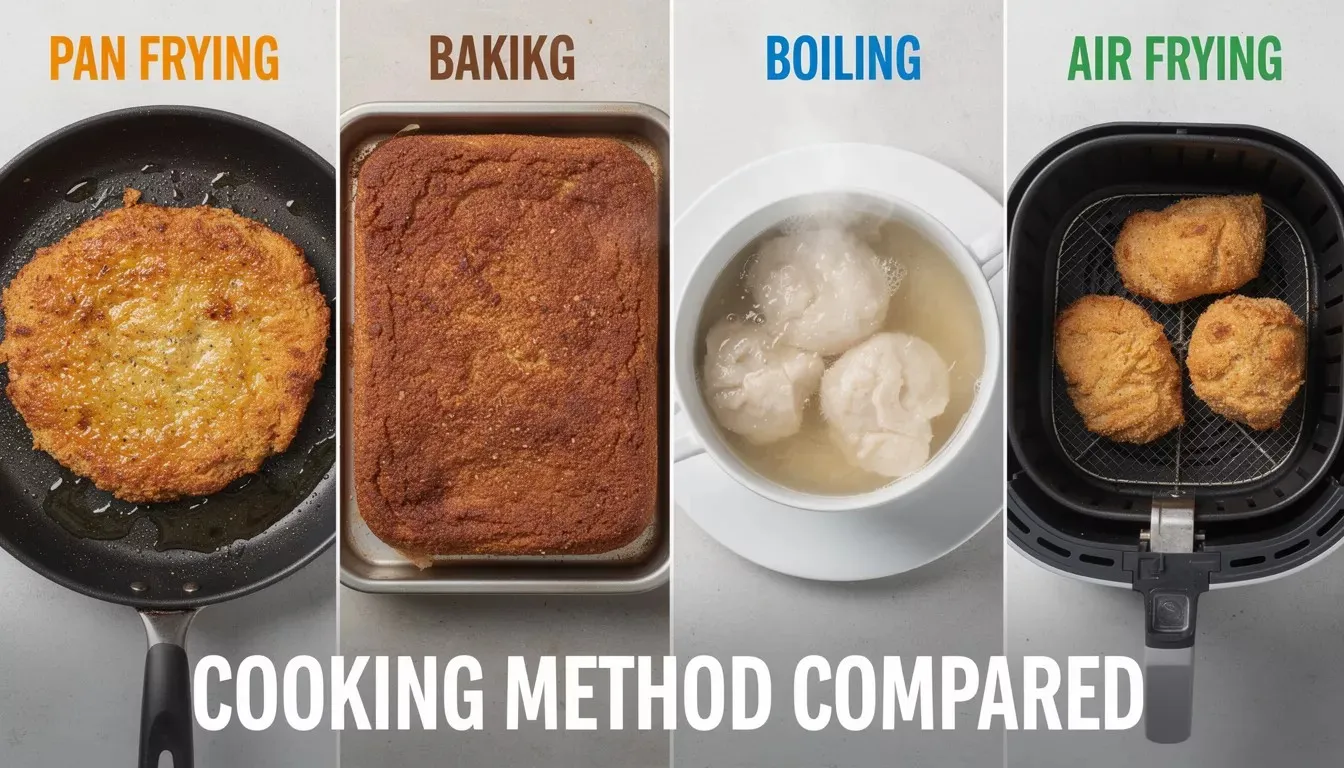
- Pan frying applies direct surface heat
- Baking surrounds food with dry air
- Boiling transfers heat through water
- Air frying combines rapid hot air with dehydration
Each method determines:
- Where structure sets first
- How fast moisture escapes
- Whether the exterior or interior changes first
Texture is shaped by how heat reaches the food, not just how hot it is.
2️⃣ Moisture Movement Is the Real Difference
The biggest difference between cooking methods is moisture control.
Some methods:
- Trap moisture (boiling, steaming)
- Push moisture outward (baking)
- Rapidly remove surface moisture (frying, air frying)
Texture follows moisture movement.
When moisture stays inside, food feels soft.
When moisture escapes unevenly, food develops contrast.
When moisture escapes too far, food feels dry.
These moisture shifts follow the same principles outlined in food basics, where heat and time determine how ingredients change structure.
3️⃣ Pan Frying Creates Surface Structure First
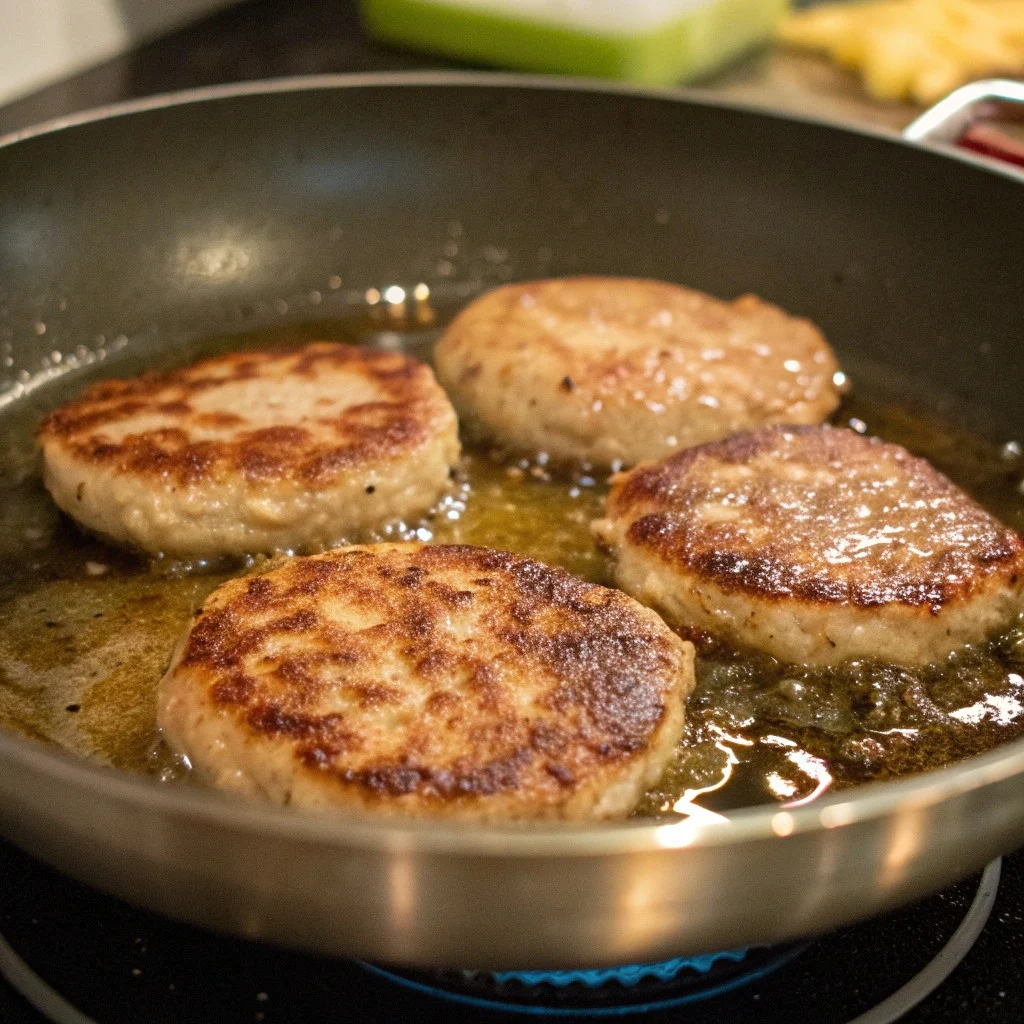
Pan frying exposes food to intense, direct heat at the surface.
This causes:
- Rapid moisture loss on the outside
- Early surface firming
- Crisp or browned exteriors
Because the interior heats more slowly, pan frying naturally creates texture contrast. This contrast is why pan-fried food often feels more satisfying.
However, if surface heat is too high or timing is off, moisture loss becomes excessive and texture hardens instead of crisping.
4️⃣ Baking Dries the Outside Before the Inside
Baking surrounds food with dry heat.
This leads to:
- Gradual moisture evaporation
- Uniform surface drying
- Less aggressive browning compared to frying
Baked food often feels firmer and drier on the outside, especially when cooked for long durations. Without added fat or internal moisture, baking can easily remove too much water.
This explains why baked food can feel evenly cooked but less juicy.
5️⃣ Boiling Softens by Trapping Moisture
Boiling transfers heat through water, not air.
Because water surrounds the food:
- Moisture loss is minimal
- Structure weakens instead of setting
- Texture becomes soft or swollen
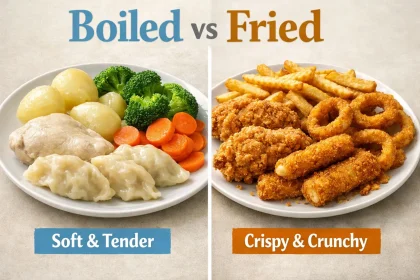
Boiled food rarely develops contrast. Instead, it becomes uniform. This is why boiled food often feels filling but less exciting to eat.
6️⃣ Air Frying Removes Moisture Faster Than Expected
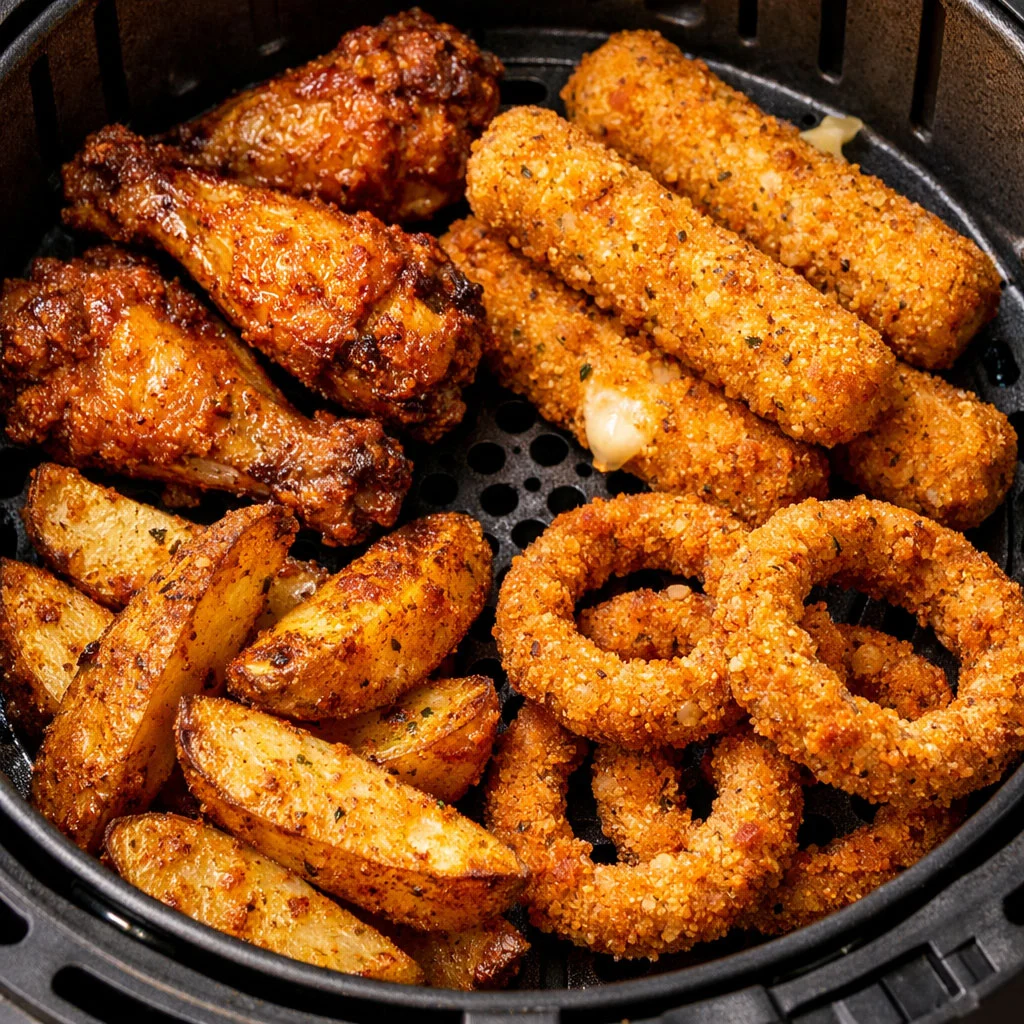
Air frying combines high heat with rapid air circulation.
This creates:
- Very fast surface dehydration
- Early crust formation
- Higher risk of internal dryness
Unlike deep frying, air frying does not surround food with oil. Without that protective layer, moisture escapes more aggressively.
This is why air-fried food:
- Feels crisp quickly
- Dries out easily if timing is off
- Requires more moisture awareness
This explains why surface crispiness feels rewarding even when internal moisture drops, as discussed in why crispy food feels more satisfying.
7️⃣ Cooking Methods Shape Perceived Dryness
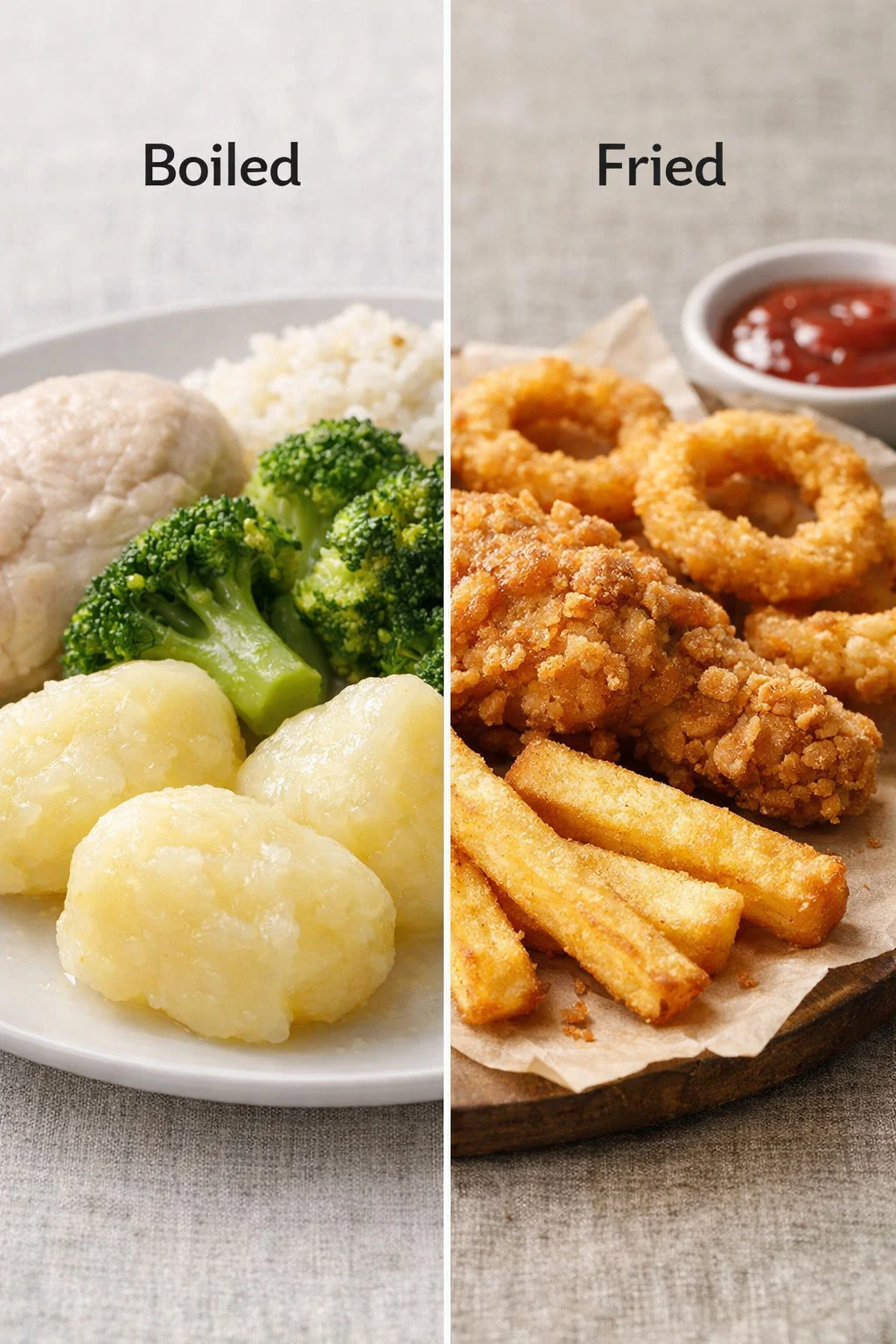
Dryness is not just about water loss.
It is about how texture feels while chewing.
- Fried food may lose surface moisture but still feel juicy
- Baked food may retain water but feel firm
- Boiled food may feel soft but unstructured
Perceived dryness is created by structure, not moisture alone.
This is why two foods with similar water content can feel completely different in the mouth.
8️⃣ Method Choice Determines Texture Fatigue
Texture fatigue happens when food:
- Requires excessive chewing
- Lacks contrast
- Feels repetitive bite after bite
Methods that over-set structure (over-baking, over-air-frying) increase fatigue. Methods that preserve contrast reduce it.
Good texture balances:
- Resistance
- Breakdown
- Moisture release
Cooking methods decide whether that balance exists.
9️⃣ Choosing the Right Method Is About Outcome, Not Rules
There is no “best” cooking method.
There is only:
- Desired texture
- Moisture tolerance
- Structural balance
Choosing a method should answer:
- Do I want contrast or uniformity?
- Do I want crispness or softness?
- How forgiving is this ingredient?
Once you understand how methods affect texture, cooking becomes predictable.
🧠 Summary
Cooking methods change texture by controlling how heat enters food and how moisture moves. Frying builds surface structure, baking dries gradually, boiling softens by trapping moisture, and air frying accelerates dehydration. Texture quality depends on balance, not the method itself.
FAQ
Why does air-fried food feel dry?
Air frying uses rapid hot air circulation that removes surface moisture quickly. Without oil acting as a barrier, interior moisture escapes more easily, which can create a drier texture.
Is boiling the healthiest method for texture?
Boiling preserves moisture and avoids added fats, but it often reduces textural contrast. While it can be nutritionally efficient, it may feel less satisfying due to uniform softness.
Why does fried food feel juicier than baked food?
Oil creates a surface barrier that slows moisture loss and enhances mouthfeel. Even when total water content is similar, fat can increase the perception of juiciness.
Which method is best for texture balance?
Cooking methods that create contrast, such as controlled pan frying, searing followed by oven finishing, or hybrid techniques, often deliver the most balanced and satisfying texture.