
Why Understanding Digestion Matters More Than People Think
Many people search for answers to bloating, gas, discomfort, or irregular digestion without truly understanding how digestion works from start to finish. Symptoms are often blamed on a single food or supplement, when the real issue lies in how the digestive system processes food over time.
Digestion is not a single event. It is a coordinated process involving multiple organs, enzymes, hormones, and gut bacteria. Each stage depends on the one before it. When something breaks down along the way, symptoms appear.
Before identifying trigger foods, it helps to understand how digestion actually works from the moment food enters the body to when nutrients are absorbed.
This guide explains digestion in a clear, structured way. You will learn how food moves through the body, how nutrients are absorbed, and why common digestive symptoms occur even when eating “healthy” foods.
The Purpose of Digestion in the Human Body
Digestion exists for one primary reason – to convert food into usable energy and nutrients that the body can absorb.
Food is not useful to the body in its original form. Even nutrient-rich foods must be broken down into smaller components before they can pass through the intestinal wall and enter the bloodstream.
The digestive system performs three essential functions:
- Mechanical breakdown of food
- Chemical breakdown using enzymes and acids
- Absorption of nutrients and elimination of waste
When any of these steps are inefficient, digestion becomes incomplete, and discomfort often follows.
Overview of the Digestive System
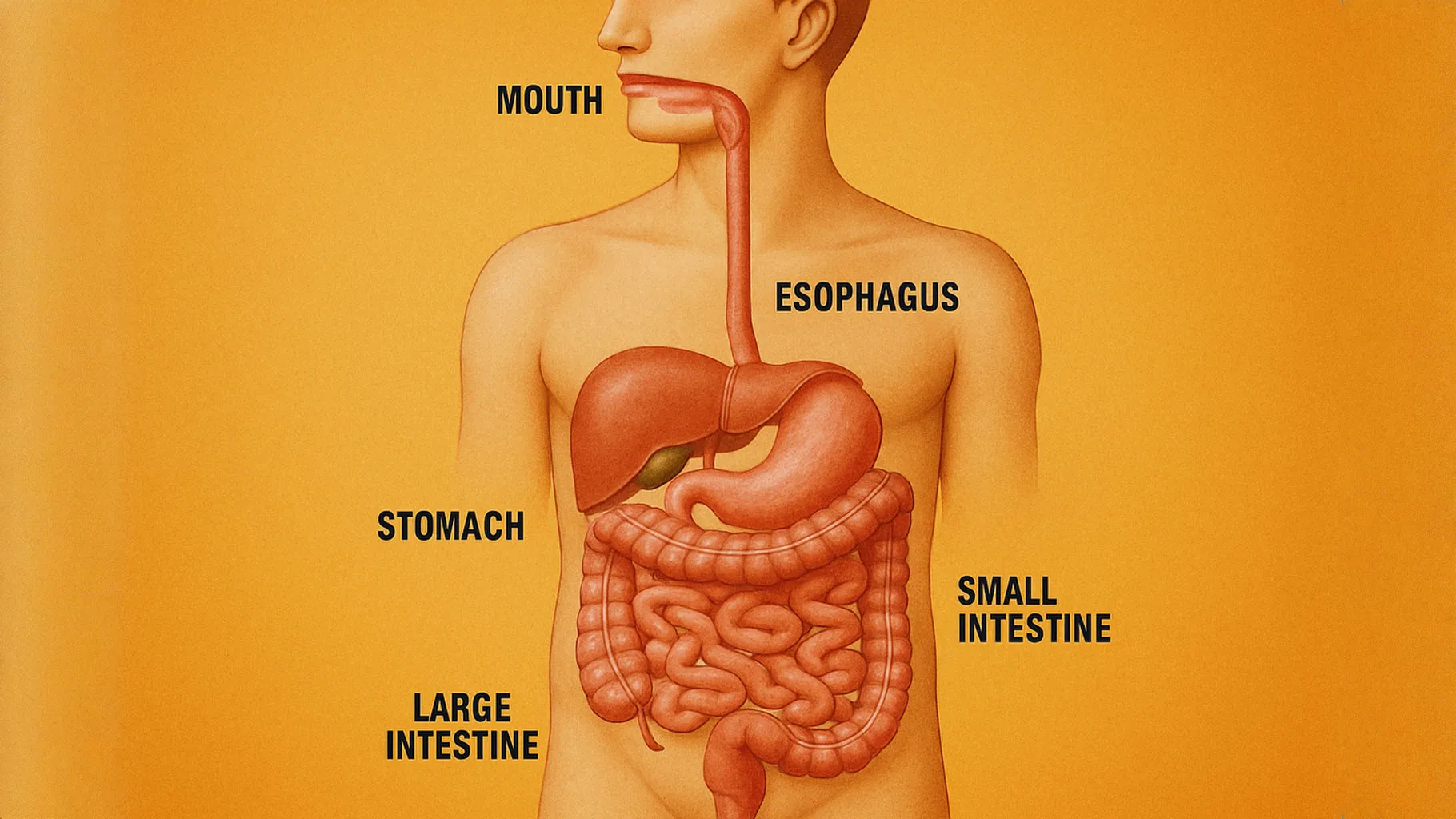
The digestive system is a continuous pathway that begins at the mouth and ends at the rectum. Along the way, several organs assist with digestion by releasing enzymes, bile, and hormones.
Main digestive organs
- Mouth
- Esophagus
- Stomach
- Small intestine
- Large intestine (colon)
- Rectum
Supporting organs
- Salivary glands
- Liver
- Gallbladder
- Pancreas
Each organ plays a specific role. Digestion is not limited to the stomach, which is a common misconception.
Stage 1 – Digestion Begins in the Mouth
Digestion starts before food reaches the stomach.
Mechanical digestion
Chewing breaks food into smaller pieces, increasing surface area. This allows enzymes to work more effectively later in the digestive process.
Eating too quickly reduces chewing time and places extra strain on the stomach and intestines.
Chemical digestion in the mouth
Saliva contains enzymes, particularly amylase, which begins breaking down carbohydrates. This means digestion starts within seconds of food entering the mouth.
Poor chewing can lead to:
- Increased bloating
- Heavier stomach workload
- Slower digestion
Stage 2 – Food Travels Through the Esophagus
After swallowing, food moves down the esophagus through rhythmic muscle contractions called peristalsis.
This process is automatic and does not rely on gravity. That is why swallowing works even when lying down.
At the end of the esophagus is a valve called the lower esophageal sphincter. Its job is to prevent stomach acid from moving upward.
When this valve weakens, acid reflux or heartburn may occur.
Stage 3 – The Stomach’s Role in Digestion
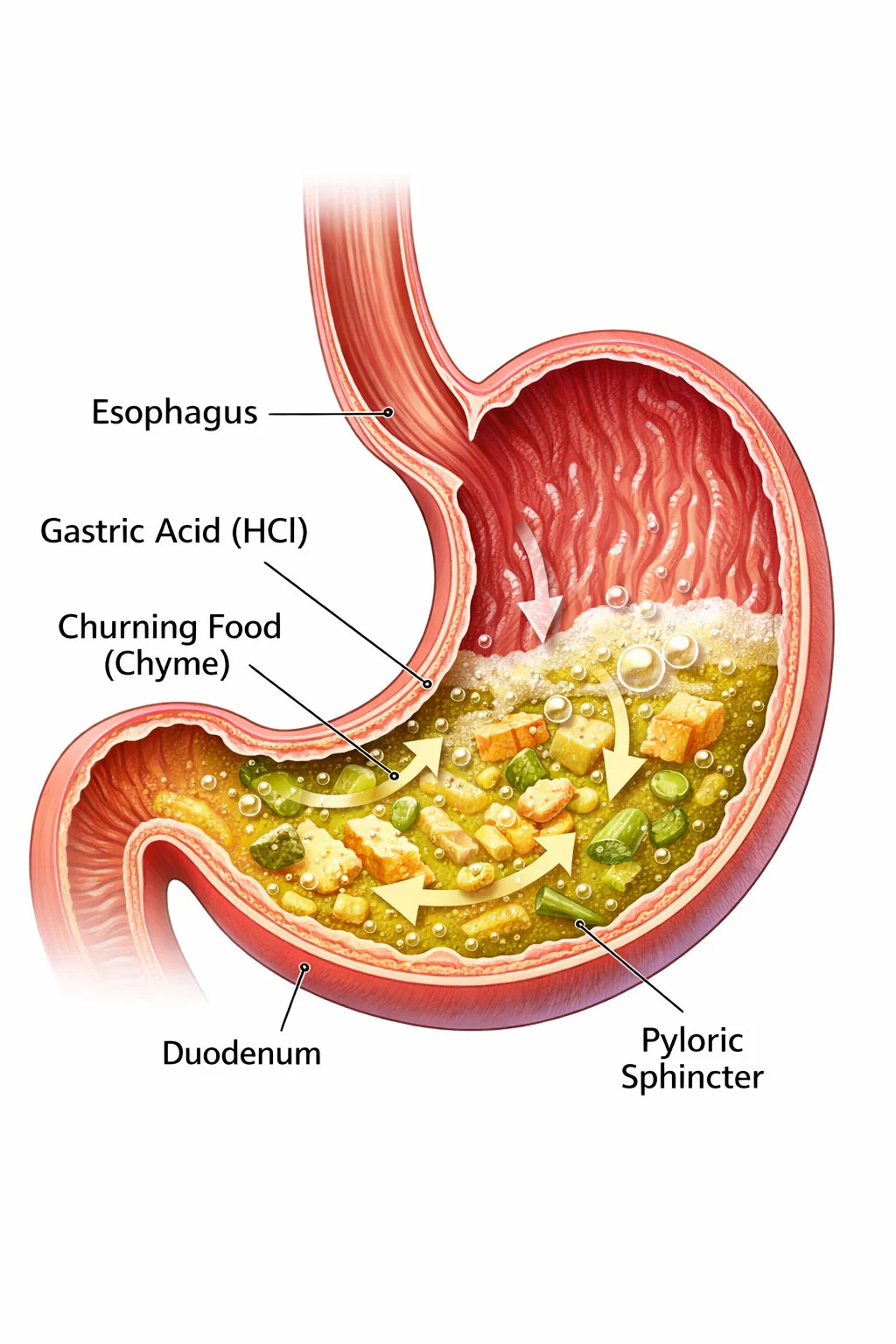
The stomach acts as a mixing and processing chamber.
What happens in the stomach
- Food is mixed with gastric acid
- Proteins begin breaking down
- Harmful bacteria are neutralized
Stomach acid is essential. Low stomach acid is more common than excess acid and can cause symptoms such as bloating, nausea, and poor nutrient absorption.
Food typically remains in the stomach for 2 to 4 hours, depending on the meal composition.
Stage 4 – The Small Intestine and Nutrient Absorption
The small intestine is where most digestion and absorption occurs.
It is divided into three sections:
- Duodenum
- Jejunum
- Ileum
Role of digestive enzymes
The pancreas releases enzymes that break down:
- Carbohydrates into sugars
- Proteins into amino acids
- Fats into fatty acids
The liver produces bile, which helps digest fats. The gallbladder stores and releases bile when needed.
Nutrient absorption
The inner lining of the small intestine contains tiny structures called villi. These increase surface area and allow nutrients to pass into the bloodstream.
Poor absorption may result in:
- Fatigue
- Weight changes
- Vitamin deficiencies
Stage 5 – The Large Intestine and Gut Bacteria
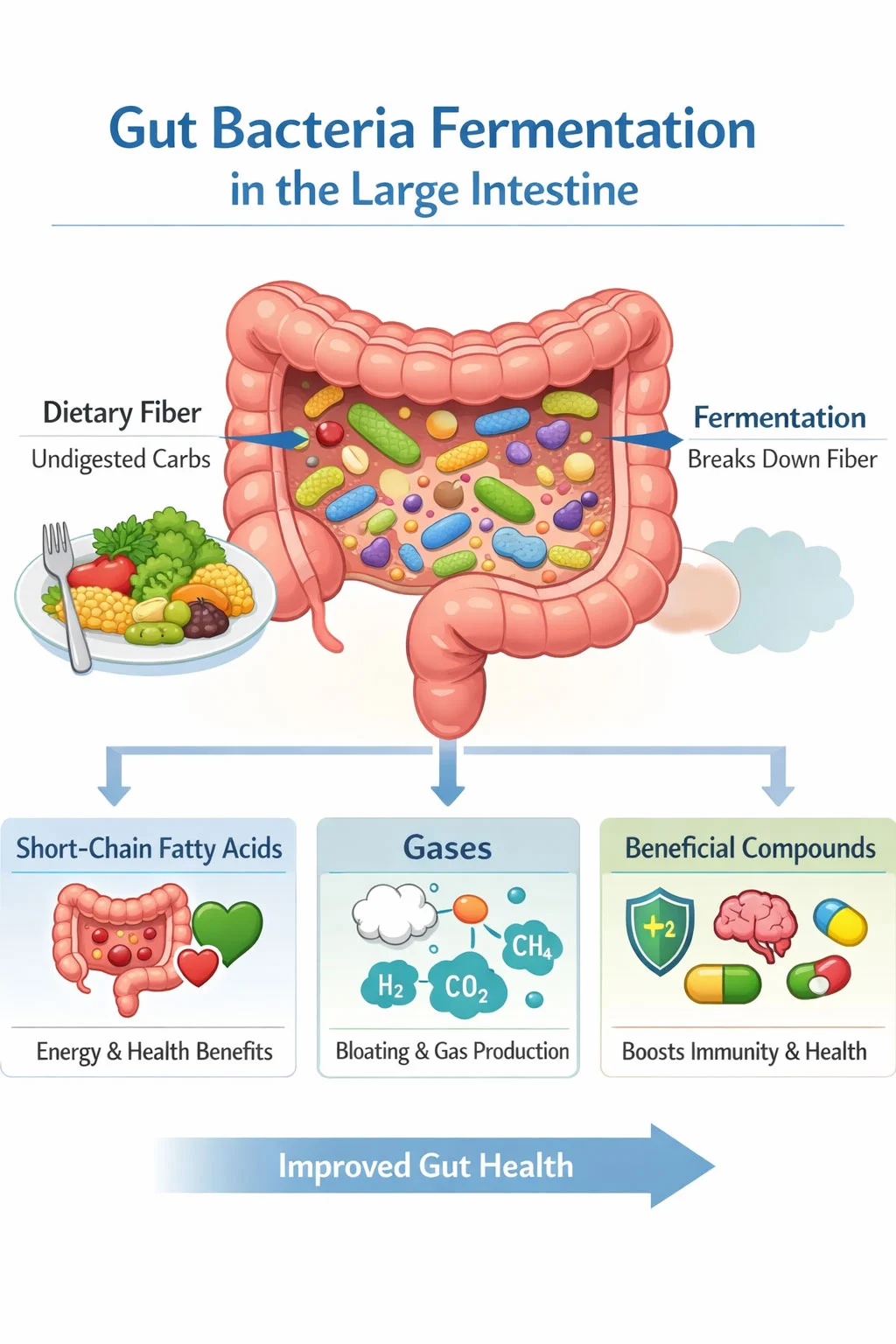
After nutrients are absorbed, remaining material enters the large intestine.
Functions of the large intestine
- Absorbs water and electrolytes
- Forms stool
- Houses gut bacteria
Gut bacteria ferment undigested carbohydrates. This process produces gas. Some gas is normal, but excessive fermentation can cause bloating and discomfort.
This stage is where many bloating symptoms originate.
Stage 6 – Waste Elimination
The final stage of digestion involves storing and eliminating waste.
Regular bowel movements indicate that digestion is functioning smoothly. Infrequent or irregular elimination may signal slow digestion, dehydration, or dietary imbalance.
Why Digestion Problems Often Feel Unpredictable
Digestion is influenced by many factors beyond food itself:
- Stress levels
- Sleep quality
- Hydration
- Eating speed
- Gut bacteria balance
This explains why the same food may cause symptoms on one day but not another.
How Digestion Timing Affects Bloating and Discomfort
Many digestive symptoms are not caused by what you eat, but by how fast or slow food moves through your digestive system.
Digestive timing refers to how long food stays in each stage of digestion. When food remains too long in certain areas, fermentation increases. When it moves too quickly, nutrients are poorly absorbed.
Both situations can lead to bloating.
Average digestion timeline
- Mouth and esophagus – seconds to minutes
- Stomach – 2 to 4 hours
- Small intestine – 3 to 6 hours
- Large intestine – 12 to 48 hours
This timeline varies between individuals, and even day to day.
Slow Digestion vs Fast Digestion
When digestion is too slow
Slow digestion allows undigested food to remain in the gut longer than intended. This increases bacterial fermentation, especially in the large intestine.
Common signs of slow digestion include:
- Persistent bloating
- Feeling full for hours after eating
- Constipation
- Heaviness in the abdomen
Low stomach acid, insufficient enzymes, dehydration, and stress can all slow digestion.
When digestion is too fast
Fast digestion reduces the time available for nutrient absorption. Food passes through the intestines before it is fully processed.
Common signs include:
- Loose stools
- Nutrient deficiencies
- Fatigue after meals
Both extremes disrupt balance and contribute to discomfort.
Why Certain Foods Ferment More Than Others
Not all foods digest at the same rate.
Some carbohydrates are not fully digested in the small intestine. When they reach the large intestine, gut bacteria ferment them, producing gas.
Examples include:
- Certain fibers
- Sugar alcohols
- Lactose (in sensitive individuals)
- Fructose (when poorly absorbed)
Fermentation itself is not harmful. Gas becomes a problem when it accumulates faster than the body can release it.
This is why bloating often feels worse hours after eating, not immediately.
Many digestive symptoms become easier to understand when you know why certain foods ferment differently in the gut, which is why identifying foods that commonly cause bloating can be helpful.
The Role of Gut Bacteria in Digestion
Gut bacteria are essential for digestion, immune function, and nutrient production. However, balance matters.
Healthy gut bacteria help:
- Break down fibers
- Produce short-chain fatty acids
- Support regular bowel movements
Imbalanced gut bacteria may cause:
- Excess gas production
- Irregular digestion
- Increased bloating
Diet changes, antibiotics, stress, and illness can alter gut bacteria composition.
How Stress Directly Disrupts Digestion
Digestion does not operate independently from the nervous system.
When the body is under stress, blood flow shifts away from digestion toward muscles and alertness. This slows digestive processes.
Stress can reduce:
- Stomach acid production
- Digestive enzyme release
- Intestinal movement
This explains why digestive symptoms often worsen during stressful periods, even without dietary changes.
Why “Healthy” Foods Can Still Cause Bloating
Many people are confused when nutritious foods trigger digestive discomfort.
This usually happens because:
- Fiber intake increases too quickly
- Raw foods digest slower than cooked foods
- Individual tolerance varies
Digestive systems adapt over time. Sudden changes, even positive ones, can temporarily disrupt digestion.
Digestion and Water Balance
Water plays a crucial role in digestion.
Adequate hydration helps:
- Enzymes function properly
- Stool remain soft
- Food move smoothly through the intestines
Drinking too little water can worsen constipation and bloating. Drinking excessive water during meals may dilute stomach acid in sensitive individuals.
Balance is key.
When Digestive Symptoms Are a Warning Sign
Occasional bloating is normal. However, persistent or severe symptoms may indicate an underlying issue.
Signs that warrant medical attention include:
- Unexplained weight loss
- Persistent abdominal pain
- Blood in stool
- Ongoing diarrhea or constipation
Understanding digestion helps identify when symptoms are normal versus when further evaluation is needed.
How Digestion Connects to Bloating Articles on This Site
Many bloating-focused articles explain which foods trigger symptoms. This digestion overview explains why those foods cause reactions in the body.
Without understanding digestion mechanics, bloating advice often feels inconsistent or incomplete.
This page serves as the foundation for all digestion and bloating-related content.
Practical Habits That Support Healthy Digestion
Understanding digestion is important, but daily habits determine how well the digestive system actually functions. Small behavioral changes often have a bigger impact than removing individual foods.
Eating speed matters more than most people realize
Digestion begins in the mouth. Eating too quickly reduces chewing time and signals the stomach to work harder with fewer resources.
Helpful habits include:
- Chewing food thoroughly
- Putting utensils down between bites
- Avoiding distractions while eating
Slower eating improves enzyme activity and reduces air swallowing, which can directly reduce bloating.
Meal size and digestion capacity
The digestive system has a limited processing capacity at any given time.
Large meals require more stomach acid, enzymes, and intestinal movement. When intake exceeds capacity, digestion becomes inefficient.
This often leads to:
- Heaviness after meals
- Delayed bloating
- Acid discomfort
Smaller, balanced meals are easier to digest and support consistent energy levels.
How Food Combinations Affect Digestion
Different macronutrients digest at different speeds.
- Proteins digest slower than carbohydrates
- Fats slow stomach emptying
- Fiber adds bulk and slows movement
When meals are excessively heavy in multiple slow-digesting components, digestion time increases significantly.
This does not mean food combining rules must be strict, but awareness helps explain why certain meals feel heavier than others.
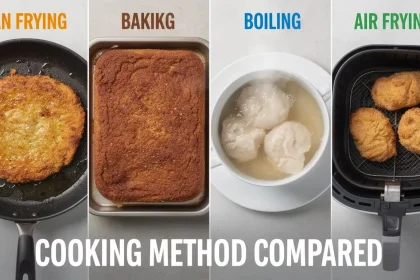
Cooking Methods and Digestive Ease
Cooking changes food structure.
Cooked foods are generally easier to digest than raw foods because heat breaks down plant fibers and softens proteins.
People with sensitive digestion often tolerate:
- Steamed vegetables better than raw
- Soups better than dry meals
- Warm foods better than cold foods
This is not a rule, but a common pattern observed in digestive comfort.
Fiber Intake and Digestive Adaptation
Fiber supports digestion, but increases should be gradual.
Sudden increases in fiber intake can overwhelm gut bacteria and increase gas production.
A balanced approach includes:
- Mixing soluble and insoluble fiber
- Increasing fiber slowly
- Drinking adequate water
Fiber tolerance improves over time as the gut adapts.
The Role of Digestive Enzymes
Digestive enzymes break food into absorbable components.
Enzyme activity depends on:
- Stomach acid levels
- Pancreatic function
- Adequate chewing
Symptoms like bloating after protein-rich meals or fatigue after eating may reflect enzyme insufficiency rather than food intolerance.
Sleep and Digestion
Sleep quality affects digestion more than most people expect.
Poor sleep disrupts hormonal balance and slows intestinal movement the following day.
Chronic sleep disruption may lead to:
- Irregular bowel movements
- Increased bloating
- Reduced appetite regulation
Supporting digestion includes prioritizing consistent sleep patterns.
Movement and Digestive Flow
Gentle movement supports digestion.
Walking after meals helps stimulate intestinal contractions and reduces gas buildup.
Prolonged sitting, especially after eating, slows digestion and increases pressure in the abdomen.
Even short walks can improve digestive comfort.
Common Digestion Myths That Create Confusion
Many digestion myths oversimplify complex processes.
Examples include:
- “All bloating is food intolerance”
- “Acid reflux always means too much acid”
- “Fiber fixes all digestive problems”
In reality, digestion involves multiple systems working together. Single-cause explanations rarely tell the full story.
How to Use This Digestion Knowledge Practically
Understanding digestion helps you interpret symptoms accurately.
Instead of asking only “What food caused this?”, better questions include:
- Was digestion rushed or stressed?
- Was the meal size appropriate?
- Was hydration sufficient?
- Was sleep adequate the night before?
This perspective reduces frustration and trial-and-error dieting.
How to Identify Where Digestion Breaks Down
Digestive symptoms often repeat in patterns. Learning to recognize where digestion struggles helps reduce unnecessary food restriction and confusion.
Symptoms linked to early digestion stages
Issues in the mouth or stomach may show up as:
- Feeling overly full shortly after eating
- Frequent burping
- Discomfort within 30 to 60 minutes
These symptoms often relate to eating speed, stress, or low stomach acid rather than the food itself.
Symptoms linked to small intestine digestion
Problems in the small intestine may include:
- Fatigue after meals
- Nutrient deficiencies
- Loose stools or irregular digestion
This stage relies heavily on enzymes and bile. When these are insufficient, food is not fully broken down.
Symptoms linked to large intestine fermentation
Most bloating originates here.
Common signs include:
- Bloating several hours after eating
- Gas and pressure in the abdomen
- Symptoms worsening later in the day
This usually reflects fermentation of undigested carbohydrates rather than immediate food intolerance.
Why Digestion Is Not a One-Size-Fits-All Process
Digestive capacity varies between individuals.
Factors that influence digestion include:
- Age
- Gut bacteria composition
- Hormonal balance
- Stress exposure
- Long-term eating patterns
This explains why two people can eat the same meal with very different outcomes.
How This Digestion Overview Supports Bloating and Food Articles
Many food-related articles focus on identifying trigger foods. This page explains the underlying digestive mechanics that make those foods problematic in certain situations.
Understanding digestion reduces unnecessary restriction and improves long-term digestive comfort.
This page should be treated as a foundational digestion reference for all bloating-related content.
Clear Takeaway Summary
Digestion works best when:
- Food is chewed thoroughly
- Meals match digestive capacity
- Stress is managed
- Hydration is adequate
- Gut bacteria remain balanced
Bloating is often a signal of digestive imbalance, not failure.
Learning how digestion actually works provides clarity, confidence, and better decision-making.
FAQ
How long does digestion take from start to finish?
Digestion typically takes between 24 and 48 hours, depending on the individual, hydration level, activity, and the type of food consumed. Fiber-rich meals may move differently compared to high-fat or protein-heavy meals.
Why do I feel bloated hours after eating?
Delayed bloating often occurs when undigested carbohydrates reach the large intestine and undergo fermentation by gut bacteria, producing gas. This process typically happens several hours after a meal.
Can stress affect digestion even if diet stays the same?
Yes. Stress can slow stomach emptying, alter gut motility, and reduce digestive enzyme and acid production. Even with the same diet, digestive comfort can change under prolonged stress.
Is bloating always caused by food intolerance?
No. Bloating can also be influenced by eating speed, hydration levels, portion size, meal timing, gut bacteria balance, and stress. Food intolerance is only one of several possible contributors.