


Anemia and depression can both leave you exhausted and unable to concentrate, and they can occur together. Shortness of breath with ordinary activity or unusual bleeding makes a medical assessment especially important, while persistent loss of interest or hopelessness needs attention even if an iron test is abnormal. A symptom checklist alone cannot distinguish them; your history, a mental health assessment, and appropriate blood tests can.
If you have already been diagnosed with depression, new physical symptoms still deserve their own assessment. If you have been diagnosed with anemia, that result does not make a sustained change in mood or thoughts of self-harm less urgent.
Depression, anemia, or both: a quick comparison
| Pattern | Clues to discuss | What the clue cannot prove |
|---|---|---|
| More suggestive of depression | Low mood or markedly reduced interest most of the day, nearly every day, for at least two weeks; hopelessness, guilt, or thoughts of death. | Depression may coexist with low iron or another physical illness. |
| More suggestive of anemia or iron deficiency | New breathlessness on exertion, reduced exercise tolerance, dizziness, unusual pallor, craving ice, or restless legs; heavy periods or other blood loss. | None is specific. A normal appearance does not rule out anemia. |
| Common to both | Fatigue, poor concentration, sleep disruption, headaches, irritability, and difficulty getting things done. | The intensity of fatigue cannot identify its cause. |
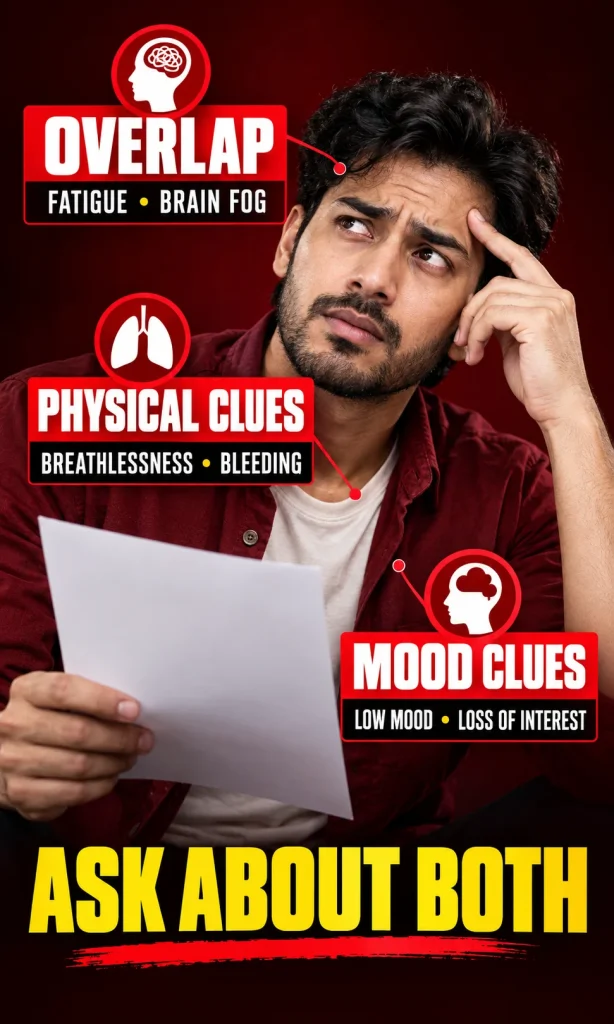
The National Institute of Mental Health’s description of depression includes low energy and concentration problems alongside mood and interest changes. The World Health Organization’s anemia guidance explains that low hemoglobin reduces the blood’s capacity to carry oxygen. Those facts explain some overlap; they do not turn a symptom pattern into a diagnosis.
Why the two conditions can feel similar
Hemoglobin in red blood cells carries oxygen. If hemoglobin falls, ordinary tasks can take more effort and may bring on breathlessness or a racing heartbeat. Struggling to do familiar activities can affect mood, but that experience alone does not establish a depressive disorder.
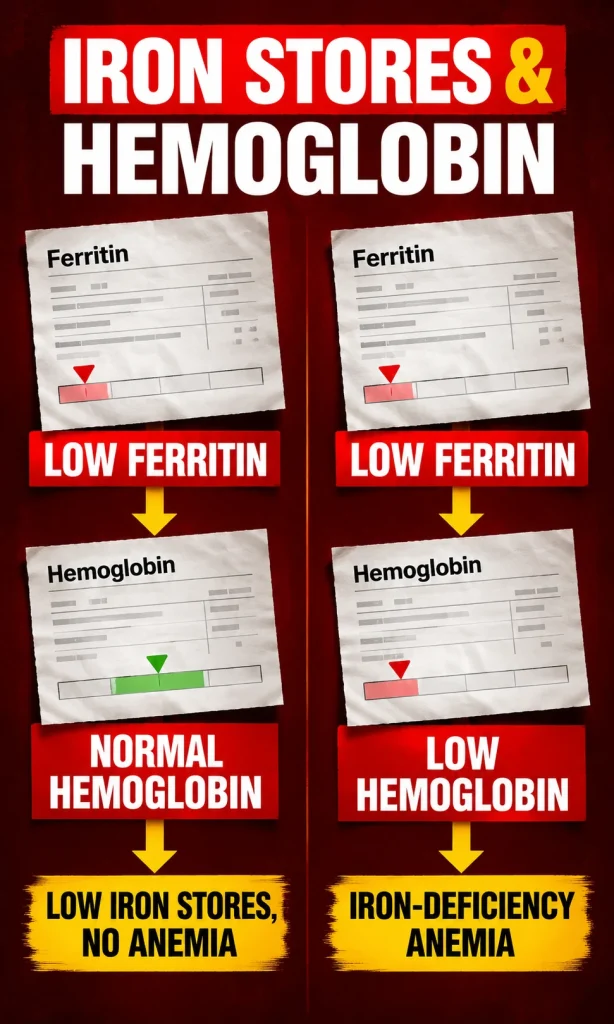
Iron deficiency may begin before hemoglobin falls below the laboratory’s anemia threshold. Ferritin reflects stored iron; someone can therefore have a normal complete blood count and depleted iron stores. Studies of nonanemic women have shown that iron treatment can improve fatigue in some people with low ferritin, but fatigue improvement should not be described as proof that iron treats depression.
Iron also participates in several processes used by the nervous system. Proposed links with dopamine and serotonin are biologically plausible, yet a low ferritin result cannot explain an individual’s depression by itself. Observational studies can find anemia and depressive symptoms together without establishing which condition came first or whether another factor affected both.
What changes the decision to get tested?
- Possible blood loss: heavy menstrual bleeding, bleeding after childbirth or surgery, blood in stool, or repeated blood donation.
- Possible reduced absorption: a diagnosed gastrointestinal condition, prior gastrointestinal surgery, or symptoms that make malabsorption plausible.
- Physical change: new breathlessness on modest exertion, dizziness, reduced exercise capacity, or an unusual craving for ice.
- Persistent uncertainty: fatigue that remains substantial despite depression care, or symptoms that changed after a medication change.
These are reasons to discuss an assessment, not a way to diagnose iron deficiency at home. Other possibilities include sleep disorders, thyroid conditions, vitamin B12 deficiency, medication effects, and chronic disease. If a period of depression has changed appetite or food access, mention that history too; low intake may contribute, but a clinician still needs to identify the actual reason for a deficient result.
Which blood tests help, and what do they mean?
| Test | Useful question | Limit |
|---|---|---|
| Complete blood count (CBC) | Is hemoglobin low, and what do the red cell indices show? | Normal hemoglobin does not exclude low iron stores; low hemoglobin has causes other than iron deficiency. |
| Ferritin | Are iron stores depleted? | Inflammation can raise ferritin and mask deficiency. |
| Transferrin saturation and related iron tests | Is the iron available for use consistent with the wider clinical picture? | Serum iron varies and should not be interpreted alone. |
| Other tests when indicated | Could B12 deficiency, thyroid disease, inflammation, bleeding, or another condition explain symptoms? | Selection depends on history and examination, not a universal panel. |
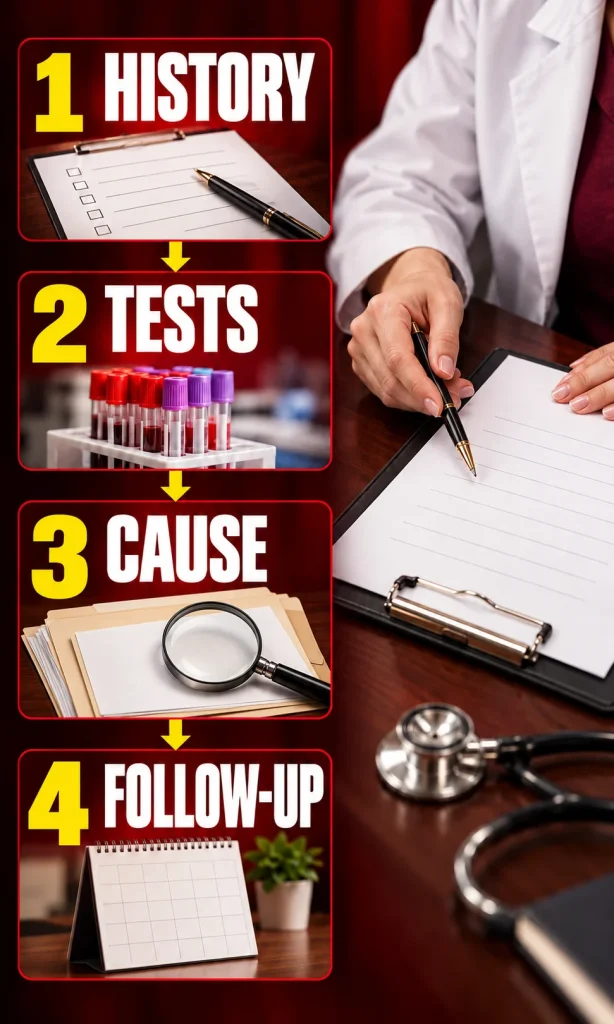
Ask a clinician whether a CBC and ferritin are appropriate for your situation, and whether transferrin saturation or further investigation would clarify an uncertain result. The WHO ferritin guideline explains why ferritin must be interpreted in context, particularly when inflammation is present. A number displayed inside a laboratory reference interval is not, by itself, a proven target for mental health.
There is no established “optimal ferritin level for depression.” Thresholds used to investigate iron deficiency depend on clinical setting and inflammation; they are not evidence that everyone should raise ferritin to 50, 100, or another fixed value for mood. Ask what your actual result, symptoms, and risk factors mean together instead of aiming at an online target.
Anemia & Mood Check
Organize what has changed, what to tell a clinician, and when help should be urgent.
No diagnosis or score
Select only what applies. The result stays in this browser and is not submitted to this site. Symptoms can have several causes.
Discussion notes
This summary cannot distinguish anemia from depression or recommend iron treatment. A clinician can evaluate both.
What does treatment evidence actually show?
In a randomized trial of nonanemic menstruating women with fatigue and ferritin below 50 micrograms per liter, oral iron improved fatigue more than placebo over twelve weeks. The trial did not find a statistically significant improvement in its depression outcome. Its selection criteria and results cannot be generalized to everyone with depression or to people whose iron status is normal.
A systematic review of psychiatric and cognitive outcomes in nonanemic iron deficiency reports a developing and mixed evidence base across different groups and treatments. Separately, observational studies report associations between anemia and depression; association does not prove that correcting anemia will resolve major depression. The fairest expectation is that treating confirmed deficiency can help the deficiency and may relieve some related fatigue, while depression may still need its own care.
Response is individual. Hemoglobin, iron stores, and symptoms may change on different schedules, so avoid a promised “mood recovery in two weeks.” A clinician can set a follow-up interval based on the severity and cause of deficiency, the chosen treatment, and whether the initial response is as expected.
What to do if your results show iron deficiency
First identify why iron is low. Heavy periods and insufficient intake are possible explanations, but gastrointestinal bleeding and impaired absorption also matter, particularly when deficiency is unexplained or keeps returning. The British Society of Gastroenterology’s clinical guideline describes why investigating the cause and checking response are parts of treatment, not optional extras.
Oral iron is commonly used when appropriate. Side effects can include nausea, constipation, and stomach discomfort; changing the formulation or dosing schedule is a discussion to have with a clinician rather than a reason to abandon follow-up. The American Gastroenterological Association’s practice update discusses oral dosing and circumstances in which intravenous iron may be considered, including intolerance or an inadequate rise in iron stores. IV iron is a medical treatment, not a faster antidepressant.
Food can support treatment: iron-containing foods include meat, seafood, beans, lentils, and iron-fortified foods. Vitamin C alongside plant sources can improve absorption, while some beverages and supplements can interfere when taken at the same time as iron. Do not start long-term high-dose iron because of mood symptoms without confirming a reason for it; excess iron is harmful, and self-treatment can delay diagnosis of bleeding or another illness.
What if depression symptoms continue after iron improves?
Continue a separate review of mood, sleep, functioning, medication effects, and safety. The existence of a physical contributor does not erase depression, and a diagnosis of depression does not justify ignoring a physical contributor. If a prescribed antidepressant seems to coincide with a change in fatigue, talk with the prescriber before changing or stopping it.
If you feel persistently hopeless, lose interest in most activities, or cannot manage daily responsibilities, ask for mental health assessment even while laboratory work is pending. Our guides to physical symptoms of depression, depression fatigue versus normal tiredness, and depression and memory problems explain other parts of the pattern.
When to seek help promptly
Seek urgent medical assessment for significant shortness of breath at rest, fainting, chest pain, or ongoing heavy bleeding. If you may act on thoughts of suicide or cannot stay safe, contact local emergency services or a crisis service now and stay with someone you trust. These situations need direct care, regardless of what a self-check or prior blood test suggests.
Questions people ask
Can low ferritin affect how I feel when hemoglobin is normal?
Yes. Iron stores can be low before hemoglobin reaches the anemia range, and low iron can contribute to fatigue in some people. A ferritin result cannot establish that iron deficiency caused depression, so review both symptoms and the result with a clinician.
What ferritin level is best for depression?
There is no validated ferritin target that treats depression for everyone. Clinicians interpret ferritin in the context of inflammation, other iron tests, symptoms, and the reason iron may be low. A goal quoted online, such as 50 or 100, should not replace that assessment.
How long does iron take to help low mood?
There is no reliable mood timeline. Some people with confirmed deficiency notice improved fatigue over weeks, while mood symptoms may have other causes and may persist. Arrange the follow-up testing and symptom review recommended for your treatment rather than using a promised date.
Should I start iron if I feel depressed?
Do not use iron as a self-prescribed depression treatment. Ask whether your history calls for a CBC, ferritin, and other tests, then discuss a treatment plan if deficiency is found. Unnecessary iron may cause harm and can obscure the cause of symptoms.
Can antidepressants cause anemia?
Medication history is one part of evaluating unexplained fatigue or bleeding, but it is not safe to infer that an antidepressant caused anemia from symptoms alone. Tell the prescriber about any new bleeding, fatigue, and other medicines you take. Do not stop prescribed medication without advice.
Can anemia and depression happen at the same time?
Yes. One diagnosis does not exclude the other, and improvement in one does not guarantee recovery from the other. A practical assessment addresses physical symptoms, blood loss or other causes of anemia, mood changes, functioning, and immediate safety together.
The next useful step
Write down when fatigue, low mood, breathlessness, and any bleeding began, plus relevant medication changes and previous results. Take that account to a clinician and ask which tests and mental health assessment fit your situation. This article is educational and cannot diagnose or replace individual medical care.