
You finish a conversation and realise you cannot remember half of what was said. You open your phone to do something and forget why you picked it up. A familiar name refuses to come to mind, instructions have to be read several times, and work that once stayed organised in your head starts depending on reminders. When this happens repeatedly during depression, it can be unsettling enough to make you wonder whether something more serious is happening to your memory.
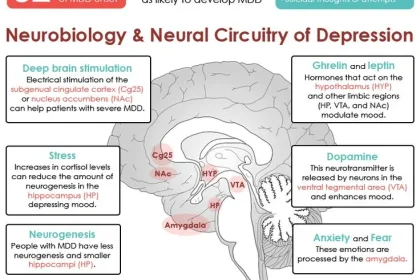
Depression can affect memory, but the experience is often more complicated than information simply disappearing. Memory depends on attention, learning, working memory, processing speed and retrieval. Depression can interfere with several of those processes at the same time, which means the problem may begin before a memory is ever firmly stored. The National Institute of Mental Health includes difficulty concentrating, remembering and making decisions among the recognised symptoms of depression, showing that cognitive changes can be part of the condition rather than a separate complaint.
For some people, the change is mild and mostly irritating. For others, it affects meetings, study, household responsibilities, conversations and confidence in their own abilities. There is also an important boundary to keep in mind: depression can contribute to forgetfulness, but a new or worsening memory problem should not automatically be explained by depression. Sleep disorders, medication effects, alcohol or other substances, nutritional deficiencies, thyroid problems, neurological conditions and other illnesses can produce overlapping symptoms.
The most useful question, therefore, is usually more specific than “Is my memory getting worse?” It is: Which part of remembering seems to be breaking down, and what else is happening at the same time?
Can Depression Cause Memory Problems?
Yes. Depression can make it harder to concentrate, learn new information, keep information active in working memory and retrieve something when you need it. A 2024 systematic review and meta-analysis of neuropsychological testing in major depressive disorder found cognitive impairment across several domains, supporting the clinical experience that depression can affect more than emotional state alone.
That does not mean everyone with depression develops the same kind or severity of cognitive difficulty. One person may mainly lose concentration while reading. Another may remember older information easily but struggle to hold onto something they were told five minutes ago. Someone else may know what they want to say but need noticeably longer to retrieve the word. Depression can create several routes to the same everyday complaint: “I keep forgetting things.”
This distinction matters because the word memory can hide what is actually happening. Imagine that someone tells you an appointment time while you are exhausted, preoccupied with a problem and mentally replaying a difficult conversation. You may hear the words without giving them enough attention for the information to become strongly encoded. When the appointment time cannot be recalled later, the experience feels like memory failure even though the difficulty started with attention.
Depression can also affect the speed at which information is processed. If thoughts are moving more slowly, following a fast conversation, switching between tasks or remembering the next step in a sequence becomes harder. Research has found cognitive impairment across several domains in major depressive disorder, supporting the clinical experience that depression can affect attention, learning, memory and other areas of mental performance.
What Can Depression-Related Forgetfulness Feel Like?

The changes are often most obvious during ordinary activities. Someone may reread a page because very little seemed to register the first time, forget part of a conversation soon after it happened, leave tasks unfinished because they lost track of the next step or repeatedly search for objects that they normally put in predictable places. Work meetings become more demanding because listening, organising ideas and remembering what needs to happen afterward all compete for the same limited attention.
You may also notice difficulty recalling names, appointments, passwords or recent instructions; losing your train of thought while speaking; needing more written reminders than before; forgetting why you entered a room; or finding that interruptions completely erase what you were doing. These experiences can become especially distressing when they are unusual for you. A person who has always relied on a strong memory may interpret the change as evidence that they are becoming incompetent, which can deepen self-criticism and make concentration even harder.
Memory performance can also become inconsistent. You might struggle to recall something when directly asked, then remember it unexpectedly twenty minutes later. You may forget the details of a conversation but recognise them as soon as somebody provides a cue. That pattern can occur when retrieval has become inefficient rather than when the information has been completely erased.
The inconsistency itself is useful information. Instead of recording only “I forgot again,” it can help to notice whether the problem appears most strongly when you are tired, under pressure, multitasking, ruminating, sleeping poorly or trying to process several instructions at once. The circumstances surrounding a memory failure can reveal more than the failure alone.
Memory Is a Process, Not a Storage Box
It is tempting to imagine memory as a filing cabinet in which information either exists or does not. Human memory works through a sequence of processes, and difficulty anywhere along that sequence can affect what you eventually remember.
A practical way to understand the process is:
Attention -> Encoding -> Working memory -> Consolidation -> Retrieval
Attention determines what receives enough mental priority to be processed. Encoding turns what you notice into information the brain can represent and later recognise. Working memory keeps a small amount of information available while you use it. Consolidation helps stabilise information over time, and retrieval allows you to bring that information back when it is needed.
Depression can disturb more than one part of this sequence. That is why two people who both describe themselves as “forgetful” may actually be experiencing very different cognitive problems.
| Memory process | What difficulty may feel like | Everyday example |
|---|---|---|
| Attention | Information does not fully register | Someone gives you an instruction, but your attention drifts before you absorb it |
| Encoding | New information feels vague almost immediately | You meet someone and cannot recall the name moments later |
| Working memory | Information disappears while you are still using it | You begin a multi-step task and forget the next step halfway through |
| Consolidation | Recently learned information does not become stable | Material studied yesterday feels unexpectedly unfamiliar today |
| Retrieval | You know something but cannot access it when needed | A familiar name will not come to mind until well after the conversation |
This model also explains a common contradiction in depression: you can have a genuine memory complaint without every memory system being equally impaired. Long-established knowledge may remain readily available while recent conversations become difficult to retain. Recognition may work better than spontaneous recall. Quiet tasks may be manageable while conversations in busy environments become almost impossible to follow.
Understanding where the bottleneck occurs is more useful than treating every forgotten detail as proof that memory itself is disappearing.
Why Does Depression Make It Harder to Remember?
There is no single mechanism that explains every cognitive symptom of depression. Mood symptoms, sleep disruption, fatigue, stress, rumination, slowed information processing and reduced executive control can interact, and the balance differs from person to person. The cognitive effects can therefore change across the course of a depressive episode and may not improve at exactly the same pace as sadness, motivation or sleep.
One important point is that cognitive symptoms deserve attention in their own right. Research examining the course of major depressive disorder suggests that cognitive symptoms do not always improve at the same rate as depressive symptoms. A systematic review examining cognitive change over the course of major depressive disorder found that improvement in cognition does not always closely match improvement in depressive symptoms.
That helps explain an experience that can otherwise feel confusing: someone may say, “Emotionally I am doing better, so why am I still struggling to think?” Mood recovery and cognitive recovery do not necessarily move on an identical timetable. Persistent cognitive symptoms should still be discussed with a healthcare professional, particularly when they interfere with work, study, driving, medication management or independent daily tasks.
Attention Can Fail Before Memory Gets a Chance
Think about the last time you tried to read while deeply worried about something. Your eyes may have travelled across every sentence, yet at the bottom of the page you realised that almost nothing had been retained. The page was visible, but attention was repeatedly leaving the material.
Depression can create a similar problem on a much larger scale. Rumination, guilt, hopelessness, physical discomfort and self-monitoring can compete with incoming information. Fatigue can further reduce the amount of sustained attention available. During a conversation, part of the mind may be listening while another part is replaying an earlier mistake or anticipating what could go wrong next.
When attention repeatedly disconnects, memory formation becomes patchy. You may remember the beginning of the conversation and lose the middle. You may remember that somebody asked you to do something without remembering exactly what they asked. Later, this fragmented record feels like a retrieval failure even though the missing section was never encoded strongly.
This is one reason a person can seem attentive from the outside while remembering very little afterward.
Working Memory Can Become Easier to Overload
Working memory is the temporary mental space used while information is actively being handled. You use it when you remember a phone number long enough to type it, hold the first part of a sentence while interpreting the end, keep several instructions in mind or mentally track where you are in a task.
Its capacity is limited even under ordinary conditions. Depression can make that limitation more noticeable, especially when concentration is poor or thinking has slowed. A sequence such as “reply to the email, attach the document, update the calendar and call the client” may once have been easy to hold mentally. During a depressive episode, reaching the second step may be enough for the remaining instructions to disappear.
Interruptions can become unusually costly for the same reason. Someone asks a question while you are preparing dinner, and afterward you cannot remember what ingredient came next. A notification appears during work, and returning to the original task feels as though the whole mental setup has vanished.
These moments are often interpreted as laziness, carelessness or lack of discipline. They can instead reflect a temporary cognitive workload problem, especially when they occur alongside other symptoms such as low mood, fatigue, slowed thinking, poor sleep and difficulty making decisions.
Rumination Uses Attention That Could Be Going Somewhere Else

Depression can make the mind extremely busy even while thinking feels slow. Rumination is a good example. A person may repeatedly examine why something went wrong, what they should have said, whether somebody is disappointed in them or what another failure might mean about their future.
That internal activity consumes cognitive resources. If much of your attention is already occupied by repetitive negative thought, less remains available for remembering a shopping list, following directions or keeping track of a conversation. The problem becomes especially noticeable when the situation requires switching attention quickly between internal thoughts and external information.
This is why depression-related memory difficulty can coexist with hours of intense thinking. Mental effort and useful information processing are not the same thing. A mind caught in repetitive analysis can feel exhausted while still failing to register what happened around it.
When repetitive thought is one of the strongest parts of the pattern, depressive rumination and overthinking may explain why attention keeps being pulled away from what you are trying to remember.
Why Can Recall Feel Slow Even When You Know the Answer?

Sometimes the information is available, but accessing it takes noticeably longer. You may recognise a person immediately but struggle to produce their name, or understand a question yet need extra time before an answer forms. Research in major depressive disorder has identified difficulties involving processing speed and sustained attention, which can help explain why ordinary conversations or multi-step tasks sometimes feel unusually demanding.
That experience points toward retrieval and processing speed rather than simple forgetting. Depression can also affect the speed at which information is processed. If thoughts are moving more slowly, following a fast conversation, switching between tasks or remembering the next step in a sequence becomes harder. Research examining major depressive disorder has found difficulties involving attention and processing speed, which helps explain why everyday cognition can feel effortful even when intelligence and long-established knowledge remain intact.
When the wider problem involves slower thinking, reading, comprehension and mental response, cognitive slowing in depression explains the broader cognitive pattern.
If slower thinking occurs alongside noticeably slower speech, movement or physical responsiveness, psychomotor slowing in depression describes a pattern that extends beyond memory alone.
Slower processing can have a multiplying effect because everyday activities rarely depend on one isolated mental skill. A conversation requires listening, interpreting meaning, holding earlier information in mind, selecting a response and producing it quickly enough to keep pace. If each stage takes slightly longer, the conversation can begin to outrun your ability to process it.
The same thing happens at work. Reading an email may be possible, but deciding what it requires, finding the relevant information, remembering the next action and switching to another task can consume far more energy than the email itself would suggest.
This is where memory problems can overlap with cognitive slowing in depression. If the change also includes noticeably slower movement, speech or physical responsiveness, psychomotor slowing in depression describes a broader pattern that extends beyond memory alone.
Is Depression Brain Fog the Same as Memory Loss?

“Brain fog” is an informal term rather than a specific medical diagnosis. People commonly use it to describe a mixture of mental cloudiness, poor concentration, slowed thinking, difficulty finding words, forgetfulness and a sense that their mind is less sharp than usual. Depression can produce several of those experiences, which is why brain fog and depression are often discussed together.
The phrase is useful for describing how cognition feels, but it does not identify the cause. Similar complaints can occur with sleep deprivation, chronic stress, medication effects, hormonal changes, nutritional deficiencies, infection, pain, neurological conditions and other medical problems. Calling everything brain fog can therefore hide a distinction that matters clinically.
When mental cloudiness, poor concentration and slowed thinking are more prominent than forgetting itself, depression and brain fog may be the more useful way to understand the experience.
It is also possible for someone to have both depression and another condition affecting cognition. Once depression has been diagnosed, there is a risk of interpreting every later concentration or memory problem through that diagnosis. A sudden change, steadily worsening difficulty, unusual confusion or major loss of independent functioning deserves a fresh assessment rather than an assumption that depression must explain it.
How Depression-Related Memory Problems Differ From Dementia and Other Causes

Memory problems associated with depression can overlap with symptoms seen in dementia, sleep disorders, medication side effects and several medical conditions. That overlap is one reason self-diagnosis is unreliable. Depression can affect concentration, recall and thinking speed, while dementia can also affect memory, language, judgment, problem-solving and day-to-day independence. Clinicians therefore look at the whole pattern, including when the changes began, whether they are progressing, which cognitive abilities are affected and whether there has been a meaningful change in cognitive function and everyday independence.
The presence of depression does not rule out another cause. Someone can have depression and a separate cognitive disorder at the same time, particularly later in life or when other medical problems are present. The reverse is also true: depression can produce cognitive symptoms serious enough to resemble a neurocognitive disorder during an initial assessment. This is why a careful evaluation may include a medical history, medication review, mood assessment, cognitive testing, physical examination and, when clinically appropriate, laboratory tests or brain imaging.
There is also no dependable home rule such as “If reminders help, it is depression” or “If you forget recent events, it must be dementia.” Patterns can provide clues, but they are not diagnostic by themselves. The safest distinction is functional: persistent cognitive change that is worsening, affecting independence or appearing unusual for the person deserves professional assessment regardless of whether depression is already known to be present.
Depression and Dementia Can Share Several Symptoms
Depression and dementia can overlap in ways that make the distinction difficult without assessment. Depression may involve loss of interest, social withdrawal and concentration problems, while the Alzheimer’s Association also notes that depression can occur alongside dementia and may affect thinking and functioning.
Where the conditions often differ is in their broader course and impact, although considerable overlap remains. Dementia describes a decline in cognitive abilities that becomes significant enough to interfere with daily life and independent functioning. Depression may cause substantial cognitive difficulty without following the same progressive neurological course, and some depression-related problems can improve when the underlying condition is treated.
The following table is useful for orientation, but it should not be used as a diagnostic checklist.
| Feature | Can occur with depression | Why further assessment may matter |
|---|---|---|
| Forgetfulness | Yes. Poor attention, working-memory difficulty and retrieval problems can make recent information harder to remember. | Persistent or progressive memory loss can also occur with dementia and other neurological or medical conditions. |
| Slower thinking | Yes. Processing speed can be affected during depression. | Slowed thinking can also occur with medications, neurological disease, sleep problems and other illnesses. |
| Difficulty concentrating | Common in depression and may fluctuate with mood, fatigue and rumination. | Concentration problems are nonspecific and can accompany many physical and mental health conditions. |
| Difficulty managing familiar daily activities | Possible when depression is severe, particularly when motivation, attention or executive function is impaired. | Increasing loss of independent function is an important reason for cognitive assessment. |
| Progressive worsening over time | Depressive symptoms can persist or recur, but the pattern varies considerably. | Steady cognitive decline raises concern for causes beyond depression and should be investigated. |
A diagnosis cannot be made by matching yourself to one column. The table is more useful as a reminder that trajectory matters. A memory problem that has remained closely tied to depressive episodes creates a different clinical question from a cognitive decline that continues to progress independently of mood.
What Else Can Look Like Depression-Related Memory Loss?
Once someone knows that depression can affect memory, there is a temptation to explain every episode of forgetfulness through depression. That shortcut can become risky because memory complaints have a broad differential diagnosis.
Memory complaints have a broad range of possible causes. MedlinePlus lists medications, alcohol or other substances, vitamin deficiencies, head injuries and neurological conditions among factors that may contribute to memory problems, alongside emotional and medical causes. Evaluation may include blood tests for conditions such as vitamin B12 deficiency or thyroid disease depending on the person’s history and symptoms.
Other conditions can produce symptoms that resemble cognitive decline. Examples include depression, untreated sleep apnea, medication side effects, thyroid problems and certain vitamin deficiencies.
The practical lesson is simple: memory symptoms deserve their own history. When did they start? Was the change sudden or gradual? Did it appear before, during or after the depressive episode? Is it getting worse? Did a medication change occur around the same time? Has sleep deteriorated? Has alcohol or another substance increased? Are there new physical or neurological symptoms?
Those questions are more clinically useful than assuming that one diagnosis explains everything.
Poor Sleep Can Make Memory Problems Worse
Sleep is closely connected with attention, learning and memory. If depression is accompanied by insomnia, fragmented sleep, early waking or an irregular sleep schedule, daytime cognition can deteriorate further. Someone may describe severe forgetfulness when the combined burden of depression and poor sleep is affecting how effectively information is processed throughout the day.
Sleep problems can also become self-reinforcing. The more tired you become, the harder it may be to concentrate. Reduced concentration leads to more mistakes and forgotten tasks, which may create additional stress at bedtime. The following day begins with less restorative sleep and even fewer cognitive resources available.
This is why sleep deserves separate attention when memory complaints appear during depression. If insomnia, repeated waking or excessive sleepiness is prominent, the pattern may be clearer when considered alongside depression and sleep problems rather than treating memory as an isolated symptom.
Untreated sleep disorders can also produce substantial cognitive complaints, so persistent problems should not automatically be attributed to mood alone. Persistent sleep problems deserve separate attention because conditions such as untreated sleep apnea can contribute to cognitive symptoms that may otherwise be mistaken for depression-related brain fog.
Fatigue Can Reduce the Amount of Mental Effort Available
Memory complaints often become worse when depression is accompanied by substantial fatigue. Remembering something requires more than storing information. You have to direct attention toward it, organise it, sometimes rehearse it and later search for it. All of those activities require effort.
When energy is low, people naturally begin conserving that effort. They may skim instead of reading carefully, stop mentally rehearsing information or avoid tasks that require sustained concentration. The resulting memory failures can then feel disproportionate to the original task.
This distinction becomes useful when forgetfulness changes markedly with energy level. If memory works reasonably well during the person’s better hours but deteriorates when exhaustion intensifies, fatigue may be contributing heavily to the pattern.
The broader difference between ordinary tiredness and depression-related exhaustion is explored in depression fatigue vs normal tiredness.
Medication Can Sometimes Contribute to Cognitive Symptoms
Medication deserves consideration whenever a cognitive change begins after starting a drug, changing a dose or adding several medications. This applies to prescription medicines, over-the-counter products and substances used for sleep, pain, anxiety or other conditions. Medication deserves consideration whenever a cognitive change begins after starting a drug, changing a dose or combining several medicines. A clinical review may consider prescription medicines, alcohol and other substances as possible contributors to memory problems.
The correct response is usually to discuss the pattern with the prescribing clinician rather than stopping medication independently. Abruptly stopping some medicines can cause withdrawal symptoms, relapse or other complications. A clinician can assess timing, dosage, interactions and alternative explanations before deciding whether a change is appropriate.
For antidepressants specifically, the relationship between treatment and cognition is complex. Depression itself can impair concentration and memory, so improvement in mood may improve cognition for some people. Others may experience side effects that affect alertness, sleep or subjective mental clarity. The important question is therefore not simply “Are antidepressants good or bad for memory?” It is whether the cognitive change began in a way that corresponds with treatment and whether other explanations have been considered.
Could Vitamin B12 or Thyroid Problems Be Involved?
Yes, in some cases. Vitamin B12 deficiency can affect the nervous system and may be associated with problems involving memory, understanding and judgment, sometimes alongside symptoms such as numbness, weakness, balance problems or pins and needles.
Thyroid disorders are another example of a medical problem that may contribute to cognitive symptoms. Depending on the person’s history and symptoms, an assessment may also include blood tests for possible causes of memory problems, including thyroid or nutritional abnormalities when clinically indicated.
This does not mean everyone experiencing forgetfulness needs an exhaustive battery of blood tests. Testing is guided by symptoms, medical history, age, medications, physical findings and other risk factors. The value of mentioning reversible causes is not to encourage self-testing. It is to prevent the opposite mistake of assuming that memory problems are automatically psychological because depression is present.
A Useful Question: What Changed at the Same Time?
When memory begins to feel unreliable, the timing of other changes can provide useful clues. A clinician may want to know whether the cognitive symptoms appeared alongside worsening depression, sleep disruption, illness, a new medication, heavier alcohol use, major stress, nutritional changes, hormonal changes or a head injury.
Keeping a brief record for one or two weeks can make this pattern easier to describe. Record the type of memory problem, what you were doing when it occurred, your sleep the night before, how severe depressive symptoms felt that day and whether anything else unusual was happening.
The aim is not to prove the cause yourself. It is to replace a vague statement such as “My memory is terrible” with useful information such as “I am forgetting recent verbal instructions mainly in the afternoon, and it became much worse after my sleep dropped to four or five hours.”
That level of detail gives a clinician far more to work with.
Where is the memory problem actually happening?
Map whether the main friction appears around attention, working memory, retrieval or processing speed, then place sleep, fatigue, rumination, duration and functional impact around that pattern.
Start with the direction of change
Duration and course help distinguish a recent fluctuating problem from a persistent, worsening or sudden change.
Locate the point of friction
These four questions preserve the original domain map and help identify which reported cognitive area is most prominent.
What may be competing with cognition?
The original sleep, fatigue and rumination inputs remain unchanged, with the optional timing clues grouped beside them.
How much is the pattern changing daily life?
Functional impact, response to reminders, observations from someone else and urgent symptoms determine how the report frames next-step assessment.
When Should Memory Problems Be Medically Evaluated?

Memory problems should be medically assessed when they are persistent, worsening or beginning to interfere with normal functioning. NHS guidance advises seeking medical advice when memory problems are affecting day-to-day life because identifying the underlying cause can affect what happens next.
Examples include repeatedly missing important appointments despite reminders, making unusual errors with medication, becoming unable to manage finances or household routines that were previously familiar, frequently getting lost, struggling to follow ordinary conversations or having other people notice a clear change in your thinking.
A change is also worth discussing when it does not improve as the depressive episode improves. Cognitive recovery can lag behind mood recovery, so persistence does not automatically indicate another disorder. It does, however, create a reason to reassess rather than assuming that more time will necessarily solve the problem.
Seek Urgent Help for Sudden Confusion or Neurological Change
Gradual forgetfulness during depression is very different from suddenly becoming confused or disoriented. A gradual pattern of forgetfulness is very different from suddenly becoming confused or disoriented. Sudden unexplained confusion can have medical causes that require prompt evaluation.
Urgent medical help is especially important when a sudden cognitive change occurs with facial weakness, arm weakness or speech difficulty, which are recognised warning signs of stroke. Stroke symptoms can sometimes improve temporarily, but that does not make them safe to ignore.
Confusion following a head injury, particularly when accompanied by loss of consciousness, worsening alertness or other neurological changes, also requires appropriate medical assessment. Guidance on warning signs after a head injury can help clarify when urgent care may be needed.
What Happens During an Assessment for Memory Problems?

An assessment usually begins with a detailed history. A clinician may ask when the problem started, whether it is worsening, which types of information are hardest to remember and how much the change is affecting everyday life. A memory assessment may also review medications, alcohol use, mood, medical history and neurological symptoms.
They may also ask about depression, anxiety, sleep, alcohol or substance use, medications, medical conditions, recent illness and family history. If appropriate, somebody who knows you well may be asked for additional observations because cognitive changes are sometimes easier for another person to describe.
Brief cognitive testing can assess areas such as memory, attention, language, orientation and problem-solving. More detailed neuropsychological testing may be recommended when the pattern needs closer investigation. Depending on the pattern, assessment can include cognitive testing, physical or neurological examination, laboratory investigation and selected imaging. A comprehensive evaluation for cognitive impairment uses several sources of information rather than relying on one short memory test.
No single test answers every question. Dementia assessment itself typically combines medical history, cognitive and functional evaluation, physical or neurological examination and appropriate diagnostic tests. Depression screening forms part of that process because mood disorders can produce symptoms that overlap with cognitive illness.
The purpose is broader than deciding whether a person “passes” or “fails” a memory test. A good assessment asks which cognitive functions are affected, whether another condition might be contributing and what can be done next.
Can Depression-Related Memory Problems Get Better?
They can improve, particularly when the cognitive difficulty is closely connected with the depressive episode, sleep disruption, fatigue or another treatable contributor. Improvement may happen gradually rather than all at once, and cognitive symptoms do not always recover at the same speed as mood.
That difference can be frustrating. Someone may begin enjoying activities again and feel emotionally more stable while still relying heavily on reminders or struggling to follow complex conversations. Expecting cognition to recover on exactly the same timetable as mood can create unnecessary alarm when the two do not move together.
Persistent symptoms still deserve attention. If concentration and memory remain significantly impaired after other depressive symptoms improve, a clinician may reconsider sleep, medication, medical causes, residual depression and whether more formal cognitive assessment is appropriate.
Recovery is therefore better judged by function over time than by isolated moments of forgetfulness. Are conversations easier to follow than they were a month ago? Can you complete more steps of a task without losing track? Are you making fewer consequential mistakes? Can you learn new information with less repetition?
Those changes may provide a clearer picture of cognitive recovery than asking yourself several times a day whether your memory feels normal.
What Can You Do When Depression Is Making Memory Unreliable?
Trying harder to remember everything is rarely the most efficient strategy. If attention and working memory are already strained, forcing the brain to carry more information internally can increase frustration.
A better approach is to reduce the amount that needs to be remembered unaided.
Put Important Information Outside Your Head
Use one consistent place for appointments, tasks and essential information rather than several disconnected systems. A calendar, notebook or reminder app can become an external working-memory system. The particular tool matters less than using it consistently.
When somebody gives you an important instruction, write it down while the conversation is still happening. If the task has several steps, record the steps rather than relying on the general idea that you will remember what to do later.
This can feel unnecessary to someone who previously had an excellent memory. It is better understood as temporary cognitive support. Wearing glasses does not mean somebody has failed at seeing, and using reminders does not mean somebody has failed at remembering.
Reduce Multitasking When Information Matters
Multitasking increases the number of things competing for attention. If you need to remember a medical instruction, work request or important conversation, remove avoidable distractions for a few minutes.
Pause notifications, put down the other task and repeat the important point in your own words. If appropriate, confirm it with the other person: “So I need to send the revised document before Thursday afternoon?”
That simple act strengthens encoding because you are actively processing the information rather than merely hearing it.
Break Tasks at Natural Decision Points
Long task lists can overload working memory because each unfinished step remains mentally active. Breaking a task into visible stages reduces how much information has to be held at once.
Instead of “prepare the meeting,” the sequence may become:
- Open the agenda.
- Add the three decisions that need discussion.
- Attach the supporting document.
- Send the agenda.
- Add the meeting to the calendar.
The purpose is not to make an ordinary activity artificially complicated. It is to create an external sequence when internal sequencing has become unreliable.
Give Retrieval More Time
If a word or name does not immediately come to mind, pressure can make retrieval harder. Allowing several seconds of silence, describing the idea another way or temporarily moving on can be more effective than repeatedly demanding the answer from yourself.
This matters socially as well. People often become embarrassed when depression slows recall, especially during meetings or conversations. That embarrassment consumes even more attention.
A slower answer can still be an accurate answer.
Protect Sleep and Daily Structure
Memory strategies become less effective if sleep is severely disrupted or daily routines are chaotic. Regular sleep and wake times, consistent meals, medication routines and predictable task periods reduce the amount of mental organisation required each day.
For someone recovering from depression, rebuilding these patterns may require a broader approach than simply creating reminders. How to rebuild daily routines after depression can become particularly relevant when cognitive problems are occurring alongside disrupted meals, sleep, household responsibilities and personal care.
A Better Way to Track Whether Your Memory Is Improving
One of the problems with subjective memory complaints is that they are influenced by attention. Once you become worried about your memory, every forgotten name becomes evidence that something is wrong, while dozens of things remembered successfully disappear from awareness.
Instead of monitoring every lapse, choose a few functional indicators.
| Functional indicator | What to notice over time |
|---|---|
| Conversations | Can you follow longer conversations without repeatedly losing the thread? |
| Recent instructions | Do you need fewer repetitions or written prompts? |
| Reading | Can you absorb a page with less rereading? |
| Task completion | Can you finish more steps without losing your place? |
| Appointments and responsibilities | Are important omissions becoming less frequent? |
| Mental recovery after interruption | Can you return to a task more easily after being interrupted? |
Tracking function rather than perfection makes improvement easier to recognise. It also produces more useful information if you later discuss the problem with a clinician.
Professional Perspective
Memory complaints during depression should be taken seriously without assuming the worst explanation. The cognitive burden of depression can be substantial, particularly when poor sleep, fatigue, rumination and slower information processing occur together. A person may genuinely struggle with conversations, learning, planning and recall even though the underlying problem is not a degenerative memory disorder.
At the same time, the diagnosis of depression should never become a reason to stop investigating a changing symptom. The most useful clinical approach considers timing, progression, daily functioning, medication exposure, sleep, physical health and neurological symptoms alongside mood. When memory problems are persistent or increasing, assessment can help distinguish between cognitive effects related to depression and other conditions that may require different treatment.
The practical goal is therefore broader than “improving memory.” It is to identify which cognitive process is struggling, remove avoidable burdens, treat contributing conditions and protect important daily functions while recovery develops.
What Should You Avoid When Your Memory Feels Unreliable?
When memory starts feeling less dependable, people often respond by monitoring themselves constantly. They test whether they can remember names, replay conversations to check what they missed or become alarmed by every misplaced object. That level of vigilance can make the problem feel larger because normal lapses, which happen to everyone, suddenly receive much more attention.
A more useful approach is to look for changes in function and patterns over time. Forgetting where you put your keys once tells you very little. Repeatedly missing appointments, forgetting important instructions, becoming unable to manage familiar responsibilities or noticing a steady decline over several months provides much more useful information.
It is also worth resisting the temptation to compensate by forcing yourself to remember everything without help. If working memory is already overloaded, refusing to use reminders can create unnecessary failures. Calendars, written instructions, alarms and checklists are practical cognitive supports. Their purpose is to reduce mental load while you address the underlying depression, sleep problem or other contributing factor.
Medication changes should also be handled carefully. If memory or concentration changed after starting or adjusting a medicine, record what happened and discuss it with the prescribing clinician. Do not abruptly stop an antidepressant or another prescribed treatment solely because you suspect it may be affecting cognition. Timing, dosage, other medications and the depression itself all need to be considered together.
Do Memory Problems Mean Your Depression Is Becoming More Severe?

Not necessarily. Cognitive symptoms can occur at different levels of depressive severity, and the relationship between mood and cognition is not perfectly linear. Someone can have relatively modest sadness while experiencing substantial concentration difficulty, while another person with severe depressive symptoms may describe memory as only mildly affected.
The more useful question is how much the cognitive change is interfering with everyday life. Losing track of a television programme occasionally is different from repeatedly forgetting medication, missing essential work instructions or becoming unable to manage tasks that were previously routine. Functional impact often tells you more than the number of lapses.
A noticeable change in cognition can also signal that several problems are accumulating at once. Poor sleep, fatigue, rumination, slowed processing and executive difficulties can combine until ordinary mental work becomes much harder. In that situation, memory may be the symptom you notice most clearly even though several cognitive processes are involved.
This overlap is important because depression-related cognitive symptoms often travel together. Difficulty remembering what you intended to do may reflect working memory, while struggling to organise and carry out the task may also involve executive dysfunction in depression. When choosing between several options becomes unusually difficult as well, depression and decision-making may be another part of the same cognitive pattern.
What If Your Mood Improves but Your Memory Does Not?
This is one of the more important questions because recovery does not always happen evenly. A person may begin sleeping better, reconnecting socially and experiencing less hopelessness while still noticing slower thinking or unreliable recall. Cognitive symptoms can sometimes persist after other depressive symptoms have improved.
That does not establish that another disease is present, although it does create a reason to review the situation rather than assuming the remaining problem must eventually disappear. A clinician may reconsider residual depressive symptoms, sleep quality, medication effects, physical health and whether formal cognitive assessment would be useful.
It can help to compare current functioning with your own earlier baseline instead of expecting an immediate return to perfect performance. Are you retaining conversations more easily? Are reminders becoming less necessary? Can you resume a task after an interruption without reconstructing everything from the beginning? Can you read for longer before concentration disappears?
Improvement across those functions suggests that the cognitive system is recovering even if occasional memory lapses remain.
When Does Forgetfulness Become a Safety Issue?
Some memory problems create inconvenience. Others can affect safety.
Forgetting an acquaintance’s name or needing to reread an email may be frustrating without posing immediate danger. Repeatedly forgetting whether medication has been taken, leaving cooking appliances on, becoming lost in familiar places or making significant mistakes while driving deserves more attention.
Safety becomes especially important when another person has noticed a change that you have not recognised yourself. Cognitive symptoms are sometimes easier for family members, colleagues or partners to observe because they see changes in behaviour over time. Their observations should not automatically determine the diagnosis, but they can add useful information to an assessment.
If memory problems are beginning to affect medication management, driving, finances or another safety-sensitive responsibility, temporary practical safeguards may be appropriate while the cause is being investigated.
Can You Improve Memory Directly While Recovering From Depression?
There is no single memory exercise that reverses depression-related cognitive difficulty. Improvement is more likely to come from addressing the conditions that allow memory to work effectively: attention, sleep, mental energy, manageable workload and treatment of the depression itself.
Some strategies can still make daily functioning easier. Reducing distractions during important conversations gives information a better chance of being encoded. Repeating an instruction in your own words strengthens processing. Keeping tasks in one reliable system reduces the amount of information that working memory has to carry. Spacing demanding tasks across the day can also help when mental energy fluctuates.
Memory aids work best when they are simple enough to become automatic. Five reminder apps usually create more confusion than one calendar that is checked consistently. A notebook that always stays in the same place is often more useful than scraps of paper scattered across several rooms.
The goal is to design the environment around your current cognitive capacity rather than continually testing whether you can function exactly as you did before the depressive episode.
What Is the Main Takeaway About Depression and Memory Problems?
Depression can affect memory, but the experience commonly involves more than memory storage alone. Poor concentration can interfere with encoding, working memory can become easier to overload, rumination can compete for attention and slower processing can delay retrieval. The result may feel like information is disappearing even when the underlying difficulty occurs earlier in the memory process.
The pattern also needs context. Memory changes that closely follow depression, fatigue or poor sleep raise different questions from progressive cognitive decline that continues regardless of mood. Medication effects and treatable medical conditions can overlap with both patterns, which is why persistent or worsening symptoms should be assessed rather than automatically attributed to depression.
For everyday management, the most useful approach is usually to reduce cognitive load, support memory externally and watch how function changes over time. If memory difficulty is affecting independence, safety or important responsibilities, or if the pattern is continuing to worsen, professional evaluation becomes more important.
The question is therefore not simply whether depression “causes memory loss.” A better question is which part of the cognitive process has become difficult, what other factors are contributing and whether the pattern is improving, stable or progressing.
Frequently Asked Questions
Can depression really cause memory problems?
Yes. Depression can affect attention, working memory, processing speed, learning and retrieval, all of which influence how well information is remembered. Someone may therefore experience genuine forgetfulness even when the difficulty begins with poor concentration or slower processing rather than the complete loss of stored information.
What does depression-related memory loss feel like?
It may feel like repeatedly losing your train of thought, forgetting recent conversations, struggling to remember instructions, rereading information because it did not register or knowing an answer but being unable to retrieve it quickly. The pattern can fluctuate with fatigue, sleep, stress and the severity of other depressive symptoms.
Is depression brain fog the same as memory loss?
Brain fog is an informal description of symptoms such as poor concentration, slowed thinking, mental fatigue and forgetfulness. It does not identify a specific cause. Depression can produce brain fog, but similar symptoms may occur with poor sleep, medication effects and several medical conditions, so persistent changes may need professional assessment.
Can depression-related memory problems improve?
They can improve, particularly when the cognitive difficulty is closely related to depression, poor sleep, fatigue or another treatable contributor. Cognitive recovery may happen more slowly than mood recovery, however, so ongoing difficulty should be discussed with a healthcare professional if it remains significant or interferes with daily functioning.
How can I tell depression-related forgetfulness from dementia?
There is no reliable home test that can make this distinction. Clinicians consider the pattern of cognitive change, whether symptoms are progressing, how daily independence has changed, mood history, medications, physical health and results from cognitive or medical assessment. Progressive or significant cognitive decline should not automatically be attributed to depression.
When should I see a doctor about memory problems?
Seek medical advice when memory problems are persistent, worsening or beginning to interfere with work, medication management, finances, driving or other everyday responsibilities. Sudden confusion or cognitive change accompanied by neurological symptoms requires urgent medical assessment.
Does using reminders make memory weaker?
Using reminders does not mean you have failed to use your memory. Calendars, notes, alarms and checklists can reduce the demand placed on working memory while concentration and mental energy are limited. A simple, consistent reminder system can protect important responsibilities while the underlying cognitive difficulty is being addressed.