
Have you ever touched the top of your potting soil, thought, “This definitely needs water,” reached for the watering can, and then found yourself wondering a few days later why the plant looked even less happy?
If that sounds familiar, you’re in very good company. In fact, it’s one of the easiest gardening mistakes to make because the soil is telling two completely different stories at the same time. The surface appears dry, dusty, and ready for another drink, while a few centimetres below, the roots may still be surrounded by plenty of moisture.
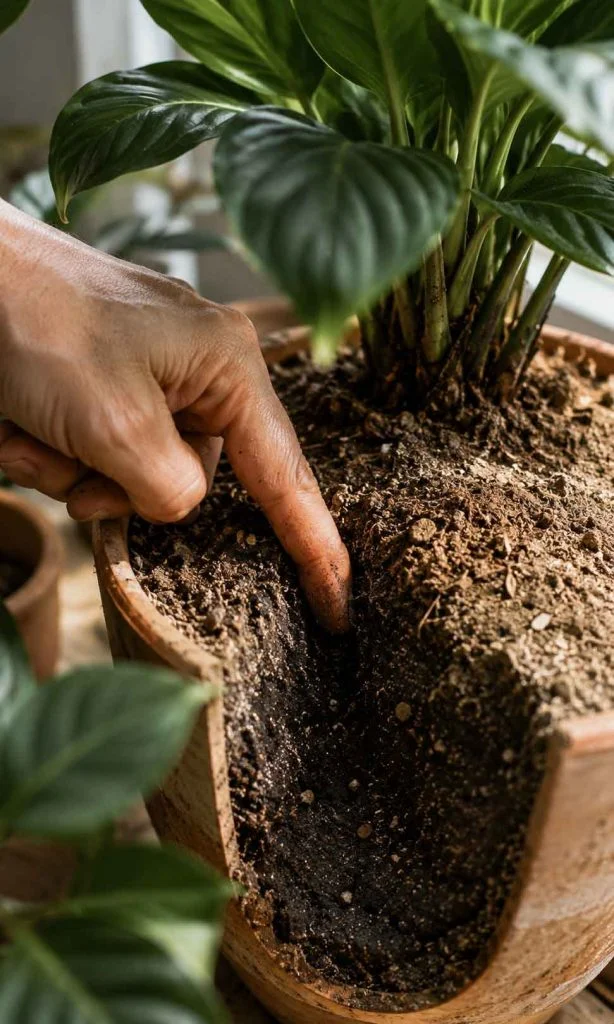
I still smile whenever I see this happen during plant workshops because almost everyone reacts the same way. They confidently point to the pale, dry-looking surface and announce that the plant must be thirsty. Then we gently dig a finger a little deeper into the pot, and suddenly everyone looks surprised. The lower soil is cool, dark, and comfortably damp.
Plants have a funny way of keeping their biggest secrets underground.
The upper layer of soil lives in a completely different world from the root zone. It feels warm sunshine first, catches moving air, and loses moisture more quickly through evaporation. Meanwhile, deeper inside the pot, water moves much more slowly. That hidden moisture is exactly what roots rely on, but it’s also why gardeners sometimes water far more often than their plants actually need.
Here’s the fascinating part. This isn’t simply about watering too much or too little. It’s about understanding how water naturally travels through potting mix, how different materials hold moisture, and why your eyes can sometimes be the least reliable moisture meter in the garden.
By the time you finish this guide, you’ll know how to tell the difference between genuinely dry soil and a pot that’s only pretending to be thirsty. More importantly, you’ll understand why this simple observation can prevent slow growth, yellowing leaves, root problems, and many of the watering frustrations that make indoor gardening feel far more complicated than it really is.
Not Sure Whether to Water? Check the Whole Pot
A dry-looking surface does not always mean a dry root zone. If you are standing beside the plant with a watering can and thinking, “Well… now what?”, use the Soil Moisture Layer Studio below to compare several clues at once.
The tool looks at the surface, deeper soil moisture, pot weight, pot material, light, airflow, potting mix, plant growth, and visible symptoms. Instead of letting one dry-looking layer make the entire decision, it helps you build a more complete picture of what may be happening inside the pot.
Soil Moisture Layer Studio
Discover what your plant is really experiencing below the surface by comparing surface dryness, root-zone moisture, evaporation, potting mix behaviour and watering confidence.
How to Read Your Soil Moisture Report
Note
The numbers in your report are not trying to turn your houseplant into a mathematics exam. They are there to help you compare clues that can otherwise seem contradictory.
A high Surface Moisture Reading means the upper layer appears dry or is losing moisture quickly. That does not automatically mean the roots are dry. If the Root Zone Moisture Reading tells a different story, pay closer attention to the deeper test, pot weight, and recent watering history before adding more water.
The Evaporation Pressure score estimates how strongly light, warmth, and airflow may be drying the exposed surface. A sunny window, warm balcony, ceiling fan, or air-conditioning can make the top centimetres dry surprisingly quickly while the protected soil below changes much more slowly.
The Water Retention Pressure score looks at the opposite side of the problem. A moisture-holding potting mix inside a plastic or glazed container can remain damp underneath long after the top has lost its darker, freshly watered appearance.
The most useful part is the comparison between these readings. If the surface appears very dry while the root zone still appears moist, you have found the exact mismatch that causes so much watering confusion. In that situation, waiting and checking again is often more sensible than automatically reaching for the watering can.
Your four-day forecast and weekly plan should also be treated as a checking schedule rather than a rigid watering calendar. Plants do not read calendars, which is terribly inconsiderate of them, so use the suggested days as reminders to observe the pot again.
When the Surface and Root-Zone Scores Disagree
A large difference between the two readings is not necessarily a problem. In fact, it can be the most useful clue in the entire report.
Imagine that the surface is dry after two warm, breezy days, but the pot still feels heavy and a wooden chopstick comes out with damp soil attached. The upper layer has responded to the environment faster than the lower layer. Watering again at that moment may restore the dark colour at the surface while adding even more moisture around roots that were never dry.
The opposite pattern can happen too. A loose, fast-draining mix in a porous pot may dry more evenly, especially during active growth or warm weather. When the surface is dry, the pot feels noticeably lighter, and deeper checks also suggest dryness, the clues begin agreeing with one another.
That agreement is what you are looking for. One clue can mislead you. Three or four clues pointing in the same direction are much harder to ignore.
How to Tell Whether Your Plant Actually Needs Water
The awkward truth about watering is that there is no single test that works perfectly every time. A dry surface can hide damp soil underneath, a drooping leaf can mean too little water or too much, and even a moisture meter can give a strange reading if the probe lands in an unusually wet or dry pocket. Plants do enjoy keeping us humble.
The most reliable approach is to compare several clues instead of allowing one observation to make the entire decision. You do not need expensive equipment, and you certainly do not need to conduct a miniature laboratory experiment beside the kitchen window. A few simple checks can tell you a surprising amount about what is happening inside the pot.
The Surface Is Only One Clue. A dry surface is useful information, but it is not a complete watering instruction. Before reaching for the watering can, compare what is happening at the top of the pot with what may still be happening around the roots.
Check these clues together:
- How dry does the surface look and feel?
- Does the pot feel lighter than usual?
- Is the soil still damp a few centimetres below the surface?
- Does a wooden chopstick come out dry or with damp soil attached?
- Is the plant actively growing or using less water than before?
- Have light, heat, airflow, or seasonal conditions recently changed?
- Is water draining freely, or could moisture be lingering near the bottom?
When several clues point in the same direction, your watering decision becomes much easier. A dry surface combined with a light pot, a dry deeper check, and active growth is much more convincing than a dry surface alone. On the other hand, a dry surface combined with a heavy pot and damp soil underneath is a good reason to put the watering can down for now.
And yes, putting the watering can down can sometimes be the most useful thing you do for the plant that day.
1. Check Below the Surface
Push a finger a few centimetres into the potting mix if the container and plant allow it. The surface may feel completely dry while the soil just below it still feels cool and slightly damp.
For larger pots, checking only the first centimetre is often not enough. The deeper the container, the greater the chance that the upper and lower layers are drying at different speeds.
If the soil feels noticeably moist below the surface, pause before watering. That does not always mean you need to wait for the entire pot to become bone dry, but it does tell you that the surface alone is not giving you the whole story.
2. Lift the Pot
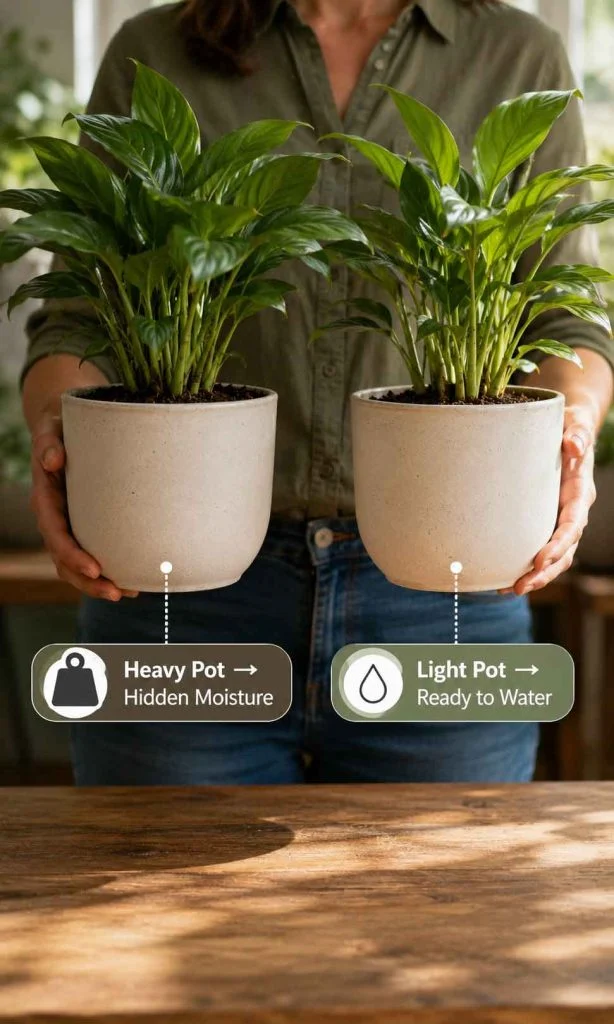
Pot weight is one of the most useful watering clues because water is heavy. A freshly watered container usually feels noticeably heavier than the same container after much of its available moisture has been used or lost.
Try lifting the pot after watering, then lift it again several days later. You are not trying to memorize an exact number. You are simply learning the difference between “still carrying plenty of water” and “much lighter than before.”
This method becomes surprisingly intuitive with practice. Eventually, some gardeners can lift a familiar pot and immediately think, “Nope, not today,” which is considerably faster than holding a committee meeting with the soil.
3. Look at the Drainage Area
If the drainage holes are accessible, look at the soil near the bottom of the container. In some pots, the upper layer may be pale and loose while the mix around the drainage holes is still dark and damp.
This is especially useful when you suspect that moisture is collecting in the lower part of the pot. A decorative outer pot or saucer may also be hiding drained water, so check whether the nursery pot has been sitting in runoff.
If the bottom remains persistently wet despite a dry surface, the issue may involve more than watering frequency. Understanding why some pots never drain even with holes can help you inspect the potting mix, root system, cachepot, saucer, and drainage exits more closely.
4. Try the Wooden Chopstick Test
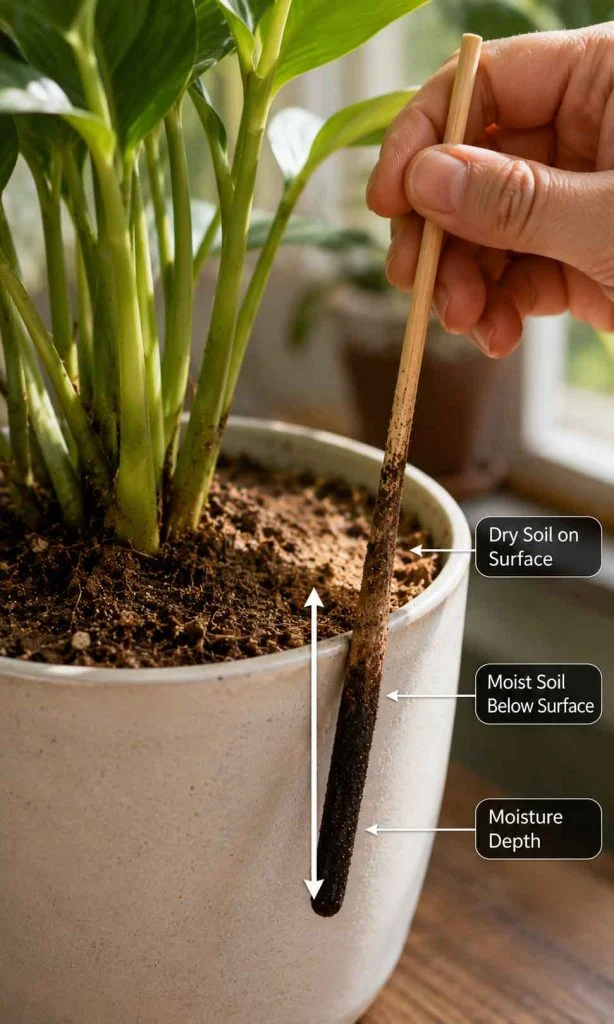
A plain wooden chopstick can be a wonderfully low-tech moisture detective. Insert it carefully into the potting mix, avoiding obvious resistance from large roots, leave it briefly, and then pull it out.
If the wood comes out relatively clean and dry, the deeper mix may be drying. If damp soil sticks to it or the wood has visibly darkened from moisture, the lower layers are probably still holding water.
This method is not perfect, especially in very chunky potting mixes, but it can be helpful when your finger cannot reach deeply enough.
5. Watch How the Plant Is Growing
An actively growing plant usually uses water faster than the same plant during a slower period. New leaves, longer stems, warm weather, brighter light, and increased root activity can all change how quickly moisture disappears from the pot.
The opposite is also true. A plant that has slowed its growth may use much less water, even if you have not changed your usual watering routine. Continuing to water on the old schedule can gradually leave the root zone wetter for longer.
This is one reason watering habits need to move with the plant rather than remaining fixed throughout the year.
Why the Surface Dries First While the Roots Stay Wet
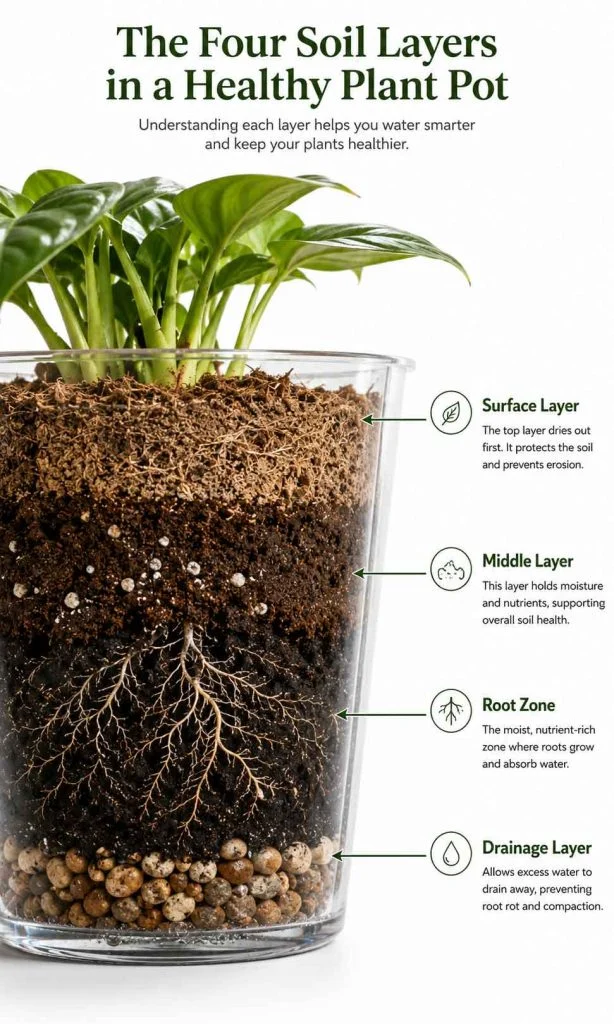
One of the most interesting things about container gardening is that a flowerpot isn’t evenly moist from top to bottom. Even though we often think of the soil as one solid block, it’s actually made up of several tiny environments, each behaving a little differently throughout the day. Once you understand that, the mystery of dry-looking soil with wet roots becomes much easier to explain.
Imagine leaving a freshly baked loaf of bread on the kitchen counter. The crust dries first because it’s exposed to the air, while the middle stays soft for much longer. Potting soil behaves in a surprisingly similar way. The surface is constantly exposed to sunshine, moving air, room heating, ceiling fans, or even the gentle breeze from an open window. Every one of those things encourages moisture to evaporate from the very top layer before the deeper soil has changed very much at all.
That’s why the first centimetre or two can sometimes look pale, dusty, and completely dry while the lower half of the pot still contains plenty of water.
I often tell new gardeners that the top of the soil is a little dramatic. It changes appearance very quickly and isn’t shy about letting everyone know. The roots, meanwhile, quietly carry on much deeper in the pot, where conditions change much more slowly. If we judge watering only by what the surface looks like, we’re listening to the loudest voice instead of the most important one.
Another detail many people never notice is that water doesn’t disappear from the pot at the same speed everywhere. Gravity pulls excess moisture downward, but evaporation works in the opposite direction by removing water from the surface. At the same time, roots are absorbing moisture from different depths depending on where they’re actively growing. The result is a constantly changing moisture gradient rather than one evenly damp block of soil.
This is exactly why two people can look at the same plant and reach completely different conclusions. One sees a dry surface and decides the plant needs watering immediately. The other gently checks below the surface and discovers that the lower root zone is still comfortably moist. Surprisingly, the second gardener is often closer to what the plant is actually experiencing.
The ExpertsGuys Moisture Layer Framework™
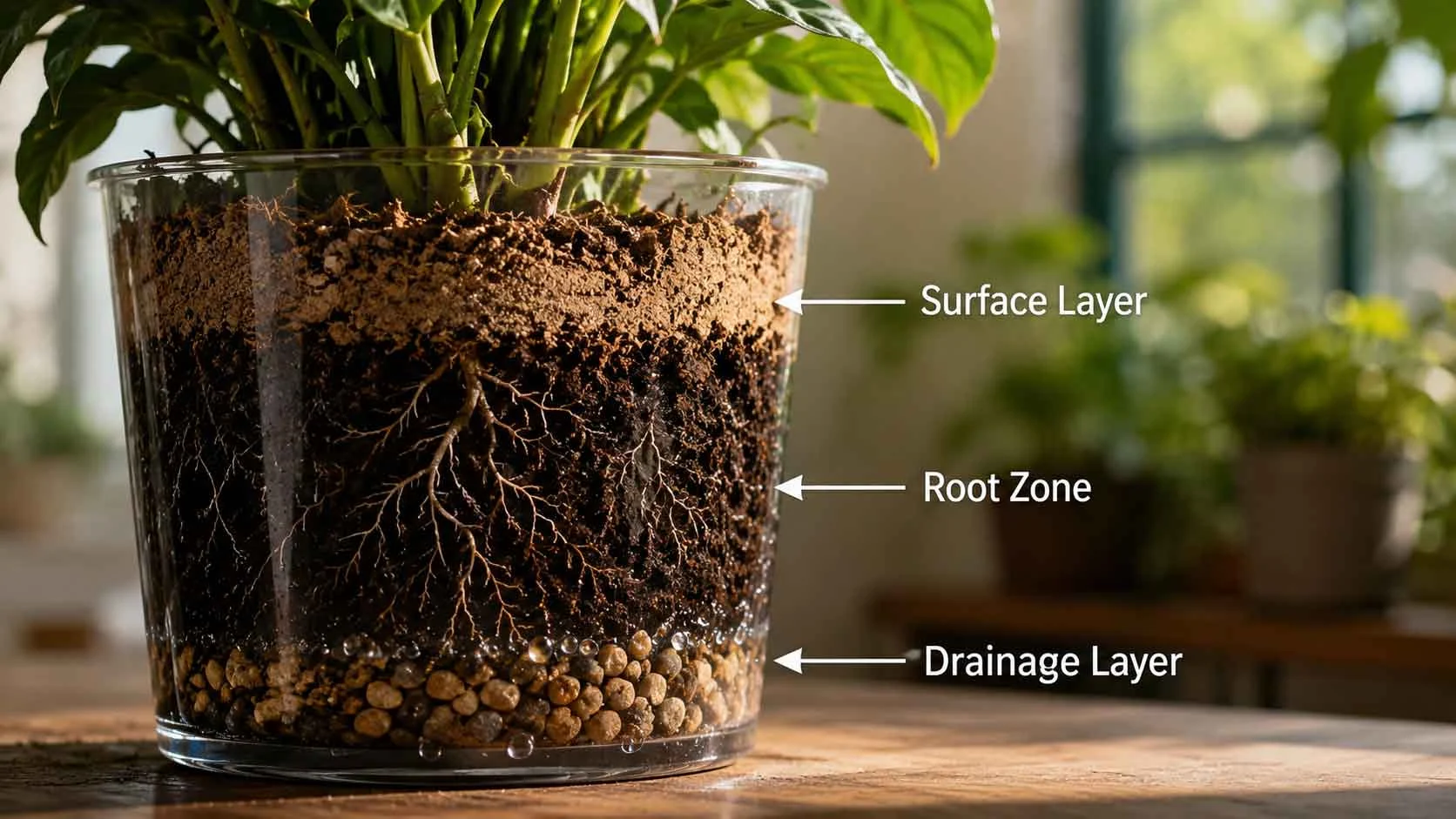
One way I’ve found helpful to explain this is to picture the soil as three separate layers working together instead of one uniform mixture.
Surface Layer
This is the fastest-changing part of the pot. It receives the most airflow, sunlight, and warmth, so it usually dries first. Its appearance changes rapidly, making it useful for spotting evaporation but not always for deciding when to water.
Root Zone
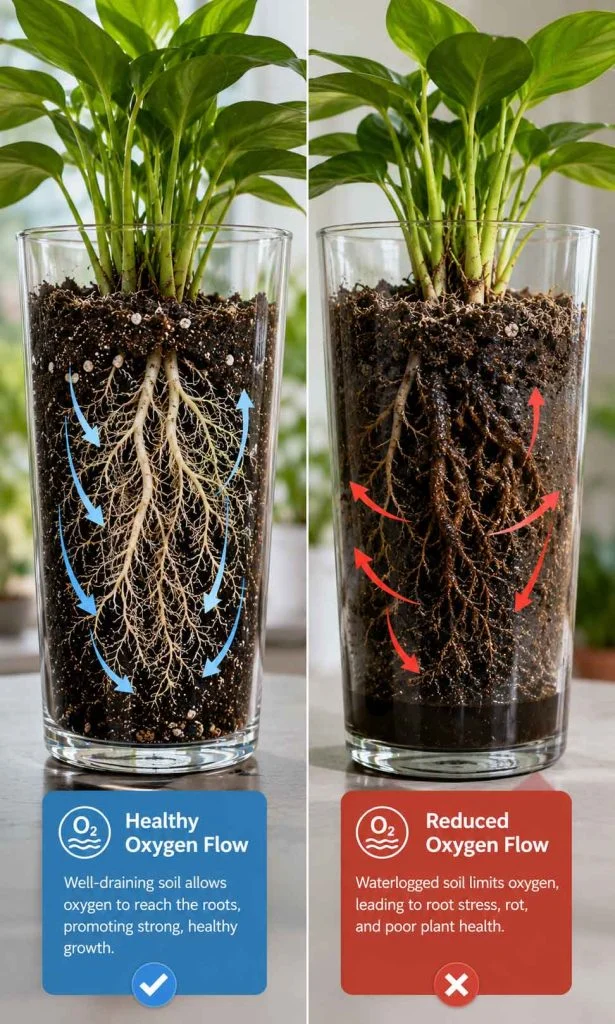
Just a little deeper, the root zone changes much more slowly. This is where the plant spends most of its time collecting water and nutrients. Healthy roots prefer consistent moisture with plenty of oxygen rather than constant saturation.
Drainage Layer
Near the bottom of the container, water collects briefly before draining away through the holes. If drainage is poor or the soil has become compacted, this layer may stay wetter for much longer than it should, even while the surface already appears dry.
| Soil Layer | What Happens | What Gardeners Often Assume |
|---|---|---|
| Surface Layer | Loses moisture quickly through evaporation. | “The whole pot must be dry.” |
| Root Zone | Retains moisture much longer while supplying the plant. | “The roots probably need water too.” |
| Drainage Layer | Excess water gathers before draining away. | “The drainage holes have already emptied everything.” |
Once you begin thinking in layers instead of simply “wet” or “dry,” many watering decisions become much easier. Rather than reacting to the first thing you see, you’ll start asking a better question:
“What are the roots experiencing right now?”
That small change in perspective is often the difference between watering at exactly the right time and accidentally keeping the root system wetter than it needs to be.
Evaporation Can Fool Even Experienced Gardeners
Here’s a question I like asking people during gardening workshops:
Which part of the pot dries first?
Almost everyone points to the top, and they’re absolutely right.
The interesting part comes next.
Does that mean the entire pot is dry?
That’s where the answers start changing.
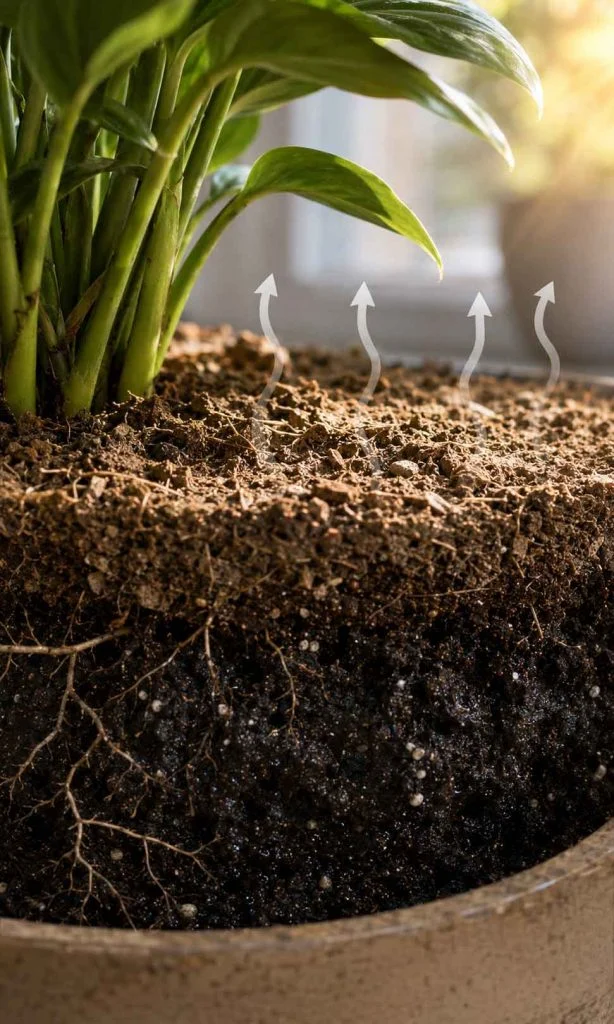
Evaporation is one of the biggest reasons gardeners misjudge soil moisture because it’s happening constantly, even when we’re not paying attention. Every time warm air moves across the surface, tiny amounts of water disappear into the atmosphere. It happens so gradually that we rarely notice it, yet after a day or two the top layer can look completely different despite the lower soil barely changing at all.
Have you ever spilled a little water onto a kitchen worktop? A few hours later the surface is dry, but the cloth you used to wipe it up may still feel damp inside. The same idea applies to potting soil. The outside changes appearance first because it’s exposed, while the inside quietly holds onto moisture for much longer.
Several everyday conditions make this difference even more noticeable.
A sunny windowsill warms the top of the pot long before heat reaches the lower soil.
An air conditioner gently blowing across your living room speeds up evaporation without changing the moisture around the deeper roots very much.
Even a ceiling fan can dry the surface surprisingly quickly while the bottom half of the container remains comfortably damp.
This is one reason experienced gardeners rarely judge watering by colour alone. A pale surface may simply be responding to today’s weather rather than telling you the roots are thirsty.
In fact, one of the nicest little habits you can develop is becoming curious instead of reactive. The next time the soil looks dry, pause for a moment before watering. Gently check a little deeper, lift the pot if it’s safe to do so, and compare what your eyes are telling you with what the root zone is actually experiencing.
Quite often, you’ll discover that your plant has been quietly drinking from a hidden reserve of moisture all along.
Five Common Reasons the Lower Soil Stays Wet for Too Long
By now, we’ve seen that a dry-looking surface doesn’t necessarily mean the entire pot is dry. The next question is just as important.
Why does the lower soil sometimes stay wet much longer than expected?
The answer is usually a combination of natural water movement and the environment you’ve created for the plant. Interestingly, the watering can is often the least surprising part of the story. More often than not, the real cause is hiding inside the pot itself.
Let’s look at the situations I see most often.
1. The Potting Mix Holds More Water Than You Realise
Not all potting mixes behave the same way.
Some are designed to stay moist for longer because they’re intended for thirsty plants. Others contain larger particles such as bark or perlite that encourage water to move more freely while leaving plenty of air around the roots.
Here’s a little experiment you can try.
Take two identical pots and fill one with a light, chunky potting mix while the other contains an older, finer mix that’s been in use for several years. Water both equally and leave them side by side. Within a few days, you’ll probably notice that one feels noticeably lighter than the other even though nothing else has changed.
That’s because water doesn’t simply disappear. It follows the tiny pathways between soil particles, and some pathways are much easier to travel through than others.
This is one reason professional growers often refresh potting mix before they replace the container itself. They’re restoring the movement of air and water rather than simply giving the roots more space.
2. The Pot Is Deeper Than the Root System
Here’s something that surprises many indoor gardeners.
A plant doesn’t use water from every part of the container equally.
Imagine placing a small young plant into a large decorative pot because you want to avoid repotting for several years. It certainly looks attractive, but most of the root system is still concentrated near the centre of the container. The lower section contains moist soil that very few roots are actively using.
The result?
The surface begins drying through evaporation while the bottom quietly holds onto yesterday’s watering.
It’s a bit like filling a large sponge when you only needed half of it. The unused section simply stays wet much longer.
This doesn’t mean large pots are always a mistake. It simply means watering should match the size of the active root system rather than the size of the container.
3. Airflow Around the Pot Is Limited
Plants don’t only depend on what’s happening inside the soil.
What’s happening outside the pot matters too.
Containers placed inside decorative cachepots, tightly packed onto shelves, or sitting directly on solid surfaces often experience less airflow around the base. That slower air movement reduces evaporation from both the drainage holes and the sides of breathable containers.
Have you ever noticed that plants growing on an open balcony often dry much faster than identical plants inside a quiet living room?
The sunshine certainly plays a role, but moving air is just as important.
Fresh air helps moisture leave the container naturally, creating a healthier cycle of watering, drying, and oxygen returning to the roots.
4. Your Plant Simply Isn’t Drinking Very Much
One of my favourite questions to ask is:
“Has your plant actually been growing recently?”
People sometimes pause because they hadn’t connected those two ideas before.
Healthy, actively growing plants use remarkable amounts of water. Every new leaf, stem, and root requires moisture to build fresh tissue. Slower-growing plants, however, consume much less.
During winter, after flowering, or when light levels are lower, many houseplants naturally reduce their water use. The surface still dries because evaporation continues, but the roots are taking far less from the lower soil.
The pot hasn’t changed.
The plant has.
Recognising seasonal growth patterns is one of the easiest ways to avoid accidental overwatering.
5. Hidden Drainage Problems Keep Water Trapped
Sometimes the explanation really is hiding underneath the pot.
Blocked drainage holes.
Standing water inside a decorative cachepot.
Compacted soil near the bottom of the container.
A saucer that’s never emptied.
These situations all allow excess moisture to remain around the lower root zone long after the surface has begun drying.
When moisture remains concentrated near the bottom despite careful watering, understanding why some pots never drain even with holes can help you inspect the soil structure, root system, cachepot, saucer, and drainage exits more accurately.
The Hidden Moisture Checklist™
Whenever you’re unsure whether the lower soil is staying wet for too long, I recommend running through this quick checklist before watering again.
| Question | Why It Matters |
|---|---|
| Is only the surface dry? | The root zone may still contain enough moisture. |
| Does the pot still feel heavy? | Weight often reveals hidden moisture better than appearance. |
| Has the plant slowed its growth? | Slower growth usually means lower water consumption. |
| Is water collecting underneath the pot? | Standing water keeps the lower soil wet for much longer. |
| Has the potting mix become old or compacted? | Older soil slows both drainage and oxygen movement. |
One thing I genuinely enjoy about gardening is that every observation teaches you something new. The next time your soil looks dry on top, resist the urge to reach for the watering can straight away. Instead, become curious. Lift the pot, check a little deeper, and ask what the roots are actually experiencing.
More often than not, you’ll discover that your plant has been quietly telling the truth all along—it was simply speaking from a place you couldn’t immediately see.
Small Changes That Make Watering Much Easier
Once you understand that the surface and root zone can dry at different speeds, the next step is not to become a full-time soil detective. A few small changes to the pot, potting mix, and way you check moisture can make the whole routine much easier. The goal is not to create a perfect watering system, because plants have an impressive ability to ignore our plans, but to make the conditions inside the pot more predictable.
Use a Potting Mix That Matches the Plant
A potting mix that holds a great deal of water may work beautifully for one plant and remain frustratingly wet for another. Fine peat-rich mixes can retain moisture for a long time, especially in large plastic or glazed pots, while mixes containing more bark, perlite, pumice, or other coarse materials often allow more air to move through the root zone.
This does not mean every plant needs an extremely fast-draining mix. A mix that dries too quickly can create its own problems, particularly for plants that prefer more consistent moisture. The useful question is whether the potting mix, plant, container, and environment are working well together. Because different species can have very different moisture preferences, a plant compatibility guide can help you compare watering needs, light conditions, soil preferences, and suitable growing companions before changing your care routine.
Match the Pot Size to the Root System
A much larger pot may look generous, but extra soil around a small root system can stay wet for longer because there are not enough active roots using that moisture. This can create the familiar situation where the surface dries while a large volume of potting mix underneath remains damp.
When repotting, move up gradually rather than giving a small plant an enormous new home simply because it looks impressive. The right pot size should give the roots room to grow without surrounding them with far more wet potting mix than they can reasonably use.
Choose Pot Material With Your Environment in Mind
Terracotta and other porous containers can lose moisture through their walls, which may help a moisture-retentive mix dry more evenly. Plastic and glazed ceramic pots usually lose less water through the container itself, so the same potting mix may stay damp longer inside them.
Neither type is automatically better. A terracotta pot in a hot, breezy location may dry frustratingly fast, while a plastic pot in a cool, dim room may remain wet much longer than expected. Think of the container as part of the watering system rather than simply something decorative that happens to be holding the plant.
Water Thoroughly Instead of Giving Frequent Small Sips
Frequent small amounts of water can create an uneven moisture pattern, especially when only the upper portion of the pot becomes wet. When a plant is genuinely ready for water, a thorough watering that evenly moistens the root zone and allows excess water to drain is usually easier to monitor than a series of nervous little splashes.
After watering, allow excess water to leave the container and empty any collected runoff when appropriate. Then begin observing the drying process again. Over time, you will learn how the pot changes from freshly watered to nearly ready for its next drink.
Do Not Let the Pot Sit in Hidden Water
Decorative cachepots and saucers can quietly hold water after the visible draining has finished. From above, everything may look perfectly normal while the nursery pot continues sitting in runoff underneath. If the lower soil repeatedly stays wetter than expected, lift the inner pot and check what is happening below it.
Good drainage is not simply about having a hole in the bottom. Water also needs somewhere to go after it leaves the pot, and the potting mix needs enough structure for air and water to move through it.
Learn the Normal Rhythm of Each Plant
The most useful watering schedule is often not a schedule at all, but a familiar pattern. One plant may become noticeably lighter after four days in warm weather, while another may still feel heavy more than a week after watering. Those rhythms can change again when seasons, light levels, temperatures, or growth rates change.
Instead of asking, “Is today watering day?”, try asking, “What has changed since I last watered?” That small shift turns the calendar into a reminder to check the plant rather than an instruction to pour water into the pot.
Change One Thing at a Time
If a plant has been staying wet for too long, it can be tempting to change the pot, replace the soil, move the plant, reduce watering, increase airflow, and reorganize the entire room before lunch. The problem is that when the plant improves, you may have no idea which change actually helped.
Unless there is an urgent problem such as severe root damage, make thoughtful adjustments and observe the response. A slightly better-draining mix, a more suitable pot size, or simply waiting longer between waterings may be enough to create a much healthier moisture rhythm.
The Watering Confidence Framework
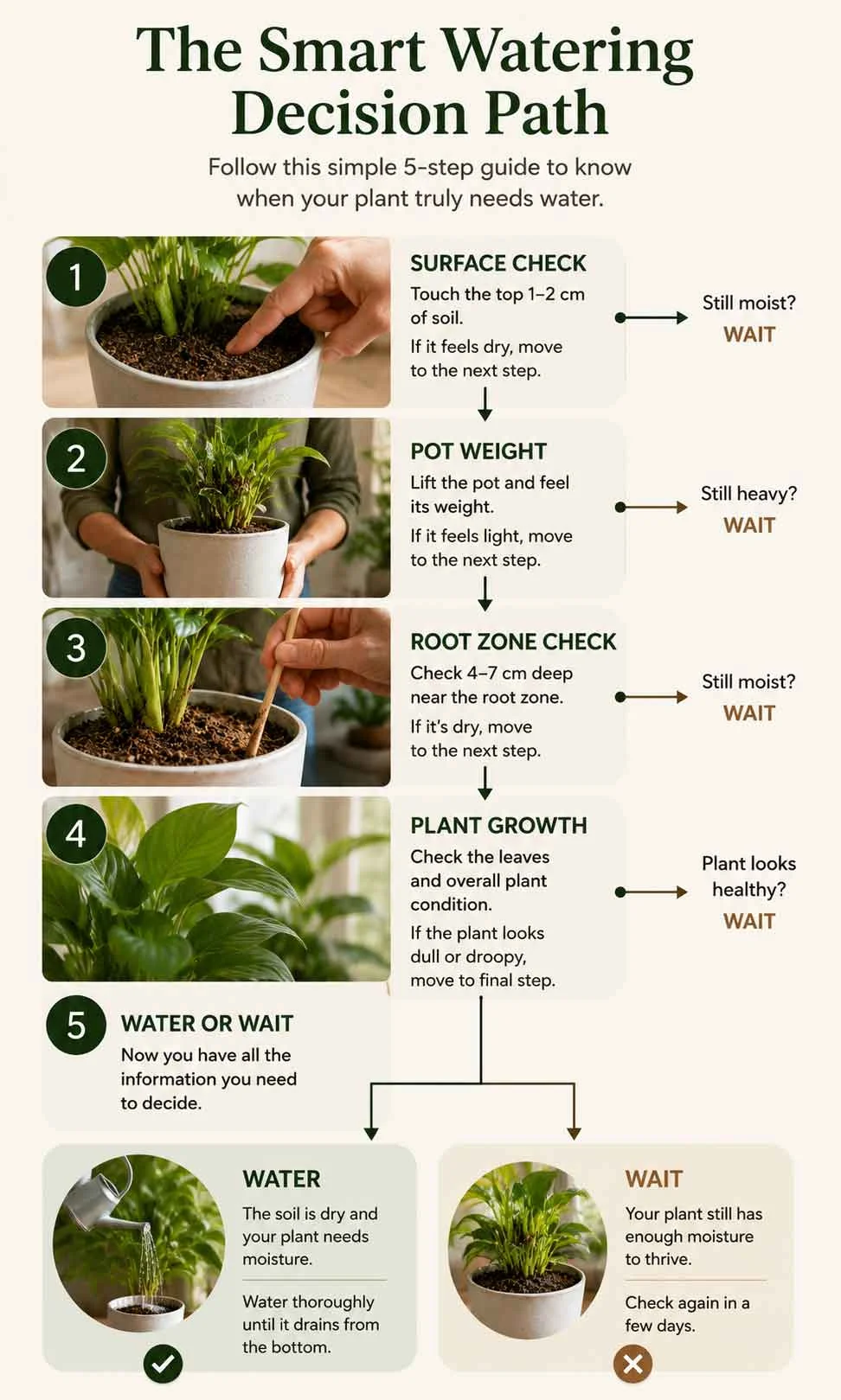
Good watering decisions rarely come from a single test. The surface may look dry, a leaf may droop, or a moisture meter may flash a number that seems very official, but each clue only shows one part of what is happening inside the pot. The Watering Confidence Framework brings those clues together in a simple sequence so you can decide whether to water, wait, or check again.
Step 1 – Look at the Surface
Start with what you can see. Is the surface dark and moist, slightly dry, pale and dusty, or beginning to pull away from the edge of the pot? This gives you a useful starting point, but not the final answer. A dry surface tells you that the top layer has lost moisture; it does not prove that the root zone has done the same.
Step 2 – Check Below the Surface
Move beyond appearances by checking deeper into the potting mix. Use a finger where practical, a wooden chopstick for a deeper reading, or inspect the soil near an accessible drainage hole. If the lower soil still feels cool and damp, the roots may have enough moisture even when the top looks ready for another drink.
Step 3 – Lift the Pot
Now add another clue. A pot that still feels noticeably heavy is often holding more water than its surface suggests, while a much lighter pot may indicate that moisture has declined throughout more of the container. Pot weight becomes especially useful when you compare the same plant with itself over time rather than trying to judge whether a pot is objectively “heavy” or “light.”
Step 4 – Consider the Plant and Its Environment
Ask what has changed around the plant. Has the weather become warmer? Is a fan running nearby? Has the plant moved into brighter light? Is it producing new leaves quickly, or has growth slowed? A fast-growing plant in warm, bright conditions may use water rapidly, while the same plant during a cooler or slower period may leave the soil wet for much longer.
Step 5 – Look for Agreement Between the Clues
This is where the decision becomes easier. If the surface is dry, the deeper soil is also drying, the pot feels much lighter, and the plant is actively growing, several clues are pointing toward watering. If the surface is dry but the pot remains heavy and the root zone is still damp, the clues are telling you to wait.
You do not need every clue to agree perfectly. Plants are living things, not spreadsheets with leaves. The goal is simply to stop allowing one dramatic-looking signal to make the entire decision. The more clues that point in the same direction, the more confidence you can have in what you do next.
Professional Perspective
One of the most common watering mistakes is not really caused by carelessness. It is caused by paying attention to the wrong layer of the pot. The surface is the easiest part to see, so naturally it becomes the part people trust most. Unfortunately, it is also the layer most exposed to light, heat, airflow, and evaporation, which means it can change appearance long before conditions around the roots have changed very much.
That is why a plant should be assessed as a small growing system rather than a surface of soil waiting to become dark again. The pot material affects evaporation, the potting mix controls how water moves and is retained, the root system influences how quickly moisture is used, and the surrounding environment changes the speed of the entire process. Even two identical plants can develop different watering rhythms if one sits beside a bright window and the other grows several metres farther into the room.
Repeatedly adding small amounts of water whenever the surface looks dry can create an especially confusing pattern. The upper layer may briefly become wet and then dry again, while the lower part of the pot remains consistently damp. Over time, roots in that zone may receive less oxygen, growth may slow, and the plant may begin showing symptoms that look surprisingly similar to thirst. The natural response is often to water again, which is how a well-intentioned routine can quietly become part of the problem.
A more useful habit is to build familiarity with each plant over time. Notice how heavy the pot feels after a thorough watering. Check how many days pass before the deeper mix begins to dry. Watch how that rhythm changes during warmer weather, active growth, cooler periods, or after moving the plant to a new location. These observations gradually become more valuable than any universal instruction to water every seven days.
The goal is not to become nervous about watering or to wait until every plant is dramatically dry. It is to understand that moisture exists in layers and that roots experience the conditions below the surface, not the appearance we see from above. Once that distinction becomes familiar, watering tends to feel much less like guessing and much more like reading a pattern.
Key Takeaways
- Dry soil on top does not automatically mean the entire pot is dry. The exposed surface can lose moisture much faster than the protected root zone underneath.
- Check more than one clue before watering. Surface appearance, deeper moisture, pot weight, plant growth, recent weather, light, airflow, and drainage can all help you make a better decision.
- Potting mix and container material matter. Plastic and glazed pots often retain moisture longer, while terracotta and more porous containers may dry faster.
- A heavy pot can reveal hidden moisture. Learning how the same container feels when wet and when drier is one of the simplest ways to improve watering confidence.
- Drooping does not always mean thirst. Roots that remain too wet can become stressed by reduced oxygen, producing symptoms that may be mistaken for a need for more water.
- Fixed watering schedules have limits. Plant growth, temperature, light, airflow, humidity, season, and root development can all change how quickly a pot dries.
- The surface is only one clue. The most reliable watering decisions usually happen when several observations point in the same direction.
The more familiar you become with the difference between surface dryness and root-zone moisture, the less often you need to guess. You may still occasionally stand beside a plant holding a watering can and wondering what it wants – plants have a remarkable talent for keeping that tradition alive – but you will have far better clues to work with.
When that balance remains disrupted for too long, it can help explain why plants stop growing even when they look healthy, because root stress often begins before the leaves show obvious damage.
Frequently Asked Questions
Why does soil look dry on top but stay wet underneath?
Soil usually dries from the top down because the surface is directly exposed to light, warmth, and moving air. Deeper soil is more protected, so moisture around the root zone can remain for much longer. This is why a pot may look ready for water from above even though the roots are still surrounded by damp soil.
Should I water my plant if only the top of the soil is dry?
Not automatically. Check deeper into the soil and compare the pot’s weight with how it feels when freshly watered and when genuinely dry. If the pot still feels heavy or the root zone is moist, waiting before watering again is usually the safer choice.
How can I tell if the soil is still wet around the roots?
You can combine several simple checks, including inserting a finger below the surface, using a wooden chopstick, lifting the pot to judge its weight, and checking soil near a drainage hole when possible. One test can be misleading, so several clues pointing in the same direction give you more confidence.
Why does the top of potting soil dry so quickly?
The top layer is exposed to evaporation. Bright light, warm temperatures, fans, air-conditioning, outdoor breezes, and low humidity can make the surface dry much faster than the protected soil deeper inside the pot.
Can soil stay too wet even when the pot has drainage holes?
Yes. Drainage holes allow excess water to escape, but they do not guarantee that the entire potting mix will dry quickly. Compacted soil, fine moisture-retentive ingredients, dense roots, blocked drainage exits, oversized pots, and water trapped inside decorative cachepots can all keep the lower root zone wet.
Why is my plant drooping when the soil is still wet?
Wet soil can sometimes reduce the amount of oxygen available around the roots. Stressed roots may then struggle to function normally, which can make a plant droop even though water is present. Because both overly dry and overly wet plants can droop, checking the root-zone moisture before watering again is important.
Are moisture meters accurate for houseplants?
A moisture meter can provide another useful clue, but it should not be treated as the only source of truth. Readings can vary with soil composition, salts, probe position, and contact with the potting mix. For a more reliable decision, compare the meter reading with pot weight, deeper soil checks, recent watering, and the plant’s current growth.
What is the best way to avoid overwatering a houseplant?
Avoid watering from a fixed calendar or from surface appearance alone. Check the root zone, learn how the pot feels at different moisture levels, consider the plant’s growth rate and environment, and water when several observations suggest that moisture has genuinely declined.
Final Thoughts
A dry-looking soil surface can be surprisingly persuasive. It sits there looking pale and thirsty, practically asking you to bring over the watering can. Meanwhile, a few centimetres below, the roots may still be enjoying plenty of moisture and wondering why another rainstorm has arrived indoors.
The better habit is not to ignore the surface, but to stop asking it to make the entire decision. Look at the top layer, then check deeper. Lift the pot. Think about how quickly the plant is growing, how warm or breezy the environment has been, and whether the container and potting mix tend to hold water. None of these clues needs to be perfect on its own.
Over time, this becomes much easier. You begin to recognize the difference between a pot that merely looks dry and one that is actually ready for water. You notice how quickly different plants use moisture, how seasons change the rhythm, and how a heavy pot can quietly tell you, “Not today.”
That is really the goal of better watering – not following a perfect schedule, but becoming more confident at reading what is happening below the surface. When the clues agree, the decision usually becomes much simpler.