
Watering looks simple, yet it is the number one reason beginners lose plants.
Most plants don’t die from lack of care – they die from too much care, especially overwatering. Understanding when, how, and how much to water is more important than fertilizer, soil brands, or expensive tools.
This guide explains plant watering using clear rules, visual cues, and global standards, so you can water confidently in any climate.
This article is part of our complete home gardening guide, where we break down every beginner step from soil to plant selection.
How Plants Absorb Water (Foundational Concept)
Plants absorb water through their roots, not their leaves.
Roots need:
- water
- oxygen
- space to breathe
When soil stays constantly wet, oxygen disappears — roots suffocate and rot.
This is why drainage matters more than watering frequency.
How Often Should You Water Plants?
There is no universal schedule — watering depends on:
- plant type
- pot size
- soil type
- climate
- sunlight
Instead of schedules, beginners should follow physical tests.
The Finger Test (Beginner Standard)
The Finger Test is the safest rule for beginners.
Stick your finger 1–2 cm into the soil:
- Dry → water now
- Moist → do NOT water
This simple method prevents overwatering more effectively than any app or calendar.
If you want faster diagnosis, some gardeners now rely on AI tools for home gardening to analyze soil moisture and plant stress using image recognition.
Pot Weight Test (Quick Check)
Lift the pot:
- Heavy → soil still wet
- Light → time to water
This is especially useful for indoor plants and larger containers.
Best Time of Day to Water Plants
🌅 Morning (Best)
- Reduces evaporation
- Roots absorb efficiently
- Lower disease risk
🌇 Late Afternoon (Second Best)
- Acceptable in hot climates
🌙 Night (Avoid)
- Promotes fungus and mold
How to Water Plants Properly (Technique)
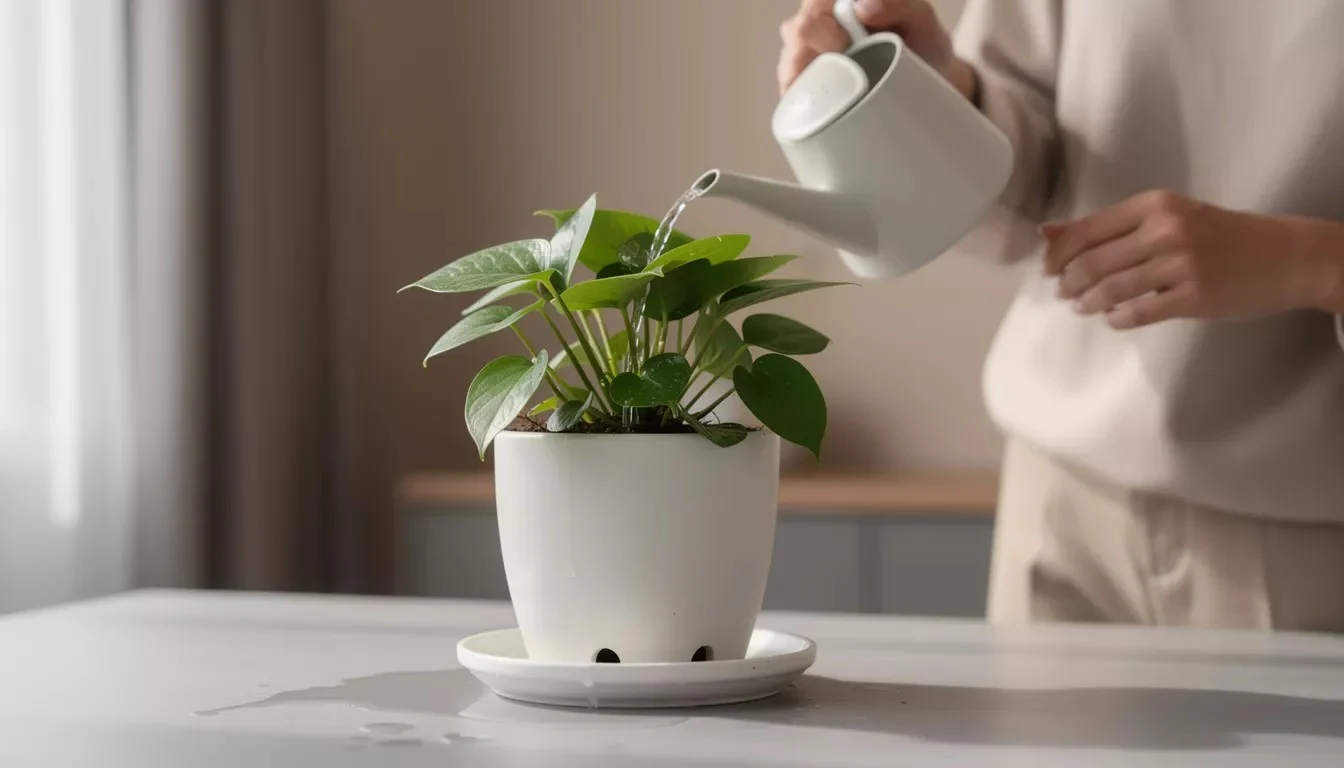
Correct watering is slow and deep.
Proper method:
- Water slowly
- Stop only when water flows out of drainage holes
- Empty saucers after 10 minutes
This ensures roots grow deep and strong.
If you’re setting up containers for the first time, follow our step-by-step guide on how to set up your first garden to avoid drainage mistakes.
Signs of Overwatering vs Underwatering
Overwatering Signs:
- Yellow leaves
- Mushy stems
- Fungus gnats
- Constantly wet soil
Underwatering Signs:
- Crispy brown edges
- Drooping leaves
- Soil pulling away from pot edges
Most beginners confuse drooping from overwatering as “thirst.”
How Soil Type Affects Watering
Soil determines how long water stays available.
- Sandy soil → dries fast
- Clay soil → holds water too long
- Loam → balanced
If you’re unsure what soil you’re using, refer back to our soil types for beginners guide to adjust watering correctly.
Watering Indoor vs Outdoor Plants
Indoor Plants:
- Water less frequently
- Lower evaporation
- Smaller root systems
Indoor watering also affects styling and maintenance of indoor plants for aesthetic home design, where consistent moisture keeps plants visually healthy.
Outdoor Plants:
- Water more often
- Weather-dependent
- Soil dries faster
Watering Vegetables (Beginner Notes)
Vegetables need consistent moisture, especially:
- tomatoes
- lettuce
- herbs
Inconsistent watering causes:
- cracked fruits
- bitter taste
- stunted growth
This is one reason vegetable gardening can reduce food waste and help with saving money through home gardening over time.
Tools That Help With Watering (Optional)
Beginners do NOT need complex systems.
Helpful tools:
- Watering can with narrow spout
- Moisture meter
- Mulch
For tool recommendations, see our curated list of beginner-friendly gardening tools suitable for home use.