
Many Foods Begin Breaking Down Before Visible Mold Appears
People often expect spoiled food to show obvious warning signs immediately.
In reality, many foods begin deteriorating internally long before dramatic visual rot becomes visible.
This is why food sometimes feels:
- softer
- wetter
- stickier
- unusually dry
- less stable
- structurally weak
even when the surface still looks mostly normal.
Texture changes are often one of the earliest signs that the food environment is becoming unstable.
The food may already be experiencing:
- moisture imbalance
- cellular collapse
- bacterial activity
- internal decomposition
- environmental stress
before mold becomes obvious to the eye.
Texture Is Controlled by Cellular Structure
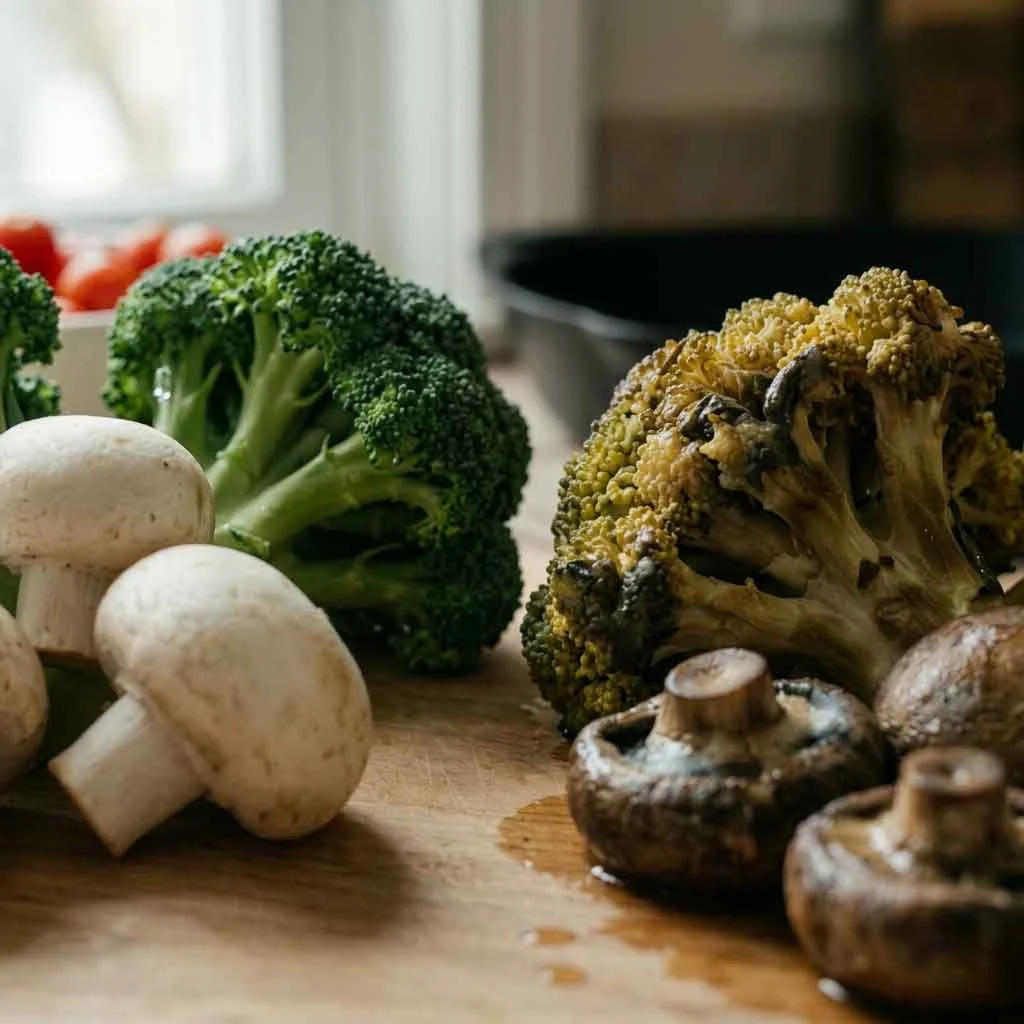
Most foods maintain their firmness because their internal cellular structure remains stable.
Water pressure inside cells helps maintain shape, tension, and structural resistance.
As food ages, several things begin changing internally:
- moisture movement
- enzyme activity
- temperature stress
- bacterial growth
- oxygen exposure
These processes gradually weaken the food structure.
The result is often subtle at first.
Food may become:
- slightly softer
- less crisp
- uneven
- damp
- rubbery
- fragile
before visible rot appears externally.
Moisture Imbalance Quietly Changes Food Texture
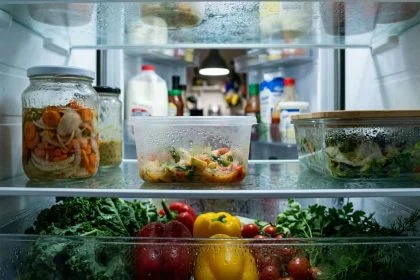
One major hidden cause is refrigerator condensation, which repeatedly exposes food surfaces to unstable humidity.
One of the biggest hidden causes of texture instability is moisture imbalance.
Foods constantly exchange moisture with the surrounding environment.
This continues even after refrigeration.
When humidity becomes unstable, food surfaces begin responding.
Some foods absorb excess moisture and become:
- slimy
- wet
- sticky
- soft
Other foods lose moisture and become:
- wrinkled
- dry
- leathery
- hollow
This is why two foods stored in the same refrigerator may deteriorate differently depending on their structure and water content.
Why Some Foods Become Wet Before They Rot
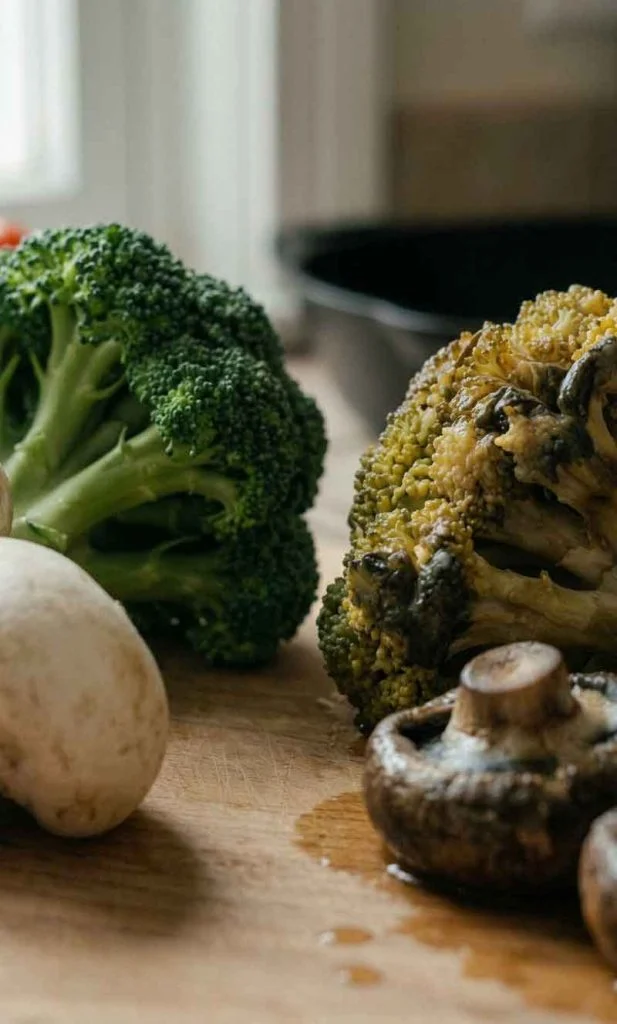
People sometimes notice food becoming damp even though mold is not visible yet.
This often happens because microscopic breakdown has already started.
As cellular structures weaken:
- water escapes more easily
- surface moisture increases
- condensation accumulates
- protective barriers weaken
The food environment becomes increasingly unstable.
This is especially common in:
- mushrooms
- berries
- leafy greens
- cut vegetables
- cooked leftovers
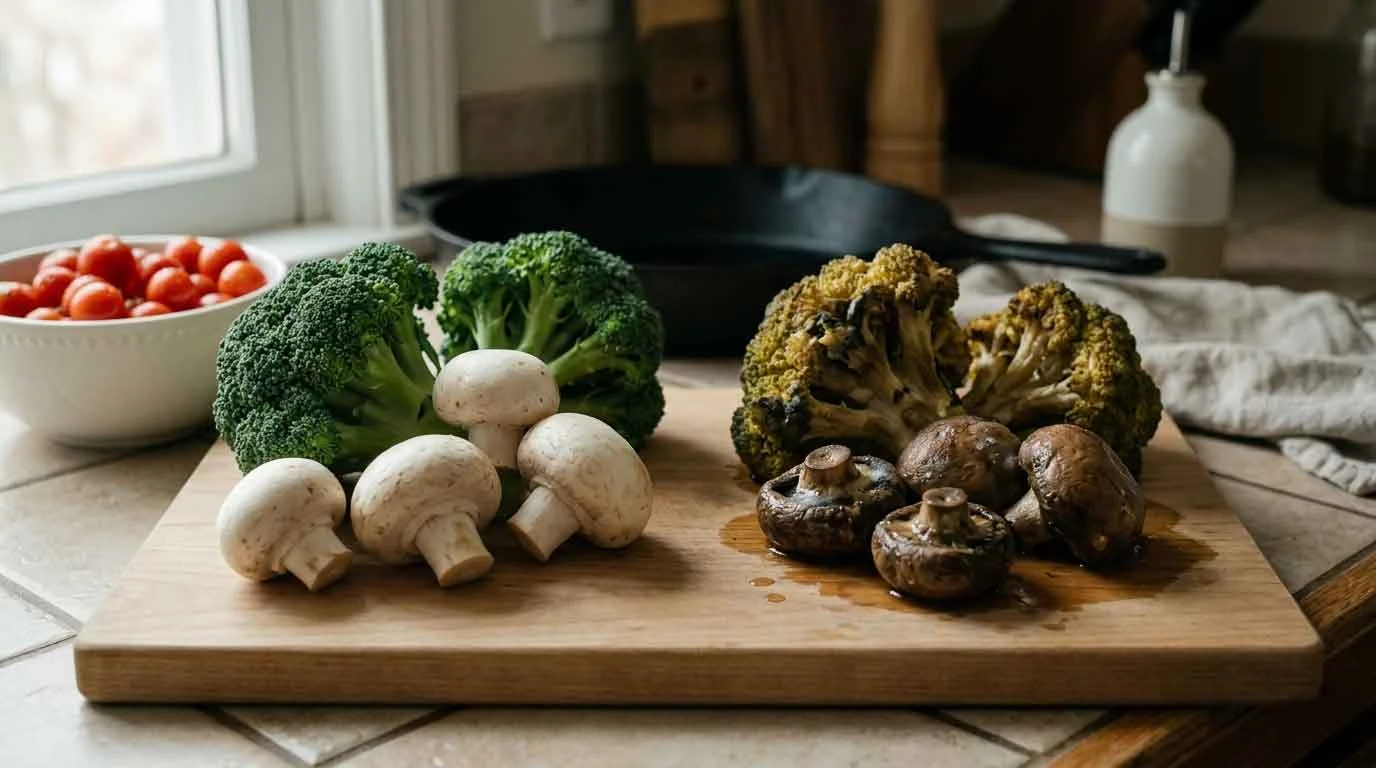
This pattern is especially visible during mushroom texture breakdown, where softness and slime often appear before dramatic visible rot develops.
Some people first notice this as a slightly sticky surface or unusual softness rather than obvious spoilage.
Refrigerators Slow Spoilage But Do Not Stop Structural Breakdown
Many people believe cold temperatures completely stop food deterioration.
Refrigeration mainly slows biological activity.
Food structure still changes gradually over time.
Moisture continues moving.
Cells continue weakening.
Environmental stress still affects texture stability.
This is why refrigerated food may still become:
- soft
- wet
- rubbery
- dry
- unstable
even before dramatic spoilage becomes visible.
Repeated temperature fluctuations can accelerate the process further.
Repeated Moisture Cycling Weakens Food Stability
Food does not simply stay in one fixed condition inside storage environments.
Moisture continuously moves between:
- food surfaces
- surrounding air
- containers
- refrigerator walls
- packaging materials
As this cycle repeats, food gradually loses structural consistency.
Some people notice this when vegetables near the back wall of the refrigerator become wetter even though the refrigerator itself does not appear excessively damp.
These environmental shifts slowly destabilize texture.
The process often becomes noticeable before visible mold appears.
Why Food Sometimes Feels Dry and Wet at the Same Time
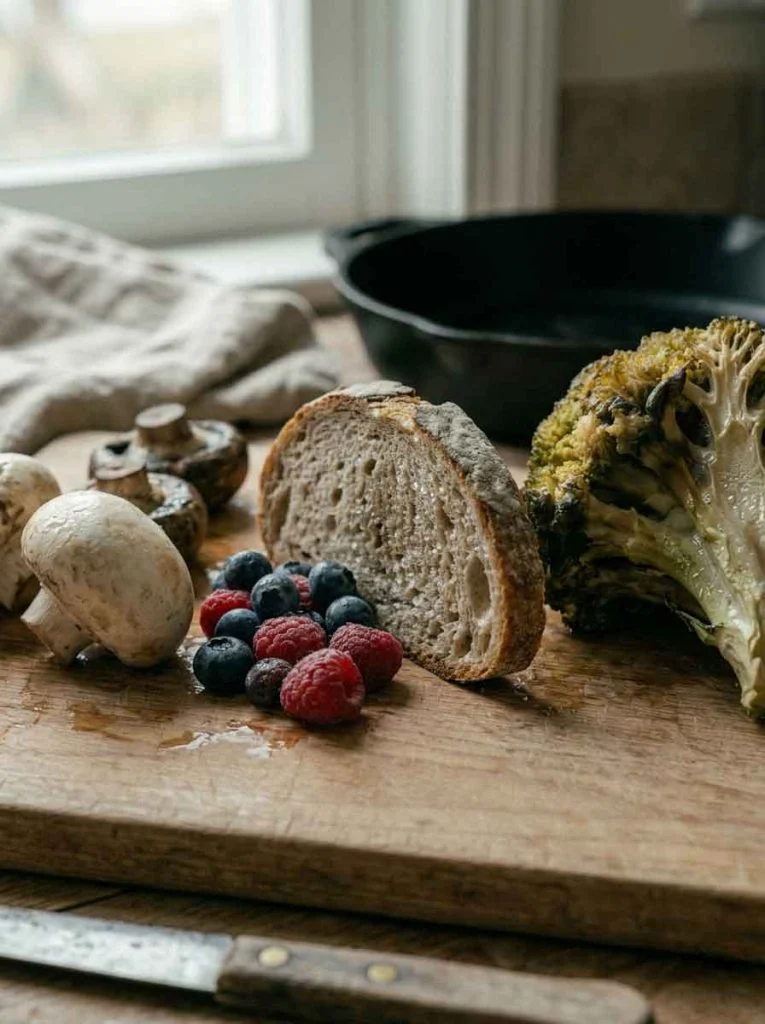
Some foods develop confusing texture changes during early deterioration.
Parts of the food may feel dry while other sections become wet or sticky.
This happens because moisture movement inside food is rarely uniform.
As cellular structures weaken, water begins redistributing unevenly across the food surface.
One side may lose moisture into the surrounding air while another section traps condensation or absorbs humidity.
This creates mixed texture instability.
People sometimes notice this in:
- bread with dry edges and soft centers
- vegetables with wrinkled surfaces but wet patches
- berries with collapsed areas beside firmer sections
- mushrooms with dry caps but damp undersides
The food may still look visually acceptable from a distance.
Closer inspection often reveals uneven structural breakdown already taking place.
Different Foods Show Different Early Texture Signals
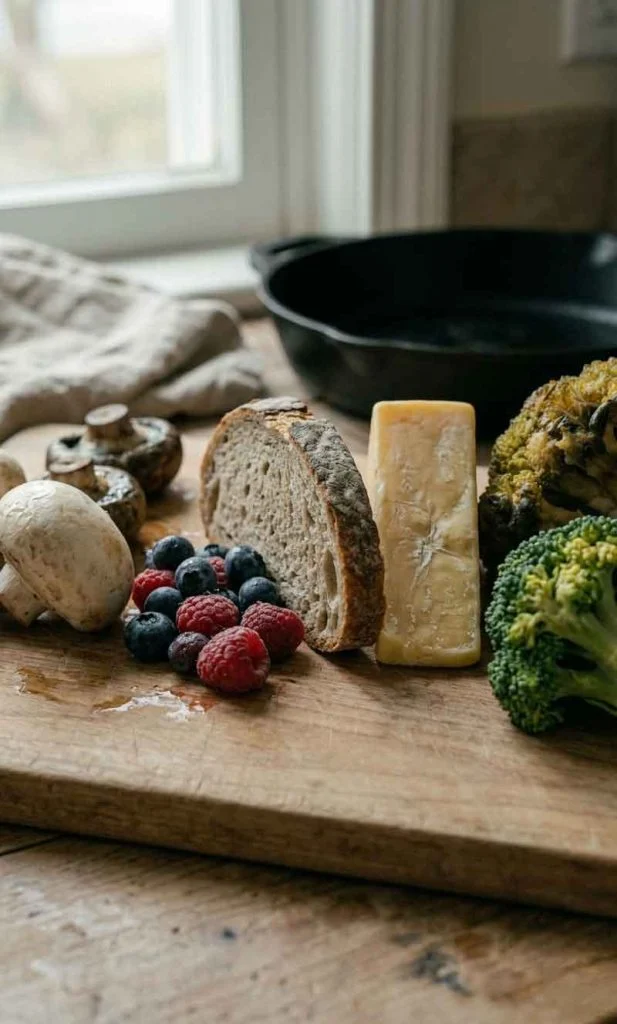
Not all foods deteriorate the same way.
Each type of food responds differently to moisture imbalance and environmental stress.
| Food Type | Early Texture Signal |
|---|---|
| Mushrooms | Slime and softness |
| Leafy greens | Wilting and dampness |
| Berries | Soft collapsing texture |
| Bread | Dryness or rubberiness |
| Cheese | Sweating or surface moisture |
| Cooked leftovers | Sticky surface |
The texture pattern depends on:
- water content
- structural density
- fat composition
- air exposure
- storage environment
This is why spoilage does not always look identical across foods.
Why Cut Food Changes Texture Faster Than Whole Food
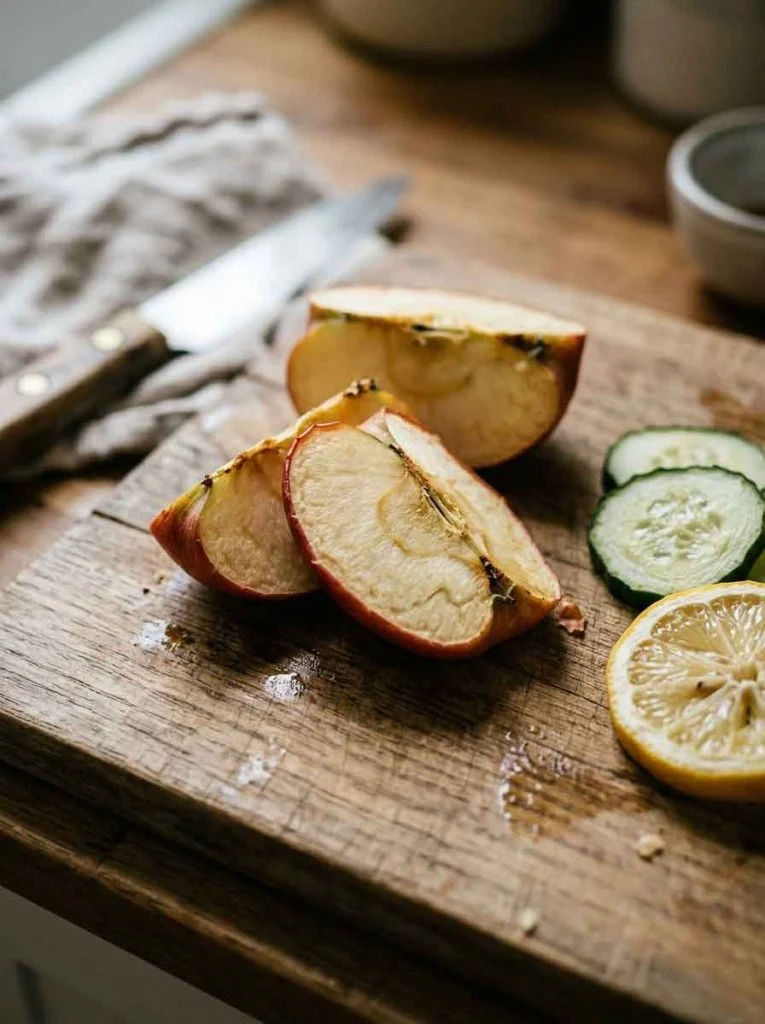
Cut food usually deteriorates faster than whole food.
Once food is sliced, its internal structure becomes directly exposed to air, moisture fluctuation, and microorganisms.
The protective outer surface is partially removed.
This accelerates:
- moisture loss
- surface oxidation
- bacterial exposure
- texture weakening
- environmental stress
Cut fruits and vegetables often become soft, wet, or rubbery much faster than intact versions of the same food.
This is why pre-cut produce in refrigerators sometimes develops texture problems surprisingly quickly even when visible mold is absent.
The exposed surfaces continuously interact with the surrounding storage environment.
Even small humidity fluctuations can begin altering texture stability within a short period of time.
Why Texture Changes Often Appear Before Smell
Odor usually becomes noticeable later in the spoilage process.
Texture instability often appears earlier because physical structure weakens before strong decomposition gases fully develop.
The food may already be biologically unstable even though the smell still seems mild.
This is why relying only on odor can sometimes be misleading.
Food texture frequently reveals environmental instability earlier than smell alone.
Small Environmental Differences Create Big Texture Changes
Many food texture problems are caused by subtle environmental variation.
Small changes in:
- airflow
- humidity
- storage pressure
- temperature cycling
- packaging
- condensation exposure
can significantly alter food stability over time.
This creates hidden micro-environments around the food surface.
Two identical foods stored in slightly different conditions may age completely differently after several days.
Why Early Spoilage Often Starts at the Surface First
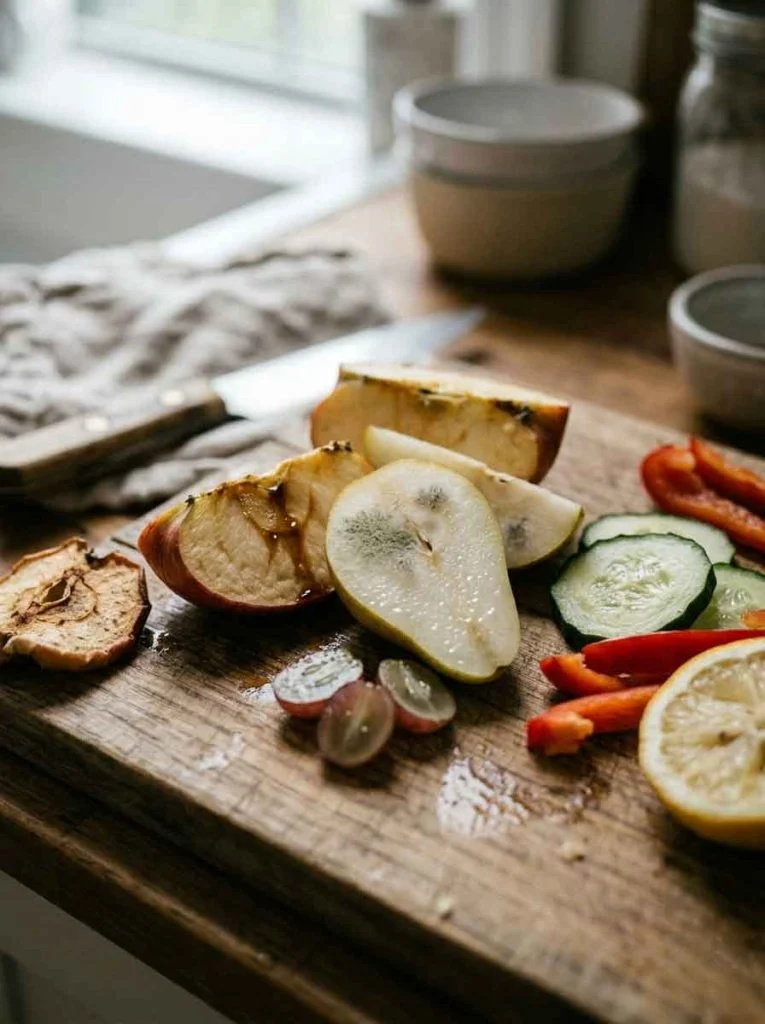
The outer surface of food experiences the greatest environmental stress.
This is where moisture exchange, oxygen exposure, condensation contact, and bacterial interaction happen most aggressively.
As a result, texture changes often begin externally before deeper internal collapse becomes obvious.
Some people first notice:
- slightly sticky surfaces
- soft outer layers
- wet patches
- surface wrinkling
- minor collapse around edges
These early texture signals may appear subtle initially.
Over time, repeated environmental exposure weakens the food structure further.
This is why food sometimes feels unstable even before strong odor or visible mold develops.
The surface is effectively acting as the front line between the food and its surrounding environment.
Texture Instability Is Often the First Visible Warning Sign
Many people wait for dramatic visual spoilage before recognizing food deterioration.
In reality, texture changes are often the earliest visible signal that the food environment is becoming unstable.
The surface may still appear acceptable.
Internally, however, structural breakdown may already be advancing.
This is why paying attention to:
- softness
- stickiness
- slime
- unusual dampness
- collapse
- wrinkling
can help identify deterioration earlier before severe spoilage develops.