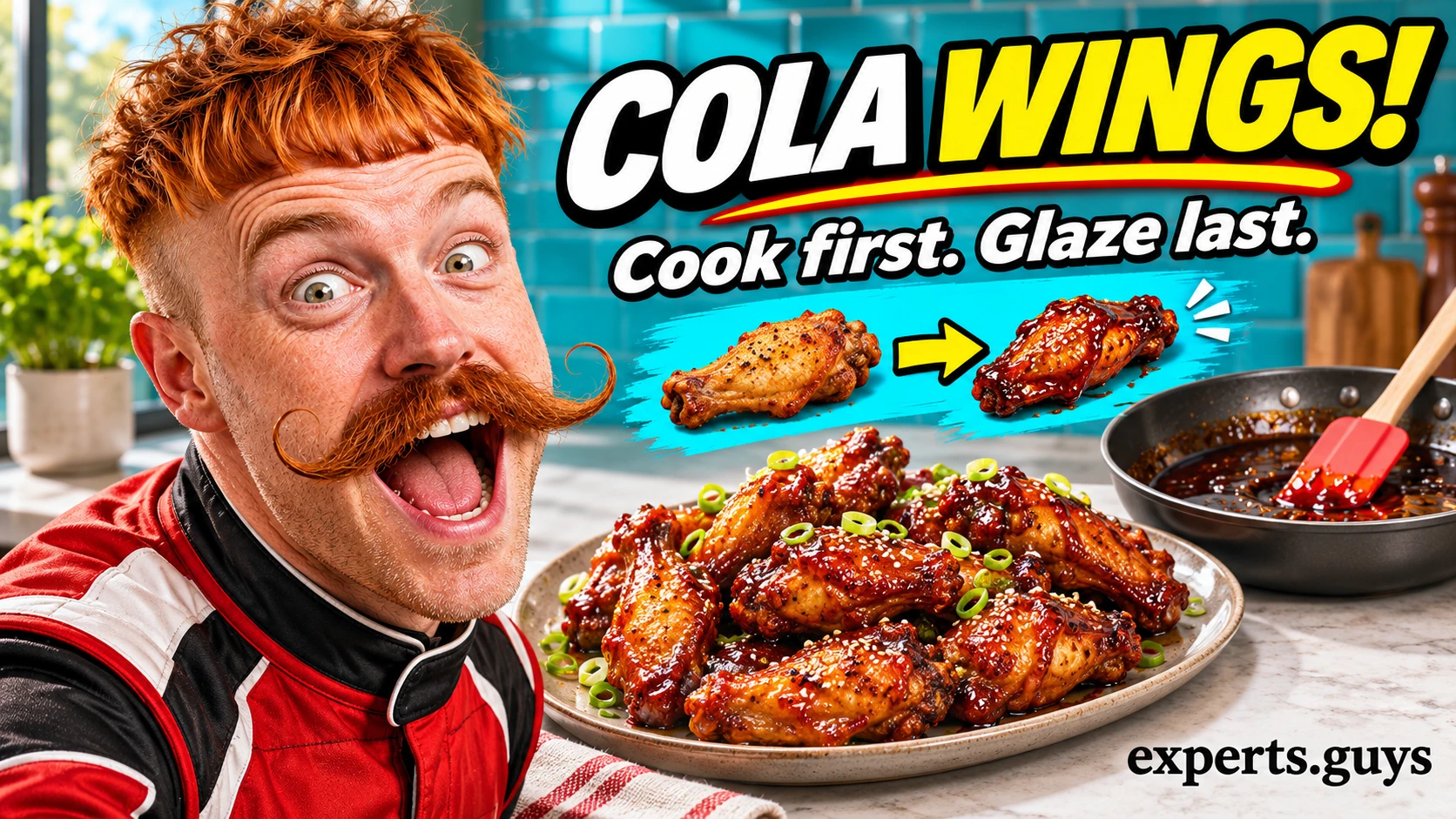
Coca-Cola hot wings are chicken wings cooked in a sweet, savory cola sauce with chili for heat. For a glossy coating without scorched sugar, simmer the wings until safely cooked, lift them out, and reduce the liquid separately before coating them off the heat. This stovetop recipe produces tender wings with soft skin, rather than an oven-crisp finish.
What ingredients make a cola glaze work?
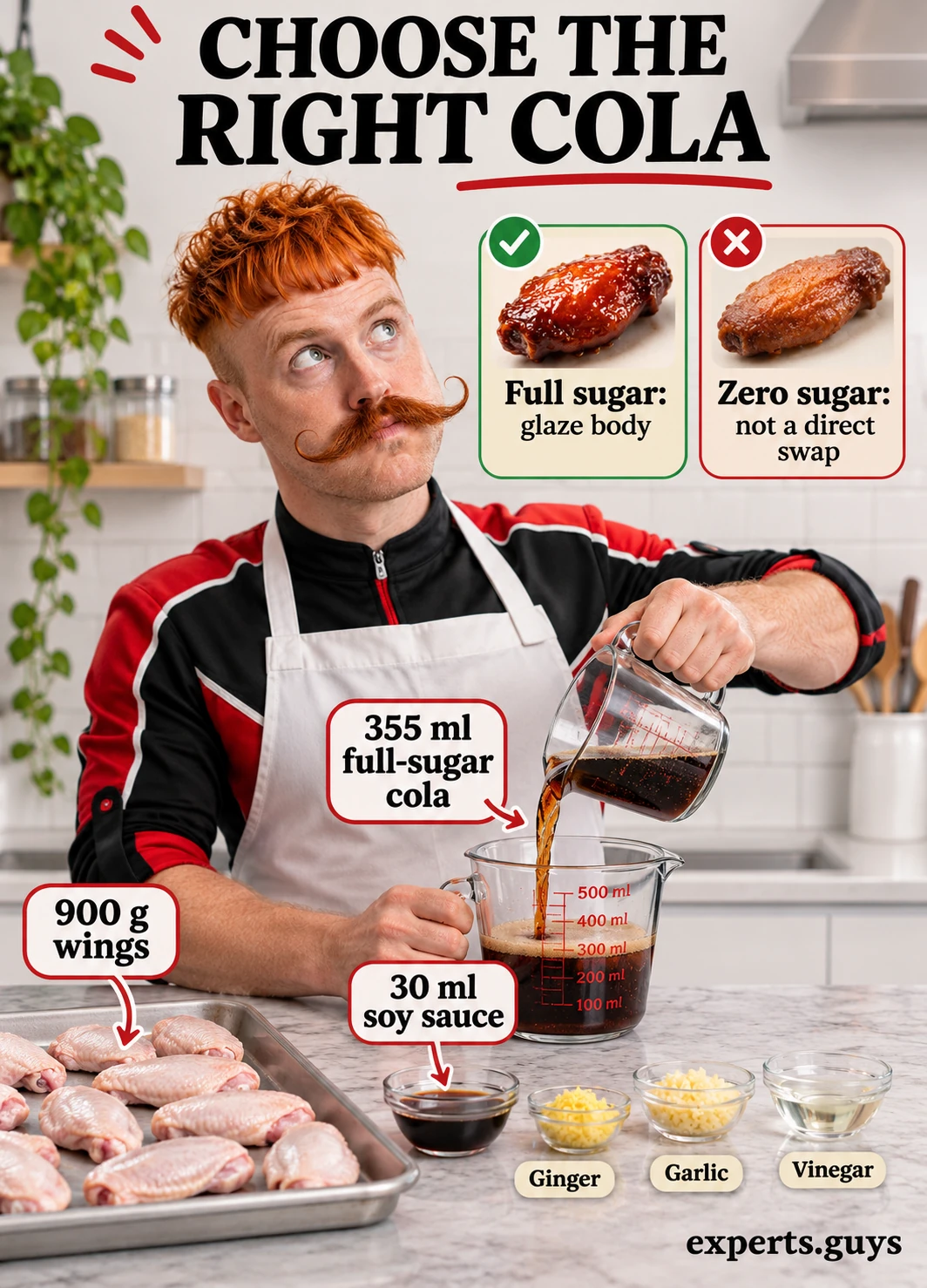
The useful distinction is between sweetness and body. Full-sugar cola contributes both: as water evaporates, the remaining sauce becomes more concentrated. A zero-sugar drink can taste sweet without supplying the same sugar needed for this particular reduction.
Use the quantities below for 900 g (about 2 lb) of separated, fully thawed flats and drumettes. This makes roughly four appetizer servings, depending on wing size and what else you serve. Buy the pieces already separated so no joint-cutting step is needed.
| Ingredient | Amount | What it does |
|---|---|---|
| Chicken wing pieces | 900 g / about 2 lb | The stated timing assumes thawed bone-in, skin-on flats and drumettes. |
| Full-sugar cola | 355 ml / 12 US fl oz | Supplies the main liquid, sweetness and glaze body. |
| Light or all-purpose soy sauce | 30 ml / 2 tbsp | Adds salt and savory flavor; not sweet soy or concentrated dark soy. |
| Unseasoned rice vinegar | 15 ml / 1 tbsp | Balances sweetness with acidity. |
| Fresh ginger | 12 g, finely chopped | Adds aromatic warmth. |
| Garlic | 2 cloves, finely chopped | Adds savory aroma. |
| Crushed chili flakes | ½ tsp, or less to taste | Makes the wings hot; omit for a non-spicy version. |
| Water | Up to 60 ml / 4 tbsp, held in reserve | Use only if the liquid thickens before the chicken is cooked, or to loosen the finished glaze. |
Check the nutrition panel rather than relying only on the name on the can. Formulations differ by market: Coca-Cola’s Singapore product information lists both a lower-sugar Original Taste and a higher-sugar Classic. For this recipe, choose a full-sugar version around 10–11 g sugar per 100 ml; a lower-sugar blend may behave differently.
The soy sauce also becomes more concentrated as the pan reduces. Start with the measured amount and do not add salt at the beginning. A reduced-sodium all-purpose soy sauce can be used in the same volume, but avoid replacing it tablespoon-for-tablespoon with dark or sweet soy sauce, which changes both flavor and consistency.
Measure the cola, soy, vinegar, ginger, garlic and chili before handling the raw chicken. Keep the raw wing tray separate from the clean serving plate and utensils. The CDC advises against washing raw chicken; keep its juices away from ready-to-eat food and wash hands and used equipment after handling it.
Equipment and timing
Use a broad, deep sauté pan with a lid, approximately 28–30 cm across, plus tongs, a heat-safe spatula and a food thermometer. The pieces should fit in one layer. Allow about 10 minutes to prepare and roughly 30–45 minutes to cook and glaze; these are planning estimates, not a substitute for the temperature and sauce checks below.
How do you cook the wings without burning the sugar?
Keep the first stage wet and covered. The liquid transfers heat around the wings while the lid slows evaporation. Trying to make a thick glaze while the chicken is still cooking creates a conflict: the sugar can catch on the pan before the meat reaches its safe temperature.
Start with the chicken and sauce together in the unheated pan, then bring the liquid to a boil and lower the heat. Aim for small, steady bubbles once covered, not a violent boil that rapidly empties the pan. Lift the lid away from your face when checking or turning the wings.
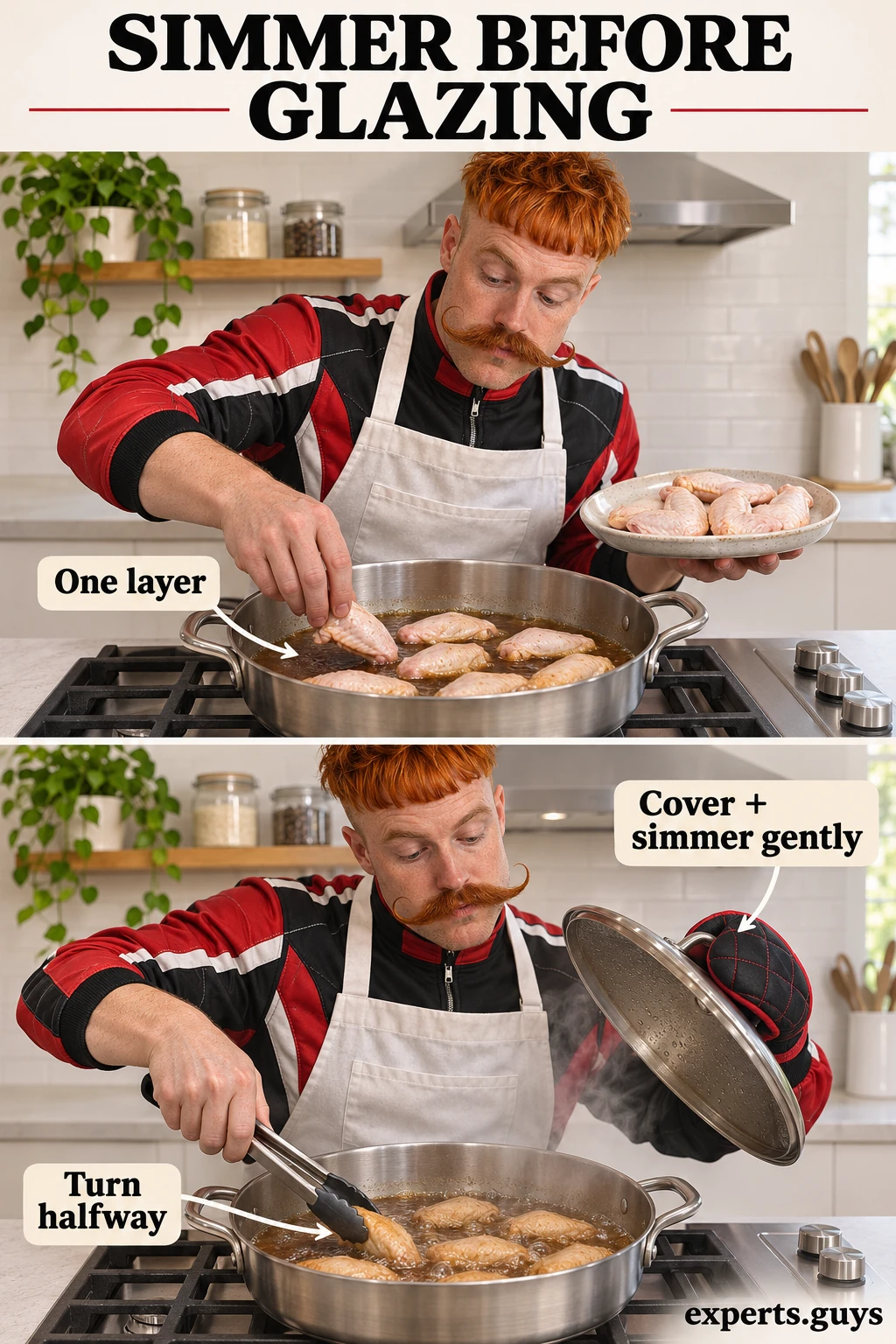
A wider pan usually loses water faster than a narrow one, and a loose lid lets more steam escape. If the sauce begins looking syrupy before the wings are cooked, lower the heat and add a tablespoon of the reserved water. The checkpoint at this stage is cooked meat with liquid still in the pan—not a glossy coating.
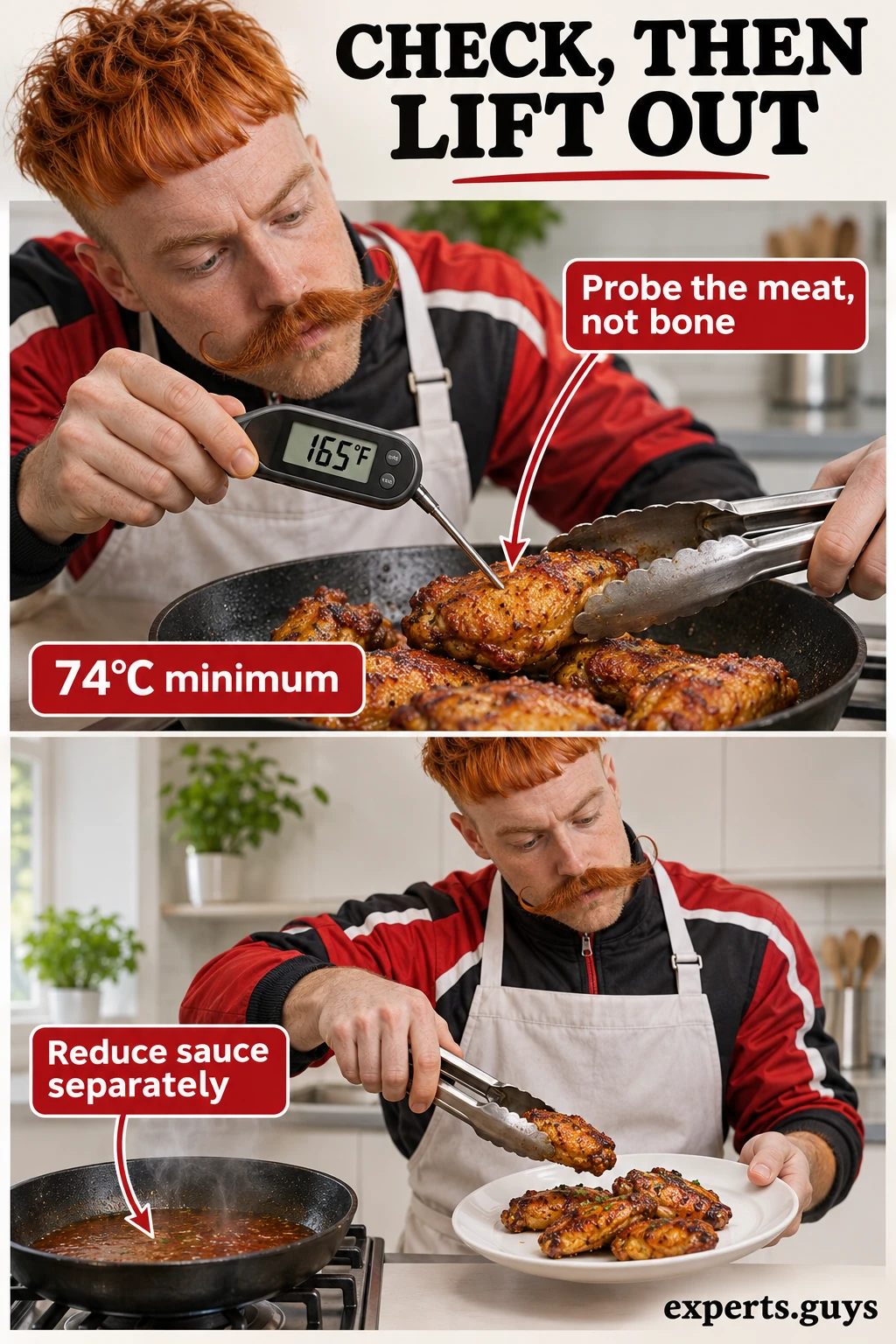
Check several pieces, including the largest drumettes, with the probe in the thickest meat and away from bone. FoodSafety.gov specifies 165°F (74°C) for poultry. Sauce color, browned skin and a timer cannot establish that temperature; keep cooking any piece that has not reached it.
- Load the pan. Stir the measured cola, soy sauce, vinegar, ginger, garlic and chili together in the pan. Add the thawed wings in one layer. If they cannot fit, use a larger pan or prepare separate batches with proportionate ingredients; do not stack them deeply.
- Simmer gently. Bring the liquid to a boil, cover, then reduce the heat to a gentle simmer. Start checking after about 20 minutes; many pieces may take 20–25 minutes or longer. Turn them about halfway through. Add reserved water, 1 tbsp at a time, if the sauce thickens before the meat is ready.
- Check and remove. Confirm at least 165°F (74°C) in the thickest meat of several pieces, avoiding bone; check remaining large pieces as needed. Move the cooked wings to a clean plate using clean tongs. Leave the cooking liquid in the pan. Do not reuse the raw-chicken tray.
When is the cola glaze ready to coat the wings?
With the wings out, reduce the sauce uncovered over medium heat, stirring more often as it thickens. Allow approximately 5–15 minutes, depending on the pan and remaining liquid. Stop when a spatula leaves a brief trail that closes again and the sauce still pours from a spoon; it will thicken further as it cools.
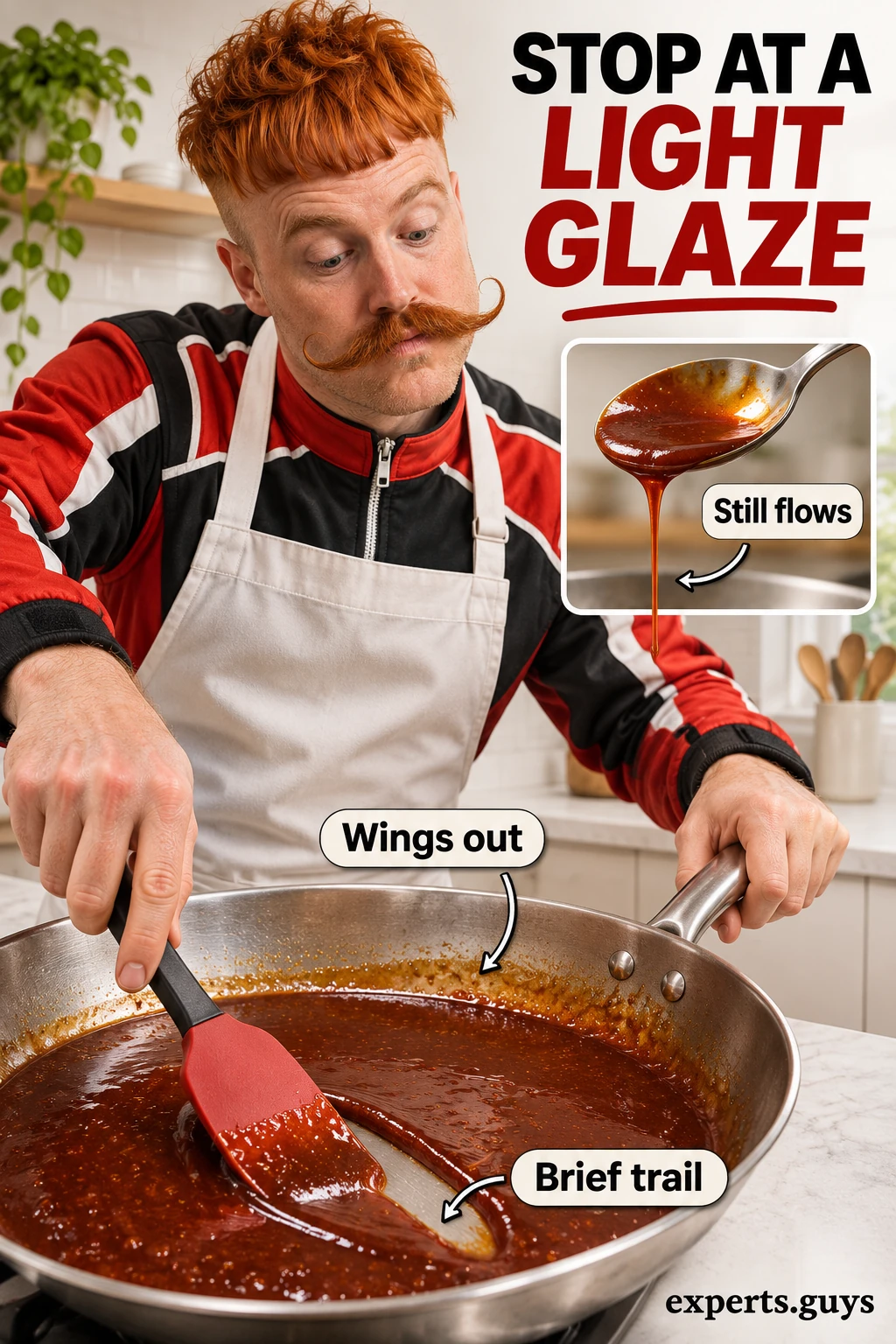
This is a coating, not a candy stage. A trail that stays open, a dry-looking edge or tacky strings suggests you have gone too far. Lowering the heat near the end gives you more time to notice the change. Do not wait for the sauce to become almost dry before switching off the burner.
- Reduce with the wings out. Let the liquid bubble uncovered and stir across the base of the pan. Keep the heat moderate; turn it down as the bubbles become larger and the sauce starts to coat the spatula. Do not taste liquid that has contacted raw chicken before it has been thoroughly cooked.
- Check the flow. Drag the spatula through the sauce. A momentary trail and a fluid coating on the spoon are enough. If the pan is drying out or the sauce is stringy, stop and use the thick-sauce correction below.
- Coat off the heat. Switch off the burner and move the pan onto a heatproof trivet, using oven mitts where needed. Return the cooked wings and turn gently with clean tongs until lightly coated. Serve promptly. Optional sliced scallions and sesame seeds are garnish, not part of the glaze; omit sesame where unsuitable.
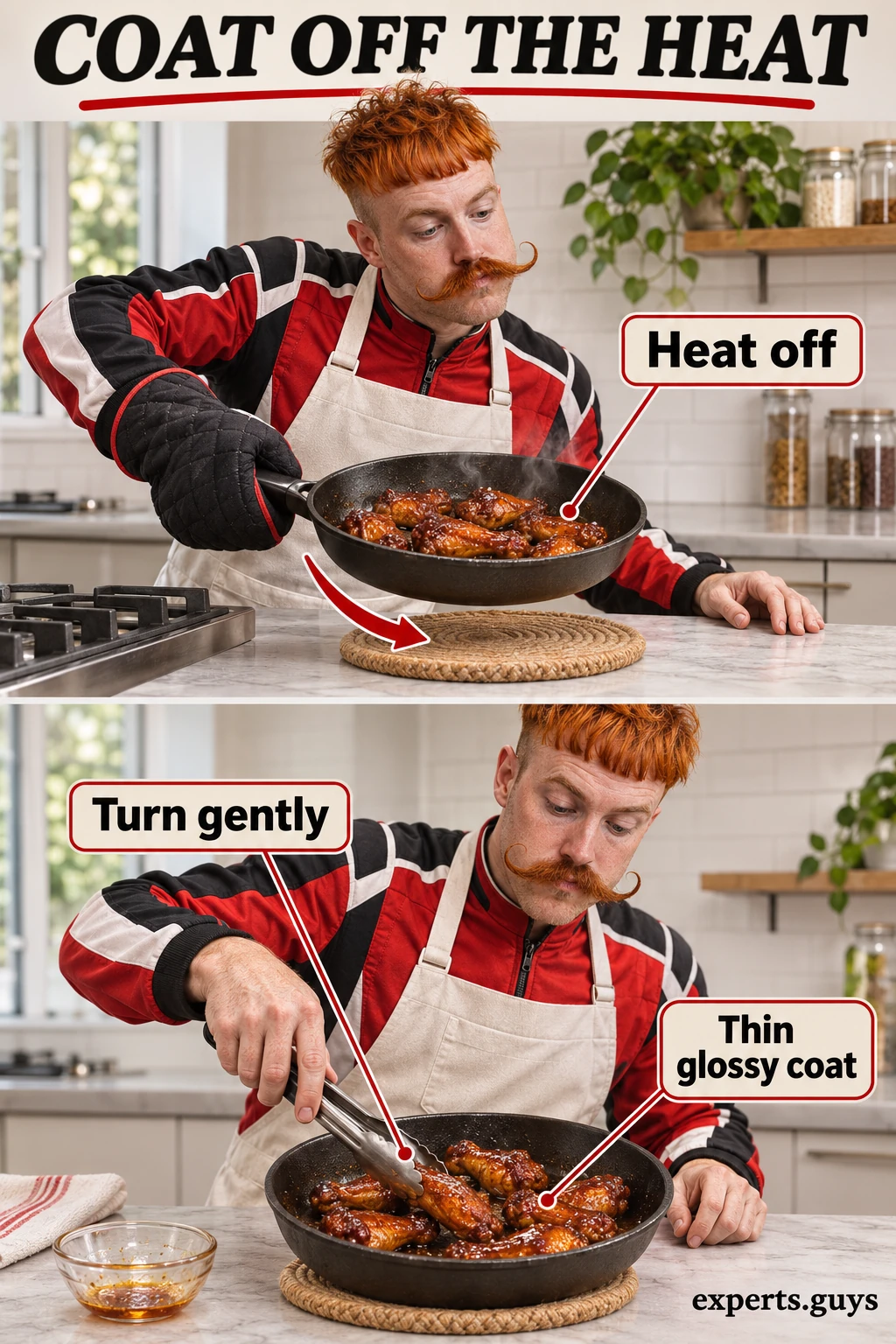
Removing the pan matters on an electric or ceramic hob because the cooking surface can stay hot after you switch it off. A thin glaze should cling without forming a heavy pool on the plate. The moist cooking method leaves the skin soft; for a crisp-skin result, use the separate oven hot-wings guide rather than adding an untested broiling step to this sugar-rich sauce.
How do you fix the glaze and reheat leftovers?
| What you see | What to do | Why / limit |
|---|---|---|
| Thin sauce runs off the wings | Keep the cooked wings out and simmer the sauce a little longer, checking frequently. | More water must evaporate. Do not overcook the chicken while waiting. |
| Thick, sticky sauce; no burnt smell | Move the pan off the heat. Once vigorous bubbling subsides, carefully stir in 1 tbsp water; repeat only if needed. | Water loosens an over-reduced sauce. Avoid splashing into a violently hot pan. |
| Black patches, smoke or bitter burnt smell | Stop heating and discard the sauce once safe to handle. Do not scrape burnt residue into the food. | Water cannot remove burnt flavor. Keep uncoated cooked wings only if they are unaffected. |
| Sauce tastes too salty | Stop reducing; serve a lighter coating with plain sides. | Evaporation concentrates salt. More reduction will make it worse; do not promise a perfect rescue. |
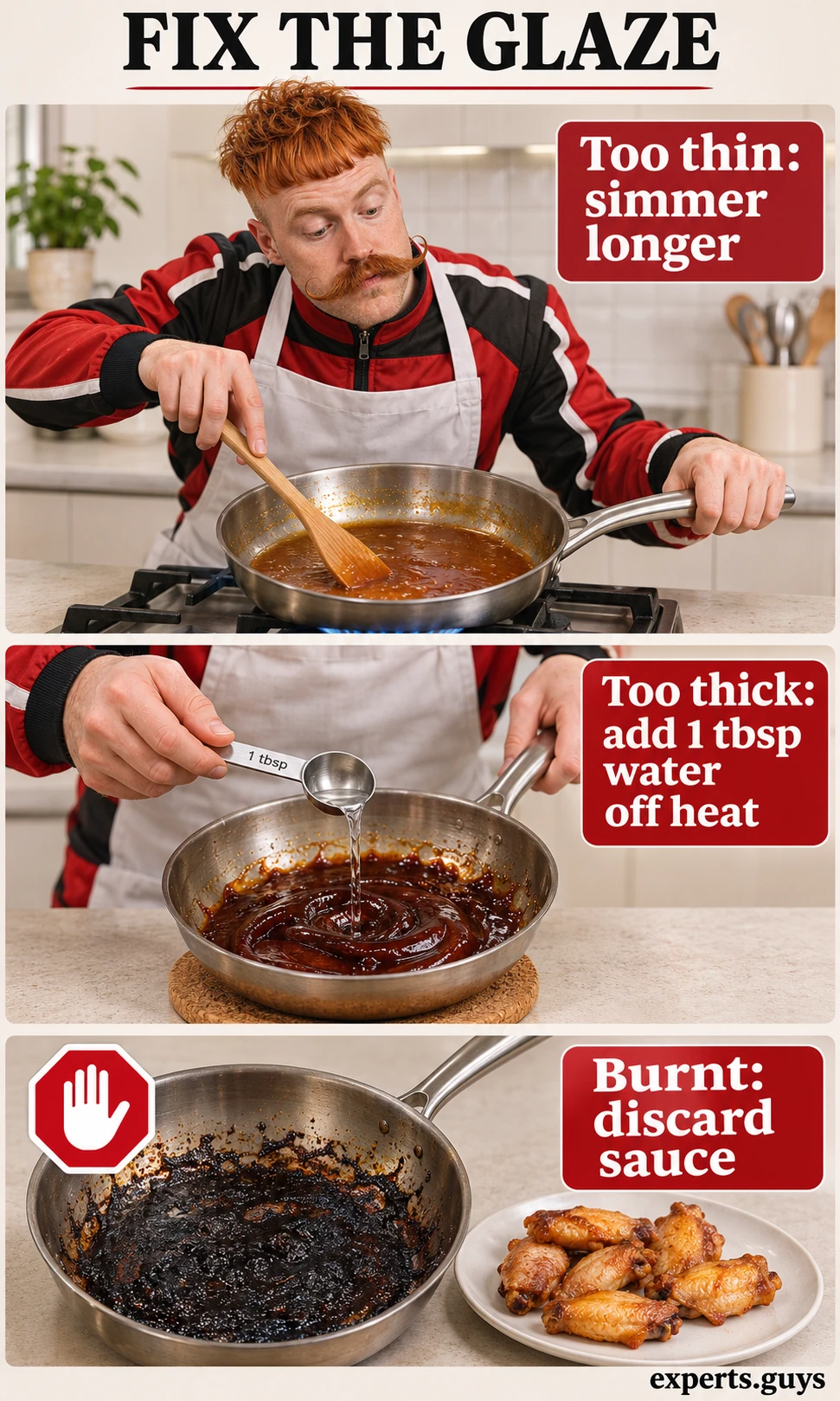
Small adjustments are easier while the sauce is separate from the meat. If a batch is already heavily coated in bitter burnt sauce, there is no reliable way to restore the intended flavor. For the next batch, use moderate heat, keep the wings out during reduction, and stop at the flowing-glaze checkpoint.
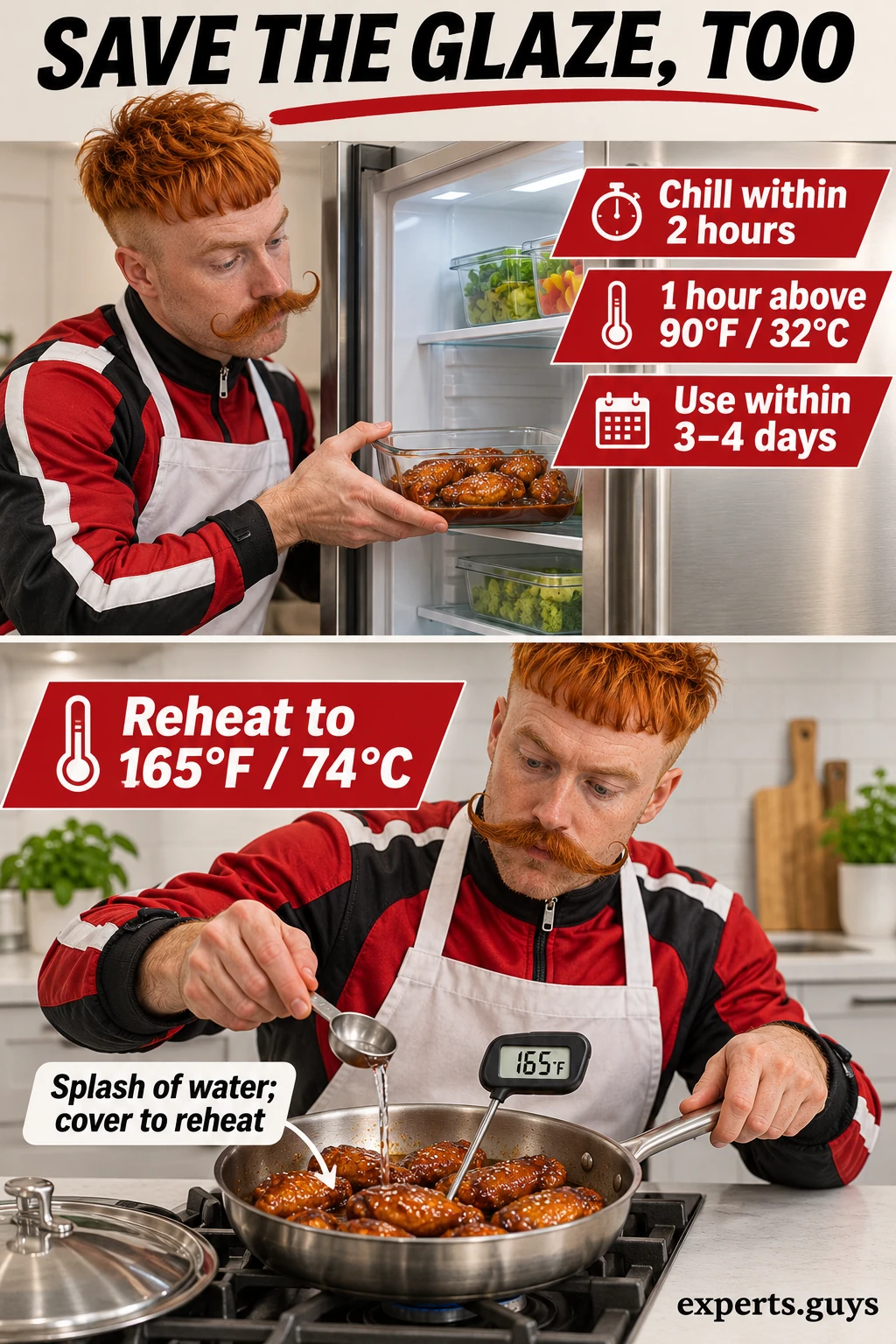
Put leftovers into shallow containers and refrigerate within two hours, or within one hour when the surrounding temperature is above 90°F (32°C). Do not wait for a large pan to sit out until completely cold. The FoodSafety.gov cold-storage chart gives cooked poultry 3–4 days in a refrigerator at 40°F (4°C) or below.
- Chill in shallow portions. Transfer leftovers into clean, shallow containers and refrigerate within the applicable time limit.
- Reheat gently with moisture. Put only the portion needed into a pan with a small splash of water before heating. Cover and warm gently, turning as needed so the glaze does not dry onto the pan.
- Check the meat again. Reheat leftovers to 165°F (74°C), checking the thickest meat rather than just the hot sauce. Serve once hot; do not keep reducing an already thick glaze.
Frequently asked questions
Can I use flat cola?
Yes. The recipe uses cola for its liquid, sugar and flavor, not for lasting fizz. Use cola that has been stored appropriately; carbonation is not the glaze-readiness test.
Can I use Coke Zero or Diet Coke?
Not as a direct swap in this recipe. Their sweeteners do not provide the same sugar body when reduced. Use a recipe developed for that drink rather than boiling it longer and expecting the same glaze.
Are these wings very spicy?
The cola is sweet; the chili supplies the heat. Half a teaspoon of chili flakes is a starting point, but strength varies by product. Use less or omit it for a non-spicy batch. This is not a medical or child-feeding recommendation.
Can I double the recipe in the same pan?
Only if the wings still fit in one layer and the pan has enough safe working room. Otherwise make separate batches. A doubled volume of liquid will not necessarily reduce in the same time, so use the flow checkpoint rather than doubling the timer.
Can I make the wings crispy after glazing?
This recipe is designed for tender, soft-skinned wings. Extra high heat can burn the sugar coating before producing the crispness you want. Choose the linked oven method when crisp skin is your main goal.
Is this a healthier way to make hot wings?
Avoid treating the lack of deep-frying as a complete nutrition assessment. The dish still contains sugar and sodium, and serving size matters. No nutrition analysis or health benefit is claimed for this recipe.
Next steps
For your first batch, focus on two checkpoints: safely cooked meat before removal, and a sauce that still flows before coating. If you are feeding a group, use the party wing-quantity guide for planning; if you want a different texture or cooking setup, compare the other hot-wing cooking methods.