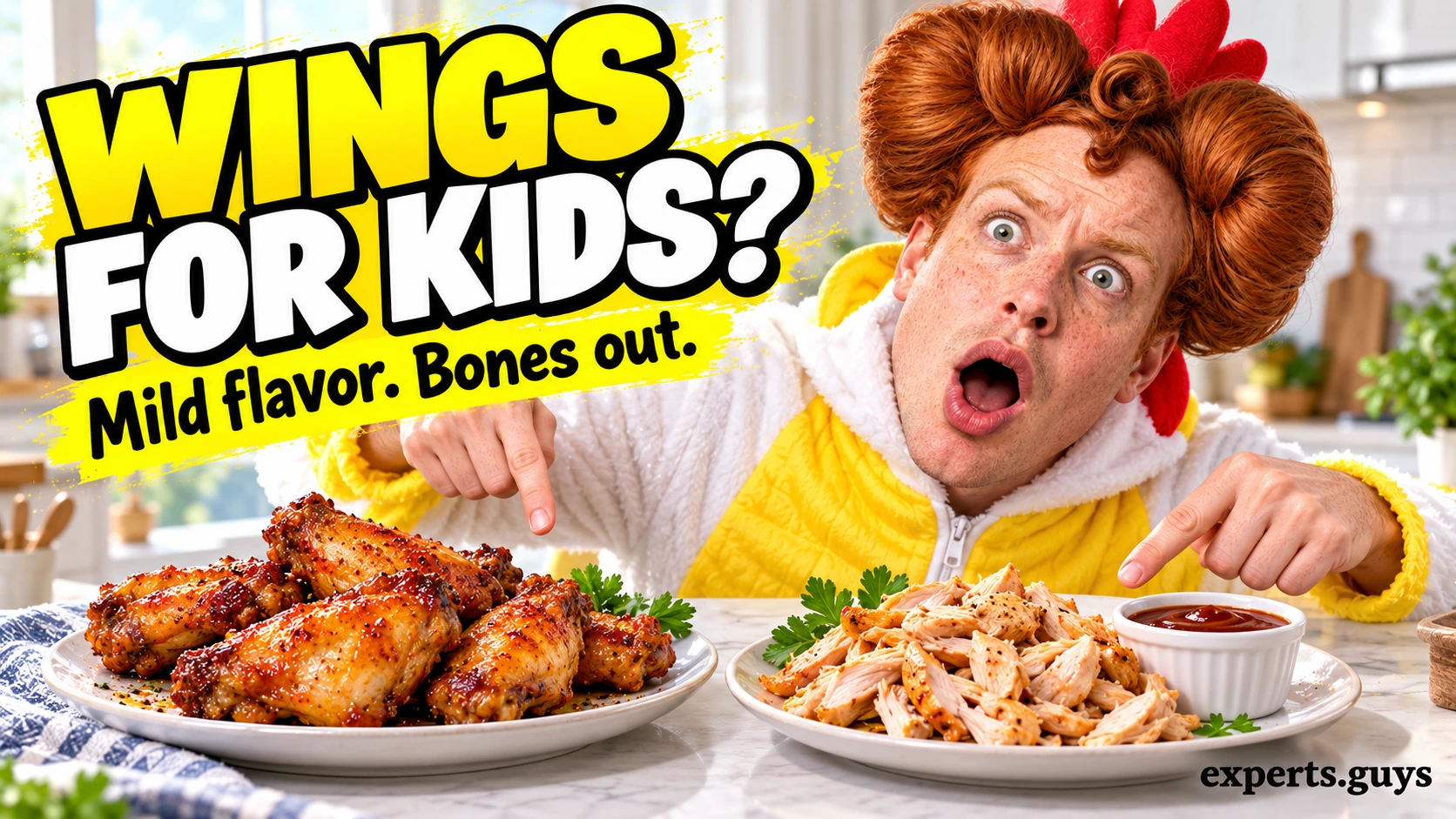
Hot wings are chicken wings served with a chili-based sauce, but children who enjoy the chicken may not enjoy the heat. Their appeal can come from savory flavor, a familiar dipping routine, or sharing the same meal as everyone else; it is not evidence that all children like spicy food. For a family serving, keep a plain portion separate and adapt the meat’s bones, texture, and temperature to the child before adding any sauce.
Why do some children like wings but dislike hot sauce?
A wing offers several experiences at once: browned flavor, meat, skin, sauce, and a hand-held format. A child can like one and reject another, so “likes wings” is an incomplete description of what they will actually eat. Treat the sauce as an optional component rather than the ingredient that makes the meal worth serving.
There is no reliable child-specific popularity figure established here, and a family’s preference does not prove a universal trend. The practical question is narrower: does this child want the chicken, the coating, the dip, or the shared occasion? That distinction helps you change the difficult part without preparing an entirely different dinner.
- Likes the chicken, rejects the burn: reserve unsauced cooked meat before the adult batch is tossed.
- Likes dipping, rejects mixed foods: keep an already tolerated, mild dip in its own small dish.
- Likes the flavor, struggles with chewing: change the meat texture rather than adding more sauce.
- Does not want wings: offer another familiar food without a spicy-food challenge.
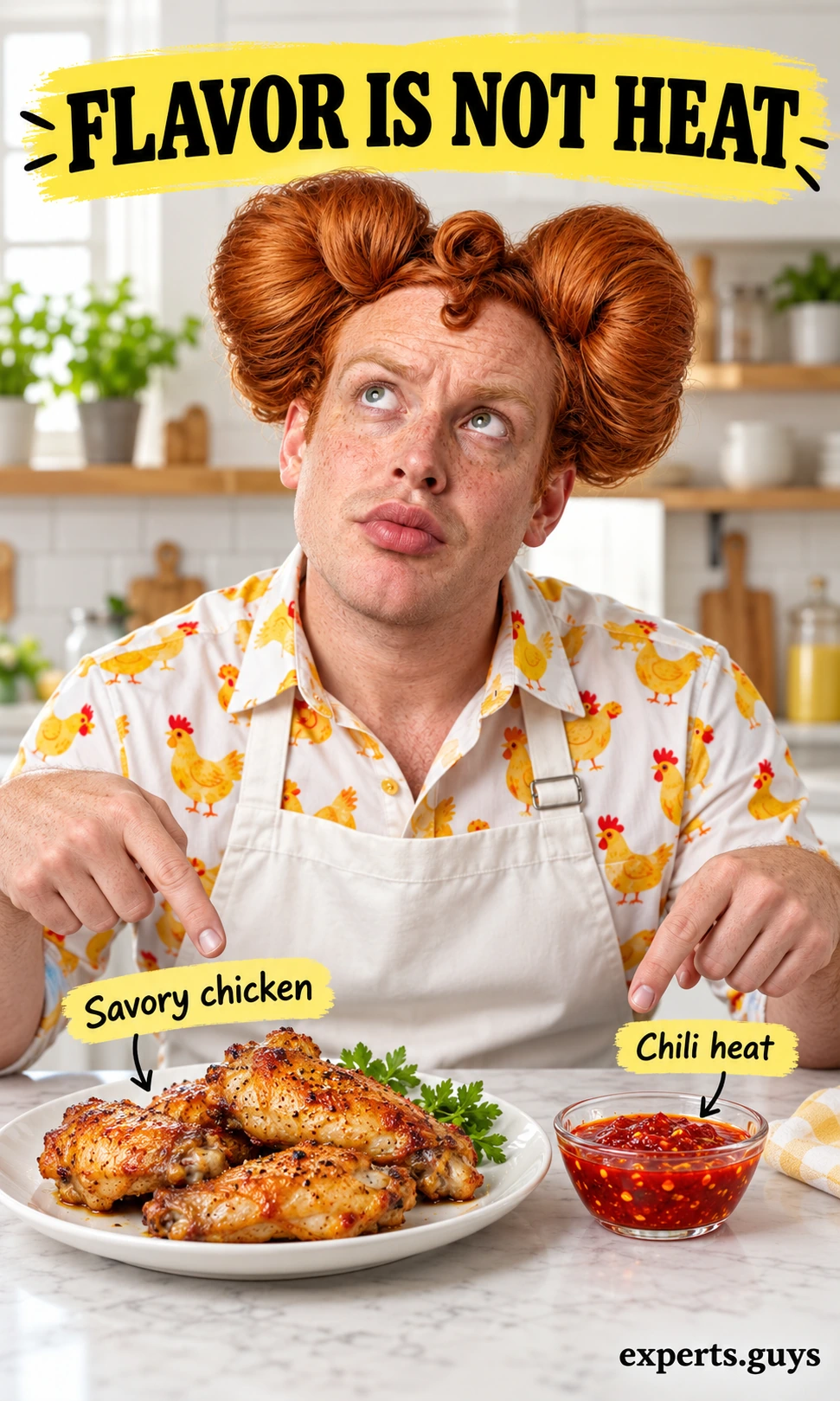
Chili heat is different from the temperature of the food. Capsaicin can produce a burning sensation even in a cool sauce, while freshly cooked plain chicken can still be too hot to eat. A child’s rejection of one does not tell you which problem occurred; ask whether the food feels physically hot, spicy, or difficult to chew.
Do not use a “mild” label as a child-specific tolerance rating. Brands and recipes vary, and a sauce you barely notice can still be unpleasant to someone else. For a child who dislikes chili, plain means leaving chili out of that portion, not covering it with a sweeter sauce and hoping the burn disappears.
The effects of too much capsaicin can include mouth irritation and stomach symptoms. Stronger is not a developmental goal, and eating a hotter wing is not an achievement a child needs to demonstrate. Keep intensely hot sauces and eating challenges out of the family serving routine.
| What the child notices | Likely issue to separate | Useful adjustment |
|---|---|---|
| “It burns,” even when cool | Chili heat | Offer plain, unsauced chicken; do not pressure another taste. |
| “It is too hot,” straight from the oven | Serving temperature | Let the individual portion cool to comfortably warm before eating. |
| Long chewing or tough pieces left behind | Texture | Choose moist, tender boneless meat prepared for the child’s eating skills. |
| Only wants the dip | Preference or familiarity | Keep components separate and offer a familiar accompanying food. |
Baking, grilling, and frying are different ways to cook the chicken; none tells you whether the final sauce suits the child. Your choice of wing cooking method can remain a separate decision. The child’s serving still needs its own texture and heat check.
Which wing format fits a child’s eating skills?
For babies and young children, do not serve whole bone-in wings. Bones and tough or large meat pieces are recognized choking hazards; removing the bone is only one part of preparing a suitable serving. The remaining meat also needs an appropriate texture, shape, and size.
There is no birthday that makes every child ready to manage a flat or drumette. Older children differ in chewing ability, attention, and familiarity with bones. If there is any doubt, a carefully checked boneless portion avoids asking the child to discover small bones or cartilage while eating.
Boneless wings are not automatically soft
A restaurant “boneless wing” may be a breaded piece of chicken rather than meat taken from a wing. Its crust can be firm and its center can be a substantial chunk. The name answers a bone question, not a chewing question, so judge the actual food rather than treating the menu wording as a safety assurance.
For a child already eating suitable solids, plain boneless chicken cooked until tender can be simpler to prepare than dismantling many small wings. This is an easier ingredient choice, not a second wing recipe. Follow any established feeding plan for a child with swallowing difficulties; ordinary family-food preparation is not a substitute for an individually prescribed texture.
How do you prepare a plain portion before saucing?
Start with fully cooked, unsauced chicken, a clean plate, a separate discard bowl, and clean utensils. This workflow’s distinct job is to turn the family batch into a child-appropriate portion before spicy sauce reaches it. It does not require a second batch, a phone, or written tracking.
Check cooking temperature before taking meat off
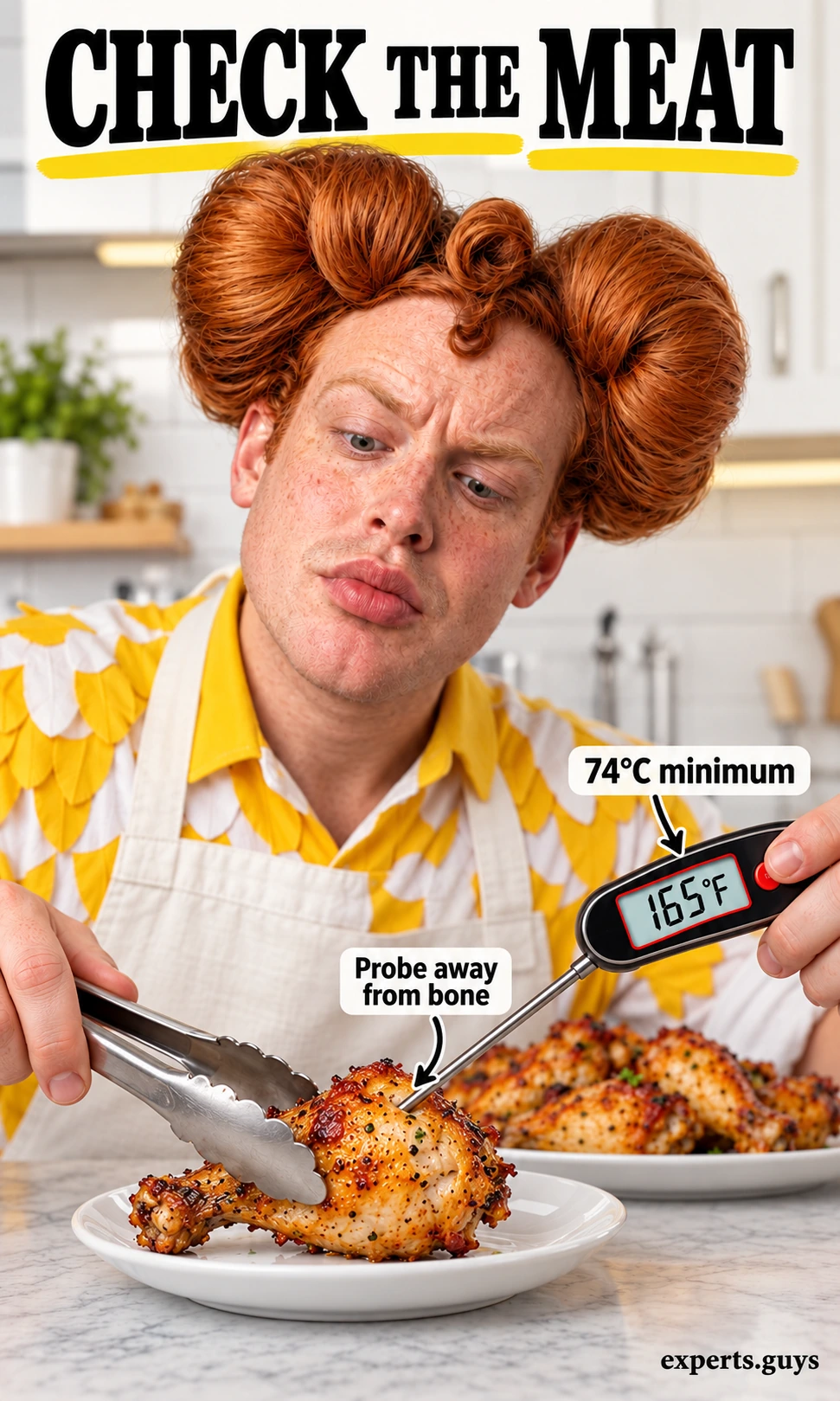
Chicken must reach 165°F (74°C) internally. Insert a food thermometer into the thickest meat without touching bone and check the wings individually; a reading from the pan, skin, or bone does not establish the meat temperature. If a piece is below the minimum, continue cooking and recheck it.
Keep the cooked-food plate away from raw chicken and its juices. The chicken food-safety guidance also advises against washing raw chicken, which can spread contamination. Color and crispness do not replace the thermometer checkpoint; a browned exterior is not proof that the center is done.
For the cooking stage itself, use the dedicated oven-wings guide, keeping the thermometer requirement above as the final doneness check. Cooking time varies with wing size, starting temperature, and oven performance. The preparation below begins after that cooking check, not after a fixed number of minutes.
Remove, spread, inspect, then shorten the fibers
Let a small working portion cool enough to handle safely, without leaving the whole batch sitting out. Work on one wing at a time so the meat you have checked does not mix with unchecked pieces. Clean hands and an uncluttered light-colored plate make the small pieces easier to see.
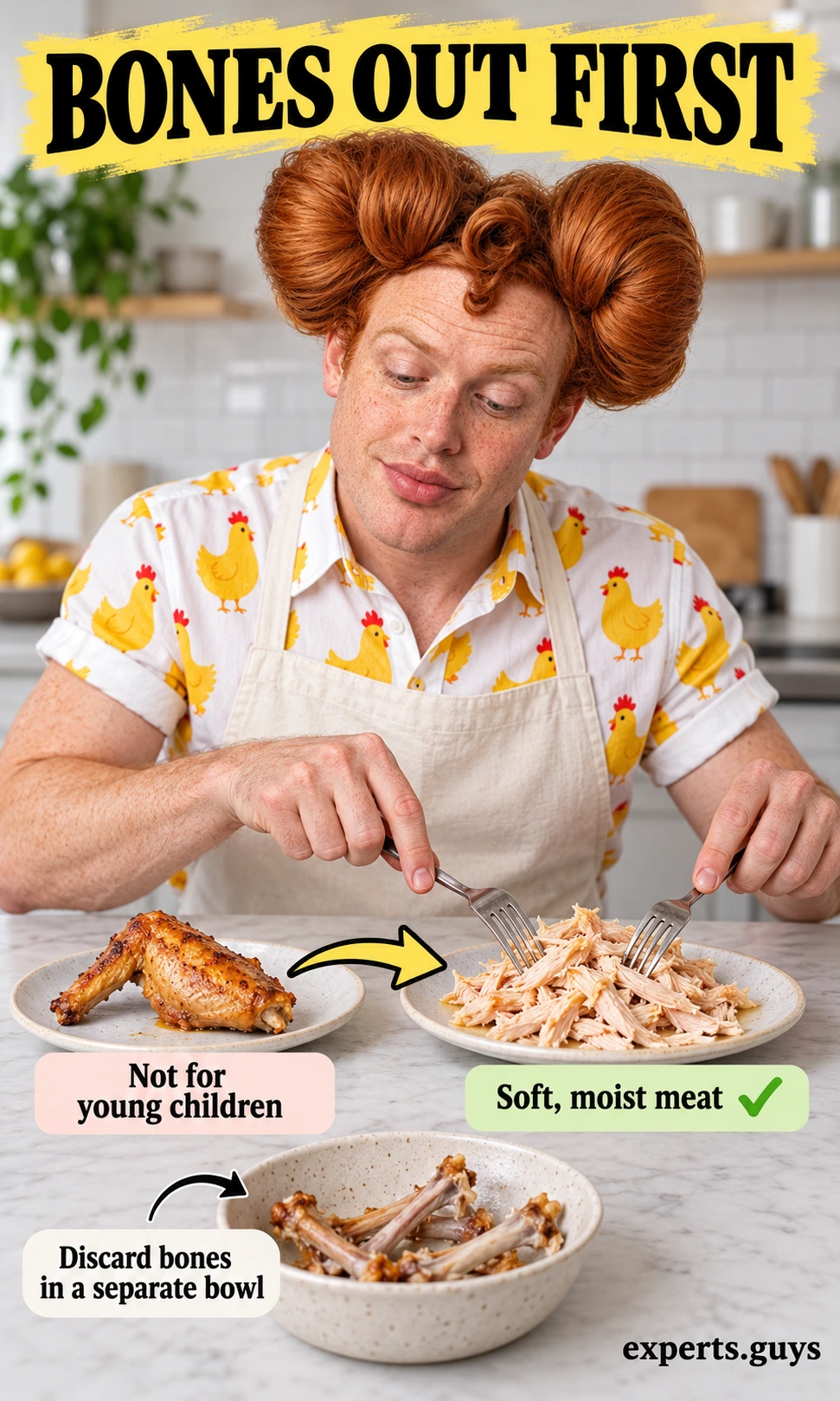
- Remove: pull cooked meat away from the bones. Put bones, cartilage, and skin that is tough or rubbery directly into the discard bowl.
- Spread and inspect: open the meat into a thin layer. Check it visually and gently with clean fingertips for hard fragments; do not assume an intact-looking bone means nothing broke off.
- Shorten: pull tender meat into fine shreds with two forks, then cut across any long strands with clean kitchen shears. Match the final texture to the child’s established eating skills.
- Check the result: the portion should be moist and easy to separate, without hard bits, leathery skin, or long stringy clumps. If the meat stays tough, choose a more suitable food instead of hiding it under sauce.
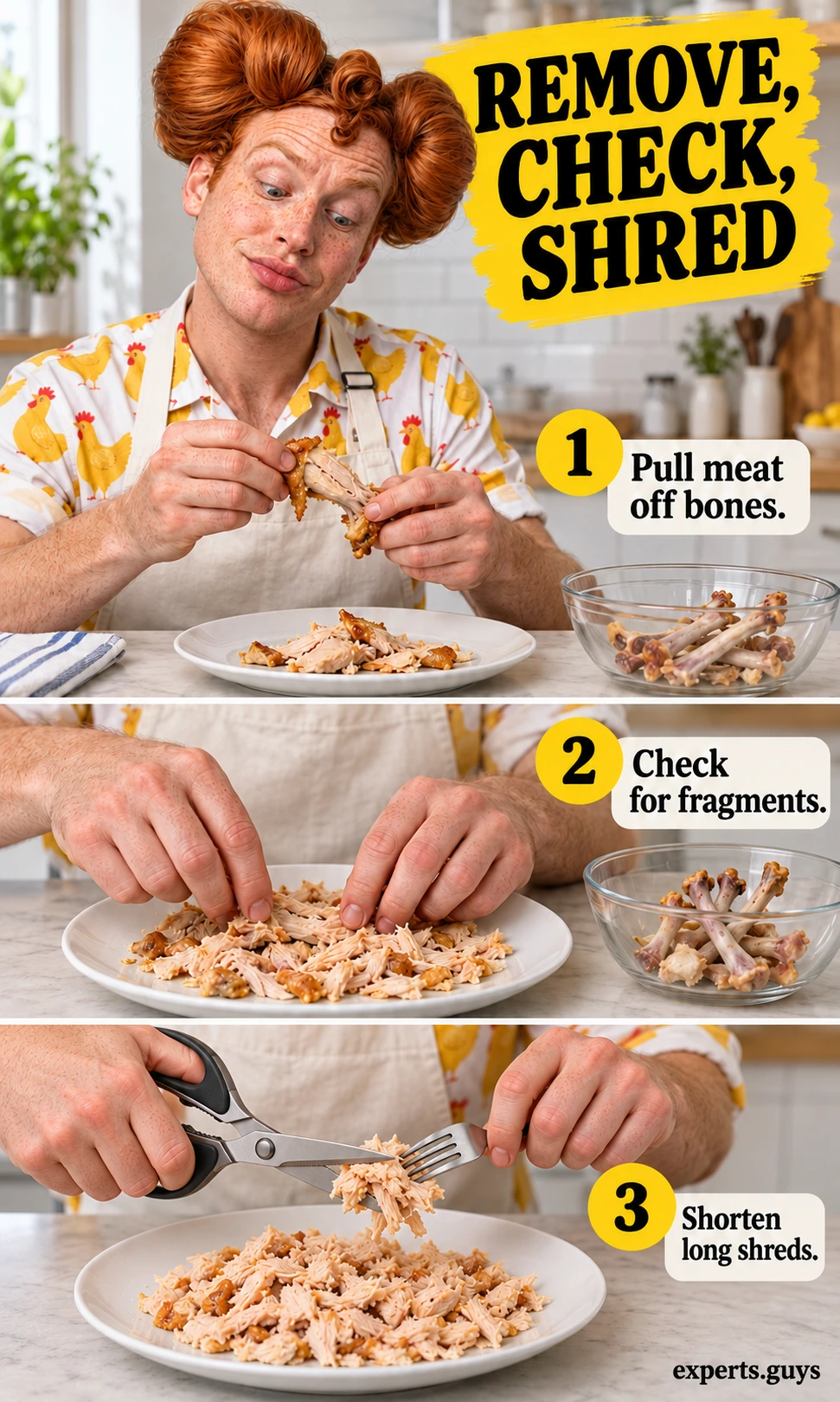
Do not use the quick “slide the bones out” trick as your only check. Even when the major bones come away cleanly, the serving still needs inspection and suitable texture. If handling a small wing is awkward, switch to tender boneless chicken rather than speeding through an uncertain bone check.
Reserve the plain serving before the adult toss
Use a clean serving spoon to move the checked plain meat into its own serving dish first. Only then put the remaining wings into the adult sauce bowl. Keep that bowl and its tongs separate, and do not return sauced utensils to the plain portion.
This order is easier to control than trying to wipe sauce off later. Once sauce coats a wing, removing visible red liquid does not reliably remove chili or an unwanted ingredient. The practical correction for an accidentally sauced portion is to replace it with food you know is suitable, not dilute it by guesswork.
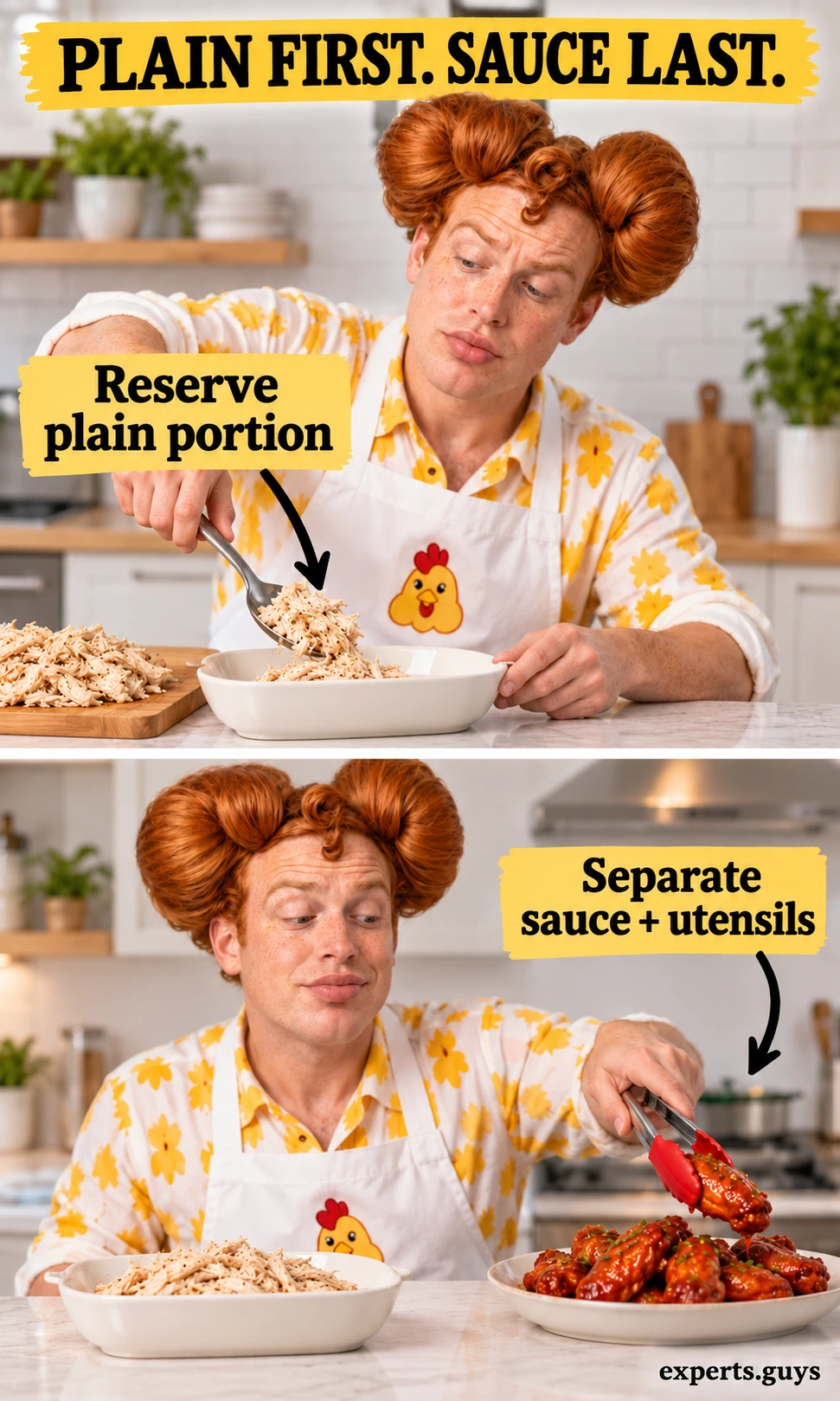
Check the dip separately from the meat
A dip can contain ingredients that were absent from the chicken: milk in a creamy dressing, egg in mayonnaise, or wheat, soy, and sesame in coatings or sauces. Read the actual ingredient information every time; a familiar product can change. The FDA’s allergen-label guidance explains why a missing “Contains” statement does not replace reading the full ingredient list.
Plain and allergy-safe are different claims. A shared fryer, preparation surface, marinade, or utensil can matter when someone has a food allergy. Follow that child’s allergy plan, and at a restaurant ask about preparation as well as ingredients; choosing a sauce-free item alone does not establish that it is suitable.
How should wings be served and leftovers handled?
Build the child’s plate around the prepared meat, not the restaurant basket. The usual hard carrot or celery sticks may be unsuitable for a young child, even if the chicken has been modified. A familiar soft side keeps the meal recognizable without asking the child to manage several difficult textures at once.
Check the side and serving warmth
For a simple example, pair moist prepared chicken with mashed potato and cooked carrot. Press the carrot with a fork: it should mash readily, rather than resist like a raw stick. Adapt its final size and texture to the child, and let the individual chicken serving reach a comfortably warm eating temperature.
Keep the child sitting upright and supervise eating. Offer a modest first serving and more if wanted rather than turning a wing count into a requirement. Choking-prevention guidance emphasizes preparation and calm, seated meals; no plate arrangement eliminates every risk.
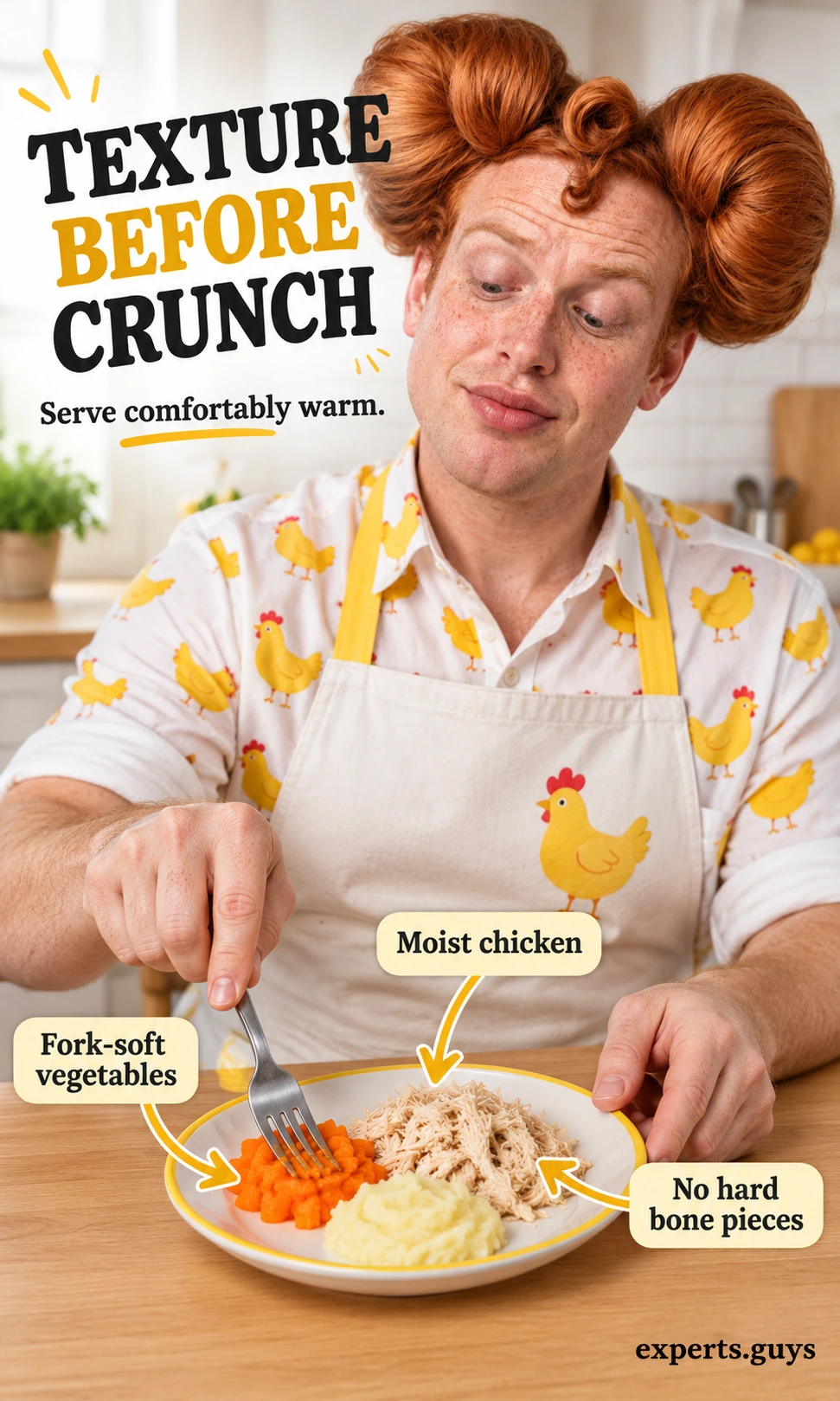
At a gathering, set aside the plain serving before the shared platter goes out. Shopping quantities belong with the party-wing quantity guide; a child’s plated amount depends on appetite, other foods, and how much edible meat remains. Whole wings, wing sections, and boneless pieces are not interchangeable counting units.
Chill the unused batch promptly
Put leftovers into shallow containers and refrigerate promptly rather than waiting for a large pile to reach room temperature. The maximum time out is two hours, or one hour when conditions are above 90°F (32°C). If that limit has been exceeded, discard the food; reheating is not a reliable way to rescue mishandled leftovers.
Keep the refrigerator at 40°F (4°C) or below. Use properly stored cooked chicken within three to four days, or freeze it sooner; reheat leftovers to 165°F (74°C), checking the meat again. These leftover-storage limits also apply to takeout, so travel and time on the table both matter.
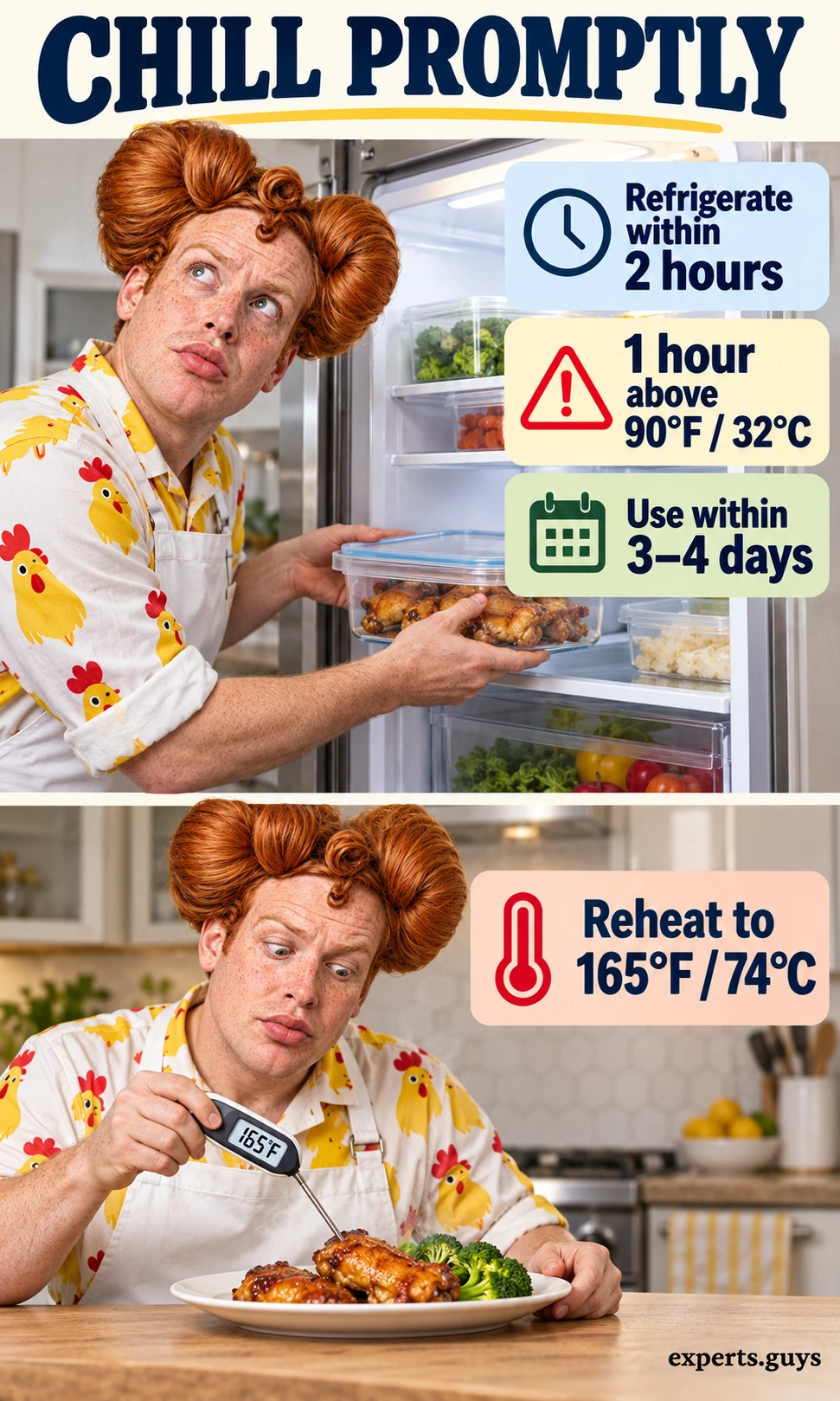
If a bite causes discomfort
Stop serving the spicy food rather than asking the child to finish it. Trouble breathing, swelling of the lips or tongue, collapse, or inability to speak or cough effectively needs emergency help, not another food experiment. For ongoing pain or repeated vomiting after a very spicy exposure, seek prompt medical or poison-center advice.
Frequently asked questions
Does eating wings make children aggressive?
The way a chicken portion is served does not establish that it causes aggression. A small behavior study is not a sound basis for predicting a child’s behavior or prescribing a family diet. Choose food format for eating ability, comfort, and safety.
Can sweet sauce cancel out chili heat?
Sweetness can change how a sauce tastes, but it does not reliably remove capsaicin. For a child avoiding heat, keep a genuinely unsauced portion rather than trying to correct a hot batch with sugar.
Can I order mild wings for a child at a restaurant?
Ask whether the chicken can be served unsauced and what is in the coating or marinade. “Mild” is not a consistent heat standard. Check the actual texture and bones before serving, and discuss preparation separately if food allergies are involved.
Should a child finish a fixed number of wings?
No fixed wing count fits every child or meal. Wing sizes and edible yield vary, and appetite depends on the other foods offered. Start with an appropriate prepared serving and allow more if wanted.
Is a crispy outside proof that a wing is cooked?
No. Use a food thermometer in the meat and confirm at least 165°F (74°C), avoiding the bone. Crispness, color, and a recipe’s estimated time cannot confirm the internal temperature.
Choose the serving that fits tonight
If the family is having wings, reserve plain meat before the adult sauce, check the cooked portion for bones and texture, and pair it with a familiar suitable side. If preparing the wing meat is awkward or the child does not want it, another tender protein is a reasonable choice. The useful outcome is a meal the child can manage comfortably, not proving they can eat the same wing as an adult.