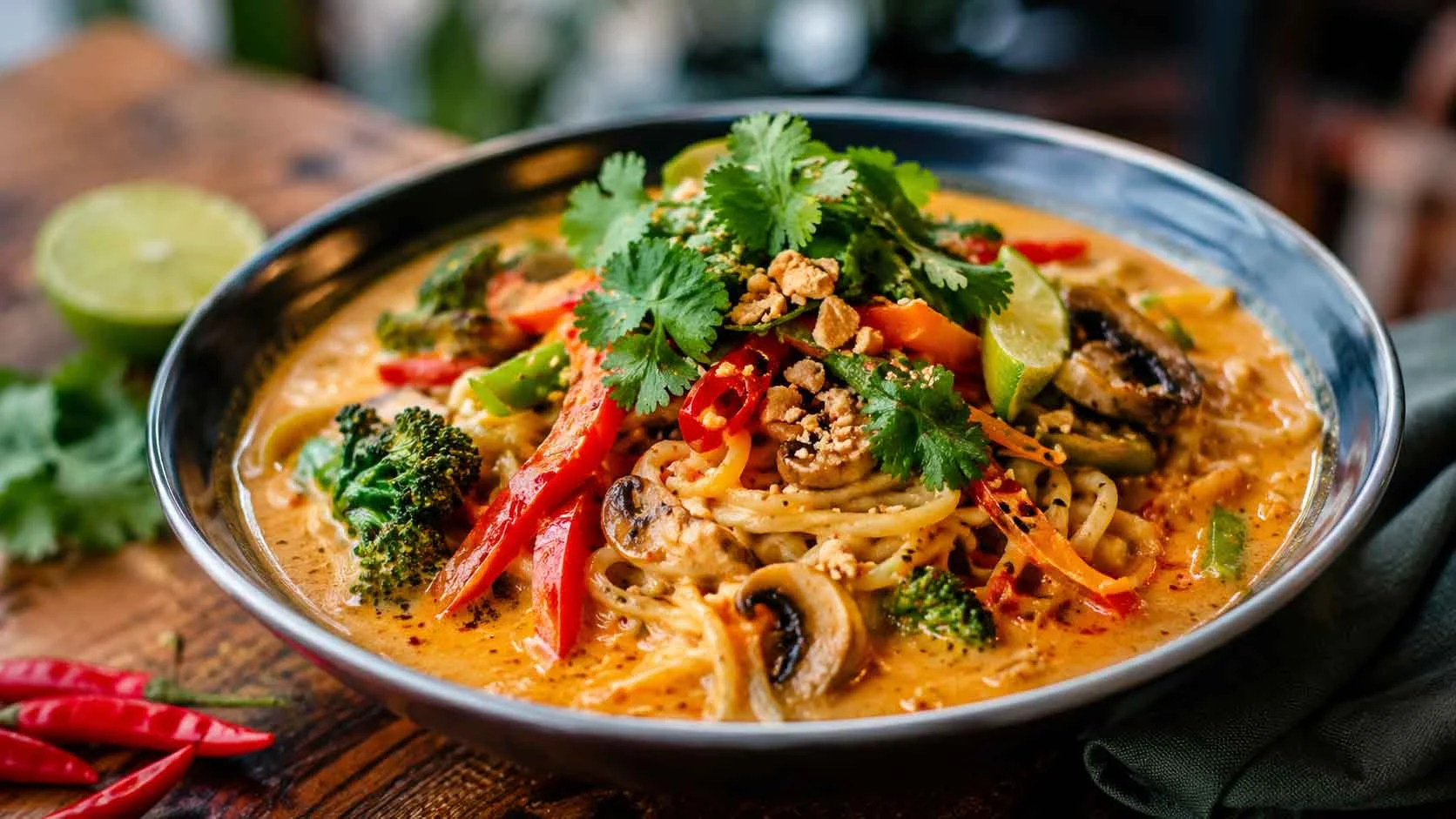

There is a reason spicy coconut curry noodles continue to appear on restaurant menus, food delivery apps, and social media feeds. The combination of silky noodles, creamy coconut milk, warming spices, fresh vegetables, and customizable proteins creates a meal that feels indulgent while remaining surprisingly easy to prepare at home. Unlike many takeout dishes that require numerous specialty ingredients, coconut curry noodles rely on pantry staples that many home cooks already have available.
What makes this dish especially appealing is its flexibility. It can be adjusted for families with young children, transformed into a vegan meal, upgraded with seafood or chicken, or prepared ahead for lunches throughout the week. The creamy coconut broth balances spicy flavors without overwhelming the palate, creating a dish that feels comforting in cooler weather while remaining light enough for year-round enjoyment.
Whether you need a quick weeknight dinner, a meal-prep solution, or simply want a restaurant-quality noodle bowl without leaving home, spicy coconut curry noodles deliver bold flavor with surprisingly little effort.
Why Spicy Coconut Curry Noodles Are Trending
Food trends often come and go, but coconut curry noodles continue gaining popularity because they solve several modern cooking challenges at once. They are fast to prepare, highly adaptable, relatively affordable, and easy to customize based on dietary preferences.
Many households are moving away from complicated recipes that require dozens of ingredients and hours of preparation. Coconut curry noodles offer rich flavor without excessive effort. The combination of vegetables, noodles, and a creamy sauce creates a complete meal in a single bowl, reducing cleanup while maximizing satisfaction.
ExpertsGuys Curry Noodle Builder
Build Your Coconut Curry Noodle Bowl
Create a custom noodle bowl based on your noodle type, spice level, protein, vegetables, sauce style, and family needs.
The growing interest in plant-based eating has also contributed to their popularity. Coconut milk naturally provides richness without dairy, making it suitable for vegetarian and vegan households while still appealing to meat eaters.
Readers who enjoy creamy curry flavors may also like this 15-minute vegetable curry, which uses a similar coconut-based flavor approach in a rice-friendly format.
What Makes Coconut Curry Noodles So Delicious
The magic of this dish comes from balancing four important elements: creaminess, spice, texture, and freshness.
Coconut milk provides a luxurious base that softens the intensity of chili and curry spices while adding natural sweetness. Aromatics such as garlic, ginger, and onions build depth, while vegetables contribute texture and color. The noodles absorb the sauce as they cook, allowing flavor to penetrate every bite.
Fresh herbs added at the end create contrast against the richness of the curry. This combination of creamy, spicy, savory, and fresh flavors is what keeps people returning to coconut curry noodles again and again.
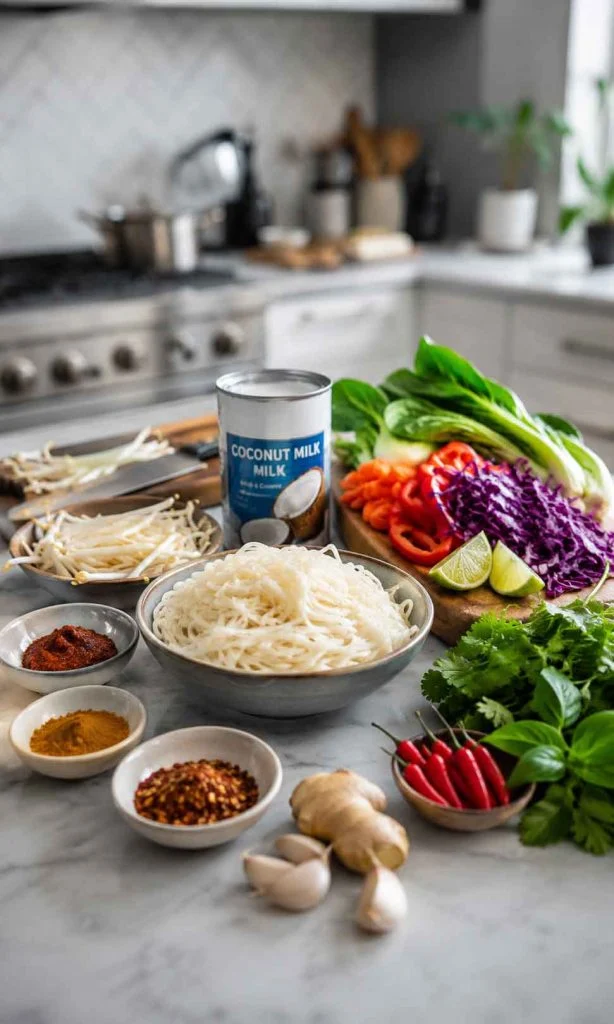
Ingredients You Need

A great bowl of coconut curry noodles starts with quality ingredients. While there are many variations, most versions rely on a similar foundation.
Core Ingredients
- Rice noodles
- Coconut milk
- Garlic
- Fresh ginger
- Onion
- Curry powder or curry paste
- Chili flakes or chili paste
- Vegetable broth
- Fresh cilantro
Vegetables
- Bell peppers
- Carrots
- Broccoli
- Snow peas
- Spinach
- Mushrooms
- Bok choy
Optional Protein Additions
- Tofu
- Chickpeas
- Shrimp
- Chicken
- Paneer
Best Noodles For Coconut Curry
Not all noodles create the same experience.
Rice Noodles
Rice noodles are the most traditional choice. Their light texture absorbs curry flavors while maintaining a satisfying bite.
Udon Noodles
Udon noodles create a richer and more filling meal. Their thick texture works especially well with creamy coconut sauces.
Ramen Noodles
Ramen noodles provide a springy texture that pairs beautifully with spicy broth.
Egg Noodles
Egg noodles contribute additional richness and work well with proteins such as chicken or shrimp.
Whole Wheat Noodles
Whole wheat noodles provide extra fiber and create a slightly nuttier flavor profile.
If you want another flexible grain-based dinner idea, this guide on how to cook quinoa and 20 quinoa recipes can help with side dishes and meal prep.
Step-By-Step Spicy Coconut Curry Noodles Recipe
Step 1: Build The Flavor Base
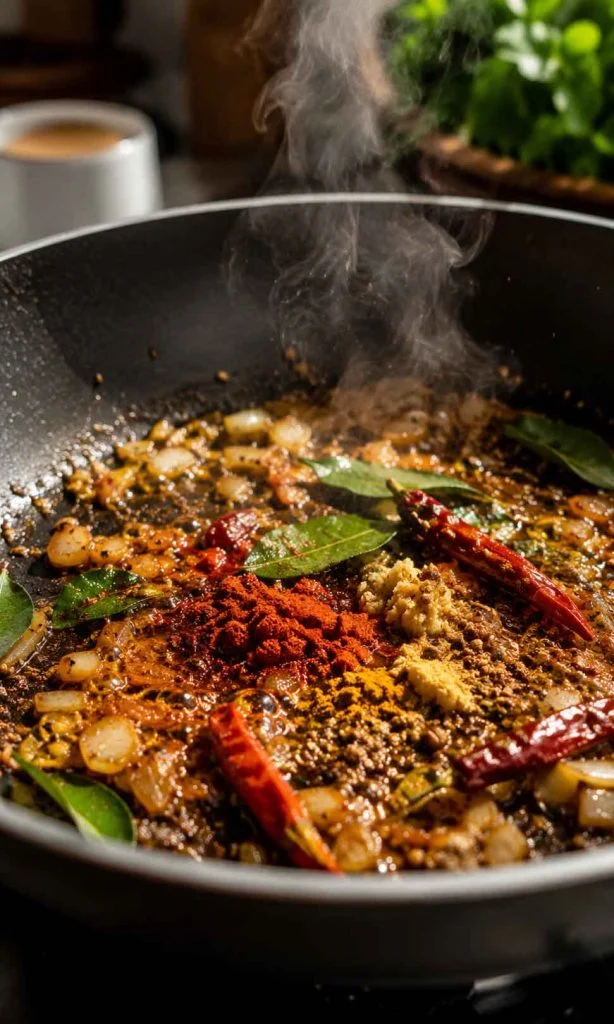
Heat a tablespoon of oil in a large skillet or wok over medium heat. Add onion and cook until softened before stirring in garlic and ginger. Once fragrant, add curry spices and chili to bloom the flavors.
Step 2: Create The Sauce
Pour in coconut milk and broth. Stir thoroughly until the sauce becomes smooth and evenly combined.
Step 3: Add Vegetables
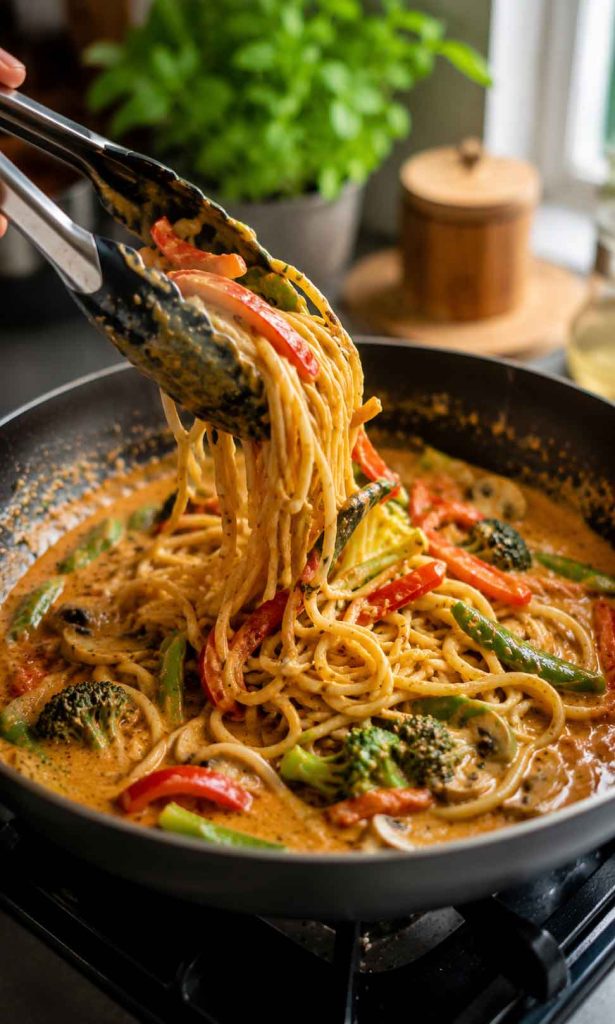
Add vegetables according to cooking time. Hard vegetables such as carrots should be added first, while spinach should be added near the end.
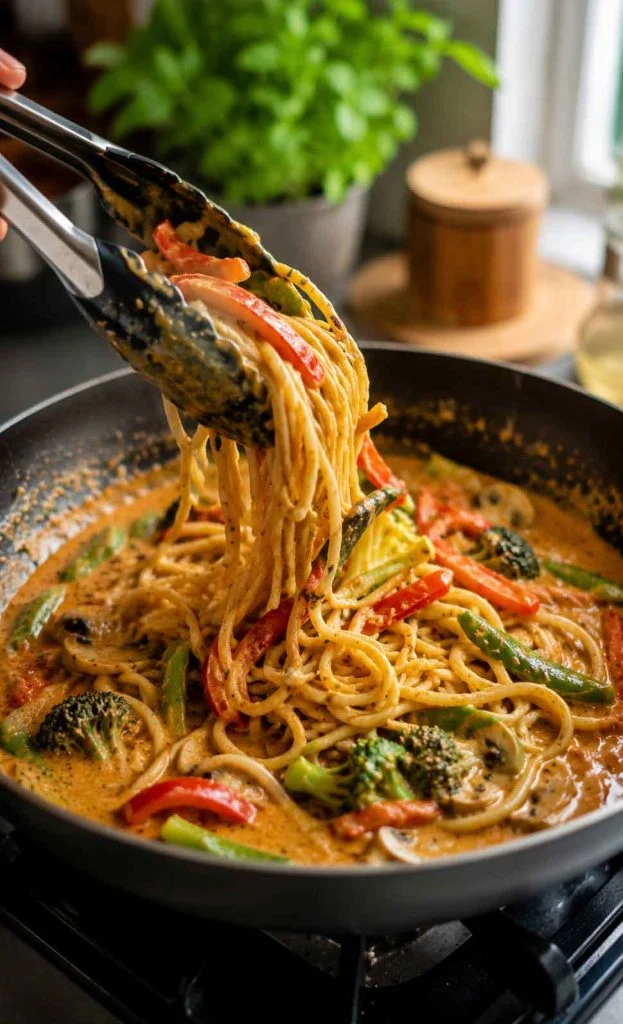
Step 4: Cook The Noodles
Add cooked noodles directly into the sauce and toss gently to coat.
Step 5: Finish And Serve
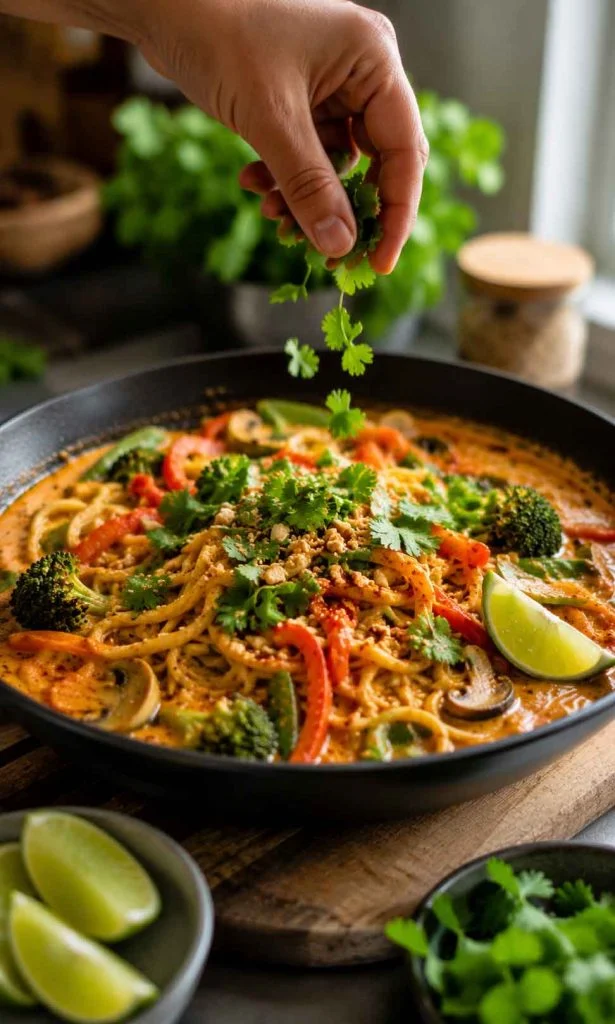
Remove from heat and garnish with cilantro, lime wedges, sliced chili, or green onions before serving.
What To Serve With Coconut Curry Noodles
Spicy coconut curry noodles are satisfying on their own, but the right side dishes can transform them into a complete restaurant-style meal. The best accompaniments either provide freshness to balance the richness of the coconut milk or add texture that contrasts with the soft noodles.
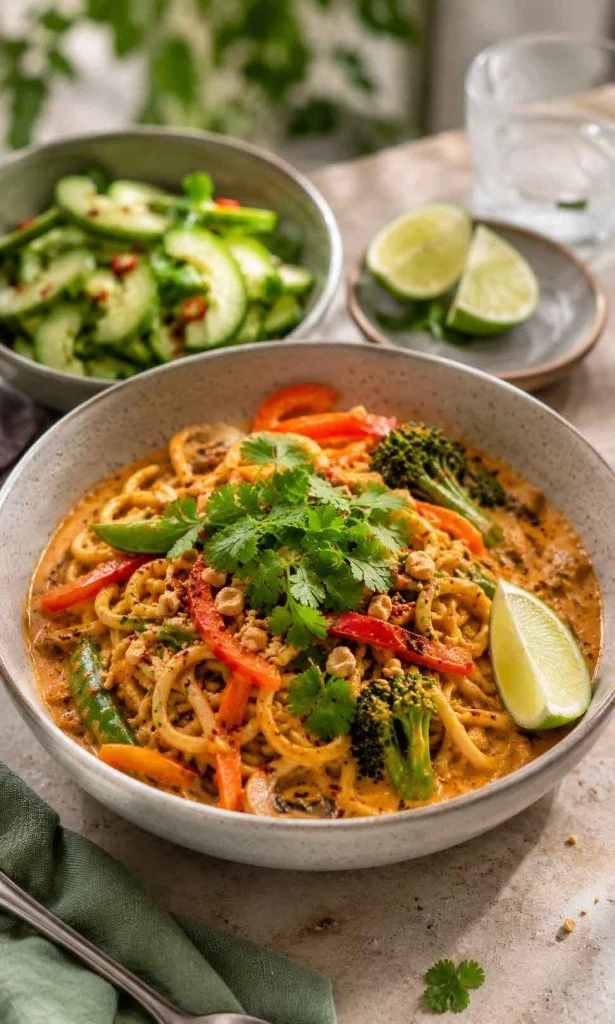
Fresh Cucumber Salad
A simple cucumber salad dressed with lime juice and herbs provides a cooling contrast to the warming curry spices. The crisp texture also adds freshness to every bite.
Garlic Flatbread
Soft garlic flatbread works wonderfully for soaking up extra curry sauce. Many families enjoy serving warm naan or roti alongside noodle bowls for a more substantial meal.
ExpertsGuys Kitchen Noodle Builder
What’s In My Kitchen Noodle Builder
Choose what you already have and create a coconut curry noodle plan, missing ingredient list, substitute guide, food waste score, and printable shopping list.
Saved Favorite Noodle Combos
'; }).join(''); } document.addEventListener('DOMContentLoaded', egnfbLoadFavorites);