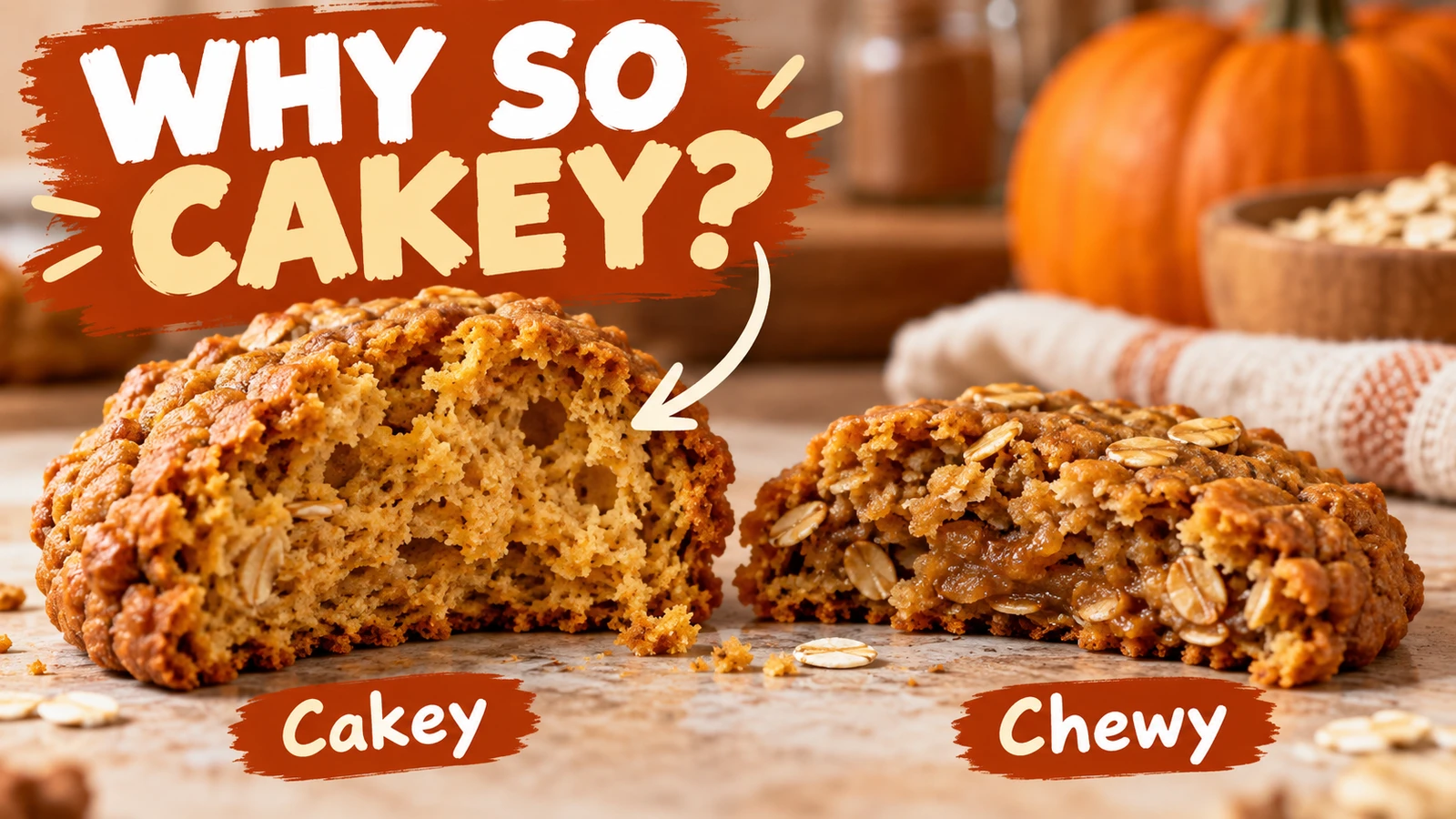
Pumpkin oatmeal cookies often turn cakey when the dough contains more moisture or lift than the intended chewy formula can handle. Start with the pumpkin preparation, then check whether you changed the eggs, leavening, or oats. If the recipe promises a soft, cake-like cookie, that crumb may be the intended result rather than a mistake.
Why pumpkin oatmeal cookies are cakey
A thick dome alone does not identify the cause. Break a cookie after it has cooled and look at the center: an evenly airy, springy crumb points toward a cake-like structure, while a shiny, pasty center raises a different question about baking and cooling. Chewy cookies can still be soft, so softness by itself is not a reliable diagnosis.
Read the recipe description before changing anything. A formula developed around generous pumpkin, whole eggs, and an aerated batter may never produce the dense bite you expected. Choosing a tested chewy formula is more predictable than repeatedly stripping ingredients out of a cake-style one.
Check the pumpkin before changing the flour
Pumpkin brings moisture as well as flavor, and the amount varies with the product and preparation. A loose homemade puree or thawed puree with separating liquid deserves attention before it goes into the bowl. However, a thick appearance does not prove that its moisture matches the puree used by the recipe developer.
For a chewy recipe that specifically calls for blotting, use clean, plain, food-safe paper towels and press gently as directed. Change saturated towels and keep the pumpkin solids on the plate or in the bowl. Stop at the recipe’s stated endpoint rather than trying to turn the puree into a dry paste.
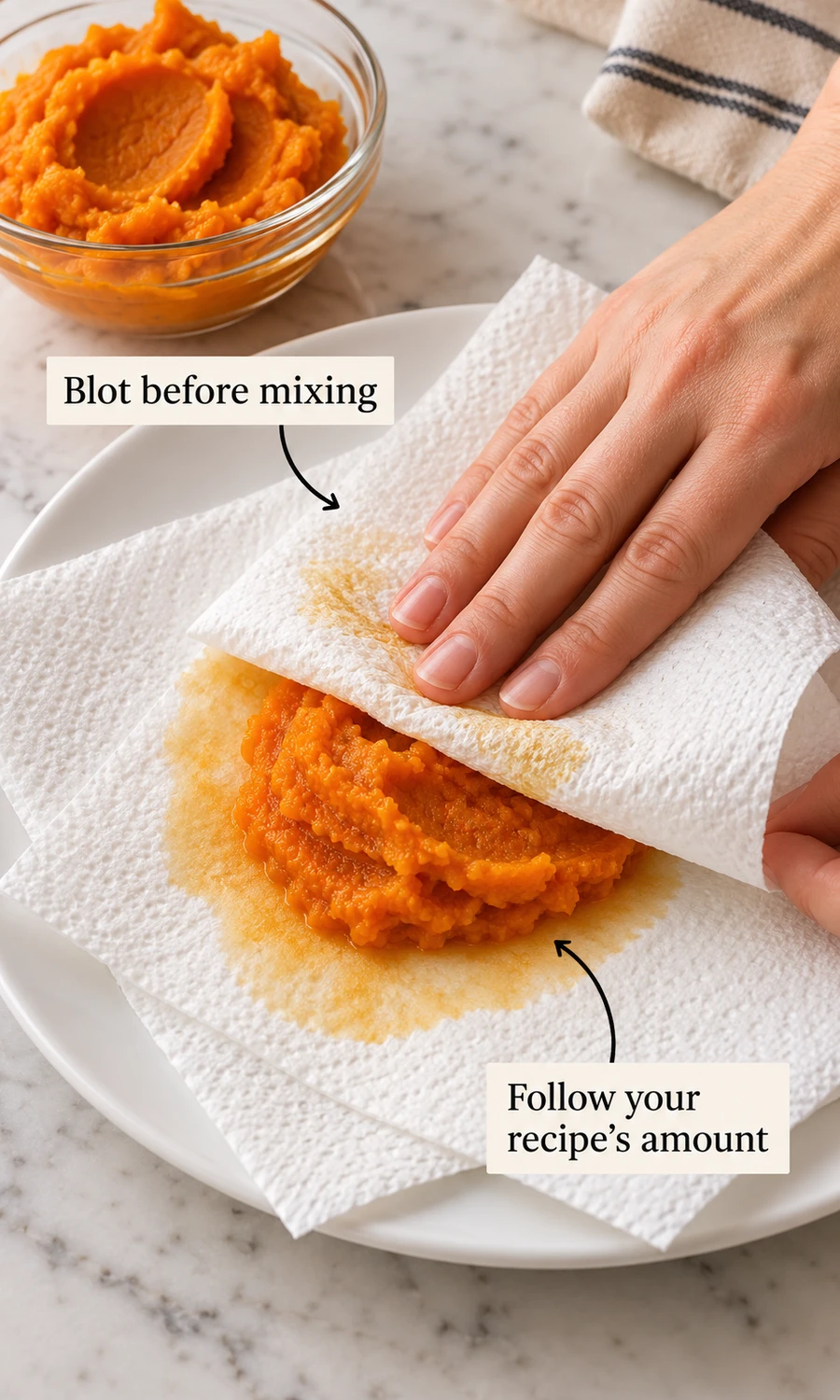
Blotting belongs before mixing because it removes liquid from a separate ingredient. Once flour, sugar, eggs, and fat are combined, you cannot selectively blot the pumpkin out of the dough. Adding flour to compensate may make the baked cookies heavier or drier without producing the chew you wanted.
The same ingredient creates a different problem inside a tortilla: our guide to why pumpkin quesadillas get soggy explains how wet filling and trapped steam soften the shell. The cookie correction still has to follow the cookie formula. Do not transfer a stovetop reduction amount directly into a baking recipe.
Should you measure pumpkin before or after blotting?
Follow the sequence written in your particular recipe. “Measure, then blot” specifies a starting amount; “use blotted pumpkin” may specify the amount after drying. Refilling a measuring cup after a recipe told you to blot its measured portion changes how much pumpkin you add.
- Read the ingredient line and method together before weighing anything.
- Record the starting weight and the final weight separately, using a tared bowl.
- If the recipe gives a final target, use that target; if it gives only a starting portion, do not automatically top it up.
- Ask the recipe author when the measurement basis is unclear rather than guessing a universal conversion.
An illustrative kitchen log could read “160 g before blotting; 125 g after.” That records a 35 g mass difference, not a recommended endpoint, and the difference may include pumpkin left on the towels. It cannot tell you the final moisture percentage or prove that the portion is correct for another recipe.
The published method for Sally McKenney’s brown butter pumpkin oatmeal cookies, for example, specifies 285 g before blotting and about 225 g afterward. Those amounts belong to that recipe. They illustrate why a blanket instruction to always measure after blotting would be misleading.
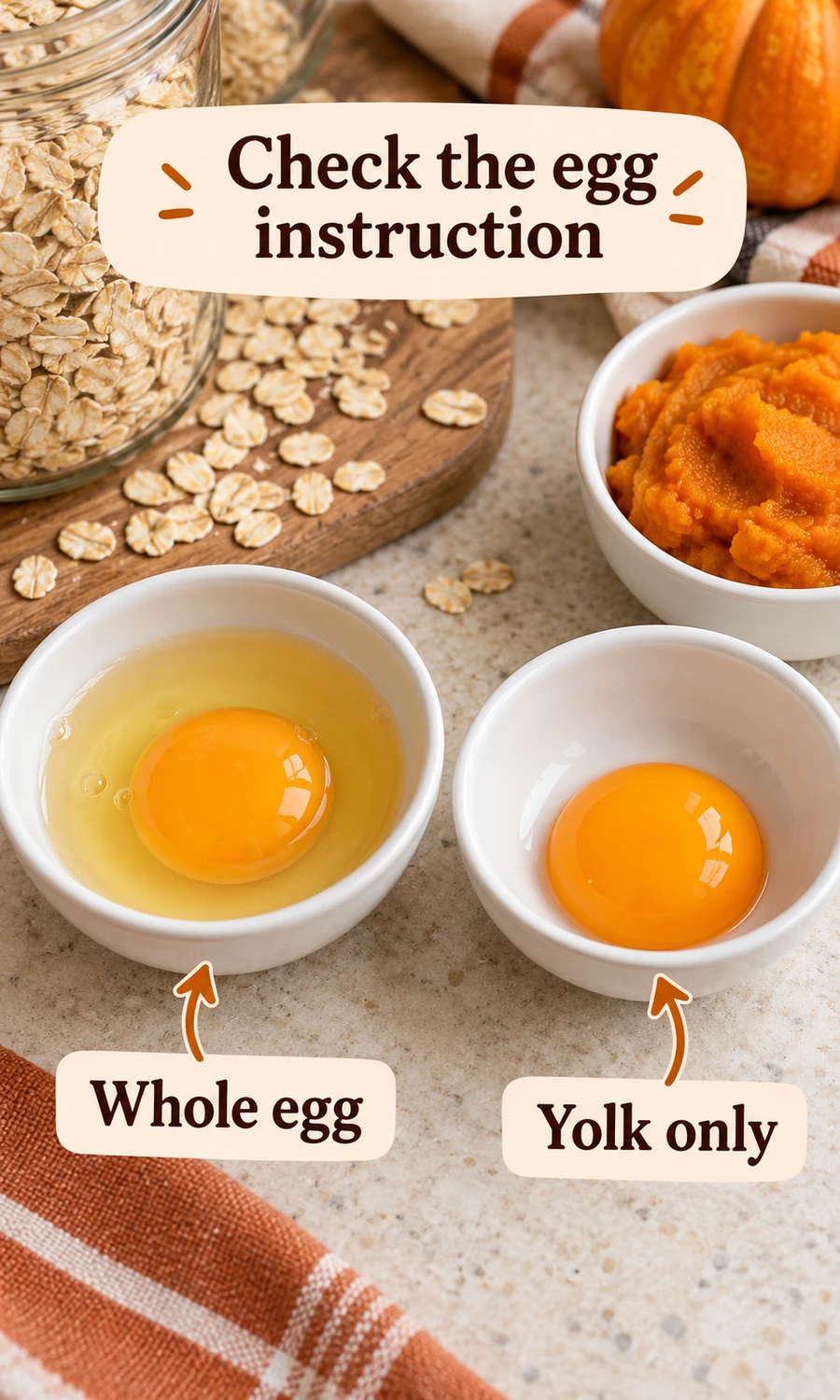
Egg white is another ingredient to check
A whole egg is not an equivalent replacement for a yolk-only instruction. The white adds water and proteins, changing how the dough spreads and sets. If you made that substitution, restore the specified egg amount before changing the oven temperature or adding more flour.
Yolks also contribute fat and binding, so removing every egg is not the automatic answer. In Sugar Spun Run’s pumpkin oatmeal cookie development notes, browning butter, blotting puree, and omitting whites are coordinated choices. Treat that as an explanation of its formula, not permission to remove whites from every pumpkin cookie.
Check leavening and mixing without guessing a new dose
Baking powder, baking soda, and air incorporated during mixing can affect how a cookie rises. Check whether you used the correct product, a level measuring spoon, and the quantity specified for the full batch. Doubling a recipe but leaving some ingredients at their original amounts can also create a different balance.
There is no universal teaspoon limit that separates chewy cookies from cakey ones. Baking soda responds to the overall formula, and pumpkin alone does not justify assuming enough acidity for any added dose. If the amount was correct, investigate moisture and ingredient substitutions before reducing the leavener.
| What you see | What to check | Useful next action |
|---|---|---|
| Airy crumb after cooling | Chewy versus cake-style recipe; pumpkin prep; egg substitution | Restore the written method before changing several quantities. |
| Thin, widely spread cookies | Warm dough or tray; butter temperature; flour measurement | Use the recipe’s cooling instructions and a cool tray. |
| Shiny or pasty center | Portion size, baking endpoint, and actual oven temperature | Review the bake; do not diagnose every soft center as excess pumpkin. |
| Dry or crumbly bite | Overbaking, extra flour, or omitted yolk | Return to the formula and avoid more drying as a reflex. |
| Hard oat pieces | Steel-cut substitution or incorrect oat type | Choose the oats specified by the recipe. |
Old-fashioned, quick, and steel-cut oats behave differently
Keep the specified oat type for the first repeat batch. Old-fashioned rolled oats leave a more visible, hearty oat texture; quick oats have smaller pieces and can produce a different bite. That does not make quick oats universally unsuitable: Quaker’s baking ingredient guidance describes uses for both quick and old-fashioned oats, while reserving steel-cut oats for recipes designed for them.
A resting dough may become firmer as dry ingredients hydrate and fat cools, but firmer raw dough does not guarantee a chewy baked crumb. Use the rest or chill specified by your recipe. Steel-cut oats should not be swapped into a rolled-oat cookie on the assumption that a longer chill will soften them enough.
If a grainy center is the problem instead of a springy crumb, the troubleshooting sequence changes. Our guide to black bean oat brownies that turn grainy examines particle size and mixing in another oat-based bake. Keep that distinction in mind before treating every texture problem as extra moisture.
Brown butter does not dry the pumpkin
Browning cooks water out of the butter while developing toasted flavors in the milk solids. It does not remove water from the pumpkin sitting in another bowl. A chewy formula may use both techniques, and following only the butter step does not reproduce the complete method.
Butter temperature matters separately. King Arthur Baking’s explanation of spreading cookies identifies overly warm butter as a spread problem. Cool browned butter to the state specified by your recipe, and check whether its butter amount is measured before or after browning.
What can you still do with this batch?
Before mixing, you can still follow the pumpkin preparation and correct a mistaken ingredient selection. After mixing, chill only as the recipe directs, then bake a small test portion before committing the whole bowl. If the mixture is pourable when the recipe describes scoopable dough, review the amounts instead of adding dry ingredients repeatedly.
Once cookies are baked, you cannot rebuild their internal structure into a chewy crumb. Fully baked, properly stored cakey cookies can still be enjoyable as soft cookies or crumbled over a dessert. Longer baking may dry them, but it does not undo the formulation that made them cake-like.
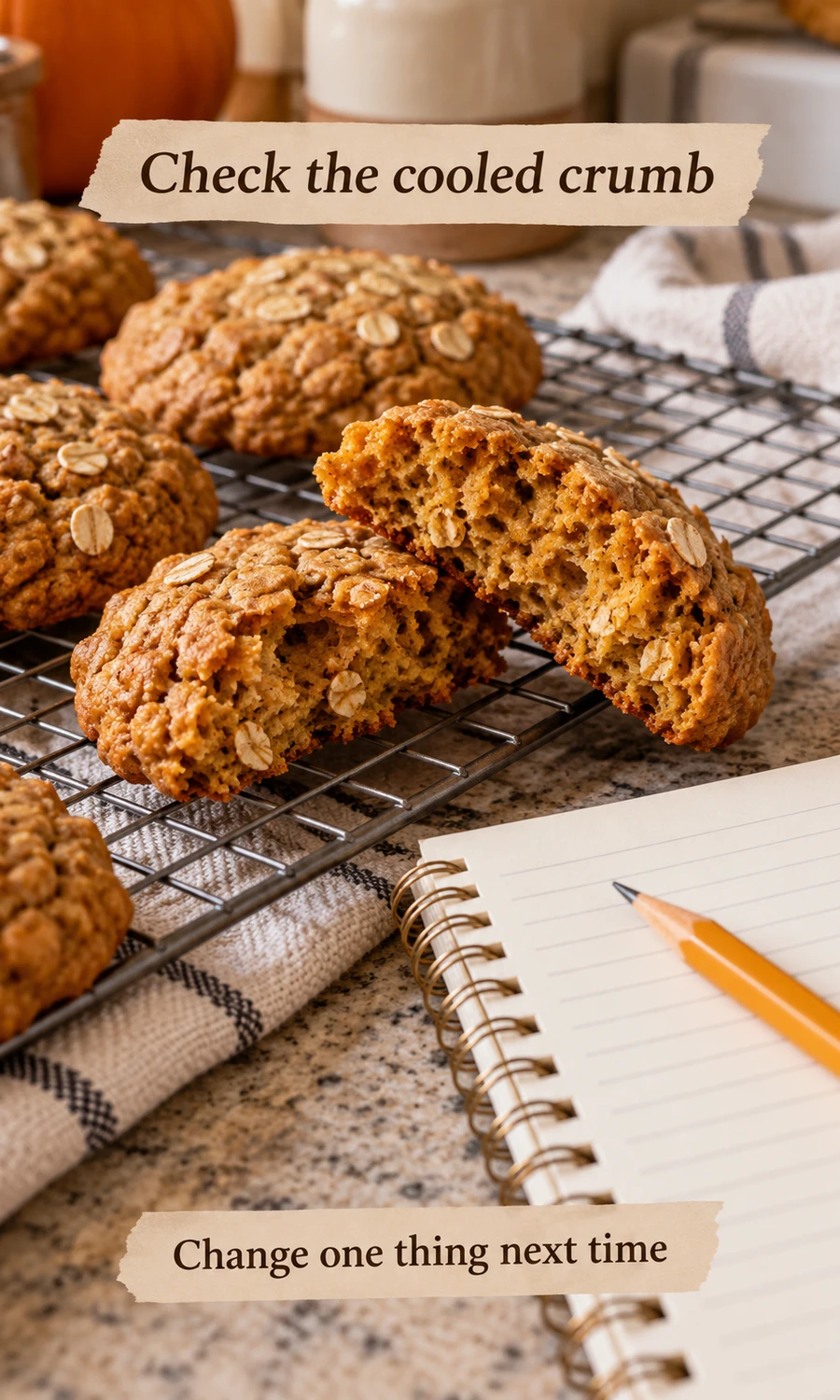
For the next batch, change one condition at a time and keep the recipe, scoop size, tray, and oven setting consistent. Record pumpkin weights, oat type, egg choice, and the cooled crumb. These images are AI-generated illustrations; this article reports no original controlled bake test or measured moisture result.
Choose a clear next action with Pumpkin Chew Studio
Pumpkin Chew Studio turns your observations into a short action sheet for ingredients, mixed dough, or baked cookies. It also keeps optional before-and-after pumpkin weights separate from the texture suggestions. The guidance cannot identify a cause with certainty, supply a complete recipe, or calculate the puree’s moisture content.
Pumpkin Chew Studio
Find the next useful check for cakey pumpkin oatmeal cookies.
Suggestions from your observations, not a confirmed cause, measured moisture result, complete recipe, or food-safety verdict.
Your next kitchen action
Choose your stage and observations, then show your next steps. Start with the intended texture and the written pumpkin and egg instructions.
How these suggestions work
The experience matches selected observations to recipe checks. It gives no scores or guaranteed outcomes. Baked cookies receive next-batch advice; mixed dough is not treated as if its pumpkin can still be blotted. Your selections stay in this page; the report transfers them into its address fragment, with no server submission.
Store according to the recipe and toppings
Let fully baked cookies cool before closing the container so condensation does not soften them further. Use the storage directions for the actual recipe and icing, since different toppings and formulas need different handling. Do not combine room-temperature, refrigerated, and frozen storage claims into one universal shelf life.
If you prefer pumpkin in a drink, the pumpkin, pear, and pecan smoothie article offers a different use for the ingredient. Set aside puree before mixing cookie dough if you plan to reuse it. Do not put raw cookie dough containing flour or egg into an uncooked drink.
Frequently asked questions
Do I have to blot canned pumpkin or only homemade puree?
Blot either type when your chewy cookie recipe calls for that step. Homemade or thawed puree may have separating liquid, but canned puree also brings moisture. A recipe developed without blotting should be followed as written before you change it.
Should I measure pumpkin puree before or after blotting?
Use the measurement basis in your recipe. Some methods give a starting portion and then ask you to blot it; others specify prepared puree or a final weight. Record both weights if helpful, but do not refill the portion automatically after removing liquid.
Can I skip the egg and still avoid cakey cookies?
Use a tested egg-free formula if you need to omit eggs. Removing a yolk can change binding and fat as well as moisture, leaving some oatmeal cookies dry or crumbly. A cakey result does not establish that every egg should be removed.
Why did brown butter not prevent a cakey crumb?
Browning removes water from butter, not pumpkin. Check whether the recipe also required blotting or yolk-only eggs, and whether those steps were followed. Butter temperature is a separate check when excessive spread is the problem.
Will chilling the dough fix a cakey cookie?
Chilling can firm fat and affect spreading, but it cannot selectively remove pumpkin water or reverse an egg substitution. Follow the recipe’s chilling directions and assess a cooled test cookie. Do not expect a cold dough alone to change a cake-style formula into a chewy one.
Is pumpkin pie filling why my cookies puffed?
Pie filling can change the formula because it contains added ingredients, but puffing alone cannot identify it as the cause. Read the can and compare it with the recipe’s pumpkin instruction. Use plain puree when requested and a recipe designed for pie filling if that is what you have.
Can I use quick oats in pumpkin oatmeal cookies?
Sometimes, if the recipe allows them. Their smaller pieces change the oat texture, so they are not identical to old-fashioned oats in every formula. Steel-cut oats need a recipe designed around them rather than a casual substitution.
Decide what to change next time
If you wanted chew and got an airy crumb, first restore the pumpkin preparation and egg choice in a tested chewy recipe. If those matched, check leavening measurement, oat type, and the intended texture before changing amounts. Treat a baked cakey batch as information for the next attempt, rather than trying to force it into a different structure with more oven time.