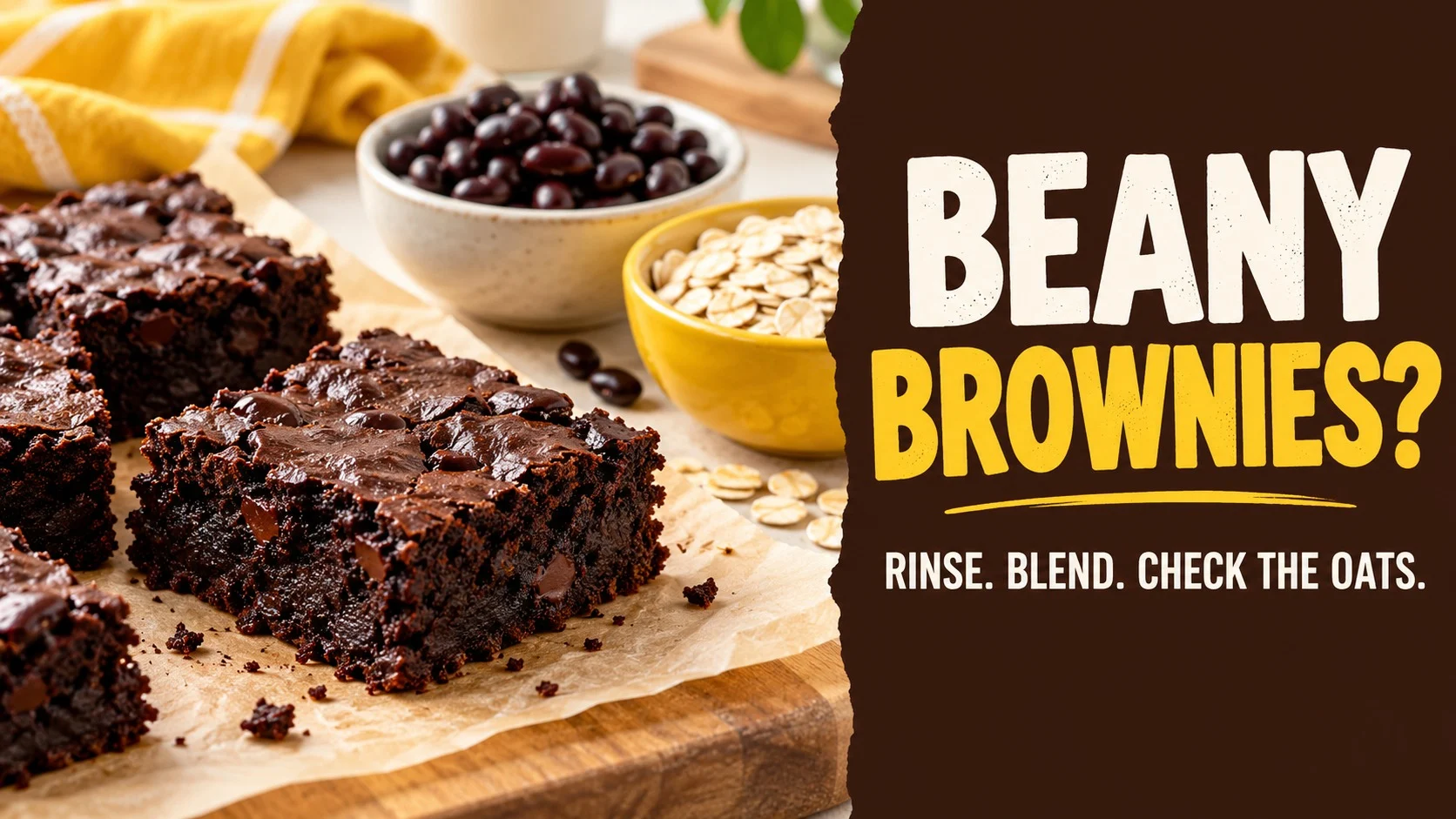
Black bean oat brownies can taste earthy or canned when bean preparation, puree texture, or the recipe’s chocolate balance is off. Start by checking whether the beans were rinsed and drained, whether pieces remained in the batter, and whether the specified oats and chocolate were changed. A baked batch cannot be blended smooth again, so separate what you can do now from what needs a new batch.
A bean flavor and a gritty bite are different faults, even when they arrive together. More cocoa may change the flavor balance, but it cannot remove skins or coarse oat particles. Treat the checks below as possible explanations rather than a diagnosis of your particular pan.
This is a preparation and troubleshooting guide, not a newly tested recipe. No side-by-side batches or blind tasting were performed for this article, and the generated images illustrate methods rather than document results. For quantities and baking instructions, begin with a complete measured recipe and keep it unchanged while you investigate one variable.
- Check the beans: cooked, rinsed when specified, drained, and measured in the state the recipe requires.
- Check the puree: spread a little batter with a spatula and look for obvious pieces without tasting it raw.
- Check the oats and chocolate: restore the original ingredients before adding extra liquid or flavoring.
Why a mild bean note becomes noticeable
Rinsing is a sensible first preparation check when a recipe calls for rinsed canned beans. It removes the packing liquid instead of carrying it into the batter, but it does not guarantee that every bean flavor disappears. Drain afterward; replacing a drained ingredient with beans sitting in liquid also changes the mixture you are trying to troubleshoot.
Chocolate amounts matter within the recipe they belong to. If you reduced cocoa, omitted chocolate chips, or changed the sweetener, restore that version before assuming the beans are the sole problem. Avoid prescribing a universal cocoa-to-bean ratio: the fat, sugar, binder and pan all belong to the same formula.
An established example is Katie Higgins’s black bean brownie recipe, which specifies rinsed beans, quick oats and thorough processing. Use that recipe’s complete ingredient list and method if you choose it, rather than borrowing its timing for a different batter. Its reported results belong to its author; they are not tests conducted for this page.
| What you notice | What to check | Next-batch action |
|---|---|---|
| Earthy flavor, smooth bite | Check rinsing and any reduction in cocoa or chocolate. | Restore the original preparation and chocolate amounts. |
| Dark pieces in the crumb | Check whether bean skins or pieces remained before baking. | Improve processing before baking the next batch. |
| Pale flakes or coarse particles | Check the oat type and how it was prepared. | Return to the specified oats and preparation. |
| Dry or cakey crumb | Check ingredient swaps, pan size and bake time. | Restore the original formula before changing timing. |
| Wet, collapsing center | Check recipe doneness cues, cooling and added liquid. | Do not treat chilling as a substitute for baking. |
Rinse, drain and inspect before baking
Use fully cooked beans and follow the recipe’s instructions for draining and measuring. A can’s total weight includes liquid, so it is not automatically the amount of beans the recipe needs. If home-cooked beans stay firm when pressed, do not assume that a short brownie bake will turn them into smooth puree.
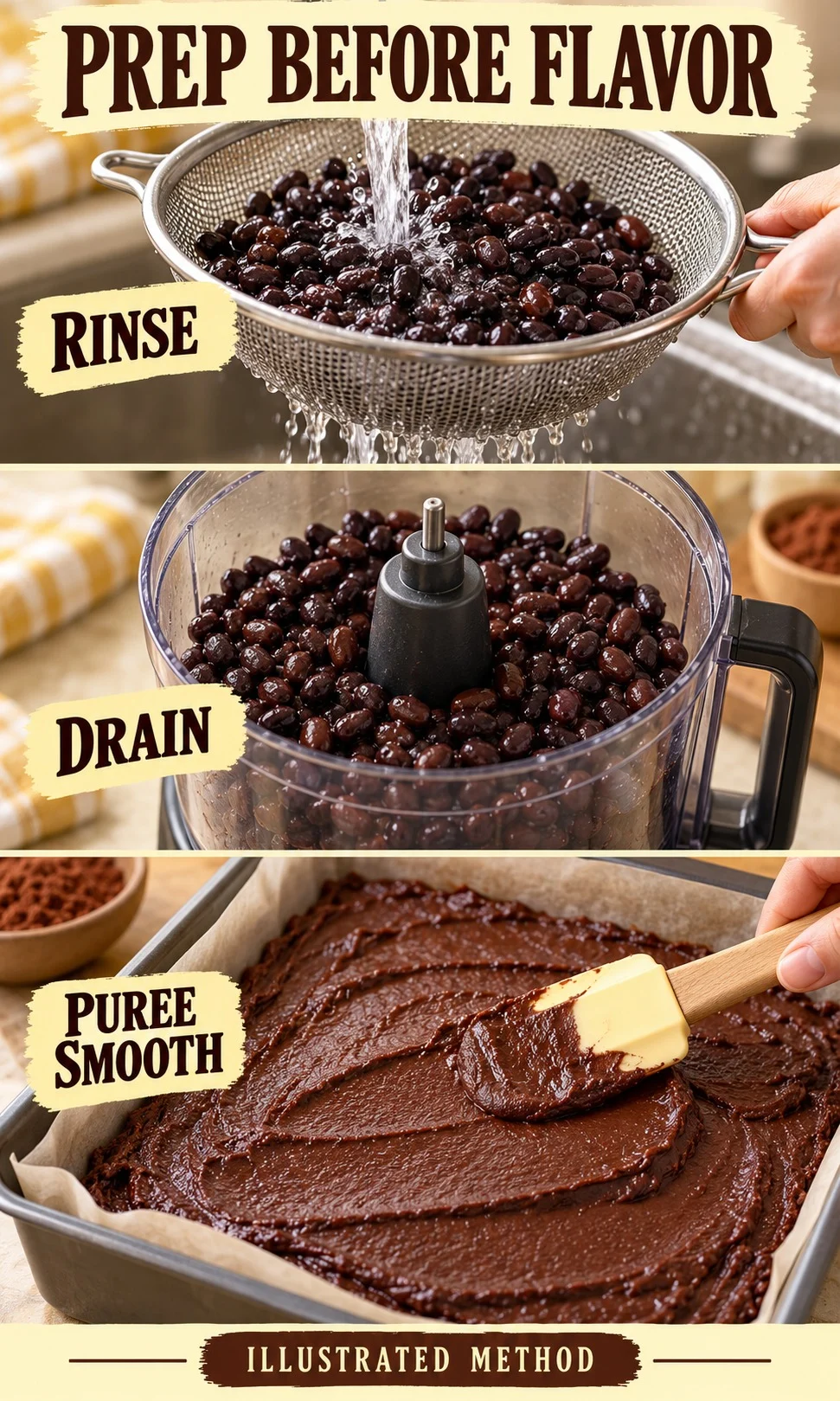
Process the mixture in equipment suited to the amount and consistency. Stop the machine before scraping, and inspect a thin spread of batter for visible pieces. If the blades cannot move the mixture, follow the appliance instructions and recipe rather than pouring in unmeasured water.
Keep the original recipe nearby while you work. A change that seems small—another sweetener, less oil or an extra spoon of oat flour—makes it harder to identify the source of a disappointing result. Write down what actually went into the pan, including the drained bean amount and any substitutions.
The useful checkpoint comes before the batter reaches the oven. At that stage, you can still spot coarse pieces and correct a missed processing step. Once the brownies are baked, a gritty crumb becomes information for the next batch rather than something extra vanilla can repair.
Oat grit can be mistaken for bean grit
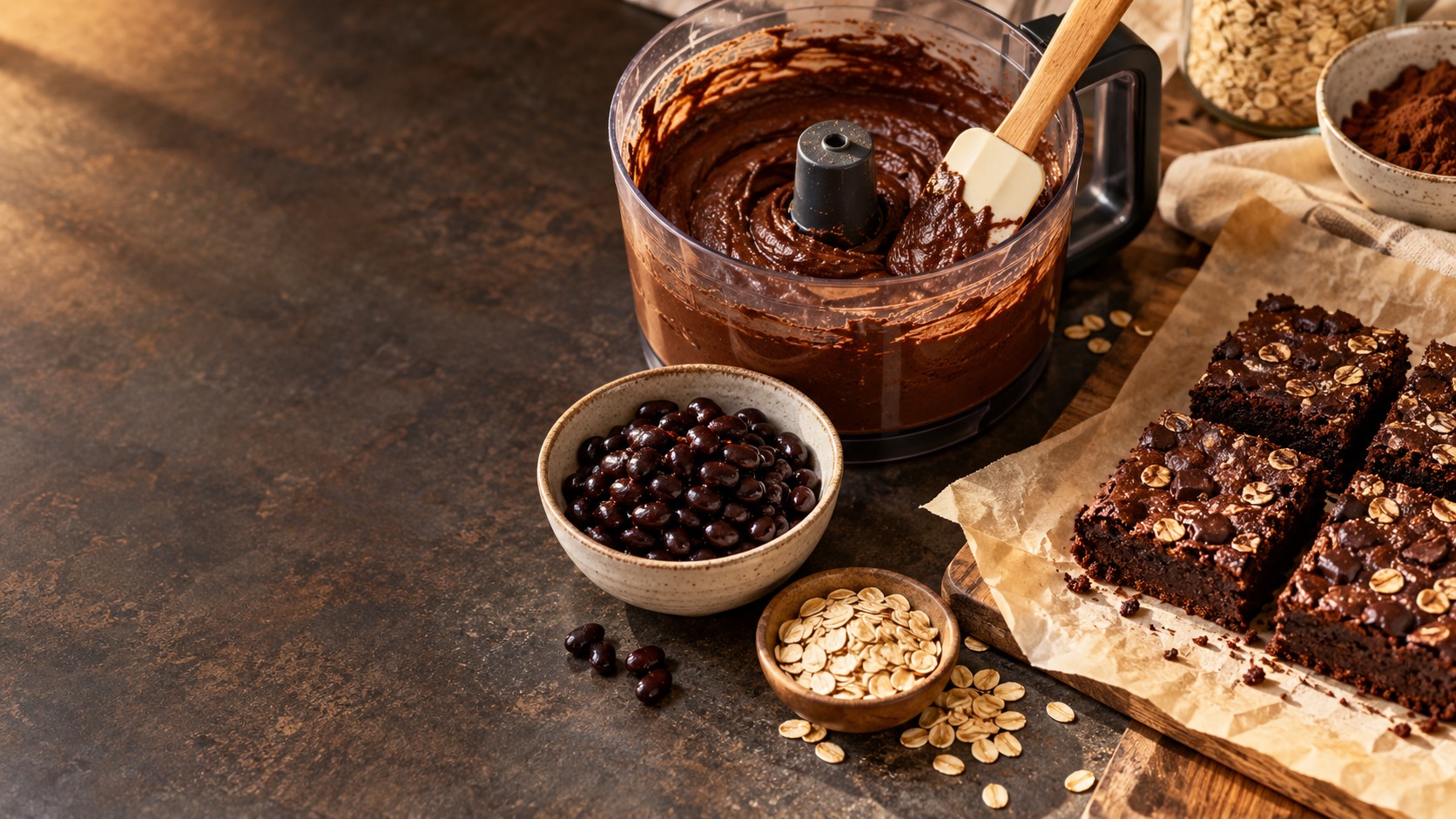
Whole oat flakes and fine oat flour do not look the same in a batter. Dark fragments suggest a bean-processing check, while pale flakes suggest an oat-preparation check; neither appearance proves the cause on its own. Examine both ingredients instead of blaming the beans for every coarse bite.
Quaker’s guide to oat types distinguishes rolled flakes from chopped steel-cut oats. That difference is a reason to follow the specified oat type rather than make an untested swap. If your recipe requires grinding oats first, complete that step before the wet mixture makes their texture harder to inspect.

What you can change after baking
A properly baked, safely stored brownie with a mild earthy note may be more enjoyable with a topping you like. A topping changes the eating experience, but it does not remove coarse particles or establish that the batch is safe. If the center appears unbaked, follow the recipe’s doneness guidance instead of treating refrigeration as cooking.
For dry or cakey brownies, compare the actual pan, oven setting and ingredient quantities with the recipe. For a wet center, check extra liquid, drainage and pan depth before drawing conclusions. Change one variable on the next bake so you can tell whether that change helped.

Choose your next preparation check
Brownie Texture Studio turns your observations into a short list of preparation checks. Select the main problem, the bean and oat preparation, and any recipe changes, then generate your next step. You can open a one-page A4 report to keep beside the recipe, but its suggestions remain possible explanations rather than confirmed causes.
Brownie Texture Studio
Find the first preparation change worth making.
No scores. Clear next steps.Recipe-based troubleshooting, not a kitchen-tested diagnosis or food-safety check.
Your next step
Choose what happened, then select Check my batch.
Storage and ingredient claims need their own checks
Follow storage instructions for the actual recipe and toppings you used. The FoodSafety.gov cold-storage chart gives refrigerator and freezer temperature guidance, but it does not establish a bean-brownie shelf life. Do not transfer another recipe’s counter or refrigerator limit to a different formulation and present it as tested.
Oats are a grain, so an oat brownie should not be described as grain-free. Vegan status depends on every ingredient, including chocolate and sweetener; gluten-free status also requires checking ingredients and preparation. The FDA’s gluten-free labeling guidance explains the US packaged-food standard, while a homemade batch still needs its own ingredient checks.
Frequently asked questions
Do black bean brownies taste like beans?
Some have a noticeable earthy note, and the result depends on the recipe and preparation. Check whether rinsing, processing or chocolate amounts differed from the instructions. This guide cannot promise that every batch will taste identical to a conventional brownie.
Should you rinse canned black beans for brownies?
Rinse them when your recipe calls for rinsed beans, then drain before measuring as directed. Do not replace drained beans with the entire can and its liquid. Rinsing is a preparation check, not a guarantee that all bean flavor disappears.
Why are my black bean brownies grainy?
Visible bean pieces or coarse oats are possible causes. Inspect the puree and oat preparation separately before the next bake. Extra flavoring cannot remove those particles from an already baked brownie.
Does oat flour make black bean brownies taste beany?
Oat preparation is a separate variable from bean flavor. Coarse flakes can contribute an uneven bite that gets described as beany. Use the oat type and preparation your recipe specifies before trying a substitution.
Do black bean brownies taste better the next day?
Some recipes use cooling or chilling to help the finished texture firm up. Whether you prefer the flavor the next day is a personal judgment, not a result established here. Store the batch according to its recipe rather than leaving it out for a flavor experiment.
Can you fix brownies that already taste like beans?
A mild note in properly baked and safely stored brownies may be more enjoyable with a topping. Rinsing and pureeing cannot be repeated after baking. Use the result to choose one preparation change for the next batch.
Keep the next batch easy to compare
Start with the simplest discrepancy: a missed rinse, visible pieces, a different oat type or a changed chocolate amount. Preserve the recipe’s other quantities and record the result before making another change. For more about the way a bite changes enjoyment, read why food texture matters more than flavor; it complements this preparation check without replacing a measured brownie recipe.