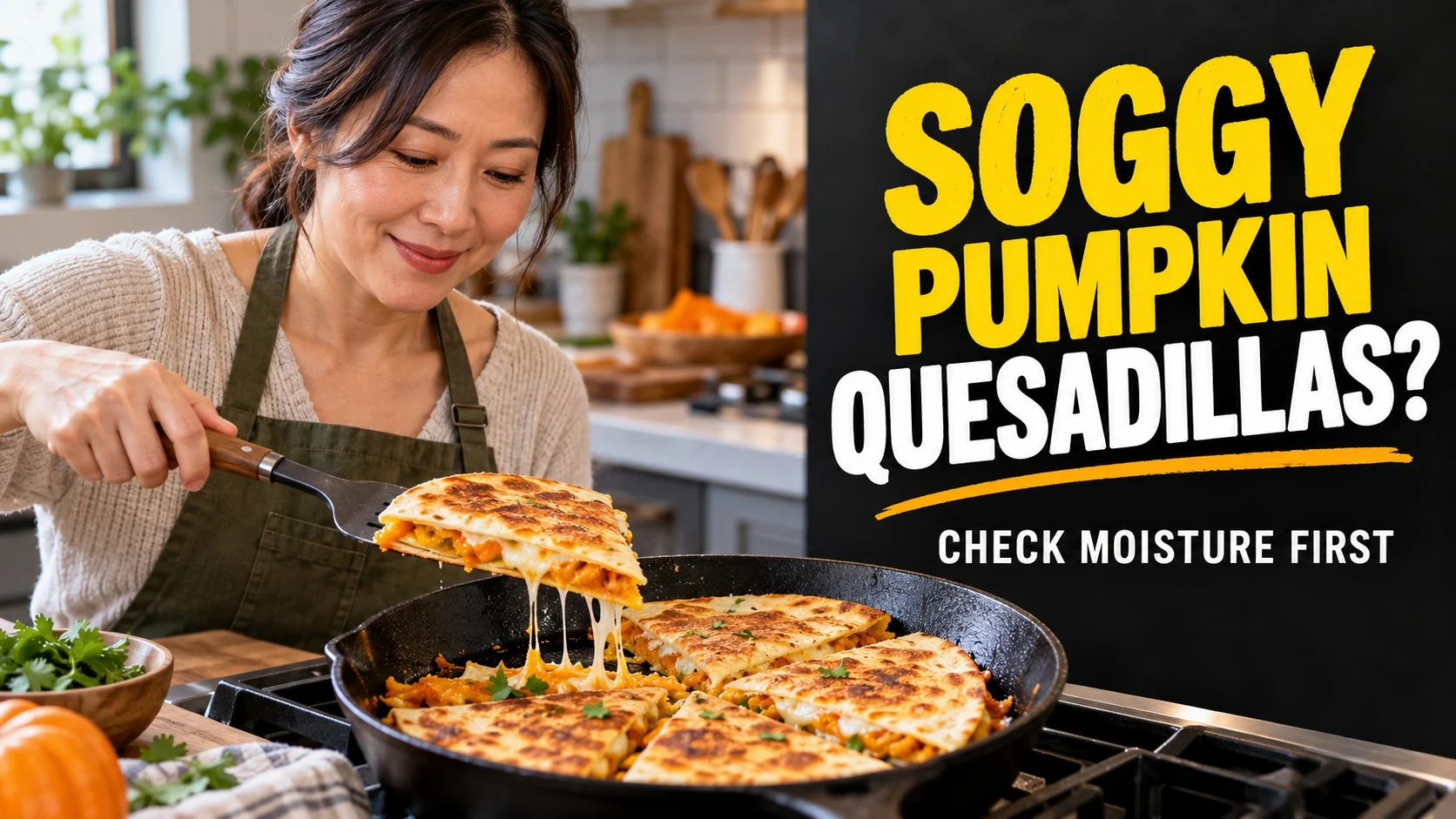
Pumpkin quesadillas get soggy when a wet or thick puree layer transfers moisture into the tortilla, especially if a lid or warm stack traps steam. Check the puree for separating liquid, spread it thinly, and finish the tortilla uncovered. A browned outside can still hide a wet center, so adding more heat is not always the fix.
Find the moisture problem before adding more oil
Look at when the tortilla lost its structure. If it was limp as soon as you filled it, suspect watery puree or an overloaded fold; if it browned well and softened on the plate, look at stacking and trapped steam. When the shell scorches while the center stays cool, heat and filling thickness need attention together.
More oil may help the outside brown, but it cannot remove water held inside a thick filling. Keep wet salsa, sour cream, or other sauces on the side rather than mixing them into the pumpkin. Drain beans and cooked vegetables too, because puree is only one possible source of excess liquid.
Watery puree and too much puree need different fixes
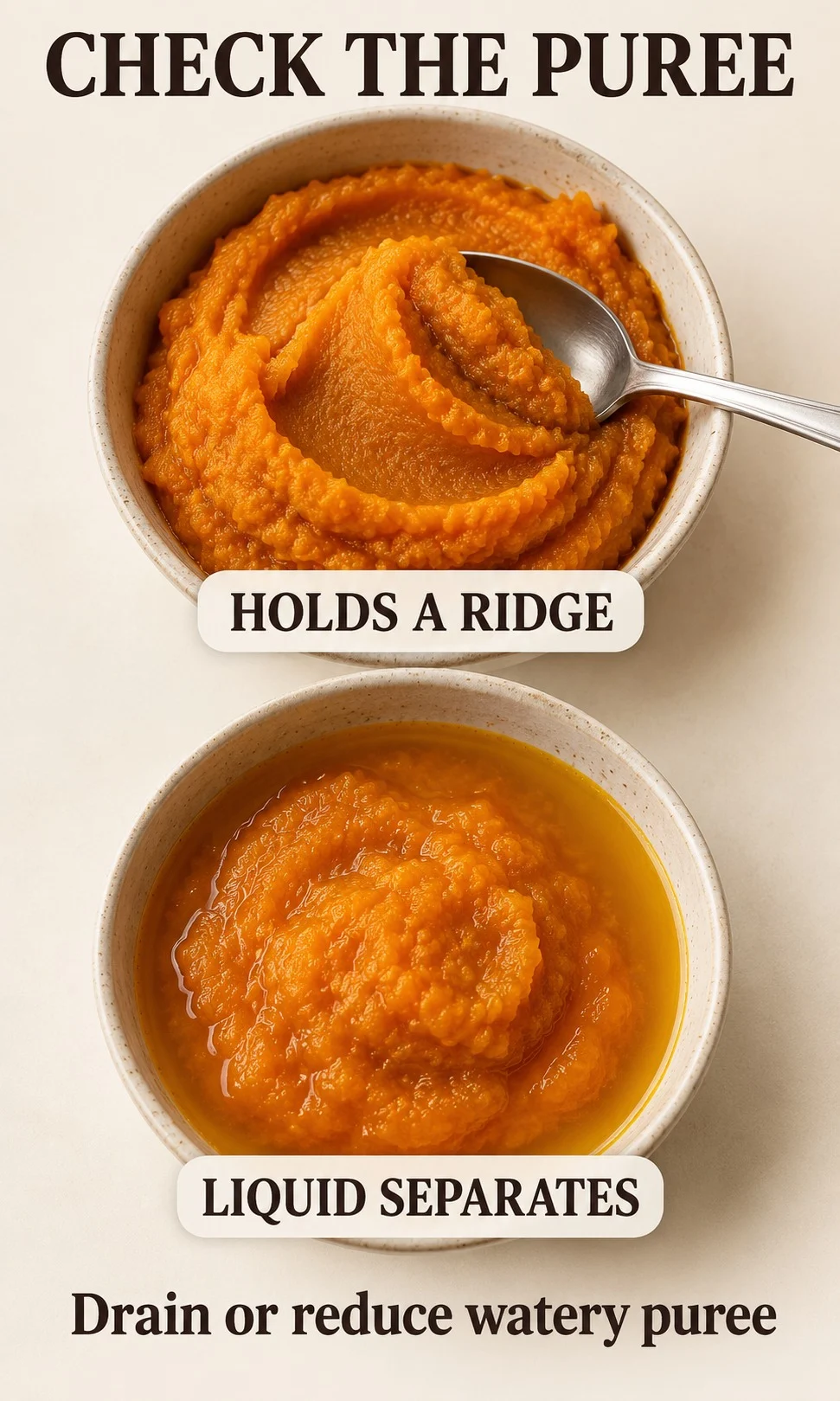
A thick puree should keep a shallow ridge after you draw a spoon through it. A watery ring around the spoonful suggests liquid that can drain away or evaporate before assembly. This is a useful kitchen observation, not a moisture measurement or a guarantee that the finished tortilla will stay crisp.
Homemade puree can vary with the pumpkin and cooking method, and thawed puree may release liquid as it warms. Check canned puree as well instead of assuming every brand has the same consistency. If the puree holds a ridge but you need to force the tortilla closed, the quantity is the more useful thing to change.
The pie-filling can changes the dish
For a savory quesadilla, choose plain pumpkin puree and read the ingredient list. The plain pumpkin label lists pumpkin alone, while the same manufacturer’s pie mix label lists added water, sugar, salt, spices, and other flavor ingredients. That example explains why the two cans are not interchangeable; your own label remains the authority for your product.
Salt and cheese will not remove the sweetness or spice already mixed into pie filling. Reducing it can thicken it, but will also concentrate its flavor. Save it for a dish designed around sweetened pumpkin rather than chasing a savory result by adding more seasonings or filling.
Drain, blot, or reduce according to what you see
If liquid has pooled, let the puree drain through a fine sieve over a bowl without pressing the solids through. A small surface puddle can be gently blotted with clean food-safe paper, but blotting will not reliably dry a loose mixture all the way through. For puree that remains runny, stir it in a small pan over gentle heat until it thickens and a spoon ridge holds.
Cool reduced puree briefly before spreading so it does not soften the tortilla during assembly. Add seasoning after reduction if you can, because evaporation concentrates salt as well as pumpkin flavor. In a filled quesadilla, you cannot drain the puree cleanly; correcting the next batch is often more effective than cooking the current one until the shell burns.
- Separated liquid: drain first; gently blot a small surface puddle if needed.
- Loose puree throughout: reduce separately, stirring so the bottom does not catch.
- Thick puree but a strained fold: use less filling rather than drying it further.
How much pumpkin belongs on one tortilla?
For an 8-inch flour tortilla folded in half, about 2 tablespoons of thick puree is a practical starting point to try. It is not a tested upper limit or a complete recipe, and it should spread into a thin layer over one half with room at the edge. A smaller tortilla, loose puree, or extra beans and vegetables may need less; judge the fold before adding more.
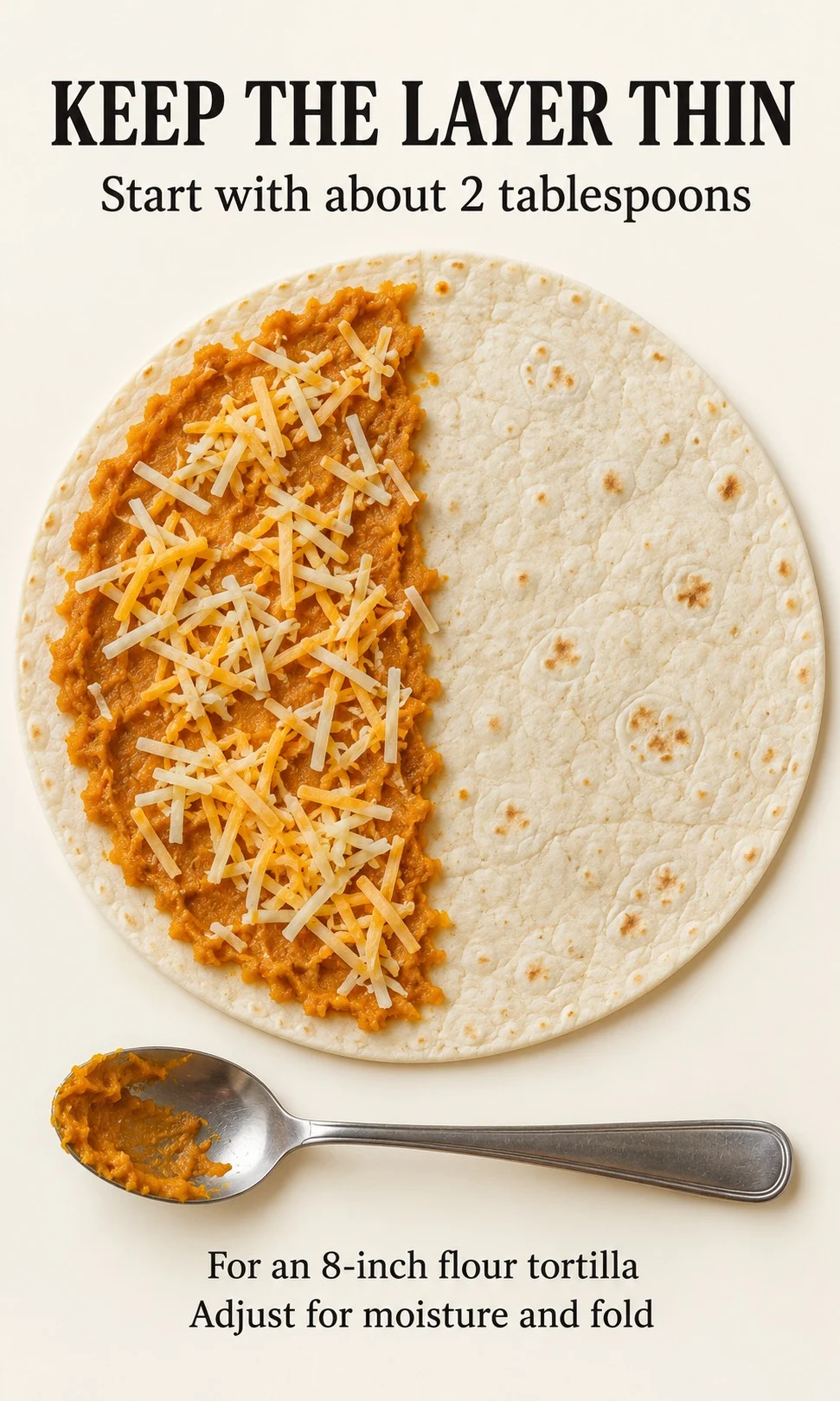
Shredded melting cheese can help bind the filling and hold the fold together. You can try placing some under the pumpkin, but cheese is not a waterproof barrier and will not compensate for watery puree. A modest amount of cheddar or Monterey Jack is a familiar option; dairy-free shreds behave differently, so check their heating instructions and keep the layer thin.
Warm a stiff tortilla gently before folding rather than creasing it cold around a mound of filling. Small corn tortillas may be easier to use as a two-tortilla sandwich, while gluten-free wraps vary enough that package directions matter. Use the warming and folding method that suits your tortilla rather than forcing every type into the same shape.
Pan heat and the covered-skillet trap
Preheat the skillet, start around medium heat, and use a thin film of oil if the pan and tortilla need it. Watch the underside rather than relying on a universal cooking time: burner strength, pan material, and the starting temperature of the filling all vary. If the shell darkens before the center warms, lower the heat and briefly move the pan off the burner if necessary.
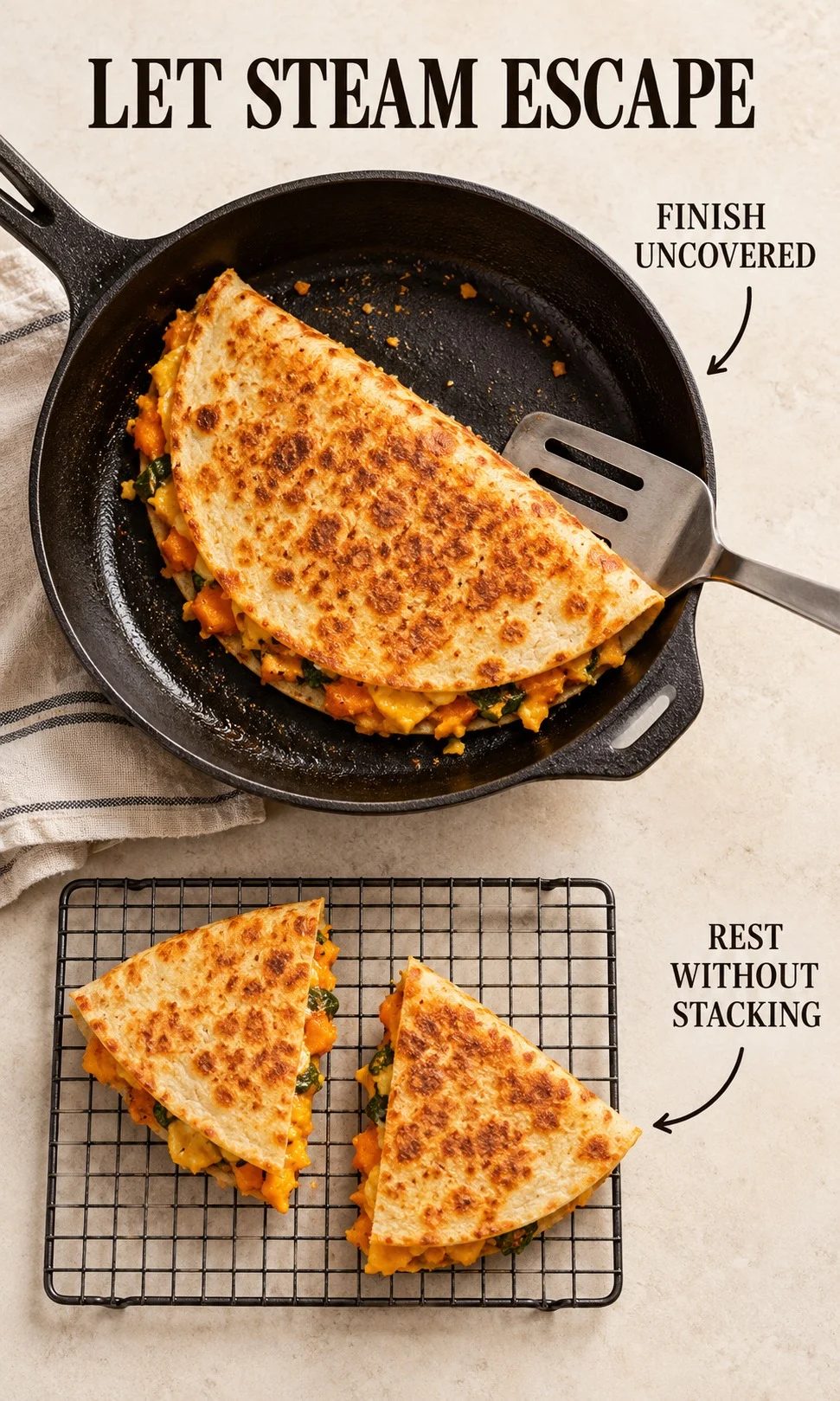
A brief cover can help cheese melt, but keeping the pan covered throughout holds moist air around the tortilla. Remove the lid for the final browning and avoid pressing hard enough to force filling out. Once the quesadilla is done, give it a brief rest on a rack instead of sealing it in a container or placing another hot quesadilla on top.
Can you rescue the soggy one already in the pan?
If the quesadilla is still intact, finish it uncovered and turn it gently so both sides contact the pan. If the fold is visibly overfilled, opening it carefully and removing some filling may help, although a softened tortilla can tear. Once the tortilla has become saturated, you may improve the outside without restoring its original structure; use that result to change the next batch.
Change one condition at a time when you try again. Keep the tortilla type and pan setting consistent, then compare a thinner layer, drier puree, or an uncovered finish, noting when the shell begins to soften. The images here are AI-generated illustrations, not photographs of a controlled cooking test, and no side-by-side test result is claimed.
| What you see | What to check | Next adjustment |
|---|---|---|
| Pale or soft from the start | Wet puree, crowded pan, or insufficient browning | Check puree consistency; use a thin layer and finish uncovered. |
| Dark shell, cool center | Heat too high for the thickness of the filling | Lower the heat and reduce the filling next time. |
| Filling squeezes from the fold | Too much filling or too much pressure | Use less; turn gently without pressing hard. |
| Crisp in pan, limp on plate | Steam trapped in a stack or container | Separate pieces and rest briefly on a rack. |
Swipe horizontally to compare on a narrow screen.
Choose your next adjustment
Use Pumpkin Crispness Studio to turn the observations above into an action sheet for your current stage. It handles preparation, an already-filled tortilla, softening after cooking, and refrigerated leftovers differently. The suggestions are practical checks rather than measured moisture values, a recipe, or a food-safety verdict.
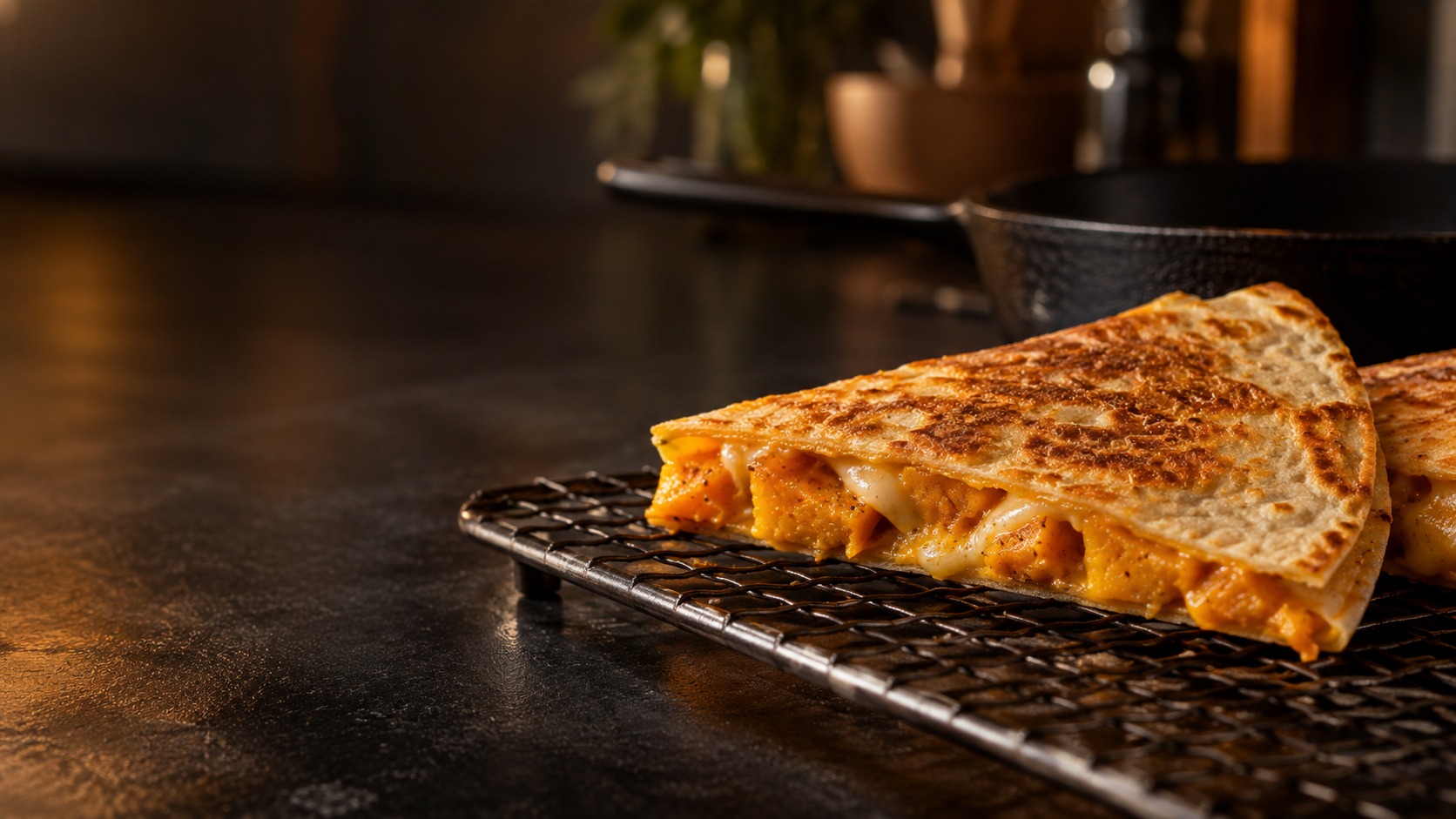
Check for separating liquid, a thick filling layer, or steam trapped after cooking. This experience suggests adjustments from your observations; it cannot measure moisture, confirm food safety, or guarantee a crisp result.
Store safely, then reheat for texture
A brief rack rest is for texture, not extended cooling on the counter. USDA leftover guidance calls for refrigeration within 2 hours, or 1 hour above 32°C / 90°F; keep the refrigerator at 4°C / 40°F or colder, use refrigerated leftovers within 3-4 days, and reheat to 74°C / 165°F. Discard food with spoilage signs or exceeded holding times, and do not treat a normal smell or crisp shell as proof of safety.
A skillet or oven can restore surface browning more effectively than a microwave alone, which does not provide the same dry browning environment. Check the center temperature before calling refrigerated leftovers ready, and lower the heat if the outside is darkening first. Keep wet toppings separate during reheating, and avoid immediately enclosing the hot quesadilla again.
Frequently asked questions
Can I use pumpkin pie filling instead of puree?
For a savory pumpkin quesadilla, plain puree gives you control over seasoning. Pie filling contains added sweeteners and spices, with ingredients varying by product. Thickening it changes consistency but does not remove those flavors.
How much pumpkin puree goes on one tortilla?
Try about 2 tablespoons of thick puree on one half of an 8-inch flour tortilla, spread thinly with space at the edge. Treat this as a starting point, not a tested maximum. Use less if the tortilla is smaller, the puree is loose, or other fillings make the fold strain.
Do I have to drain homemade pumpkin puree?
Drain it if liquid separates, or reduce it separately if the whole mixture is loose. Homemade puree that already holds a spoon ridge may not need either step. Check thawed puree after defrosting because liquid can separate then.
Why does the tortilla tear when I fold it?
A cold or dry tortilla may crack, and an overloaded fold can split even a flexible one. Warm it gently and reduce the filling before folding. For gluten-free wraps, follow package directions; small corn tortillas may be easier to sandwich than fold.
Should the cheese go under the pumpkin or on top?
Some shredded cheese beneath the pumpkin may help bind the filling when it melts, and you can add a little above it if needed. It does not create a guaranteed moisture barrier. Dry the puree and control the filling thickness before changing cheese quantity.
How do I reheat without making the tortilla wet again?
Use a skillet or oven, avoid trapping steam during the final browning, and keep sauces on the side. For refrigerated leftovers, check that the center reaches 74°C / 165°F. Rest briefly without stacking, and remember that unsafe storage cannot be corrected by reheating.
Decide what to change in the next batch
If you see free liquid, dry the puree before filling; if the fold is strained, use less. When browning outruns warming, reduce the heat, and when crispness disappears on the plate, let steam escape instead of stacking. Keep those observations separate so you can correct the actual failure without adding more cheese, oil, or cooking time by habit.