
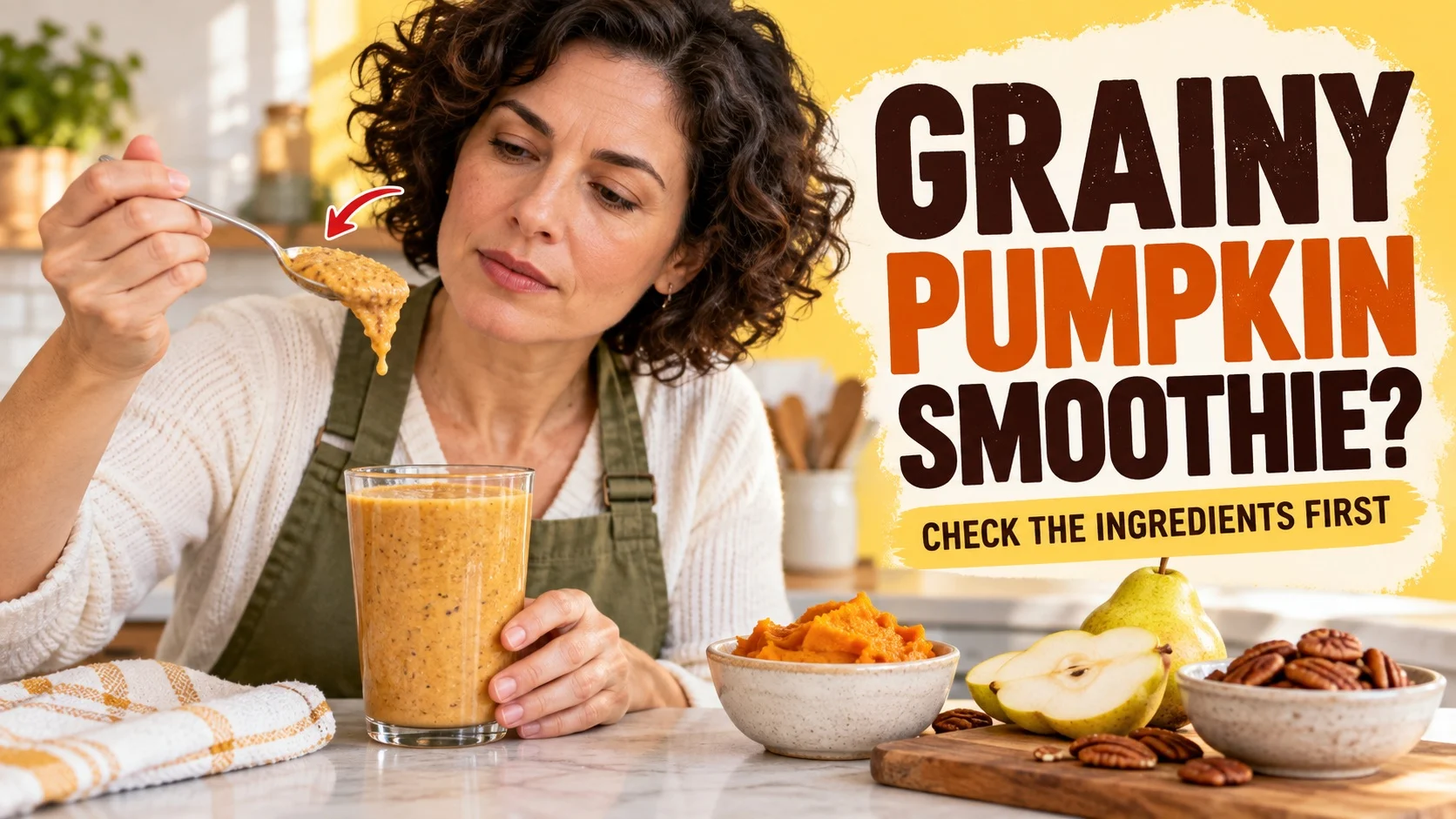

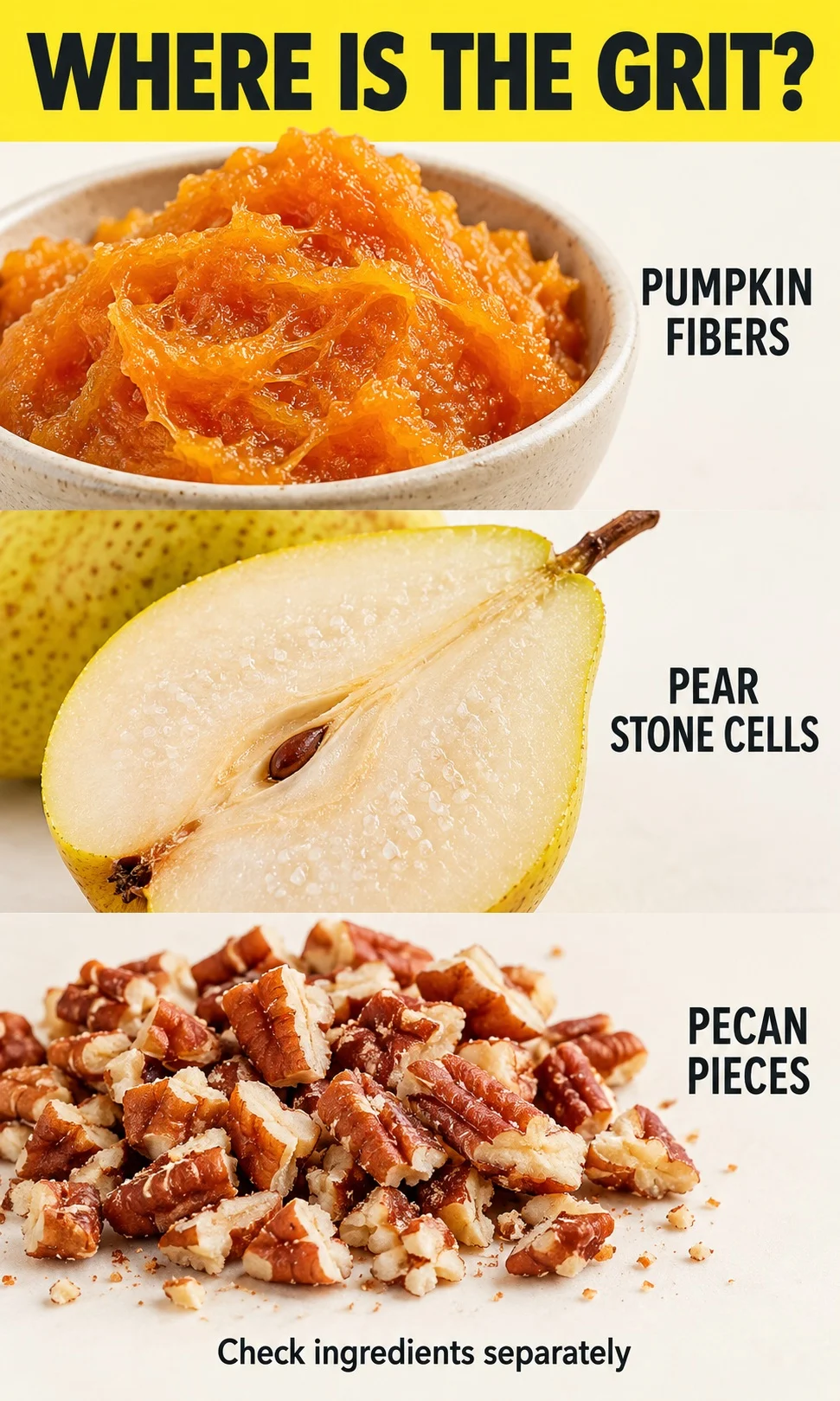
Pumpkin smoothies can taste grainy because of fibrous puree, pear stone cells, or pieces of pecan that have not broken down. Blending longer may reduce soft lumps, but it does not dissolve every hard particle, and extra ice can leave the drink thinner as it melts. Check the ingredients separately before changing the whole batch.
Start with the ingredient that already feels gritty
Keep a little of each ingredient aside before blending your next drink. If the pumpkin container is intact, its storage history is sound, and there are no signs of spoilage, spread a small amount of puree on a clean spoon to look for fibers or lumps. Check a piece of washed, cored pear and the nuts separately; the texture present before blending is the most useful clue afterward.
Do not taste a suspect ingredient to decide whether it is safe. A bulging or leaking can, mold, unexpected fizzing, or an unusual sour smell calls for discarding the ingredient rather than blending it again. Normal smell and appearance also cannot rule out unsafe storage, so use the handling history as well as what you can see.
A sandy can is different from a stringy puree
Soft orange lumps suggest that the puree has not dispersed fully into the liquid. Long strands point toward vegetable fibers, particularly when homemade puree includes stringy flesh. A distinctly hard, sandy texture already present in the plain puree is a reason to stop using that batch for a smooth drink; its appearance alone cannot identify the material or establish safety.
Pear stone cells can remain after blending
Pears naturally contain clusters of hard cells called sclereids, or stone cells. The University of Texas plant-anatomy explanation of pear stone cells identifies these clusters as the source of the familiar gritty bite. A blender can break fruit into smaller pieces, but it does not dissolve those hardened cell walls.
A ripe pear may be softer and easier to blend while still contributing grit. Remove the core and seeds, cut the fruit into pieces appropriate for your machine, and compare a small portion before adding more. If the remaining grit bothers you, straining the drink or leaving pear out of the next batch is more realistic than promising a perfectly smooth result from extra blending.
Pre-blend pecans before adding frozen ingredients
Whole pecans can leave small fragments when there is little liquid, a thick mixture, or poor circulation around the blades. Start with chopped nuts and enough liquid for the blender to move them, following the manufacturer’s minimum fill and ingredient-order instructions. Once that mixture has broken down, add the pumpkin and fruit rather than asking a packed frozen blend to grind the nuts at the same time.
Smooth pecan butter offers a simpler starting point when the machine struggles with whole nuts. Choose a product with a texture you like and check its ingredient list, because added sugar or salt changes the drink as well as its consistency. Do not substitute another nut butter for someone with a nut allergy; omit nuts and avoid cross-contact instead.
Stop the blender before scraping the sides, and unplug it before approaching the blades. If the motor strains, the mixture stops circulating, or the appliance becomes unusually hot, follow its manual instead of extending the run indefinitely. There is no universal blending time that guarantees the same texture across a personal blender and a full-size machine.
Change one variable for the next small batch: nut preparation, pear inclusion, or puree quality. That makes the result easier to interpret than adding oats, seeds, ice, and more milk together. Those additions may create a new texture problem while concealing the ingredient that caused the first one.

Match the symptom to the first adjustment
| What you notice | What to check | First adjustment |
|---|---|---|
| Soft orange lumps | Puree has not dispersed | Blend with liquid while maintaining circulation. |
| Long vegetable strands | Fibrous pumpkin flesh | Use well-cooked, smoother puree; strain if needed. |
| Fine grit after adding pear | Pear stone cells may contribute | Compare without pear; strain for a finer texture. |
| Visible brown fragments | Pecan pieces may remain | Pre-blend chopped pecans or use smooth pecan butter. |
| Thin layer after standing | Separation or ice dilution | Stir if safely stored; reduce extra ice next time. |
| Unexpected hard grit in plain puree | Material is not identifiable by sight | Set it aside; do not assume it is harmless. |
Ice changes thickness, not the source of grit
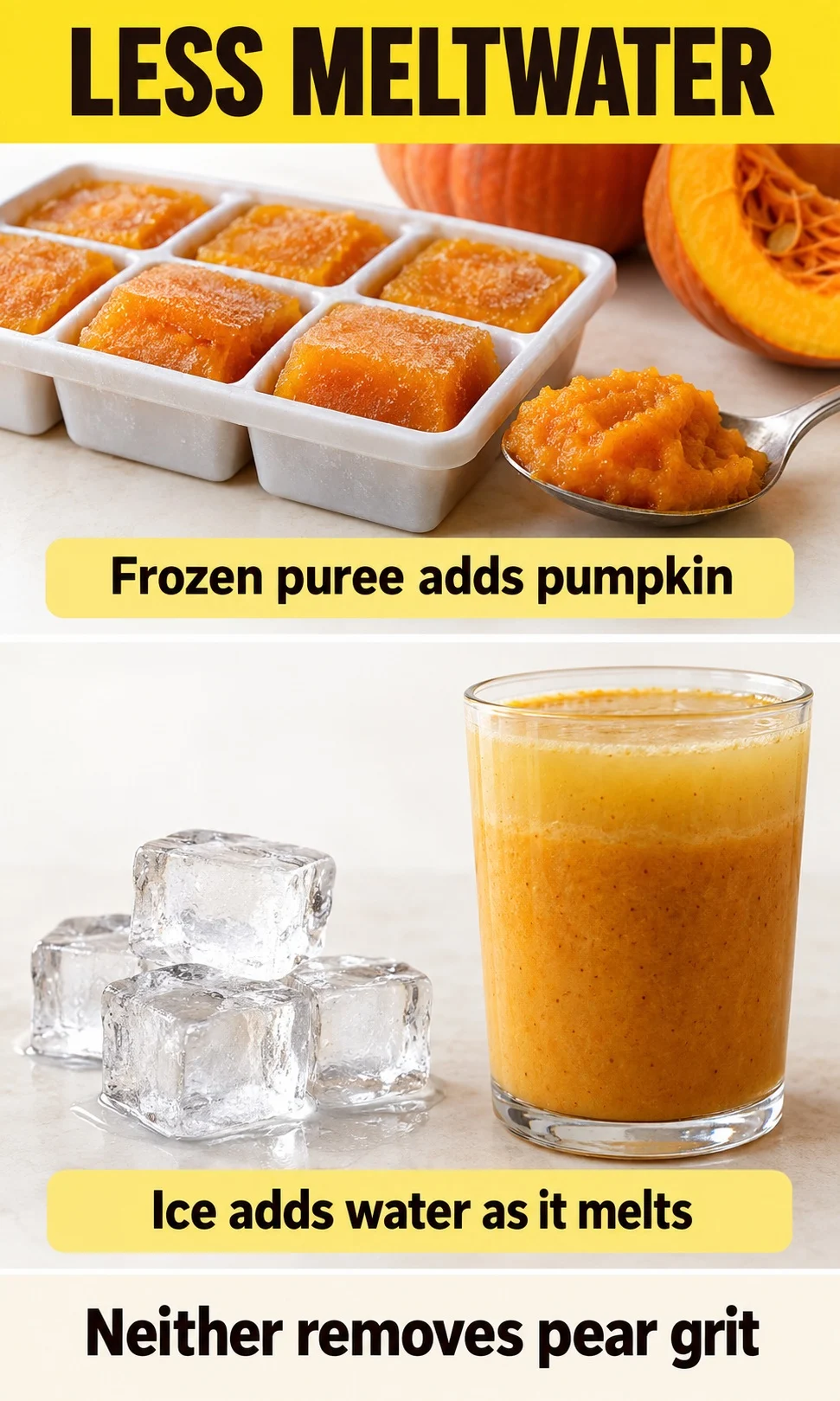
Ice chills a smoothie, then adds water as it melts. That can make particles more noticeable in a thinner drink, although it does not create pear stone cells or turn nuts into grit. If the smoothie was acceptable when freshly blended but becomes watery later, address dilution separately from the original texture.
Freeze plain pumpkin puree in small portions that your blender is designed to handle. Using frozen puree in place of some ice contributes pumpkin as it softens rather than only extra water. It still adds the water already inside the puree, and it cannot guarantee that the drink will never separate.
For homemade puree, cook the flesh until tender, remove stringy material, and blend it smooth before chilling or freezing. If it is much wetter than your usual canned puree, drain excess free liquid rather than compensating with more frozen ingredients. The same moisture-management principle matters in pumpkin quesadillas, although a filling and a drink need different final consistencies.
Pumpkin pie filling changes the flavor
Plain pumpkin puree and pumpkin pie mix are different products. The manufacturer’s pumpkin pie mix ingredient list, for example, includes sugar, salt, and spices in addition to pumpkin and water. Check your own can rather than assuming every product with pumpkin on the front is interchangeable.
If you have already used pie filling, leave out additional sweetener and spices until you assess the flavor. Adding plain puree or an unsweetened liquid can dilute an overly sweet mixture, but it also changes the pumpkin concentration and thickness. Pie filling does not solve pear grit or unblended nuts, and a baking mixture to which raw eggs have been added should not be used as a ready-to-drink smoothie.
Try one correction, then decide whether to strain
Use Smoothie Texture Studio to select the ingredients and texture you actually noticed. It will suggest practical checks and one first adjustment, with spoilage and unsafe storage taking priority. Its suggestions cannot identify contamination, certify food safety, or promise a perfectly smooth result.
Smoothie Texture Studio
Find the likely grit source. Choose one useful change.
Ingredient checkBatch rescueSuggestions depend on your observations. This cannot identify contamination or certify food safety.
Your next step will appear here
Check ingredient condition and storage before choosing a texture correction.
- Check the puree and pear separately before blending the next batch.
- Prepare pecans with liquid first, or omit them for a comparison batch.
- Reduce extra ice if meltwater is the problem.
- Strain persistent grit if the ingredients and storage are sound; discard suspect food.
Store the drink cold and keep texture separate from safety
Pear browning and a watery layer can develop without proving that a smoothie has spoiled. Neither change guarantees safety either, because harmful contamination may have no obvious smell or visible sign. Store the drink promptly in a clean, covered container at 4°C / 40°F or below and make only what you expect to use soon.
The USDA guidance on perishable food handling says to discard food left at room temperature for more than two hours, or more than one hour above 32°C / 90°F. For this drink, making it fresh or drinking it the next day is a practical quality preference, not a validated smoothie-specific shelf-life limit. The ingredient with the shortest remaining safe storage period still matters; blending does not restart its clock.
Frequently asked questions
Is pumpkin pie filling the same as pumpkin puree?
No. Plain puree is pumpkin without the ready-made sweetness and seasoning of a pie mix. Read the ingredient panel before adding sugar or spices, and do not use a pie batter containing raw eggs as a drink.
Why is canned pumpkin sometimes sandy?
Texture can vary, but an unusually hard or sandy batch cannot be diagnosed safely from appearance alone. Check the container and storage history, and set aside puree that feels abnormal. Do not taste food from a bulging, leaking, or otherwise suspect can.
Does freezing pumpkin puree fix a watery smoothie?
It can reduce the extra water contributed by ice when frozen puree replaces some of that ice. It does not remove water already in the puree or stop every form of separation. It also does not eliminate pear stone cells or nut fragments.
Can a blender remove the grit from pears?
A blender breaks pear flesh into smaller pieces, but hard stone-cell material may remain. A ripe pear can be easier to blend without being completely grit-free. Straining or omitting pear is more dependable if that texture is unacceptable.
Why did my pear smoothie turn brown?
Cut and blended pear can darken after exposure to air. Browning by itself does not establish spoilage, and an unchanged color does not establish safety. Check storage time, temperature, and the condition of the ingredients.
How long can a pumpkin smoothie stay in the fridge?
There is no single validated shelf life for every homemade pumpkin smoothie. Keep it covered at 4°C / 40°F or below, and prefer fresh or next-day use for quality. Follow the shortest applicable ingredient storage guidance and discard it if its handling history is unsafe.
Your next batch: change the cause, not everything
Keep the next adjustment narrow enough to learn from it. If pear contributes the grit, compare without pear; if pecans remain visible, change how they enter the blender; if the drink thins after standing, cut back on ice. Stop trying to rescue a batch whose ingredient quality or storage you cannot trust, and start again with sound ingredients.