
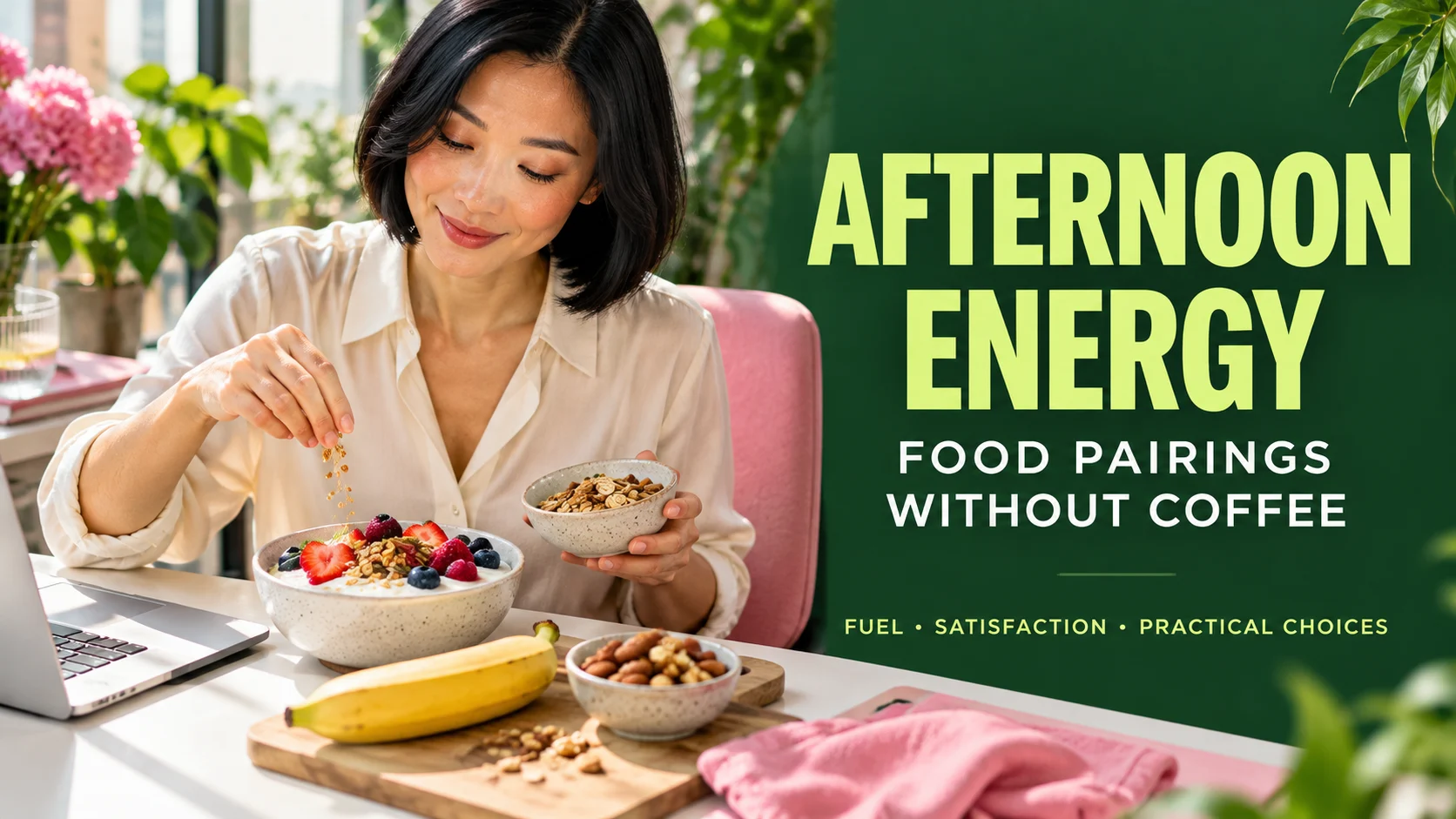

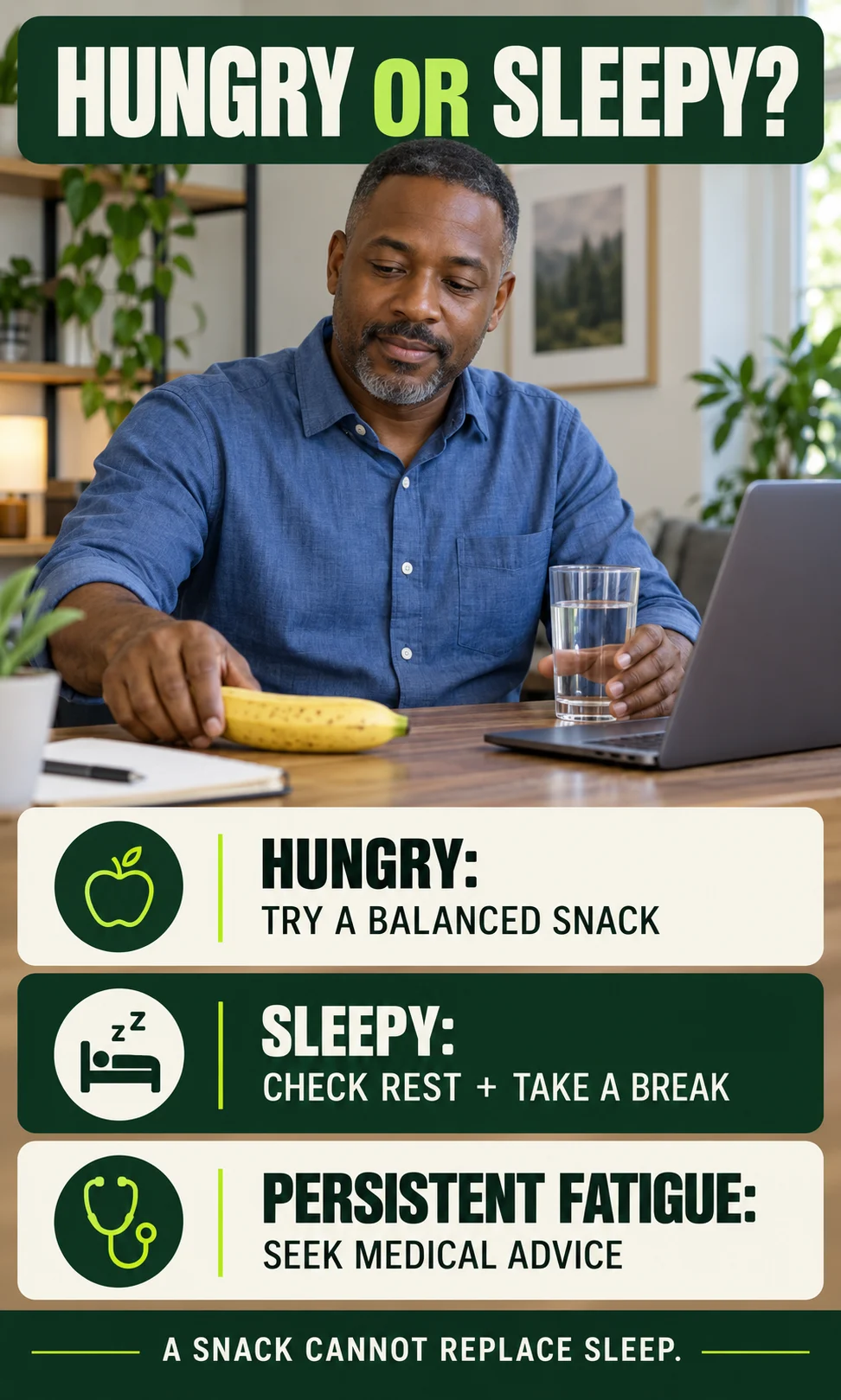
For afternoon energy, try a carbohydrate food paired with protein: a banana with plain yogurt, oats with milk, or whole-grain crackers with hummus. These combinations can address hunger and make a snack more satisfying, but they cannot guarantee that you will avoid an afternoon slump. If you feel sleepy rather than hungry, check sleep, hydration and your daily routine alongside what you eat.
What should you eat when your energy drops at 3 pm?
Start with what happened before the slump: a missed meal, a very small lunch, an unusually active morning or a poor night of sleep. If you are hungry, choose a snack or meal that fills the gap instead of trying to suppress it with another drink. If you have eaten enough and are simply drowsy, extra food may not be the answer.
| Your situation | A useful starting point |
|---|---|
| Hungry after a light lunch | Plain yogurt with a banana, or hummus with whole-grain crackers. |
| No fridge at work | A whole banana with nuts, or dry packaged roasted chickpeas with crackers; follow storage labels. |
| Sleepy after an adequate lunch | Check last night’s sleep, take a short movement break if able, and drink water if thirsty. |
| Preparing for exercise soon | An easily tolerated carbohydrate food, such as a banana or toast; keep the portion comfortable. |
| Fatigue keeps returning or affects daily life | Arrange medical advice rather than repeatedly changing snacks. |
Why the afternoon energy crash happens
An afternoon dip in alertness can happen even when lunch is sensible. Your body clock helps regulate waking and sleeping, and some people become less alert during the middle of the afternoon. Research on the post-lunch dip in performance describes this biological pattern, including dips that occur without eating lunch.
Meal composition still matters, but feeling tired after eating does not prove that your blood glucose has crashed. Carbohydrate foods raise blood glucose by different amounts depending on the portion, processing and the rest of the meal. Protein, fat and some types of fiber can alter digestion and the glucose response, although a mixed meal cannot promise a perfectly flat glucose curve.
Ten foods for afternoon energy without coffee
1. Eggs: add protein to a carbohydrate snack
A hard-boiled egg is a convenient way to make toast or crackers more substantial. Eggs contribute protein and several micronutrients, but they contain very little carbohydrate and are not a rapid fuel source on their own. Their leucine content does not make them a special remedy for the afternoon slump.
Try one or two eggs with whole-grain toast and sliced tomato. Cook ahead if that makes packing easier, then keep the eggs refrigerated or in a properly chilled lunch bag. For an egg-free alternative, use tofu or hummus with your carbohydrate food.
2. Plain Greek yogurt: an easy base for fruit and oats
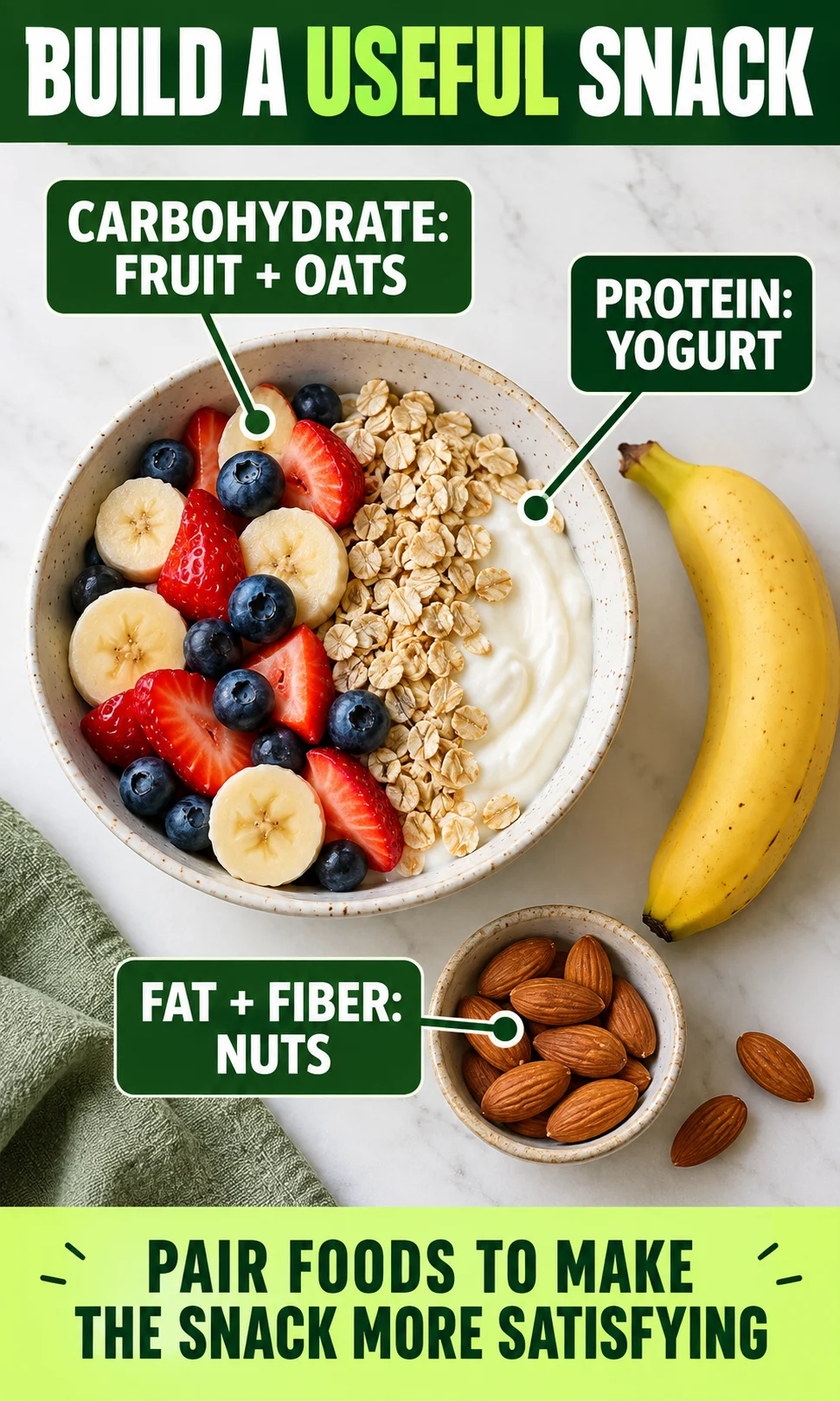
Plain Greek yogurt combines protein with some carbohydrate and is easy to pair with foods you already enjoy. A small pot becomes a more substantial snack when you add berries, sliced banana or a spoonful of oats. Choose it for convenience and nourishment rather than expecting probiotics to provide immediate alertness.
For a quick bowl, mix about 150–200 g of plain yogurt with fruit and two tablespoons of oats. Use lactose-free yogurt if needed, or compare labels on fortified soy alternatives because protein content varies. Keep the finished bowl chilled until you eat it.
3. Nuts: useful alongside fruit, not a replacement for lunch
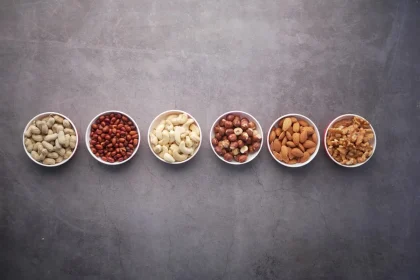
Almonds, walnuts and cashews supply unsaturated fats, some protein and fiber. They are also convenient when your desk has no refrigerator. Their compact size can be helpful, but a few nuts may not provide enough food after a missed meal.
Pair a small handful with a whole banana or an apple. Portion them into a container if eating straight from a large bag makes it hard to notice fullness. Avoid nuts if you have an allergy, and choose another safe pairing rather than assuming every seed product is suitable.
4. Bananas: convenient carbohydrate when you need fuel
A banana is useful because it is portable, easy to eat and provides carbohydrate. Potassium supports normal body function, but it is not a stimulant and does not explain an instant energy boost. Bananas also contain sugar naturally, so a caffeine-free snack should not be described as sugar-free.
At a desk, pair one with yogurt or nuts if you want a more filling snack. Before exercise, a banana alone may be comfortable when a heavier snack would not be. Adjust the amount to appetite and tolerance instead of relying on a promised number of minutes until it works.
5. Oats: a flexible whole-grain ingredient
Oats provide carbohydrate and fiber, including the soluble fiber beta-glucan. Their effect on digestion depends on the type of oats, preparation and what you add. An oat biscuit or sweetened bar is not automatically equivalent to a bowl made from plain oats.
Make a small overnight oat pot with roughly a quarter cup of dry oats and enough milk or a suitable alternative to soften them. Add plain yogurt and fruit if you like a thicker mixture, and refrigerate it. Choose a portion that complements lunch rather than treating it as a compulsory second meal.
6. Leafy greens: improve the meal around your fuel
Spinach and kale contribute folate and other nutrients, and can help make lunch more varied. They are low in energy compared with grains, legumes or many protein foods. A bowl of leaves alone is therefore an unreliable lunch when you need fuel for a long afternoon.
Add a handful to a lentil bowl, egg sandwich or rice dish. Pairing plant iron sources with vitamin-C-rich foods such as peppers can support iron absorption. Greens are a useful ingredient, but they do not correct iron deficiency in the time between lunch and a meeting.
7. Legumes: carbohydrate, fiber and protein together
Chickpeas, lentils and beans cover several meal roles at once. They provide carbohydrate alongside fiber and protein, making them useful in bowls, soups and wraps. That combination can make lunch more substantial without requiring meat.
Mash chickpeas with lemon and a little olive oil for a sandwich filling, or use hummus with crackers. If legumes make you uncomfortable, begin with an amount you tolerate and increase gradually rather than forcing a large portion. Rinsed canned beans and cooked lentils are practical options when preparation time is short.
8. Avocado: make the pairing more substantial
Avocado contributes unsaturated fat and fiber, and works well with bread, eggs or beans. It is better understood as one component of a meal than as a stand-alone energy booster. Adding it does not remove the need for a useful protein source or sufficient carbohydrate.
Spread a quarter to half an avocado on whole-grain toast and add an egg or mashed beans. Add lemon and tomato for flavor if they suit your digestion. You can leave avocado out and still build a balanced snack, especially when cost or availability makes another ingredient easier.
9. Berries: fruit that fits a snack bowl
Fresh or frozen berries add carbohydrate, fiber and variety to yogurt or oats. Their antioxidant compounds are not evidence that a berry snack will clear brain fog immediately. The practical benefit is getting a fruit you enjoy into a snack you can repeat.
Add a handful to yogurt, or serve berries beside toast and a protein food. Follow package directions for frozen products and keep prepared dairy bowls chilled. If berries are expensive, another whole fruit can do the same snack-building job without needing to copy the photograph.
10. Sweet potatoes: a useful starch for lunch or leftovers
Sweet potatoes provide carbohydrate and fiber, and work well when you want something more substantial than fruit. Orange and purple varieties can both fit this role; neither needs a special energy claim. Pairing the starch with beans, yogurt or another protein food gives it a clearer place in a meal.
Cook a small sweet potato ahead, chill it promptly and reheat safely when needed. Add black beans and vegetables for lunch, or plain yogurt as a savory topping if that suits your taste. Keep cooked leftovers chilled rather than storing them in a warm desk drawer.
Build a lunch that can carry you into the afternoon
A practical lunch includes enough food, a protein source, a carbohydrate food and vegetables or fruit. Add fats in a way that fits the dish rather than treating them as a requirement for every snack. For a wider visual meal framework, use MyPlate as a meal-composition check, then adapt the actual amount to your needs.
| Lunch | How to make it substantial |
|---|---|
| Lentil and rice bowl | Add spinach or peppers and a little olive oil; increase rice or lentils if the portion leaves you hungry. |
| Egg and avocado sandwich | Use whole-grain bread and add tomato, with fruit on the side when you want it. |
| Tofu and sweet potato bowl | Add cooked greens and a dressing you enjoy; the tofu supplies the protein component. |
| Chickpea wrap | Use mashed chickpeas or hummus, a whole-grain wrap and vegetables; pack it cold. |
Choose a snack that fits your storage
The best desk snack is one you can store safely and actually eat. Whole fruit, dry crackers and products labeled shelf-stable are convenient without refrigeration. Yogurt, cooked eggs, prepared hummus and many leftovers require cold storage, so pack them with reliable chilling or use the office refrigerator.
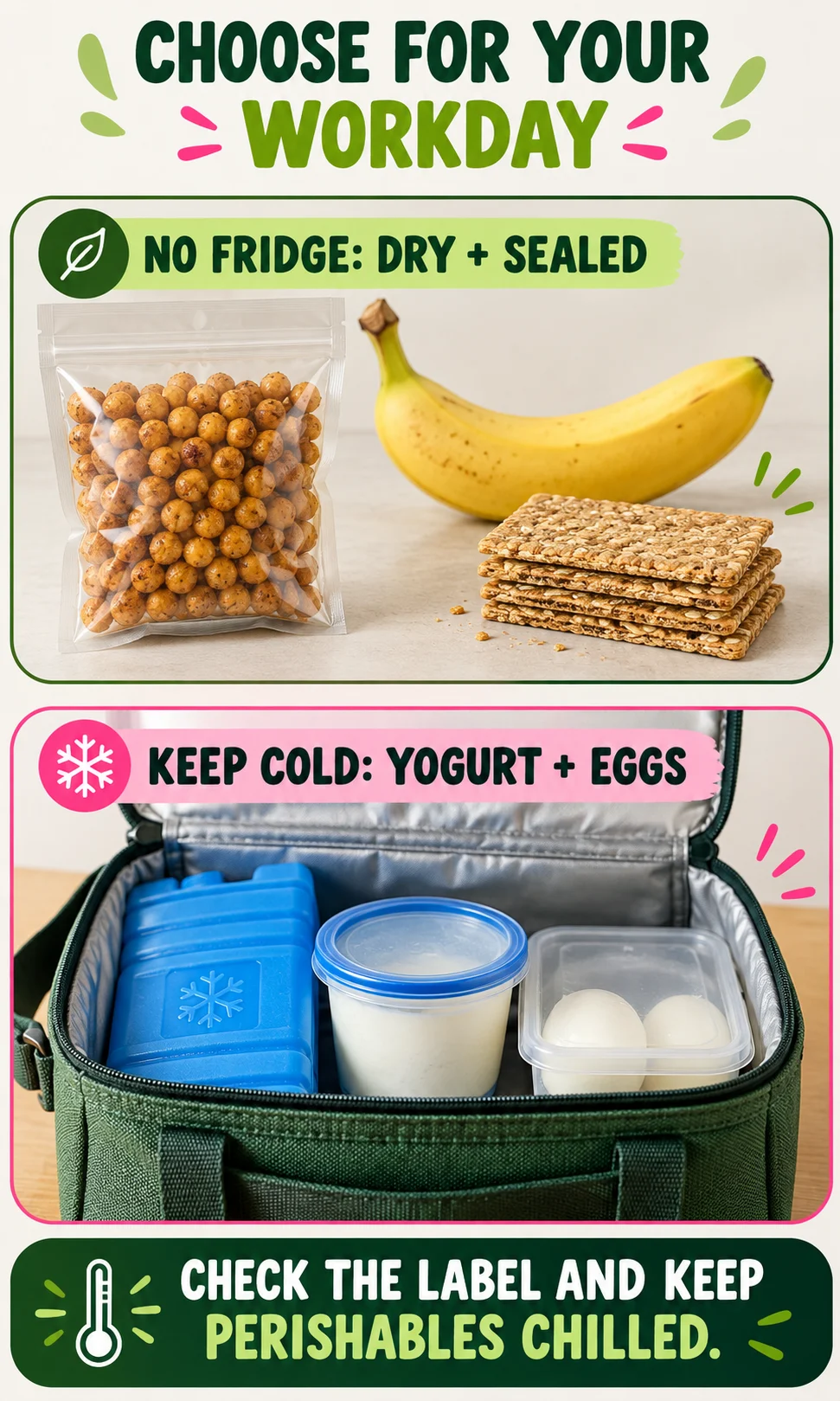
- No preparation: a banana with nuts, or dry packaged roasted chickpeas with whole-grain crackers.
- With a refrigerator: yogurt with fruit, or an egg with toast brought separately.
- If lunch was missed: choose a real meal when possible; a tiny snack may only delay the hunger.
- If you are not hungry: check sleep and take a comfortable break instead of assuming you must eat.
Choose your next pairing
Afternoon Energy Studio filters practical food pairings by hunger, food preferences and cold storage. It gives you options and a next step without estimating your blood glucose, diagnosing a deficiency or producing an energy score. Use it for everyday food choices, and follow your clinician’s plan when a medical diet or diabetes treatment changes what you should eat.
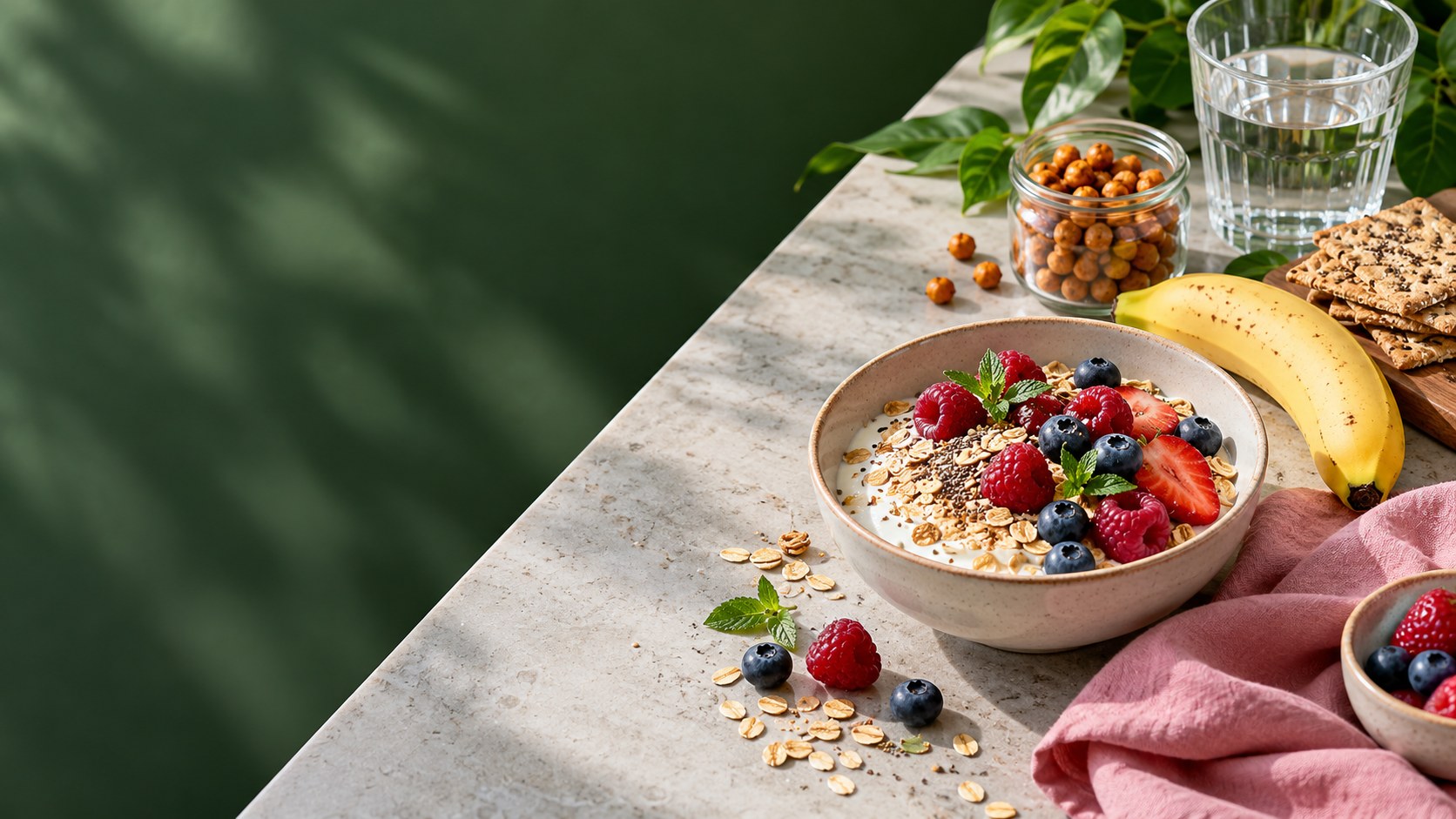
A practical next choice
Afternoon Energy Studio
Find a snack that fits your hunger, preferences and storage.
Choose practical food pairings for an ordinary afternoon. This checks food choices and storage; it does not diagnose tiredness or estimate blood glucose.
Choose a useful pairing
Use the choices above to narrow practical snack options.
General nutrition education only. No food guarantees sustained alertness. Follow prescribed diets and your diabetes plan. Persistent unexplained fatigue needs medical advice.
Timing: eat for hunger, not an exact crash window
Regular eating can be useful when long gaps leave you hungry, and the NHS guidance on tiredness includes regular meals and healthy snacks. That does not mean everyone needs to eat at a fixed time before 3 pm. Bring an option, then use hunger, your schedule and the size of lunch to decide whether you need it.
| Meal or moment | Example |
|---|---|
| Breakfast | Oats with milk or a suitable alternative, plus fruit. |
| Lunch | Lentil and rice bowl with vegetables and dressing. |
| Afternoon, if hungry | Yogurt with banana, or whole fruit with a safe shelf-stable pairing. |
| Later in the day | A normal meal when hungry; no compulsory extra boost or supplement. |
Micronutrients support metabolism, but are not instant fixes
Your cells use nutrients from food to produce ATP, the molecule involved in transferring energy for cellular work. Magnesium participates in energy production, and B vitamins support metabolic processes. Those roles do not mean that an extra serving will make a well-nourished person feel more awake immediately.
Iron helps support oxygen transport, and iron-deficiency anemia can cause fatigue and difficulty concentrating. If a deficiency is responsible, improving intake may be only one part of treatment, and the response is not an afternoon snack effect. Avoid diagnosing yourself or taking iron solely because you feel tired; the cause needs checking.
Habits that can make the afternoon harder
Coffee is optional, and it supplies stimulation rather than replacing food or sleep. Green tea and dark chocolate contain caffeine, so neither belongs in a strictly caffeine-free list. Drink water regularly, but do not automatically add electrolyte products for an ordinary desk-work slump; substantial sweating or a medical need is a different situation.
When fatigue needs a medical check
Seek medical advice if tiredness persists for several weeks, affects daily life or comes with unexplained weight loss, excessive thirst, palpitations or sleep-related gasping. The NHS tiredness guidance recommends assessment when fatigue is unexplained or persistent. Severe breathlessness, chest pain, fainting or sudden confusion need urgent help rather than a food experiment.
If you have diabetes and symptoms of low blood glucose, follow your agreed treatment plan and check glucose when possible. Routine snacks rich in fat, fiber or protein are not substitutes for fast-acting carbohydrate when treating hypoglycemia. The NIDDK guidance on low blood glucose explains treatment and when emergency help is needed.
Frequently asked questions
What should I eat at 3 pm for energy?
If you are hungry, try a carbohydrate food with protein, such as a banana with plain yogurt or whole-grain crackers with hummus. The combination is a practical snack rather than a guaranteed treatment for tiredness. If you are not hungry, check sleep, hydration and the need for a break before adding food.
Can food replace afternoon coffee?
Food can replace a missed snack or meal, but it does not reproduce caffeine’s stimulant effect. Enough food and good sleep can reduce reliance on coffee when hunger or insufficient rest is contributing. You can choose a caffeine-free routine without expecting one ingredient to make you instantly alert.
Does an afternoon crash mean low blood sugar?
No. Normal body-clock changes, poor sleep, stress and eating patterns can all contribute to an afternoon dip. Low blood glucose is a medical issue that needs assessment or measurement, especially for people using glucose-lowering medicines; feeling sleepy alone does not establish it.
Which energy foods are quickest before exercise?
An easily tolerated carbohydrate food, such as a banana or toast, may suit the period shortly before exercise. A larger meal with substantial fat or fiber can be less comfortable close to activity. The useful amount and timing depend on the workout, what you ate earlier and your digestion.
Do magnesium or B vitamins give immediate energy?
These nutrients support normal metabolic processes, but they do not act like caffeine. If you already get enough, extra amounts are not a reliable solution for a 3 pm slump. Persistent fatigue or a suspected deficiency calls for assessment rather than assuming a supplement will help.
Should office workers and active people eat the same snack?
The ingredients can overlap, but the total amount may differ. An active person or someone who missed lunch may need more carbohydrate and more food overall than a person who ate adequately and is not hungry. Match the snack to appetite, activity and any medical advice rather than using one fixed portion.
Start with the gap you can actually change
Tomorrow, bring one pairing you enjoy and give lunch enough substance to meet your appetite. Notice whether the afternoon problem is hunger, drowsiness or a repeated symptom that needs help. A useful food routine supports your day without asking a single ingredient to solve every cause of fatigue.