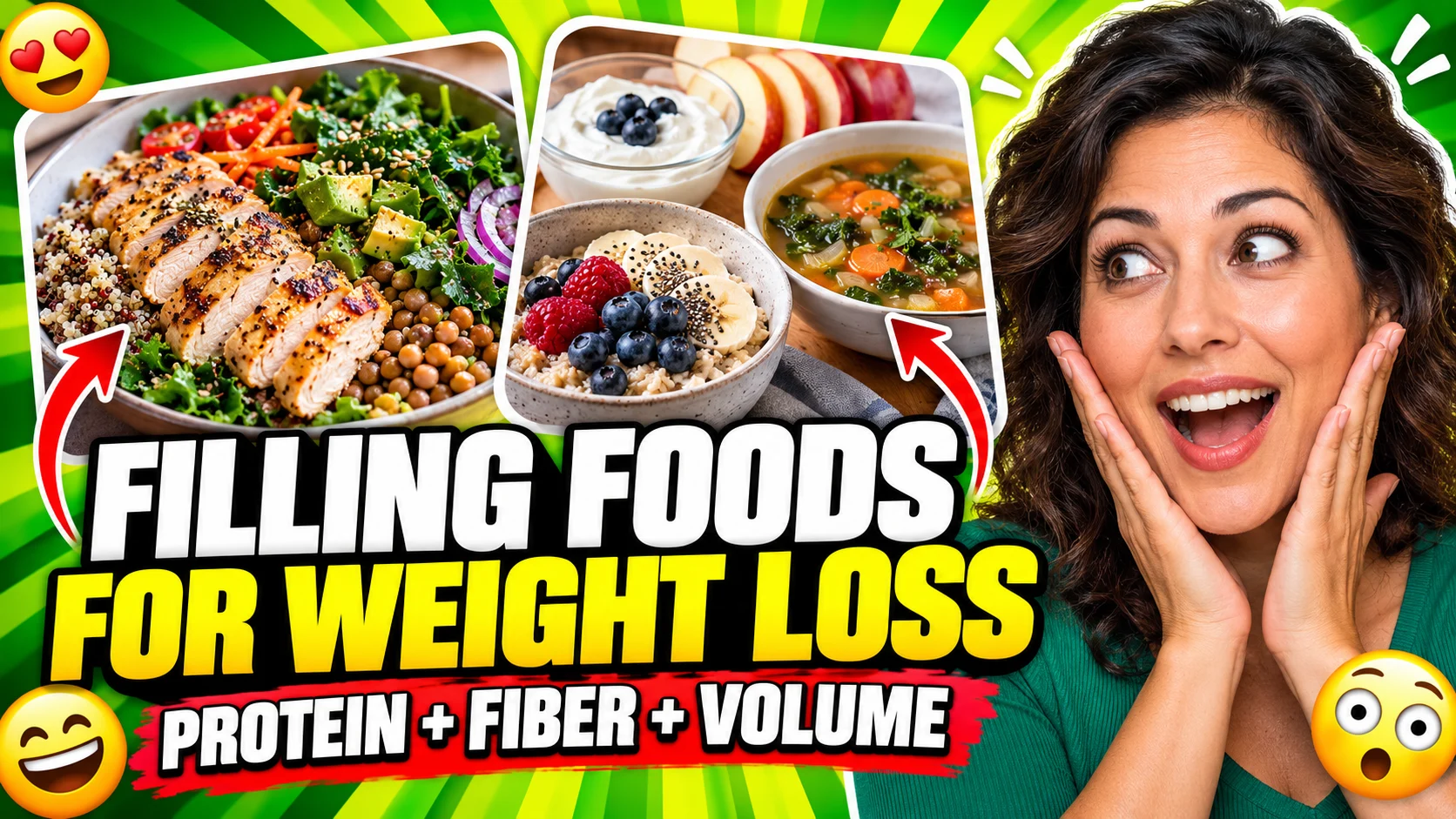

Filling foods can make weight loss easier because they help you build satisfying meals without relying on tiny portions or constant willpower. The strongest pattern is usually a combination of protein, fiber-rich foods, and water-rich volume, while calorie-dense extras still need reasonable portions. The goal is not to find one “magic” food, but to build meals that keep hunger manageable and still fit your overall energy needs.
Fullness is not a fixed property that belongs to one ingredient. Portion size, protein, fiber, water content, food texture, eating speed, sleep, stress, medications, and your individual appetite all affect how long a meal feels satisfying. That is why a bowl of plain vegetables may feel bulky but incomplete, while a small handful of nuts can be nutritious yet surprisingly easy to overeat.
What makes a food more filling?
Protein usually gives a meal a stronger satiety anchor. Eggs, fish, poultry, yogurt, tofu, tempeh, beans, lentils, and other protein-rich foods tend to make a meal feel more substantial than a meal built mostly from refined starch or added sugar. You do not need an extreme high-protein diet; the practical question is whether each main meal has a clear protein source you actually enjoy.
Fiber helps by adding structure and, in many foods, bulk. Whole grains, beans, lentils, vegetables, fruit, nuts, and seeds contribute fiber, but different fibers do not behave identically. A systematic review of cereal fibers and satiety found favorable effects on appetite measures overall, while also showing that the effect varies by fiber source.
Water-rich foods increase the physical volume of a meal without automatically making it calorie-dense. Soups, vegetables, whole fruit, stews, and yogurt-based meals can therefore be useful when a small-looking plate leaves you dissatisfied. The CDC’s guidance on vegetables and fruits also emphasizes their water and fiber content and their role in reducing hunger when they replace more calorie-dense foods.
Fat can improve flavor and satisfaction, but it is energy-dense. Avocado, nuts, seeds, olive oil, cheese, and nut butters can absolutely fit a weight-loss eating pattern, yet they are poor choices for “eat as much as you want” thinking. Treat them as valuable components rather than unlimited fullness foods.
The most useful combination is therefore simple: include a protein anchor, add a fiber-rich carbohydrate or legume, make room for vegetables or whole fruit, and portion energy-dense toppings deliberately. This matches the broader pattern in the Dietary Guidelines for Americans, which prioritize nutrient-dense foods such as protein foods, vegetables, fruit, healthy fats, and whole grains.
Filling food categories worth building meals around
| Food category | Why it can help fullness | Easy uses | What to watch |
|---|---|---|---|
| Eggs, yogurt, fish, poultry, tofu, tempeh | Clear protein anchor | Breakfast, bowls, salads, wraps, stir-fries | Cooking fats and sauces can add energy quickly |
| Beans, peas, lentils | Protein plus fiber in one food | Soups, curries, salads, grain bowls | Increase gradually if large amounts cause digestive discomfort |
| Oats, barley, intact whole grains | Fiber-rich carbohydrate with more structure than refined grains | Porridge, grain bowls, soups | Large sugary toppings can change the meal quickly |
| Potatoes, corn, other starchy vegetables | Substantial texture and meal volume | Boiled, baked, roasted, added to soups | Frying and heavy toppings increase energy density |
| Non-starchy vegetables | High water content and useful fiber for meal volume | Roasted sides, soups, salads, stir-fries | Do not let vegetables replace the meal’s protein anchor |
| Whole fruit | Water, fiber, chewing, natural sweetness | Breakfast, snack, dessert | Juice is usually less filling than whole fruit |
| Nuts, seeds, avocado, olive oil | Flavor, texture, and satisfying fats | Toppings, dressings, snack pairings | Energy-dense, so portion size matters |
Build a filling meal with a four-part pattern
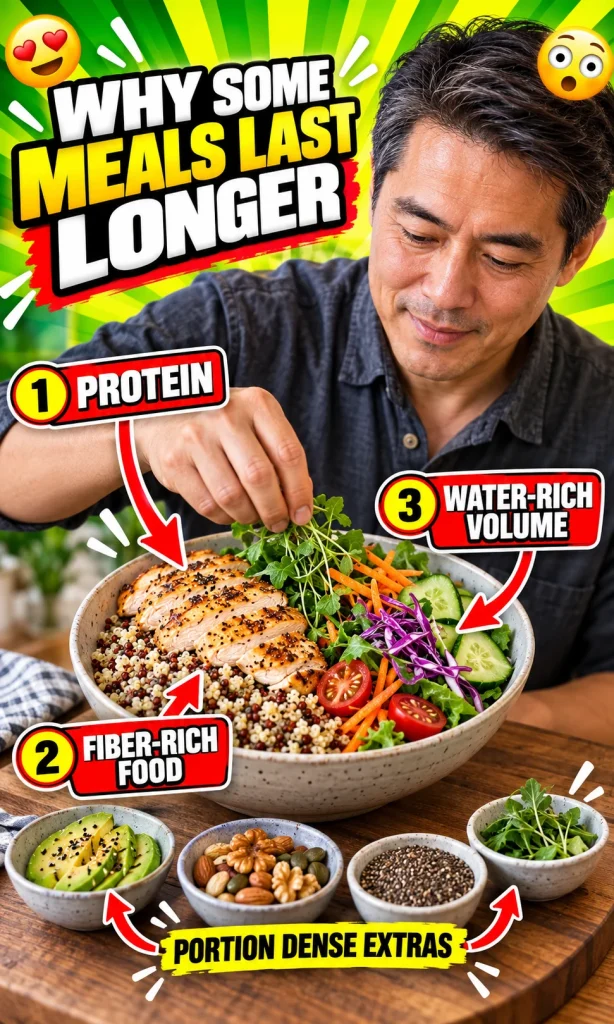
You do not need to calculate a “satiety score.” A more useful check is whether the meal has enough structure to satisfy you without accidentally concentrating most of its energy in sauces, fried coatings, desserts, or drinks.
- Start with protein. Choose a practical serving of eggs, yogurt, fish, poultry, lean meat, tofu, tempeh, beans, or lentils. If you need ideas, see foods with protein examples.
- Add a fiber-rich base. Oats, barley, beans, lentils, potatoes, brown rice, quinoa, or another whole-grain or starchy-vegetable choice can make the meal feel more complete.
- Add visible produce volume. Vegetables, whole fruit, or a broth-based vegetable soup can increase the amount of food on the plate without turning the meal into a pile of refined snacks.
- Finish with measured extras. Use cheese, avocado, nuts, seeds, oil, dressings, or sauces for flavor and satisfaction, but do not let the extras become the largest calorie source by accident.
This pattern is flexible enough for many eating styles. A lentil curry with vegetables and yogurt can fit it; so can grilled fish with potatoes and salad, oatmeal with Greek-style yogurt and berries, or tofu with brown rice and stir-fried vegetables. The point is the structure, not a single approved menu.
Examples of filling meals and snacks
For breakfast, try oatmeal with plain yogurt and berries, eggs with whole-grain toast and vegetables, or a yogurt bowl with fruit and a modest amount of nuts or seeds. If breakfast leaves you hungry very quickly, look first at whether it contains a meaningful protein source rather than simply making the portion larger.
For lunch or dinner, start with a protein such as fish, chicken, tofu, tempeh, or beans; add a fiber-rich starch or legume; then build volume with vegetables. This is also a useful place to connect with the broader plate-building approach in MyPlate explained.
For snacks, pair categories instead of eating a small refined snack by itself. Whole fruit with yogurt, vegetables with hummus, or whole-grain crackers with a protein-rich topping usually creates more staying power than a snack built mostly from refined flour or added sugar.
Fullness Balance Studio
Check whether your meal has the three foundations that usually make it easier to stay satisfied: protein, fiber-rich food, and water-rich volume.
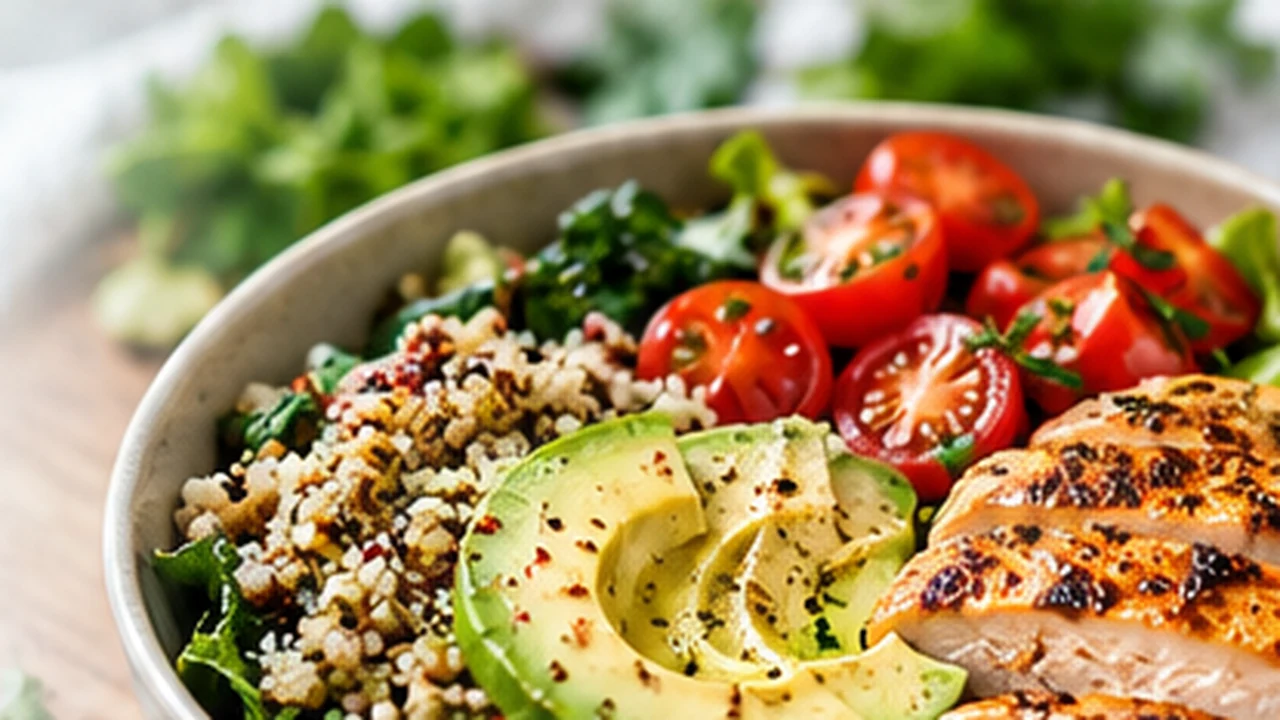
Describe the meal
Select what is already present. There is no calorie score and no “perfect” answer.
Build the base first
Already covered
Consider adding
Why this can help
Protein, fiber-rich foods, and water-rich foods can make a meal more satisfying. Energy-dense foods can still fit, but their portion matters. This is a meal-structure check, not a diagnosis or a personalized calorie prescription.
Foods that can be nutritious but easy to overshoot
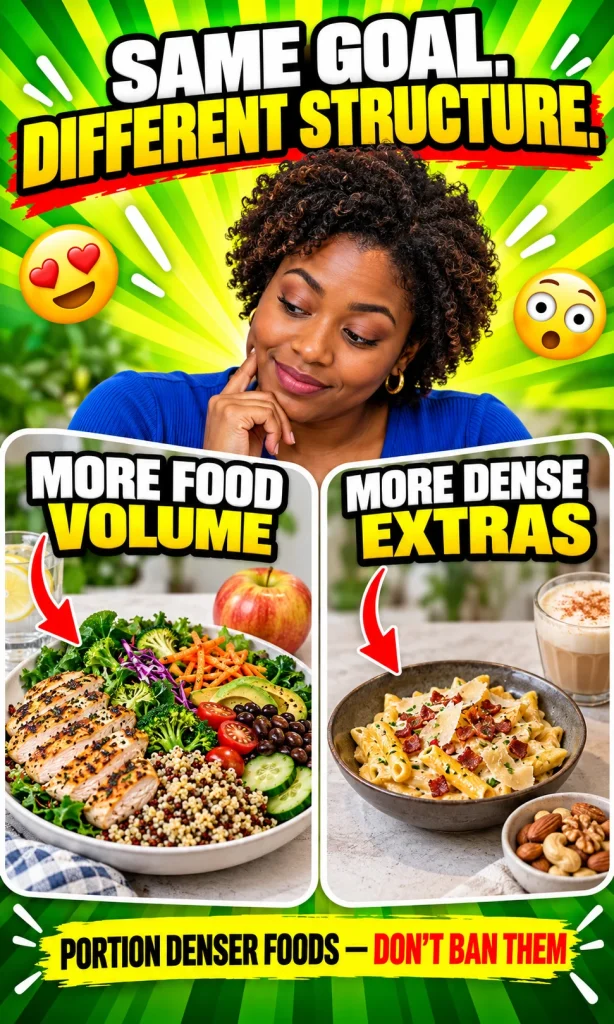
Some foods are healthy and satisfying yet still concentrated in calories. Nuts, nut butter, seeds, avocado, cheese, granola, oils, dried fruit, and many “energy bites” fall into this group. They can be excellent ingredients, but the portion that feels visually small can carry far more energy than a large serving of vegetables, soup, or whole fruit.
That does not make these foods “bad.” It means they work better as part of a structured meal than as an unlimited answer to hunger. A spoonful of nut butter on oatmeal may improve satisfaction; several unmeasured spoonfuls can quietly change the energy balance of the meal.
Liquid calories deserve similar attention because they often add energy without the same chewing and meal volume as solid food. If you are trying to make meals more filling, start with water or another low-calorie drink and let the food provide most of the meal’s energy.
| If this is the problem | Try this first | Why it helps |
|---|---|---|
| Meal looks tiny | Add vegetables, whole fruit, soup, or another water-rich food | Adds physical volume without relying only on dense extras |
| Hungry again soon | Check protein and fiber first | The meal may be mostly refined carbohydrate or liquid calories |
| Meal is “healthy” but weight is not moving | Review portions of oils, dressings, nuts, cheese, granola, and drinks | Nutritious foods can still be energy-dense |
| Always searching for a snack | Pair a protein food with fruit, vegetables, or a whole grain | A paired snack is usually more substantial than a refined snack alone |
If you are hungry again soon after eating
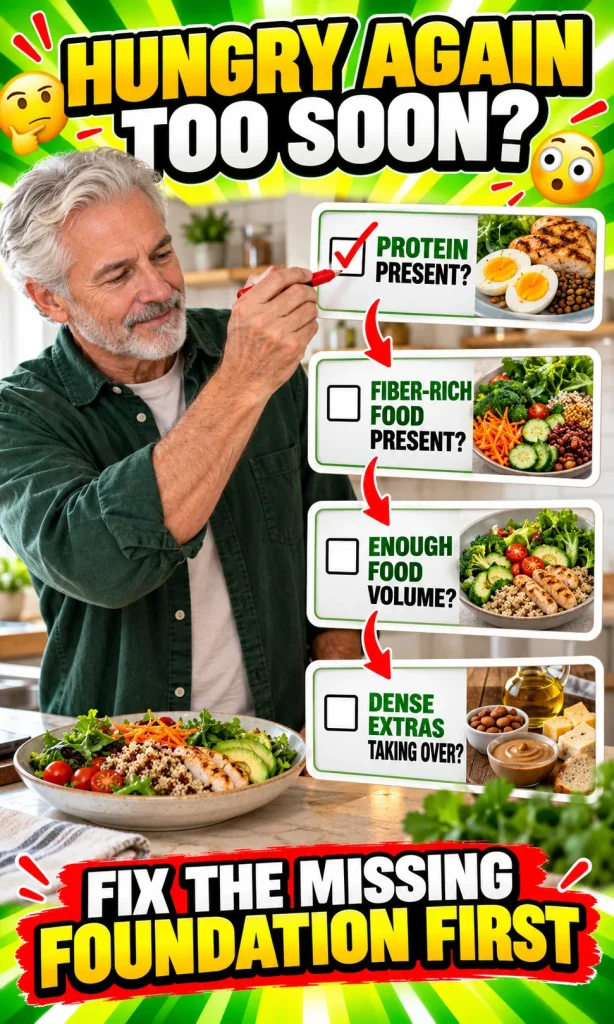
Do not automatically assume you “lack discipline.” First inspect the meal. A meal can be large in calories and still feel unsatisfying if much of it comes from refined snacks, sweet drinks, sauces, or foods that are easy to eat quickly.
Then look beyond the plate. Poor sleep, high stress, long gaps between meals, increased activity, some medications, and hormonal changes can all change appetite. Weight management is not only a food-selection problem.
If hunger is persistent, intense, or accompanied by dizziness, fainting, unusual thirst, unexplained weight change, binge eating, or other concerning symptoms, speak with a qualified health professional. People who are pregnant, have diabetes, kidney disease, gastrointestinal disease, a history of an eating disorder, or take medicines that affect appetite or blood sugar may need individualized advice.
- Check the protein anchor: is there a clear protein food in the meal?
- Check the fiber source: is there a whole grain, legume, vegetable, fruit, nut, or seed?
- Check meal volume: does the plate include water-rich foods, or is most of it compact and energy-dense?
- Check the extras: are oils, cheese, sauces, nuts, sweets, or drinks doing more work than you realized?
- Check the schedule: are you waiting so long between meals that you arrive extremely hungry?
Weight loss still depends on the overall pattern
Filling foods are helpful because they can make a lower-energy eating pattern easier to live with, not because they cancel calories. The NIDDK’s weight-management guidance emphasizes choosing an eating pattern you can maintain over time while reducing overall energy intake when weight loss is the goal.
A sustainable plan also leaves room for preference, culture, convenience, budget, and enjoyment. If your “perfect” meal requires ingredients you dislike or a cooking routine you cannot maintain, it is not a strong long-term plan. Use the fullness principles to improve foods you already eat rather than forcing every meal into the same template.
For a broader list of related choices, compare healthy foods that fill you up and foods that help you lose weight. This page is most useful when you use it as a meal-building guide: protein, fiber, food volume, and deliberate portions of calorie-dense extras.
Frequently asked questions
What food keeps you full the longest for weight loss?
No single food is guaranteed to keep everyone full the longest. Meals that combine a clear protein source with fiber-rich and water-rich foods are usually a better bet than relying on one ingredient alone.
Are potatoes filling for weight loss?
Potatoes can be a satisfying starchy food when boiled, baked, or roasted with moderate added fat. The preparation matters: frying and heavy toppings can make the same basic food much more energy-dense.
Is oatmeal a good filling breakfast for weight loss?
Oatmeal can be a strong base because oats provide fiber and meal volume. It is usually more satisfying when you add a protein source such as plain yogurt or milk and keep sugary toppings proportionate.
Can I lose weight without feeling hungry all the time?
Many people can reduce persistent hunger by improving meal structure, eating enough protein and fiber, using higher-volume foods, and avoiding overly aggressive restriction. Some hunger can still occur during weight loss, and unusually intense or persistent hunger deserves individualized review.
Are nuts good for weight loss if they are high in calories?
Nuts can fit well because they provide protein, fiber, texture, and unsaturated fat, but they are energy-dense. Use a deliberate portion rather than treating them like a low-calorie volume food.
Bottom line
Choose meals that are satisfying enough to repeat: a protein anchor, a fiber-rich food, plenty of water-rich produce, and sensible portions of calorie-dense extras. That structure gives you more control over hunger while keeping the focus on a healthy eating pattern you can realistically maintain.