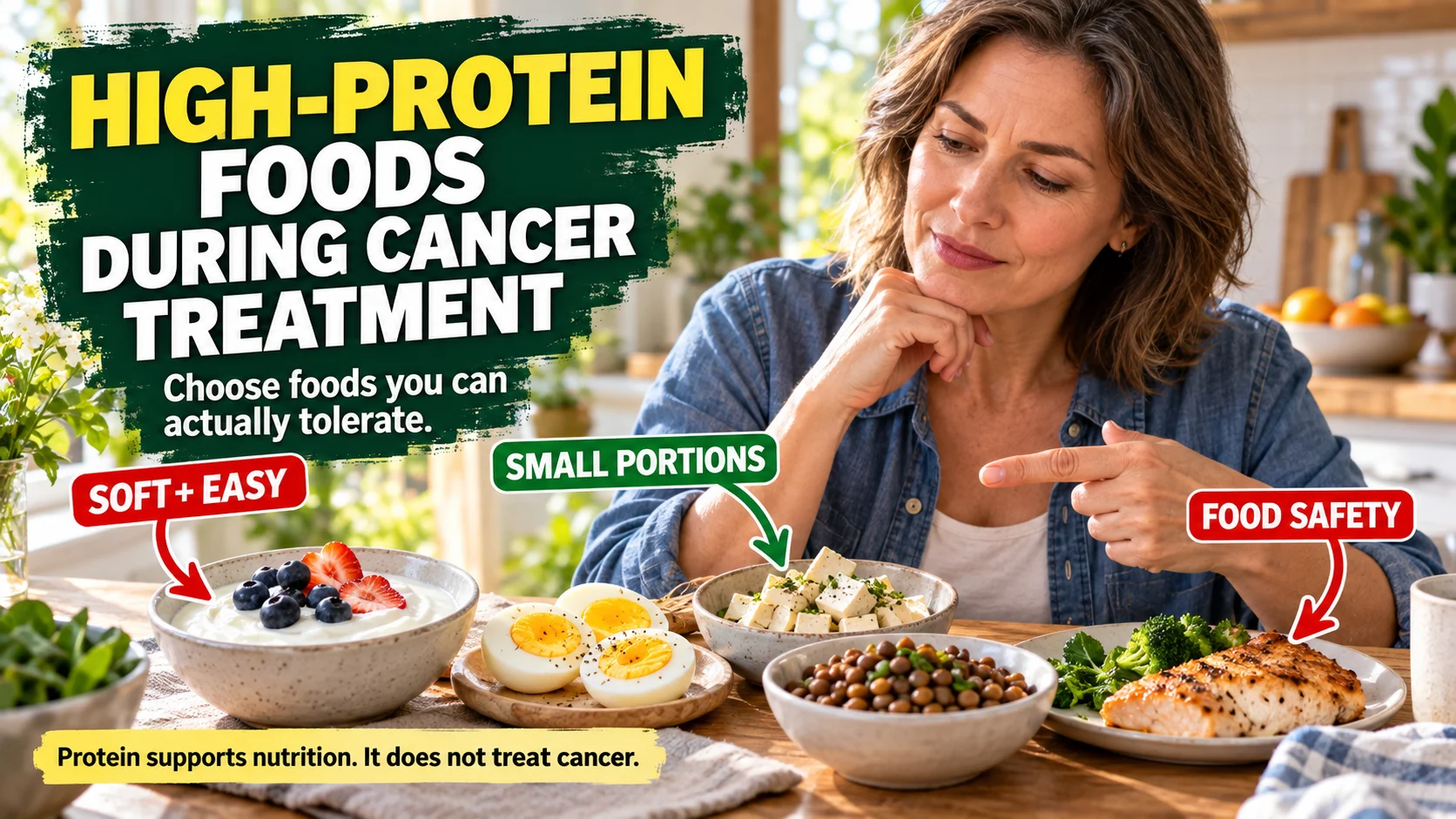

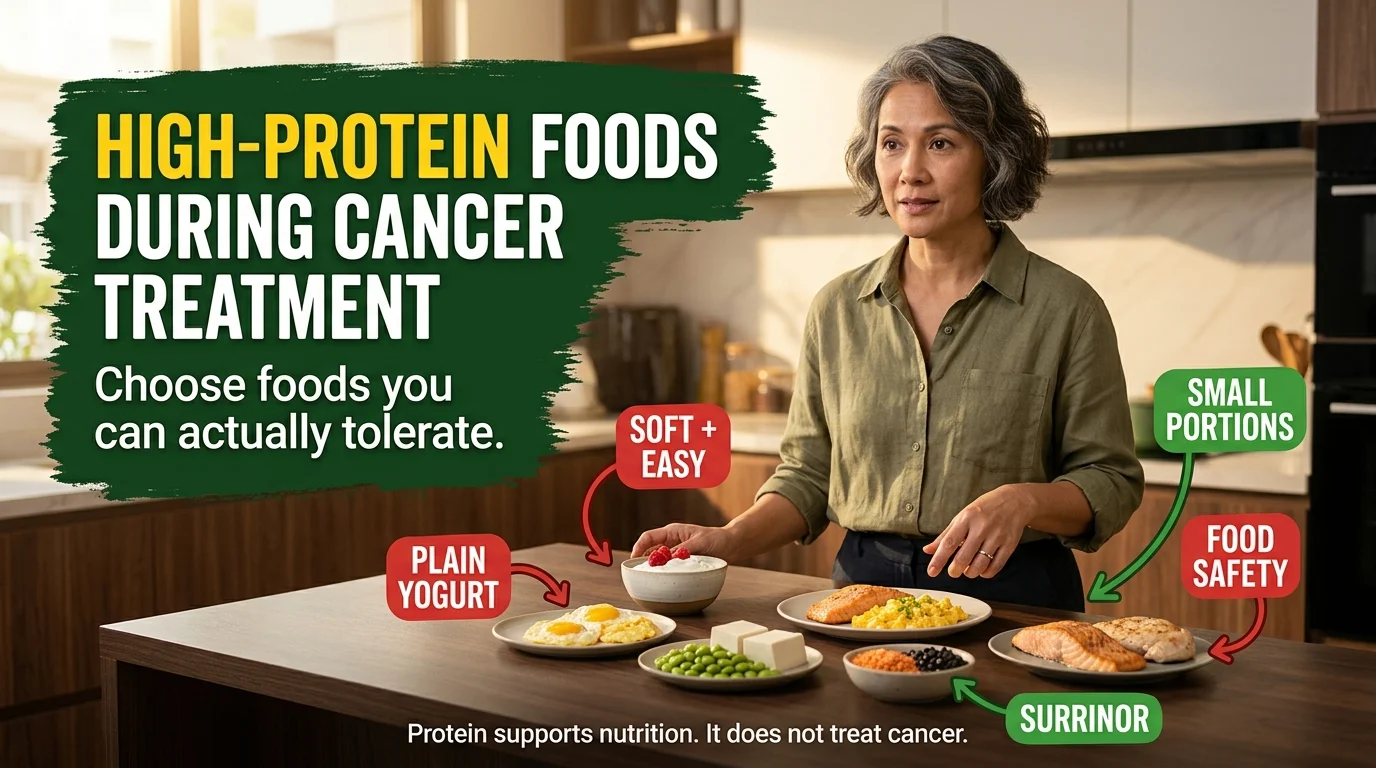
People with cancer often need more protein than usual during treatment or recovery, but the best foods depend on appetite, weight change, swallowing comfort, treatment side effects, and other medical conditions. Start with protein-rich foods you can tolerate – such as eggs, fish, poultry, dairy or fortified soy foods, tofu, beans, lentils, and nut or seed butters – and ask your oncology team or a registered dietitian for a personal target if your intake or weight is falling.
Protein supports muscle, immune function, tissue repair, and recovery; it does not treat cancer itself. The National Cancer Institute’s cancer-treatment nutrition guidance notes that some people need extra protein and calories while appetite loss, nausea, mouth soreness, taste changes, or swallowing problems can make eating harder.
High-protein foods that are practical during cancer treatment
The most useful protein food is not always the one with the biggest number on a nutrition label. During treatment, texture, smell, temperature, food safety, and how much you can finish may matter more than choosing the theoretically “highest-protein” option.
Soft eggs, yogurt, cottage cheese, tofu, tender fish, smooth nut butters, beans, lentils, milk, and fortified soy drinks are often easier to adapt when eating is difficult. When appetite is low, smaller portions that combine protein with extra calories can be easier to manage than a full plate.
Use the table below as a food-selection guide rather than a prescription. Portions and protein needs vary, and some people need a more individualized plan because of kidney disease, liver disease, diabetes, gastrointestinal surgery, swallowing problems, or treatment-specific restrictions.
| Protein food | Why it can work well | Useful when eating is difficult | Important caution |
|---|---|---|---|
| Eggs | Compact, versatile protein that can be served warm or cool. | Scrambled or soft-textured preparations may be easier with a sore mouth or low appetite. | Cook thoroughly if your care team has warned you about low white blood cell counts or infection risk. |
| Greek yogurt, cottage cheese, milk | Easy to add to snacks, smoothies, cereals, soups, and desserts. | Cool, soft textures can be easier when chewing is tiring or the mouth is tender. | Choose pasteurized products; use lactose-free options if treatment has reduced lactose tolerance. |
| Fish and poultry | Concentrated protein that can be minced, shredded, or mixed into soft dishes. | Tender fish or finely shredded chicken with sauce may be easier than dry meat. | Cook thoroughly and avoid raw or undercooked seafood when infection risk is a concern. |
| Tofu, tempeh, fortified soy foods | Plant-based protein with textures ranging from silken to firm. | Silken tofu can blend into soups, sauces, smoothies, or desserts with little chewing. | Follow food-safety instructions from your treatment center, especially when immunity is low. |
| Beans, lentils, chickpeas | Provide protein plus carbohydrate and other nutrients. | Blend into soups, dhal, hummus, or smooth purees if texture is a problem. | Large portions may worsen gas or bloating for some people; increase gradually if needed. |
| Nut and seed butters | High-energy, compact addition when volume is hard to manage. | Stir into oatmeal, yogurt, smoothies, sauces, or soft desserts. | Sticky textures can be difficult with swallowing problems; ask for a texture-safe alternative if needed. |
Why protein can matter more during treatment
Cancer can change nutrition needs in two directions at once: the body may need more resources for recovery, while treatment makes it harder to eat enough. The National Cancer Institute’s nutrition guidance during cancer treatment explains that extra protein and calories may help people maintain strength, reduce malnutrition risk, and cope with treatment side effects.
This is why advice for a person in active treatment can look different from ordinary “healthy eating” advice. If someone is losing weight or eating only a few bites, a higher-calorie yogurt, a milk-based drink, eggs with cheese, tofu blended into soup, or peanut butter stirred into oatmeal may be more useful than a large low-calorie salad that fills the stomach without supplying much protein or energy.
The same principle applies after surgery. Recovery increases demand for energy and nutrients while pain, early fullness, fatigue, or changes to digestion can reduce intake, so the practical goal is often to protect muscle and keep nutrition coming in consistently.
Choose protein around the side effect that is making eating hard

The best food changes when the problem changes. Instead of asking only “Which foods have the most protein?”, ask “Which protein can I eat comfortably and safely with the symptoms I have today?”
Interactive decision support
Use the Protein Support Studio to match protein ideas to appetite, mouth or throat comfort, dietary pattern, dairy tolerance, weight or intake concerns, and food-safety precautions.
Cancer nutrition decision support
Protein Support Studio
Match protein foods and preparation ideas to the eating problem you have today - without inventing a medical protein target.
Your practical starting pattern
Choose the easiest protein first
Protein foods to try first
Change the preparation, not just the ingredient
Food-safety note
Contact your care team sooner if...
- you are losing weight or eating much less for several days;
- you cannot keep enough fluids down;
- food or drink makes you cough, choke, or feel stuck;
- mouth or throat pain prevents eating;
- you have fever or signs of infection, especially during low white blood cell counts.
Find nutrition help near you
For ongoing weight loss, swallowing problems, or complex treatment side effects, look for a registered dietitian with oncology experience.
Registered dietitian / dietitian with oncology nutrition experience.
Which oneCompare cancer-nutrition experience, credentials, appointment availability, whether they coordinate with your oncology team, and the cost or referral requirements.
Educational decision support only. This experience does not set a protein requirement, diagnose malnutrition, or replace advice from your oncologist, oncology nurse, dietitian, speech-language pathologist, or other treating clinician.
If appetite is low or you feel full quickly
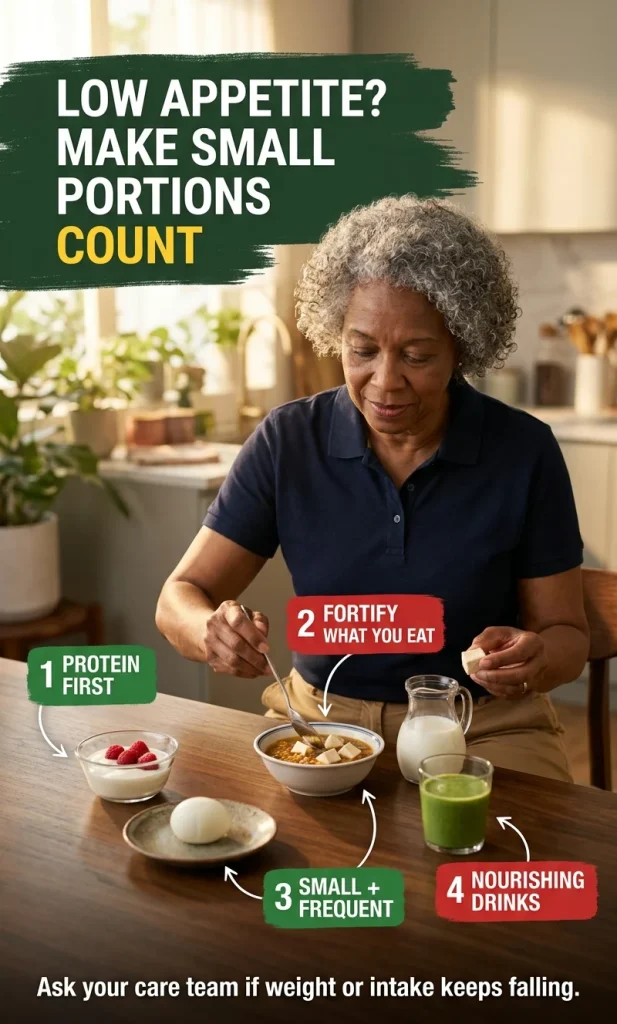
Start with the protein part of the meal while your appetite is strongest, then eat smaller meals or snacks more often. The NCI recommends high-protein, high-calorie foods, smaller meals, and adding extra protein to foods when appetite loss or weight loss is a problem. Cancer Research UK’s guidance on boosting energy and protein likewise emphasizes smaller, regular meals and adding protein to foods when cancer or treatment has caused weight loss.
Useful small-volume ideas include Greek yogurt, cottage cheese, an egg, half a sandwich with chicken or tuna, tofu pudding, hummus, peanut butter on soft toast, or a smoothie made with milk or fortified soy drink. If you already eat oatmeal, soup, mashed potatoes, or pasta, adding milk powder, grated cheese, tofu, eggs, beans, or nut butter can increase nutrition without creating a much larger portion.
If your mouth or throat is sore
Soft, moist, cool or room-temperature foods are often easier than dry, crunchy, spicy, salty, or acidic foods. The NCI’s easy-to-chew and easy-to-swallow food guidance includes eggs, cottage cheese, yogurt, creamy nut butters, soups, stews, and smooth nutrition drinks among foods that may be easier to manage.
Texture matters as much as the ingredient. Tender fish with sauce can be easier than dry grilled chicken; silken tofu can be easier than firm cubes; and blended lentil soup can be easier than whole legumes when chewing or swallowing is uncomfortable.
If food tastes metallic, bitter, or “wrong”
Taste changes can make a previously reliable protein suddenly unpleasant. If red meat tastes metallic, try eggs, fish, poultry, tofu, beans, dairy foods, or chilled protein foods, and consider non-metal utensils if your care team recommends them.
Do not judge your entire diet by one bad day. During treatment, tolerance can change from cycle to cycle, so keeping several protein options with different temperatures, smells, textures, and flavors gives you more ways to keep eating.
If nausea is the main problem
Strong odors and large meals can make nausea worse for some people. Cold or room-temperature foods usually smell less than hot foods, so yogurt, cottage cheese, a chilled tofu dish, a mild sandwich, or a small smoothie may be easier than a strongly scented hot meal.
When nausea is active, hydration and symptom control come first. Ask the treatment team about anti-nausea medication if symptoms are preventing food or fluids; once nausea is controlled, protein can be added back in small amounts.
Protein foods for vegetarian or plant-based diets
A plant-based diet can still provide substantial protein, but appetite loss can make bulky high-fiber foods difficult to finish. Tofu, tempeh, smooth nut or seed butters, hummus, lentil or bean soups, soy yogurt, and fortified soy drinks can concentrate protein into smaller servings.
When dairy is avoided, fortified soy milk generally contributes more protein than many other plant-based drinks. Read the nutrition label because products differ, and choose an option that fits any advice your care team has given you about calories, sugar, potassium, phosphorus, or other nutrients.
If gas or abdominal fullness is already a problem, whole beans and lentils may not be the easiest first choice. You can use smoother forms such as hummus, pureed lentil soup, silken tofu, or nut butter, and compare those options with the site’s guide to foods that commonly cause bloating.
Food safety matters when your immune system is suppressed
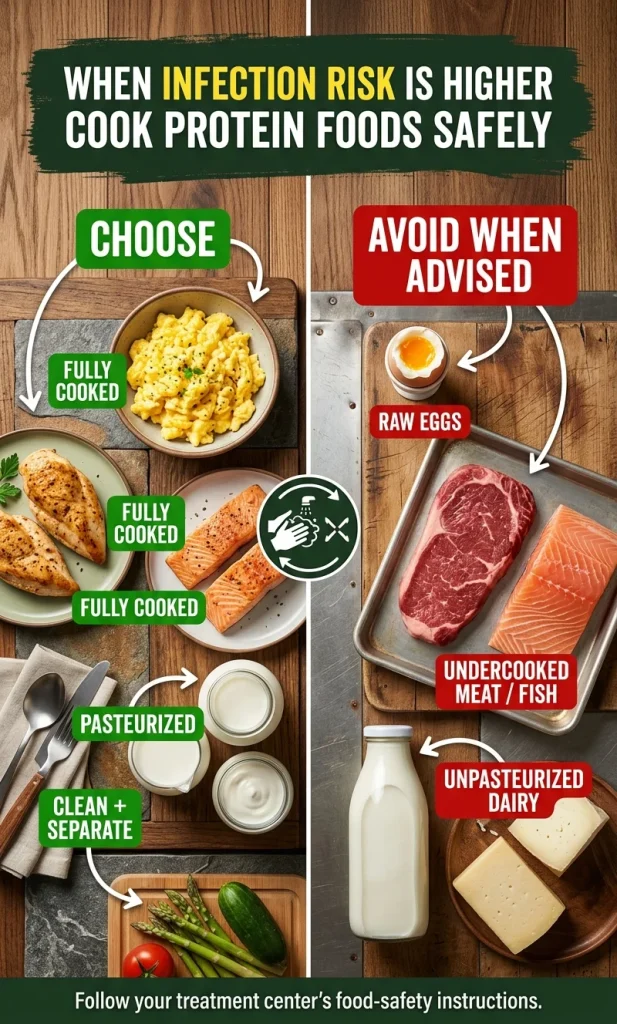
Chemotherapy and some other cancer treatments can lower infection-fighting white blood cells. The American Cancer Society’s food-safety guidance during cancer treatment emphasizes careful food handling and, when white blood cell counts are low, thorough cooking of meats, poultry, fish, and eggs along with avoidance of higher-risk raw or undercooked foods.
| If infection risk is increased | Safer protein habit | What to clarify with your team |
|---|---|---|
| Eggs | Use fully cooked eggs and pasteurized egg products when advised. | Whether your treatment center has specific neutropenia food rules. |
| Fish, meat, poultry | Cook thoroughly and avoid raw or undercooked forms. | Whether there are additional restrictions during periods of very low counts. |
| Milk, yogurt, cheese | Choose pasteurized products. | Whether lactose intolerance or diarrhea changes the best choice. |
| Prepared foods and leftovers | Keep foods cold or hot as appropriate, avoid cross-contamination, and reheat safely. | How long your center recommends keeping leftovers during immunosuppression. |
Food-safety policies differ between treatment centers and between patients. If your oncology team has given you a specific neutropenia or transplant food-safety plan, follow that plan over general internet advice.
Do you need protein powder or nutrition shakes?
Sometimes food is enough; sometimes it is not. Protein powders and oral nutrition drinks can be useful when chewing, appetite, time, or meal volume is limiting intake, but the best product depends on calories, protein, sugar, lactose, fiber, kidney function, and treatment-related symptoms.
Do not assume that a high-dose supplement is automatically better. The National Cancer Institute’s guidance on diets and supplements states that no nutrition trend, food, vitamin, mineral, supplement, herb, or combination has been proved to slow or cure cancer, and some supplements can change how treatment works. Discuss powders, herbal products, and high-dose vitamins with the oncology team before making them a regular part of treatment nutrition.
Simple ways to add more protein without making meals much bigger
Small changes are often more realistic than forcing a large “perfect” meal. The NCI’s ways to add protein include using milk instead of water in some foods, adding cheese to dishes, and mixing dairy or protein ingredients into foods the person is already eating.
- Breakfast: add milk or fortified soy drink to cereal; add yogurt, eggs, nut butter, or cottage cheese.
- Soup: add shredded chicken, fish, tofu, lentils, beans, cheese, or milk powder where appropriate.
- Mashed foods: stir in cheese, milk, yogurt, silken tofu, or finely mashed beans.
- Smoothies: use yogurt, milk, fortified soy drink, silken tofu, or a clinician-approved protein powder.
- Snacks: choose a protein food first – yogurt, cheese, egg, hummus, tofu, nut butter, or a small sandwich filling.
- Desserts: custard, yogurt, milk-based puddings, or tofu-based desserts can contribute protein when savory foods are unappealing.
When to ask for an oncology dietitian
A registered dietitian with oncology experience is especially useful when weight is dropping, the person is eating substantially less than usual, swallowing is difficult, tube feeding is being discussed, kidney or liver disease changes nutrition choices, or multiple side effects make generic advice impractical. The goal is not simply to “eat more protein” but to match protein, calories, texture, fluids, food safety, and symptom management to the actual treatment situation.
You may also want to review best foods for chemo patients for a broader treatment-day eating strategy, and zinc in beef and chicken if you are comparing micronutrient sources as part of an otherwise balanced diet.
What matters most
For many people in cancer treatment, the best high-protein food is the one that is safe, comfortable to eat, and realistic to finish. Keep several protein options available, adapt texture and temperature to side effects, use smaller fortified portions when appetite is low, and involve the cancer care team early when weight or intake is sliding.
No single protein source is mandatory, and no food is a cancer treatment. The practical objective is to protect nutrition and strength while the medical team treats the cancer.
Frequently Asked Questions
What are the easiest high-protein foods for a cancer patient with low appetite?
Small, soft protein foods are often easier than a large meal. Examples include Greek yogurt, cottage cheese, eggs, tofu, hummus, nut butter, a small portion of tender fish or chicken, and smoothies made with milk or fortified soy drink. If appetite loss is persistent or weight is falling, ask the oncology team for a dietitian referral.
Are eggs good for cancer patients?
Eggs can be a practical protein food because they are compact, versatile, and easy to soften. Food-safety precautions matter during periods of low white blood cell counts, so use thoroughly cooked or pasteurized egg products if your care team recommends stricter infection precautions.
Is yogurt a good protein food during chemotherapy?
Yogurt can be useful because it is soft, cool, and easy to combine with fruit, cereal, or nut butter. Choose pasteurized products and adjust for lactose intolerance, diarrhea, or other treatment-related digestive symptoms if they occur.
What plant-based protein foods work well during treatment?
Tofu, tempeh, soy milk, soy yogurt, beans, lentils, chickpeas, hummus, nuts, seeds, and nut or seed butters can all contribute protein. If chewing, swallowing, gas, or early fullness is a problem, smoother options such as silken tofu, hummus, pureed lentil soup, or nut butter may be easier.
Should cancer patients drink protein shakes?
Protein shakes can help when food intake is limited, but they are not necessary for everyone. A dietitian can help choose a product that fits calorie needs, protein needs, blood sugar, kidney function, lactose tolerance, and treatment side effects.
Can high-protein foods cure cancer or make chemotherapy work better?
No food or protein source has been proven to cure cancer. Protein is used to support nutrition, muscle, tissue repair, and recovery while medical treatment addresses the cancer. Discuss restrictive diets, high-dose vitamins, herbs, and supplements with the oncology team because some can interfere with treatment.