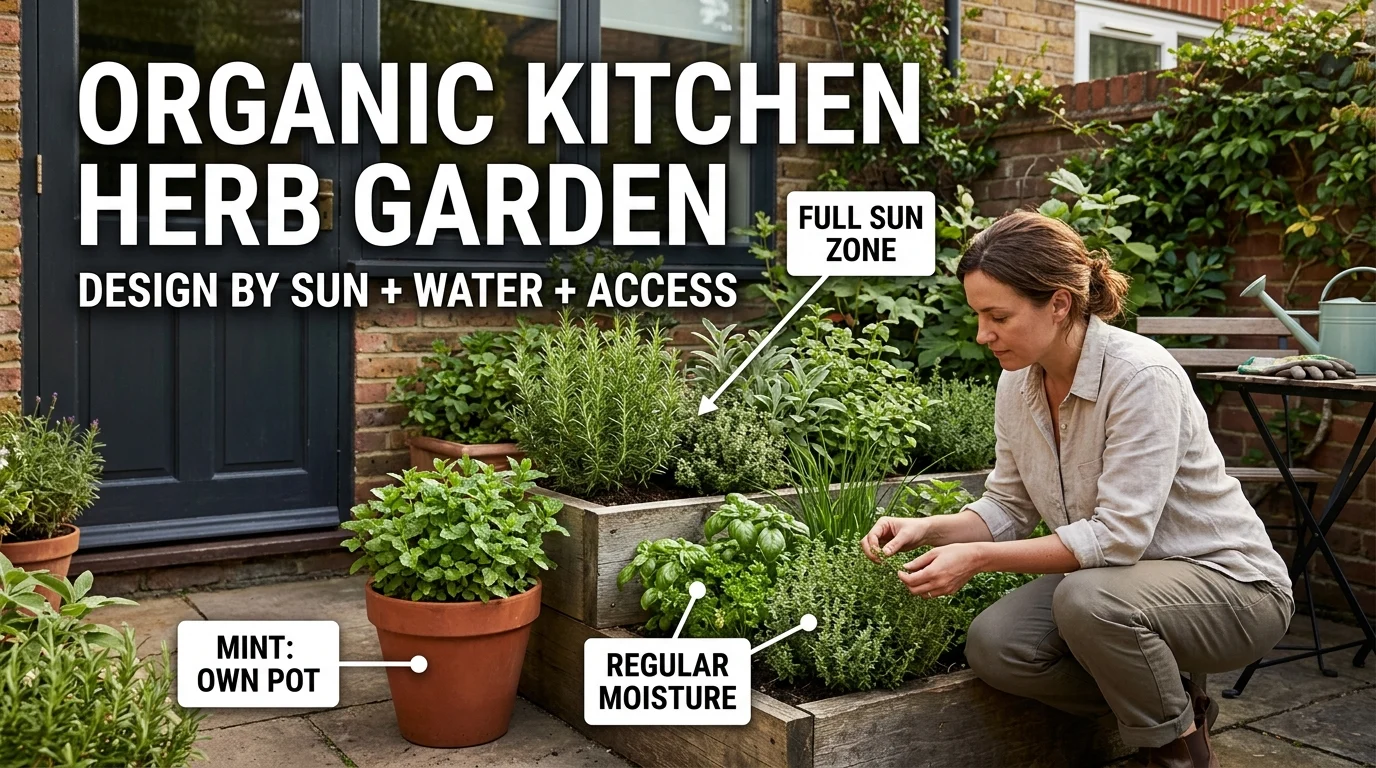

The most reliable kitchen herb garden is designed around sun, drainage, watering needs, and harvest access before you choose the final herb list. Most culinary herbs grow best with strong light and freely draining soil, but the layout improves when dry-tolerant Mediterranean herbs are separated from herbs that prefer more regular moisture, and mint is kept contained.
A kitchen herb garden does not need to be large or formal. A few square feet near the kitchen, a raised bed beside a patio, or several well-drained containers can work if the growing conditions match the plants and you can reach them easily enough to harvest often.
Start with the site, not the herb list
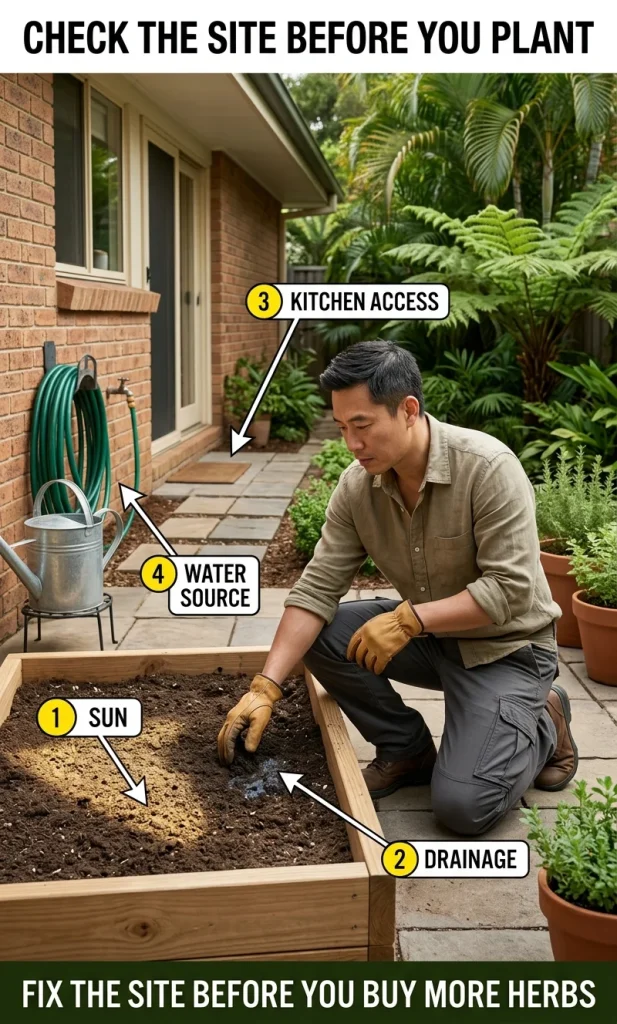
Watch the proposed growing area before buying plants. Most culinary herbs perform best with about six or more hours of direct sun, and inadequate light often produces weak, stretched growth; University of Minnesota Extension’s herb-growing guidance also emphasizes full sun and well-drained soil as the basic pattern for many common herbs.
Access matters almost as much as sunlight in a kitchen garden. If harvesting basil means walking to a remote corner of the property in the rain, it will be used less often; Illinois Extension notes that even a small herb area near a kitchen window or patio can be practical for fresh use.
Drainage is the third site filter. If water sits in the bed after rain or irrigation, fix the soil structure, raise the planting level, or use containers before planting rosemary, thyme, sage, or oregano; repeatedly wet roots are a more serious design failure than an imperfect-looking layout.
Match the layout to how different herbs actually grow
| Garden zone | Good starting herbs | What the layout should provide | Common mistake |
|---|---|---|---|
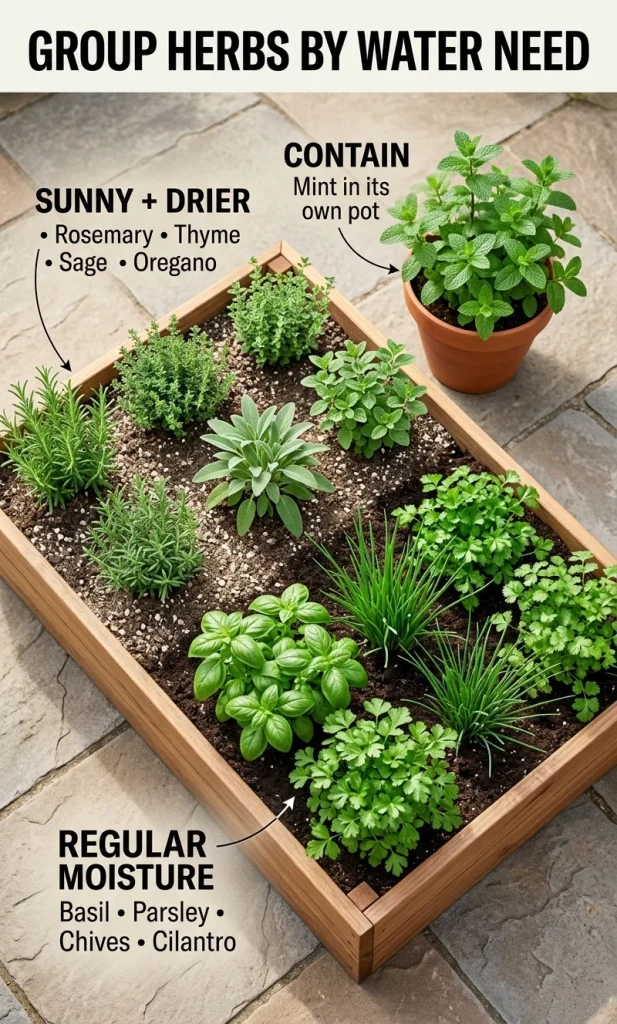
| Sunny, drier zone | Rosemary, thyme, sage, oregano | Strong sun, fast drainage, room for woody growth | Watering them as often as moisture-loving herbs |
| Regular-moisture zone | Basil, parsley, chives, cilantro | Good light, even moisture, airflow, easy harvesting | Letting the bed swing between waterlogged and bone dry |
| Containment zone | Mint | A separate above-ground pot with drainage | Planting mint loose in a mixed herb bed |
This zoning approach is more useful than arranging herbs only by color or height. Penn State Extension describes Mediterranean herbs such as rosemary, oregano, sage, thyme, and lavender as plants that favor sunny, dry, well-drained conditions, while moisture preferences differ across other culinary herbs.
Mint deserves its own rule because it spreads aggressively by rhizomes. Illinois Extension recommends growing mints in containers above ground, which is usually easier to manage than trying to stop runners after they have moved through a bed.
Choose a bed, raised bed, containers, or an indoor setup
An in-ground bed is efficient when the soil already drains well and the site receives enough sun. A raised bed is useful when native soil is heavy, wet, compacted, or awkward to work, while containers are the most flexible choice when you need to separate watering requirements or move plants to better light.
If you are building a small-space setup, the existing guides to organic gardening in containers and herb garden ideas can help you adapt the same principles to balconies, patios, and compact outdoor spaces. For a broader beginner foundation, setting up a home herb garden is the closest internal companion page.
| Growing setup | Best fit | Design priority |
|---|---|---|
| In-ground bed | Good existing soil and drainage | Separate moisture zones and leave mature-size airflow |
| Raised bed | Poor native drainage or easier access needed | Freely draining mix, convenient reach, irrigation access |
| Containers | Patios, balconies, mixed water needs | Drainage holes, potting mix, enough root volume, faster summer drying |
| Indoors | A few frequently used herbs near the kitchen | Light intensity and duration first; drainage second |
Indoor herb gardens are usually limited by light, not by the size of the pot. Penn State Extension notes that many indoor herbs need substantial direct light, so a bright window or supplemental grow light is often more important than adding extra varieties.
Build the soil for drainage first, fertility second
For an organic kitchen herb garden, the goal is biologically active, workable soil that drains freely and does not force soft, weak growth. Add mature compost to poor soil, but avoid assuming that more fertilizer always means better flavor or stronger plants; many Mediterranean herbs prefer leaner conditions once established.
For containers, use a quality potting mix rather than digging garden soil into pots. Garden soil compacts easily in containers, while a container mix is built to hold both air and moisture; UGA Extension specifically recommends a lightweight, well-drained mix and drainage holes for container herbs.
If you need a stronger foundation on soil texture and drainage behavior, the site’s guide to soil types for beginners is the most useful internal next step. It is better to correct a drainage problem before planting than to compensate later with complicated watering routines.
Put frequently harvested herbs where your hands can reach them
Kitchen gardens are working spaces, so design the harvesting path before the decorative pattern. Basil, parsley, chives, cilantro, and other herbs you cut repeatedly should sit along the easiest edge or in the closest containers, while less frequently harvested woody herbs can occupy the back or outer part of the layout.
Do not crowd herbs just because young transplants look small. Mature plants need airflow and root room, and University of Minnesota Extension advises spacing herbs according to mature size because crowding weakens growth and can increase disease problems.
Think about shade created by the plants themselves as well. Place taller or broader herbs where they will not block the sun path to shorter herbs, using the actual sun direction at your site rather than a fixed north-or-south rule that would be wrong in some parts of the world.
Water by plant group, not by a fixed calendar
A weekly watering schedule is too crude for a mixed herb garden because beds, raised beds, and containers dry at different rates. Check the root zone, water thoroughly when the plant group needs it, and let the drainage characteristics of the soil determine how quickly you return with the watering can.
Containers may need water far more often during hot or windy weather, while rosemary, thyme, sage, and oregano should not stay constantly wet. If you are unsure what the soil is doing below the surface, the site’s guide to watering plants correctly explains how to judge moisture rather than relying only on the top layer.
Make organic care part of the layout
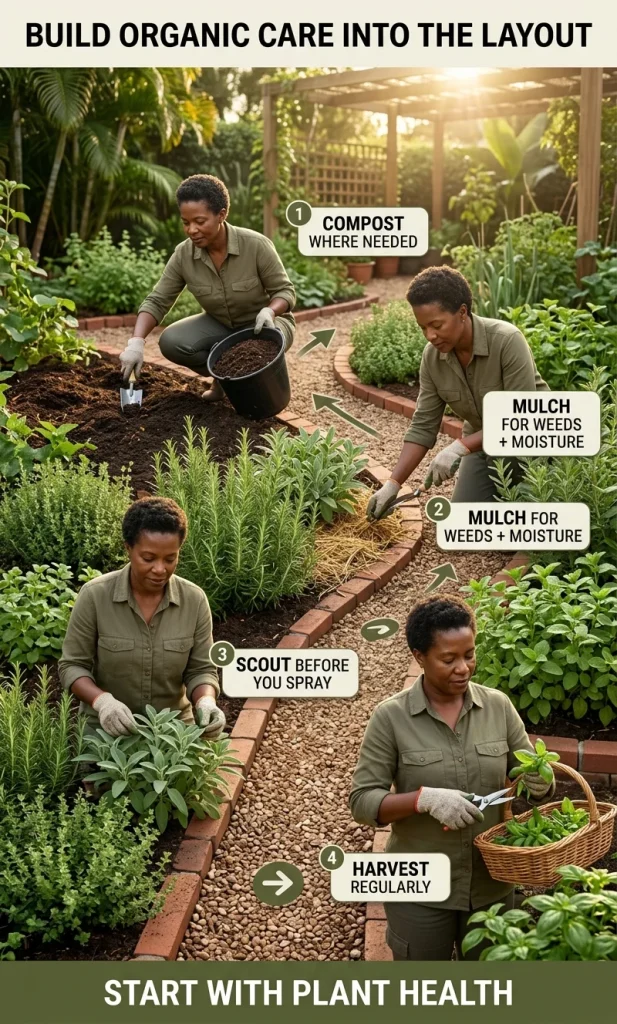
Organic care works best when the garden is easy to inspect. Leave enough access to look under leaves, remove damaged growth, hand-pick pests, refresh mulch, and harvest regularly; a dense bed that cannot be checked encourages problems to become established before you notice them.
Use integrated pest management instead of treating every insect as a reason to spray. Penn State Extension’s IPM guidance starts with cultural and lower-toxicity controls, monitoring, and plant-health practices before escalating to pesticide options.
Mulch can reduce weeds and moisture swings, but keep it from sitting heavily against the crowns of herbs that prefer dry conditions. The best organic layout is not defined by a decorative label; it is defined by healthy soil, appropriate watering, regular observation, and interventions that are proportionate to the actual problem.
Use the Herb Garden Fit Studio before you plant
If you are deciding between a bed, raised bed, containers, or an indoor setup, use the interactive experience below to match your sun, drainage, watering habits, and cooking priorities. It does not assign a fake score; it translates those conditions into a practical zone structure and flags the mismatch most likely to cause trouble.
Herb Garden Fit Studio
Match your light, drainage, watering style and cooking habits before you plant.
Your growing conditions
A simple planting sequence that avoids the common redesign
- Observe sunlight: check the site at several times of day before committing permanent herbs.
- Test drainage: correct waterlogging before planting dry-tolerant Mediterranean herbs.
- Choose only herbs you use: start with a small group that matches your cooking habits.
- Separate water needs: keep dry-zone herbs apart from herbs that want steadier moisture.
- Contain spreaders: place mint in its own above-ground container.
- Leave harvesting access: keep frequently cut herbs closest to the kitchen or path.
- Scout weekly: check leaves, stems, soil moisture, and airflow before problems become severe.
A kitchen herb garden usually improves when you resist the urge to fill every gap on day one. Start with the site conditions you can verify, give each herb enough room to reach its mature form, and let the garden expand only after you see which plants you actually harvest and which microclimates your space creates.
Frequently Asked Questions
How much sun does a kitchen herb garden need?
Most common culinary herbs perform best with roughly six or more hours of direct sunlight, although parsley, chives, and mint can tolerate less. If the site receives only a few hours of weak light, reduce the herb list or use supplemental lighting rather than expecting a full-sun herb to behave normally.
Can basil and rosemary grow in the same container?
They can survive together for a while, but they are not an ideal beginner pairing because basil generally wants more consistent moisture while rosemary is more tolerant of drying. Separate pots make watering easier and reduce the chance that one herb is kept too wet or the other too dry.
Should mint be planted directly in a herb bed?
Usually no. Mint spreads aggressively through underground stems, so an above-ground container is much easier to control than planting it loose in a mixed bed.
Can I use garden soil in herb containers?
A quality potting mix is a better choice because it is designed to maintain air space and drainage inside a container. Garden soil can compact in pots and make water movement harder to manage.
How often should I water a kitchen herb garden?
Water according to root-zone moisture, container size, weather, and the herb group rather than following a rigid calendar. Containers often dry faster than beds, while Mediterranean herbs should not remain continuously wet.
What makes a kitchen herb garden organic?
For a home garden, the practical focus is healthy soil, compost where useful, appropriate plant selection, efficient watering, pest monitoring, and least-disruptive controls before pesticides. If produce will be sold or marketed as certified organic, follow the certification and labeling rules that apply in your jurisdiction.
Decision summary
Design the garden in this order: sunlight, drainage, water zones, containment, then aesthetics. Put the herbs you harvest most where they are easiest to reach, keep mint separate, and group plants with similar moisture needs so the garden stays simple enough to care for consistently.