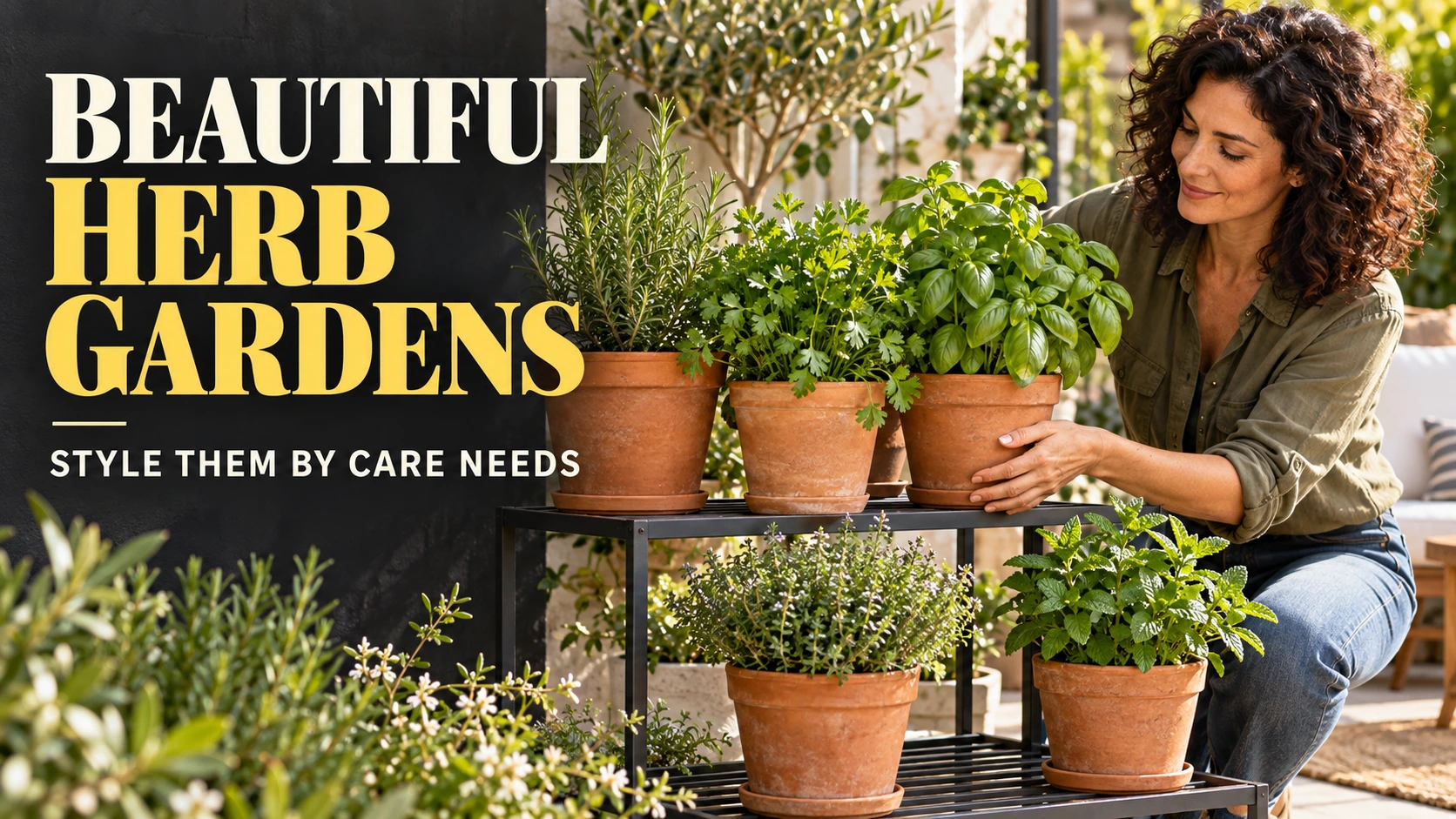

The most reliable beautiful herb garden starts with a simple layout, a repeated pot or edging finish, and herbs grouped by light and watering needs. A sunny patio, a bright kitchen window, and a shaded wall require different planting choices, even when the containers look alike. Choose the growing conditions first, then use one of the six designs below to make the arrangement feel intentional.
Choose a design you can actually maintain
A modern herb garden does not need elaborate construction. Three well-chosen pots can look more composed than a wall of mismatched vessels, especially when the plants are healthy and easy to harvest. Start with herbs you cook with regularly rather than filling every available space.
Before buying containers, observe where direct sunlight reaches the proposed planting area and how that changes during the day. Check the position at more than one time rather than judging brightness from a single photograph. Indoors, a room that feels bright to people can still provide too little light for compact herb growth.
Next, rehearse the maintenance routine with empty containers. Can you lift a pot out, water it without soaking furniture, and reach the back plants without leaning across a crowded display? If the answer is awkward, change the layout while it is still easy.
Keep the first installation small enough that you can adjust it after a season. A repeated material gives a collection visual order, while independent pots preserve flexibility when one herb needs different care. Use the comparison below to narrow the layout before committing to fixtures or a large bed.
| Design | Best starting location | Main trade-off |
|---|---|---|
| Coordinated terracotta pots | Sunny patio or doorstep | Flexible, but porous pots can dry quickly |
| Divided trough | Sunny ground-level terrace | Clean outline; shared soil limits watering flexibility |
| Windowsill pots | Bright window or grow-light shelf | Convenient, but indoor light may limit growth |
| Removable vertical stand | Bright sheltered outdoor corner | Saves floor area; needs safe support and access |
| Low raised bed | Sunny garden near the kitchen | More rooting space; requires ground and soil preparation |
| Freestanding plant shelf | Patio or bright indoor growing area | Easy to rearrange; tiers can shade each other |
Match the planting to the light and moisture
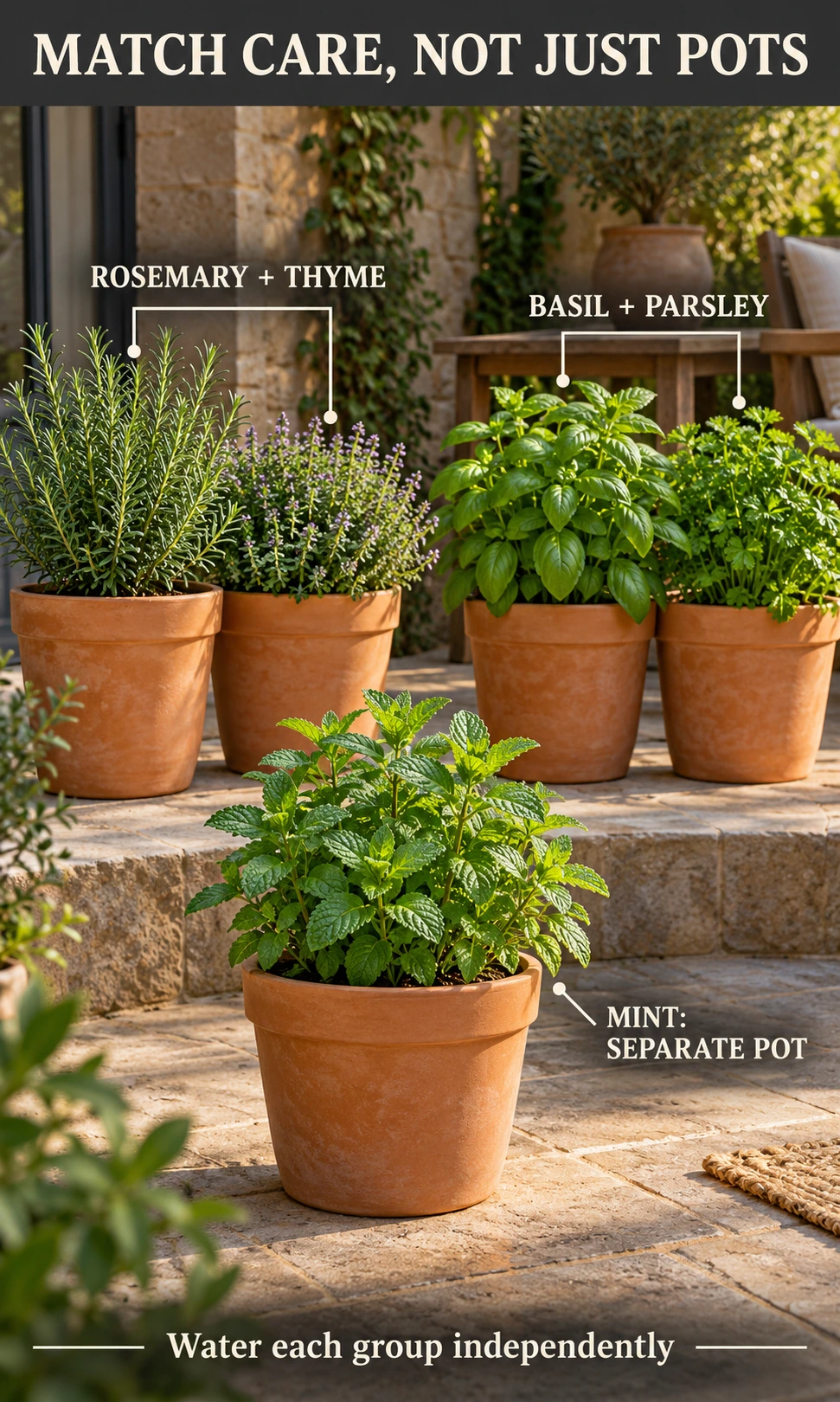
Treat watering compatibility as a design requirement. Rosemary and thyme suit a sunny arrangement with freely draining growing media, while basil and parsley usually need closer attention to moisture during active growth. Matching the exterior pots does not require putting all four herbs into the same soil.
Mint deserves a separate container because it can spread vigorously. Leave its pot visible and accessible so you can check for runners and roots escaping through drainage openings. Lemon balm can also become vigorous, so give it its own growing space when a tidy small display is the priority.
Choose compact cultivars and read their mature dimensions before arranging the display. A young rosemary can look balanced beside a small basil, then become a woody shrub that dominates the composition. Give long-lived plants space to develop or plan to move them into larger containers.
Light requirements are a starting point, not a promise that every herb will thrive in every climate. A hot exposed balcony may need afternoon protection for tender growth, while a cool cloudy kitchen may need a grow light. The RHS guide to growing herbs provides plant-specific growing and harvesting advice when you choose your varieties.
The simplest planting arrangement uses two care groups and one independent mint pot. Keep rosemary and thyme together visually, then place basil and parsley in a second group that you can water independently. This preserves a cohesive appearance without pretending every plant needs the same treatment.
Use foliage shape to create interest rather than adding more ornaments. Upright rosemary, fine thyme leaves, rounded basil foliage, and divided parsley leaves provide useful contrast. Repeat the pot finish and leave some visible surface between plants so the display retains its structure as it grows.
Do not assume the top shelf is always the driest suitable position or the bottom shelf always the moistest. Roof overhangs, wind, watering access, and neighboring plants can reverse those expectations. Observe each pot and adjust its position to the conditions it actually receives.
1. Coordinated terracotta pots on a small patio
Terracotta works especially well when you want a contemporary herb garden without permanent building work. Repeat one pot shape, use a limited range of sizes, and arrange the collection against a plain background. The warm clay color supplies enough character without patterned signs or additional decorative objects.
Start with individual draining pots for rosemary, thyme, basil, and parsley, plus a separate mint container if you use it. Select pot sizes for the plant and its expected growth rather than forcing every herb into identical tiny vessels. Use plant labels or nursery guidance to decide when larger perennial herbs need more space.
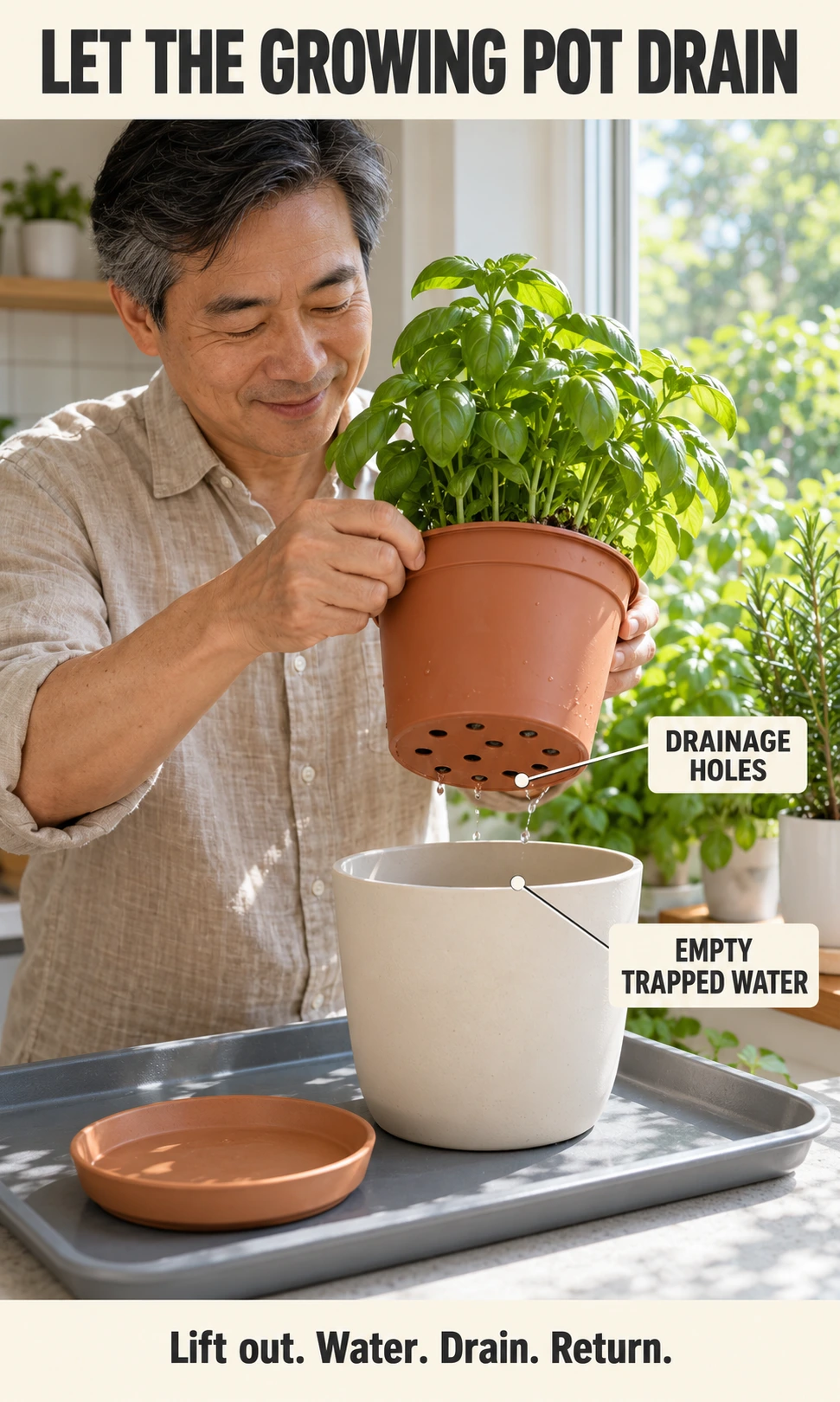
Porous clay tends to lose moisture faster than glazed or plastic containers. That can be useful for some herbs, but it also means a windy summer patio may demand frequent checks. If you prefer the terracotta look with different watering behavior, use coordinated outer planters around removable growing pots and empty trapped water after watering.
| Plant group | Arrangement | Care distinction |
|---|---|---|
| Rosemary and thyme | Separate pots in one sunny cluster | Allow more drying between checks; avoid persistent saturation |
| Basil and parsley | Separate pots in a second cluster | Check regularly during active growth; avoid prolonged drying |
| Mint | Independent accessible container | Contain spread and refresh crowded growth |
| Cilantro / coriander | Seasonal individual pot | Plan replacement sowings; heat can shorten leaf production |
2. A clean-lined trough with separate growing compartments
A rectangular trough makes a narrow terrace look organized because it establishes one clear edge. It works best when its planting follows the same discipline: a few herbs, enough rooting room, and a layout you can reach from the side. Check that drainage exits freely onto a suitable surface before filling it.
Where herbs have different watering needs, use removable inner pots or properly separated growing compartments. A decorative divider laid over continuous soil does not create independent root zones. If the trough has one shared soil volume, choose plants with similar requirements and accept that you cannot water each one in isolation.
Avoid copying a staged photograph that packs mature rosemary, mint, basil, and parsley into one shallow box. Such planting can look full immediately but leaves little room for growth or maintenance. A spacious arrangement with fewer plants usually keeps its proportions longer and makes pruning more straightforward.
- Check the empty trough for clear drainage openings before planting.
- Use container growing media rather than dense garden soil in pots.
- Leave watering space below the rim according to the container and plant guidance.
- Keep mint in a removable independent pot.
- Position the trough so every plant can be reached without blocking the main route.
3. A kitchen windowsill with removable growing pots
For a modern kitchen herb garden, use a waterproof tray and removable pots that have drainage holes. Coordinate the outer finish with the kitchen, then keep the actual growing containers practical. This lets you take the plants to the sink for watering instead of turning the windowsill into a wet work surface.
A draining pot inside a decorative container is different from planting directly into a sealed jar. The inner pot must drain, and the outer container must be emptied after watering. Stones at the bottom of a sealed vessel do not provide an outlet for excess water.
Place the collection where plants receive useful light without touching hot appliances or obstructing the window. If stems become stretched and lean strongly toward the glass, reassess the light rather than adding water automatically. A purpose-made grow light can help, but follow its guidance for distance and operating time rather than treating normal room lighting as equivalent.
Keep the indoor selection modest and expect variation between homes and seasons. Start with a small number of herbs you will actually harvest, then assess their growth before expanding the shelf. For the drainage fundamentals, see University of Minnesota Extension’s herb-growing guidance, which specifies drainage holes for indoor and outdoor containers.
4. A removable vertical herb display
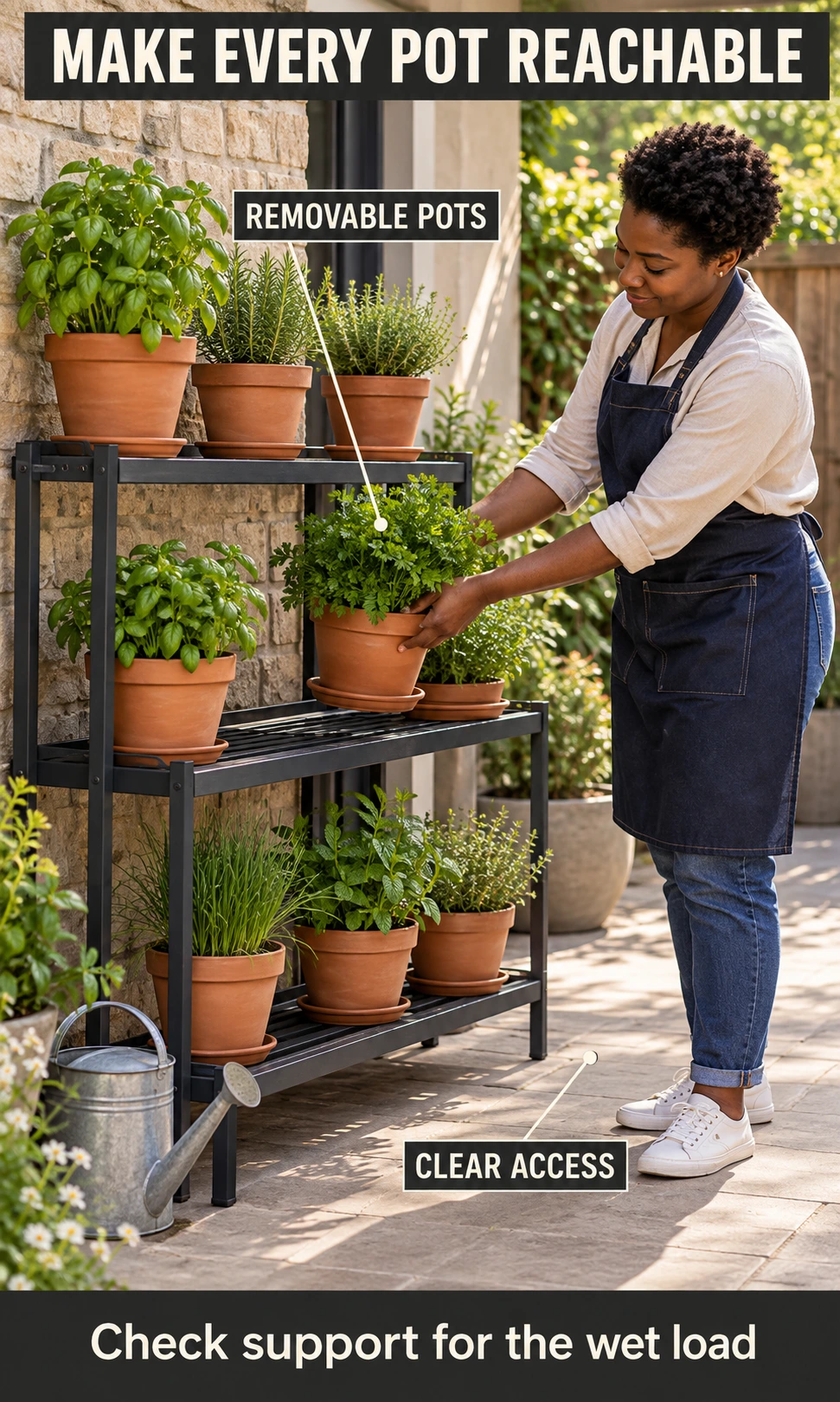
A removable vertical display is a better starting point than a wall of permanently fixed pockets when you are learning how your herbs behave. Individual pots make it easier to change the spacing, remove a struggling plant, and water without soaking everything below. Keep the arrangement shallow enough that the lower tiers still receive light.
A freestanding outdoor-rated stand avoids drilling into a wall, but it still needs a level base and any anti-tip measures specified by its manufacturer. A wall-mounted system requires fixings suitable for the actual wall and the fully watered weight, including pots, media, and plants. Balcony railings and thin decorative panels should not be assumed to provide adequate support.
Use a system designed for the environment and check that runoff will not damage the wall, create a slippery route, or drip onto neighbors. Place thirsty plants where you can inspect them comfortably rather than placing them high simply for symmetry. Give woody herbs enough space that their growth does not shade smaller plants.
Reclaimed pallets are not automatically suitable for edible planting. An HT mark concerns heat treatment, not the pallet’s complete history or freedom from contamination. If you cannot verify the material history and safe support details, choose purpose-made containers on a reliable stand instead of turning the pallet into a food-growing bed.
5. A low raised herb bed with one repeated edging material
A low raised bed gives a ground-level herb garden a clear outline and more rooting space than a small window box. Repeat one edging material and keep the interior planting simple enough to reach without stepping into the bed. Measure the available area and your comfortable reach before choosing its width.
Prepare the bed for the actual soil and drainage conditions rather than relying on a universal gravel layer. Raising the planting surface may help some sites, but it does not fix every compacted or waterlogged location. If runoff already collects there, investigate the cause before adding a decorative bed on top.
Group compatible herbs within the bed and keep vigorous spreaders in separate accessible containers. Use a modest mulch layer appropriate to the plants and keep it away from their crowns. If you want a sculptural raised feature instead, the separate DIY herb spiral garden guide covers that construction job in detail.
6. A freestanding shelf with a restrained pot collection
A shelf offers flexibility when your first herb arrangement may need to move. Choose one finish for the stand, repeat the containers, and leave enough headroom for growth and watering. Place the tallest plants where they will not shade the herbs behind or underneath them.
Keep each pot supported across its base and avoid narrow shelves that leave heavy containers overhanging. For indoor installations, use waterproof trays and check the shelf’s loading instructions before filling it. For outdoor installations, assess exposure to wind and follow any anchoring requirements.
This layout suits people who prefer changing a collection gradually over building a permanent feature. It also reveals its limitations quickly: overcrowded tiers, poor light below, or an awkward watering route. Remove a tier or reduce the plant count when the stand becomes difficult to use.
Compare your space before buying
The Herb Style Studio below helps you choose a starting layout from your growing position, light, drainage, support, and access. Its recommendations explain the conditions behind each choice rather than assigning a decorative score. If a basic requirement is unresolved, it shows the check to complete before recommending an installation.
Keep the design tidy without overwatering
Check growing media and the plant’s condition before deciding to water. A fixed schedule cannot account for changing heat, wind, pot material, plant size, and indoor light. Where the surface is misleading, use the checks explained in soil that looks dry on top but stays wet underneath.
Water each care group independently and empty collected runoff from saucers or decorative outer containers. Do not deliberately send water through upper pots to supply lower ones, because that gives you little control over the amount each receives. Persistent saturation needs a drainage and root-zone check rather than an extra layer of decorative gravel.
Harvest in a way that maintains a useful plant structure. Pinch basil tips above a suitable leaf pair to encourage branching, pick parsley stems selectively, and avoid cutting rosemary back indiscriminately into bare old wood. Remove damaged foliage, review crowded roots, and replace annual herbs when their productive season ends.
Adapt the planting calendar to your climate instead of following a single worldwide month. In cold regions, consider frost tolerance and the vulnerability of roots in exposed pots; in hot humid regions, pay attention to heat, heavy rain, and airflow. The RHS advice on herbs in containers explains container planting and cold-weather considerations, with timing interpreted for its UK context.
Problems that make a beautiful display difficult to maintain
| What you notice | Check first | Useful next action |
|---|---|---|
| Long thin stems indoors | Light at the leaves, not room brightness | Move to a brighter growing position or assess a grow light |
| Yellowing with persistently wet media | Drainage outlet and water trapped outside the inner pot | Empty runoff and inspect the root zone before watering again |
| Upper tier dries much faster | Wind, heat, pot size, and access | Move the pot or alter the arrangement |
| Mint dominates the collection | Escaping roots and runners | Separate and refresh the mint container |
| Display blocks harvesting or walking | Mature plant spread and your reach | Reduce pots or change the layout |
Scented herbs should be chosen for cooking, foliage, and enjoyment rather than a promise of mosquito protection. Growing mint or rosemary beside a seat is not a dependable substitute for controlling breeding water and using appropriate bite protection. For that separate problem, follow the practical checks in why mosquitoes make a backyard unusable.
Questions about beautiful herb gardens
Which herbs look good together in a modern garden?
Rosemary and thyme provide fine-textured foliage, while basil and parsley add softer leafy shapes. Keep them in separate pots when their watering needs differ, even if the container finishes match. Mint should have its own accessible container so its spread can be managed.
Can I grow herbs in decorative pots without drainage holes?
Use a decorative pot as an outer cover around a removable growing pot with drainage holes. Empty water collected in the outer pot after watering. Planting directly into a sealed vessel makes excess water difficult to remove, and a layer of stones does not create drainage.
How can I make terracotta pots look contemporary?
Repeat a simple pot shape, limit the size range to what the plants need, and use a plain background or stand. Let foliage provide the contrast instead of filling the arrangement with ornaments. Leave enough space to inspect, water, and harvest every plant.
Is an indoor herb garden low maintenance?
An indoor herb garden can be convenient, but it still needs sufficient light, drainage, and regular observation. Herbs may grow slowly or become stretched when the light at the leaves is inadequate. Begin with a small collection and confirm it grows well before adding more pots.
Are pallet herb gardens safe if the pallet has an HT stamp?
An HT stamp indicates heat treatment, but it does not establish that the pallet has never carried contaminants or acquired spills. You also need suitable structural support and a way to manage runoff. Use purpose-made growing containers when the pallet’s history is unknown.
Should this garden include a herb spiral?
A herb spiral can suit a sunny ground-level site where its construction and drainage are appropriate. It is a separate building project rather than a necessary feature of a modern herb display. Compare a simple pot collection first, then use the dedicated spiral guide if you want that raised form.
Choose the smallest arrangement that fits your routine
For a sunny patio, coordinated individual pots are the most flexible first step. For a kitchen, confirm light and a clean drainage routine before choosing the decorative finish; for a vertical display, confirm support and access before adding plants. A herb garden stays beautiful when its layout makes healthy growth and regular harvesting easy.