Introduction – Why AI Use Cases Matter More Than AI Hype
Artificial intelligence is often discussed in abstract terms. Headlines focus on breakthroughs, tools, or predictions about the future. What most people struggle to understand is how AI is actually used today in real environments.
AI use cases explain the gap between theory and reality.
This article breaks down where AI is applied in practice, how it supports human work, and where its limitations remain. Rather than focusing on tools or investments, this guide explains functional use cases across industries, grounded in real adoption patterns.
This article builds on foundational concepts explained in AI Basics and expands into practical application contexts.
If you are new to artificial intelligence concepts, this AI basics guide explains how AI systems work before exploring real-world use cases.
How AI Use Cases Are Different From AI Tools
Many people confuse AI tools with AI use cases.
- AI tools describe software products
- AI use cases describe problems AI is applied to
For example:
- A chatbot is a tool
- Customer support automation is a use case
Understanding use cases helps users:
- Set realistic expectations
- Evaluate risk
- Choose AI responsibly
This distinction is essential before exploring industry-specific applications.
A detailed breakdown of modern AI tools and categories is covered in this AI tools guide.
Core AI Capabilities That Enable Use Cases
Before examining industries, it helps to understand the core capabilities that make AI useful.
AI use cases generally rely on one or more of the following:
- Pattern recognition
- Prediction and forecasting
- Classification and grouping
- Language processing
- Image and video analysis
- Process automation
Most real-world AI systems combine several of these capabilities rather than operating as standalone intelligence.
AI Use Cases in Healthcare
Healthcare is one of the earliest adopters of applied AI due to data availability and high decision complexity.
Common healthcare AI use cases include:
- Medical image analysis
- Disease risk prediction
- Clinical decision support
- Administrative workflow automation
AI assists doctors by flagging patterns, not by replacing medical judgment.
Where AI works well in healthcare
- Detecting anomalies in scans
- Processing large volumes of patient data
- Reducing administrative burden
Where AI struggles
- Rare conditions with limited data
- Ethical decision-making
- Patient-specific nuance
Healthcare highlights a key principle – AI supports professionals, it does not replace them.
AI Use Cases in Business Operations
Businesses adopt AI primarily for efficiency and scalability.
Common business use cases include:
- Demand forecasting
- Customer segmentation
- Process automation
- Fraud detection
- Decision support dashboards
AI helps businesses optimize operations by identifying trends humans may overlook.
Real-world examples of how companies implement AI responsibly are explored in this business transformation guide.
AI Use Cases vs AI Risks – A Necessary Balance
Every AI use case carries inherent risk depending on context.
Low-risk environments:
- Content assistance
- Workflow optimization
- Data organization
High-risk environments:
- Financial decisions
- Automated execution
- Compliance and regulation
Understanding this balance prevents misuse and overreliance.
The limitations and risks that affect real-world AI deployment are explained in detail in this AI risks guide.
Transition to Industry-Specific Use Cases
So far, you’ve learned:
- What AI use cases are
- How they differ from tools
- Why context matters
In the next section, we’ll examine:
- AI use cases in finance (non-investment)
- AI use cases in marketing and customer support
- AI use cases in manufacturing and logistics
AI Use Cases in Finance (Non-Investment)
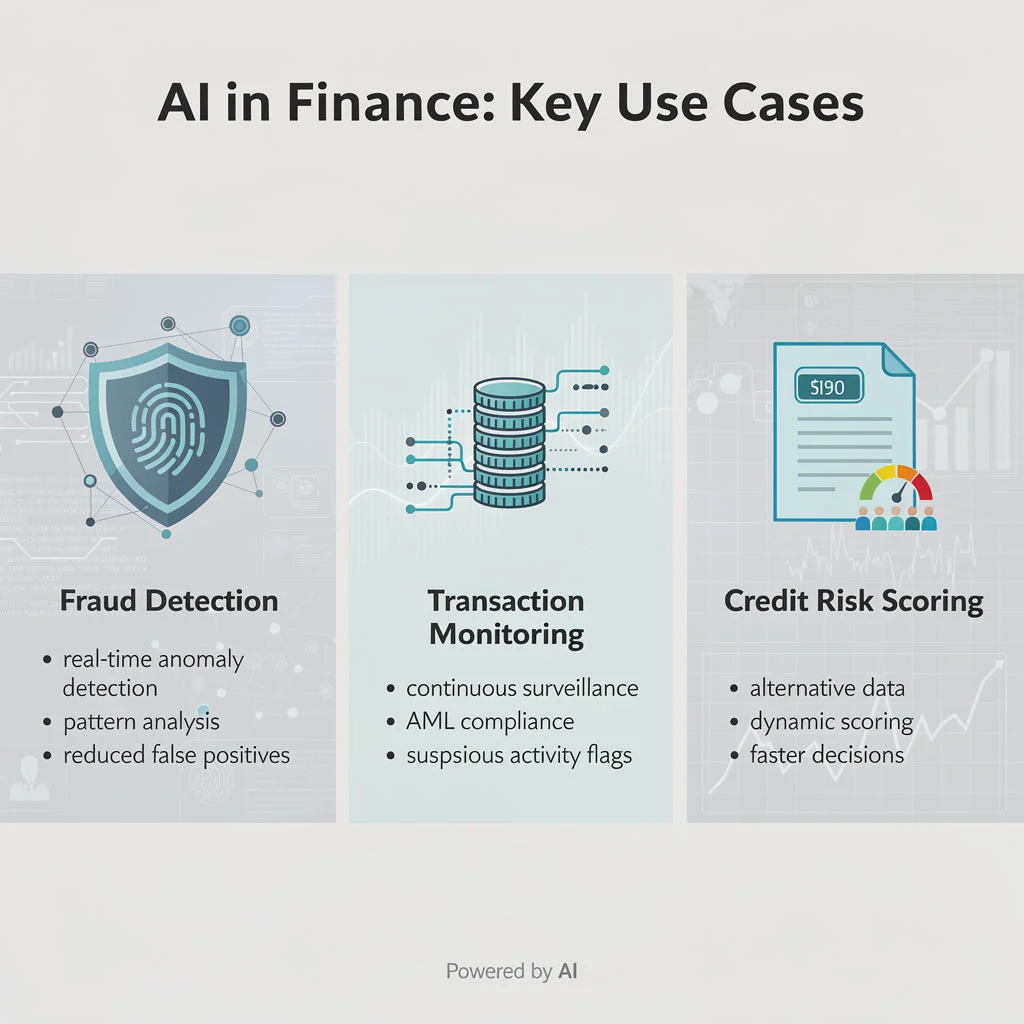
Finance uses AI extensively beyond investing. These use cases focus on risk control, efficiency, and pattern detection, not predictions or returns.
Common finance AI use cases
- Fraud detection and transaction monitoring
- Credit risk assessment
- Customer identity verification
- Compliance monitoring
- Operational forecasting
AI works well here because financial systems generate large, structured datasets.
Where AI works well
- Detecting abnormal transaction patterns
- Flagging potential fraud in real time
- Reducing manual compliance workload
Where AI struggles
- Rare fraud scenarios with limited examples
- Sudden regulatory changes
- Interpreting intent behind human behavior
For AI applications related specifically to investment decision-making, this AI investing guide explains how AI is applied in markets.
AI Use Cases in Marketing and Customer Support
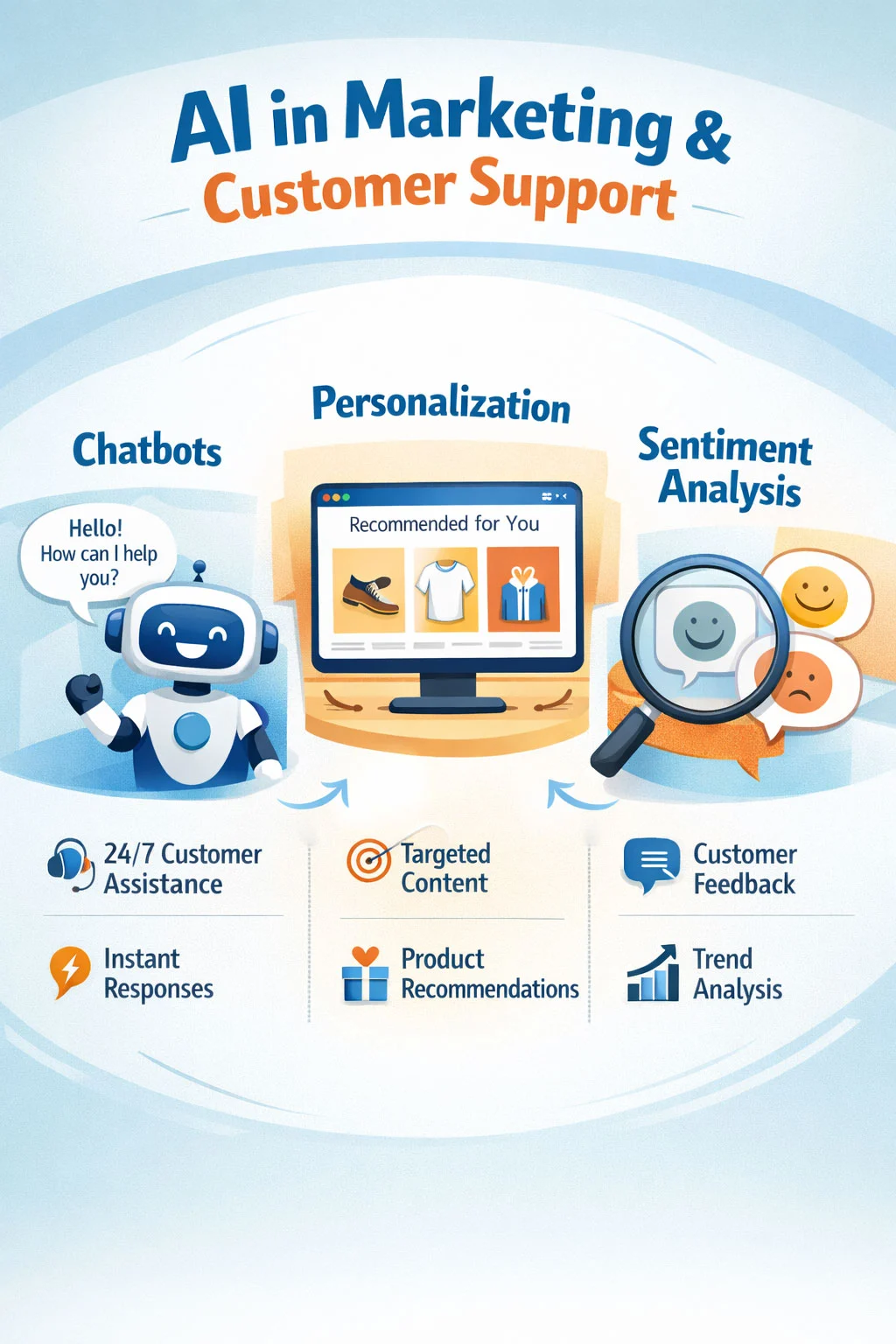
Marketing and customer support were among the earliest commercial adopters of AI.
Common marketing and support use cases
- Customer segmentation
- Personalized recommendations
- Chat-based customer support
- Sentiment analysis
- Campaign performance forecasting
AI excels here because behavior patterns are repetitive and data-rich.
Where AI works well
- Handling large volumes of customer interactions
- Identifying preference patterns
- Reducing response time
Where AI struggles
- Emotional nuance
- Complex complaints
- Context beyond training data
AI Use Cases in Manufacturing and Logistics
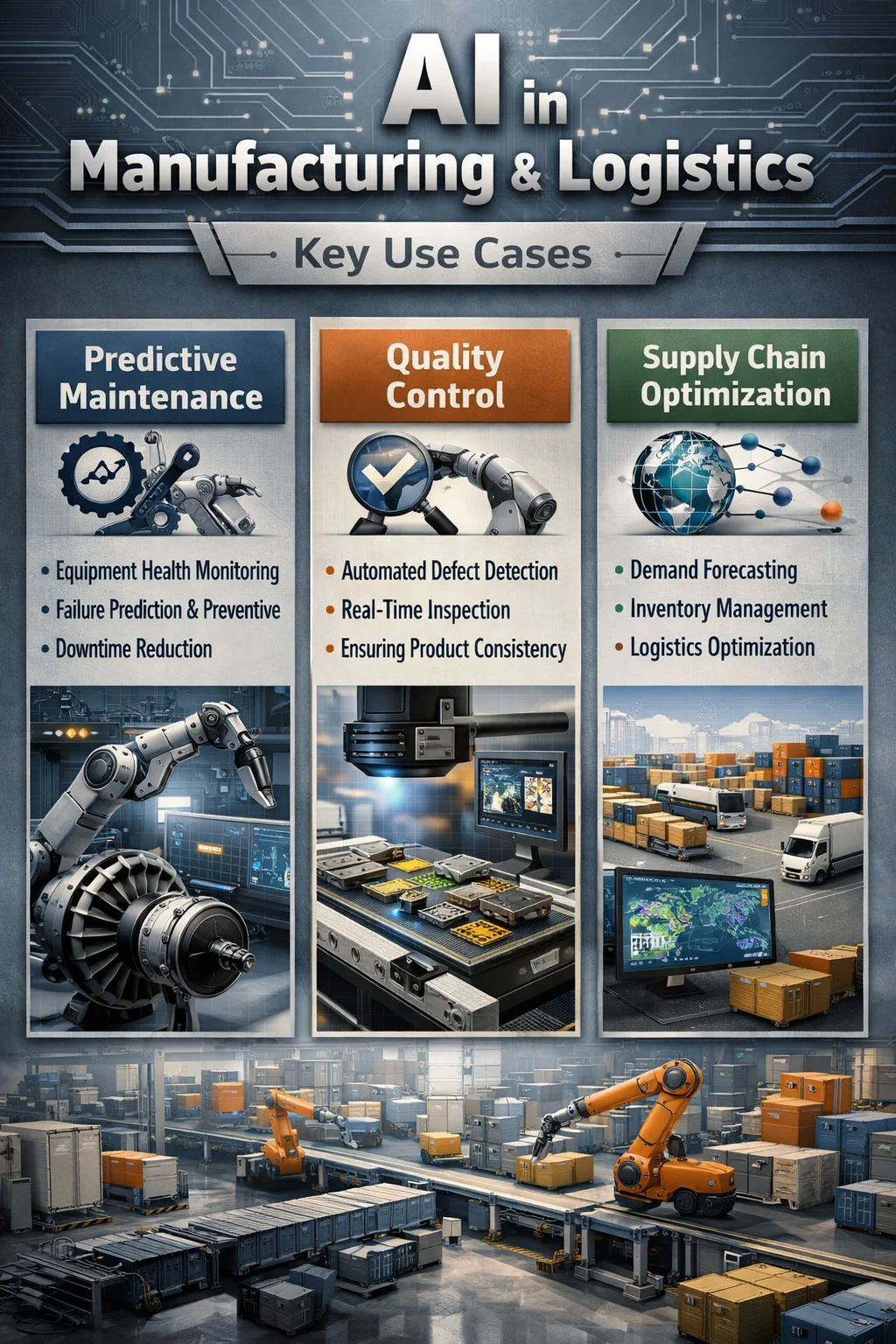
Manufacturing and logistics rely on AI for optimization and prediction, not creativity.
Common manufacturing AI use cases
- Predictive maintenance
- Quality inspection
- Supply chain optimization
- Demand forecasting
AI reduces downtime by identifying patterns humans may miss.
Where AI works well
- Detecting equipment failure patterns
- Monitoring production quality
- Optimizing delivery routes
Where AI struggles
- Sudden supply chain shocks
- Unstructured environments
- Human safety judgment
Why AI Adoption Differs by Industry
Not all industries adopt AI at the same pace.
Adoption depends on:
- Data availability
- Risk tolerance
- Regulatory constraints
- Cost of failure
Industries with high data volume and lower consequence of error adopt AI faster.
AI Use Cases in Daily Life
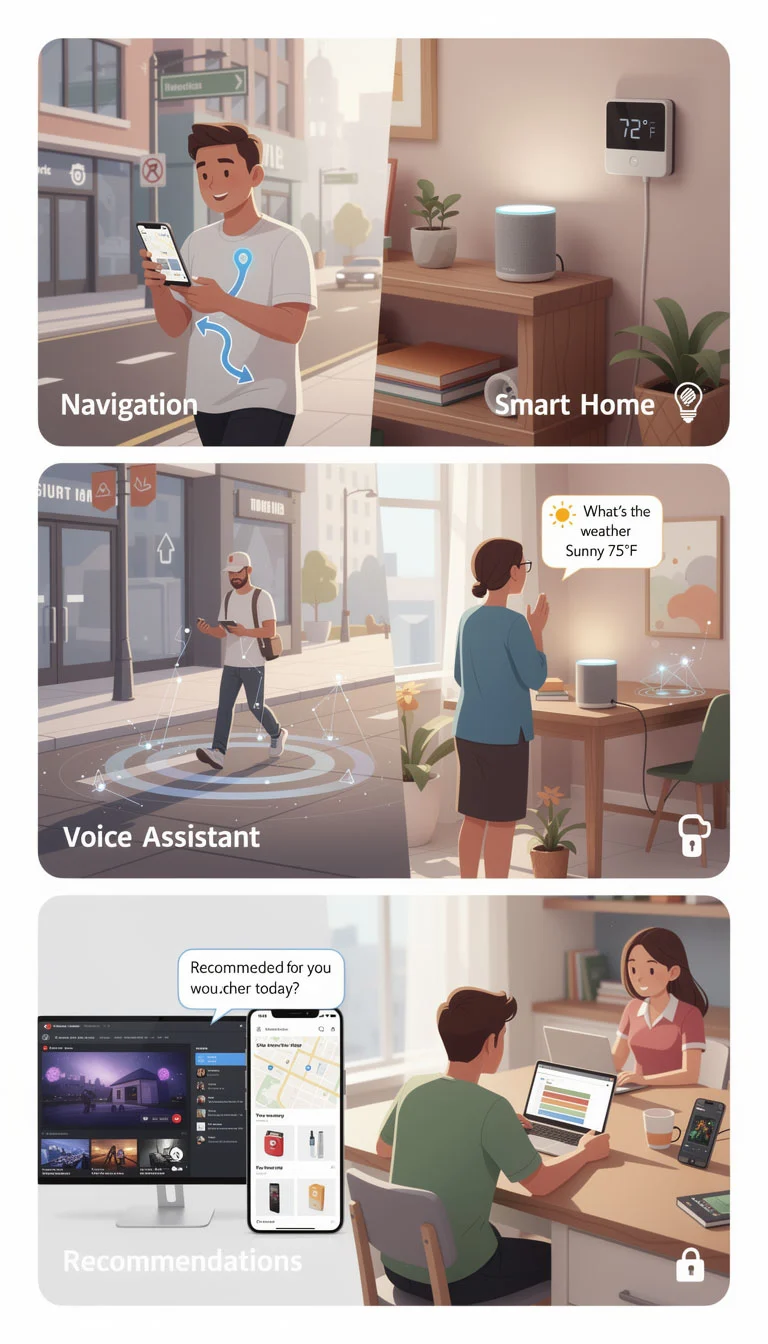
Many AI applications operate quietly in the background of everyday activities. These use cases are often low-risk individually, but highly influential at scale.
Common daily-life AI use cases
- Navigation and traffic prediction
- Smart home automation
- Voice assistants
- Recommendation systems
- Photo and video enhancement
AI improves convenience by predicting preferences and reducing friction.
Where AI works well
- Pattern-based personalization
- Repetitive household automation
- Route and time optimization
Where AI struggles
- Understanding personal context
- Handling ambiguous instructions
- Respecting privacy boundaries
AI Use Cases in Education and Learning
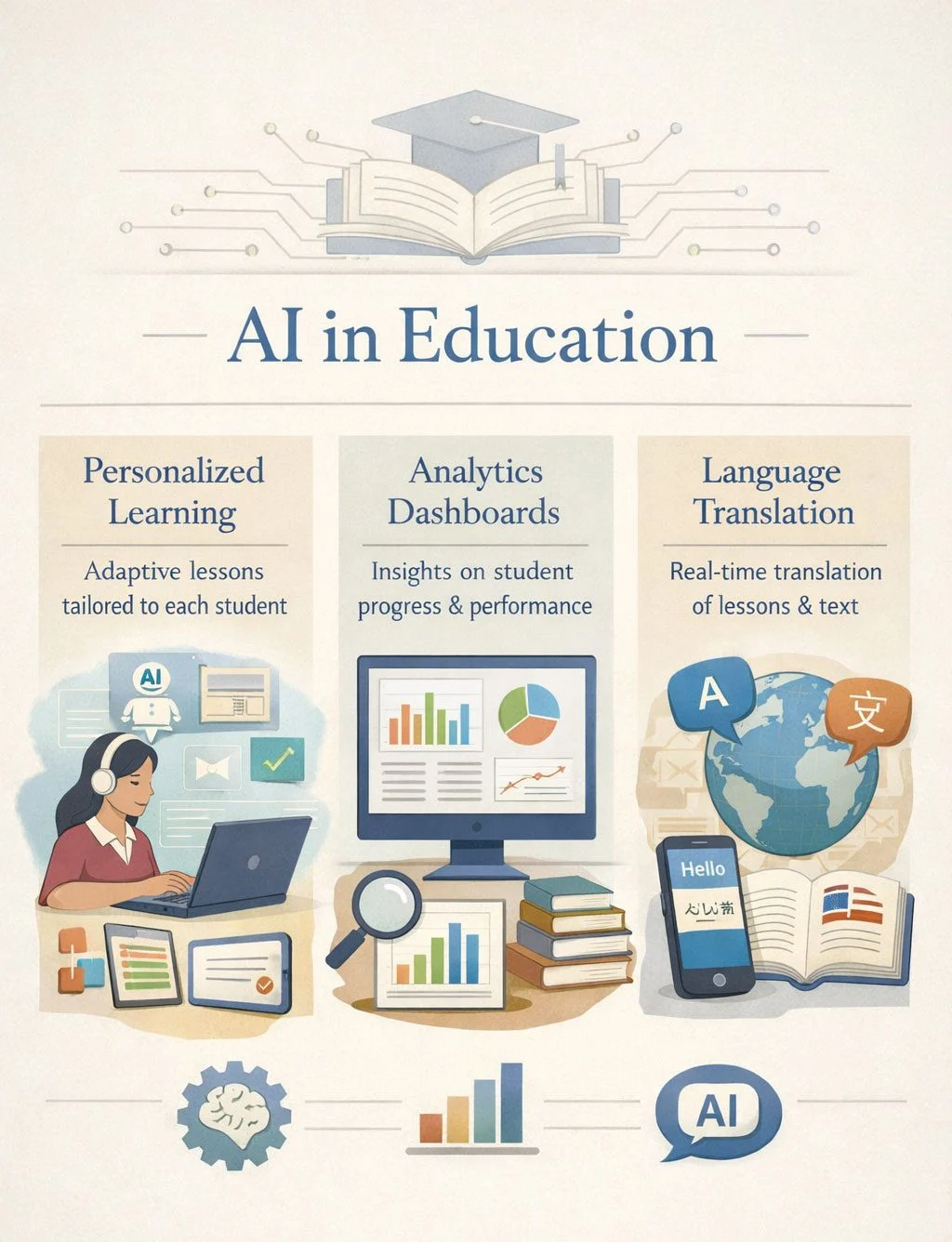
Education adopts AI primarily for support and personalization, not for replacing teachers.
Common education AI use cases
- Personalized learning paths
- Automated grading assistance
- Learning analytics
- Content summarization
- Language translation
AI supports educators by identifying learning gaps and reducing administrative workload.
Where AI works well
- Adaptive practice exercises
- Pattern detection in student progress
- Translation and accessibility
Where AI struggles
- Emotional support
- Motivation and mentorship
- Ethical judgment in assessment
How to Evaluate AI Use Cases Responsibly
AI creates value when it is applied to the right problem, with clear limits and human accountability.
Understanding use cases is not enough. Responsible AI adoption requires evaluation.
Practical evaluation checklist
- What problem is AI solving?
- Is the data sufficient and representative?
- What happens if AI is wrong?
- Is human oversight present?
- Can outputs be explained?
This checklist helps prevent blind adoption.
Responsible adoption principles and ethical considerations are discussed in detail in this AI safety and ethics guide.
AI Use Cases and Risk Alignment
Not all AI use cases carry the same level of risk.
Low-risk use cases
- Content assistance
- Scheduling optimization
- Recommendation systems
Medium-risk use cases
- Hiring screening
- Credit assessment
- Operational forecasting
High-risk use cases
- Automated financial execution
- Medical diagnosis
- Legal decision-making
Understanding risk alignment prevents misuse.
For a deeper explanation of why some AI applications are riskier than others, see this AI risks guide.
Why AI Use Cases Should Guide Tool Selection
Choosing AI tools without understanding use cases leads to:
- Overpaying for features
- Misaligned expectations
- Increased operational risk
Use cases should define:
- Tool requirements
- Oversight needs
- Success metrics
A structured overview of AI tool categories is available in this AI tools guide.
FAQ
What are AI use cases?
AI use cases describe real-world problems or scenarios where artificial intelligence is applied, such as fraud detection, personalization, automation, forecasting, and pattern recognition.
How are AI use cases different from AI tools?
AI tools are software products or platforms, while AI use cases refer to the practical problems those tools are designed to solve. A single tool may support multiple use cases.
Which industries use AI the most today?
Industries with high data volume and repeatable processes use AI most extensively. These include finance, healthcare, manufacturing, marketing, retail, and logistics.
Are AI use cases risky?
Risk depends on context and impact. Low-risk use cases may include content assistance or workflow automation, while higher-risk applications involve financial decisions, healthcare diagnostics, or automated execution systems.
Should AI replace human decision-making?
No. AI is best used to support human judgment by providing analysis and recommendations. Accountability, ethical reasoning, and final decisions should remain with humans.