

Artificial Intelligence (AI) is no longer a futuristic concept. It already powers everyday tools such as navigation apps, voice assistants, recommendation systems, and conversational platforms like ChatGPT.
This guide explains AI basics in clear, beginner-friendly language. You will learn what AI is, how it works, its main types, real-world examples, and its limitations. This page serves as the foundation for understanding AI before exploring how it is applied in investing, business, and other advanced fields.
What Is Artificial Intelligence (AI)?
Artificial Intelligence refers to systems designed to perform tasks that normally require human intelligence. These tasks include learning, reasoning, recognizing patterns, understanding language, and making decisions.
Instead of following fixed instructions, AI systems analyze data, identify patterns, and improve their outputs over time.
Common examples of AI include:
- Voice assistants
- Recommendation engines
- Image and facial recognition
- Language-based tools
AI vs Machine Learning vs Deep Learning
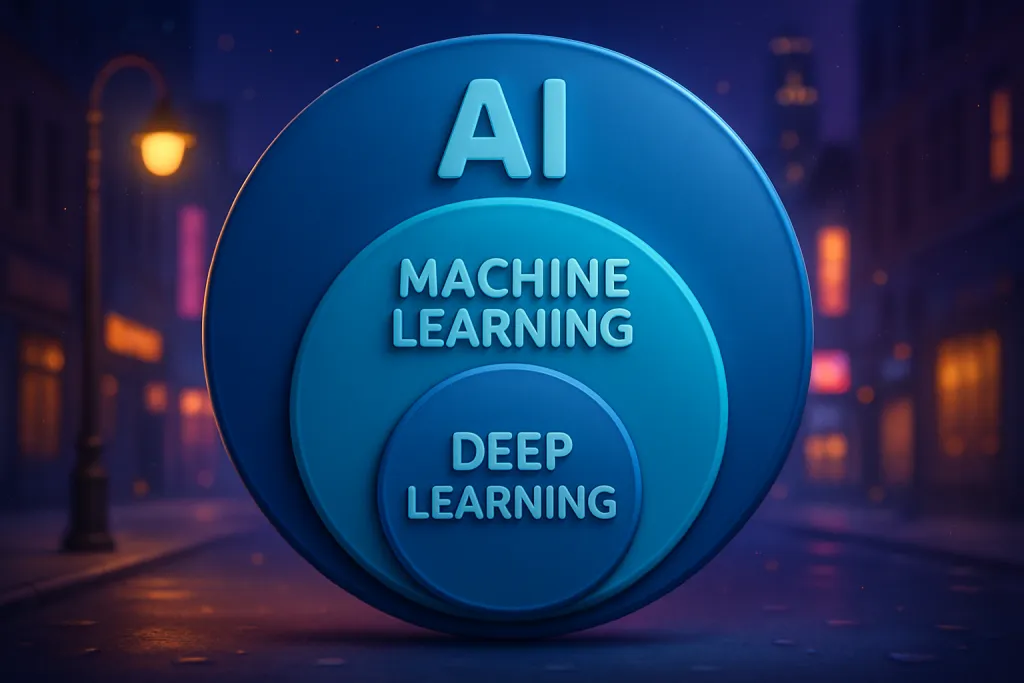
Understanding the relationship between AI, Machine Learning, and Deep Learning is the first step to understanding how modern AI systems work.
Artificial Intelligence (AI)
Artificial Intelligence is the broad field focused on creating machines that can perform tasks normally requiring human intelligence, such as reasoning, learning, perception, and decision-making.
Common examples of AI include:
- ChatGPT
- Siri and voice assistants
- Google Maps route optimization
- Facial recognition systems
AI acts as the umbrella concept that includes many different technologies.
Machine Learning (ML)
Machine Learning is a subset of AI where computers learn patterns from data instead of being explicitly programmed.
ML systems improve over time by analyzing examples and adjusting their behavior.
Examples of Machine Learning:
- Netflix and YouTube recommendations
- Email spam filtering
- Credit scoring systems
- Product recommendations in online stores
Deep Learning (DL)
Deep Learning is a specialized type of Machine Learning that uses neural networks inspired by the human brain.
It is especially powerful for processing images, speech, and large amounts of unstructured data.
Deep Learning powers:
- Autonomous vehicles
- Large language models (LLMs)
- Voice recognition systems
- Camera and image recognition
How AI Works (Simple Explanation)
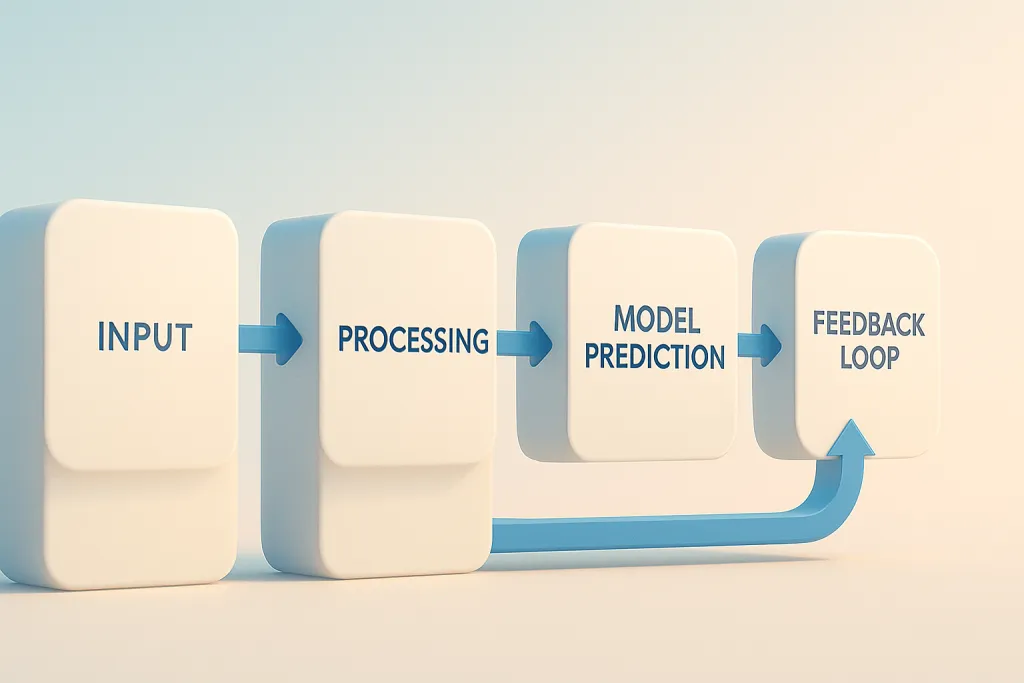
At a high level, most AI systems follow a similar process:
1. Input
AI receives data such as:
- Text
- Images
- Video
- Audio
- Numbers
2. Processing
Algorithms convert the input into mathematical representations that machines can understand.
3. Model Prediction
The AI model analyzes patterns in the data and produces an output, prediction, or decision.
4. Feedback Loop
With more data and feedback, the system continuously improves its performance over time.
This learning loop is what allows AI systems to become more accurate and useful.
Types of Artificial Intelligence
AI is often classified into three main types based on capability.
1. Narrow AI (What we use today)
Narrow AI is designed to perform one specific task extremely well.
Examples include:
- ChatGPT for language tasks
- Spotify music recommendations
- Tesla Autopilot
Almost all AI systems today fall into this category.
2. General AI (Not yet achieved)
General AI refers to a theoretical form of AI with human-level intelligence across many tasks.
It does not exist yet and remains a long-term research goal.
3. Superintelligence (Future concept)
Superintelligence describes AI that would surpass human intelligence in all areas.
This is a speculative concept and currently exists only in theory and research discussions.
Types of AI by Functionality (The 4 Common Types)
AI systems can also be classified based on how they function and interact with the world. This is where the commonly referenced four types of AI come from.
1. Reactive Machines
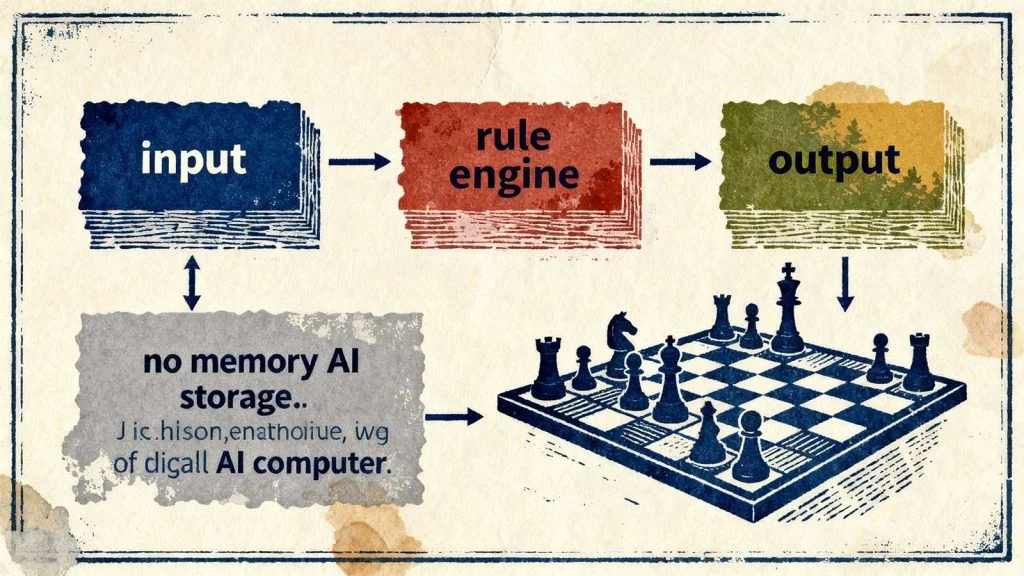
Reactive machines are the most basic type of AI.
They do not store memories or learn from past experiences.
They react only to current inputs.
Example:
- IBM’s Deep Blue chess computer
Key traits:
- No learning
- No memory
- Rule-based responses
2. Limited Memory
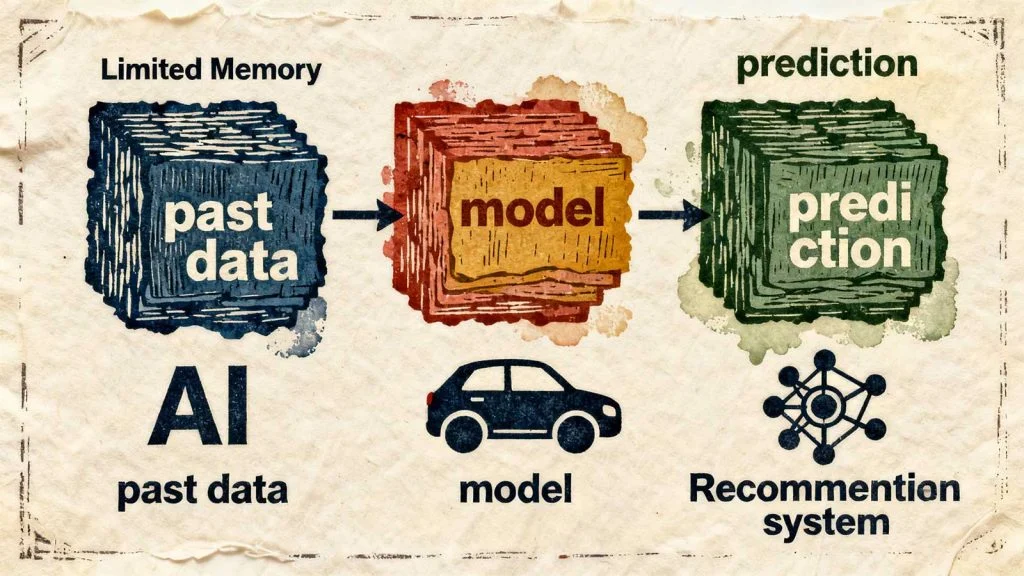
Limited memory AI can learn from past data for a short period of time.
Most modern AI systems fall into this category.
Examples:
- Self-driving cars
- ChatGPT
- Recommendation systems
Key traits:
- Uses historical data
- Improves predictions
- Temporary memory
3. Theory of Mind

Theory of Mind AI refers to systems that could understand emotions, beliefs, and intentions of humans.
This type of AI does not yet exist.
Potential abilities:
- Understanding human emotions
- Social interaction awareness
- Adaptive behavior
4. Self-Aware AI
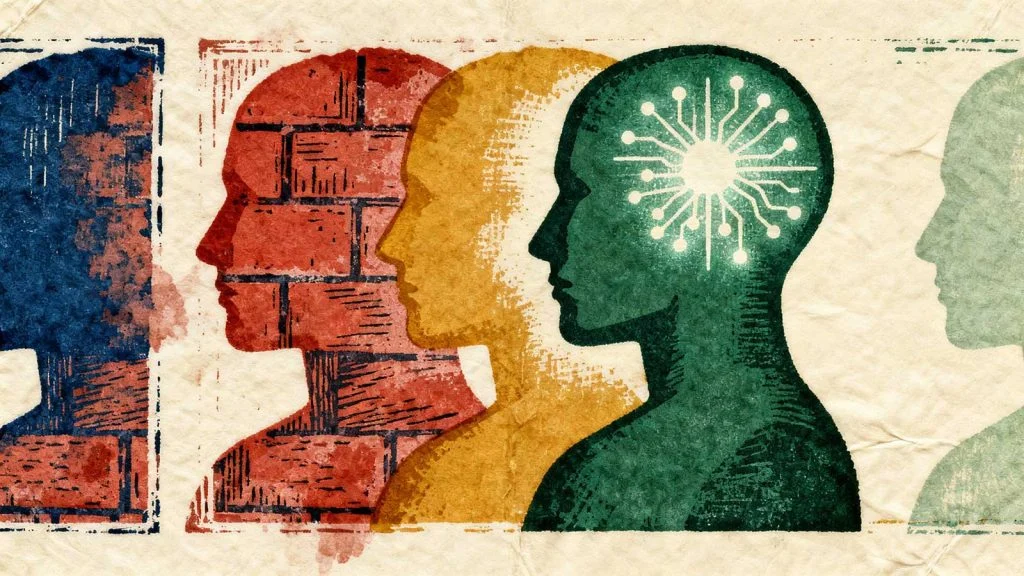
Self-aware AI would have consciousness and self-awareness.
This is a purely theoretical concept and remains science fiction.
Key idea:
- Awareness of its own existence
Real-World Applications of AI
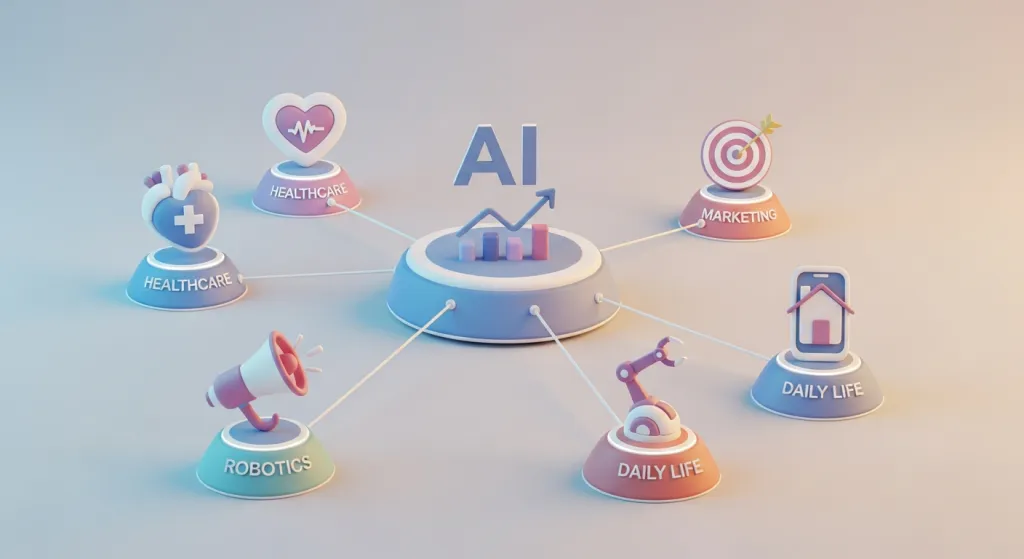
AI is already used across many industries. This guide focuses on foundational understanding, while detailed applications are covered in dedicated pages.
Healthcare
- Disease detection
- Medical image analysis
- Personalized treatment suggestions
AI in Investing & Finance
- Fraud detection
- Risk assessment
- Algorithmic decision support
AI is widely used to analyze markets, assess risk, and support financial decisions.
- Learn how AI supports financial decision-making in AI for Investing
👉 https://www.expertsguys.com/ai-for-investing-guide/ - Beginners can follow a structured approach in AI Investing for Beginners
👉 https://www.expertsguys.com/ai-investing-for-beginners/ - Long-term investors often use diversified exposure through AI ETF Investing
👉 https://www.expertsguys.com/best-ai-etfs-to-buy/ - To understand risk differences, see AI Stocks vs AI ETFs
👉 https://www.expertsguys.com/ai-stocks-vs-ai-etfs/ - Advanced users explore automation in AI Trading Bots Guide
👉 https://www.expertsguys.com/ai-trading-bots-guide/ - Data-driven projections are discussed in Best AI Stock Picks
👉 https://www.expertsguys.com/best-ai-stock-picks-2026/
AI in Business & Operations
- Customer behavior prediction
- Content generation
- Market segmentation
AI is transforming how companies automate processes and make decisions.
- See practical examples in How AI Transforms Business
👉 https://www.expertsguys.com/how-ai-transform-business/
Daily Life
- Smart home devices
- Navigation and traffic prediction
- Voice assistants
Benefits of AI
Artificial Intelligence offers several advantages:
✔ Saves time
✔ Reduces operational costs
✔ Improves accuracy
✔ Supports complex decision-making
✔ Operates continuously (24/7)
Limitations of AI
Despite its power, AI also has important limitations.
- AI hallucinations: models can generate incorrect or misleading information
- Data dependency: poor data leads to poor results
- Bias and fairness issues: AI can reflect biases in training data
- Limited creativity: AI does not truly understand or reason like humans
- High computing costs: advanced models require significant resources
- Privacy and ethical concerns: data use must be carefully managed
*For a deeper discussion, see AI Safety & Ethics
👉 https://www.expertsguys.com/ai-safety-ethics-guide/
The Future of AI
Looking ahead, AI development is expected to focus on:
- AI agents replacing traditional apps
- Hyper-personalized digital assistants
- Stronger regulation of AI-generated content
- Continued growth in robotics and automation
FAQ – Beginners’ Common Questions
What is AI in the simplest meaning?
Artificial intelligence (AI) refers to technology that enables machines to perform tasks that typically require human intelligence, such as recognizing patterns, understanding language, or making decisions.
What is the difference between AI and Machine Learning?
AI is the broader field focused on creating intelligent systems. Machine Learning (ML) is a method within AI where computers learn patterns from data to improve performance without being explicitly programmed for every task.
Can I learn AI without coding?
Yes. Many modern AI platforms and tools allow beginners to experiment with AI features through user-friendly interfaces, making it possible to learn basic concepts without programming skills.
Will AI replace humans?
AI primarily automates repetitive or data-heavy tasks rather than replacing entire professions. Human judgment, creativity, ethical reasoning, and accountability remain essential in most roles.