
A garden can be beautifully planted, carefully furnished and visually impressive while still failing to provide the sense of ease you expected from it. You may sit outside with nowhere urgent to go and still find yourself shifting position, noticing neighboring movement, listening to traffic, squinting into glare or feeling strangely unable to settle. Nothing is obviously wrong with the garden, yet staying there does not feel restorative.
This is a different problem from having an outdoor space that nobody uses. If entering the backyard feels inconvenient, the seating is never prepared or there is no clear reason to go outside, why your backyard feels unused explains the behavioral barriers that can prevent use from beginning. This article starts after that point. You have entered the garden and sat down, but the environment still asks for too much attention.
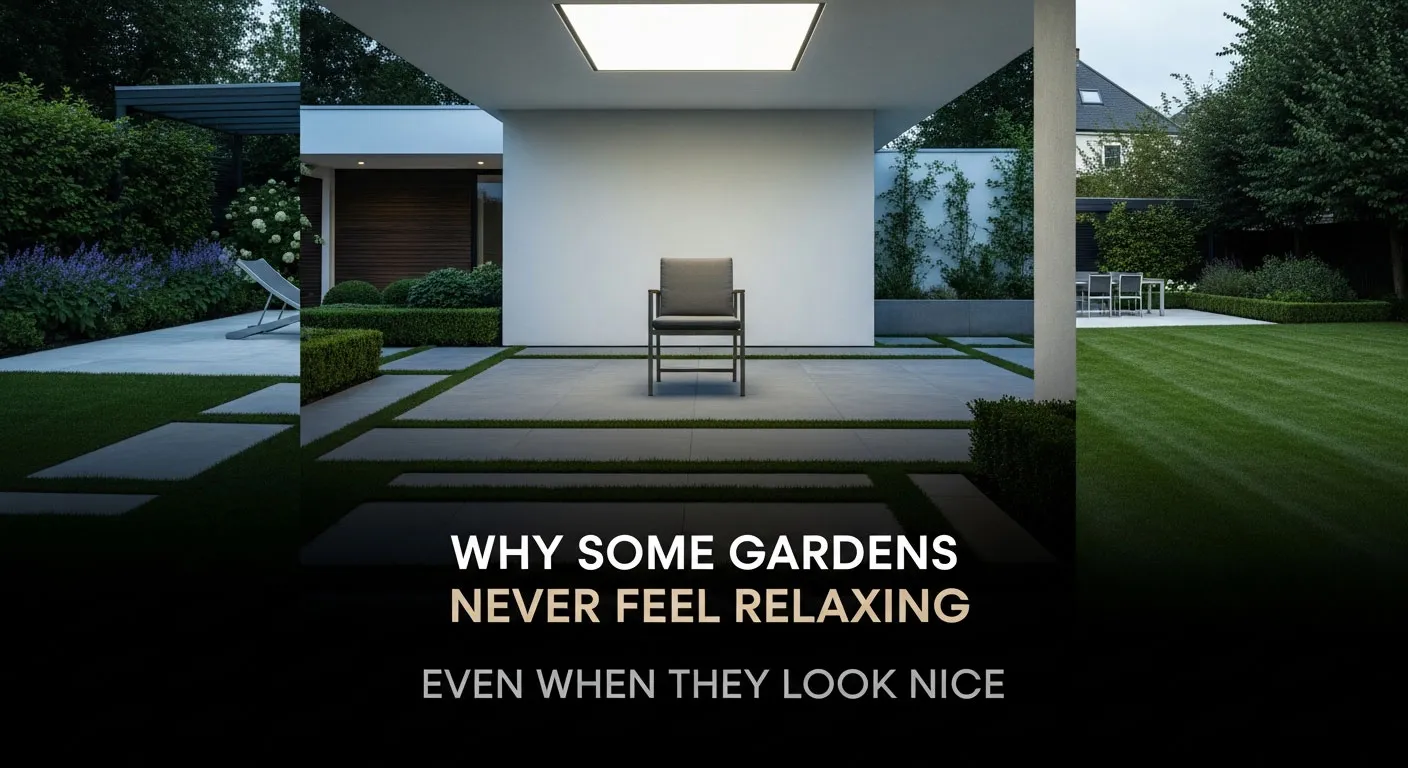
The difference matters because a garden designed for frequent use is not automatically a garden designed for relaxation. A dining terrace may be highly functional during family meals while feeling too exposed for reading alone. A brightly illuminated patio may work beautifully for entertaining but feel harsh during a quiet late-evening break. An immaculate formal garden can provide strong visual order while giving the body nowhere that feels protected enough to stay for long.
A relaxing garden therefore depends on sensory regulation as much as appearance. What you see matters, although so do sound, brightness, movement, temperature, sightlines, posture and the amount of information competing for attention. When those signals work together, the garden becomes easier to remain in without constantly evaluating the surroundings. When they conflict, the space can remain visually attractive while feeling surprisingly restless.
A Relaxing Garden Reduces the Amount of Attention the Environment Demands
Relaxation outdoors does not require the garden to become empty, silent or perfectly symmetrical. In many successful gardens, there is considerable planting, movement, texture and seasonal change. The difference is that those elements form relationships the eye and body can understand without repeatedly searching for what matters.
Imagine sitting in a garden where every decorative object has similar visual importance. Several brightly colored containers compete with patterned cushions, multiple ornaments, contrasting paving, exposed storage and a collection of small lights. None of those items is necessarily unattractive. The difficulty appears because the scene has no obvious hierarchy, so attention keeps moving from one element to another instead of settling.
Now compare that with a garden containing an equally rich planting scheme but a clearer structure. One tree creates the dominant canopy, a quieter planting mass forms the background, a restrained seating area occupies one defined zone and a single view becomes the natural place for the eye to rest. The second garden can contain more living material while demanding less mental sorting because the composition provides stronger priorities.
The same principle applies beyond vision. A space may contain sound without feeling noisy, shade without feeling dark and enclosure without feeling trapped. Relaxation improves when environmental signals are coherent enough that you no longer need to keep checking them. That is why the most effective changes often involve relationships between elements rather than simply removing more things.
Visual Noise Can Keep an Attractive Garden Feeling Restless
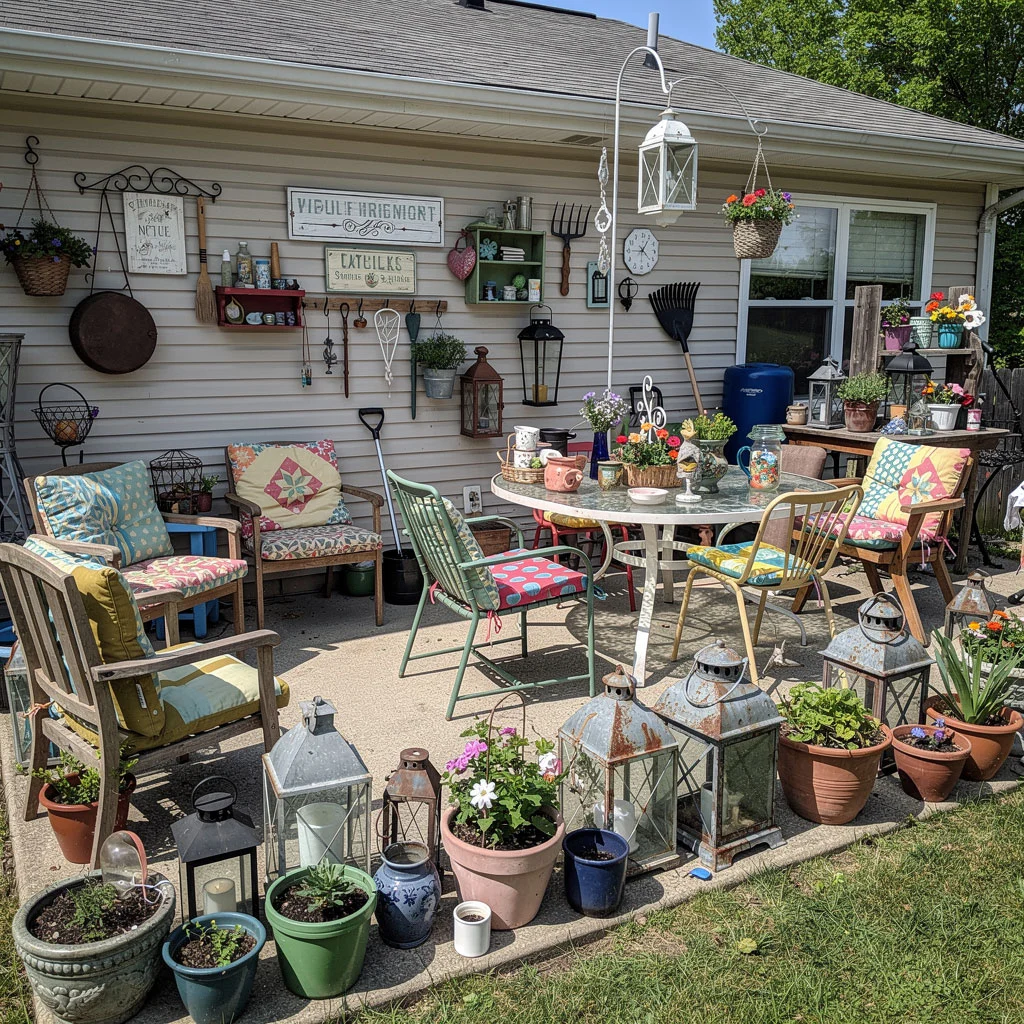
Visual noise occurs when too many elements compete for attention without a clear hierarchy. In outdoor design, it often develops gradually because individual additions seem harmless. A planter fills an empty corner, another ornament adds personality, solar lights define the path, several furniture finishes arrive at different times and seasonal items remain visible because each one still feels useful.
The problem becomes easier to see in photographs than during everyday maintenance. Step back and ask where your eye lands first. If five or six unrelated objects answer that question simultaneously, the garden may be visually busy even if every individual item is attractive.
The Problem Is Usually Competition, Not Quantity
A densely planted woodland-style garden can feel calmer than a minimalist patio containing only a few objects. Quantity alone therefore does not explain visual overload. The stronger variable is how many things are asking to be interpreted separately.
Repeated planting often creates coherence because similar forms merge into a visual field. A hedge becomes one boundary rather than fifty individual plants. A drift of the same perennial reads as a single mass. By contrast, twelve unrelated decorative objects can remain twelve separate decisions for the eye even though they occupy less physical space.
This is why larger, repeated elements often calm a composition more effectively than many small accents. A substantial planter containing one planting family may create stronger visual order than several unrelated pots. One confident seating arrangement may feel quieter than chairs distributed around the garden wherever empty space happens to exist.
Give the Eye Somewhere to Finish
A useful focal point does more than create visual interest. It gives the eye a place where scanning can stop.
The focal point might be a mature tree, a framed planting composition, a sculpture, a water feature, a fire element or simply the strongest view into the garden. It does not need to dominate every angle. It needs enough visual importance that the surrounding elements can become supporting information instead of competing destinations.
This also means that every garden feature should not be equally emphasized. If the path, seating, planting, fence treatment, lighting and decorative objects all attempt to become focal points, the garden can feel visually louder after improvement than it did before.
A good test is to sit in the position where you want to relax and look forward for thirty seconds. Notice whether your attention naturally settles somewhere or keeps bouncing between unfinished edges, bright objects, exposed utilities and unrelated details. That seated perspective is considerably more useful than evaluating the composition only from above or from the doorway.
Exposure Can Make a Beautiful Seat Feel Temporary
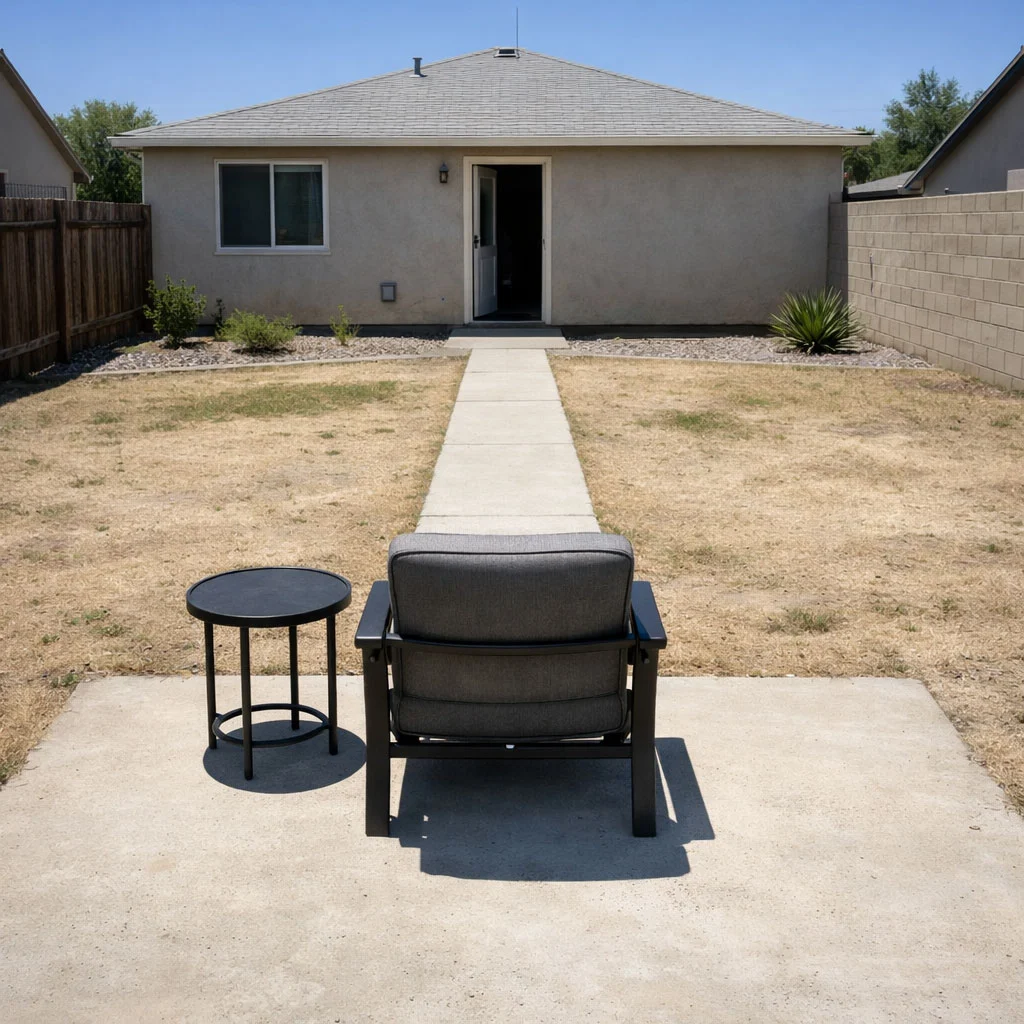
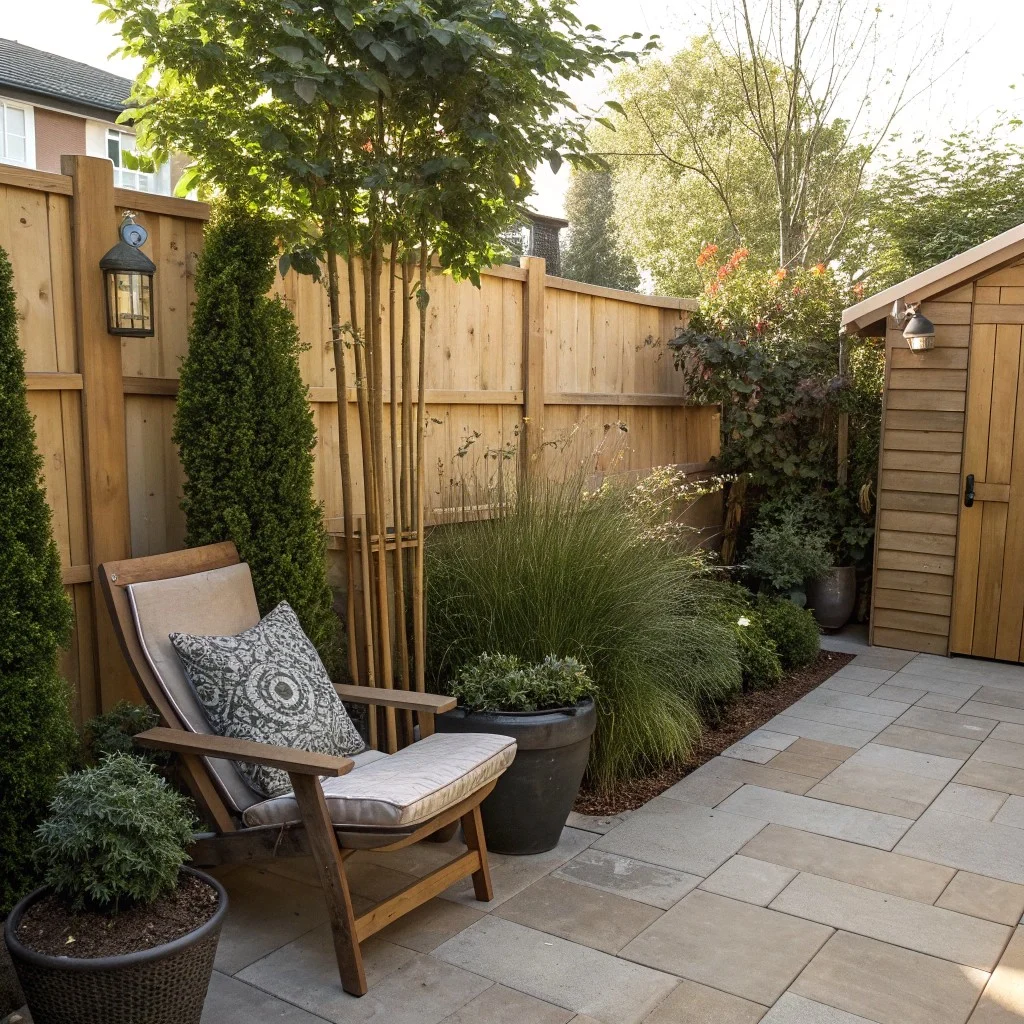
Many uncomfortable garden seats are technically well furnished but poorly positioned. A chair may have a cushion, a nearby table and an attractive view while still feeling as though it has been placed in the middle of activity instead of within a place intended for rest.
Exposure comes from several directions. The area behind the chair may remain completely open. A neighboring window may overlook the seat. A pathway may pass close enough that people constantly move through peripheral vision. Strong sunlight may illuminate the entire body without relief, while the lack of an overhead element can make the position feel visually disconnected from the surrounding garden.
The response does not need to be complete enclosure. In fact, enclosing every direction can replace exposure with confinement. The more useful goal is selective shelter.
A hedge, wall, planting mass, pergola post or screen behind one side of the seating can establish a protected edge while the main view remains open. Overhead branches or a partially covered structure can define the vertical boundary without eliminating daylight. Furniture orientation can protect one side simply by changing where the body faces.
This relationship between outlook and enclosure is why two identical chairs can feel completely different when placed only a few metres apart. One stands alone in an open lawn where every direction is equally exposed, while the other sits near planting with protection behind the body and a clear view across the garden. The furniture has not changed, but the spatial experience has.
Privacy Is About Sightlines, Not Just Boundary Height
People often respond to exposure by immediately planning taller fences or denser planting around the entire property. That can work in some gardens, although it may solve more of the boundary than the actual problem requires.
Privacy is experienced from particular positions. A second-storey window may overlook one chair while another position remains naturally screened. A neighboring patio may be visible only from the dining area. A side gate may create a direct line of sight toward a resting position even though the rest of the boundary is already private.
The most efficient response is therefore to sit where relaxation is expected to happen and identify the sightlines that create discomfort. Screening can then intercept those views using planting, trellis, furniture orientation or a localized structure. The existing landscaping ideas for privacy can support larger privacy planning, while the immediate objective here is to protect the resting position without unnecessarily closing every edge of the garden.
Plants are particularly useful when the goal is partial screening because foliage can obscure direct views while preserving depth, daylight and seasonal variation. Mixed planting may also feel softer from the seating position than a continuous hard barrier, although plant choice has to reflect the available space, climate, maintenance tolerance and mature size.
The strongest privacy arrangement often creates a protected foreground rather than trying to make the entire outside world disappear.
Movement in the Wrong Place Keeps Attention Active
A garden can have excellent circulation and still feel difficult to relax in if the main movement occurs within the resting person’s immediate visual field. This is a subtler issue than a path physically cutting through the furniture because movement can remain distracting even when the route technically passes beside the seating zone.
Peripheral movement attracts attention very efficiently. Someone opening a gate, walking to a shed, carrying laundry or moving repeatedly between the house and another part of the property can keep drawing the eye away from whatever the seated person was doing. In a busy household, that repeated visual interruption can matter more than the architectural beauty of the seating area.
The solution depends on the garden. Sometimes turning the chair thirty degrees moves the active path out of the direct sightline. A planting bed can create a visual buffer between circulation and rest. In a larger property, a secondary route can bypass the main seating area. In a small backyard, placing the resting position at the end of movement rather than alongside it can produce a surprising improvement.
The principle is simple: movement should remain understandable without becoming the dominant thing a resting person watches.
This is one of the areas where relaxation and backyard activation overlap, but their decisions remain different. Why your backyard feels unused examines circulation because a blocked route can prevent people from using an activity zone comfortably. Here, circulation matters because repeated nearby movement keeps attention engaged after the person has already settled.
Sound Can Undermine Calm Even When the Garden Looks Perfect
Visual improvements cannot solve a garden whose strongest source of discomfort is auditory. Traffic, mechanical equipment, conversations from neighboring properties, barking dogs, construction and intermittent impact sounds can dominate the experience even when the physical space looks exceptionally calm.
The difficulty with unpredictable sound is that it repeatedly interrupts attention. A constant distant road hum may eventually become part of the background, while an occasional loud vehicle, closing gate or sudden conversation can pull attention outward each time it occurs. This is why the subjective experience of noise does not always correspond neatly with whether the garden seems objectively loud.
Sound Masking Is Usually More Realistic Than Trying to Create Silence
Residential gardens rarely offer complete acoustic isolation, particularly in dense neighborhoods. Instead of expecting the garden to become silent, it is often more practical to introduce a pleasant nearby sound that reduces the prominence of distant interruptions.
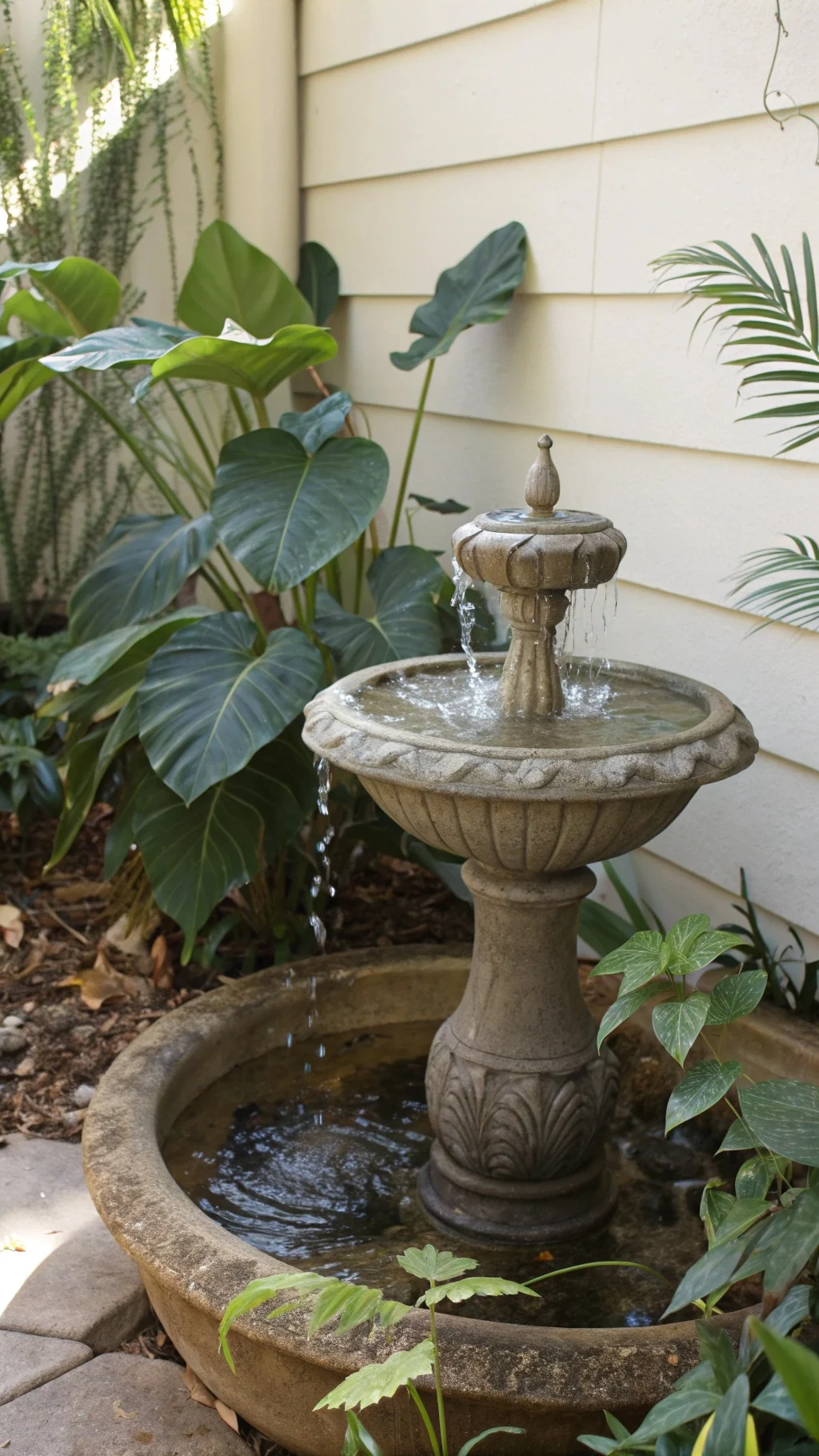
Moving water is commonly used for this purpose because its sound can remain relatively consistent. The location matters considerably. A modest water feature close to the seating area may influence the perceived soundscape more effectively than a larger feature positioned far across the garden because the nearby sound reaches the listener more clearly.
Planting can contribute through leaf movement, especially when the species and local breeze create audible rustling. Dense vegetation may also change how exposed the space feels acoustically even when it does not physically block all external sound.
Hard reflective surfaces deserve attention as well. A small courtyard surrounded by masonry, paving and solid walls can make voices and mechanical sounds feel sharper because there are few soft surfaces interrupting reflections. Introducing planting, outdoor textiles where appropriate and more varied surface conditions can alter the character of the space even when the external noise source remains.
The objective is not to pretend that landscaping can eliminate every neighborhood sound. It is to create a local sound environment that gives attention something gentler and more continuous to follow.
Silence Can Feel Different From Calm
It is tempting to assume that removing sound automatically creates relaxation. In practice, an extremely quiet garden can make intermittent noises more noticeable because every interruption becomes a strong contrast.
Natural background sounds can therefore contribute to a calmer atmosphere precisely because they provide continuity. Leaves moving, insects, birds, water and distant environmental sound establish an acoustic baseline that changes gradually rather than arriving as repeated surprises.
This is one reason a garden with abundant planting can feel more settled than a visually minimal hardscape even when their measured sound levels are not dramatically different. The planted environment provides more layers of sensory information that belong to the setting rather than arriving as isolated interruptions.
The distinction is useful because the goal is not necessarily less sound. It is often a more coherent soundscape.
Over-Bright Lighting Can Turn a Retreat Into a Stage
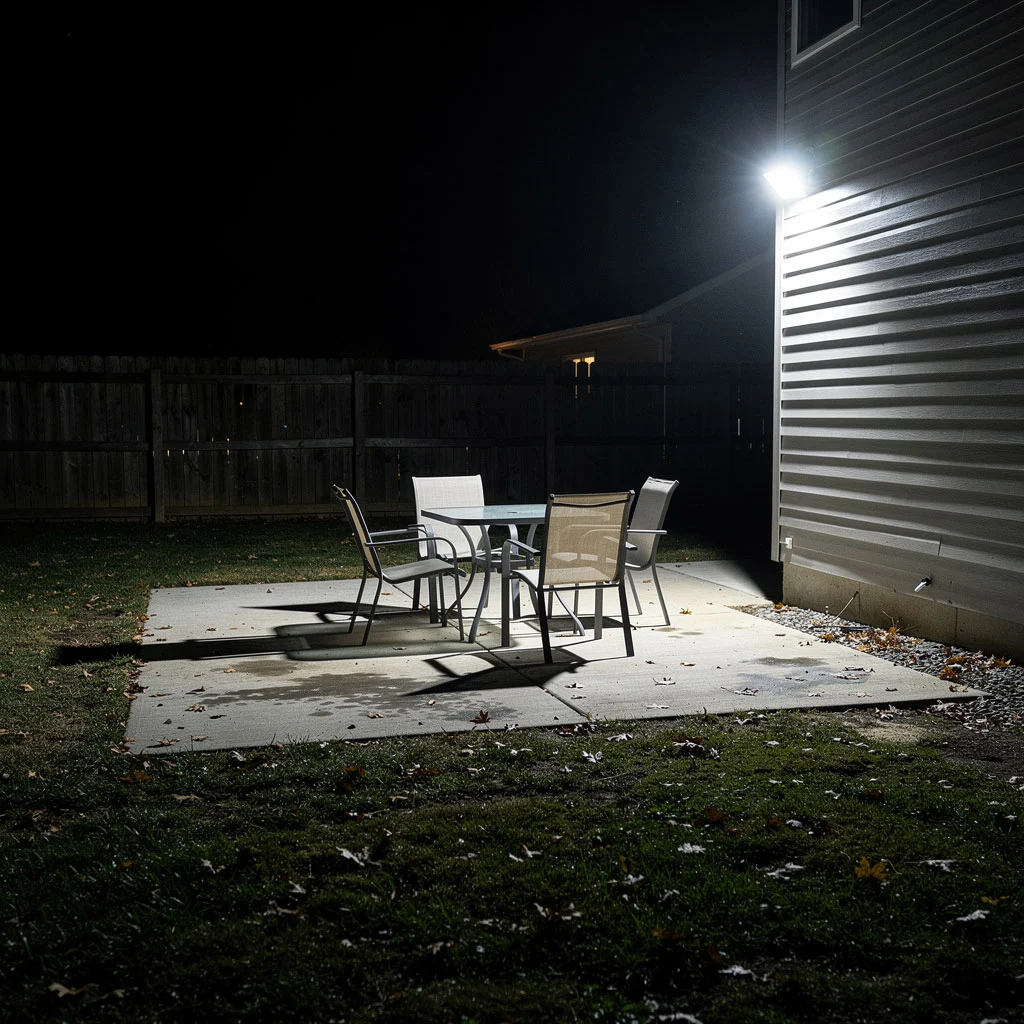
Garden lighting is frequently planned around visibility, security and architectural impact, while the experience of sitting within the illuminated scene receives less attention. That can produce a backyard that photographs beautifully at night but feels surprisingly exposed when occupied.
One common problem is equal brightness. When the path, planting, seating, fence and background are all illuminated at similar intensity, there is little visual depth and nowhere for the eye to transition into darkness. The person sitting within the space may feel as visually prominent as the features intended to be displayed.
Relaxing evening lighting usually benefits from hierarchy. The activity zone needs enough light for whatever people are doing, important movement routes need appropriate visibility, and selected landscape features can receive accent lighting. Other areas can remain considerably darker.
This creates visual depth and allows the seating area to feel contained within the larger night garden rather than placed under general illumination.
Direct Glare Matters More Than Fixture Style
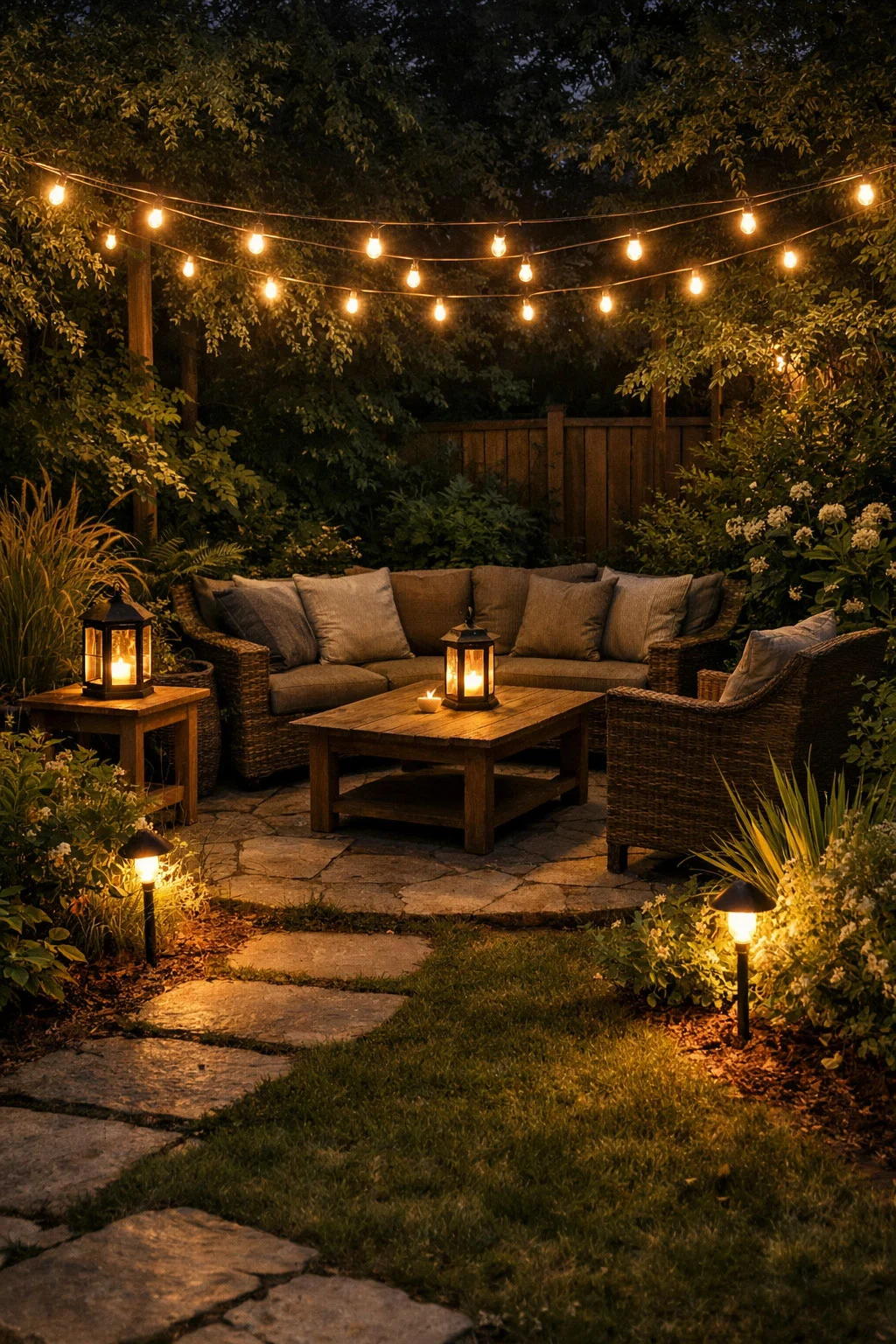
A beautifully designed light fixture can still be uncomfortable when the lamp or LED source is visible directly from the resting position. Glare causes the eye to adapt to the bright source, which can make the surrounding garden appear darker and reduce visual comfort.
Before installing or repositioning outdoor lighting, sit in the chairs that will actually be used and look toward every likely fixture. The light should illuminate the intended surface without forcing the occupant to look directly into the brightest part of the source.
Low-level path lighting, shielded fixtures, indirect illumination and carefully positioned local light can often provide better comfort than simply increasing brightness.
Preserve Some Darkness
Darkness is part of night garden design rather than a failure to illuminate every corner. Unlit planting can create depth behind a softly illuminated foreground, and darker boundaries can reduce the feeling that the entire property is on display.
This does not mean compromising necessary safety around stairs, level changes, gates or circulation. It means distinguishing areas that need illumination from areas where darkness contributes positively to the experience.
The most relaxing night gardens often feel edited rather than fully exposed.
Warm Light Alone Does Not Guarantee a Relaxing Garden
Warm-toned lighting is often associated with comfort, but color temperature cannot rescue a poor lighting arrangement. A warm fixture aimed directly toward the eyes can still create glare, and twenty warm lights spread evenly across a garden can still make the space excessively bright.
The more useful sequence is to decide what needs to be visible, from which viewing position, and at what level of brightness before considering decorative fixture style. Color can then support the atmosphere rather than carrying the entire responsibility for it.
This prevents lighting design from becoming a collection of products. The garden instead develops a night-time hierarchy in which paths remain readable, faces can be seen where conversation occurs, selected planting gains depth and the surrounding darkness is allowed to remain part of the composition.
Shade Changes More Than Temperature
Shade is usually discussed as a heat-control strategy, which is obviously important, but its spatial effect can be equally significant. A canopy, pergola, mature tree or strategically placed fabric element creates a vertical boundary that helps define where the resting area begins.
This is why a chair underneath partial cover can feel more settled than the same chair placed several metres away in open lawn even when the temperature difference is small. The overhead element gives the seating position a stronger relationship to its surroundings.
The best form of shade depends on time and orientation. Deep permanent shade can make a position unnecessarily dark during cooler periods, while a small umbrella may fail when low afternoon sun enters from the side. Dappled tree shade changes through the day and season, which can be an advantage when the planting and climate support it. Pergolas can provide structural definition while allowing the degree of overhead coverage to be adjusted through planting, slats or secondary materials.
A useful shade assessment should therefore be performed at the time when you actually want to relax. The garden at 9:00 a.m. and the same garden at 4:00 p.m. can offer completely different conditions.
Filtered Shade Often Feels Better Than Maximum Shade
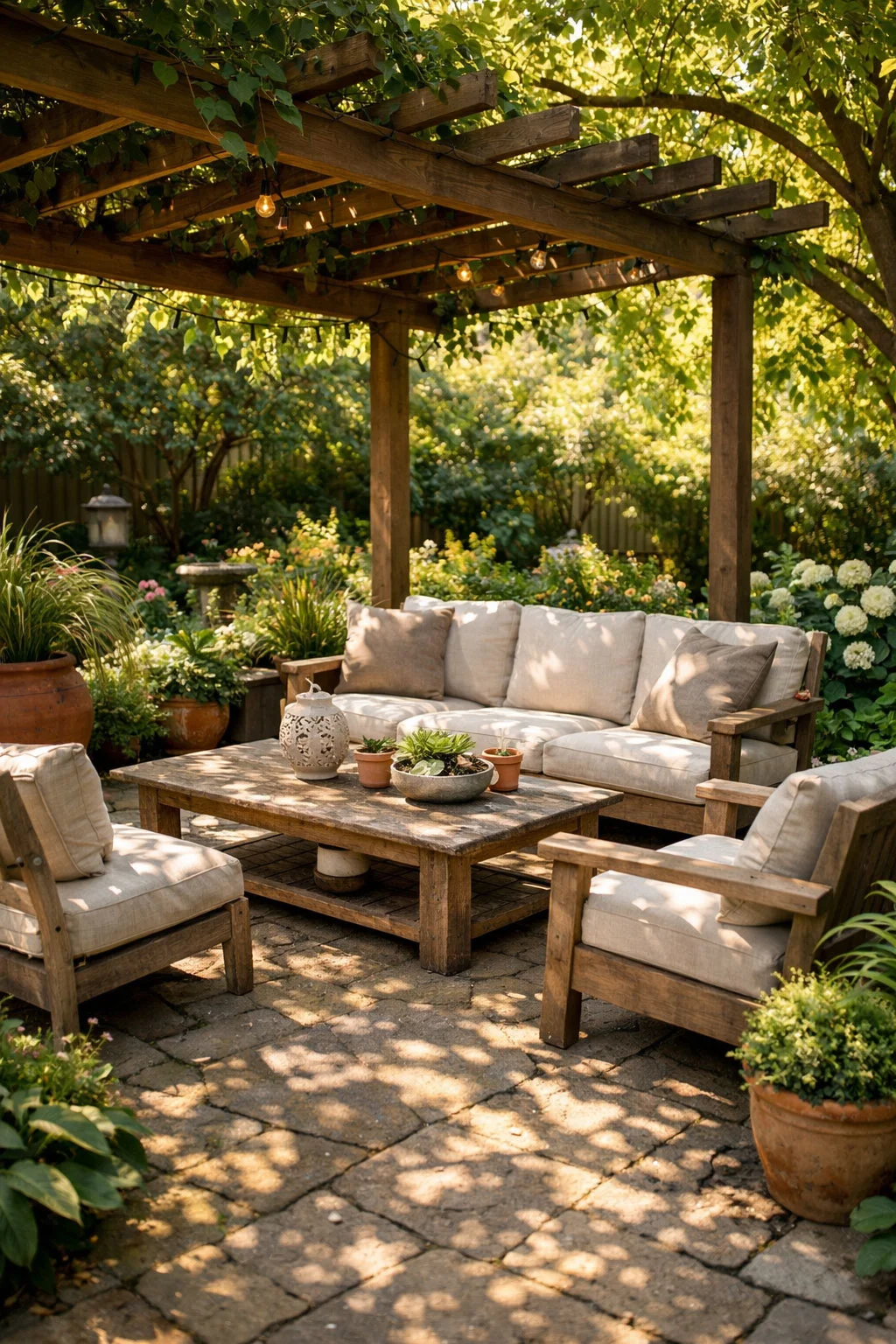
The calmest seating area is not always the darkest one. Heavy shade can eliminate glare and heat while also reducing visual connection with the rest of the garden. Complete enclosure can make a small space feel compressed, particularly when surrounding planting is dense.
Filtered shade often creates a more balanced experience because it reduces direct exposure while allowing changing light to remain visible. Leaves, pergola structures and semi-open overhead systems can produce this condition naturally.
The effect is partly visual. Moving patches of light create depth and reveal the changing character of the day without making the person sitting underneath feel fully exposed. This can make the area feel protected while preserving some of the qualities that make being outdoors different from staying inside.
The existing article’s Exposure vs Shelter and filtered-shade comparison concepts should be rebuilt into stronger informational visuals rather than replaced with ordinary garden photography. One visual should explain where protection is needed around the seated body, while another should compare open sun, complete shade and filtered shelter at the same resting position.
Seating Posture Can Quietly Decide Whether You Stay
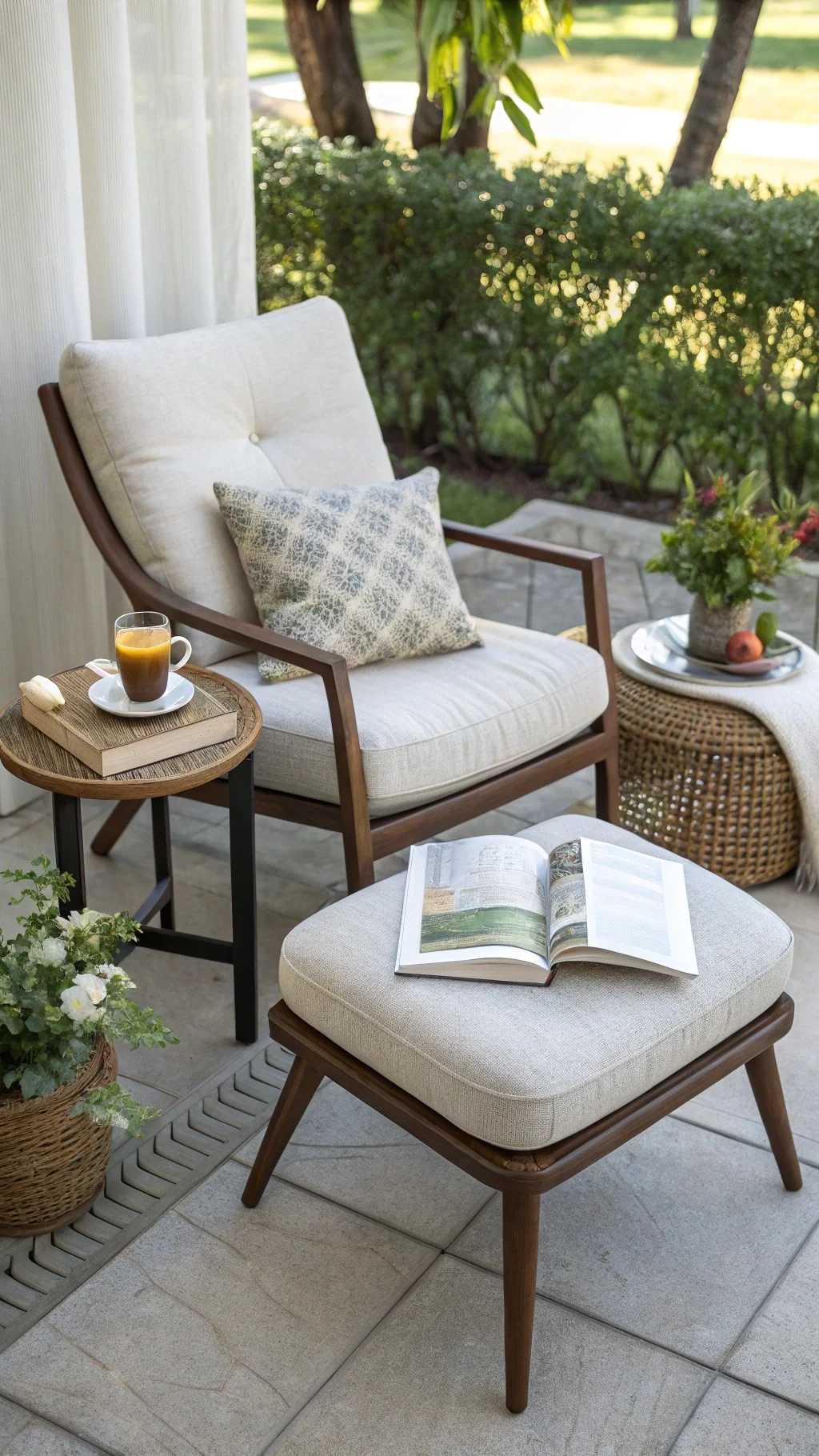
A garden may have excellent planting, shade and privacy while the furniture itself keeps the body slightly uncomfortable. Outdoor furniture is often chosen for durability, appearance or how neatly it fits a terrace, yet those qualities do not guarantee that someone can remain seated comfortably for thirty minutes. A chair that is too upright, too low, too deep or poorly supported can keep the body making small adjustments that eventually become a reason to go back indoors.
The important question is therefore not whether a chair looks comfortable in a photograph. It is whether the posture it creates matches the activity. Outdoor dining chairs are designed for eating and conversation around a table, where a more upright position is useful. A reading or resting chair generally benefits from more support through the back and arms, while a very deep lounge seat may feel comfortable for one person and awkward for another if their feet cannot rest naturally.
Arm support can matter more than people expect because it gives the upper body somewhere to settle. A side table within easy reach also reduces repeated leaning, twisting and standing. Those details seem minor individually, although they influence how much physical work the body performs while supposedly resting.
Cushions deserve similar attention. A thin decorative cushion may soften the appearance of a timber chair without changing its pressure points very much, while a properly sized seat and back cushion can alter how long the same chair remains comfortable. In exposed climates, however, cushions that require complicated storage can introduce the kind of setup friction discussed in why your backyard feels unused, so comfort and readiness need to be balanced rather than optimized separately.
A practical test is to use each resting chair for at least fifteen minutes without adjusting its position. Notice whether you begin crossing your legs repeatedly, leaning forward, searching for somewhere to place your arms or shifting away from pressure points. Those small movements reveal whether the furniture is supporting relaxation or merely looking appropriate within the garden.
The View From the Chair Matters More Than the View of the Chair
Garden design is often evaluated while standing, walking or looking toward the seating area from the house. Relaxation happens from a lower position, which means the view experienced while seated deserves its own design process.
A chair can look perfectly placed from across the garden while facing a utility area, exposed fence junction, neighboring roofline or busy path. Another chair positioned less dramatically may offer a layered view through planting, a mature tree, moving grasses or a framed opening toward the deepest part of the garden. The second position can feel much richer because the visual experience has been designed for the occupant rather than for the observer.
Depth is particularly valuable. A seat that faces only a nearby wall can feel visually compressed even when the wall is attractive, while foreground planting, a middle zone and a more distant focal element create several layers for the eye to explore without demanding constant attention. The space feels larger because the view contains progression rather than ending immediately.
This is one reason small garden designs that make a garden feel more spacious can benefit from seating orientation as much as from physical dimensions. A compact garden cannot manufacture additional land, but it can avoid positioning the resting person directly against the shortest possible visual distance.
The best view does not need to be dramatic. It needs enough order, depth and seasonal interest that the eye can remain there without repeatedly noticing unresolved clutter.
Planting Can Soften a Garden Without Making It Visually Busy
Planting is one of the most effective ways to make a hard outdoor space feel calmer because it changes several sensory conditions at once. Leaves soften boundaries, flowers create seasonal variation, foliage can filter views, taller planting can moderate exposure and moving branches introduce a gentler form of visual motion than people, vehicles or mechanical objects.
The challenge is to create enough planting to support the atmosphere without turning every square metre into a separate display. A collection of unrelated specimens can feel more visually demanding than a larger planting scheme built from repeated forms and a limited number of dominant plant families.
Repetition creates continuity. When the same foliage texture or plant group appears in several places, the eye begins reading those areas as connected. Variation can then occur through height, season, flowering or subtle changes in tone without requiring every plant to perform as a focal point.
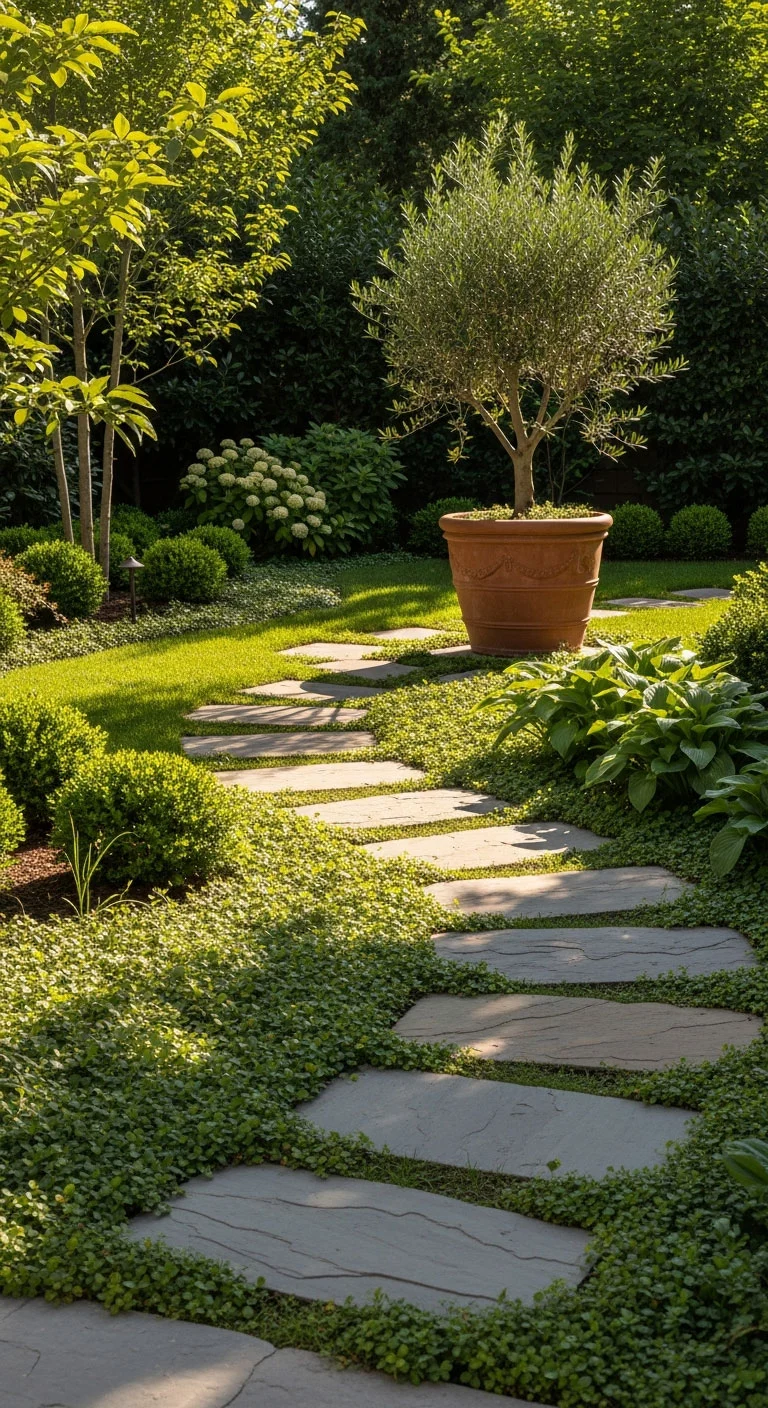
Layering is equally important. Low planting can soften paving edges, medium planting can build enclosure around seating, while taller shrubs or small trees can filter boundaries and provide vertical structure. The result feels more complete because each layer has a spatial job rather than existing only as decoration.
Maintenance must remain realistic. A garden intended as a place of recovery can become stressful if the planting immediately surrounding the main resting area constantly needs deadheading, staking, sweeping or intensive watering. Higher-maintenance planting can still belong elsewhere in the garden, particularly when gardening itself is enjoyable, although the quietest seating zone benefits from plants that can look settled without demanding attention every time someone sits down.
Hard Edges Can Make a Garden Feel More Exposed Than Its Size Suggests
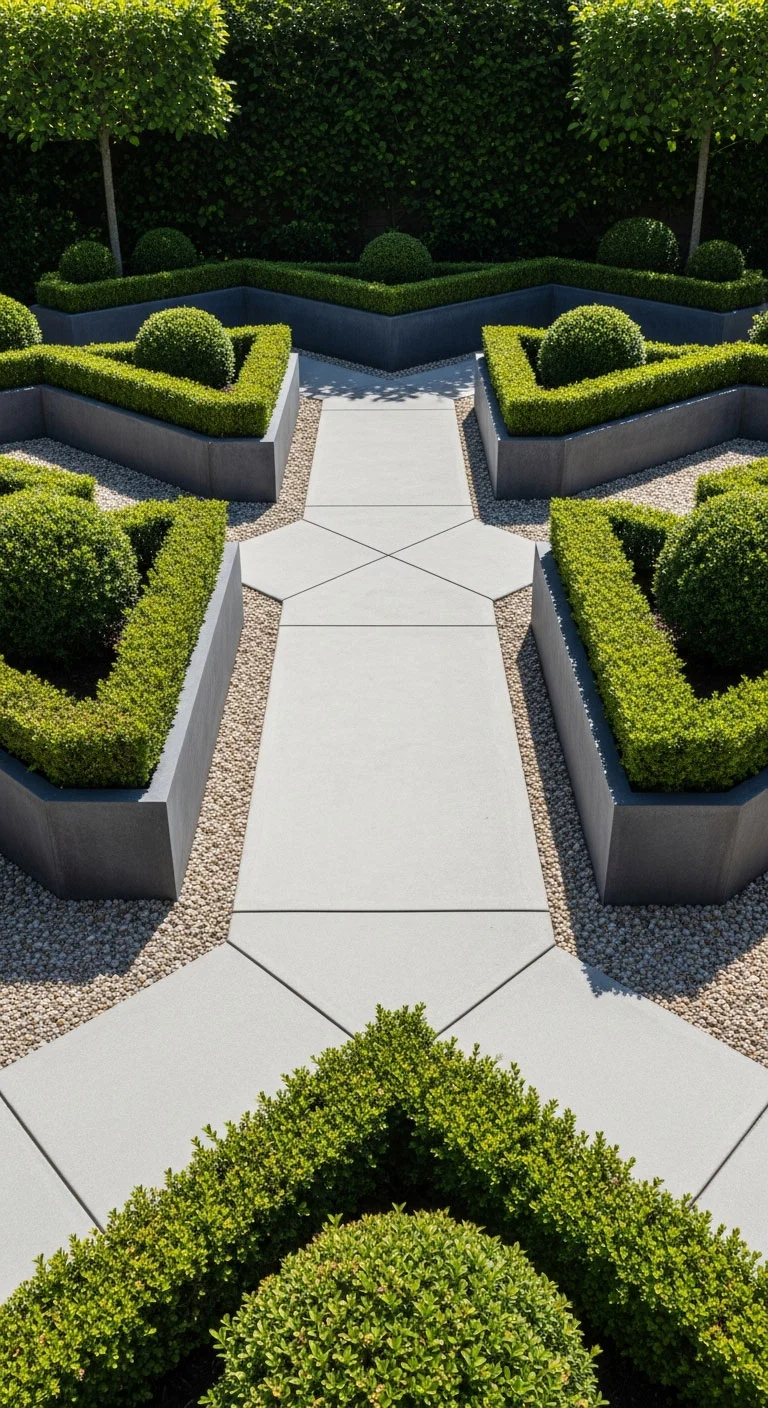
Straight walls, sharp paving junctions, exposed fence lines and uninterrupted hard surfaces can create a clear contemporary aesthetic, but when every boundary remains visually hard, the garden can feel more exposed and more static than expected. The issue is not that straight lines are inherently uncomfortable. The problem appears when there is no softer layer between the body and the surrounding structure.
Planting near the edges of a patio can change that relationship without hiding the architecture. A border that overlaps the paving slightly, a climbing plant on part of a wall, a hedge behind seating or a planter positioned at a corner can reduce the visual severity of the junction while preserving the overall geometry.
Curves can help in some landscapes, although simply adding curved paving is not automatically more relaxing. A poorly planned curve can become decorative complexity without improving movement or enclosure. What matters more is whether the transition between surfaces feels intentional and whether the eye encounters enough variation to avoid reading the entire garden as one exposed plane.
This is why garden borders and edging ideas should be considered as part of spatial definition rather than as a purely decorative finishing detail. The edge can separate activities, guide movement and soften the transition between hardscape and planting when it is designed around a purpose.
Water Works Best When It Has a Clear Sensory Job
Water features are often recommended for relaxing gardens because moving water can create sound, reflected light and visual movement. Their usefulness depends on where they are positioned and what problem they are solving.
If sound masking is the main purpose, the feature needs to be close enough to the resting position that its sound competes meaningfully with the unwanted background noise. A fountain at the far end of the property may look attractive but have almost no acoustic effect from the chair.
If visual calm is the goal, a quieter water surface may work better than vigorous movement. Reflections, subtle ripples and changing light can create interest without becoming a dominant sensory event. In a compact garden, an oversized feature with constant splashing may become another source of stimulation instead of reducing it.
Maintenance also changes the experience. Pumps, algae, water loss, debris and winter care can turn a poorly chosen feature into an obligation. The relaxing effect therefore depends partly on whether the household is willing to maintain the system required to keep it functioning properly.
Water should be treated as a tool with a specific job rather than as a universal ingredient for calm.
A Garden Can Be Too Stimulating Without Looking Cluttered
Sensory overload does not always come from visible clutter. A visually restrained garden can still combine strong sun, reflective paving, traffic noise, exposed wind, hard furniture and constant peripheral movement. Each individual condition may seem manageable, yet together they keep attention active.
This is why relaxation problems should be assessed across several senses at the same time. The chair may need shade because glare is the strongest problem. Another location may need sound masking. A third may need a hedge behind the seat because visual exposure dominates the experience. Treating all three gardens with the same decorative solution would ignore the reason each one feels uncomfortable.
The most useful diagnosis begins by identifying the signal that keeps interrupting rest. Sit in the preferred position for ten minutes without changing anything and observe what repeatedly pulls your attention away. It might be heat, glare, sound, a view, movement, posture or the feeling of being watched. Once the strongest interruption is identified, the design response becomes much more precise.
This also explains why adding more plants is not always the answer. Planting can soften views and create enclosure, but it cannot correct uncomfortable furniture, direct glare or a mechanical noise source by itself. Relaxing design depends on matching the intervention to the actual sensory problem.
Why Enclosure Should Be Uneven Rather Than Identical on Every Side
A restful garden seat often benefits from protection around part of the body while preserving openness toward the preferred view. Creating the same level of enclosure on every side can reduce anxiety about exposure, but it can also remove depth, airflow and visual connection with the garden.
An uneven boundary is usually more useful. The side facing a neighboring window may need dense screening, while the opposite side can remain relatively open. The back of the seat may benefit from planting or a wall, while the front remains connected to lawn, planting or a distant focal point.
This asymmetric approach also allows the garden to respond to real conditions rather than to abstract symmetry. Sun may arrive from one direction, wind from another and neighboring activity from a third. A successful resting area can therefore look less formally balanced while feeling much more comfortable.
The existing Open Boundary vs Enclosed Boundary concept should be evolved into a three-condition visual for this article: fully exposed, selectively sheltered and over-enclosed. The center condition should clearly demonstrate why selective shelter usually provides the strongest balance between protection and outlook.
Comfort Changes Through the Day
A relaxing garden at 9:00 a.m. may become uncomfortable by late afternoon because the environmental conditions have shifted while the physical design remains unchanged. Sun angles change, neighboring activity increases, wind patterns become stronger and artificial lighting begins to influence the evening atmosphere.
This is why a single garden can benefit from more than one resting position. A morning seat near the house may receive gentle light and convenient access, while a later position under a tree becomes preferable as the sun moves. A small garden may not have enough area for multiple dedicated zones, although even rotating furniture orientation or using flexible shade can extend the useful comfort window.
Seasonal change matters as well. Deciduous trees can provide summer shade while allowing more light through during cooler periods. Evergreen screening can preserve privacy throughout the year but may create heavy winter shade if poorly positioned. A pergola that performs beautifully in midsummer can feel unnecessarily dominant during a dark season if the overhead treatment is too dense.
A calm garden therefore needs to be evaluated over time rather than from one perfect photograph. The design should respond to the periods when the household actually wants to be outside.
The Quietest Part of the Garden May Be the Wrong Place to Sit
It seems logical to place seating in the most remote corner because distance from the house can reduce noise and activity. In some gardens that works extremely well. In others, the isolated location introduces new problems such as poor access, weak lighting, damp conditions, uncomfortable shade or a sense of being disconnected from the home.
A better choice balances sensory calm with practical usability. The quietest position is only valuable when it also feels safe, dry, accessible and worth visiting.
This is another reason to test furniture temporarily before building permanent structures. Moving a chair around the property for several days can reveal surprisingly different experiences. One corner may feel peaceful for five minutes but become cold and damp later. Another may have slightly more background sound yet offer better sun, outlook and enclosure.
The most relaxing position is therefore the place where several conditions reach an acceptable balance, rather than the location that wins on one isolated factor.
Design for Recovery, Conversation and Observation Separately
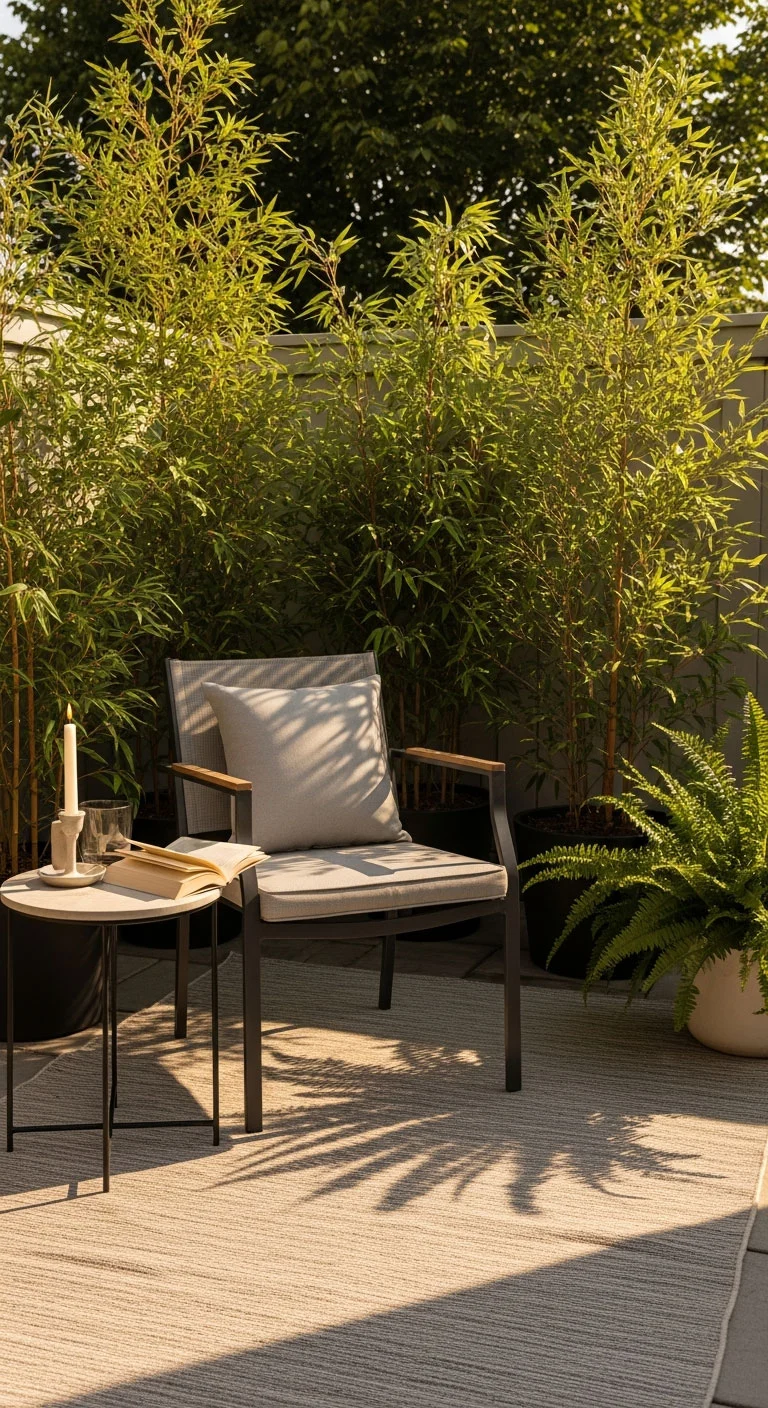
Not every relaxing activity requires the same environment. A seat intended for solitary recovery may benefit from stronger enclosure and a quieter view. Conversation seating often needs faces oriented toward each other with enough background calm that people can hear comfortably. Observation seating may work best when the view toward planting, birds or wildlife becomes the dominant feature.
Trying to make one seating arrangement perform every role can create compromises. Dining chairs may be too upright for prolonged rest. Deep lounge seating may be awkward around a meal. A fire-pit circle may support social interaction while offering little visual privacy for someone reading alone.
Where space allows, even small differences in position can help. One chair slightly away from the main group can create a quieter option without requiring an entirely separate patio. A bench facing the planting can serve observation while the main table remains social.
This is where the broader ecological character of a garden can also become part of relaxation. If watching seasonal change, birds and pollinators is what makes the space rewarding, why some gardens feel alive explores the planting and ecological relationships that support that experience.
The Relaxing Garden Test
A useful garden assessment should be performed from the seat where you actually want to relax. Spend at least ten minutes there during the time of day when the space is normally used, then evaluate the conditions below as one connected experience.
- Visual hierarchy: Does the eye have one or two places where it can settle, or do many unrelated objects compete for attention?
- Sightlines: Are there neighboring windows, gates, pathways or exposed boundaries that repeatedly make you aware of being observed?
- Background protection: Is there enough enclosure behind or beside the body to make the seating position feel established?
- Outlook: Does the chair face planting, depth, sky or another worthwhile view rather than unresolved clutter or a visually compressed boundary?
- Movement: Do ordinary household routes constantly pass through the direct or peripheral view?
- Sound: Is there a persistent or unpredictable noise source that repeatedly interrupts attention?
- Sound masking: Could a nearby water feature, planting or other appropriate environmental sound reduce the prominence of unwanted noise?
- Heat: Does direct sun make the position physically uncomfortable during the period when you want to use it?
- Glare: Are bright paving, windows, light fixtures or reflective surfaces forcing the eyes to adjust repeatedly?
- Shade: Is shelter placed according to the actual sun direction rather than simply added somewhere nearby?
- Posture: Can you remain seated for the intended length of time without repeatedly shifting, leaning or searching for support?
- Reach: Are drinks, books and personal items easy to place without repeated bending or standing?
- Lighting: At night, are pathways and activities visible without illuminating the entire garden equally?
- Darkness: Are some areas allowed to remain darker so the night garden retains depth?
- Planting: Does vegetation soften boundaries and create coherence without requiring constant attention from the resting position?
- Maintenance: Does the immediate relaxation zone remain presentable without a long preparation routine?
The checklist should reveal a pattern rather than produce a perfect score. A garden can remain relaxing with some traffic noise, limited space or imperfect privacy when the other conditions compensate effectively. The goal is to identify which sensory factor currently dominates the experience and correct that condition before redesigning everything else.
Start With the Signal You Notice First
When a garden feels unsettled, the strongest clue is often the first thing you notice after sitting down. If your eyes immediately go to a neighboring window, privacy deserves attention. If your body begins searching for shade, exposure is probably more important than planting style. If a road or mechanical unit repeatedly interrupts concentration, changing the visual design may accomplish very little until the soundscape is addressed.
This approach prevents random improvement. Instead of adding another decorative feature because the garden does not feel finished, you are responding to an observable condition that changes the experience.
After the first change, use the same seat again and notice what becomes apparent next. Sometimes correcting one dominant problem reveals a second weakness that was previously masked. Better shade may make an exposed sightline more noticeable. Improved privacy may reveal uncomfortable furniture. Softer lighting may make the evening sound environment more obvious.
That sequence is useful because it allows the garden to evolve around real experience rather than assumptions.
A Relaxing Garden Does Not Need to Look Empty
There is a persistent design assumption that calm requires minimalism. Some people genuinely prefer restrained outdoor spaces, although relaxation can also exist within richly planted, highly textured gardens when the composition remains coherent and the sensory environment feels manageable.
The determining quality is whether the garden gives attention somewhere to settle. Repeated planting can create rhythm. A strong canopy can organize the upper layer. Dense boundaries can provide shelter while the center remains visually open. Water, wildlife and seasonal movement can add life without becoming chaotic.
The difference between richness and overload is hierarchy. When every feature competes equally, the scene becomes difficult to read. When dominant and supporting elements are clear, a garden can contain considerable complexity while still feeling composed.
This is one reason copying a minimalist photograph does not guarantee relaxation. The photograph may show fewer objects while omitting the traffic, sun exposure, neighboring views or uncomfortable seating that determine the actual experience of the property.
The Goal Is to Make Staying Feel Easier
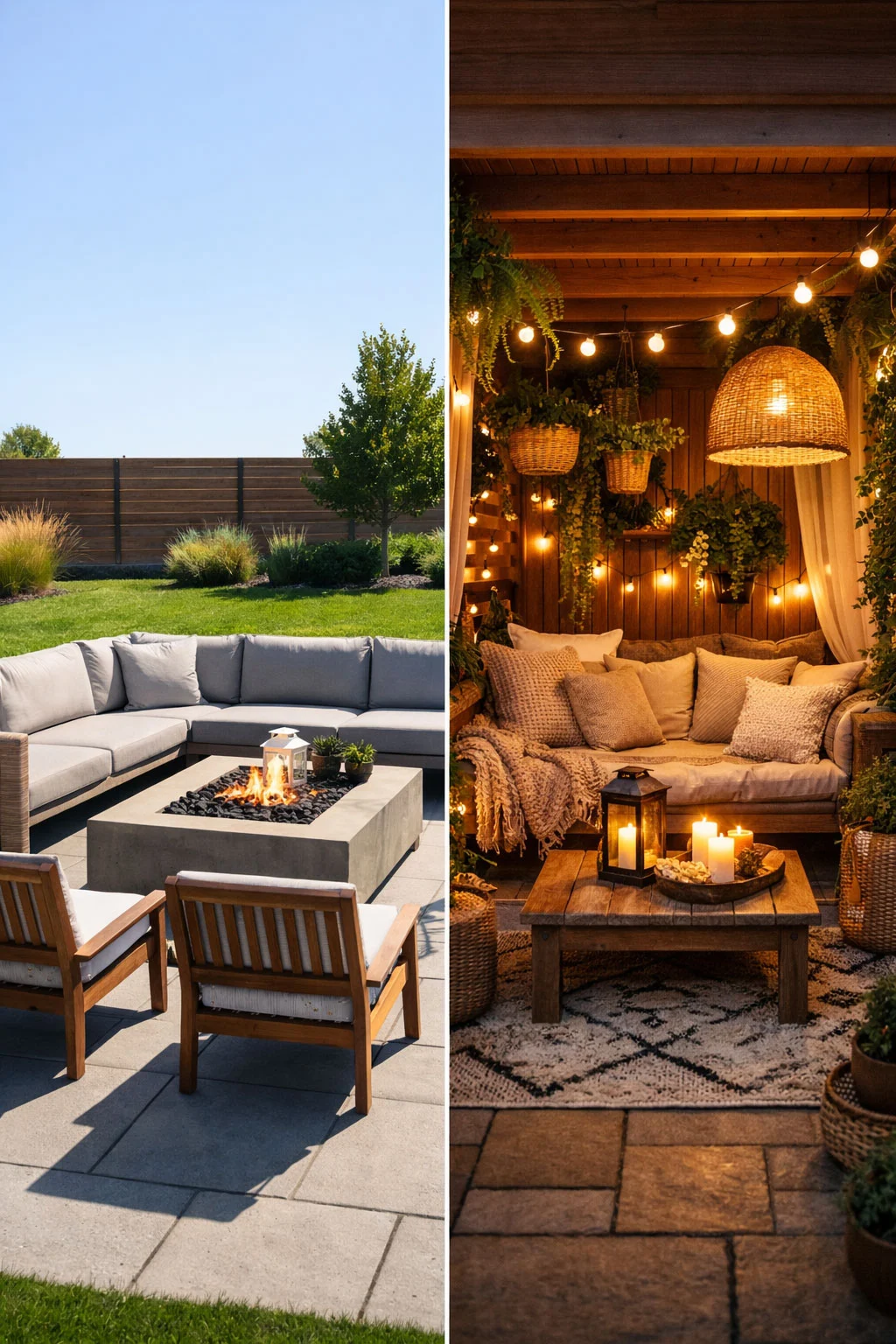
A relaxing garden does not need to force a particular emotional state. It needs to remove enough unnecessary sensory demand that staying outside becomes easier.
The most important improvement may be a hedge behind one chair rather than a new patio. It may be moving the seat away from a circulation route, replacing a glaring fixture, introducing filtered shade, improving back support or simplifying a visually noisy planting edge. These changes can appear modest on a plan while producing a large difference from the seated position.
Once the strongest sensory conflicts have been reduced, the garden begins to support slower attention. You notice planting instead of exposure, changing light instead of glare, conversation instead of background distraction and the larger environment instead of constantly evaluating whether the seat itself is comfortable.
That is the point at which the garden starts functioning as a place of recovery rather than simply another attractive area of the property.
Frequently Asked Questions
Why does my garden feel stressful even though it looks beautiful?
A beautiful garden can still demand too much sensory attention through glare, noise, exposure, nearby movement, uncomfortable seating or visual competition. Evaluate the space from the position where you actually sit, because the experience of using the garden can be very different from how the composition looks when viewed from the house or in photographs.
How can I make my garden feel more relaxing without redesigning it?
Identify the strongest source of discomfort first and make one targeted change. Reorienting a chair, adding localized screening, improving shade, reducing direct lighting glare, simplifying one visually busy area or improving seating support can change the experience without rebuilding the entire garden.
Why do I feel exposed when sitting in my backyard?
A seating position can feel exposed when the back and sides remain open, neighboring sightlines point directly toward the seat or circulation occurs close to the resting area. Selective shelter behind or beside the body can create a stronger sense of protection while keeping the preferred view open.
Does adding more plants make a garden more relaxing?
Plants can soften boundaries, filter views, create shade and add gentler movement, but more planting does not automatically produce calm. Repetition, layering and appropriate maintenance are usually more important than simply increasing the number of species or containers.
What type of garden lighting feels most relaxing?
Relaxing garden lighting usually uses hierarchy rather than equal brightness everywhere. Paths and activity areas need appropriate visibility, direct glare should be minimized, selected features can receive accent light and some parts of the garden should remain darker to preserve depth and reduce the feeling of being on display.
Can a garden be too quiet to feel relaxing?
A very quiet environment can make occasional traffic, voices or mechanical noises feel more noticeable because each interruption creates a strong contrast. Gentle continuous sounds such as moving leaves, birds or water can sometimes create a more coherent soundscape even when they do not reduce the measured sound level.
Where should I place a chair in a relaxing garden?
Look for a position with some protection behind or beside the body, a worthwhile view ahead, suitable shade during the intended use period and minimal interruption from household circulation. Temporarily test several positions before creating permanent paving or structures because a chair can feel very different from one location to another within the same garden.