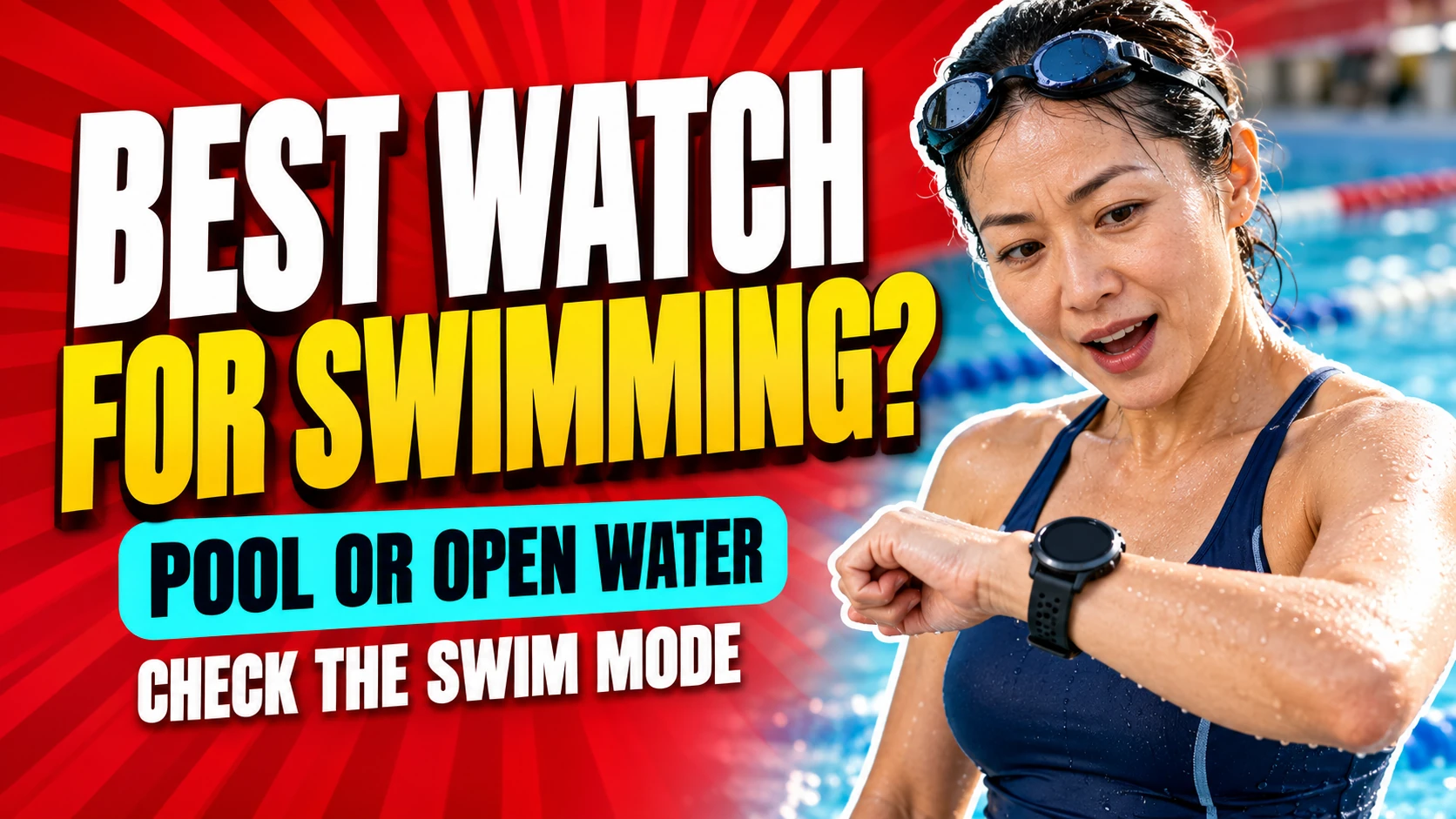
The best fitness watch for swimming is one that records your actual session: pool lengths and rests for lane swimming, or a dedicated open-water mode with route tracking for outdoor swims. Water resistance alone does not guarantee either capability. Start with where you swim, then check phone compatibility, wet controls and the information you need during the session.
Which swimming watch should you shortlist?
For structured swim training, the Garmin Forerunner 970 is a strong candidate; for an iPhone owner who also wants an everyday smartwatch, consider Apple Watch SE 3. COROS PACE 4 offers another sports-focused route with pool and open-water recording, while Fitbit Charge 6 suits readers content with basic pool-session summaries. These are specification-based starting points, not results from a comparative swimming test.
A useful shortlist should explain why a device belongs on it and what could rule it out. The table below separates documented swim support from purchasing judgments, so a familiar brand cannot substitute for a missing feature. Prices, regional availability, phone requirements and software features should be checked on the exact model before payment.
| Candidate | Best reason to consider it | Documented swimming support | Check before buying |
|---|---|---|---|
| Garmin Forerunner 970 | Structured pool sessions and broader sports training | Pool and open-water activities; pool drill logging and rest handling; 5 ATM swim rating | Whether you will use the wider training features enough to justify the purchase |
| Apple Watch SE 3 | Swimming plus everyday iPhone integration | Pool and open-water workouts, pool custom workouts, stroke and kickboard detection; 50 m water resistance | Current iPhone/software compatibility, charging routine and chosen band fit |
| COROS PACE 4 | A sports-focused alternative for pool and outdoor swimming | Pool and open-water recording; 5 ATM rating | Exact workout controls, drill workflow and app compatibility |
| Fitbit Charge 6 | A narrow tracker for basic pool summaries | Automatic swim lengths, duration, distance and pace in Google’s support table | No swim heart-rate tracking; do not assume live lap feedback or open-water GPS routes |
Match the recording mode to the water
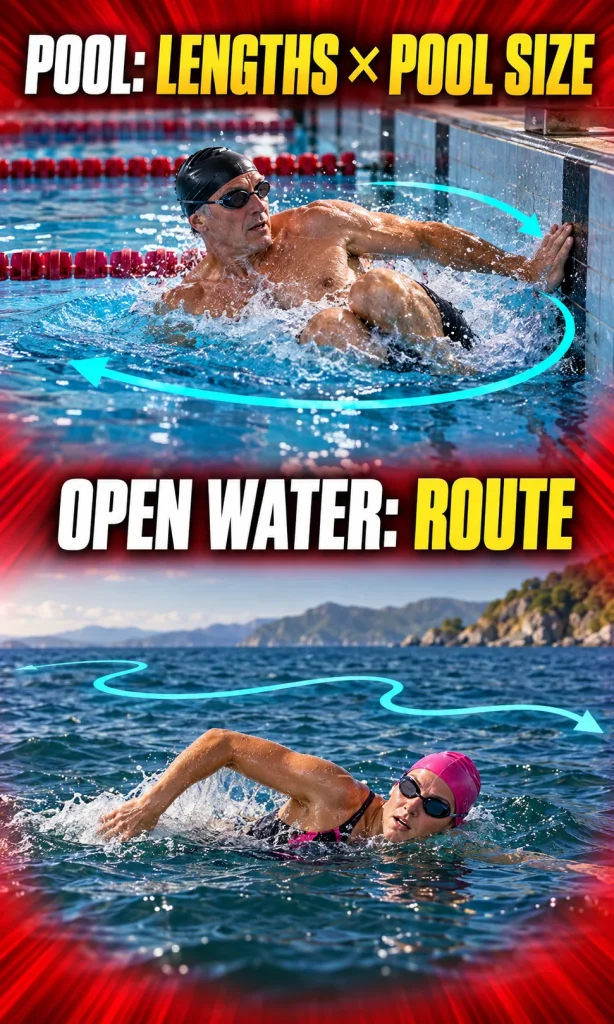
Pool watches generally estimate distance from detected lengths and the pool size you enter. An incorrect length setting creates a predictable error even when every turn is detected correctly: 40 lengths entered as 50 metres produces 2,000 metres, although 40 lengths in a 25-metre pool is 1,000 metres. Always confirm both the number and the unit before starting.
Open-water tracking has a different job because there are no pool walls to count. Look for explicit route and distance recording in the open-water profile rather than inferring it from the presence of GPS elsewhere on the watch. A running GPS feature or a mode that only records time does not establish that outdoor swim routes are supported.
The most useful feature is often the one that resolves an annoyance you already experience. Someone swimming uninterrupted lengths may need little beyond distance and duration, whereas a coached session can depend on reliable rests and drill recording. If the watch cannot represent the session, a richer dashboard afterward will not fix the missing information.
- Pool only: check pool-size entry, visible data during the swim and rest controls.
- Open water: verify that the named profile records the route and distance you want.
- Kick sets and drills: look for a documented drill workflow or compatible detection feature.
- Triathlon: confirm transitions and multisport recording, not just three separate sport modes.
- Swim spas or tethered swimming: do not expect ordinary length counting or GPS distance to measure stationary swimming usefully.
What the shortlist does well, and where to be careful
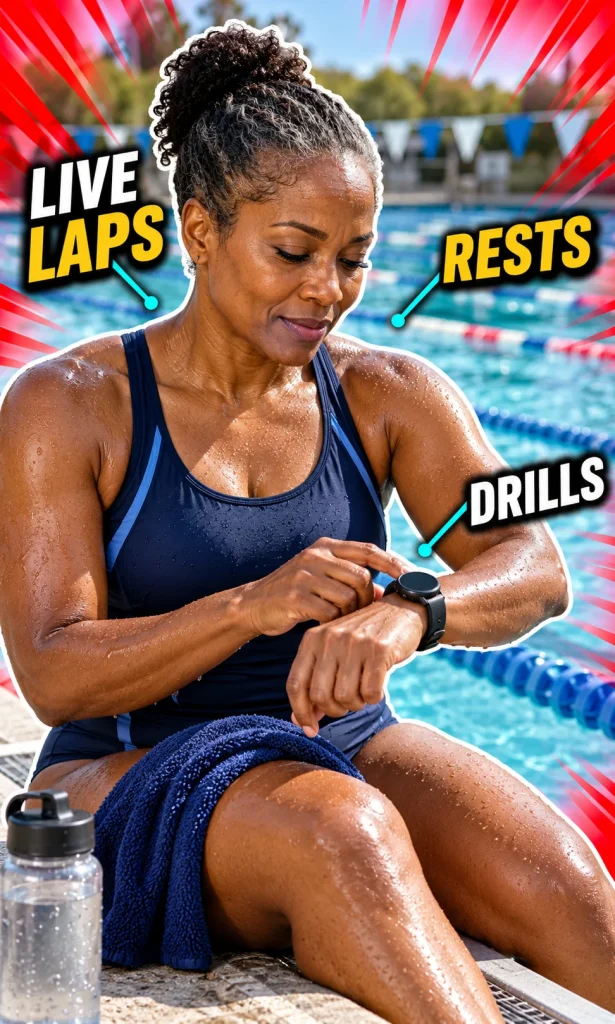
Garmin Forerunner 970: a detailed session record
The Forerunner 970 earns its place through a documented swimming workflow. Its swimming instructions cover rest intervals and manually logged drill distances. That is useful when a workout contains kick sets or one-arm drills that ordinary stroke detection may not capture.
Buy this kind of watch for the sessions you will actually record. A casual swimmer may gain little from paying for a broad training platform, while someone training across several sports may value keeping activities together. Try the controls and case on your wrist before assuming that the more capable watch is also the more comfortable one.
Apple Watch SE 3: an everyday watch with swim features
Apple’s SE 3 specifications list pool and open-water workouts, automatic stroke detection, kickboard detection and custom pool workouts. It is a reasonable first comparison for an iPhone user who wants notifications and daily wear alongside swimming. Check the current compatibility requirements and the exact band size rather than treating every iPhone or strap as interchangeable.
The charging routine deserves as much attention as the feature list. Normal-use battery figures describe a different workload from continuous outdoor exercise, and low-power settings can change what is recorded. Decide when the watch will charge around your own sessions instead of converting an advertised daily battery figure into swimming hours.
COROS PACE 4: compare the sports workflow
The PACE 4 product documentation confirms pool and open-water swim recording with a 5 ATM rating. That makes it worth comparing when you want a sports watch rather than a narrow activity band. Confirm the current drill, interval and wet-control workflow before choosing it over another model.
Do not assume that every feature described for another watch in the same brand exists here. Product families can differ in hardware, workout options and navigation, while later software updates can change menus. The right demonstration is your intended workout on the exact device you plan to buy.
Fitbit Charge 6: understand the swim-summary limit
Charge 6 can be useful when a compact tracker and a post-swim record are enough. Google’s device-by-device swimming table lists automatic swim summaries for Charge 6, but does not list swim heart-rate tracking or the live lap display available on some other devices. Confirm how you will review the information before paying for a capability you assumed was included.
“Waterproof” is a shopping term, not an unlimited promise
A watch approved for surface swimming still has limits. A 5 ATM or 50 m rating should not be read as permission to dive to that depth, use it with high-pressure water or ignore model-specific restrictions. Follow the manufacturer’s permitted activities for the exact watch and band.
Water resistance can deteriorate with wear, damage or service work. Apple’s water-resistance guidance makes that limitation explicit, and it also distinguishes suitable activities between models. Treat a cracked case, uncertain repair history or moisture under the glass as a reason to stop wet use and contact the manufacturer.
| What you see | What it establishes | What still needs checking |
|---|---|---|
| Water-resistance rating | A rated level of resistance under specified conditions | Permitted activities, condition and exclusions |
| Pool swim mode | A swimming recording profile | Length counting, live data, rests and drills |
| GPS in the specifications | Location hardware or a supported location feature | Whether GPS routes are recorded in the swim profile |
| Water Lock | A control intended to prevent unwanted screen interaction | It does not repair seals or increase the water rating |
Why the numbers can look wrong
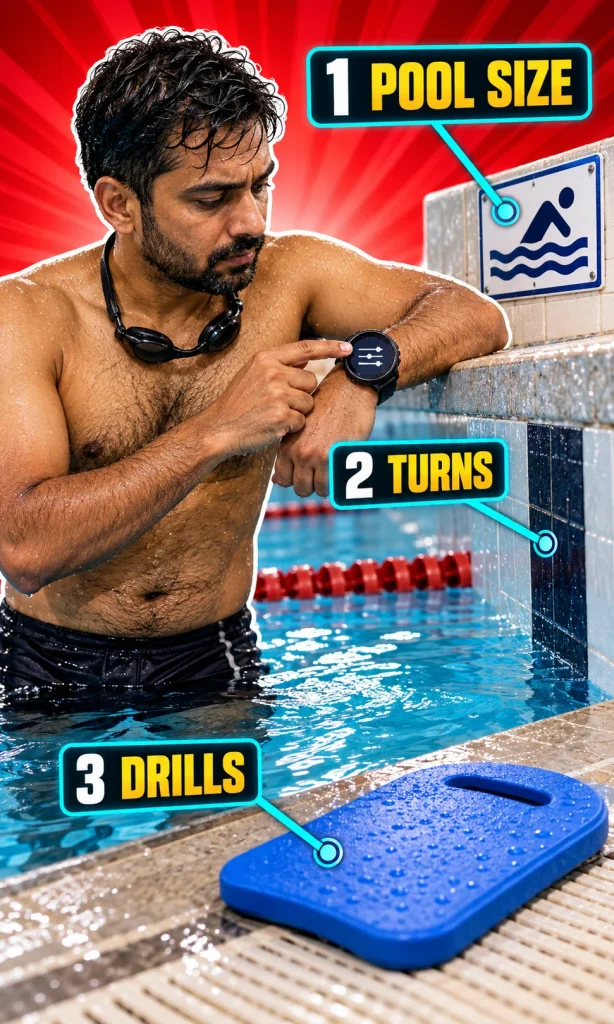
A length count is an interpretation of movement, so mid-length stops, unusual arm patterns and missed turns can produce errors. A useful first test is a short, manually counted set at a confirmed pool length, followed by a check of the recorded distance. Change one setting at a time so you can tell whether the problem is configuration, technique recognition or the device.
Heart-rate capability and heart-rate reliability are separate questions. First confirm that the watch records heart rate in its swim mode, then examine whether your sessions produce usable traces rather than gaps or implausible jumps. Do not let a single wrist reading overrule how you feel or a training plan that uses other measures of effort.
SWOLF combines the time for a length with the stroke count for that length. It is most useful when comparing your own similar sets with the same pool length, stroke and device; a lower number alone does not prove better technique. Longer glides can reduce stroke count while changing speed, so keep pace and the purpose of the exercise in view.
Fit and care belong in the buying decision
A watch that rotates during a push-off is difficult to read and can lose consistent sensor contact. Choose a secure, swim-suitable strap that stays in place without painful pressure, and check how the case sits when you bend your wrist. If a larger model feels awkward, work through these watch fit problems before buying a different strap at random.
Follow the manufacturer’s cleaning instructions after pool or seawater use, and dry the device and charging contacts before charging. If the case has been opened, ask the authorized service provider how that affects the model’s suitability for swimming; the relationship between battery replacement and water resistance matters more than the age of a receipt. Do not assume a traditional watch pressure test or gasket service is supported for every sealed smartwatch.
Visible fogging under the watch crystal deserves attention before the next swim. Stop water exposure and seek the manufacturer’s service advice rather than repeatedly testing it in a pool. Avoid heating the watch or charging a device that may contain moisture.
Build your swimming-watch shortlist
Use Swim Watch Match to turn your swim environment and feedback needs into a requirements list. Its candidate checks show documented options and the conditions you still need to verify, without assigning an accuracy score or pretending to know today’s local prices. You can record up to three shop candidates and produce a compact A4 comparison brief before visiting them.
Swim Watch Match
Turn your swim routine into a practical list of device requirements.
Compare up to three real candidates
Record models you find; no prices or ratings are fetched or invented.
Need to inspect one in person?
Enter your area to find watch retailers or authorized service for the exact model. Compare fit, strap retention, swim-mode demonstration and return terms before choosing.
Frequently asked questions
Is a 50 m swimming watch safe for diving?
Do not treat the number as a diving-depth promise. Check the manufacturer’s approved activities and restrictions for the exact model; a watch described as suitable for surface swimming can still exclude scuba diving and high-velocity water.
Does GPS guarantee an open-water route?
No. Check whether the device has a dedicated open-water swim profile and whether that profile records a route and distance. GPS advertised for running does not settle what its swimming mode does.
Why is my pool distance wrong?
First confirm the pool length and its unit, then compare recorded lengths with a set you counted yourself. Missed turns, mid-length rests, drills and unusual arm movement can change automatic detection.
Can a Fitbit Charge 6 show heart rate while I swim?
Google’s swim-support table does not list swim heart-rate tracking for Charge 6. If that measurement matters, compare the exact device’s current support information before purchasing.
Choose the watch only after checking the precise swim profile, your phone and fit on your wrist. The winning option is the one whose session record you will trust and use, rather than the device with the longest generic feature list. For outdoor swimming, keep ordinary water-safety precautions independent of the watch’s route display.