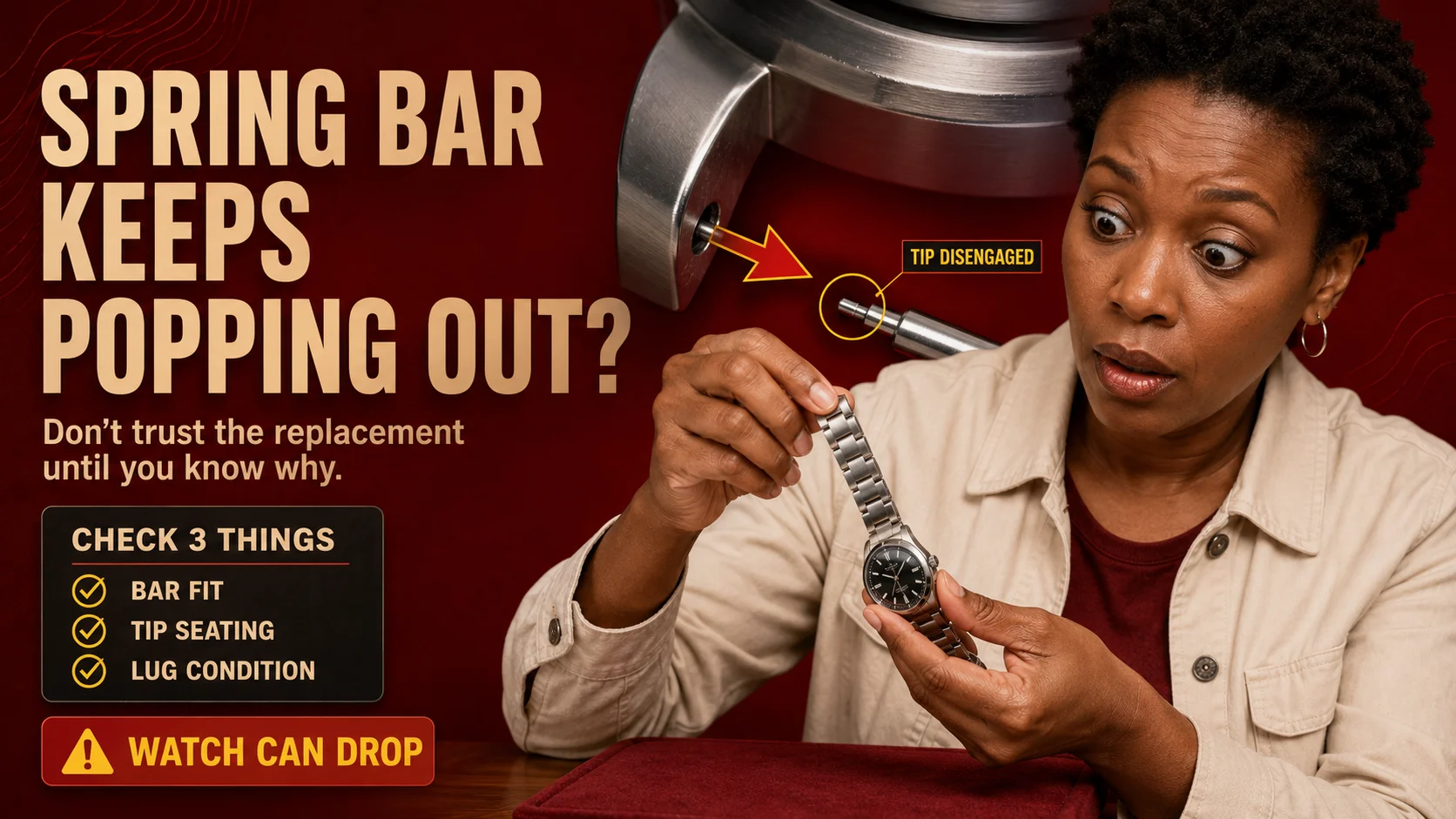
If a watch spring bar has popped out once without an obvious installation mistake, take the watch off and inspect the attachment before wearing it again. Repeated spring-bar release can come from the wrong bar length or diameter, incomplete tip engagement, a weak or bent bar, interference from the strap or bracelet, contamination inside the lug hole, or a lug hole that has become worn or enlarged.
Simply installing another random spring bar may therefore reproduce the same failure. The fastest diagnosis is to separate the problem into three possibilities: the bar is wrong or damaged, something is pushing the bar out of position, or the lug itself can no longer retain the tip correctly.
| What happens | Likely area to inspect | Next action |
|---|---|---|
| Bar pops out immediately | Tip never fully seated, wrong length or wrong bar style | Remove it and verify fit before wearing |
| Works for days, then releases | Weak spring, poor tip engagement, strap pressure or worn lug hole | Inspect both bar and lug instead of repeatedly reinstalling it |
| One tip slides sideways in the lug | Undersized tip or enlarged lug hole | Stop wearing and inspect the lug closely |
| Problem began after a strap change | Wrong replacement bar, incomplete seating or new strap interference | Compare against the original bar and attachment geometry |
| Replacement bar also fails | Lug-hole wear, case damage or incompatible hardware becomes more likely | Have the attachment inspected professionally |
How a Spring Bar Actually Holds the Watch
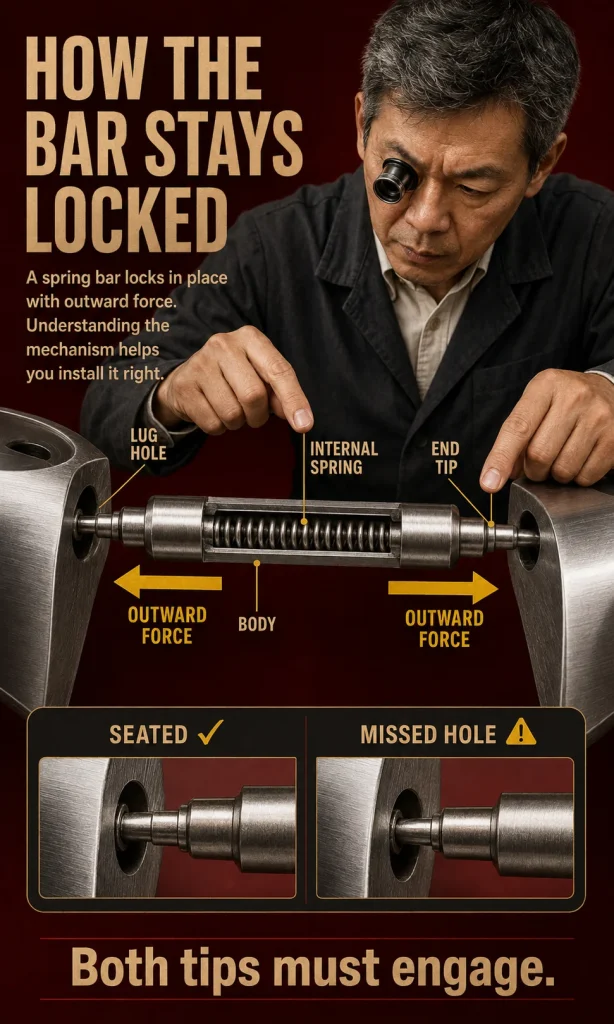
A conventional spring bar is a small telescoping assembly rather than a solid pin. Its outer body contains an internal spring that pushes the two end pins outward, and those end tips sit inside holes machined into the watch lugs. The bar stays secure because both tips remain positively engaged while the strap or bracelet sits between the lugs.
The American Watchmakers-Clockmakers Institute’s technical spring-bar guidance emphasizes that spring bars differ in length, diameter and construction and that using the wrong bar can allow a watch to separate from its strap. The correct bar is therefore a fitted component rather than a generic disposable rod. American Watchmakers-Clockmakers Institute’s technical spring-bar guidance
The lug design matters as well. Through-drilled lugs allow access from outside the case, while blind lug holes require a spring bar that can later be compressed from between the strap and lug. A bar style that works perfectly in one case may be insecure or extremely difficult to remove from another.
The Most Common Problem Is Incomplete Seating
A spring-bar tip can sit against the inside face of a lug without actually entering the hole. The strap may look installed, and even a light movement of the wrist may not expose the mistake immediately. Once sideways pressure reaches the bar, however, the unsecured tip can slide and the strap releases.
After installing a bar, check both sides rather than trusting the first click you hear. The current Longines strap-changing procedure tells owners to ensure both ends click securely into their lug holes and then perform a light stability check.
Solid bracelet end links make false seating particularly easy to miss because the end link may hide the spring-bar tips completely. If an end link sits unusually proud or has more lateral movement than before, remove it and confirm the attachment instead of assuming the spring bar is locked.
A Spring Bar Can Be the Correct Width and Still Be Wrong
Lug width is only one dimension. Two spring bars intended for the same nominal gap can differ in body diameter, tip diameter, compression range, shoulders and spring force.
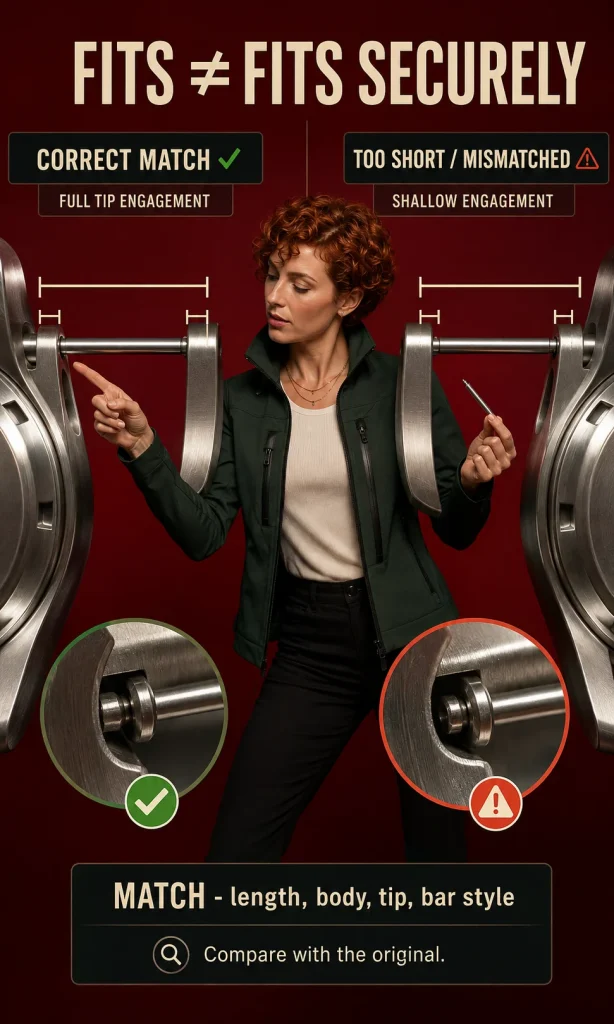
A bar that is too short may extend far enough to appear seated yet leave very little tip depth inside each lug. The older but technically useful AWCI band-fitting guidance specifically warns that a spring bar that is too short can pull out during wear.
Diameter can matter as well because the strap, end link and lug hole were designed around a particular attachment geometry. The safest replacement is the correct manufacturer-specified part or a genuinely compatible bar whose dimensions match the original, rather than whichever generic bar happens to fit between the lugs.
Compare These Before Installing a Replacement
- Compressed and expanded length: the bar must suit the actual lug spacing.
- Body diameter: it must fit the strap or bracelet without excessive play.
- Tip diameter: the tips need to match the lug holes correctly.
- Tip extension: both ends need enough engagement once seated.
- Bar style: its shoulders or flanges must suit the lug design and later removal method.
- Spring return: both tips should extend immediately after compression.
- Straightness: discard a visibly bent, cracked or damaged bar.
- Original specification: compare against the factory bar whenever possible.
Weak Spring Return Is a Failure, Even If the Bar Looks Fine
Press each end pin inward individually before installation. A healthy spring bar should compress smoothly and return positively rather than remaining partly collapsed, sticking or moving sluggishly.
A contaminated or damaged internal spring can leave one tip shorter than intended after installation. That reduces the amount of metal engaging the lug hole and makes an apparently correct bar much easier to dislodge.
Do not try to revive a questionable spring bar simply because it is inexpensive or appears cosmetically clean. The spring bar is the mechanical connection keeping the entire watch attached to the wrist, so a bar with uncertain return is not worth reusing.
Check the Lug Holes Before Blaming Another Spring Bar
A perfectly good replacement bar cannot solve a lug hole that has become enlarged, chipped or worn into an oval shape. If one bar repeatedly fails on the same side of the same watch, the lug deserves just as much attention as the bar.
A recent owner report showed an extreme version of this problem: the spring bar had worn the lug opening enough for one tip to become visibly displaced. This is an important failure mode because replacing the bar without addressing the worn case simply places another component into the same damaged geometry.
The WatchStyle spring-bar guidance from a certified master watchmaker also recommends checking and cleaning lug holes before fitting a replacement. Dirt inside a hole can prevent full tip engagement, while actual metal loss requires a different solution.
Signs the Lug Rather Than the Bar May Be the Problem
- One particular lug releases repeatedly while the opposite side never does.
- The tip can move visibly inside the lug hole.
- The hole looks oval instead of round.
- There is chipping, deformation or displaced material around the hole.
- A known-correct replacement bar still has unusual sideways movement.
- One side of the bar appears to seat much deeper than the other.
- The failure occurs again even after professional-quality bar replacement.
Do Not Use a Thicker Spring Bar to Hide a Damaged Lug
A slightly larger compatible bar may be correct for a watch that was previously fitted with undersized hardware. That is different from deliberately installing an oversized part solely to compensate for a worn hole.
If the lug hole has actually lost material, the structural repair belongs to the case. Depending on the case material and severity, a specialist may recommend case repair, precision welding and redrilling, component replacement or another model-specific solution.
Forcing a large tip into an incompatible hole can make future service harder and can create additional damage. The repair should restore the intended attachment geometry rather than merely increase friction.
Can a NATO Strap Make Spring Bars Pop Out?
A one-piece NATO-style strap has a real security advantage: if one spring bar fails, the watch can remain attached through the other bar. That does not mean every spring-bar problem seen with a NATO strap was caused by the strap itself.
Recent community discussion has highlighted that some strap configurations can apply different forces to the spring bars, particularly when the strap fits tightly beneath the case or the bar geometry is already marginal. That is an observable owner pattern rather than proof that NATO straps inherently cause spring-bar failure.
If repeated failures begin after switching straps, inspect the physical interaction. The strap should move naturally through the available space instead of forcing the bars sideways, compressing a quick-release lever or pulling an end tip away from its lug hole.
Check the Strap Relationship
- Does the strap fit freely between the case and spring bar?
- Does tightening the strap cause it to lever against the bar?
- Does the material bunch against a quick-release tab?
- Is the strap materially thicker than the original?
- Is the replacement spring bar different from the factory bar?
- Do both tips remain fully seated when the strap is tensioned?
If the new setup repeatedly challenges the attachment, change the hardware or strap configuration rather than treating spring-bar release as normal.
Are Quick-Release Spring Bars Less Secure?
A quick-release mechanism is not automatically unsafe. Good quick-release systems are designed to retain the same basic spring-bar function while adding a small lever that compresses one end for removal.
Problems arise when the supplied bar is undersized, uses a tip that does not match the watch, has weak spring return or allows the release lever to contact the case or strap in a way that partially compresses the pin. Quality and compatibility matter more than the label “quick release.”
If a conventional factory bar has worked reliably and a replacement quick-release bar repeatedly releases, return to the known-correct hardware while you determine what changed. Do not accept repeated pop-outs as the unavoidable cost of easier strap changes.
Solid Bracelet End Links Add Another Failure Point
A metal bracelet can make diagnosis harder because the spring bar may sit inside a fitted end link. The end link can prevent you from seeing whether both tips entered their holes and may also place pressure on the bar if it is not seated correctly against the case.
After installing a bracelet, look at the end-link alignment from above and from the side. An unexpected gap, rocking movement or end link sitting higher than the other side deserves inspection before the watch goes back on the wrist.
If your problem is instead a fastener moving outward within the bracelet itself, use the separate guide to a watch bracelet screw that keeps coming loose. Spring-bar failure occurs at the case-to-strap or case-to-bracelet connection and has a different mechanical diagnosis.
How to Check a Replacement Spring Bar Safely
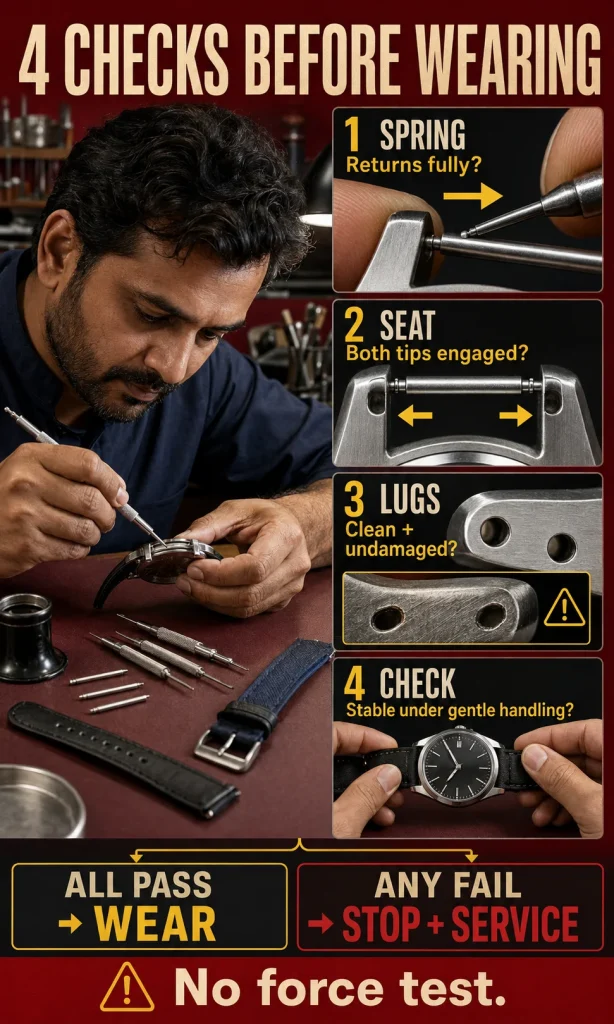
Perform the check over a padded bench or table rather than while wearing the watch over a hard floor.
- Inspect the bar before fitting. Compress each end and confirm immediate positive return.
- Compare it with the original. Check length, body diameter, tip dimensions and bar style.
- Clean and inspect the lug holes. Look for debris, oval wear, chips or deformation.
- Install one end first. Confirm that the tip is actually inside the lug hole.
- Compress and seat the opposite tip. Listen and feel for engagement without forcing it.
- Inspect the strap or end link. It should sit naturally rather than pushing the bar sideways.
- Apply only a gentle off-wrist stability check. The bar should not disengage under ordinary handling.
- Reinspect after initial wear. Stop immediately if the attachment starts clicking, shifting or sitting differently.
Do not turn this into a destructive pull test. The objective is to confirm seating and normal retention, not discover how much force is required to damage the strap, lug or bar.
A Clicking End Link Can Be a Warning
A faint clicking noise near the lugs can come from ordinary bracelet movement, but it can also indicate the spring-bar tip moving within a hole that is larger than the tip. That distinction becomes important if the click appears only after a strap change or is accompanied by visible lateral movement.
Remove the bracelet and compare the bar with the factory specification before assuming the watch needs case repair. An undersized replacement can create play even when the lug itself remains healthy.
If the correct bar still shifts visibly inside the lug, stop wearing the watch. Repeated movement can increase wear at an attachment point that is already carrying the weight of the watch.
When the Spring Bar Should Simply Be Replaced
Replace a spring bar rather than reinstalling it when:
- one end does not return strongly;
- the bar is bent;
- the tip is flattened or damaged;
- corrosion is present;
- the tube is cracked;
- the quick-release mechanism sticks;
- the bar is clearly the wrong specification;
- it has already failed without an identifiable installation mistake.
There is no useful reason to preserve a suspect spring bar for originality. The objective is to retain the original watch safely, not the inexpensive attachment component that nearly allowed it to fall.
When the Watch Needs a Watchmaker Instead
Professional inspection is the better choice when a known-correct new spring bar also releases. That changes the diagnosis from “replace the small part” toward possible lug, end-link or case damage.
Seek help when:
- the lug hole looks enlarged or oval;
- a tip has worn through or chipped the case material;
- multiple correct spring bars fail on the same lug;
- the bracelet end link cannot align correctly;
- the lug is cracked or bent;
- the case is ceramic, carbon composite, precious metal or another material you do not want to experiment on;
- the watch is expensive or sentimental;
- a failed spring bar already caused an impact.
If the attachment is secure but the watch itself slides, rotates or sits crooked, the separate watch fit problems guide owns that reader job. If the failure occurs at the closure instead, use the watch clasp that keeps opening diagnosis.
Frequently Asked Questions
Why does my watch spring bar keep popping out?
Repeated spring-bar release usually means the bar is not fully seated, is the wrong specification, has weak or damaged spring action, is being loaded incorrectly by the strap or bracelet, or cannot engage securely because a lug hole is dirty or worn. Do not keep reinstalling the same bar without finding the cause. Remove the watch and check the complete attachment before wearing it again.
How do I know if a spring bar is too short?
A bar that is too short may reach both lugs but provide insufficient tip engagement once installed. Compare it with the original or manufacturer specification rather than judging only by whether it fits between the lugs. A spring bar should remain positively seated on both sides without unusual lateral movement.
Can a worn lug hole make spring bars fall out?
Yes. An enlarged, oval or damaged lug hole can prevent the spring-bar tip from being retained properly even when the bar itself is correct. If a known-good replacement repeatedly releases from the same lug, stop wearing the watch and have the case attachment inspected.
Are quick-release spring bars safe?
A properly made and correctly sized quick-release spring bar can be secure, but it still needs the correct length, tip geometry and spring action for the watch. Generic bars that are undersized or poorly matched can create the same retention problems as any incorrect spring bar. If failures began after fitting quick-release hardware, compare it with the original attachment.
Does a NATO strap prevent losing a watch if a spring bar fails?
A properly threaded one-piece NATO-style strap can keep the watch attached through the remaining spring bar if one end releases. That does not make spring-bar failure acceptable, and the strap should not be used to compensate for incorrect or damaged attachment hardware. Diagnose and replace the failing component before normal wear resumes.
Should I use a thicker spring bar if mine keeps falling out?
Use the spring-bar dimensions specified for the watch rather than automatically choosing a thicker replacement. A larger compatible bar may correct previously undersized hardware, but an oversized bar should not be used to hide a damaged lug hole. If the correct bar remains loose, inspect the lug rather than continuing to increase spring-bar size.
Action Checklist
- Stop wearing the watch after an unexplained spring-bar release.
- Check both spring-bar tips for positive return.
- Compare the replacement with the original bar.
- Confirm the correct length, body diameter, tip dimensions and bar style.
- Inspect both lug holes for dirt and damage.
- Make sure each tip enters the actual lug hole rather than resting against the lug wall.
- Check whether the strap or end link pushes sideways on the bar.
- Investigate any new clicking or lateral movement.
- Do not use an oversized spring bar to disguise a worn lug.
- Replace bent, weak, damaged or questionable bars.
- Test the attachment gently over a padded surface.
- Stop if a correct replacement fails again.
- Have worn or damaged lug holes professionally assessed.
- Recheck the attachment after a strap change before wearing the watch over a hard surface.