A high-protein dinner can leave you comfortably full and still interested in dessert because fullness and the appeal of a sweet taste are different experiences. Protein and fiber do not switch off every food cue, and wanting something sweet does not by itself mean your blood sugar has fallen. Start by noticing when the urge appears, whether you are hungry for more dinner, and how much sauce actually reached your plate.
The useful question is narrower than “Which food stops sugar cravings?” If chicken, beans, tofu, or fish already anchors dinner, adding another protein food may miss what you are noticing. A familiar evening routine, a different flavor, or a meal that was smaller than you needed each calls for a different next step.
Why a high-protein dinner still leaves a dessert craving
Think about the last few bites of a savory meal: more of the same food may seem less appealing, while a different taste still sounds pleasant. Human research on sensory-specific satiety found that liking fell more for a food people had eaten than for foods they had not eaten. That helps explain how being finished with dinner can coexist with interest in dessert; it does not predict how much any one person will eat.
There is also a practical distinction between wanting food because you are hungry and wanting it because it looks enjoyable. You might turn down another helping of rice but welcome a spoonful of pudding, especially when that is how dinner usually ends. This distinction describes your experience; it is not a test for addiction, self-control, or a medical condition.
The 20-minute craving and the 90-minute craving deserve separate notes
Immediately after dinner, ask what sounds good: more of the meal, something sweet specifically, or simply the familiar end-of-dinner ritual. At 20 minutes, record the answer again and note whether you still feel full. You do not need to wait before eating something you need or want; if you have dessert, record it so the later entry has context.
At 90 minutes, ask the same question without assuming that a later craving has a particular cause. Hunger for a normal meal is a different observation from feeling full while wanting chocolate, and an earlier snack or dessert can affect both. The chosen times make a log easier to compare; they are not biological cutoffs, and timing alone cannot identify a blood-glucose problem.

What dessert-stomach research can-and cannot-say
The phrase “dessert stomach” describes the apparent room for sweets after a filling meal, rather than a second stomach. In research summarized by the Max Planck Institute, experiments in mice linked fullness-related POMC neurons to a separate opioid signal that encouraged sugar intake after satiety. This is a mechanism clue, not evidence that changing a dinner ingredient will block a human craving.
The researchers also reported human brain responses to a sugar solution, but that does not make the mouse intervention a proven treatment for people. The study did not establish a home meal plan, an ideal dessert portion, or a sauce swap that eliminates cravings. Use it to understand why fullness and sugar appetite can coexist, rather than to choose a supplement or medication.
A same-dinner test with three plates
Choose a familiar dinner that normally leaves you adequately fed: for example, chicken or tofu, vegetables, and rice or potatoes. Keep the protein, vegetables, starch, drink, meal time, and portions as similar as practical across three evenings. Do not start by removing the starch or making dinner smaller; that would introduce another change before you have learned anything about the original pattern.
This is a proposed kitchen observation method, not a report of meals tested for this article. Photograph your own plate before eating, weigh the sauce you normally use, and make brief notes after dinner, at 20 minutes, and at 90 minutes. Record sleep, unusual stress, snacks, and dessert eaten between entries, because a different evening can change the result even when dinner looks similar.
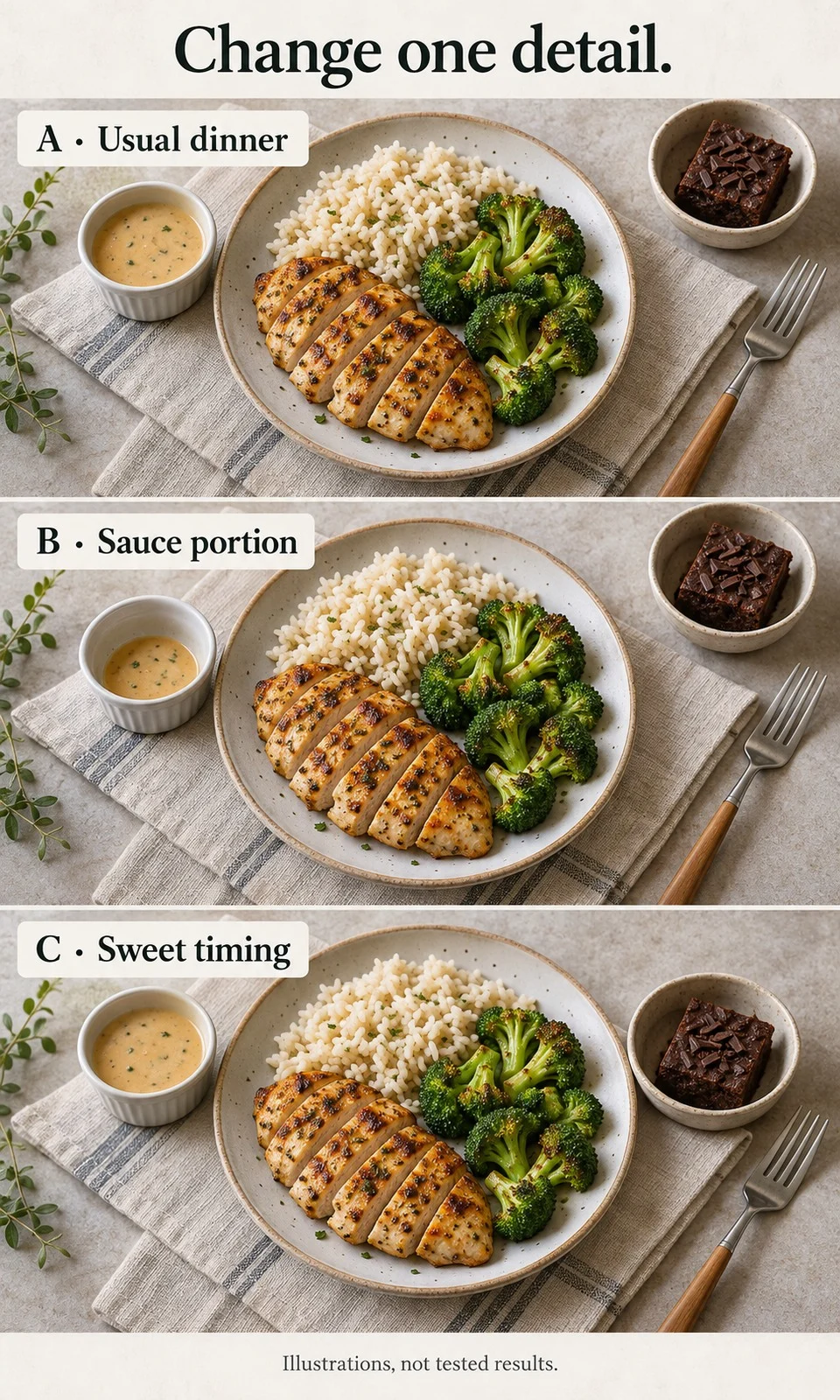
Plate A: your usual adequate dinner
Begin with dinner as you ordinarily make it, including your usual sauce and whatever dessert routine you would normally follow. Weigh the sauce without deliberately shrinking the pour, and record sweet appeal as none, mild, or strong. These words are personal observations, not a validated scale; keep your own interpretation consistent rather than comparing your entries with another person’s.
Plate B: change only the sauce portion
Repeat the dinner and use a measured, smaller amount of the same sauce if reducing that portion is something you want to try. Keep the rest of the meal and the dessert routine similar, and note the actual grams served. A different sweet-appeal entry is worth recording, but one evening cannot establish that the sauce caused the difference or that less sauce will reliably prevent dessert.
Plate C: change only the timing of the same small sweet
Return to the baseline sauce portion and, if you normally choose a small dessert, try the same food and amount with dinner rather than as a separate course later. Keep the meal itself similar and record whether you want another sweet afterward. Adding sweet flavor may leave interest unchanged or increase it, so this is an optional comparison rather than a recommended craving-control technique.
Swipe horizontally to compare.
| Evening | One thing to observe or change | Keep similar |
|---|---|---|
| Plate A | Measure your normal sauce pour; record your usual routine. | Dinner portions, starch, drink, meal time, and planned sweet. |
| Plate B | Change the amount of the same sauce only. | The baseline dinner and usual sweet timing. |
| Plate C | Move the same small sweet to dinner, if you normally have one. | Baseline sauce, dinner portions, and sweet food and amount. |
If the sweet urge remains strong on every evening, that is still a usable observation. It shows that these particular changes did not clearly alter what you noticed, not that you failed or need stricter food rules. Three dinners are too few to separate expectation, daily variation, and the effect of the changed detail; repeat a comfortable comparison only if the process remains useful.
The sauce can add sugar to a savory plate
Ketchup, barbecue sauce, and pasta sauce vary by recipe and brand, so the jar in your kitchen matters more than a generic food list. On a US Nutrition Facts label, added sugars are part of total sugars; do not add the two figures together. The label’s serving size is the basis for the arithmetic, not necessarily the amount you pour.
Use this calculation: actual sauce weight ÷ label serving weight × added sugars per serving. For an illustrative label with 8g added sugars per 30g sauce, a 60g pour represents two servings and an estimated 16g added sugars. These are invented example inputs, not measured values for a named product; weighing your own pour and reading your own label supplies the useful numbers.
Keep the units aligned: grams of sauce on both sides, or the same volume unit on both sides if that is all you can measure. For a label expressed per 100g, use 100g as the serving basis. Where a label lists only total sugars, you cannot calculate added sugars precisely from that number, and the order of ingredients does not reveal an exact gram amount.
Compare products at the amount you actually use, rather than choosing solely from a “healthy” claim on the front. The same portion check also matters for sweetened yogurt, cereal, and drinks; the guide to healthy foods that are not healthy extends that label-reading question. A measured pour makes the comparison more honest, but it does not predict whether dessert will appeal.

The FDA uses 5% Daily Value or less as a low source of added sugars and 20% or more as a high source, assessed per labeled serving. Its 50g Daily Value is a US label reference, not your personal prescription. Use these markers to read a label; do not turn them into a craving score or conclude that a sauce above a marker caused tonight’s urge.
- Read the serving weight and the added-sugars line on your own container.
- Weigh the sauce that reaches your plate, including a second pour.
- Use the same measurement units in the calculation.
- Leave added sugars unknown when the label does not provide them.
When protein and fiber are not the missing piece
A dinner can contain protein and vegetables yet still be too small for your appetite that evening. Before cutting another ingredient, check whether you would willingly eat more of the meal and whether the portion resembles what normally satisfies you. The guide to MyPlate explained provides a broader food-group framework; it is not a prescription for a fixed portion or a promise that dessert cravings disappear.
Keep carbohydrate decisions separate from the desire for a sweet finish. Rice, potatoes, oats, and fruit are not interchangeable with the added sugar in a glaze, and automatically removing them changes the meal rather than clarifying the original question. If you are reviewing things to cut out of your diet, treat that as a wider eating-pattern discussion, not proof that this dinner needs fewer carbohydrates.
Use Dessert Dinner Studio to keep the observations together
Enter the dinner you want to keep similar, then copy the serving weight and added sugars from your sauce label. For each evening, record the actual pour, sweet appeal at the three prompts, and whether hunger returned. The studio estimates sauce sugars and summarizes what you entered; it does not assign a craving score, diagnose a cause, or decide whether you are allowed dessert.

Dessert Dinner Studio
Keep dinner familiar. Check the pour. Record what changes.
For adult home-cooking observations. This cannot diagnose blood-sugar problems, treat addiction, or replace a clinical eating plan. Do not change medication or skip needed food to complete a log.
Save entries on your own device only if you want to return later, or download a CSV and open the one-page A4 record. The example button demonstrates the fields with clearly marked invented inputs; clear it before entering your own observations. Saved entries stay in the same browser, while downloaded or printed notes contain what you typed and should be handled accordingly.
When to stop the kitchen experiment
A sweet craving by itself does not identify hypoglycemia. Shaking or sweating after meals deserves medical advice, while confusion, fainting, or seizures requires urgent medical help; clinical guidance on low blood glucose explains why those symptoms matter. Do not wait for a logging prompt, change medication, or use this experiment instead of an existing prescribed action plan; people managing diabetes, hypoglycemia, eating disorders, or a supervised diet should discuss changes with their care team.
Frequently asked questions
Why do I crave sugar immediately after I eat?
You may be finished with the savory meal while a different sweet flavor still seems appealing. A familiar dessert routine can also be part of what you notice. Record whether you want more dinner or only something sweet, without using that answer as a diagnosis.
Is dessert stomach real?
It is a shorthand for wanting sweets despite feeling full, not a separate stomach. Research provides clues about how fullness and sugar appetite can coexist, including experimental work in mice. It does not establish a home treatment that switches off dessert appetite.
Does protein stop sugar cravings?
Protein in dinner is not a guarantee that every desire for sweets will disappear. If your meal is already adequate, another protein food may not address the appeal of a different taste or the usual dessert routine. Check the whole dinner and the timing before deciding what to change.
Why do I want something sweet after something salty?
A new flavor can remain appealing after you have had enough of the flavor you were eating. That does not prove salt caused the craving or that your body needs sugar. Record the actual meal and sauce rather than assuming a salty taste explains everything.
How long do post-meal sugar cravings last?
There is no single duration that this kitchen log can establish for everyone. Its after-dinner, 20-minute, and 90-minute prompts simply help you record your own experience consistently. Eating something between entries, a different evening, or hunger returning can change the pattern.
Can a balanced dinner still end with dessert?
Yes, interest in dessert can coexist with an otherwise balanced dinner. Choosing a sweet finish does not make the meal a failure. If you want to change the routine, make one comfortable adjustment and record what happens rather than expecting a particular food to prevent every craving.
What to change tomorrow
Start with the easiest detail to observe honestly: the amount of sauce you normally pour, or the moment you first want a sweet taste. Keep dinner adequate, change one detail at a time, and allow an unchanged result to stand. The useful outcome is a clearer account of your own evening, not a promise that protein, a particular ingredient, or a three-night log will make dessert stop looking good.