
You can gain body fat while eating nutritious foods if your overall intake regularly exceeds what your body uses. But a higher scale reading can also reflect fluid, muscle, bowel contents, medicines, or a health condition, so it does not prove your diet is failing. Start by checking your weight pattern, then compare the portions you actually eat with the portions on the label.
First, check what the weight change means
A single weigh-in cannot tell you whether you have gained fat. If weighing feels comfortable, compare readings taken under similar conditions, such as the same scale and time of day, and look for a pattern over several weeks. Changes around menstruation, salty meals, constipation, or a new exercise routine can make a short-term reading difficult to interpret.
A sustained upward pattern deserves a wider look than a list of foods. Consider whether walking, work activity, sleep, appetite, or medicines changed when you changed your meals. The NIDDK overview of factors affecting weight explains how these influences interact; the label “healthy” cannot account for them.
Rapid or unexplained weight gain, particularly with swelling or breathlessness, needs medical attention rather than a stricter food plan. MedlinePlus guidance on unintentional weight gain identifies fluid retention and medicines among possible causes. Seek urgent care for new or severe breathing difficulty, and do not stop prescribed medicines on your own.
Healthy food and weight loss are different questions
A food can provide useful nutrients and still supply a substantial amount of energy in a small portion. Nuts, oils, avocado, and granola illustrate that distinction, while a large drink can add energy without looking like a separate meal. The practical question is how the food fits your whole day, not whether it belongs on a good-food or bad-food list.
The health halo is the assumption that a reassuring description settles every nutrition question. Words such as plant-based, organic, gluten-free, and high-protein describe particular features; they do not tell you the portion, calorie content, or whether the product replaces something else. A useful kitchen routine is to check those details before putting the packet away.
A quick portion comparison
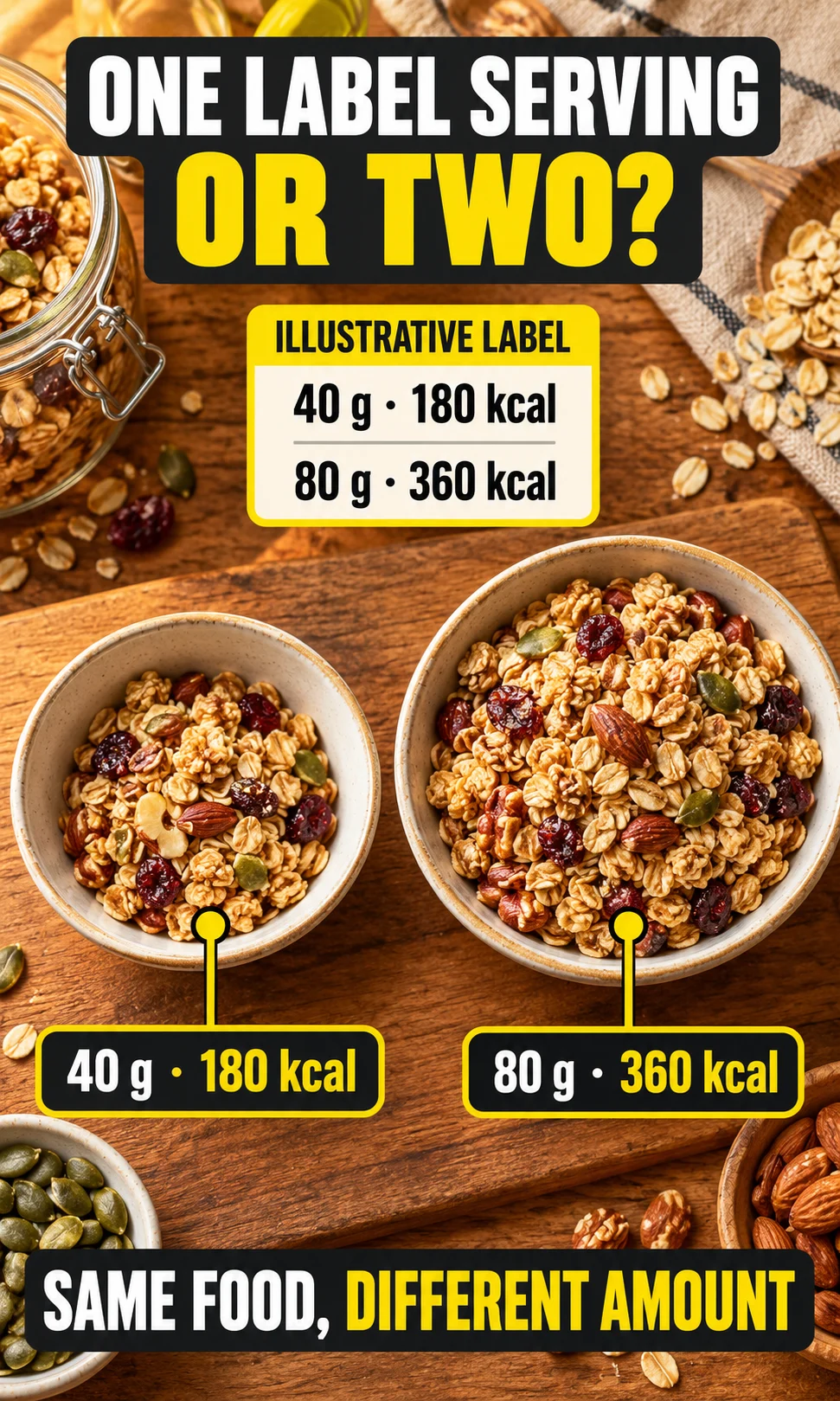
The table below uses deliberately illustrative label values, not an average for each food category or a recommendation to eat one label serving. Replace the numbers with your package or recipe, because formulations and serving sizes vary. The larger-portion column shows the same food at twice the amount, with no extra ingredients included.
| Food | Example label serving | Larger portion | First check |
|---|---|---|---|
| Granola | 40 g / 180 kcal | 80 g / 360 kcal | Weigh the granola before adding milk. |
| Smoothie or acai base | 250 mL / 200 kcal | 500 mL / 400 kcal | Check the whole cup and every topping. |
| Nuts or trail mix | 30 g / 180 kcal | 60 g / 360 kcal | Use a bowl rather than an open bag. |
| Flavored yogurt | 150 g / 120 kcal | 300 g / 240 kcal | Include granola and honey separately. |
| Protein bar | 1 bar / 220 kcal | 2 bars / 440 kcal | Decide whether it replaces a snack. |
| Plant-based milk | 240 mL / 120 kcal | 480 mL / 240 kcal | Include each coffee and cereal pour. |
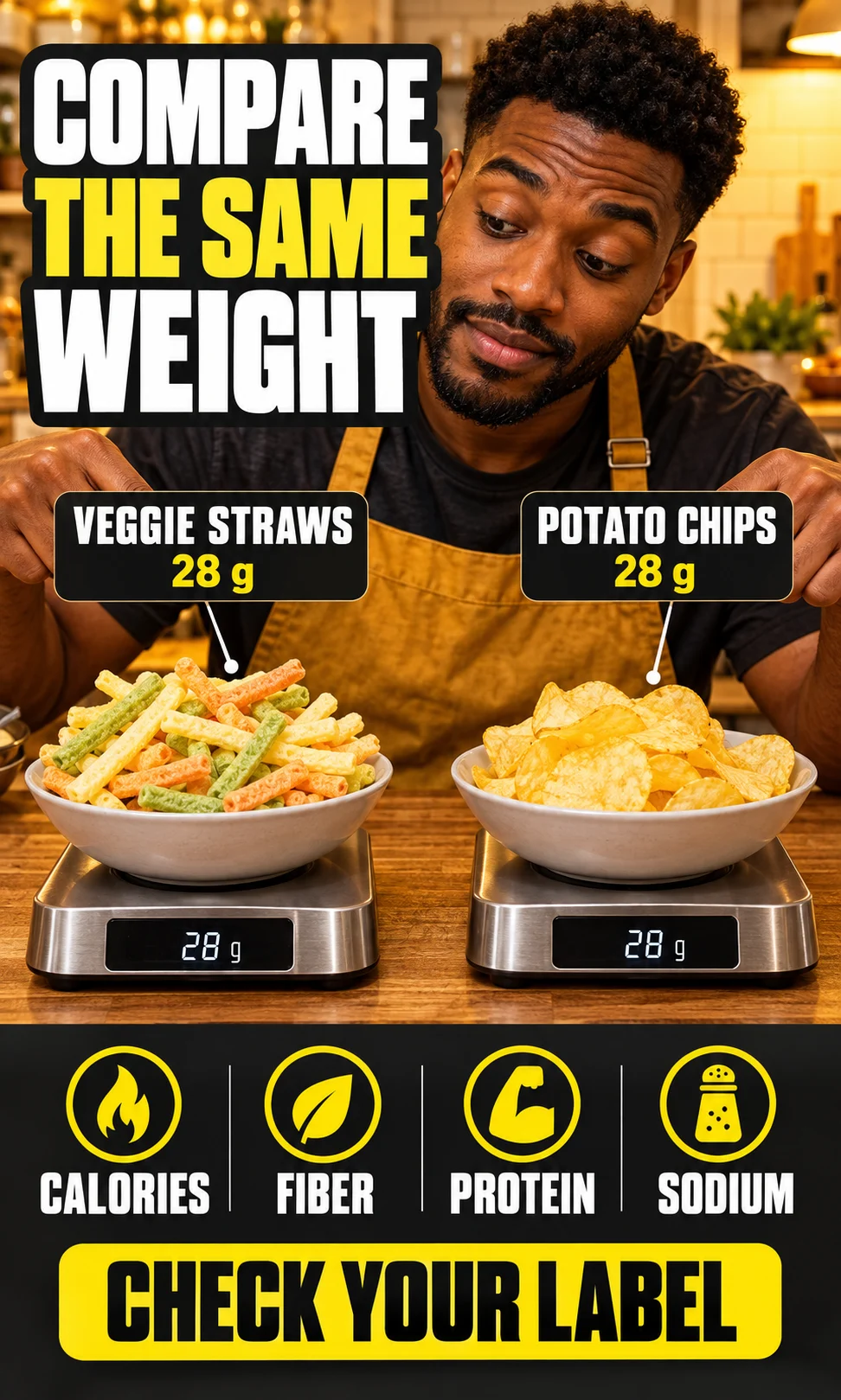
| Veggie chips | 28 g / 140 kcal | 56 g / 280 kcal | Compare equal weights with other chips. |
| Oil | 15 mL / 120 kcal | 30 mL / 240 kcal | Measure the oil, then divide shared dishes. |
1. Granola and granola bars: check the bowl underneath the topping
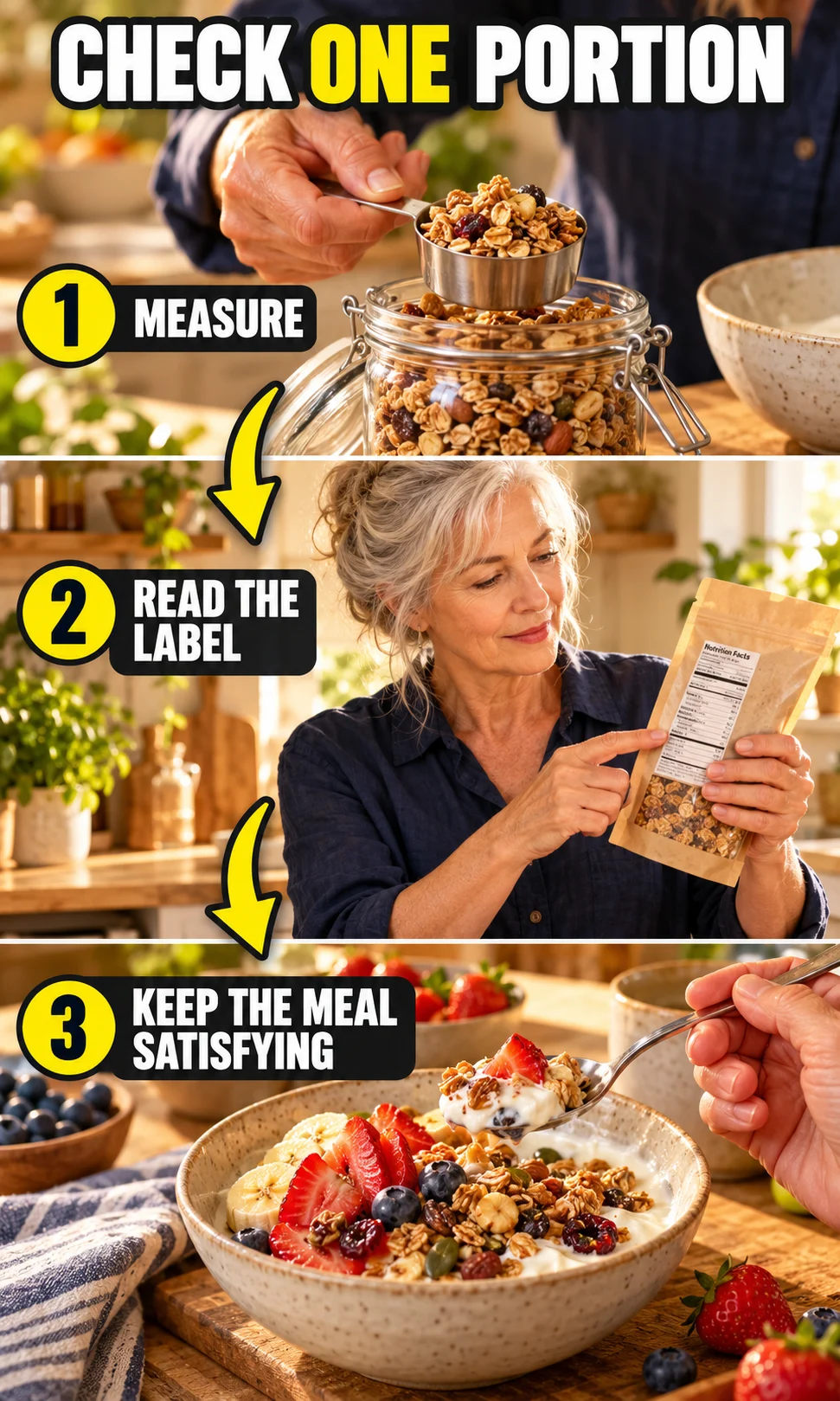
Granola brings oats, nuts, or seeds into a meal, but a cereal bowl can hold several label servings. Compact clusters also make it difficult to estimate quantity by eye. Pour your usual amount once, measure it, and keep that visual reference for future breakfasts rather than weighing indefinitely.
A real product example shows why the serving matters: the Quaker Simply Granola Oats, Honey, Raisins & Almonds label lists 270 calories for 2/3 cup, or 68 g. Two of those servings provide 540 calories before milk or yogurt. This is an example of one US formulation, not a category-wide value; the packet you buy remains the reference.
Keep granola if you enjoy it, but give it an intentional job. A measured topping over plain yogurt and fruit is different from a large bowl of granola with a little yogurt added. For bars, inspect the whole bar and the number you eat, because a convenient format does not establish how filling it will be.
2. Smoothies and acai bowls: count the complete order
Fruit, milk, and yogurt can make a useful smoothie, especially when eating a solid meal is inconvenient. The uncertainty comes from the recipe and size: juice, sweetened bases, nut butter, and toppings all change the total. Blending whole fruit does not remove all its fiber, but a drink may be easy to consume quickly and may not satisfy you like a meal you chew.
For a worked example, a base listed at 200 calories plus toppings listed at 120 and 90 calories makes a 410-calorie bowl. Those figures are illustrative recipe inputs, not a typical acai bowl or a verified chain order. Ask for nutrition information for the actual size, and establish whether the stated total includes granola, honey, and nut butter.
Build a homemade version around a protein-containing ingredient, such as yogurt or a suitable fortified soy drink, and choose toppings deliberately. If a smoothie replaces breakfast, judge whether it keeps you satisfied until the next meal. If it follows breakfast, recognize it as an additional eating occasion rather than assuming the fruit makes it energy-free.
3. Nuts, nut butter, and trail mix: measure without fearing them
Whole nuts supply useful fats, fiber, and other nutrients, and their energy density does not make them a weight-gain trigger. A systematic review of randomized nut trials supports including nuts without assuming they increase body weight. A sensible portion check therefore preserves nuts while examining repeated handfuls, coatings, and everything else eaten alongside them.
Use weight when you need a clear comparison, since a “handful” depends on your hand and a quarter cup depends on the mix. In the illustrative table, 60 g supplies twice the energy of 30 g; neither amount is a universal limit. With nut butter, a level spoon and a heaped spoon can look similar while containing different amounts.
For homemade trail mix, a simple starting recipe is two parts unsalted nuts and seeds to one part dried fruit by weight. That ratio is a recipe choice, not a clinical target, and you can adjust it for preference or dietary needs. Portion the mixture into small containers and check candy or sweet coatings separately when comparing packaged versions.
4. Flavored and “light” yogurt: separate milk sugar from added sugar
Yogurt can be a useful protein and calcium source, including flavored products. Total sugars include naturally occurring lactose, so the total-sugar number alone cannot tell you how much sweetener was added. Where an added-sugars line is available, read it alongside the serving weight and protein rather than rejecting every sweet-tasting yogurt.
“Light” needs a comparison to the product it references; it does not mean unlimited portions or necessarily more protein. A label showing 120 calories per 150 g becomes 240 calories if you eat 300 g, before toppings. That arithmetic describes an illustrative label, not every yogurt or a reason to choose the smallest portion.
Plain yogurt with fruit is an easy option if you want more control over sweetness, but keep the version you can enjoy consistently. Measure honey and granola when they regularly feature in the bowl. A satisfying snack that fits your routine can be more useful than a lower-calorie substitute that leaves you searching for another snack immediately.
5. Protein bars: check whether they replace or accompany a snack
A protein bar can make eating practical during travel, work, or exercise. The word protein does not tell you its calorie content, the amount of protein, or whether it provides a complete meal. Compare those quantities on the whole bar and consider what it replaces in your day.
If your bar lists 220 calories, two bars provide 440 calories; a bar after an already adequate meal adds another 220 calories. These are illustrative numbers, so use your product label before drawing a conclusion. A snack is not automatically unnecessary, particularly when you are hungry or have higher activity needs.
Compare the bar with an equally convenient alternative, such as yogurt and fruit, an egg with toast, or a suitable soy-based snack. Protein, fiber, taste, cost, and digestive tolerance all matter. Sugar alcohols or concentrated added fibers can cause symptoms for some people, so your comfort is part of the comparison rather than evidence that all bars are harmful.
6. Plant-based milk: check the daily volume and nutrient match
Oat, soy, almond, and dairy drinks have different nutrition profiles, and none is automatically a weight-loss drink. Unsweetened wording does not guarantee the fewest calories, especially when oil or other ingredients differ. Check protein, calcium and vitamin fortification, sugars, and the amount used across cereal, coffee, and smoothies.
For example, Oatly Chilled Original US oatmilk lists 120 calories per 240 mL serving. A 480 mL amount of that formulation would supply 240 calories, before coffee-shop syrup or other ingredients. Treat this as one product example rather than a value for all oat drinks, and confirm the current local carton.
When replacing dairy, compare the nutrients you rely on rather than calories alone. A lower-energy drink with little protein may need another protein source in the meal, while fortification varies between products. The deeper question of getting calcium and other nutrients without milk belongs alongside that choice.
7. Veggie chips and veggie straws: compare like with like
A vegetable name on the front does not establish that a snack is nutritionally comparable to vegetables. Some products are mainly starch and oil with vegetable ingredients added; others use sliced root vegetables or pulses. Read the ingredient list and compare calories, fiber, protein, and sodium for the same weight.
The illustrative chip label in the table provides 140 calories per 28 g, so 56 g provides 280 calories. That calculation cannot determine whether a particular veggie chip is better than a particular potato chip. A serving described as many airy pieces may look generous, but the gram weight is the useful comparison.
Keep crunchy snacks in the picture if you like them, while giving vegetables their own place at meals. Carrots with hummus, edamame, or another suitable snack may offer a different mix of fiber and protein, rather than being an exact substitute for chips. Claims that every veggie snack is healthier, or every processed snack is harmful, miss those practical differences.
8. Oil, avocado, and other fats: check additions that disappear into a dish
Unsaturated fats can belong in a healthy eating pattern, and choosing them does not remove their energy contribution. Oil disappears into pans, dressings, and sauces, which makes it easy to forget when reviewing a meal. Avocado, cheese, nuts, and dressing can also accumulate when each is added separately to the same salad.
If your oil label gives 120 calories per tablespoon, three tablespoons supply 360 calories to the dish. Dividing that equally among four portions gives 90 calories per portion if the oil is eaten and the servings are equal. This worked example uses a label value; it does not assume all cooking oil is absorbed or predict an individual weight change.
Measure oil before it reaches the pan and account for shared servings instead of counting the entire recipe as your intake. Keep avocado if you enjoy it, but notice whether it accompanies other dense toppings. The useful adjustment is a deliberate combination that tastes good, not replacing every source of fat with a fat-free product.
Other labels that deserve a second look
Gluten-free products are necessary for some medical conditions, but that label does not promise weight loss. NIDDK guidance on gluten-free eating explains that some packaged versions have more fat or sugar and that general weight-loss benefits are unproven. If celiac disease is suspected, discuss testing before removing gluten because avoidance can affect test results.
Multigrain describes the presence of more than one grain, while the ingredient list helps show whether whole grains are prominent. Plant-based meat needs a product-level comparison of protein, sodium, saturated fat, and portion size. Neither processing nor sodium alone explains body-fat gain, although sodium can affect fluid balance and matters for other health reasons.
Dried fruit is another concentrated food rather than an inherently unhealthy one. Removing water changes how much fruit fits into a small scoop, while sweet coatings or added syrups change the product further. Decide how it fits the snack and avoid using “natural” as a substitute for checking the ingredients and amount.
Use Portion Reality Check to compare your own label
Portion Reality Check translates a label serving into the amount you actually eat and compares that with an alternative amount of the same food. Enter matching units, the calories per label serving, and any optional nutrients you want to compare. The result explains the arithmetic and keeps unentered nutrients unknown; it does not calculate your daily needs or diagnose why your weight changed.

Portion Reality Check
Compare what the label says with what reaches your bowl.
Same food · Clear arithmetic · Private inputsEnter a food’s label serving and your own portion using the same unit. Compare calories and optional nutrients for two amounts of that same food. A label serving is not a recommended portion.
This comparison does not explain weight change, set a calorie target, or replace personalized nutrition or medical advice. Rapid unexplained gain with swelling or breathlessness needs medical attention.
Your portion comparison
| Nutrient | Usual | Alternative |
|---|
Make the comparison useful
Include toppings and drinks separately. Decide whether the alternative supports a satisfying meal; a smaller portion is not automatically better. All values are estimates scaled from the entered label.
Inputs stay in this page’s memory and are not saved or sent to analytics. Closing or reloading clears them.
A practical routine for healthy eating and weight awareness
Start with one recurring eating occasion rather than overhauling your diet. Choose the breakfast, snack, drink, or dressing you use most often and measure your usual amount once. Then decide whether you want to keep that amount, change an accompaniment, or try a different portion while checking hunger and satisfaction.
- Read the label serving and use the same units for your portion.
- Multiply calories and nutrients by the number of servings actually eaten.
- Include toppings, drinks, sauces, and recipe ingredients separately.
- Compare similar products at equal quantities, then check protein, fiber, and relevant nutrients.
- Change one repeatable habit and reassess how the meal works for you.
The FDA label-reading guide emphasizes that a serving size reflects typical consumption, not a recommended portion. On US labels, 5% Daily Value or less is low and 20% or more is high for a nutrient per serving. Those benchmarks help compare products; they are not a pass-or-fail health score, and the 2,000-calorie reference is not everyone’s requirement.
A balanced meal can combine a protein food, vegetables or fruit, a suitable grain or starchy food, and a deliberate amount of fat. Use the MyPlate food-group guide for composition, then adapt amounts to hunger, activity, and medical needs. The related discussion of filling foods for weight management can help when a portion change leaves meals unsatisfying.
An example day might include yogurt, fruit, and a measured granola topping at breakfast; beans or chicken with rice and vegetables at lunch; fruit and nuts for a snack; and fish or tofu with potatoes and vegetables at dinner. This is a menu illustration, not a calorie prescription or a guarantee of weight maintenance. Portions, preparation, allergies, budget, and your clinical needs determine whether it suits you.
Brief tracking can reveal a serving mismatch, but detailed calorie logging is optional. If measuring increases anxiety, guilt, restriction, or compulsive checking, step back and ask a dietitian or clinician for another approach. Children, pregnancy, eating-disorder recovery, and conditions requiring specialized diets call for individual advice rather than a generic weight-loss routine.
Questions about healthy eating and weight gain
Can healthy foods make you gain weight?
Nutritious foods can contribute energy to an overall intake that exceeds your needs. That does not make those foods unhealthy or prove that one food caused a weight change. Consider the whole eating pattern and other explanations for changes on the scale.
Should I stop eating nuts or avocado?
Usually you can keep them while checking how they fit your meals. Nut research does not support assuming that whole nuts cause weight gain simply because they are calorie-dense. Compare your usual portion and accompaniments before removing a food you enjoy.
Are veggie chips healthier than potato chips?
The answer depends on the two products and the quantities compared. Check ingredients, calories, fiber, protein, and sodium at equal weights. A vegetable name or color does not establish that the snack replaces a serving of vegetables.
Does oat milk cause weight gain?
Oat milk has no unique weight-gain effect established by its name. Its contribution depends on the formulation, quantity, and the rest of your intake. Compare the current carton and the nutrients you need when choosing between oat, soy, almond, and dairy drinks.
Do I need to count calories forever?
No, and some people do better without calorie tracking. A brief serving check may be enough to show where your usual bowl or pour differs from the label. If monitoring causes distress or restrictive eating, use a more supportive approach with professional help.
When should I seek help for unexplained weight gain?
Arrange medical assessment for persistent unexplained gain or changes after starting a medicine. Rapid gain with swelling or breathlessness deserves prompt attention, and severe breathing difficulty needs urgent care. Do not stop prescribed medicines without speaking to the prescriber.
Your next step: check one portion and keep the meal useful
Choose the dense food or drink you use most often and compare its label with your usual portion. Keep the foods that make your meals enjoyable and nutritionally useful, and adjust the combination only where it serves your goals. If the weight change remains unexplained, bring the pattern and any medicine changes to a clinician instead of progressively cutting more foods.