

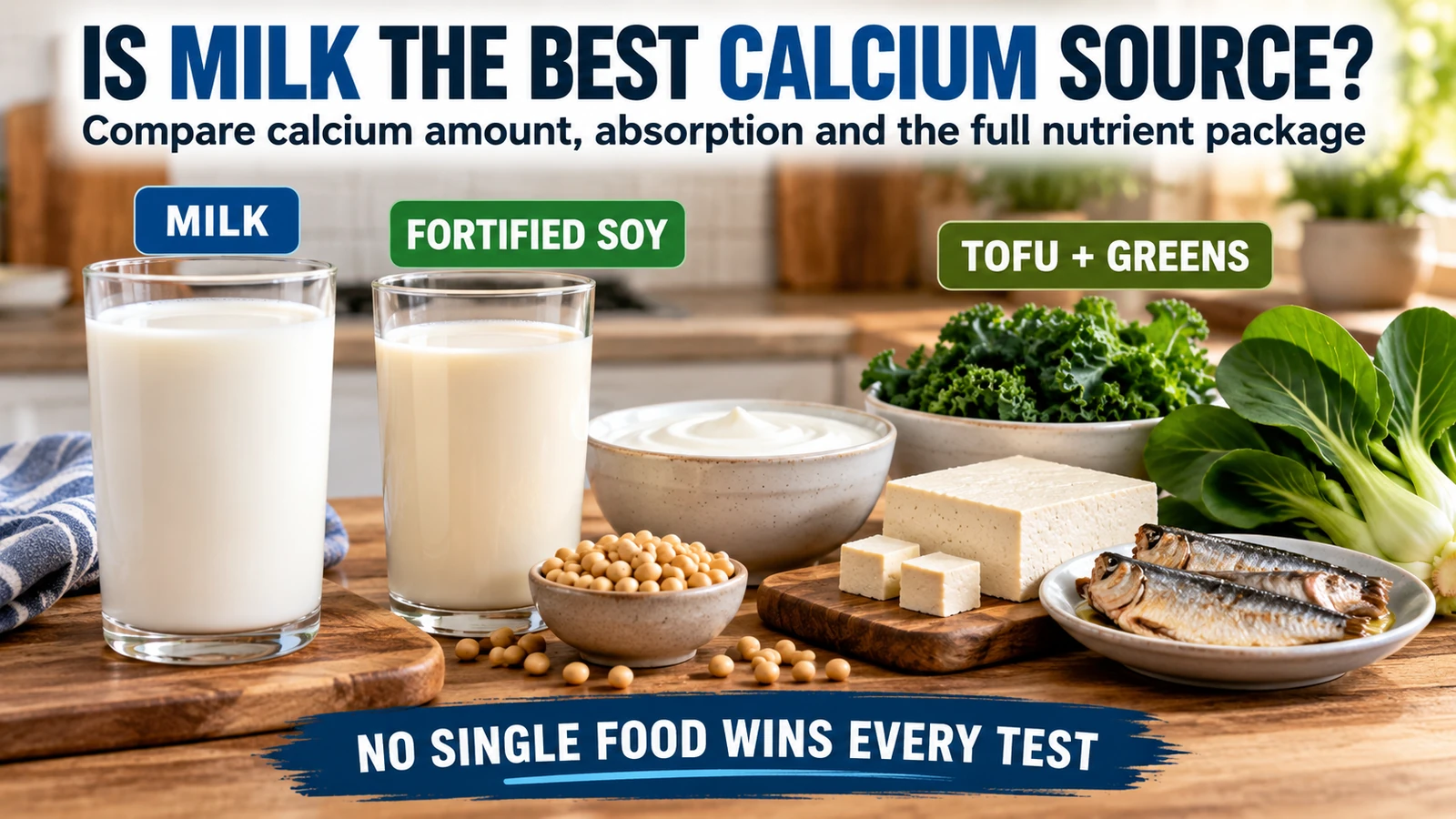

Milk is one of the easiest ways to get a substantial, well-absorbed amount of calcium, but it is not the only food that can do the job. Fortified soy milk, calcium-set tofu, fish eaten with soft bones, and several low-oxalate greens can all contribute meaningfully; the practical difference is how much calcium a serving provides, how well your body absorbs it, and what other nutrients the food brings with it. If you avoid milk, the goal is not to find one magical substitute – it is to replace the calcium and the rest of the nutrient package across your day.
Milk is strong for calcium because it combines amount with absorption
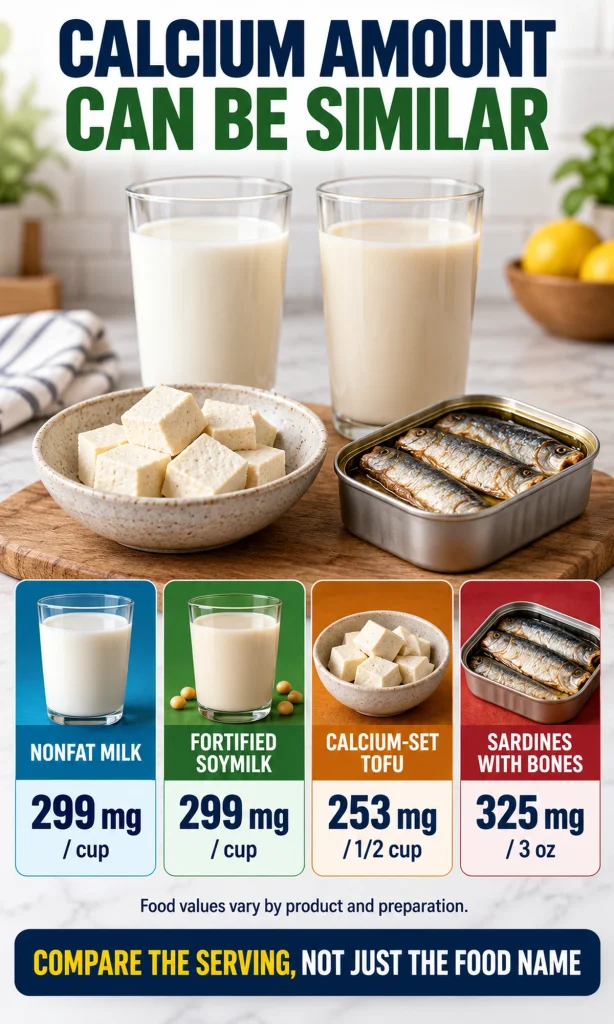
A cup of nonfat milk provides about 299 mg of calcium in the NIH Office of Dietary Supplements calcium table, and calcium from dairy products is absorbed at roughly 30% on average. That combination matters because a food can look calcium-rich on paper yet contribute less usable calcium if compounds in the food bind the mineral. Milk also brings protein, phosphorus, potassium, riboflavin, vitamin B12, and – in many markets – added vitamin D, so replacing milk is a broader nutrition decision than replacing calcium alone.
| Food or drink | Example calcium per serving | What changes the decision |
|---|---|---|
| Nonfat milk, 1 cup | 299 mg | Reliable calcium and protein; lactose may be a problem for some people. |
| Fortified soy milk, 1 cup | 299 mg | Can match milk for calcium and often protein, but fortification varies by product. |
| Calcium-set firm tofu, 1/2 cup | 253 mg | Useful dairy-free source; the coagulant and brand can change the calcium value. |
| Sardines with bones, 3 oz | 325 mg | Dense calcium plus protein; the edible bones are the important calcium source. |
| Cooked kale, 1 cup | 94 mg | Lower calcium per serving than milk, but calcium from low-oxalate greens is relatively well absorbed. |
| Cooked spinach, 1/2 cup | 123 mg | Looks strong by total calcium, but oxalate sharply reduces absorption. |
The table is why “best source” needs a definition. If you mean the easiest single food to deliver a predictable dose, milk is hard to beat; if you mean whether calcium needs can be met without milk, the answer is clearly yes with deliberate food choices. The strongest dairy-free approach usually combines a fortified beverage or calcium-set tofu with other foods instead of trying to force one vegetable or seed to carry the entire target.
Calcium on the label is not the same as calcium absorbed
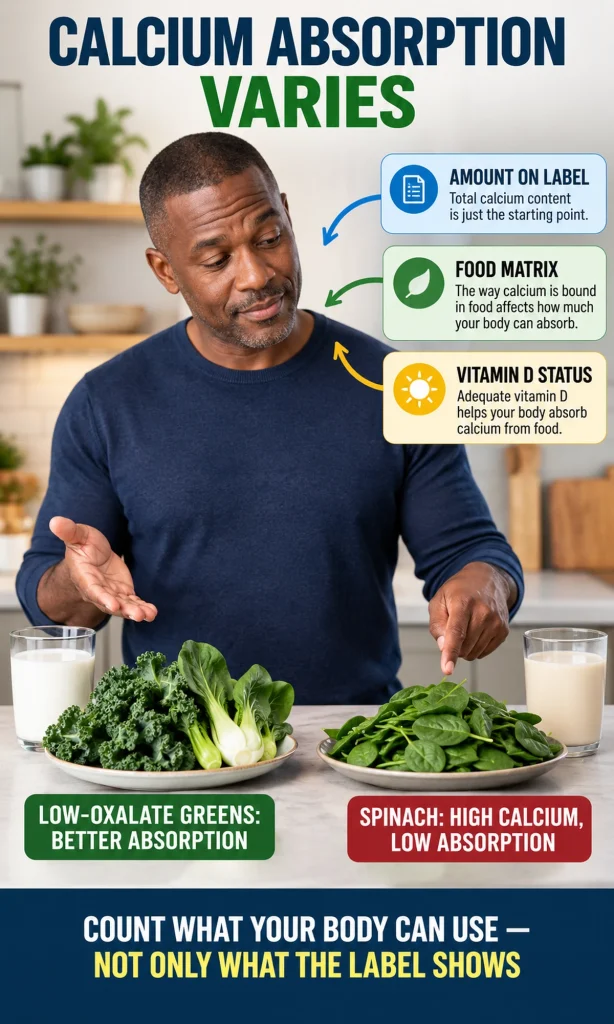
The NIH calcium fact sheet estimates absorption from dairy products and many fortified foods at about 30%, while spinach is much lower because oxalic acid binds calcium in the gut. NIH gives a useful contrast: calcium absorption is about 27% from milk but only about 5% from spinach, even though spinach still contains calcium. Low-oxalate vegetables such as kale, broccoli, and cabbage have better calcium bioavailability, but their smaller calcium amount per serving means you may need more total food to reach the same dietary intake.
Vitamin D also matters because low vitamin D status can reduce calcium absorption. That does not mean every calcium-rich food needs to contain vitamin D itself; it means the whole diet and vitamin D status influence how calcium is used. If you avoid dairy and also eat little fish or fortified food, vitamin D deserves its own check rather than being assumed to come along automatically.
How much calcium do you actually need?
Calcium needs change with age and life stage, so a generic “one glass a day” rule is not enough. The NIH consumer calcium guidance lists 1,000 mg per day for most adults ages 19-50, 1,200 mg for women ages 51-70 and adults 71 and older, and 1,300 mg for adolescents. Those are population reference intakes rather than personal medical prescriptions, and some health conditions or clinician-directed diets require a different approach.
| Life stage | Daily calcium reference |
|---|---|
| Children 4-8 | 1,000 mg |
| Ages 9-18 | 1,300 mg |
| Adults 19-50 | 1,000 mg |
| Men 51-70 | 1,000 mg |
| Women 51-70 | 1,200 mg |
| Adults 71+ | 1,200 mg |
| Pregnant or breastfeeding teens | 1,300 mg |
| Pregnant or breastfeeding adults | 1,000 mg |
Use the Calcium Coverage Studio to check your day
The interactive experience below adds up calcium from common foods using the same NIH reference values and compares the total with the life-stage target you select. It deliberately does not “correct” the result for absorption, because the RDA is an intake target, and it keeps a separate reminder for vitamin D, protein, B12, and iodine when someone is removing dairy from the diet. Use it as a food-planning check, then verify packaged foods against their real Nutrition Facts label because fortification can vary substantially.
Calcium Coverage Studio
Add the foods you actually eat, compare the total with a life-stage reference, and see what still needs checking if dairy is limited or removed.

Choose the reference intake
These are population reference values, not a personal prescription.
Add your calcium foods
Use 0.5-serving steps. Packaged products can vary, so verify their label.
Nonfat milk
1 cup per serving
Fortified soy milk
1 cup per serving
Plain low-fat yogurt
8 oz per serving
Part-skim mozzarella
1.5 oz per serving
Sardines with bones
3 oz per serving
Calcium-set firm tofu
1/2 cup per serving
Canned salmon with bones
3 oz per serving
Cooked soybeans
1/2 cup per serving
Cooked kale
1 cup per serving
Chia seeds
1 tbsp per serving
Raw bok choy
1 cup per serving
Raw broccoli
1/2 cup per serving
Custom packaged food
Enter the calcium on the real label if your product differs from the examples.
If dairy is limited, check the rest of the package
No score here - these are separate nutrition jobs worth confirming.
If you do not drink cow’s milk, choose the replacement by nutrient profile
Plant-based drinks are not nutritionally interchangeable just because they sit in the same refrigerator case. The current U.S. calcium shopping guidance recommends checking fortified dairy alternatives for calcium and vitamin D, while soy-based options can also provide meaningful protein. Almond, oat, rice, coconut, and other drinks can still fit a healthy diet, but the amount of calcium, vitamin D, protein, added sugar, and other nutrients can differ widely across products.
- Calcium: compare the milligrams per serving with the serving size you actually drink.
- Vitamin D: check whether the product is fortified rather than assuming it is.
- Protein: soy is usually closer to cow’s milk than most other plant beverages.
- Added sugar: flavored versions can add sugar without improving calcium quality.
- Vitamin B12 and iodine: these need separate attention if you are removing all dairy and eating a vegan diet.

If you are comparing products, the most useful habit is to read the label rather than assume an entire category is equivalent. One fortified soy drink may closely resemble milk for calcium and protein, while another product may have much less calcium or almost no protein. A product can still be a perfectly reasonable beverage, but that is different from being a one-for-one nutritional replacement for milk.
Lactose intolerance does not always mean you must remove all dairy
Some people stop drinking milk because it causes bloating, gas, or diarrhea, but lactose intolerance exists on a spectrum. The National Institute of Diabetes and Digestive and Kidney Diseases notes that many people with lactose intolerance can tolerate some lactose, especially in smaller amounts or with meals, and hard cheeses or yogurt may be easier for some people. Lactose-free and lactose-reduced milk remain options because removing lactose does not remove the milk’s calcium.
If symptoms are the main reason you avoid milk, our milk bloating and digestion warning explains when the problem may be lactose-related and when another trigger deserves consideration. For a broader food pattern, the foods that commonly cause bloating guide can help separate one food from a wider digestion pattern. Persistent or severe gastrointestinal symptoms deserve medical evaluation rather than endless self-elimination.
If you remove all dairy, replace more than calcium
Dairy foods can contribute several nutrients at once, so a dairy-free diet works best when you deliberately redistribute those jobs. Calcium may come from fortified soy milk, tofu made with calcium salts, fish with bones, or low-oxalate greens; protein can come from soy foods, beans, lentils, eggs, fish, meat, nuts, and seeds according to your diet. Vitamin D, B12, iodine, riboflavin, potassium, and phosphorus deserve a quick scan because the replacement pattern changes depending on whether you are merely avoiding milk, avoiding all dairy, or following a vegan diet.
If you are choosing a fully plant-based pattern, our guide to the difference between veganism and vegetarianism can help clarify what foods remain available. Our best calcium foods page is useful when you want a broader food list rather than a milk-specific comparison. For general meal-pattern context, healthy eating myths about food and nutrition covers common shortcuts that can make a balanced diet harder to judge.
What a practical milk-free calcium day looks like
A milk-free day does not need to be built around enormous portions of one “superfood.” A more practical pattern uses two or three dependable calcium anchors and lets smaller sources fill the gap, such as a fortified beverage at breakfast, calcium-set tofu or sardines at another meal, and greens or beans later in the day. The exact total depends on serving sizes and labels, which is why adding your actual foods is more useful than memorizing a universal menu.
- Choose one reliable anchor. A fortified soy drink, calcium-set tofu, or fish with edible bones can provide a large share of the day.
- Add a second source in a different meal. This makes the plan less dependent on one food and improves overall nutrient variety.
- Use greens, beans, seeds, or fortified foods as supporting sources. Their smaller contributions still add up across the day.
- Check the rest of the nutrient package. If dairy has disappeared completely, review vitamin D, protein, B12, iodine, and potassium rather than tracking calcium alone.
That approach also makes the plan more resilient if a preferred product changes formulation or is unavailable. Fortified foods are useful, but a new brand, recipe, or serving size can change the calcium number, so the label remains the final check for packaged products. Variety also reduces the temptation to use high-dose supplements as a shortcut when ordinary food can cover much of the target.
Should you take a calcium supplement if you do not drink milk?
Not automatically. The NIH Office of Dietary Supplements recommends getting most nutrients from foods and beverages, with fortified foods or supplements used when needs cannot otherwise be met. A supplement can be appropriate in some situations, but the dose, form, medications, kidney-stone history, kidney disease, and other health factors can change what is sensible.
If your food intake is consistently below your calcium target, first confirm the gap with actual serving sizes instead of estimating from memory. Then discuss persistent shortfalls with a registered dietitian, pharmacist, or clinician, especially if you already take vitamin D or calcium-containing products. More calcium is not automatically better once intake is adequate, and supplements do not replace the protein, potassium, B12, iodine, or other nutrients that may have disappeared with dairy.
The bottom line
Milk deserves its reputation as a convenient calcium source because it provides a large amount of relatively well-absorbed calcium together with several other nutrients. It does not deserve the stronger claim that it is the only or universally “best” way to meet calcium needs, because fortified soy milk, calcium-set tofu, fish with soft bones, and well-chosen plant foods can build an effective alternative. The better question is whether your full-day pattern reliably reaches your calcium target and replaces the other nutrients you were getting from milk.
Frequently asked questions
Is cow’s milk the best absorbed source of calcium?
Milk is a well-absorbed calcium source, but “best” depends on both calcium amount and bioavailability. Low-oxalate greens can have calcium absorption similar to milk, while foods such as spinach have much lower absorption despite containing calcium. Fortified foods can also contribute efficiently, so no single source wins every comparison.
Can fortified soy milk replace cow’s milk for calcium?
A fortified soy milk can provide a calcium amount similar to cow’s milk and is often closer to cow’s milk in protein than most other plant beverages. The exact nutrition varies by brand and formulation, so check calcium, vitamin D, protein, and added sugar on the label. Do not assume every soy drink is fortified the same way.
Is spinach a good calcium replacement for milk?
Spinach contains calcium, but oxalate binds much of it and makes absorption low. Kale, broccoli, and bok choy are better examples of lower-oxalate greens whose calcium is more available, although they usually contain less calcium per serving than milk. Use spinach for its many other nutrients, but do not rely on it as your main calcium anchor.
Can lactose-free milk provide the same calcium as regular milk?
Yes, lactose-free milk can provide calcium comparable to regular milk because removing or breaking down lactose does not remove the calcium. It can be useful for people who want dairy nutrition but do not tolerate lactose well. Check the individual label because product formulations still vary.
Do I need a calcium supplement if I do not drink milk?
Not necessarily. Many people can meet calcium needs with fortified foods, calcium-set tofu, fish with bones, greens, beans, and other foods, but the total needs to be checked against the appropriate life-stage target. If your intake remains low or you have a medical condition that affects calcium, discuss supplements with a clinician or registered dietitian rather than guessing a dose.