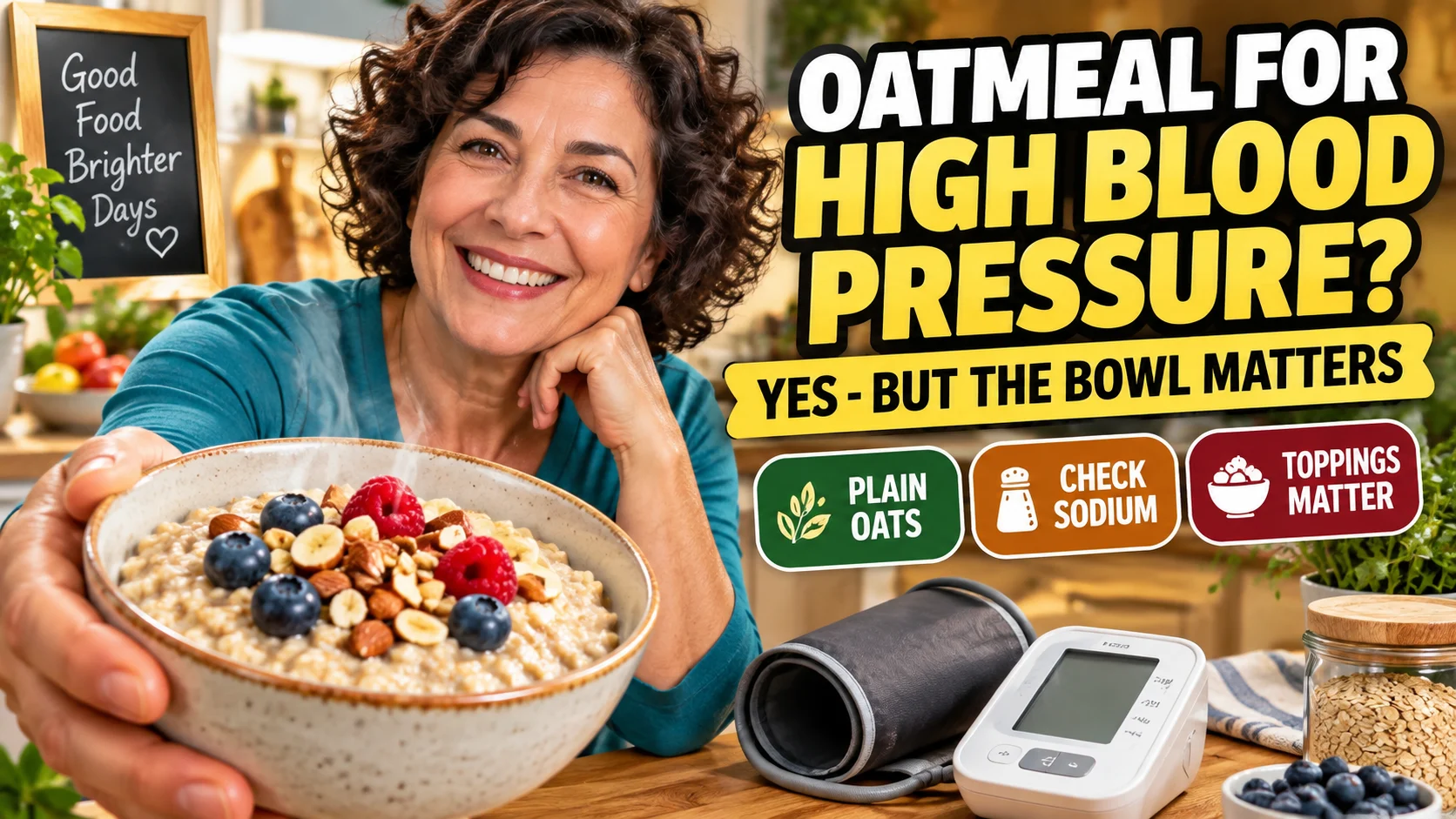

Yes. Plain oatmeal is a whole-grain food that fits well into a blood-pressure-friendly eating pattern, especially a DASH-style diet. Randomized-trial evidence suggests oats can produce a modest average reduction in systolic blood pressure, but oatmeal is not a treatment by itself, and the sodium, added sugar, portion size, and toppings can change how helpful the bowl is.
The strongest reason to choose oatmeal is not that it acts like a blood-pressure medicine. Oats provide soluble beta-glucan fiber and work well as a low-sodium whole-grain base, while the broader diet – less sodium, more fruits and vegetables, appropriate potassium intake, healthy weight, physical activity, and prescribed medication when needed – does most of the work in blood-pressure control.
What the research actually says about oats and blood pressure
A 2023 systematic review and meta-analysis of 21 randomized controlled trials involving 1,569 adults found that oat consumption reduced systolic blood pressure by an average of about 2.8 mm Hg. The overall reduction in diastolic pressure was smaller and did not reach statistical significance in the main analysis, so the evidence supports a modest benefit rather than a dramatic or guaranteed drop.
The same review found larger effects in some subgroups, including people who started with hypertension, studies using at least 5 grams per day of oat beta-glucan, and interventions lasting at least eight weeks. That does not create a universal prescription to eat a specific amount of oatmeal or beta-glucan; it shows that dose, duration, baseline blood pressure, and the food being replaced can influence the result.
This fits the larger dietary picture. The 2025 AHA/ACC high blood pressure guideline recommends a heart-healthy eating pattern such as DASH, reduced sodium, and adequate dietary potassium for adults with elevated or high blood pressure. The NHLBI DASH eating plan specifically includes whole grains and lists oatmeal as a grain option.
Oatmeal Breakfast Fit Check
See how sodium, added sugar, oat type, and toppings affect the fit of your bowl within a heart-healthy eating pattern.
Check the bowl you actually eat
Use the Nutrition Facts label for packaged oats. Enter the number printed per label serving, then tell us how many servings you eat.
Breakfast pattern review
This experience compares your food label with general FDA %DV guideposts and heart-healthy eating principles. It does not diagnose hypertension, predict a blood-pressure change, recommend medication changes, or replace care from a qualified health professional.
So, what kind of oatmeal is best?
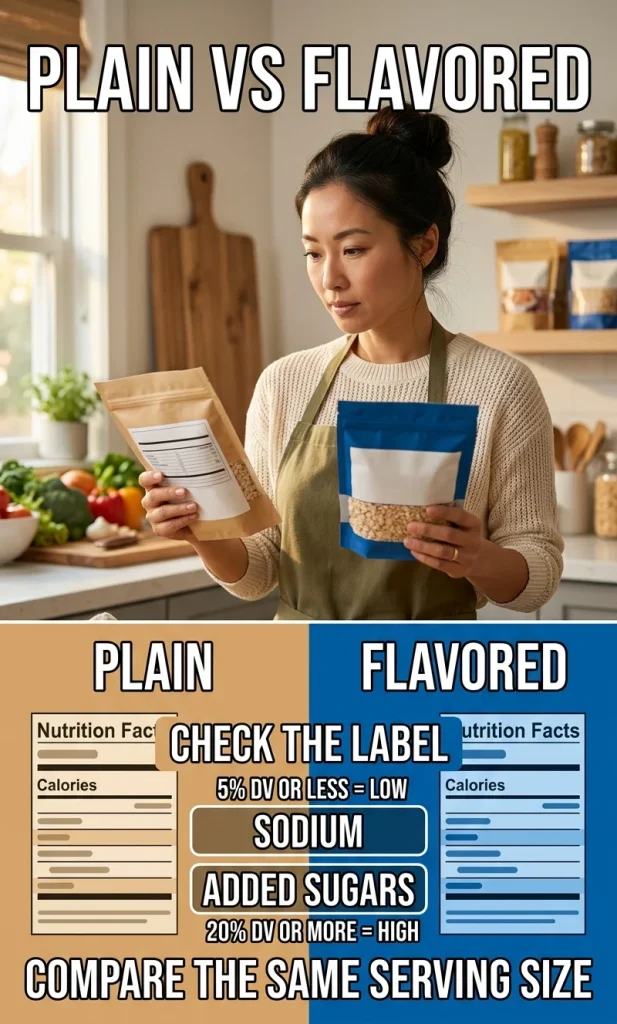
For blood pressure, the practical priority is usually plain whole-grain oats with little or no added sodium. Steel-cut oats and old-fashioned rolled oats are both good choices; plain instant oats can also fit if the label is low in sodium and added sugar. There is no good evidence that steel-cut oats uniquely lower blood pressure compared with rolled oats simply because they are less processed.
| Oat type | Blood-pressure fit | What to check |
|---|---|---|
| Steel-cut oats | Strong whole-grain choice | Choose plain; avoid adding salt during cooking. |
| Rolled / old-fashioned oats | Strong everyday choice | Check flavored versions for sodium and added sugar. |
| Plain instant oats | Can fit well | Use the Nutrition Facts label; instant does not automatically mean unhealthy. |
| Flavored instant packets | Depends on the product | Compare sodium, added sugars, serving size, and ingredient list. |
The label matters more than the marketing name. The U.S. Food and Drug Administration uses a general guide of 5% Daily Value or less as low and 20% or more as high for a nutrient per serving. For packaged oatmeal, compare products with the same serving size and favor options lower in sodium and added sugars.
Why oatmeal can help – and why the effect is usually modest
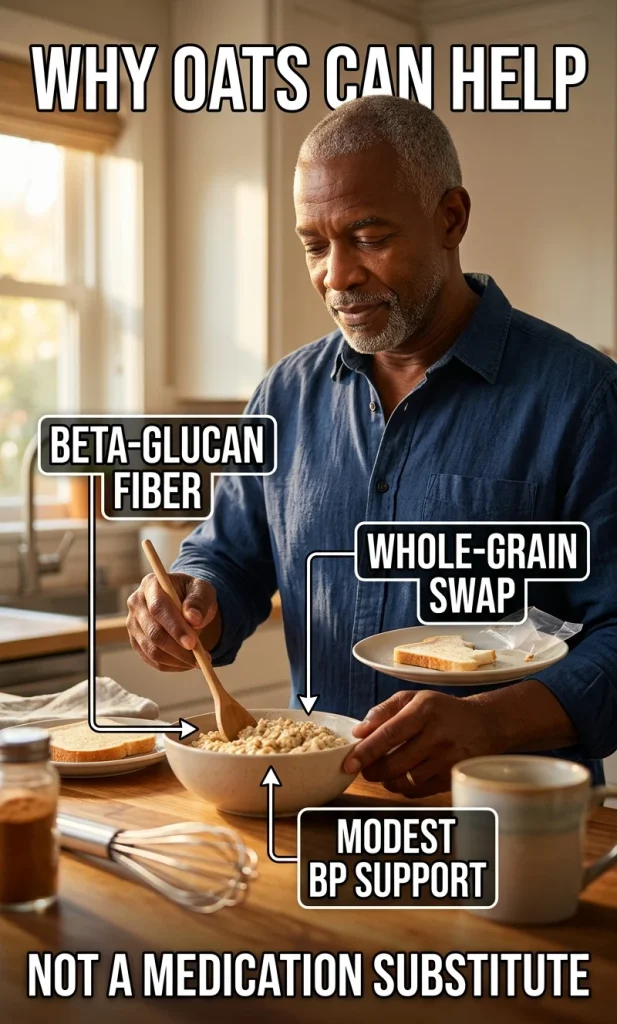
Oats are rich in beta-glucan, a viscous soluble fiber. It forms a gel-like mixture in the digestive tract and is well established for helping lower LDL cholesterol; research also suggests a smaller blood-pressure effect. A newer meta-analysis in people with overweight or obesity found oat beta-glucan was associated with a modest reduction in systolic pressure, while diastolic pressure did not change significantly overall.
The important distinction is that oatmeal supports a favorable dietary pattern rather than directly “treating” hypertension. A bowl of plain oats can replace a breakfast that is higher in sodium, saturated fat, or refined grains. That substitution may matter as much as the oats themselves.
If sodium is one of your main targets, use our guide to foods low in sodium to compare the rest of the day, not only breakfast. The American Heart Association recommends staying at or below 2,300 mg of sodium per day and moving toward 1,500 mg for many adults with high blood pressure, while individual advice can differ.
What should you add to oatmeal for high blood pressure?
A blood-pressure-friendly bowl should add nutrients without turning oatmeal into a high-sodium dessert. Fresh or frozen fruit, unsalted nuts or seeds, and an unsweetened milk or fortified soy beverage can improve flavor and nutrition without relying on salt or large amounts of added sugar.
Fruit is especially useful because DASH emphasizes fruits and vegetables, and many are good sources of potassium. Our best potassium foods guide can help with choices, but people with kidney disease or medications that affect potassium should ask a clinician before deliberately increasing potassium intake.
Cinnamon, vanilla, berries, banana, chopped apple, chia, flax, walnuts, or unsalted pumpkin seeds can all make plain oatmeal more appealing. None of these toppings should be presented as a quick blood-pressure cure; the goal is to build a repeatable breakfast that fits your overall eating pattern.
What can make oatmeal less helpful?
The biggest problems are usually additions, not oats themselves. Salt added during cooking, salty nut mixes, sweetened flavored packets, large amounts of syrup or brown sugar, and high-sodium side dishes can undo part of the advantage of starting with a low-sodium whole grain.
Serving size also matters. Oatmeal is nutritious, but a very large bowl loaded with calorie-dense toppings can make weight management harder for someone who is trying to reduce excess weight as part of a blood-pressure plan. The American Heart Association’s 2026 dietary guidance emphasizes the whole eating pattern, energy balance, whole grains, vegetables, fruits, healthy proteins, less sodium, and less added sugar.
How much oatmeal should you eat?
There is no official hypertension guideline that prescribes a particular bowl size of oatmeal. A typical serving is often around 1/2 cup dry oats before cooking, but your energy needs, appetite, glucose control, and total diet matter more than hitting a single oatmeal number.
Do not convert the beta-glucan subgroup findings from clinical trials into a personal treatment dose. The trials used different oat products, amounts, durations, and participant groups, so a bowl of oatmeal should be treated as one useful food choice rather than a measured medication substitute.
A simple way to build the bowl
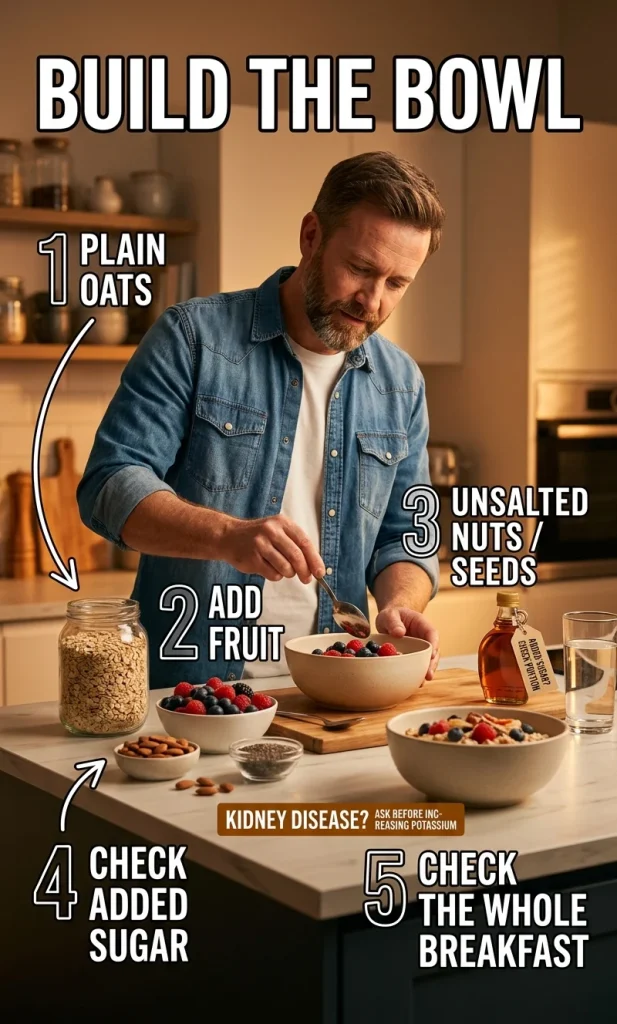
- Start with plain oats. Steel-cut, rolled, or plain instant can all work.
- Check sodium on packaged products. Use the Nutrition Facts label and compare equal serving sizes.
- Add fruit. Berries, banana, apple, pear, or other fruit adds flavor without added salt.
- Add unsalted nuts or seeds if they fit your needs. They can add texture, unsaturated fats, and protein.
- Use sweetness deliberately. If you add honey, maple syrup, or brown sugar, keep the amount modest instead of turning the bowl into dessert.
- Watch the whole breakfast. Bacon, sausage, salty spreads, and some packaged drinks can contribute far more sodium than the oats.
If you are building a broader heart-healthy pattern, see our guide to food for a healthy heart and lungs and our practical overview of fiber in your diet. Those choices reinforce the same principle: oats work best as one part of a consistent dietary pattern.
Oatmeal is not a substitute for blood-pressure treatment
High blood pressure often needs more than food changes. The 2025 AHA/ACC guideline recommends lifestyle changes for all adults with elevated or high blood pressure and medication for many people depending on the blood-pressure level and cardiovascular risk. If you already take blood-pressure medicine, continue it as prescribed unless your clinician changes the plan.
Home monitoring is useful when it is done with a validated upper-arm cuff and proper technique. If your blood pressure is above 180/120 mm Hg and you also have symptoms such as chest pain, shortness of breath, weakness, numbness, vision changes, or difficulty speaking, seek emergency medical care immediately rather than trying to manage the reading with food.
Bottom line
Plain oatmeal is a good breakfast choice for many people with high blood pressure because it is a whole grain, can be very low in sodium, and supplies beta-glucan fiber. The likely blood-pressure effect is modest, so the most useful strategy is to make the entire bowl – and the rest of the day – consistent with a DASH-style pattern instead of expecting oatmeal alone to normalize a high reading.
Frequently Asked Questions
Can oatmeal lower blood pressure quickly?
No. Oatmeal is not a fast-acting treatment for a high reading. Clinical trials that found benefits generally studied regular oat intake over weeks, and the average effect was modest.
Are steel-cut oats better than rolled oats for high blood pressure?
Not clearly for blood pressure. Both are whole-grain oat choices with beta-glucan. Choose the form you will eat consistently, then compare sodium and added sugar if the product is packaged or flavored.
Is instant oatmeal bad for high blood pressure?
Plain instant oatmeal can fit a blood-pressure-friendly diet. Flavored packets vary, so check the Nutrition Facts label for sodium, added sugars, and serving size rather than assuming all instant oats are the same.
What are good oatmeal toppings for high blood pressure?
Fruit, unsalted nuts or seeds, cinnamon, and unsweetened milk or fortified soy beverage are practical options. If you have kidney disease or take medicines that affect potassium, ask your clinician before intentionally increasing high-potassium foods.
Can oatmeal replace blood-pressure medication?
No. Oatmeal can support a heart-healthy eating pattern, but it should not replace prescribed medication or clinical follow-up. Medication needs depend on blood-pressure level, cardiovascular risk, and other health conditions.