
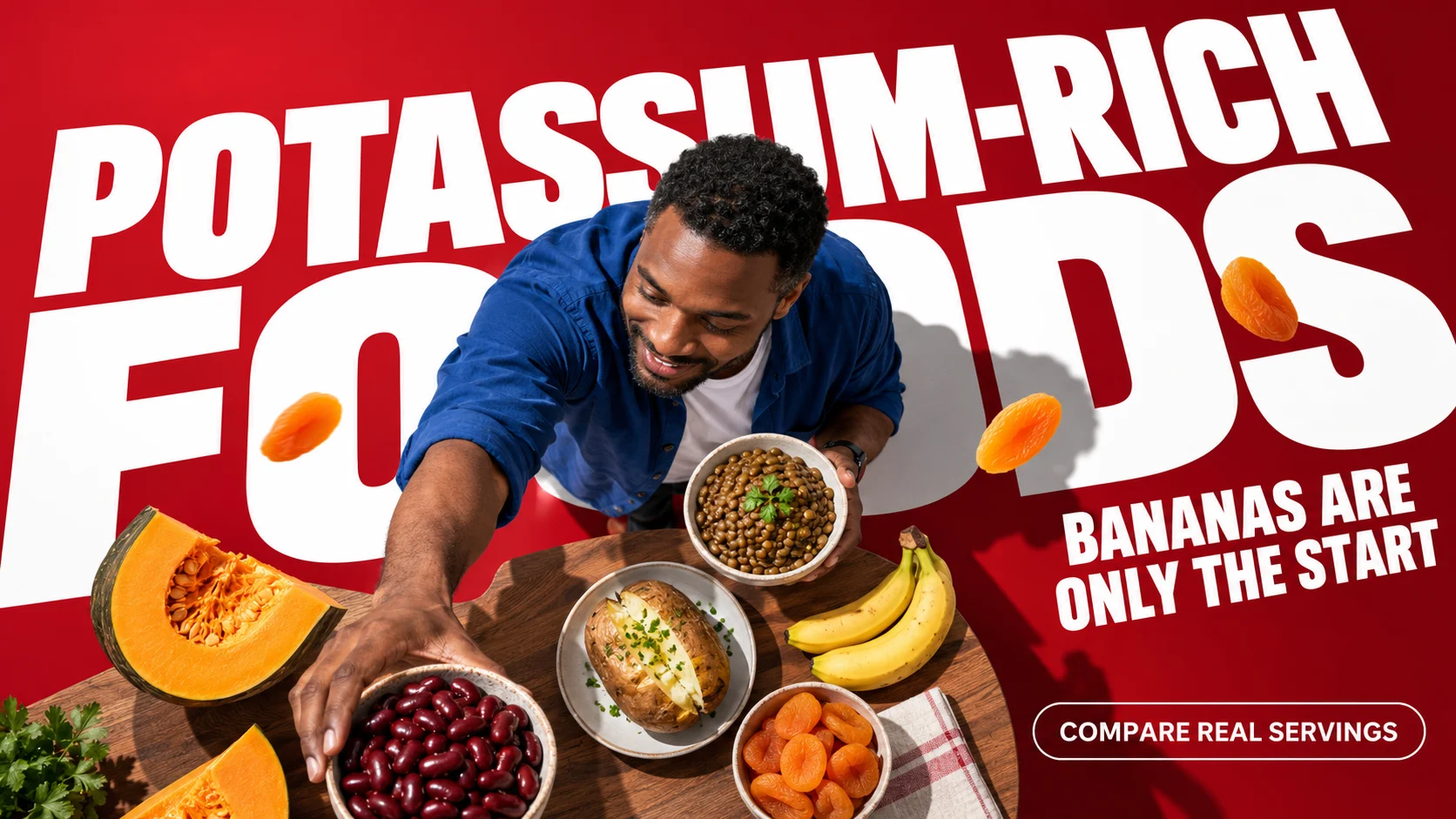

Among everyday foods, dried apricots, lentils, winter squash, prunes, potatoes and beans can provide more potassium per typical serving than a banana. The important exception is safety: if you have kidney disease, a high blood-potassium result, or take medicines that can raise potassium, general “eat more potassium” advice may not fit you. Compare realistic serving sizes first, then build variety across meals instead of chasing one “superfood.”
High-potassium foods compared by real serving size
Potassium comparisons only make sense when the serving is shown. A food can look “high” on a per-100-gram chart yet contribute less at the amount people normally eat, while a modest-looking food can add up quickly in a larger portion.
| Food | Serving | Potassium | Practical use |
|---|---|---|---|
| Dried apricots | 1/2 cup | 755 mg | Dense, portable source; portion size matters because dried fruit is concentrated. |
| Lentils, cooked | 1 cup | 731 mg | Adds potassium plus fiber and plant protein to a meal. |
| Acorn squash, mashed | 1 cup | 644 mg | Useful as a vegetable or starch side. |
| Prunes | 1/2 cup | 635 mg | Another concentrated dried-fruit option. |
| Raisins | 1/2 cup | 618 mg | Easy to add to oats, yogurt or trail mixes. |
| Baked potato, flesh only | 1 medium | 610 mg | Makes potassium part of a main meal rather than a snack. |
| Kidney beans, canned | 1 cup | 607 mg | Works in bowls, soups and salads; check sodium on canned products. |
| Orange juice | 1 cup | 496 mg | Contributes potassium quickly, but whole fruit usually adds more fiber. |
| Soybeans, boiled | 1/2 cup | 443 mg | A compact plant-protein source. |
| Banana | 1 medium | 422 mg | Convenient and useful, just not uniquely high. |
These serving values come from the NIH Office of Dietary Supplements potassium fact sheet. Food composition varies with cultivar, preparation, processing, brand and serving size, so treat the numbers as practical reference values rather than laboratory precision for every plate.
Why bananas are useful – but not the potassium champion
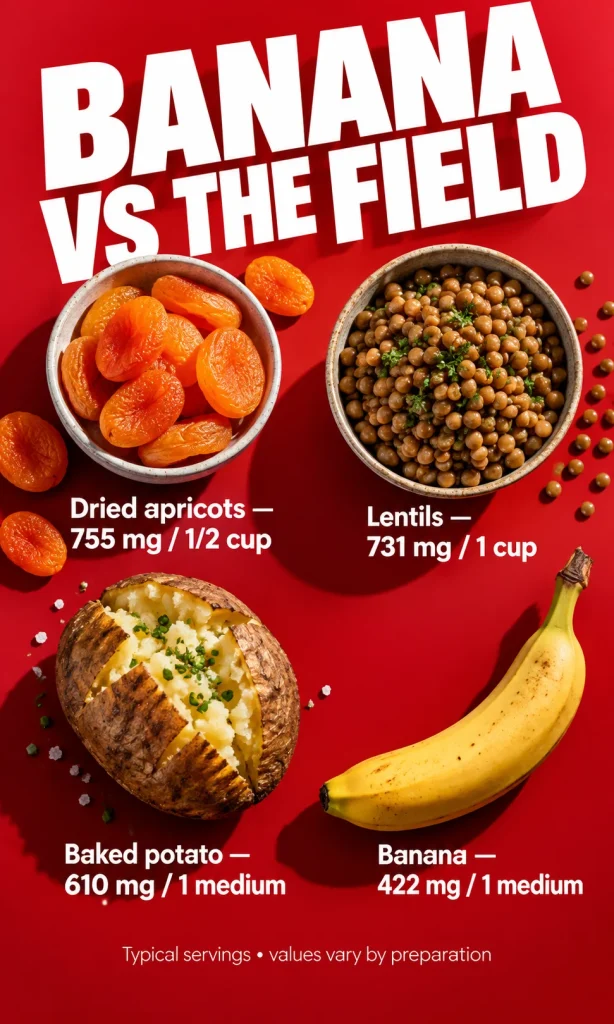
The banana reputation makes sense because bananas are portable, familiar and consistently potassium-containing. The problem comes when “banana = potassium” turns into “banana = highest potassium food.” A cup of cooked lentils or a medium baked potato can contribute substantially more potassium in the serving sizes shown above.
A better rule is to compare food patterns, not mascots. Potatoes, beans and lentils can anchor meals; yogurt and milk can contribute at breakfast or snacks; vegetables and fruit can add smaller amounts several times during the day. If you also want the wider nutrition context, the site’s food basics guide is a useful starting point.
How much potassium should an adult get?
There is more than one legitimate reference number, so a single universal “daily target” can be misleading. U.S. National Academies Adequate Intakes, summarized by NIH, are 3,400 mg per day for adult men and 2,600 mg for adult women; pregnancy is 2,900 mg and lactation is 2,800 mg. These are Adequate Intakes for generally healthy people, not treatment prescriptions.
| Reference | Adult amount | How to use it |
|---|---|---|
| NIH / National Academies AI – men 19+ | 3,400 mg/day | General intake planning for healthy adults. |
| NIH / National Academies AI – women 19+ | 2,600 mg/day | General intake planning for healthy adults. |
| Pregnancy | 2,900 mg/day | General AI during pregnancy. |
| Lactation | 2,800 mg/day | General AI during breastfeeding. |
| WHO adult guidance | At least 3,510 mg/day | Population-level guidance aimed at blood-pressure and cardiovascular risk reduction. |
The World Health Organization recommends increasing potassium from food and suggests at least 3,510 mg per day for adults. That figure and the U.S. Adequate Intakes answer slightly different nutrition questions, which is why the numbers should not be presented as though one makes the other “wrong.”
POTASSIUM-RICH FOOD COMPARISON
Potassium Plate Studio
Build a day from real food servings, compare the total with a reference intake, and keep kidney-safety limits visible.
1 · SET THE CONTEXT
Choose the reference you want to compare against
These are nutrition reference values for comparison, not a prescription for treating blood potassium.
LIVE SUMMARY
Your selected food servings
2 · BUILD THE DAY
Choose foods and adjust the portion
Potassium values use the NIH Office of Dietary Supplements selected-food table. Actual foods vary by brand and preparation.
Reference values: NIH Office of Dietary Supplements potassium fact sheets and WHO adult potassium guidance. This experience estimates food potassium; it does not estimate blood potassium.
POTASSIUM PLATE STUDIO
Food Serving Summary
Serving-based estimate for personal food comparison| Food | Base serving | Portion | Estimated potassium |
|---|---|---|---|
| No foods selected. | |||
How to read this summary
Food potassium varies with serving size, brand and preparation. Reference-intake comparisons are nutrition orientation only and are not a blood-potassium test or a medical prescription.
If you have CKD, high blood potassium, a potassium restriction, or medicines that affect potassium, use the intake guidance from your clinician or dietitian.
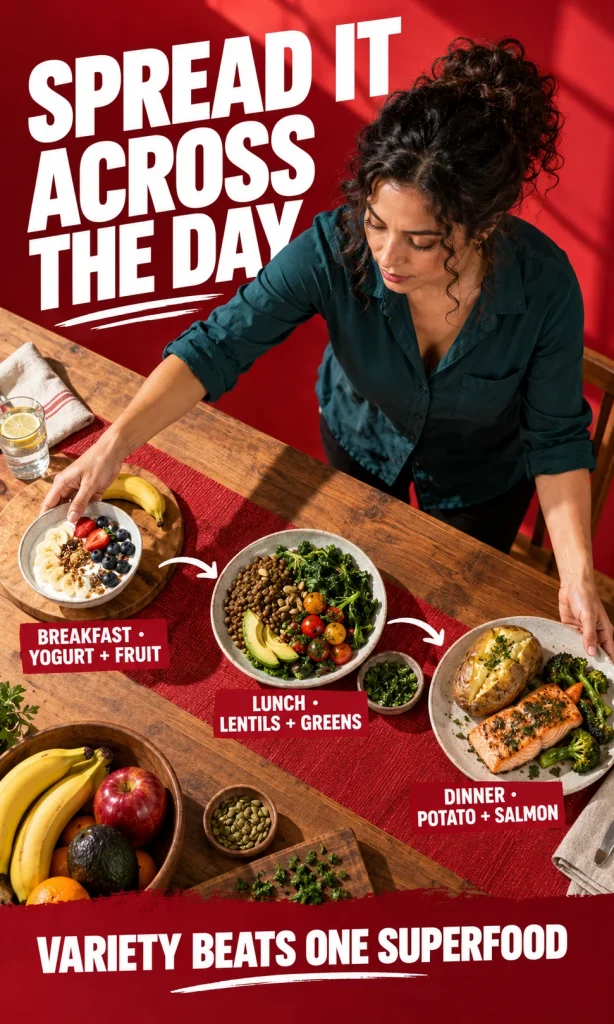
Build potassium across the day instead of forcing one huge serving
The easiest way to raise potassium from food is usually to spread several contributors across meals. This also makes the diet more balanced because the same foods bring fiber, protein, calcium, magnesium, vitamins or other useful nutrients depending on the choice.
- Breakfast: yogurt with fruit, or oatmeal with fruit and milk or fortified soy beverage.
- Lunch: a lentil, bean or soybean bowl with vegetables.
- Dinner: potato or squash with fish, poultry, beans or another protein plus vegetables.
- Snacks: fruit, yogurt or a measured portion of dried fruit can contribute without turning one food into the whole strategy.
This “distributed” approach also makes serving-size math easier. A person does not need one spectacularly high-potassium food if several normal foods each contribute a meaningful amount.
Potassium, sodium and blood pressure belong in the same conversation
Potassium is often discussed in isolation, but blood-pressure eating patterns are broader than one mineral. The NHLBI DASH eating plan emphasizes vegetables, fruit, whole grains, low-fat or fat-free dairy, fish, poultry, beans and nuts while also limiting sodium and saturated fat. DASH is designed to be potassium-rich, but its effect cannot be reduced to potassium alone.
That distinction matters when you shop. Adding a high-potassium food does not automatically make a heavily salted meal a good blood-pressure choice. If sodium is your bigger blind spot, compare this guide with foods low in sodium and how to avoid high-sodium foods rather than trying to “cancel out” sodium with potassium.
When a high-potassium diet is not the right advice
“Eat more potassium” is advice for people who can excrete potassium normally. Chronic kidney disease can reduce that ability, and some medicines can also push blood potassium upward. In those situations, the correct amount is determined by kidney function, blood tests, medication use and the individual care plan – not by a generic internet target.
- you have chronic kidney disease or impaired kidney function;
- you have been told your blood potassium is high;
- you take an ACE inhibitor, ARB, potassium-sparing diuretic or another medicine that affects potassium handling;
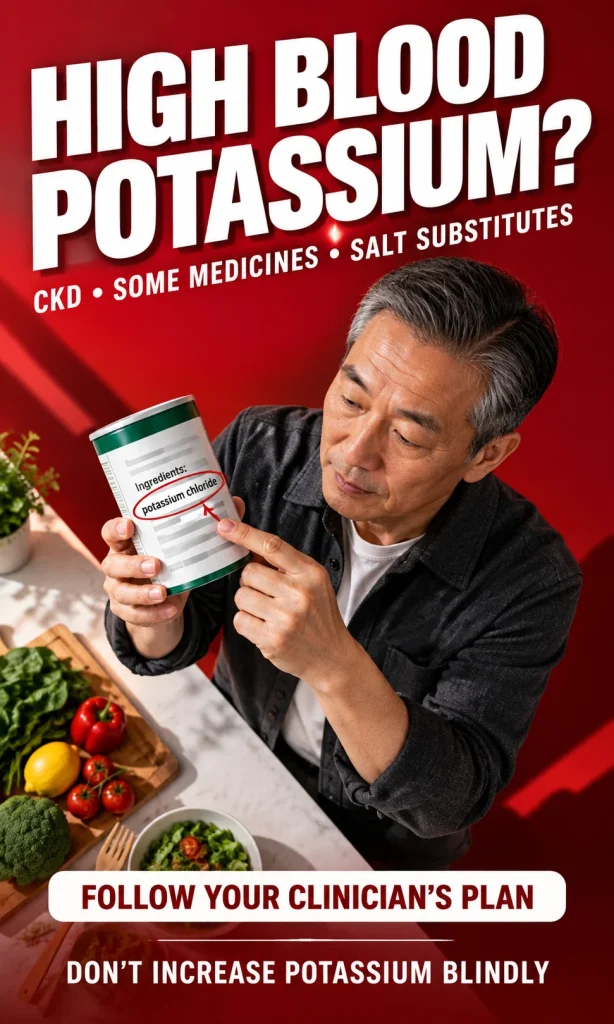
- you use potassium supplements or potassium-based salt substitutes;
- you have been given a specific potassium limit by a clinician or dietitian.
The NIDDK guidance for adults with chronic kidney disease notes that serving size, potassium chloride additives, salt substitutes and preparation methods can all matter when blood potassium is high. This is why a list of “healthy high-potassium foods” cannot double as a kidney-disease meal plan.
Potassium supplements and salt substitutes need more caution than food
Food-first planning is usually easier to control because food brings potassium in the context of a meal and normal serving sizes. Supplements and salt substitutes are more concentrated decisions. NIH notes that many salt substitutes use potassium chloride and that their potassium content can vary widely, which is especially important for people with kidney disease or medicines that reduce potassium excretion.
Do not use potassium pills or potassium-based salt substitutes as a shortcut for a “better” diet unless they fit your medical situation. If you are simply trying to improve food quality and have no potassium restriction, start with ordinary foods and a broader healthy eating pattern.
Cooking can change the potassium you actually eat
Cooking method changes potassium because some potassium can move from food into cooking water. For a person who has been told to lower potassium, boiling and leaching certain vegetables may reduce the amount consumed when the liquid is discarded. For a healthy person trying to obtain more potassium from food, repeatedly boiling foods and throwing away the cooking liquid can move intake in the opposite direction.
The practical lesson is not to memorize one fixed number for every potato, bean or vegetable. Use food-composition data to compare choices, then remember that preparation and portion size can move the real amount up or down.
How to choose potassium-rich foods without making the diet lopsided
- Start with meals you already eat. Replace or add one component rather than rebuilding your entire diet around a nutrient.
- Use serving-based comparisons. A realistic portion is more useful than a per-100-gram ranking you would never eat.
- Favor variety. Mix legumes, vegetables, fruit, dairy or fortified alternatives, and protein foods as appropriate for your eating pattern.
- Check sodium at the same time. A potassium-rich packaged food can still carry a large sodium load.
- Keep medical restrictions separate from general nutrition advice. A “high-potassium” list is not appropriate for everyone.
For broader nutrient planning, you can also compare this guide with the best food sources of calcium and common myths about food and nutrition. The goal is a workable eating pattern, not winning a single-nutrient contest.
Frequently Asked Questions About Potassium Foods
Is a banana one of the highest-potassium foods?
A banana is a useful potassium source, but several common servings contain more. NIH lists one medium banana at 422 mg, while 1/2 cup dried apricots provides 755 mg, 1 cup cooked lentils 731 mg and one medium baked potato 610 mg.
What foods are high in potassium besides bananas?
Useful choices include lentils, beans, potatoes, winter squash, dried apricots, prunes, raisins, soybeans, yogurt, milk, spinach, salmon and tomatoes. The useful comparison is potassium per serving, not the reputation of one food.
How much potassium should I get each day?
For healthy adults, U.S. Adequate Intakes are 3,400 mg a day for men and 2,600 mg for women; pregnancy and lactation have separate values. WHO suggests at least 3,510 mg a day for adults in its guidance on blood pressure and cardiovascular risk. If you have impaired potassium excretion, these general values do not function as personal treatment targets.
Can potassium-rich foods help with blood pressure?
Potassium-rich foods are part of eating patterns used for blood-pressure control, including DASH. The effect belongs to the whole pattern – including lower sodium and a mix of vegetables, fruit, whole grains, dairy or alternatives, legumes and lean proteins – rather than to one potassium food by itself.
Should people with kidney disease eat more potassium?
Not automatically. CKD can make potassium harder to remove from the blood, so the right intake depends on blood potassium, kidney function, medicines and the care plan. People who have been given a potassium restriction should follow their clinician or renal dietitian rather than a generic high-potassium list.
Are potassium supplements better than potassium-rich foods?
For general nutrition, food usually makes the more useful starting point because it contributes potassium alongside other nutrients and normal meal portions. Supplements can be inappropriate when kidney function or medicines raise the risk of excess potassium, so they should not be used as a casual substitute for individualized medical advice.
Build potassium into meals, not into a contest
The best potassium foods are the ones that fit the rest of your diet and appear in portions you actually eat. Lentils, beans, potatoes, squash, dried fruit, dairy or alternatives, vegetables, fish and fruit can all contribute; bananas are simply one convenient member of that group. If your kidneys handle potassium normally, variety is the practical strategy; if your blood potassium or kidney function is a concern, your personal target comes from your care team instead.