




Bipolar disorder does not have one established cause that explains every person’s illness. The long-running Prechter study organised observations into seven research dimensions, which is different from discovering seven proven causes. Understanding that distinction helps you read a research headline without turning it into a diagnosis, a personal explanation or a reason to change treatment.
The useful question is what kind of evidence a finding supplies: a clue about vulnerability, a pattern associated with symptoms, a possible mechanism, or evidence that a treatment helps people. Those answers need different studies. A strong explanation keeps the boundaries visible rather than asking one impressive result to do every job.
What did the 12-year bipolar study actually establish?
The study supplied a framework for investigating differences between people and changes over time. It did not identify a universal trigger, divide everyone into seven new bipolar types, or establish a seven-part treatment. Its value lies in bringing several kinds of information into the same research programme instead of treating a diagnosis as a complete explanation of a person’s experience.
The headline refers to Michigan Medicine’s December 2017 report. The underlying cohort began in 2005; the profile was published online in 2017 and appeared in a 2018 journal issue. These dates matter because the story is a historical research report, not a newly announced discovery. Twelve years describes the programme’s development, not twelve identical years of observation for every participant.
The original Prechter cohort profile described 1,111 participants: 731 in its bipolar diagnostic grouping, 277 healthy controls and 103 with other diagnoses. It was an observational, open cohort, with people entering at different times. Most participants were White, about two-thirds were women, and recruitment largely came from southeast Michigan. That composition limits how confidently any particular result transfers to other populations.
Think of a cohort as a group whose experiences are observed over time. Researchers can compare people, examine whether changes travel together, and investigate which measurements precede later outcomes. They do not automatically control the circumstances that produced those measurements. Following people for longer makes some questions answerable, but it does not convert every observed relationship into a cause.
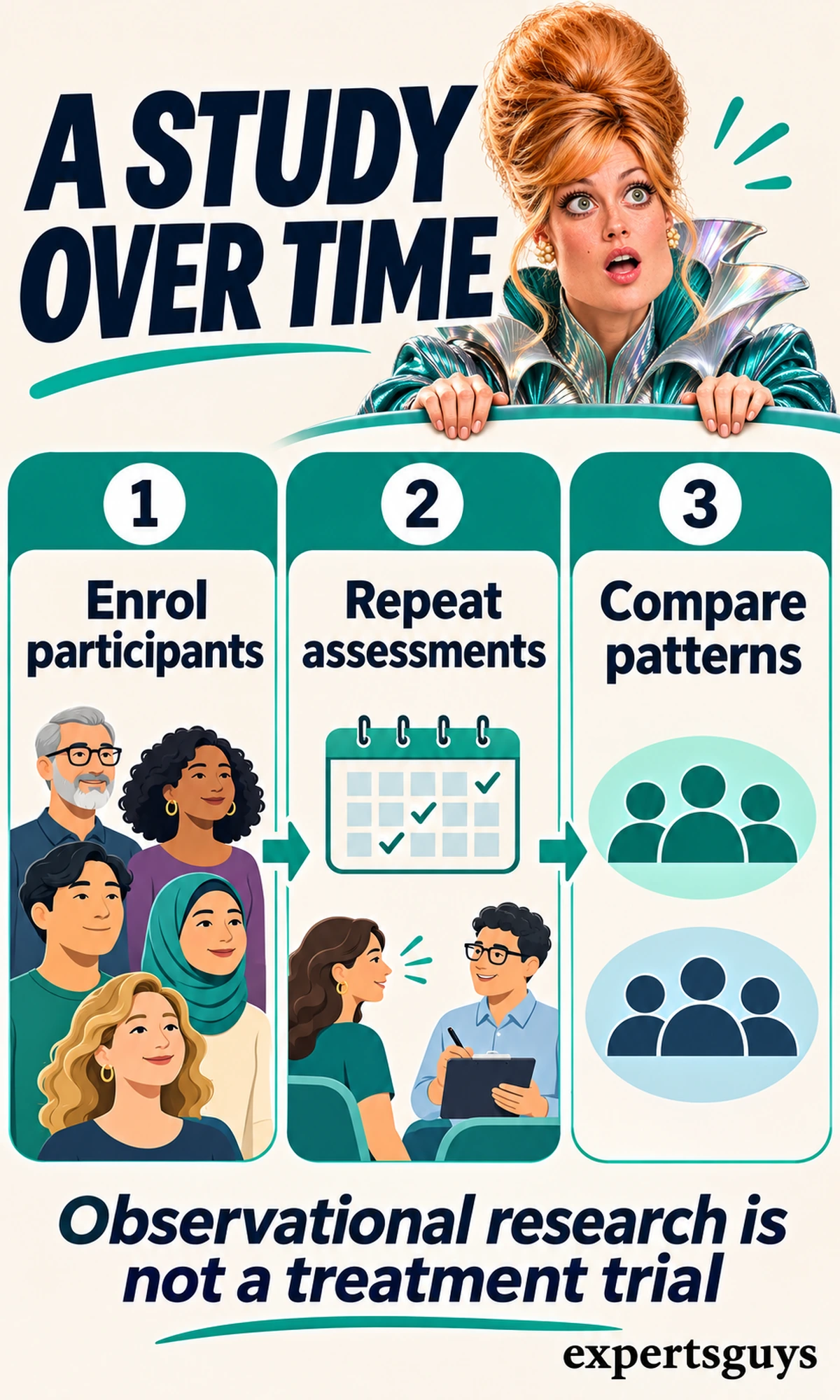
Why a framework is useful before there is a single explanation
A diagnosis and a research framework have different purposes. A diagnosis helps organise clinical assessment and care. A framework specifies which kinds of information might help explain variation within that diagnosis. For an introduction to episodes and clinical categories, the bipolar disorder overview owns that broader question; the concern here is how to interpret the research underneath a headline.
Imagine comparing two books by checking only their genre. Knowing both are novels tells you something, but it does not explain their plots, length, language or endings. Measuring several features lets you ask more precise questions. Likewise, researchers need information beyond a diagnostic label to investigate why functioning, symptoms and treatment experiences differ. This comparison illustrates the logic of measurement; it is not a model of how the illness develops.
The seven dimensions in plain language
The framework covers clinical disease features, neurocognition, temperament, motivated behaviours, life experience, circadian patterns and outcomes. These are broad areas of observation, not seven competing answers to why one person became ill. Their names describe what researchers examine. A dimension can contain measurements influenced by illness as well as factors that may affect its course.
On a narrow screen, swipe horizontally to compare all three columns.
| Dimension | What it helps researchers examine | Limit to keep visible |
|---|---|---|
| Clinical features | Diagnostic and symptom patterns. | A category does not explain every individual difference. |
| Thinking skills | Cognitive functioning. | A measured difficulty is not itself proof of its cause. |
| Temperament | Psychological dimensions. | A trait is not a moral judgment. |
| Motivated behaviours | Behavioural patterns, including substance-related behaviour. | A behaviour can have several influences. |
| Life experiences | Social and personal history. | Experience does not assign blame. |
| Sleep rhythms | Sleep and circadian patterns. | Timing and direction still need investigation. |
| Outcomes | Course, severity and treatment response. | An outcome is not automatically an original cause. |
A measurement can belong in a useful framework even when researchers have not established its causal role. Outcomes are the clearest example: how someone functions after treatment is valuable information, but an outcome is not automatically an explanation of how their condition began. Calling every dimension a cause erases precisely the distinction the framework helps researchers investigate.
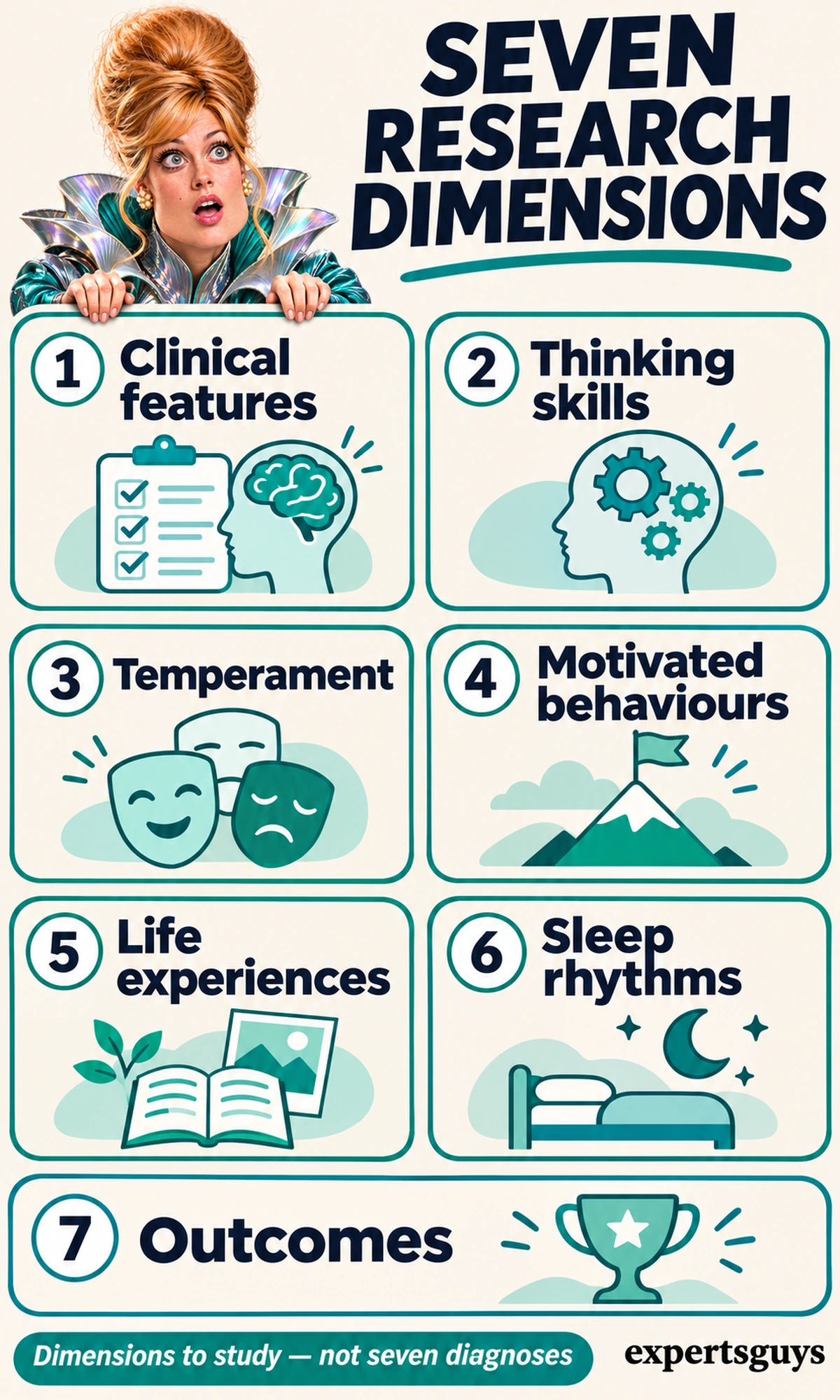
The practical consequence is a change in reading strategy. When a report names a new factor, ask which question it addresses and which measurement supports it. A relationship with functioning, for example, is not interchangeable with a relationship with first onset. Treating them as the same can make a modest but useful finding sound like a complete explanation.
What the participant count does and does not tell you
A large headline number describes the overall cohort, not necessarily the sample for every laboratory, interview or follow-up analysis. Different investigations can use different subsets. Before repeating a result, look for the sample attached to that particular analysis. The number of people available to a programme and the number contributing to one result answer different questions.
For an illustrative example, suppose a hypothetical programme enrols 1,000 volunteers but only 80 provide a particular biological sample. A statement about that sample comes from those 80 people, not all 1,000. This invented example demonstrates a denominator problem; it does not describe an additional Prechter result. Using the correct denominator is more informative than using the largest number on the page.
The comparison group also changes the question. Comparing people with a diagnosis against unusually healthy volunteers can reveal differences worth studying. It does not necessarily show whether a measurement distinguishes bipolar disorder from other conditions seen in an ordinary clinic. The important test is whether the comparison matches the claim being made, rather than whether the word control appears somewhere in the report.
How do causes, triggers and markers differ?
A cause concerns why a condition develops; a trigger may help precipitate a particular episode; a marker is something measured in relation to a condition or outcome. A susceptibility factor concerns vulnerability. These concepts can overlap, but evidence for one does not automatically establish the others. Confusing them can produce unnecessary blame and unhelpful treatment conclusions.
- Pause over a claim that identifies an individual cause from one questionnaire answer.
- Question a promise that one habit guarantees freedom from future episodes.
- Look for missing evidence when a research category is presented as a new clinical diagnosis.
The NIMH bipolar disorder guide describes research into multiple influences, including genetics and brain structure or function. Family history can increase risk without determining whether someone develops the condition. Diagnosis still depends on clinical assessment, including the course of mood and energy changes and consideration of other explanations; a research dimension is not a home diagnostic test.
Consider the statement, “My first episode happened after a stressful period.” The timing is meaningful personal context. On its own, it cannot show that stress was sufficient to produce the disorder, that the same event would have the same effect on someone else, or that eliminating all stress would remove future risk. A useful account can acknowledge the event without making it carry a stronger conclusion than the evidence supports.
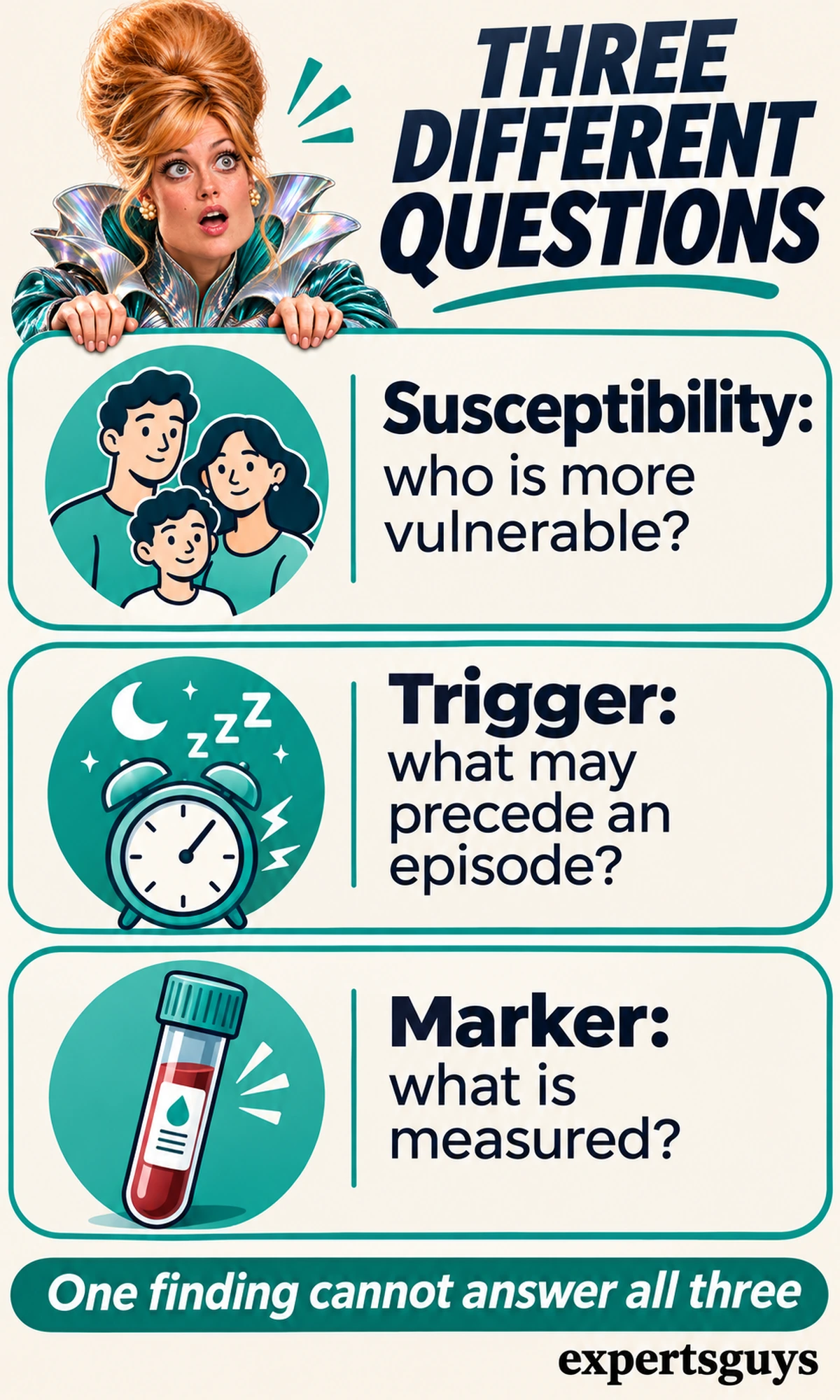
Why finding one associated factor is not finding the whole cause
A marker can be informative without being the mechanism that produces an illness. A thermometer reading is useful when someone is unwell, but changing the display does not treat the underlying problem. This is an analogy about measurement, not a claim that any bipolar research marker works like temperature. The point is that measuring, predicting and changing an outcome are separate achievements.
The same distinction applies to a promising blood measurement. It might help separate groups under specified study conditions, relate to symptom severity, or be investigated as a treatment target. Each possibility requires its own evidence. Calling all of them a breakthrough test can hide the fact that the researchers have answered only one of those questions.
| Claim you read | Question still needing an answer |
|---|---|
| Associated with bipolar symptoms | When was it measured, and what else could explain the relationship? |
| Predicts an outcome | Was prediction evaluated in a new, relevant group and over a defined timeframe? |
| Explains why illness began | What evidence supports causation rather than association? |
| Detects bipolar disorder | For which patients, against which alternative diagnoses, and with what consequences for errors? |
| Improves bipolar care | Were benefits and harms tested in people for the intended clinical task? |
The RNA-editing blood test explanation examines one specific diagnostic-research question. Keep that question separate from the Prechter framework: a test evaluated for a defined clinical comparison is not evidence that every research dimension can diagnose bipolar disorder, and a diagnostic result does not by itself identify the cause of an individual’s illness.
The direction of a relationship matters
If sleep changes and mood changes occur together, several explanations are possible. Sleep disruption might contribute to a later mood change, mood changes might alter sleep, or another factor might influence both. More than one direction might operate in a person. An association alone cannot decide between those possibilities, and a diagram should not quietly turn uncertainty into a one-way mechanism.
Timing can strengthen an investigation: a measurement made before an outcome offers different information from one taken afterward. But earlier does not automatically mean causal. An unmeasured influence may already be affecting both. This is why a careful report explains when measurements were made, what alternative influences were considered and what remains unresolved.
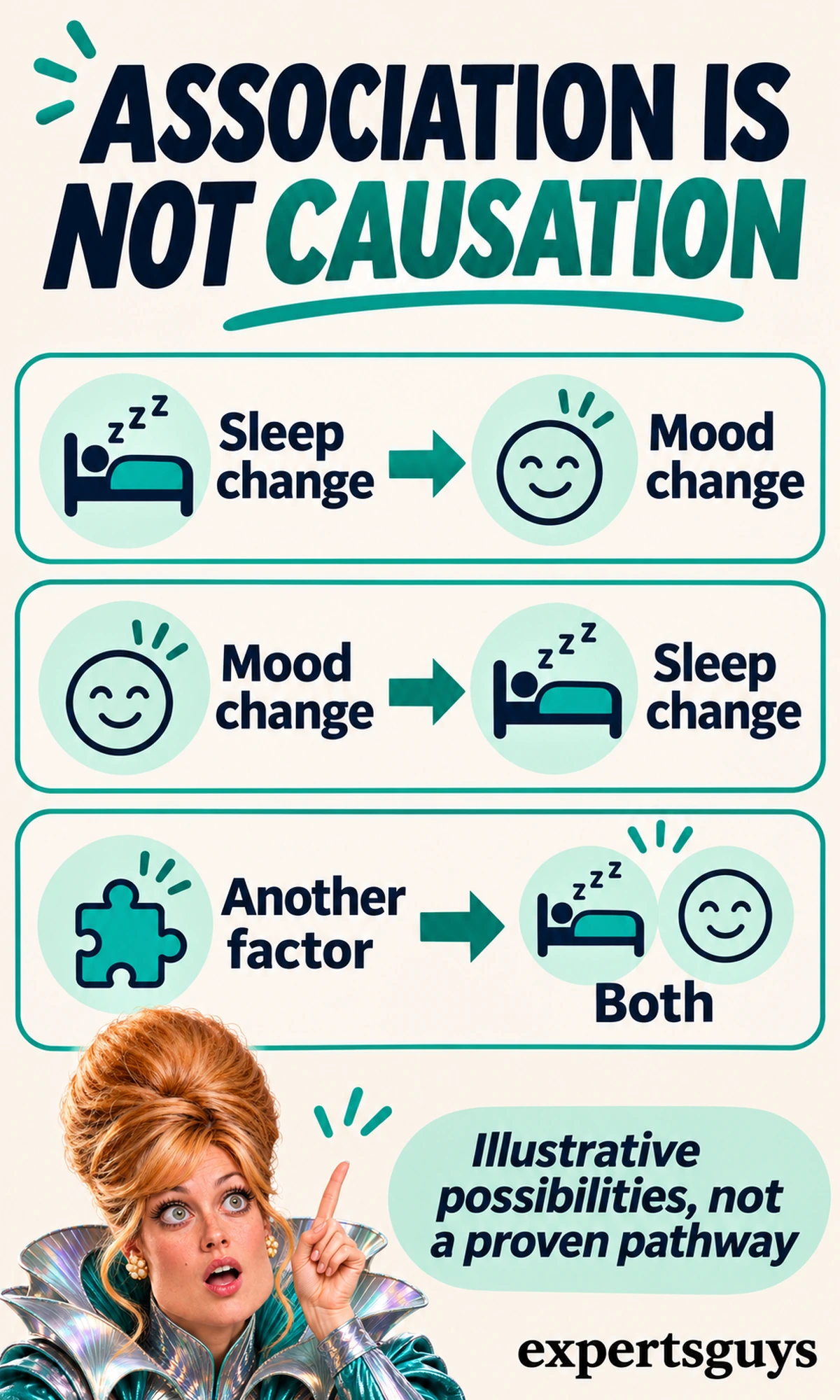
Here is an illustrative reasoning error: a person starts sleeping poorly, receives treatment and later feels better. It is tempting to attribute the improvement entirely to whichever change seems most noticeable. In reality, the episode’s course, support, treatment and circumstances may all have changed. The example shows why an individual sequence cannot isolate a treatment effect; it does not make the improvement less meaningful.
Complexity should reduce blame
An explanation that includes life experience does not establish that a person or family caused the illness. Likewise, biological vulnerability does not turn a person’s future into a fixed script. Responsible interpretation leaves room for multiple influences without inventing a percentage of blame for each. The research framework supplies categories to investigate, not a ledger of personal responsibility.
This matters in conversations as much as in headlines. “That event may have mattered” preserves useful context. “That event explains everything” closes off other possibilities. The first statement can coexist with medical care and practical support. The second may lead someone to dismiss symptoms, abandon treatment or assume that a single change must solve the entire problem.
The useful takeaway is to keep the level of the question stable. When reading about first onset, do not substitute evidence about current severity. When reading about a possible episode trigger, do not turn it into a universal cause. When reading about a marker, do not assume that changing the marker improves health. That discipline prevents several common overclaims at once.
Why can't group findings choose a diagnosis or treatment?
Group findings identify patterns across people; an individual decision requires evidence that the pattern works for that particular clinical task. An average difference does not tell you how much the groups overlap. Nor does it establish a useful cutoff, an individual’s probability of illness, or which intervention will help them. Those are additional questions with additional evidence requirements.
An illustrative classroom comparison makes the issue clearer. Two groups can have different average heights while many individuals in both groups share the same height. Knowing one person’s height would then be an unreliable way to identify their group. This analogy is about overlapping distributions, not a claim about the size or shape of any bipolar study result.
The missing question is often, “Compared with whom, for what decision?” A measurement that separates one research group from healthy volunteers may have a different role when several possible diagnoses are under consideration. Similarly, predicting a symptom score is not the same task as predicting a first episode, choosing medication or showing that treatment improves everyday functioning.
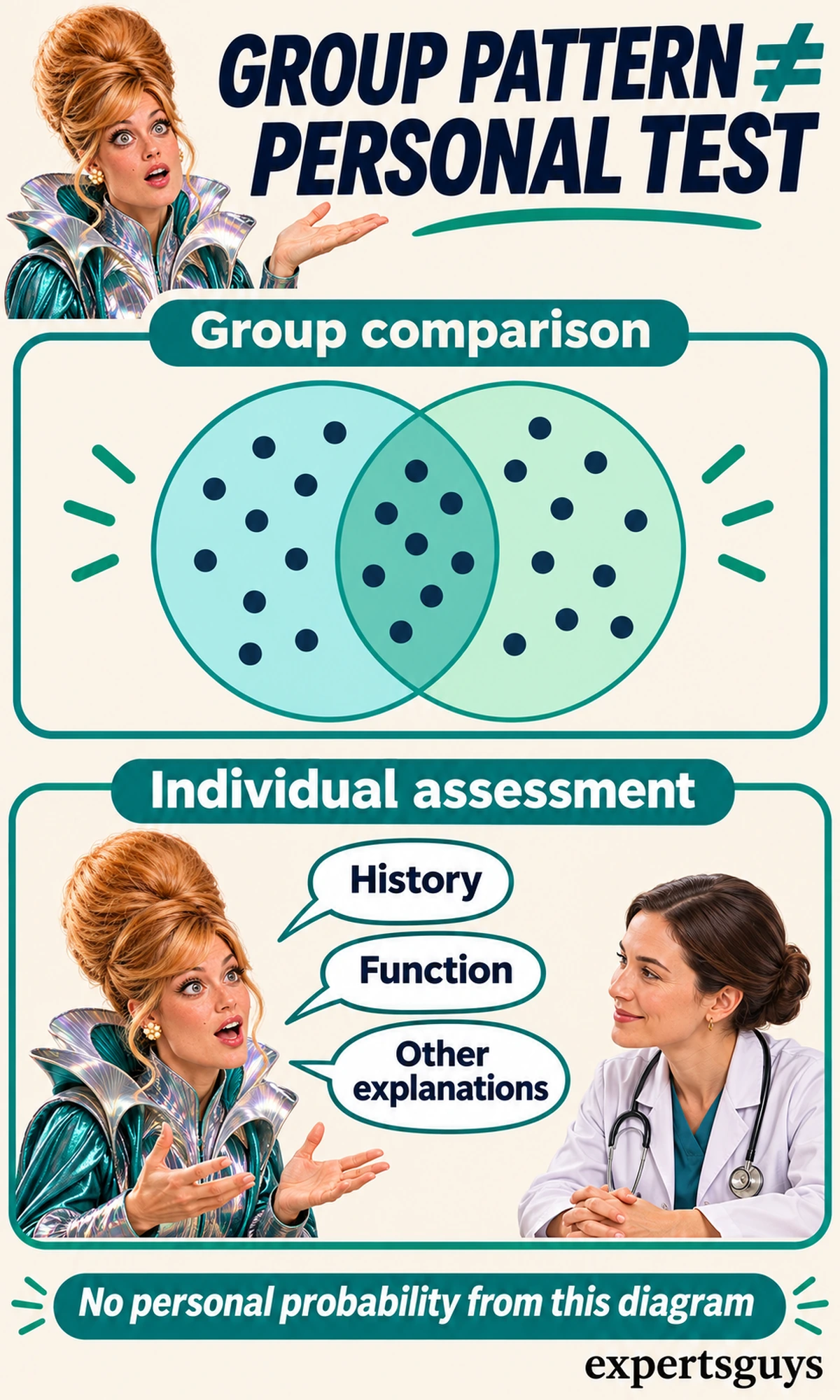
A personal test needs more than a group difference
Before treating a result as a diagnostic test, look for a defined intended use. Who would receive it? At what stage? What other explanation is it meant to distinguish? What happens after a positive or negative result? Without those boundaries, the phrase detects bipolar disorder is too broad to assess sensibly, even when the underlying measurement is scientifically interesting.
Performance also has to be checked beyond the people used to develop the test. A method can fit the characteristics of its original sample unusually well. Evaluation in a different, relevant population helps show whether that performance transfers. Even then, usefulness depends on the consequences of mistakes and how the result changes care, rather than on one attractive accuracy number.
For example, a hypothetical result might encourage further assessment but be unsuitable for ruling out illness. That is a difference in intended use, not necessarily a contradiction. The reader needs to know which decision the evidence supports. A result can be useful within a narrow task and misleading when marketed as a complete answer to a much wider one.
Genetic information does not supply a personal destiny
The National Human Genome Research Institute’s explanation of polygenic risk scores distinguishes relative genetic risk from a person’s absolute chance over a specified timeframe. It also explains why the ancestry composition of research datasets can affect interpretation. Those limitations matter whenever a headline moves from associations across genomes to claims about a particular person’s future.
A hypothetical score that places someone higher than another group does not, by that ranking alone, say whether illness will occur next year, at any point in life, or at all. A timeframe and an appropriate baseline are needed for an absolute probability. Adding a decimal place to a ranking cannot supply the missing evidence.
Nor should a genetic explanation become an all-or-nothing contest with environmental explanations. The useful scientific question is how different influences relate to an outcome and whether that knowledge improves decisions. A headline that insists one side has defeated the other usually hides the more practical issue: what, specifically, can now be predicted or changed more reliably?
Laboratory findings and treatment evidence answer different questions
A laboratory model offers a controlled setting for investigating a mechanism. A finding in cells can help researchers develop a hypothesis, examine biological processes or select the next experiment. It does not include the full circumstances of a living person: symptoms, other medicines, physical health, unwanted effects, daily functioning and long-term outcomes.
Moving from a laboratory finding to a treatment recommendation therefore requires more than an appealing biological story. The WHO bipolar disorder fact sheet describes established care as a combination of medicines and psychological or psychosocial support tailored to individual needs. A mechanism study should be interpreted alongside clinical evidence, rather than used as a replacement for it.

An illustrative mistake would be to read that a substance changed a cellular measurement and conclude that a matching supplement must improve bipolar symptoms. That conclusion skips questions about whether the substance reaches the relevant site, whether the measured change matters clinically, what dose would be safe and whether people actually benefit. A plausible explanation is a reason to investigate, not permission to fill in those answers.
The reverse error is also worth avoiding. If researchers do not fully understand an illness’s origin, that does not establish that existing treatment is ineffective. Evidence about why a condition develops and evidence about whether a treatment helps are related but separate. One question can remain partly unresolved while another has useful clinical evidence.
What would make a treatment claim more convincing?
A treatment claim should specify the intervention, the people studied, the comparison and the outcome. Did researchers assess symptoms, relapse, functioning, unwanted effects or a laboratory measure? How long did follow-up last? An improvement in one outcome cannot silently stand in for all the others. The strongest practical interpretation is the one that matches the actual question tested.
| Detail | Why it changes interpretation |
|---|---|
| Intervention | A named product, dose or treatment programme is needed to identify what was evaluated. |
| Comparison | Usual care, another intervention and no intervention answer different questions. |
| Outcome | A symptom score, functioning and an episode recurrence are different endpoints. |
| Follow-up and harms | A short-term effect alone cannot settle long-term benefit or tolerability. |
For the established clinical choices, how bipolar disorder is treated separates acute episodes from longer-term prevention. This page does a different job: it explains why a research result cannot jump straight from a group pattern or laboratory observation to a personal prescription. Do not stop, start or adjust prescribed medication because of a headline.
How can you check a bipolar research headline without keeping a log?
Use a brief source check: find the original paper, identify the people and comparison, match the claim to the study design, and keep treatment decisions separate. You do not need a symptom diary, worksheet or research account to do this. The aim is to state one accurate conclusion and one important limit before deciding whether the story changes anything practical.
This is an editorial reading method, not a diagnostic exercise or a clinically validated assessment. It follows the source-reading approach explained in NCCIH’s guide to scientific journal articles. Use it when a headline feels alarming, promises an easy explanation or suggests that established treatment has suddenly become unnecessary.
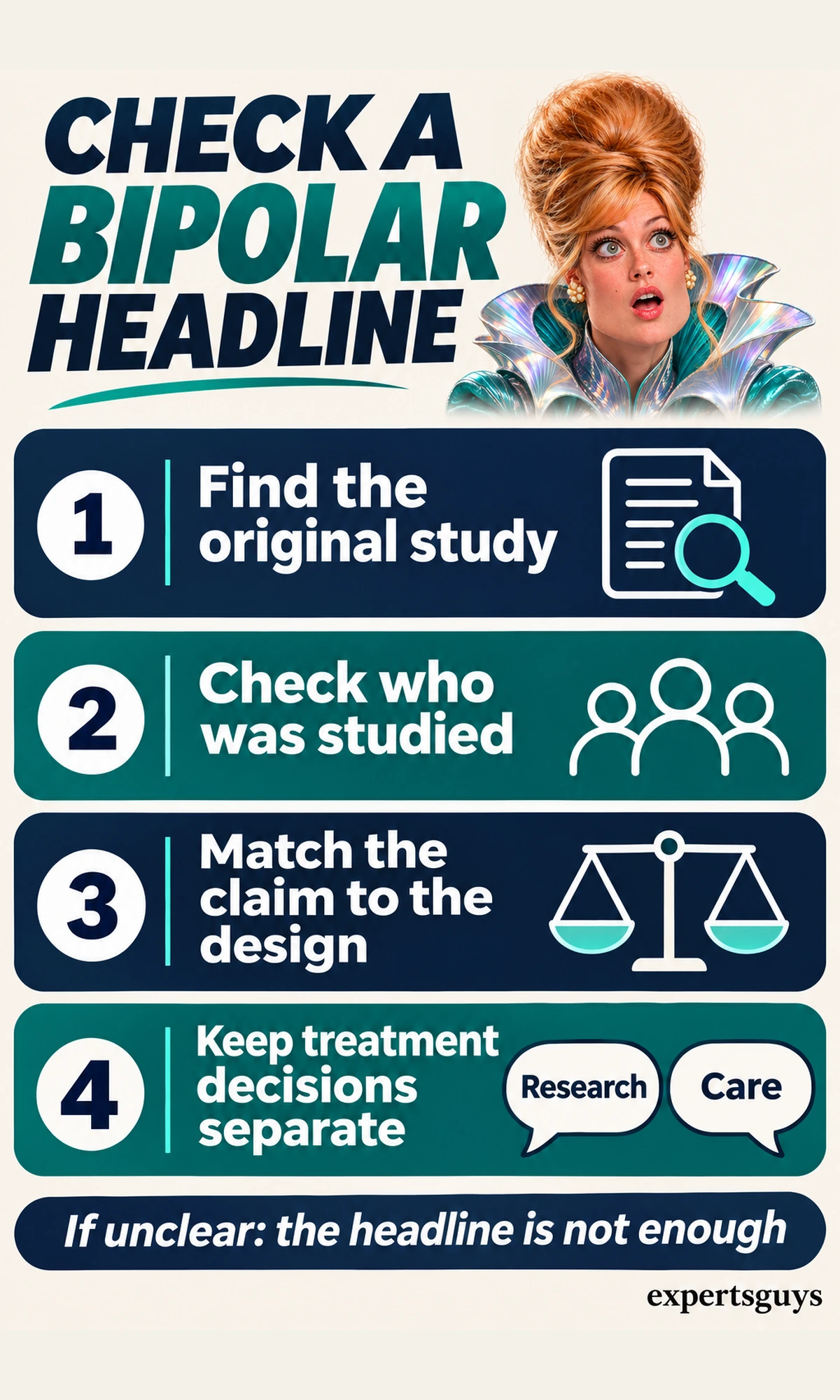
Step 1: Find the original study
Look for the paper linked from the report. Match the title, authors or journal to the finding being discussed. A news story can explain a paper clearly, but it is still useful to know whether the evidence is a cohort profile, a particular analysis, a laboratory experiment or a clinical trial. A related paper from the same programme may answer a different question.
For this article, the original paper is a cohort profile. That label immediately changes the expectation: its purpose includes describing a research population and approach. It should not be read as though everyone had been randomly allocated to seven treatments. This is a worked application of the reading method to the historical headline, rather than a new finding about bipolar disorder.
If you cannot access the full paper, use the abstract and the institution’s explanation for the limited information they provide. Do not assume that missing methods must support the headline. The lower-effort stopping point is simple: identify that the evidence is incomplete and avoid using the claim as a basis for a treatment change.
Step 2: Check who was studied and what was compared
Find the participant description and the comparison relevant to the result. Distinguish the overall cohort from a smaller analysis. Ask whether the people resemble the population named in the headline: adults with an established diagnosis, people experiencing depression, healthy volunteers or another group. These categories are not interchangeable.
In an illustrative hypothetical story, a study of adults already receiving specialist care is described as predicting illness in all teenagers. The problem is the jump in population and task. The adults’ results may still be useful, but the broader claim needs evidence in the intended population. Spotting the jump is enough; you do not need to calculate a replacement number.
Step 3: Match the strongest verb to the design
Pay attention to verbs such as associates, predicts, causes, diagnoses, prevents and treats. They describe different achievements. If a report says a measurement was associated with symptoms, keep that wording unless additional evidence supports something stronger. Do not upgrade it to causes simply because the biological explanation sounds persuasive.
Try a short spoken correction: “The study observed a relationship; this result alone does not show what happens if that factor is changed.” This is a no-writing way to check the inference. If even that feels too demanding, keep just the distinction between observation and treatment testing. The exercise is complete when you can state the limited finding, not when you have disproved the entire study.
Step 4: Keep the research conclusion separate from your next action
Ask whether the evidence actually changes a decision today. A better framework may improve understanding without changing a prescription. A research marker may justify further study without becoming a routine test. An article about a possible mechanism may be worth reading without creating a task you must perform before dinner.
For this historical report, a proportionate conclusion is: the study supports looking across several dimensions of bipolar illness, while its framework does not establish a personal cause or treatment. The completion outcome is clearer interpretation. No immediate improvement in mood is required, and there is no reason to repeat the check until it becomes another burden.
What to do when the headline still leaves uncertainty
Keep the uncertainty attached to the claim rather than attaching it to yourself. “I cannot verify this treatment claim from the information available” is more accurate than “I must be missing the one cause of my illness.” If the practical question concerns an existing care plan, use the specific question with the prescribing team: does this finding change the evidence relevant to my situation?
If the concern is new or escalating symptoms, use the clinical route instead of waiting for a research explanation. Several nights of much less sleep with unusually high energy, rapidly escalating risky behaviour or loss of touch with reality need prompt assessment. Immediate danger or an inability to remain safe requires emergency help. A study’s limitations do not make current symptoms less deserving of care.
Questions readers still ask
Does the 12-year headline mean a bipolar diagnosis takes 12 years?
No. It describes a period of research programme development, not a diagnostic waiting rule. Someone with concerning changes in mood, energy, sleep or functioning should not wait for a research milestone before seeking an assessment.
Can the seven dimensions be used as a self-test?
No. They organise areas of observation rather than provide a validated personal score or diagnostic cutoff. Selecting several dimensions that feel familiar cannot establish a diagnosis or show which treatment is appropriate.
Does a lack of one universal cause mean bipolar disorder is not biological?
No. Failure to establish one cause for every case does not exclude biological involvement. It means that a single explanation has not accounted for all cases; it does not tell you how much any one influence contributed to a particular person's illness.
Should an old study be ignored when newer research appears?
No. An older study can remain useful for understanding a method or framework. Check what question it answered and whether later evidence changes that conclusion. Do not present the original headline as breaking news or assume that its age alone makes it false.
Can a research finding explain why my treatment helped?
It may suggest a possible mechanism, but a personal response does not verify that mechanism or identify the original cause of illness. Treatment effectiveness, mechanism and individual causation are separate questions. Keep medication decisions with the evidence relevant to the care plan.
What to do next
Read the seven dimensions as a way of organising research questions. Then decide whether the next question is about evidence, a diagnostic assessment or an existing care plan. Keeping those tasks separate gives you a useful next step without demanding a complete explanation of why bipolar disorder began.
For evidence, use the four-step headline check and stop at the conclusion the source supports. For clinical concerns, describe the concrete change that needs attention. For treatment, keep decisions tied to the relevant clinical evidence and the agreed care plan. The research becomes more useful when its promise and its limits remain visible together.









