
Generalized anxiety disorder (GAD) and bipolar II can occur together, but ongoing worry and a hypomanic episode are not the same thing. The useful distinction is whether anxiety persists across mood states and whether there have been clear changes from your usual sleep, energy and behaviour. Bring examples of both patterns to an assessment rather than trying to choose a diagnosis from one symptom.
Can GAD and bipolar II occur together?
Yes. GAD concerns excessive, difficult-to-control worry across everyday areas of life, often accompanied by tension, restlessness or poor concentration. The clinical description of GAD includes worry on most days for at least six months, but you do not need to wait six months to seek help for distressing symptoms.
Bipolar II involves a history of hypomanic and major depressive episodes, without a manic episode. Anxiety can accompany either mood state or exist as a separate disorder. The NIMH explanation of bipolar disorder highlights why the lifetime pattern matters: people may seek help during depression while earlier hypomania goes unrecognised.
Restlessness, irritability, racing thoughts and difficulty sleeping can overlap. A clinician considers the combination, duration, change from baseline and impact, including possible medical or substance-related explanations. This comparison helps you describe the pattern; none of its rows is a diagnostic test.
| What to describe | Persistent anxiety pattern | Possible episodic change |
|---|---|---|
| Worry | Concerns recur across several life areas. | Worry may rise during a changed mood state. |
| Sleep and energy | Poor sleep may leave you exhausted. | Less sleep may accompany unusually sustained energy or activity. |
| Behaviour | Avoidance or repeated checking may interfere with tasks. | Speech, confidence, activity or spending may become unlike your usual self. |
| Time course | Ask whether worry persists when mood feels usual. | Describe a distinct beginning, course and return toward baseline. |
| Interpretation | Persistent worry still needs assessment in context. | A change warrants discussion; it does not establish hypomania. |
Read sleep together with energy
The sleep question is not simply “How many hours?” It is also “Did I want more sleep, and what was I like the next day?” Sleep loss from a deadline, caregiving or illness has context that a clinician needs to hear.
- Choose one recent or memorable night and compare it with your usual sleep. Use your own estimate; a wearable is optional and cannot diagnose a mood episode.
- Describe next-day tiredness, activity and behaviour alongside the sleep change. Include whether the pattern continued beyond that night.
- Tell the clinician about any clear departure from your baseline, especially much less sleep with unusually high energy or risky behaviour. Do not deliberately reduce sleep to test yourself.
Illustrative example: “I slept less because I was worrying, and I struggled to stay awake at work” tells a different story from “I slept much less, felt unusually driven and started several projects.” Either example needs context. If detailed recall feels difficult, begin with “exhausted,” “unusually energised” or “unsure”; the aim is a useful description, not a perfect record.

Compare worry across mood states
Worry that continues when mood feels usual is worth describing separately. It may help a clinician assess whether anxiety needs its own treatment plan alongside mood care. It does not prove GAD, and uncertainty about what counts as your usual mood is itself useful information.
- Think of a period of low mood, a period of higher energy if you have had one, and a period closer to your usual self. Do not invent a category you have never experienced.
- For each, recall what you worried about and whether the worry interfered with ordinary activities. A short phone note or voice memo is enough.
- Compare the contexts: did worry persist, ease or change its subject? Take the comparison to the appointment without assigning a diagnosis.
Example and easier option: “Even when my energy felt usual, I worried about work and family most days” is more useful than “I am always anxious.” If sorting several periods becomes confusing or increases rumination, stop and use one example from a relatively usual week. For a broader introduction, see depression, anxiety, or bipolar disorder.

What information helps distinguish persistent anxiety from an episode?
A concrete account of a changed period usually helps more than a long list of symptom labels. Dates, observable changes, circumstances and what happened afterward make the story easier to assess. NICE assessment guidance calls for a detailed history that includes behaviour during and between episodes, possible triggers and family history.
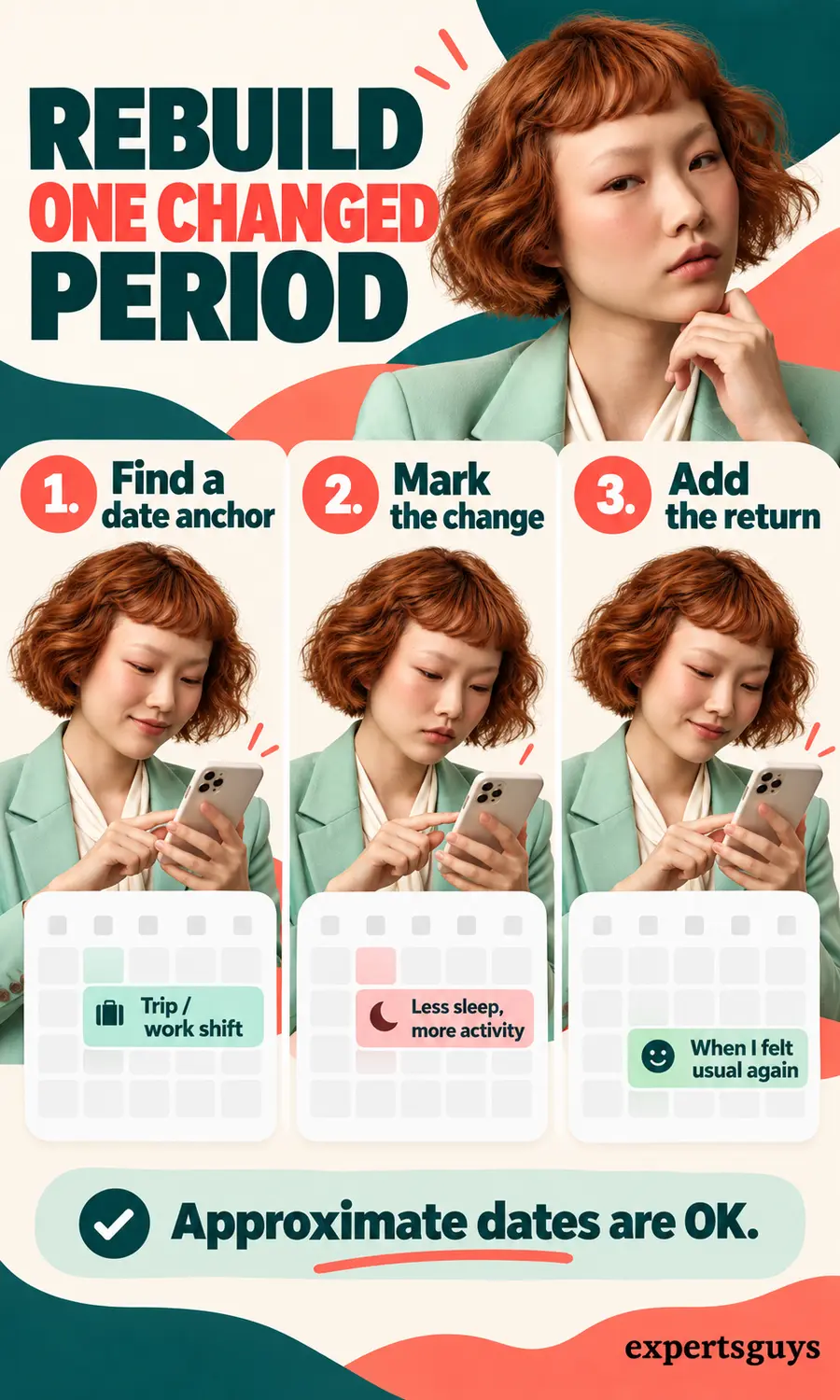
Rebuild one changed period from existing records
This is a one-off preparation exercise, not a requirement to track yourself continuously. Existing calendar entries or messages can provide date anchors when memory is uncertain. Choose records you own and feel comfortable reviewing; no one needs unrestricted access to your phone.
- Find one anchor, such as a trip, work shift, appointment or family event. Mark the date as approximate when needed.
- Add a short description of what changed around that time: sleep, energy, speech, activity or decisions. Separate what you remember from what a record actually shows.
- Add when the change eased or when you next felt closer to usual. If you do not know, leave the end open rather than guessing.
Illustrative example: a calendar trip gives you a starting point, while messages remind you that you were arranging several unfamiliar projects. Your note might say, “Around the trip: less sleep and more activity; returned toward usual afterward; exact dates uncertain.” A busy week alone is not evidence of hypomania; if reviewing records is overwhelming, use one remembered event and stop.
Ask for one outside observation
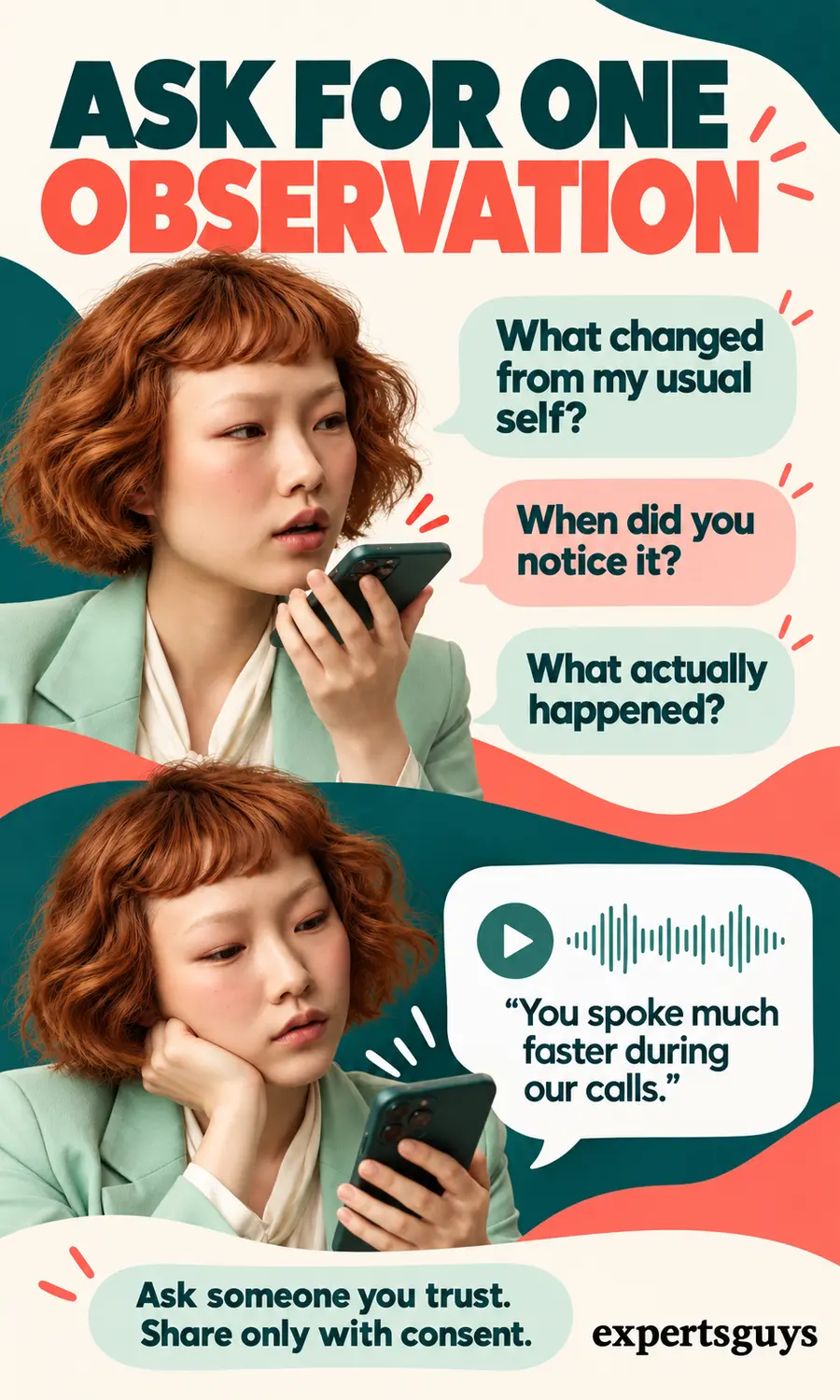
A trusted person may notice a change you did not recognise at the time. Ask about behaviour rather than asking whether they think you have a disorder. Their account is additional information, not a verdict or a substitute for your own experience.
- Choose someone whose input feels safe and useful, and ask whether they are comfortable helping.
- Ask: “What changed from my usual self, when did you notice it, and what actually happened?” A short message or voice note works.
- Keep the observation separate from your interpretation and agree what, if anything, you will share at an appointment.
Example: “You spoke much faster during our calls” is an observable detail; “You were definitely hypomanic” is a conclusion the person cannot establish. If their account differs from yours, bring both perspectives without forcing agreement. If no suitable person is available, your own account is still worth taking; do not delay assessment to obtain outside evidence.
If you are looking for broader recognition guidance, the related article on early warning indicators of a bipolar mood episode covers that separate question. Here the task is narrower: explain one change in context. A concise account can be useful even when it contains gaps.
How does having both conditions change treatment discussions?
The care plan needs to consider anxiety and mood symptoms together. Anxiety-focused therapy may have a role, while medication choices depend on the mood history, current symptoms, other conditions and previous responses. There is no universally best anxiety medicine for everyone with bipolar II, and treatment for anxiety alone should not be copied into a bipolar care plan without assessment.
Antidepressants can be associated with mood switching in people with bipolar disorder, so prescribing and monitoring require particular care. Feeling restless after a medication change does not automatically establish hypomania; the timing and accompanying changes need review. Contact the prescriber promptly about concerning changes and do not start, stop or adjust medication on your own.
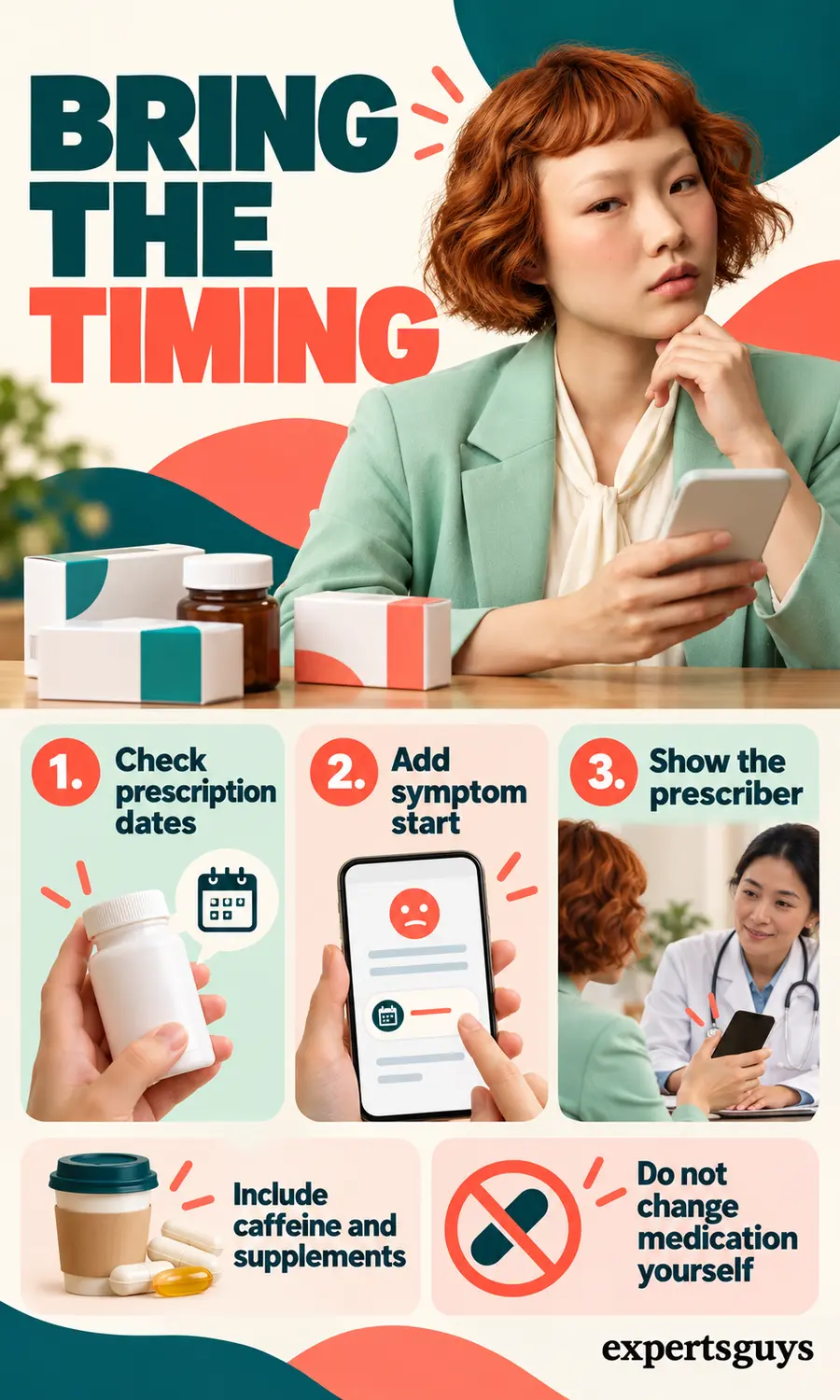
Connect medication changes with symptom timing
The purpose is to give the prescriber a sequence, not to prove that a medicine caused a symptom. A pharmacy record, prescription app or photograph of the packaging can help identify what you took. Include nonprescription products, supplements, caffeine and other substances honestly because these can change the interpretation.
- Check the names and dates of starts, stops or dose changes already made. If you do not know the details, mark them as unknown and ask the pharmacy or prescriber to confirm.
- Add when the new symptom or change began, including whether it was already present beforehand.
- Show the sequence to the prescriber and ask what needs review. Do not repeat a dose change or restart a product as a personal experiment.
Illustrative example: “The prescription changed around Monday; I noticed restlessness later that week; sleep also changed” preserves the timing without claiming causation. If the sequence is difficult to reconstruct, bring the current medication list and describe what worries you now. New severe agitation, markedly reduced sleep with unusual energy, or rapidly worsening symptoms warrant earlier contact rather than waiting to complete this exercise.
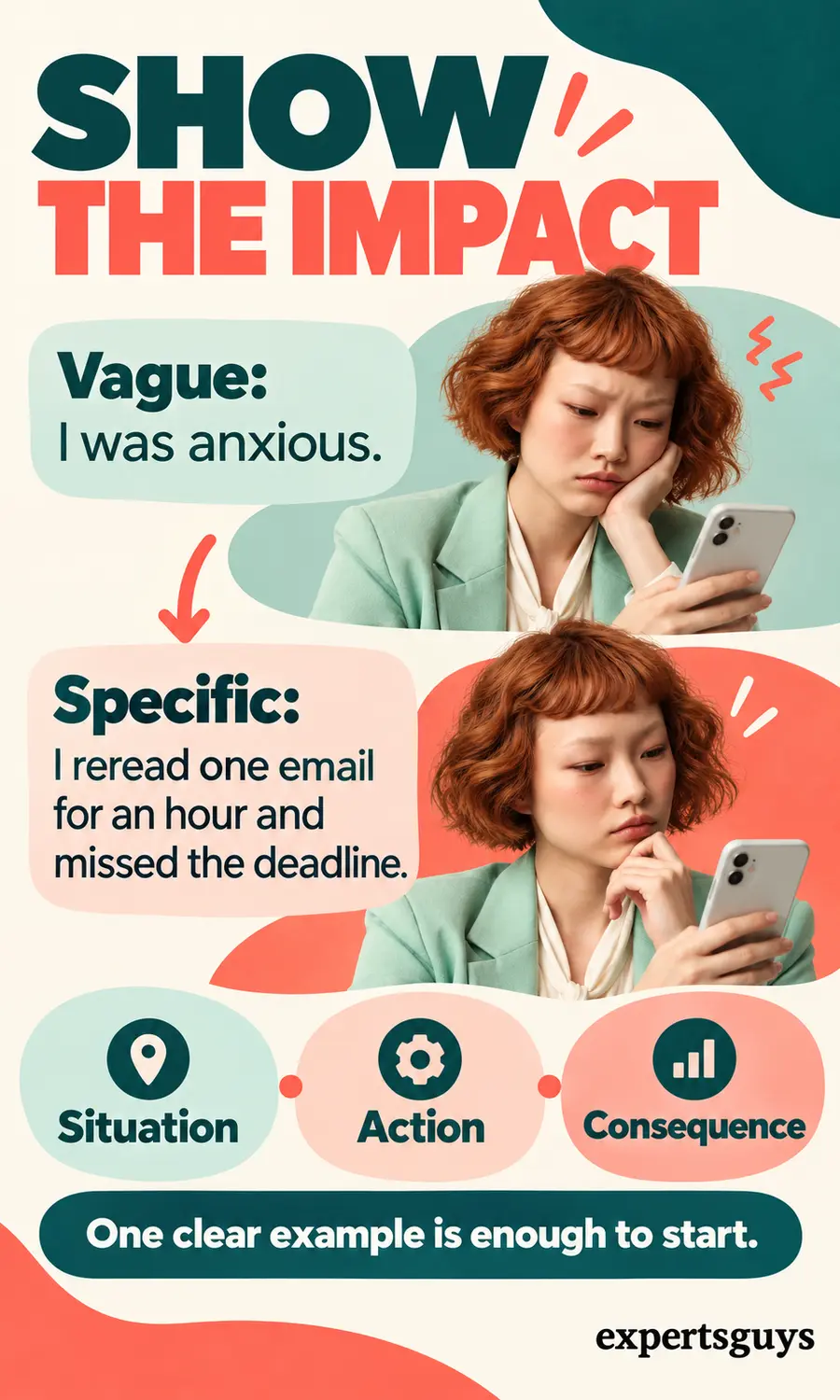
Turn a symptom label into one daily-life example
A care plan needs a practical target as well as a symptom name. Describing an effect on work, relationships or ordinary responsibilities helps explain what is most disruptive. Choose one situation you are comfortable discussing rather than compiling every difficult moment.
- Name the situation: for example, answering a work email.
- Describe what you actually did or could not do. Avoid replacing the action with a label such as “bad anxiety.”
- Add the consequence and what you would like help doing differently.
Illustrative example: “I reread one email for an hour and missed the deadline” makes the obstacle visible. The goal might be completing essential replies with less interference from worry, not eliminating every anxious thought. If you cannot remember a full example, choose one consequence such as a missed task; this exercise is complete when the difficulty is understandable, even if symptoms have not improved.
For the wider treatment overview, use how bipolar disorder is treated. This page does not rank medicines or recommend doses. Its role is to help you bring the sleep, anxiety and functioning details that can change the treatment conversation.
What should you prepare, and when should you seek earlier help?
Bring a small selection of useful examples rather than a complete personal archive. Preparing questions and medication information is consistent with NIMH advice for a mental-health appointment. The phone-based formats below are editorial adaptations for convenience, not validated screening tests or treatments.
Set a short appointment agenda
- Choose the example that best shows persistent worry and, if relevant, one that shows a change from your usual self. Put them in a short note or voice memo.
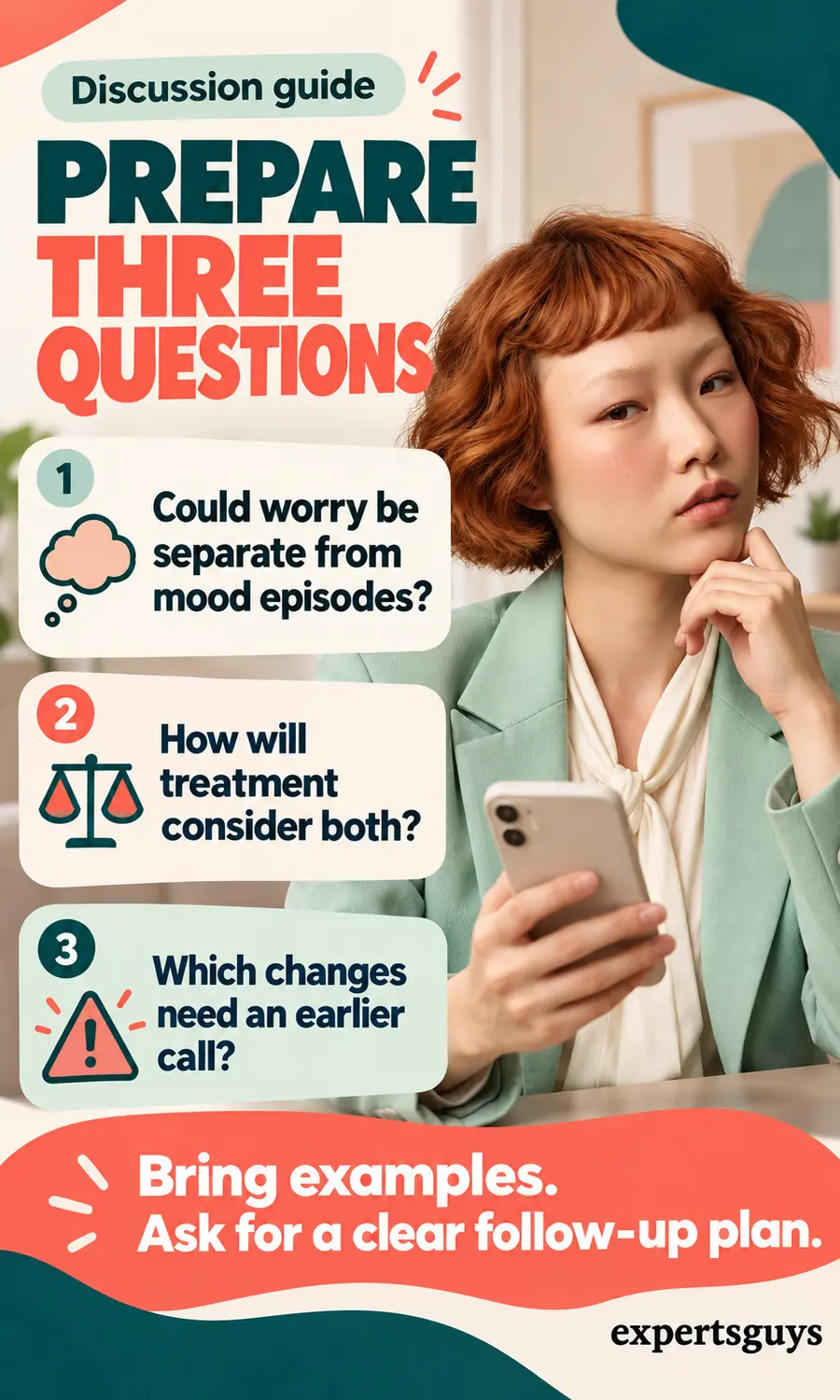
- Add three questions: “Could worry be separate from mood episodes?”, “How will treatment consider both?” and “Which changes need an earlier call?”
- At the visit, ask who will coordinate care and what the follow-up plan is. Request clarification if an instruction is unclear.
Completion means you have an agenda you can open and understand. If energy is limited, use just the most important question and one example. Keep the note on a device you control, share only the relevant portion and ask before recording any consultation; there is no need to upload private messages to a public symptom checker.
Make the first contact clear
If you already have a care team, use the contact route in your care plan. Otherwise, a primary care service can help arrange assessment, with specialist evaluation when indicated. NHS guidance on bipolar care reinforces the need to seek review when symptoms affect life or treatment is not helping; local referral routes differ.
| Situation | Next step |
|---|---|
| Immediate danger or inability to stay safe | Use local emergency help now; do not wait to finish notes. |
| New hallucinations, delusions, severe confusion or escalating unsafe behaviour | Seek urgent assessment; use emergency services if danger is immediate. |
| Much less sleep with unusual energy, new risky decisions or rapidly worsening agitation | Contact your care team promptly and ask for an urgent review; use urgent local care if they are unavailable. |
| Persistent worry or impairment without an acute safety concern | Arrange an assessment or planned review, bringing a short example. |
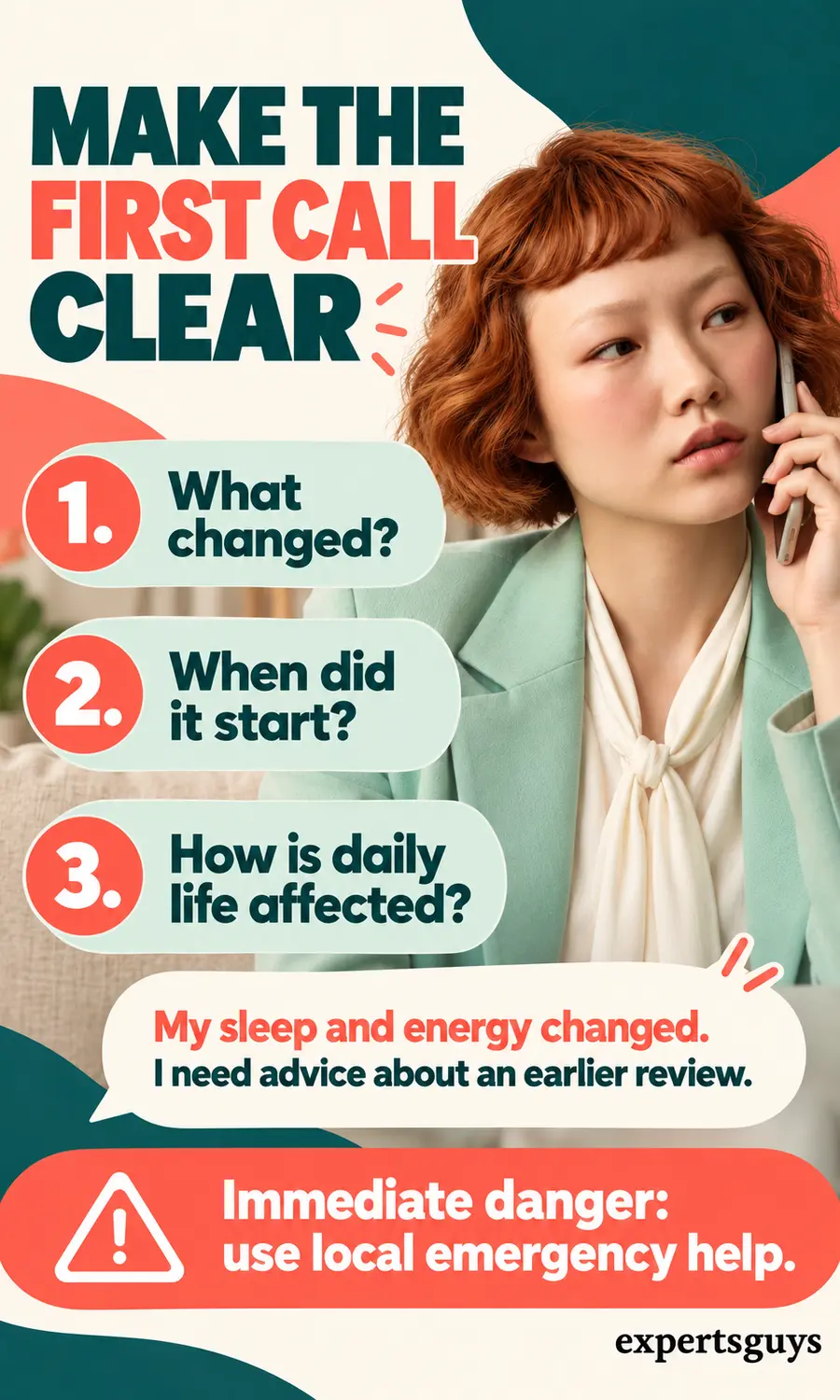
- Lead with what changed rather than with a diagnosis you are uncertain about.
- Say when it started and how it is affecting daily life. Mention a medication change or immediate safety concern at the start if relevant.
- Ask whether you need an earlier appointment, same-day advice or a different service. Follow the response and your existing care plan.
Illustrative message: “My sleep and energy have changed since last week, and I am making decisions that are unusual for me. I need advice about an earlier review.” If making the call feels difficult, ask someone you trust to sit with you or help explain, with your agreement; immediate danger takes priority over preparing the message.
For a tense but safe moment, bipolar and anxiety provides the separate general-coping guide. Feeling calmer after an exercise does not confirm the cause of symptoms or remove the need to review a significant change. Keep the distinction between momentary relief and assessment clear.
Frequently asked questions
Does an anxiety questionnaire distinguish GAD from bipolar II?
No. A questionnaire can help describe symptom burden, but it cannot establish a lifetime history of hypomania or explain every cause of anxiety. Share the result with a clinician alongside your history rather than treating the score as a diagnosis.
Can a good or productive week be hypomania?
Productivity alone is not enough. Assessment considers a distinct change from your usual mood and activity, accompanying symptoms, duration, context and observable consequences. Describe the period without labelling every good week as illness.
Does anxiety mean bipolar II is becoming bipolar I?
Anxiety alone does not establish that change. Bipolar I involves a manic episode, which requires clinical assessment. New severe changes or psychotic symptoms need urgent evaluation rather than self-reclassification.
Should I wait until I have months of phone records?
No. Existing examples can help, but complete records are not a prerequisite for care. Describe what is happening now and acknowledge gaps; urgent symptoms should be assessed without waiting for documentation.
What if my mood feels usual but worry still interferes with life?
Tell your clinician about the persistent worry and give one example of its impact. Anxiety may need attention alongside mood treatment, but symptoms can have several explanations. Ask how the care plan will address the problem and how progress will be reviewed.
Summary
GAD and bipolar II can coexist, and the most useful preparation separates persistent worry from distinct changes in sleep, energy and behaviour. Start with one clear example, add context you can verify and bring a short question about coordinated care. Seek earlier help for concerning changes instead of waiting to build a perfect history.