



Depression is centered on a sustained low mood or loss of interest, anxiety on fear or worry, and bipolar disorder on a history of distinct manic or hypomanic episodes. The symptoms can overlap, so a low mood today cannot tell you by itself whether the depression is unipolar or part of bipolar disorder. The most useful distinction is the pattern of sleep, energy, mood, and behavior over time.
Get urgent help now if you might harm yourself or someone else, cannot stay safe, or have severe confusion, psychosis, or behavior that puts you in immediate danger. Contact local emergency services or a crisis service in your country. This article and the activity below cannot diagnose a condition.
Depression, anxiety, and bipolar disorder side by side

| Question | Depression | Anxiety disorder | Bipolar disorder |
|---|---|---|---|
| What stands out? | Low mood or loss of interest and pleasure | Fear, worry, tension, or avoidance | A distinct past or current manic or hypomanic period |
| Sleep and energy | Sleep and energy may increase or decrease | Worry may prevent sleep; fatigue can follow | During an elevated period, much less sleep may feel sufficient while activity rises |
| Time pattern | Major depression usually lasts at least two weeks | Varies by anxiety disorder; persistent or situational | Distinct episodes with a clear change from usual functioning |
| Important limit | Depressive symptoms also occur in bipolar disorder | Anxiety can coexist with depression or bipolar disorder | Mania or hypomania requires clinical assessment, not a checklist alone |
What depression looks like
Major depression involves depressed mood or a marked loss of interest most of the day, nearly every day, for at least two weeks, along with other symptoms and an effect on daily life. Sleep, appetite, concentration, movement, and energy can change; guilt, hopelessness, and thoughts of death may also occur. A person may feel anxious or restless at the same time, so anxiety does not rule depression out.
A depressive episode describes what is happening now, while a diagnosis also considers what happened before. Someone who has had mania or hypomania can present with symptoms that look identical to a person with major depressive disorder. Ask about earlier periods of unusual energy and reduced need for sleep before assuming all depressive episodes have the same treatment path. See our related guide to anemia and depression when fatigue has possible physical contributors.
What anxiety looks like
Anxiety disorders involve fear or worry that is difficult to control, leads to avoidance, or disrupts daily activities. For example, generalized anxiety disorder may involve widespread worry, muscle tension, restlessness, concentration problems, and disturbed sleep; panic and social anxiety have different patterns. Being unable to sleep because you are worried is different from feeling unusually energized after very little sleep.
Anxiety can intensify during a depressive or bipolar episode, and a person may also have a separate anxiety disorder. Racing thoughts can occur in anxiety as well as mania; what else changed at the same time matters more than that phrase alone. Clinicians look for a distinct shift in activity, sleep need, speech, confidence, behavior, and functioning rather than equating anxiety with bipolar disorder.
The bipolar clue: a distinct change from your usual self

Bipolar I disorder involves at least one manic episode; a major depressive episode is common but is not required for that diagnosis. Bipolar II disorder involves hypomania and major depression, without a history of full mania. Elevated episodes can be unusually irritable rather than cheerful, and hypomania may feel productive instead of obviously problematic.
Ask whether there was a noticeable period of unusually increased energy or activity, less need for sleep, faster speech or thoughts, greater confidence, or risk taking. The change should be distinct from a person’s usual pattern and assessed in context, including duration and effects. A sleepless anxious night, a good day after depression, or an energetic personality is not enough to establish hypomania.
Mixed features add another complication: depressive symptoms can occur alongside some manic symptoms. This can look agitated or intensely uncomfortable rather than euphoric. For a deeper account, read early warning indicators of a bipolar mood episode and bipolar disorder symptoms.
Why a first depression diagnosis can later change
People usually ask for care when they are suffering from depression, while an earlier hypomanic period may have seemed like a welcome recovery or an unusually productive stretch. A short appointment may focus on today’s low mood and miss the lifetime timeline. That does not mean every initial diagnosis was careless; the defining elevated episode may not yet have happened or been recognized.
Family history, previous episodes, medications, substances, and medical conditions can help a clinician interpret the pattern, but none proves bipolar disorder by itself. An antidepressant-associated change toward unusually high energy, little need for sleep, or impulsive behavior deserves prompt review. Do not start, stop, or change a prescribed medicine on the basis of this page; discuss suspected mania or hypomania with the prescriber.
Bring a useful timeline to the appointment
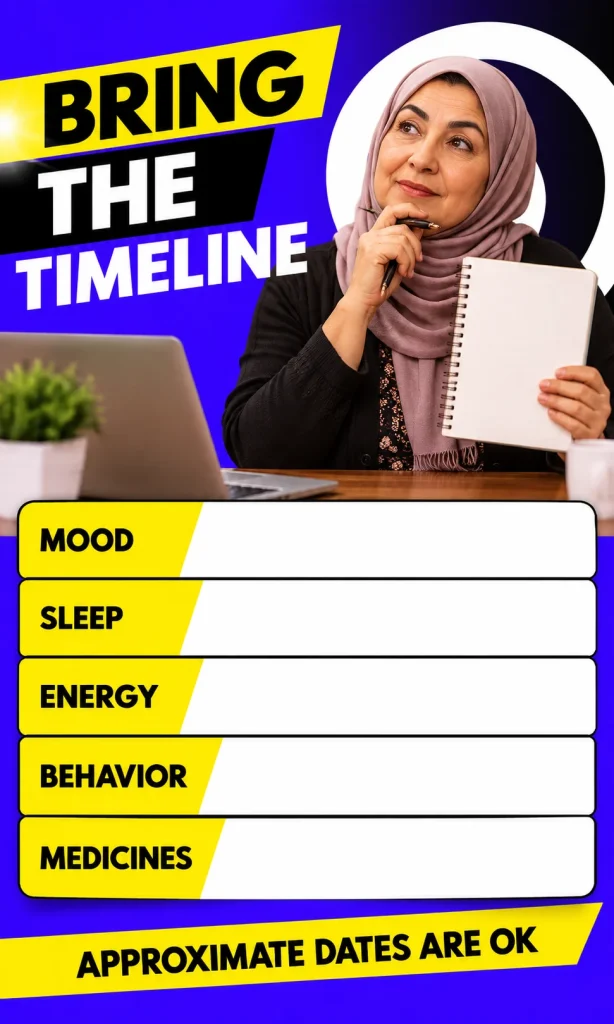
Write down when the low, worried, and unusually energized periods began and ended, plus approximate sleep hours and whether you felt tired afterward. Note changes in speech, activity, spending, risk taking, relationships, work, and anything others noticed. Include medicines and dose changes, alcohol or other substances, physical illness, and family history, while marking what you know for certain and what is approximate.
You do not need to wait two to four weeks to seek care. A few days of notes can clarify a current change, while older episodes may require memories, messages, calendars, or a trusted person’s observations. A clinician may assess physical causes and other mental health conditions as well as the three patterns discussed here.
Mood Pattern Studio
Organize what changed, when it happened, and what to ask. Your entries stay in this browser page unless you choose to print them.

This does not diagnose depression, an anxiety disorder, or bipolar disorder. If you may harm yourself or someone else, cannot stay safe, or have severe confusion or psychosis, contact local emergency services or a crisis service now.
Nothing is sent to this site by this experience. Do not stop or change prescribed medication based on the result.
When to seek help
Arrange a clinical assessment when low mood, worry, or shifts in energy persist, disrupt your life, or are difficult to understand. Seek urgent assessment for a new period of very little sleep with markedly increased energy, risky behavior, psychosis, or rapid deterioration. If you are in immediate danger or thinking of acting on suicidal thoughts, contact your local emergency number or crisis service now.
Treatment depends on the full assessment, including whether the depression is part of bipolar disorder and whether anxiety is also present. Bipolar depression has specific treatment options, and antidepressants need careful clinical consideration when bipolar disorder is suspected. Read more about how bipolar disorder is treated.
Frequently asked questions
How do I know if I have depression or bipolar disorder?
Ask whether you have ever had a distinct period of unusually increased energy or activity with other changes such as needing much less sleep, faster speech, or unusual risk taking. Depression can occur in both conditions, so the current low period alone cannot distinguish them. A clinician can assess the complete history.
Can anxiety turn into bipolar disorder?
Anxiety does not simply turn into bipolar disorder. They are different conditions, although anxiety symptoms or a separate anxiety disorder can occur alongside bipolar disorder. If you notice distinct changes in sleep need, energy, activity, and mood, bring the timeline to a clinician.
Can I have anxiety, depression, and bipolar disorder together?
A person with bipolar disorder can experience depressive episodes and can also have an anxiety disorder. Whether there are separate diagnoses depends on the history and clinical assessment. Treatment should address the whole picture rather than treating one symptom in isolation.
Is reduced sleep always a sign of mania?
No. Stress, anxiety, work schedules, substances, and medical problems can reduce sleep. The more specific concern is needing much less sleep while feeling unusually energized and showing a sustained change in activity or behavior. A clinician should assess that pattern.
Should I stop an antidepressant if I suspect bipolar disorder?
Do not stop or change a prescribed medicine based on an online comparison. Contact your prescriber promptly if you develop markedly increased energy, a reduced need for sleep, agitation, or risky behavior, especially after a medication change. The clinician can decide what treatment changes are appropriate.
Clinical sources
The distinctions here follow the National Institute of Mental Health’s explanation of bipolar disorder, its guidance on depression and generalized anxiety disorder, and NICE guidance on bipolar assessment and management. This article needs review by an appropriately qualified clinician before publication.