
When you search for bipolar symptoms in women, a list of signs may answer only half the question. You may also need to decide what to do about today’s crowded schedule, an unusually ambitious purchase, a night with very little sleep or a change that somebody close to you has noticed. Those decisions do not require you to diagnose yourself. They do require you to take a meaningful change seriously without letting an online checklist decide the whole story.
Bipolar disorder involves episodes that affect mood, energy, activity and thinking. Depression can be prominent, while an unusually activated period may feel helpful or be remembered as getting things done. The NIMH overview of bipolar disorder explains why assessment looks at symptoms over time and considers other possible explanations. A single argument, productive evening or short night cannot establish the diagnosis.
The site’s main guide to bipolar symptoms in women covers recognition, episode history and reproductive transitions. This article has a narrower purpose: matching practical support to the situation while an assessment or an existing care plan addresses the clinical questions. The examples are fictional teaching situations, not patient stories or a new treatment method.
Women do not all share the same pattern, family responsibilities or reproductive history. Some live alone; some have partners, children or other dependants; others need support with study or work. Start with the person and the change in front of you. Everyday help should preserve dignity and choice, while immediate safety concerns require urgent professional action rather than a negotiation about whether the person is coping well enough.
First establish what has changed, without voting on a diagnosis
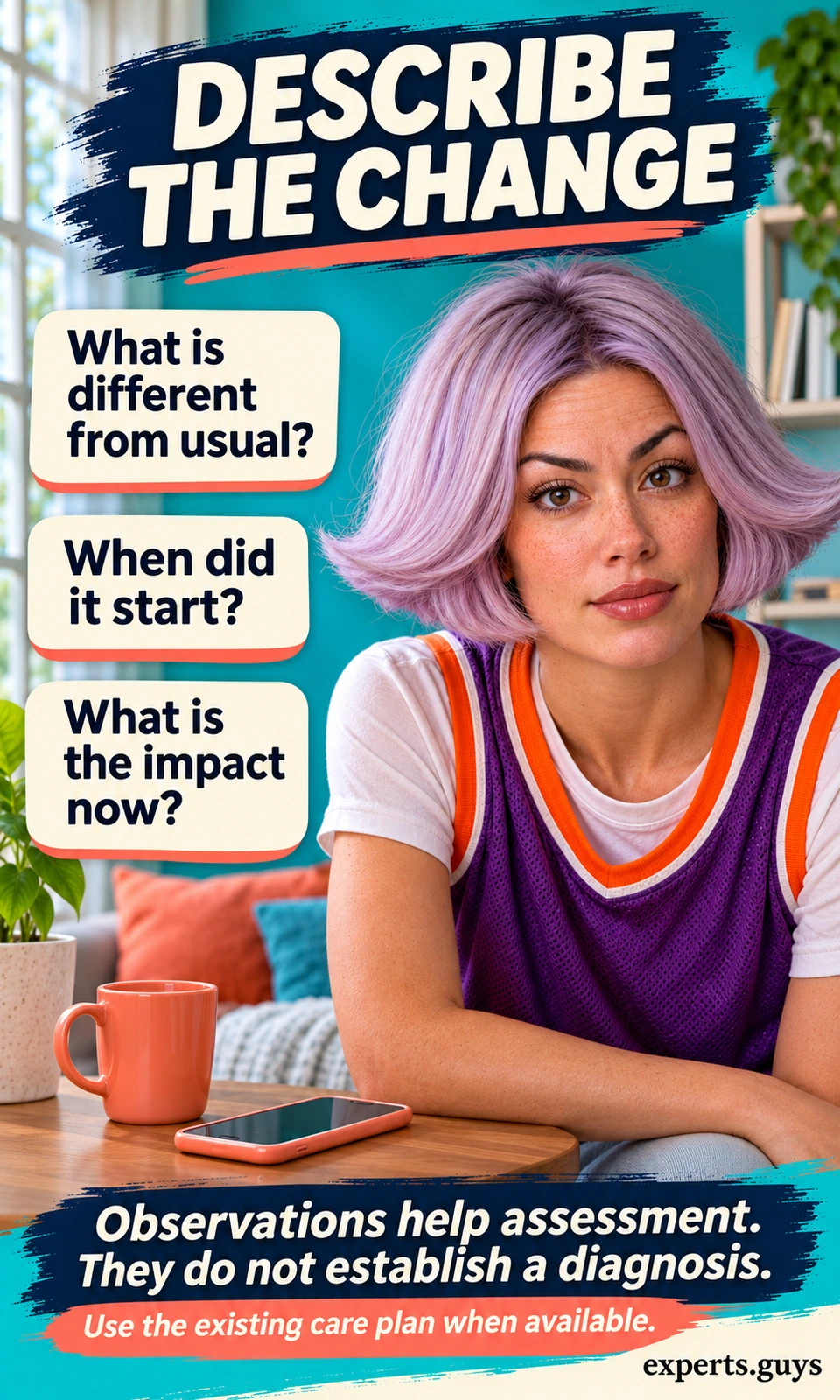
Use a concrete contrast with the person’s usual functioning. “You have been starting new projects through the night and speaking much faster than usual” conveys a different concern from “you seem moody.” The first describes something a care team can assess. The second can become a judgment about personality, especially when normal anger, disagreement or stress is being interpreted through a stereotype.
A supporter can notice a change without knowing its cause. Poor sleep, medicines, substances, physical illness and other mental health conditions can complicate the picture. Do not turn that uncertainty into either reassurance or certainty. The useful statement is that the change needs the appropriate assessment, with its timing and impact communicated clearly, rather than a declaration that every sign must be bipolar disorder.
This also protects against dismissing a concern because work is still getting done. Output is only one part of functioning. An unusual change in sleep, pace, judgment or consequences can matter even when a project is progressing. Conversely, being busy or enthusiastic is not itself a symptom. Look at the difference from usual and the wider cluster, rather than treating success as proof of wellness or ambition as proof of illness.
| Situation | Useful support | Boundary |
|---|---|---|
| A marked change with no immediate danger | Describe it and arrange appropriate assessment | A checklist cannot determine the diagnosis. |
| Possible activation and major commitments | Use an agreed reversible pause while seeking care | Do not take secret control of accounts. |
| An essential household task is at risk | Agree a specific safe handover | Do not leave responsibility vague. |
| Immediate danger or unable to stay safe | Use local emergency help | Do not wait for a routine appointment. |
| New severe confusion or psychosis after childbirth | Arrange emergency assessment | Do not assume it is ordinary tiredness. |
Separate sleep opportunity from feeling no need for sleep
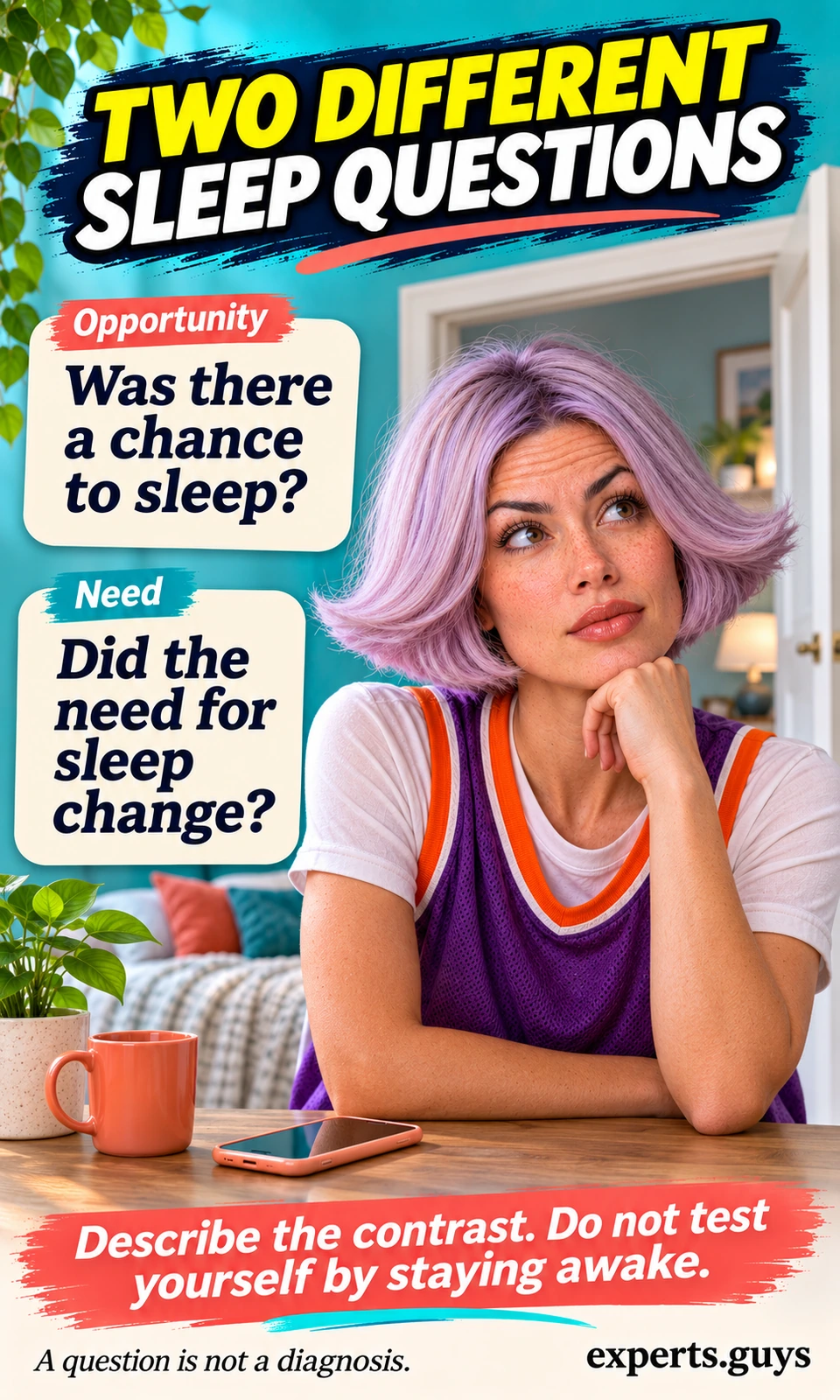
Ask two different questions: was there a realistic opportunity to sleep, and what happened to the person’s need for sleep? Someone kept awake by a baby, pain or a demanding shift may be exhausted and want sleep. A marked reduction in sleep accompanied by unusual energy or activation raises a different concern. Neither answer, viewed alone, settles a diagnosis; the contrast helps describe what should be assessed.
For example, “I had only a short opportunity and felt worn out” does not mean the same thing as “I slept much less than usual but felt unusually energized and kept adding plans.” Do not convert that comparison into a home test with a pass mark. It is a way to avoid losing useful information inside the phrase bad sleep. If the change is escalating, contact the care team rather than waiting to collect a longer sequence.
A practical response can address the opportunity while clinical care addresses the unexplained change. If agreed and safe, someone else can handle a household task so the person has a realistic chance to rest. That does not establish the cause of the sleep problem or guarantee that an activated episode will stop. It removes one avoidable demand without treating rest as a substitute for assessment.
Avoid sleep-deprivation experiments. Do not stay awake deliberately to see whether a high-energy feeling persists, use strenuous exercise to force exhaustion or change prescribed medicine to manipulate sleep. The person’s existing care plan and clinician should guide treatment. A supporter’s role is to make the situation easier to assess and safer to navigate, not to create a test condition at home.
Choose the level of response before optimizing the routine
A routine adjustment belongs in a situation where it is safe to use one. It should not delay help for suspected mania, severe depression, psychosis or immediate danger. NICE's bipolar care recommendations call for urgent specialist assessment when mania or severe depression is suspected. Its advice during mania or hypomania includes a calming environment and postponing important decisions.
A change that does not create immediate danger can still deserve prompt contact with the existing care team or an appropriate clinician. Say that the concern involves a marked change in sleep, activity, thinking or behavior, and explain its effect. If there is an established relapse or crisis plan, use it. Do not wait for an online checklist, a perfect account of the last month or agreement on a diagnostic label.
Immediate danger, an inability to stay safe, severe confusion or behavior that cannot be managed safely calls for local emergency help. Do not use a quiet-room exercise or a scheduled message as the only response. A person with rapidly changing judgment may need more support than a family member can safely provide. A supporter should not physically confront, restrain or transport someone in circumstances they cannot manage safely.
Reduce demands without turning support into punishment
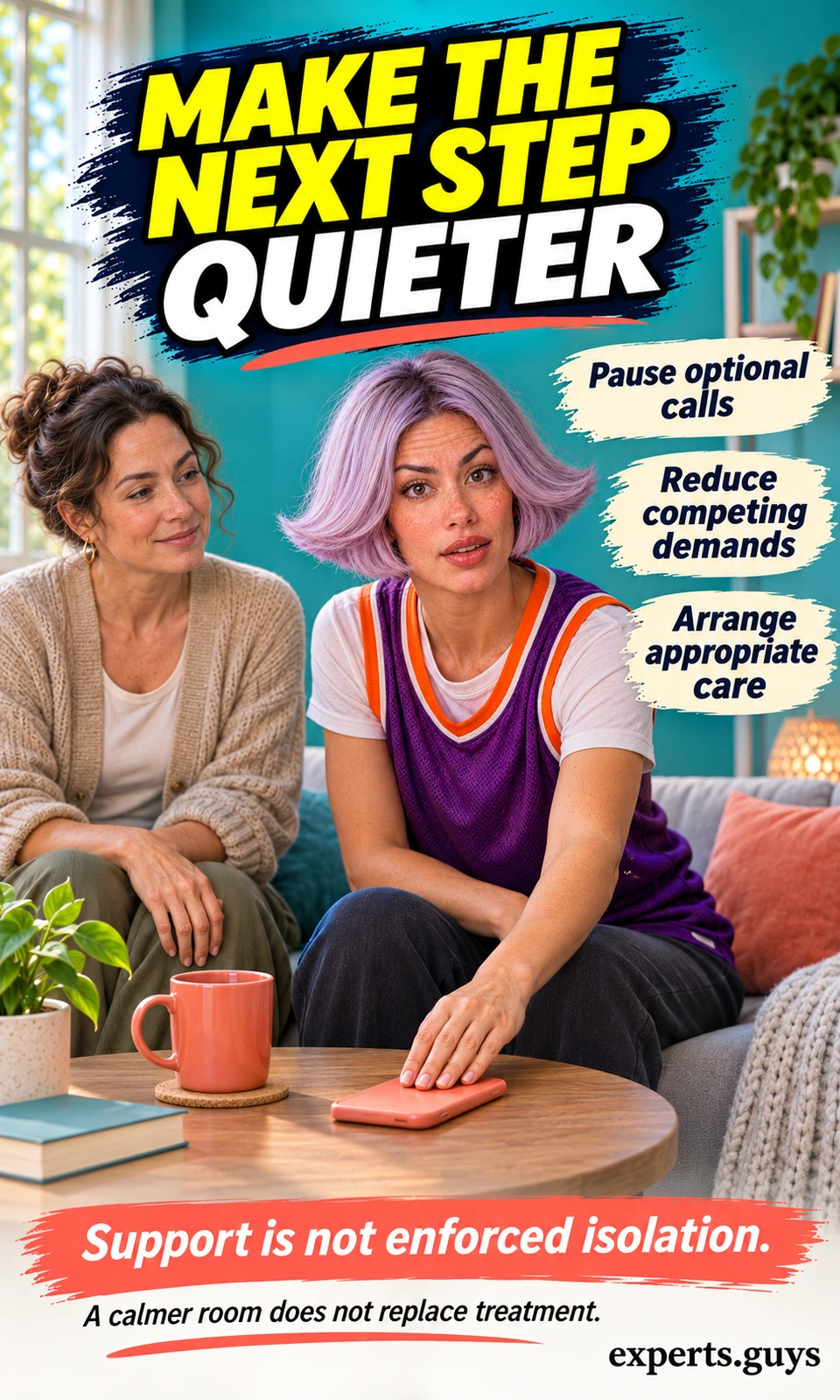
When activation is a concern, a quieter setting and fewer competing demands can support the care response. Turn off optional entertainment, pause a noisy group discussion and offer a calmer place if the person is willing and it is safe. This is not enforced isolation or a claim that a certain room setup treats bipolar disorder. The aim is to remove avoidable stimulation while arranging the appropriate help.
Make the change concrete. “Let’s pause the group call while we contact your team” is easier to understand than “you need less stress.” A small environmental request should have an immediate purpose, not become a new household rule that excludes the person from normal life indefinitely. Where a care plan specifies strategies, follow that plan instead of inventing restrictions from a general article.
Do not add a demanding self-improvement routine. A complicated breathing sequence, an intense workout or a long app-based program can become another task when the immediate need is simpler. Ordinary comfort and practical help can coexist with clinical care. They do not need to be packaged as a technique that promises to stop an episode within minutes.
Pause decisions that cannot easily be undone
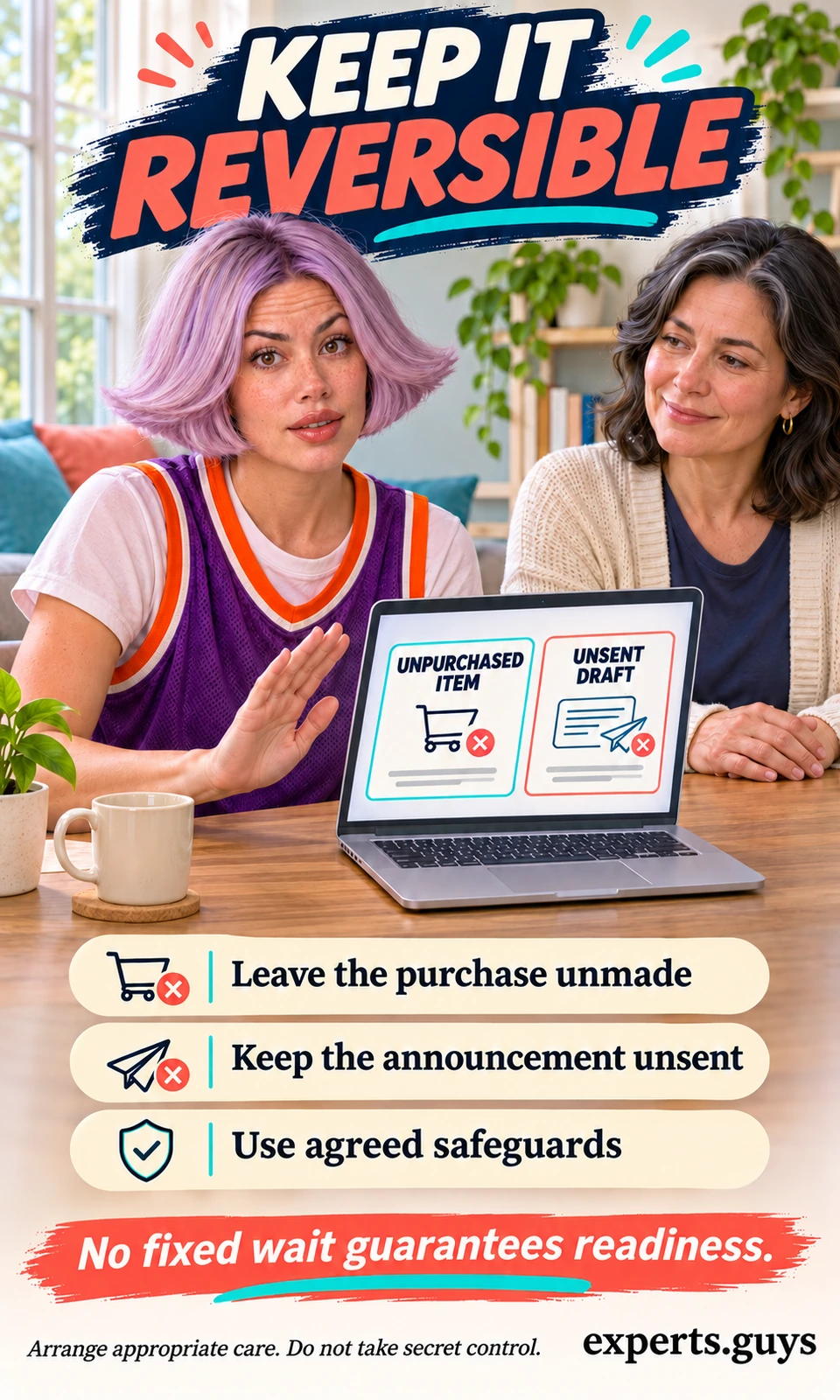
An unusually energized plan can feel compelling. If mania or hypomania is suspected or established, postpone important decisions while seeking care rather than trying to determine whether this particular idea is brilliant. That includes decisions with major financial, relationship, travel or work consequences. The point is a temporary pause on consequences, not a permanent judgment that the person’s preferences are unreliable.
For a digital purchase, an agreed action might be leaving the item unpurchased while the person contacts their care team. For a work announcement, it might be keeping a draft unsent. These are examples of a reversible pause, not a universal number of hours to wait. Do not promise that a short delay means the decision will be safe to make later; readiness depends on the clinical situation and the person’s recovery.
Where spending risk is already part of an agreed care plan, use the safeguards established while the person was well. Do not secretly take accounts, change passwords, seize money or share private information merely because a general article recommends caution. Consent, safeguarding, legal authority and immediate risk matter. When a supporter cannot safely manage a financial or exploitation concern, seek professional assistance rather than improvising control.
A pause should not become a debate about every detail of the proposal. The useful conversation may be, “This has major consequences, and the change in sleep and pace worries me. Let’s keep it reversible while we get help.” That statement makes the concern and next action visible without requiring the person to admit a diagnosis before support is offered.
- Describe the marked change rather than assigning a personality label.
- Use the existing care or crisis plan when there is one.
- Pause avoidable demands and high-consequence decisions where safe and agreed.
- Arrange a specific practical handover instead of saying “ask if you need anything.”
- Escalate promptly when safety or severe symptoms are involved.
Transfer an essential task, not the whole person’s autonomy
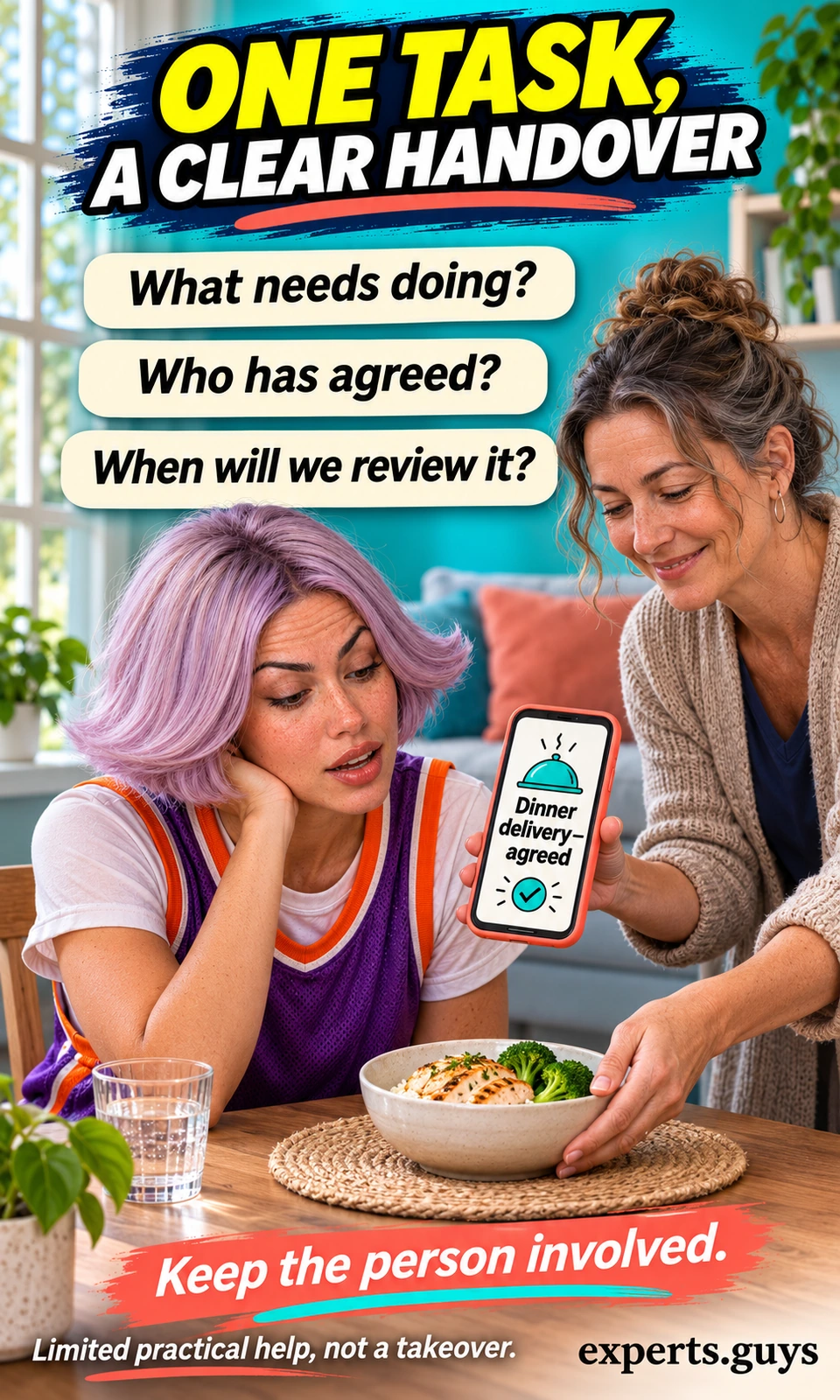
Practical support works better when the task has a clear owner and endpoint. “I can collect dinner and handle tonight’s household delivery” is more usable than “tell me what to do.” The person experiencing symptoms may not have the attention or energy to design a support plan for everyone else. Offer a limited action that can actually be accepted or declined.
For someone with dependants, the immediate question can be who is safely responsible for the essential task now. That might involve an agreed trusted adult handling a school collection or meal while care is arranged. It should fit the real household and any existing safeguarding plan. Do not leave a dependant’s essential needs resting on a vague promise that somebody will probably manage.
For a person living alone, practical support could involve an agreed companion during a care call, help obtaining food or arranging a suitable journey. Living alone does not make the person incapable, and a supporter should not assume the right to move in or supervise every activity. Ask what specific assistance is acceptable unless an emergency requires an immediate safety response.
At work or in study, keep the disclosure proportionate. A short request to move a deadline or transfer a safety-sensitive task may be more useful than sending colleagues a detailed symptom history. The WHO fact sheet on bipolar disorder emphasizes respectful, person-centered care and the role of appropriate social and workplace support. Practical adjustments should support participation and recovery, rather than label every future difficulty as illness.
Agree how the task returns. A temporary handover can become confusing when nobody knows whether it lasts for one meal, one shift or until the care team reviews the situation. Do not set an arbitrary recovery deadline. Instead, keep the handover limited and revisit it with the person and the relevant care guidance. A clear endpoint protects both the supporter and the person receiving help.
Make contact easier with a short factual message
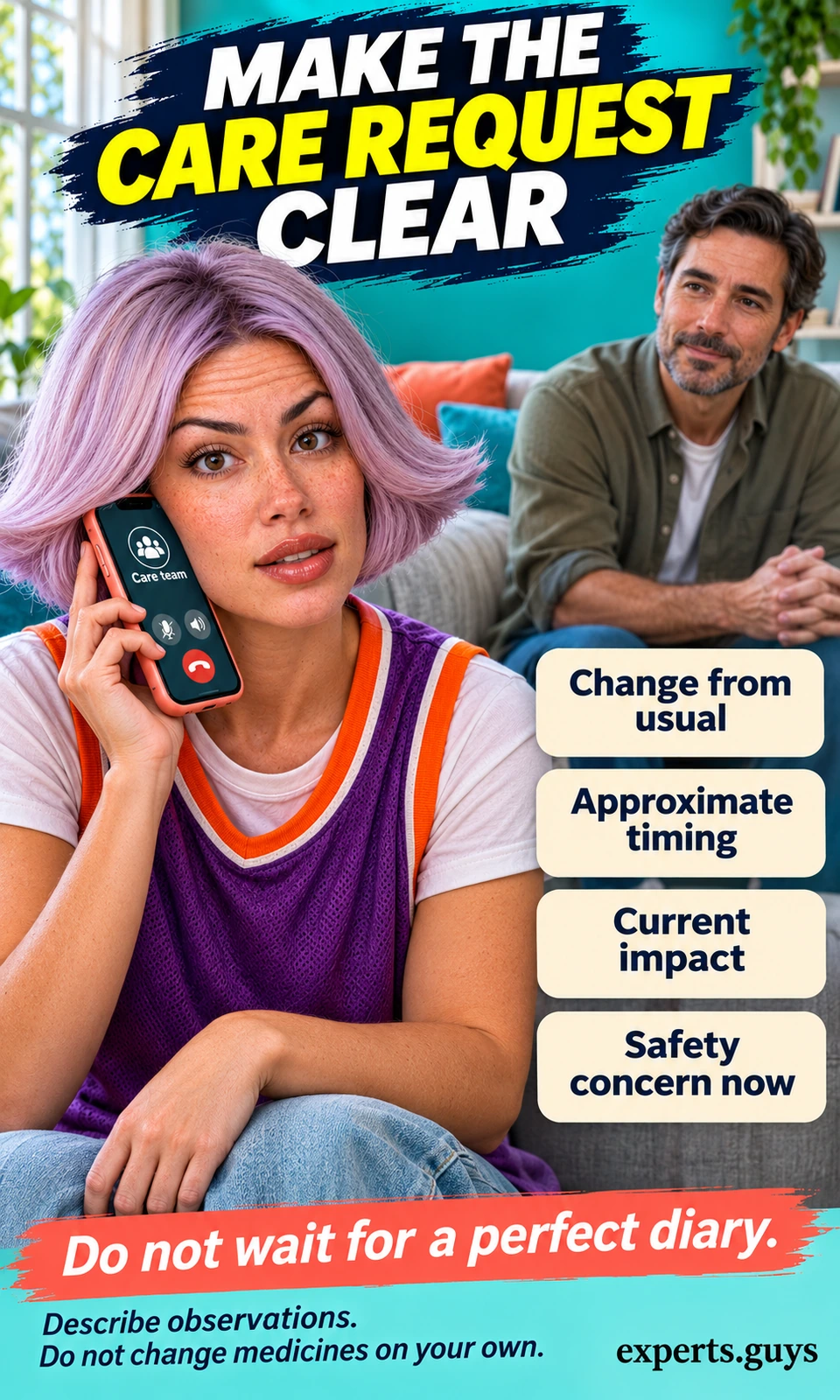
A care request does not need an essay. It needs the important change, approximate timing, present impact and current safety concern. If the person agrees, help make the call or organize those facts in a phone note. This is a communication aid, not a request to start a detailed daily mood diary or a diagnostic scoring exercise.
An illustrative message might say: “My sleep and activity have changed markedly from usual over the last several days. I am taking on unusual plans and someone close to me has noticed faster speech. I need advice about assessment and what to do now.” Add any actual safety concern directly. Do not use the example as a script that attributes symptoms the person has not experienced.
If a medicine, supplement, substance or significant physical-health change preceded the symptoms, communicate that sequence to the clinician. Report what changed and when without deciding at home that the treatment caused bipolar disorder. Do not stop, increase or substitute prescribed medicine on the basis of this article. If the person already has specific written treatment instructions for relapse, follow them as directed.
The NHS overview of bipolar disorder advises continuing prescribed treatment unless a doctor directs otherwise and seeking help when symptoms or treatment problems need review. Clinical assessment can consider more than the current mood. The message should open access to that assessment; it should not attempt to replace it with a family member’s conclusion.
If a supporter contributes observations, distinguish them from the person’s own experience. “I noticed several new commitments” and “she reports feeling rested on much less sleep” are different sources of information. Both can be useful without being forced into agreement. Ask how the person wants the supporter involved when it is safe to do so, and respect clinical privacy arrangements.
Recognize when the situation needs emergency action
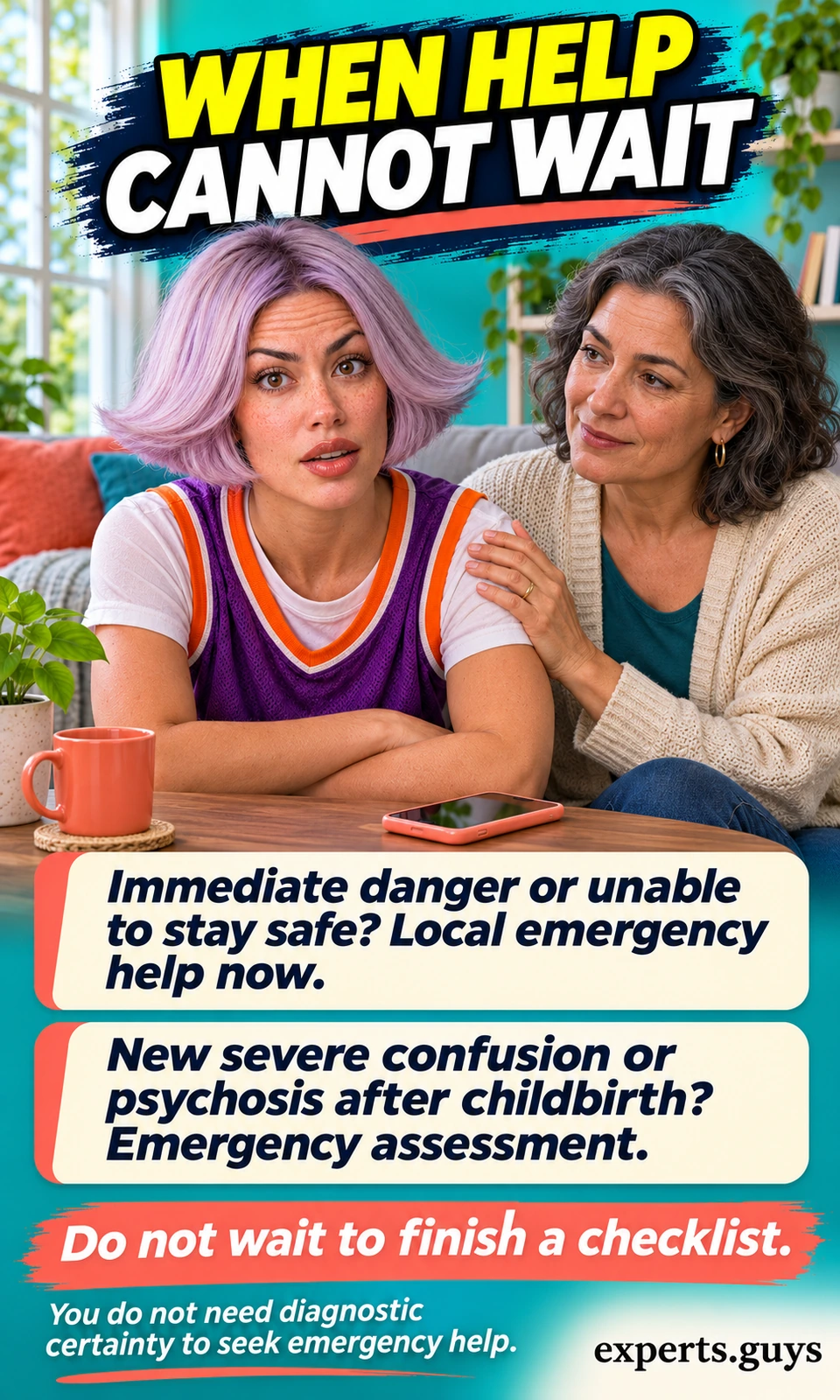
Thoughts of suicide with intent or an inability to stay safe, severe disorganization, dangerous behavior, hallucinations or delusions can require urgent or emergency care. If there is immediate danger, contact local emergency services or go through the appropriate emergency pathway. Do not wait to complete this article, a digital worksheet or a planned routine appointment. Practical support should help that action happen, not become a reason to postpone it.
After childbirth, new hallucinations, delusions, marked confusion or a rapidly changing severe mental state needs emergency assessment. The NHS guidance on postpartum psychosis distinguishes it from ordinary short-lived mood changes after birth. A household should not treat it as a problem that can be settled by one uninterrupted nap or an argument about whether the person is simply exhausted.
A supporter can communicate immediate facts and keep themselves and others safe while help is arranged. If the person cannot safely care for a baby or another dependant, make sure a safe responsible adult is available and tell the emergency team about that concern. Do not leave the practical responsibility unspoken. Avoid confrontation about unusual beliefs; focus on distress, safety and obtaining professional help.
An emergency pathway does not require certainty about the final diagnosis. Severe symptoms can have several causes, and the clinical team must assess them. The household’s decision is whether the present situation can be managed safely while waiting. When it cannot, seeking emergency assistance is appropriate even if everyone still disagrees about the word bipolar.
Offer support without reinforcing stereotypes
Normal disagreement should not be medicalized. A woman can be angry about unfair work, unhappy in a relationship or enthusiastic about a project without those experiences proving an episode. At the same time, a meaningful change should not be dismissed as hormones, drama or simply being strong enough to cope. Both shortcuts replace assessment with a stereotype.
Use the person’s ordinary language when possible. Ask what feels different and what kind of help would be useful now. Avoid public commentary about mood, jokes about being up and down or discussing private symptoms in a group chat without permission. The person should not have to choose between accepting help and surrendering every boundary around personal information.
Supporters also need boundaries. A friend can offer a meal or accompany a call without becoming the only crisis service. If the person is escalating or the supporter is frightened, exhausted or unsafe, seek the appropriate professional response. A promise to handle everything privately can prevent necessary help and create an unrealistic burden on one relationship.
A calm response does not mean ignoring consequences. Harmful behavior, exploitation risks and safety concerns still need to be addressed. It means using proportionate, appropriate channels rather than a humiliating confrontation or a claim that the person has lost all authority over their life. The clinical plan, safeguarding needs and immediate risk should guide the response.
Review the plan when the immediate situation has settled
When the person is well enough and wants to discuss it, look back at which practical actions helped and which created confusion. Was the care contact clear? Did a household task actually transfer? Did a supporter mistake a temporary pause for permanent control? This review is about improving support arrangements, not assigning blame or requiring the person to defend every action from a difficult period.
The Royal College of Psychiatrists' bipolar information includes support for people living with the condition and their families. An existing care team can help translate general ideas into an individual relapse plan. Use that opportunity to clarify contact routes, preferred involvement and what to do if the person does not recognize a marked change.
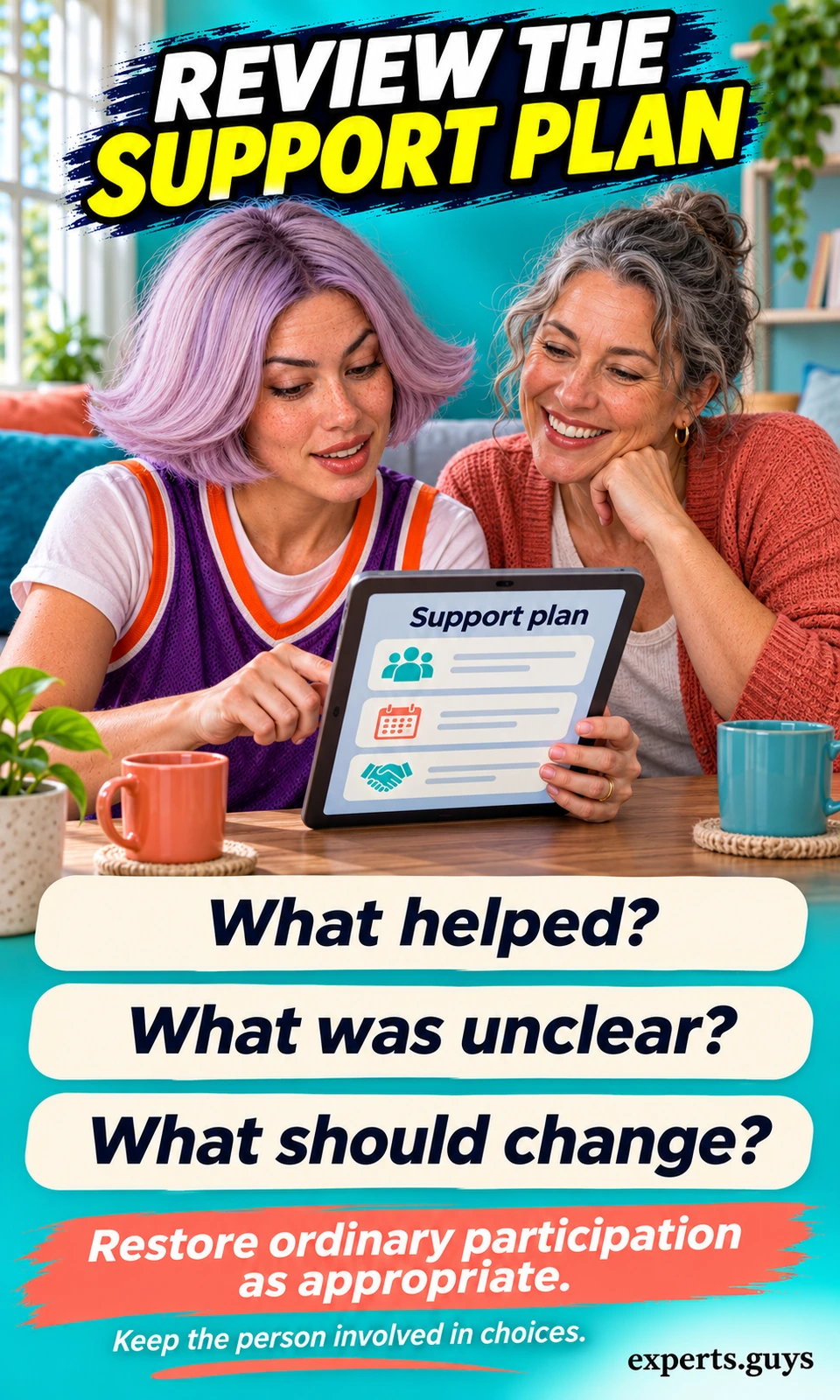
Keep the accessible plan brief. The care team’s contact route, the person’s preferences, an agreed practical handover and the emergency boundary are more useful than a complicated private dashboard nobody can use under stress. Save the relevant information in the format the person can access, such as a phone note or their care service’s existing system. Avoid making the act of completing a tracker a condition of receiving help.
Afterward, restore ordinary participation as appropriate rather than leaving the household permanently organized around a crisis. The person’s goals, relationships, work and choices remain important. Support should help them return to those activities within their care plan, not turn every future purchase, late evening or disagreement into an informal psychiatric examination.
What these examples can and cannot establish
A fictional purchase pause or household handover explains how a support action works. It does not show that a particular woman has bipolar disorder, that a technique prevented an episode or that a certain response will fit every family. The model’s expression, clothing and room are teaching choices. None should be read as a visual sign of a clinical state. A person can look calm while needing urgent care, and a dramatic photograph cannot establish severity.
The same limit applies to a reassuring conversation. Agreement to postpone a purchase may reduce one immediate consequence while leaving the clinical concern unresolved. A successful meal handover can keep an essential task covered without establishing that sleep, judgment or safety has returned to normal. Use the actual care response and present condition to guide the next step; do not turn cooperation with one practical suggestion into an informal clearance.
This distinction keeps support useful. Each action has a limited purpose that can be checked without inventing a symptom score: the call was made, the task has an agreed owner or the high-consequence commitment remains reversible. The diagnosis, treatment and assessment of recovery belong to appropriate clinical care. Keeping those roles clear allows practical help to be specific without pretending it can answer every medical question.
Frequently asked questions
Does being productive mean the change is harmless?
No. Output alone does not settle the meaning of a marked change in sleep, pace, judgment or behavior. At the same time, ordinary enthusiasm and a busy period are not proof of illness. Describe the difference from the person’s usual functioning and its consequences so the appropriate clinician can assess it. Support should be based on the actual concern, not whether the household approves of the project.
Can I use the sleep questions as a bipolar self-test?
No. They clarify the description of a problem; they do not provide a diagnostic threshold. A short sleep opportunity with exhaustion is different from feeling unusually energized after much less sleep, but other explanations and the full clinical history still matter. Do not stay awake intentionally to test the distinction or wait for more data when symptoms are escalating.
Should a partner manage all spending when symptoms are suspected?
A general article does not grant that authority. Use safeguards agreed in the person’s care plan where appropriate, and seek professional help for exploitation, safeguarding or safety concerns. Secret account changes and indefinite financial control can create harm of their own. A reversible agreed pause is different from taking over somebody’s money simply because you suspect a diagnosis.
What if the person disagrees that anything has changed?
Describe specific observations calmly and explain the proposed next action without demanding agreement on a label. If there is no immediate danger, use the appropriate care contact and the existing plan. If safety cannot be maintained or severe symptoms require emergency assessment, use that pathway rather than prolonging an argument. A supporter should not try to manage a dangerous situation alone.
Do I need to complete a mood diary before asking for help?
No. A clear account of the important change and current concern is enough to begin a care request. The clinical team may later ask for more history or monitoring, but completing a tracker is not a prerequisite for urgent help. This article uses short communication prompts because the immediate job is access to support, not producing a perfect private record.
Can I stop a medicine if the change began after taking it?
Do not independently stop, increase or replace prescribed medicine on the basis of this article. Tell the prescriber what changed, when it changed and what else was happening. If you already have individual written relapse instructions, follow them as directed. If symptoms or safety concerns are severe, seek urgent or emergency help rather than making a home medication experiment.
Does postpartum confusion always mean bipolar disorder?
No. New severe confusion, hallucinations, delusions or a rapidly changing severe mental state after childbirth needs emergency assessment regardless of the eventual diagnosis. The immediate task is safety and professional assessment, including the baby’s care needs. Do not wait to decide which diagnostic term fits, and do not assume that one period of rest can settle the cause.
Is the basketball clothing in the images an exercise recommendation?
No. It is the visual appearance brief for the article’s fictional teaching model. The images do not recommend strenuous exercise, exhaustion or athletic performance as a treatment or diagnostic test. Use the person’s own clinical plan for activity advice. The practical methods taught here involve support, communication, decision pauses and appropriate access to care.
What if I can offer help but cannot be available all night?
State the limit clearly and help connect the person with an appropriate support or care route. Do not promise continuous private supervision you cannot safely provide. A limited meal delivery or an accompanied care call can still be useful. If the situation requires crisis or emergency support, a friend’s availability should not determine whether that professional help is requested.
Summary
The next useful action depends on the present situation: a clear description of a change, a reversible pause, an agreed essential-task handover, prompt care contact or emergency help. None of those actions proves a diagnosis. They help keep uncertainty from becoming either dismissal or a justification for unnecessary control.
Use the main symptom guide for the broader recognition questions and the person’s own care plan for individual treatment. Practical support is most useful when it names one real job, protects dignity and connects the person to the level of help they need. A busy schedule, a reassuring label or a completed checklist should never override a serious safety concern.