


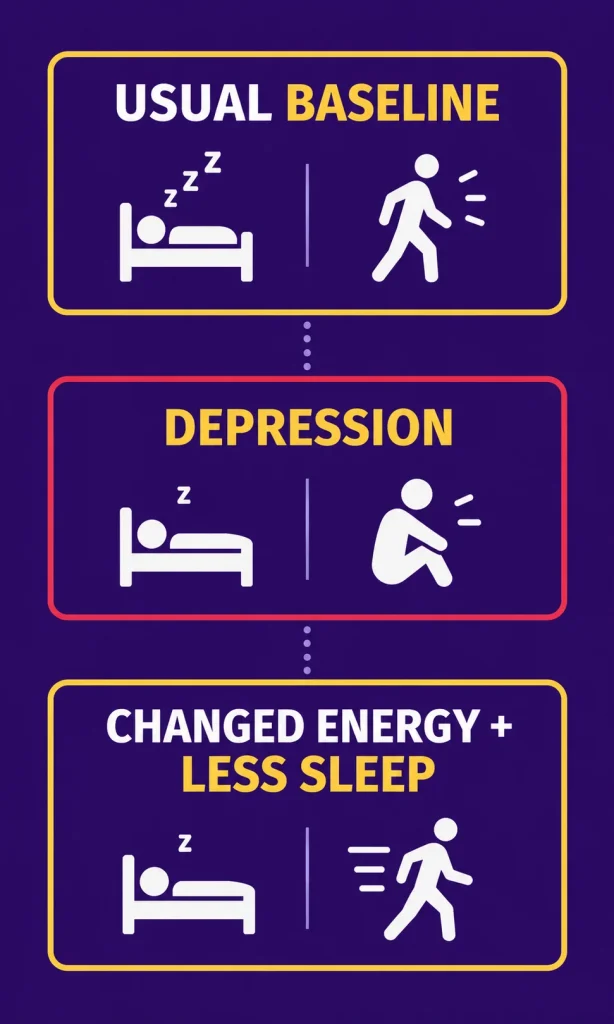
Bipolar symptoms in women can look like recurring depression interrupted by periods of unusually high energy, less need for sleep, or a change in behavior that others may call productivity. Women and men share the same core diagnostic features, but some research finds differences in the course of illness, and menstrual, pregnancy, postpartum, and menopausal transitions may matter for some people. The useful question is whether distinct episodes change sleep, energy, thinking, and functioning over time.
This guide explains what to record and when to seek an assessment. It cannot determine whether any individual has bipolar disorder; depression, anxiety, sleep loss, thyroid disease, medication effects, and other conditions can overlap.
Bipolar disorder in women: the short answer
| Question | What the evidence supports | What to check in your own history |
|---|---|---|
| Is it more common in women? | Overall adult prevalence is similar by sex in large survey data. | A personal pattern matters more than a demographic average. |
| Is the presentation different? | Some clinical studies report more depressive illness and rapid cycling in women. Results vary by sample and definition. | Ask about past episodes of activation, including ones that felt positive. |
| Is bipolar II more common? | Some studies suggest it may be; the size and consistency of the difference remain uncertain. | Look for a history of hypomania alongside depression, not depression alone. |
| Do hormones cause episodes? | Reproductive transitions can coincide with worsening in some people; they do not establish the diagnosis. | Track mood, sleep, cycle or transition, medication, and life events together. |
The National Institute of Mental Health’s adult survey figures show similar prevalence for women and men. Older clinical reviews of sex differences describe possible differences in episode patterns, but these are population observations rather than rules that predict an individual’s illness.
What symptoms can look like day to day
Depression may be the part everyone notices
A depressive episode can involve persistent low mood or loss of interest, fatigue, slowed thinking, changes in sleep and appetite, guilt, and difficulty keeping up with ordinary tasks. Someone may seek help only during these periods because the intervening increase in energy feels like recovery. Recurrent depression deserves a careful history of any past elevated or unusually irritable periods, especially before treatment decisions are made.
Hypomania may be mistaken for simply feeling better
A woman might sleep far less than usual without feeling tired, speak much faster, take on an unusual number of projects, spend impulsively, or become noticeably more confident and distracted. Hypomania is an observable change from her usual self that lasts for days; a good day, deadline, or single short night does not establish an episode. Mania is more severe and may seriously impair functioning, require hospital care, or involve psychosis; psychosis does not occur in hypomania.
Family or colleagues may notice a change before the person does, while apparently successful output can hide the cost. A dated example, such as several nights of markedly reduced sleep followed by unusual spending and escalating arguments, is more useful in an appointment than the label “high energy.” See the broader bipolar symptoms guide for signs across episode types.
Mixed features require prompt attention
Mixed features mean clinically meaningful symptoms of depression and mania or hypomania occur during the same episode. A person may feel hopeless while also experiencing racing thoughts, agitation, increased energy, or a reduced need for sleep. Irritability alone is nonspecific and cannot identify a mixed episode; a clinician considers the whole cluster, timing, and severity.
Research does not show that mixed features always occur more often in women. The practical concern is that an agitated depressive presentation can be missed if the assessment asks only about sadness. If distress, impulsivity, or suicidal thoughts appear together with increased energy, seek urgent professional help.
Rapid cycling is a course pattern, not a mood change every hour
In clinical use, rapid cycling describes at least four distinct qualifying mood episodes in 12 months, separated according to diagnostic rules. Some studies find this pattern more often in women, yet repeated changes within a single day do not by themselves meet that definition. A dated timeline helps a clinician distinguish separate episodes from ongoing symptoms, a mixed state, menstrual symptoms, sleep disruption, and medication effects.
Hormones and bipolar symptoms across life stages

| Stage | What may happen | Useful action |
|---|---|---|
| Menstrual cycle | Some people report premenstrual worsening. Premenstrual symptoms can also occur without bipolar disorder. | Record symptoms prospectively across several cycles, alongside sleep and treatment changes. |
| Pregnancy | Individual relapse risk varies, and medication choices involve balancing maternal and fetal risks. | Plan with the prescribing clinician and obstetric team before changing medication. |
| After childbirth | The postpartum period can carry substantial risk of recurrence, including mania or psychosis. | Arrange a prevention and sleep-support plan before delivery; seek urgent assessment for new severe symptoms. |
| Perimenopause | Sleep disruption and mood symptoms can overlap. Limited research suggests worsening for some people. | Track sleep, vasomotor symptoms, and mood; review any new or changed symptoms clinically. |
A systematic review on menopause and bipolar disorder found suggestive evidence but only a small number of studies, so a new symptom should not automatically be attributed to hormones. Pregnancy and postpartum care should be coordinated: ACOG’s perinatal screening guidance includes bipolar disorder and postpartum psychosis in the assessment. Never stop a prescribed medicine suddenly because of a positive pregnancy test or an online risk list; contact the care team promptly for an individual plan.
Why bipolar disorder can be mistaken for depression
A person may present during depression and forget to report an earlier period of hypomania because it seemed helpful or brief. Anxiety, irritability, and poor sleep can complicate the picture, while overlapping medical conditions and treatments may produce similar symptoms. The distinction changes care: ACOG’s perinatal screening resource calls for bipolar assessment before starting an antidepressant after a positive depression screen.
A clinician will ask when changes began, how long they lasted, what happened to sleep and functioning, whether others noticed, and whether drugs, prescribed medicines, or medical illness could explain them. A depression screen or a self-test can start a conversation, but neither can confirm or exclude bipolar disorder. If previous treatment coincided with unusually energized or agitated periods, report the sequence without changing the prescription on your own.
When to request an assessment or second opinion
- Depression has returned, and there have also been distinct spells of much less sleep without tiredness, unusually fast speech, or impulsive decisions.
- Someone close to you describes periods of marked change that you remember as merely being productive.
- Depression has been accompanied by racing thoughts, pronounced agitation, or increased activity.
- Mood changes recur around reproductive transitions, especially after childbirth, or worsen after a treatment change.
- A previous diagnosis or treatment does not explain the full timeline or has not helped as expected.
Bring a timeline of at least the episodes you remember, not a score from an online checklist. Include dates or approximate duration, hours slept and whether you felt rested, mood and energy, daily impact, medication or substance changes, cycle or pregnancy stage when relevant, and observations from a trusted person. The early warning signs guide can help organize patterns to discuss.
Episode Pattern Studio
Collect observations about sleep, energy, and changes over time. Bring the summary to a clinician.

Educational only. This experience cannot diagnose bipolar disorder, replace a clinical assessment, or decide whether medication is appropriate. Nothing entered is sent or stored by this plugin.
Describe one distinct period
Your appointment notes
Add one or more periods to make a dated list. A pattern cannot be interpreted from this experience alone.
If you have thoughts of suicide with immediate danger, severe mania, or confusion or psychosis after childbirth, seek local emergency care now.
Treatment questions that matter for women
Treatment is tailored to the episode type and history and may include mood-stabilizing medicines, selected antipsychotic medicines, psychotherapy, and a plan to protect sleep and spot relapse early. Antidepressants alone can be unsuitable when bipolar disorder is present, particularly if mania or mixed symptoms are a concern; the prescriber should assess the diagnosis and current medicines. Regular sleep and a record of mood changes support care, but cannot replace it.
If pregnancy is possible or planned, discuss contraception, medication safety, breastfeeding plans, and postpartum monitoring with the relevant clinicians well in advance where possible. Some medicines have major reproductive risks and some require particular monitoring, but there is no universal switch that is safe for everyone. Our bipolar treatment overview explains why treatment choices depend on the full clinical picture.
When help cannot wait

Seek immediate local emergency care for thoughts of suicide with imminent risk, an inability to stay safe, severe mania, or hallucinations, delusions, or confusion after childbirth. If symptoms are escalating but there is no immediate danger, contact a clinician urgently and tell them about changes in sleep, behavior, and safety. Ask someone you trust to stay with you while arranging help if needed.
Frequently asked questions
What are early bipolar symptoms in women?
Depression may be the first reason a woman seeks care, while earlier spells of reduced need for sleep, unusually high energy, rapid speech, or impulsive behavior were not recognized as episodes. No one symptom proves bipolar disorder. Record distinct changes from usual functioning and discuss the timeline with a qualified clinician.
Is bipolar II more common in women?
Some clinical studies report bipolar II more often among women, but estimates differ across samples and diagnostic methods. Bipolar II requires a history of hypomania and major depression, so depression alone does not establish it. A clinician needs to review episodes and rule out other explanations.
Can menstrual cycles or menopause trigger bipolar symptoms?
Some people with bipolar disorder report worsening around their menstrual cycle or the menopausal transition, and disrupted sleep may contribute. These associations vary between people and do not mean that ordinary premenstrual or menopausal symptoms are bipolar disorder. Tracking sleep and mood across time helps a clinician assess the pattern.
What is the difference between rapid cycling and mood swings?
Rapid cycling refers to at least four distinct qualifying mood episodes within a year under clinical criteria. A few changes in mood during one day do not alone meet that definition. A dated episode timeline is more useful than trying to count every emotional shift.
Can bipolar disorder be mistaken for depression in women?
Yes. A depressive episode may prompt care while previous hypomania is overlooked or remembered as a period of productivity. The clinician should ask specifically about changes in sleep, energy, activity, and behavior over time. A depression questionnaire by itself cannot settle the diagnosis.
Your next step
If any of these patterns fit, write down a few concrete episodes and arrange a professional assessment. Ask for urgent help when safety, severe activation, or postpartum confusion is involved. A clearer timeline makes the appointment more useful and helps the clinician choose appropriate care.