


Anxiety alongside bipolar disorder can involve persistent worry, panic, social fear, specific phobias, obsessive-compulsive symptoms or trauma-related symptoms. These are six useful patterns to understand, not six official subtypes of bipolar disorder; OCD and PTSD belong to separate diagnostic categories. The next step depends on the pattern and whether sleep, energy or behaviour has changed from your usual state.
The useful distinction is between anxiety as a symptom and a separate condition that needs its own assessment. A fast heartbeat, racing thoughts or restlessness can occur in more than one situation. This guide helps you describe the experience to a clinician; it cannot tell you which diagnosis you have.
Which six anxiety patterns can occur alongside bipolar disorder?
The six patterns below differ in what the fear is about, how it develops and what the person does in response. More than one can occur together, as discussed in a review of bipolar and anxiety comorbidity, and anxiety symptoms do not always meet criteria for a separate disorder. This is an explanation of selected patterns, not a complete classification or a ranking of how common they are.
| Pattern | What may stand out | Useful detail for an assessment |
|---|---|---|
| Generalized anxiety | Difficult-to-control worry across several everyday concerns. | Whether worry continues across settings and more settled mood periods. |
| Panic disorder | Repeated unexpected panic attacks, followed by worry about recurrence or changed behaviour. | How suddenly attacks begin and whether they happen without an obvious trigger. |
| Social anxiety | Fear of scrutiny, embarrassment or negative judgment. | What you expect other people will think or notice. |
| Specific phobia | Marked fear linked to a particular object or situation. | The exact feared object or outcome, rather than simply the place. |
| OCD-related symptoms | Unwanted intrusive thoughts, repetitive rituals, or both. | Whether checking or mental rituals feel driven and disrupt daily life. |
| PTSD-related symptoms | Re-experiencing, avoidance and other changes after trauma. | Whether reminders connect the reaction to an earlier traumatic event. |
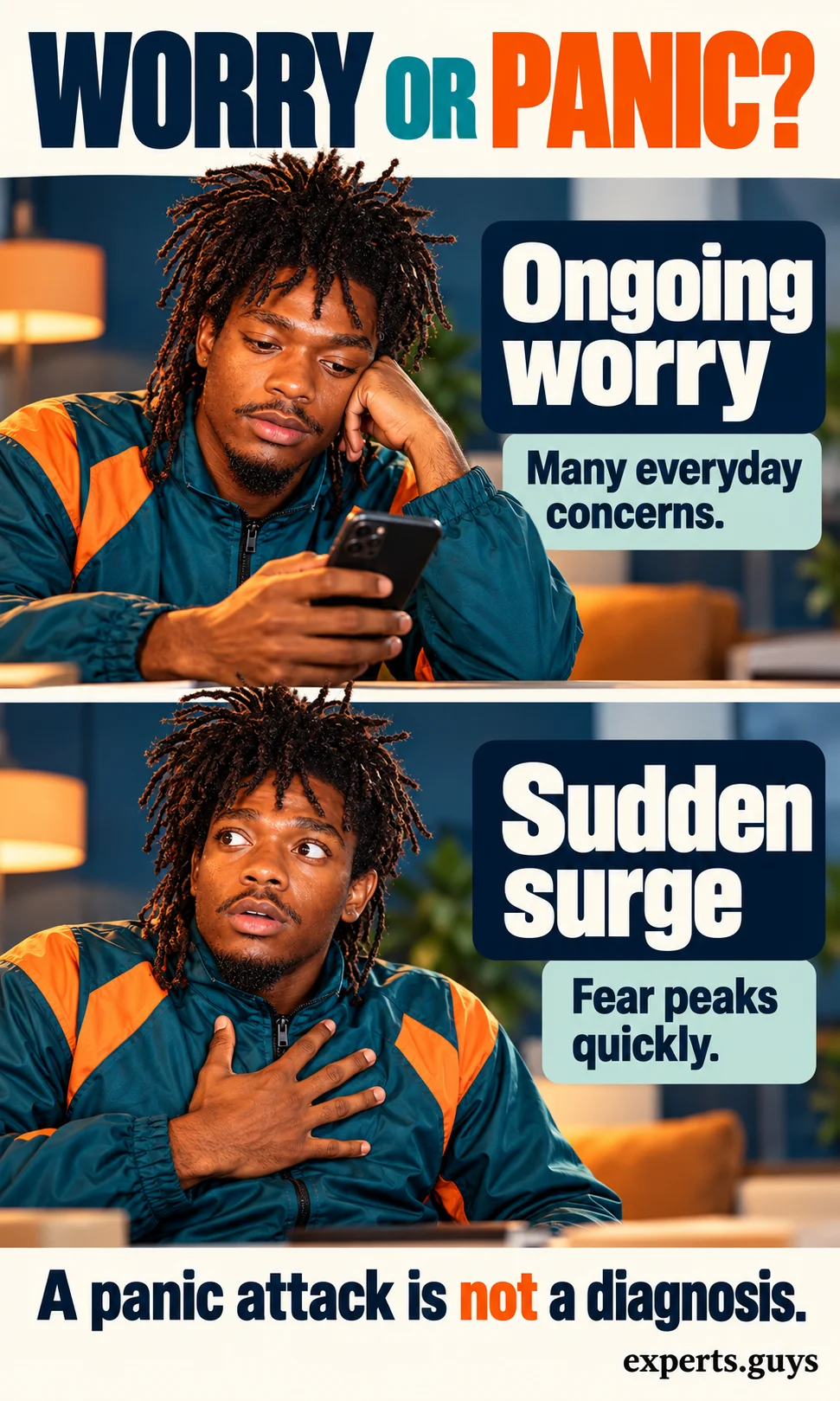
Ongoing worry and sudden panic are different experiences
With generalized anxiety disorder, worry tends to spread across ordinary concerns such as work, health or money and is difficult to control. Muscle tension, irritability and poor sleep can accompany it. The NIMH guide to generalized anxiety explains why persistence and disruption matter more than having an occasional worrying day.
Panic is a sudden surge of intense fear or discomfort that can include a pounding heart, trembling or breathlessness. Panic disorder involves recurrent unexpected attacks plus continuing concern or behaviour changes related to them. Attacks can also occur in other conditions, so a panic attack alone does not establish panic disorder.
The distinction changes the appointment conversation: describe the build-up rather than simply saying the anxiety was severe. For example, worrying about several problems throughout an afternoon differs from an abrupt episode during an otherwise ordinary task. NIMH describes the assessment of panic disorder and the need to consider other explanations.
Social fear and a specific phobia depend on the feared outcome
Social anxiety centres on being watched, embarrassed or judged, rather than simply preferring time alone. Someone may avoid a video meeting because they fear others will notice their voice shaking. Social anxiety disorder can interfere with work and relationships even when the person wants to participate.
A specific phobia concerns a particular object or situation, such as an injection, an animal or an enclosed space. An elevator example could involve fear of confinement, while another person might fear embarrassment in front of other passengers. These examples illustrate why the location by itself cannot identify the condition.

Agoraphobia is another possible anxiety disorder and is not simply a fear of going outside. Its focus includes situations where escape or help may feel difficult if panic-like symptoms occur. The NIMH explanation of phobia-related disorders distinguishes these patterns; the six-pattern overview here is not exhaustive.
OCD and PTSD need their own descriptions
OCD can involve unwanted intrusive thoughts and repetitive actions or mental rituals intended to reduce distress. Repeated checking is one possible example, but neatness alone is not OCD and rituals are not always visible. The relevant question is whether the thoughts or rituals are difficult to manage, time-consuming or disruptive.
PTSD can involve memories or nightmares that feel connected to trauma, avoidance of reminders and changes in alertness, mood or beliefs. A reminder may trigger a strong reaction even when the present setting is safe. It requires professional assessment of the full symptom pattern; a single frightening memory is not enough to diagnose it.
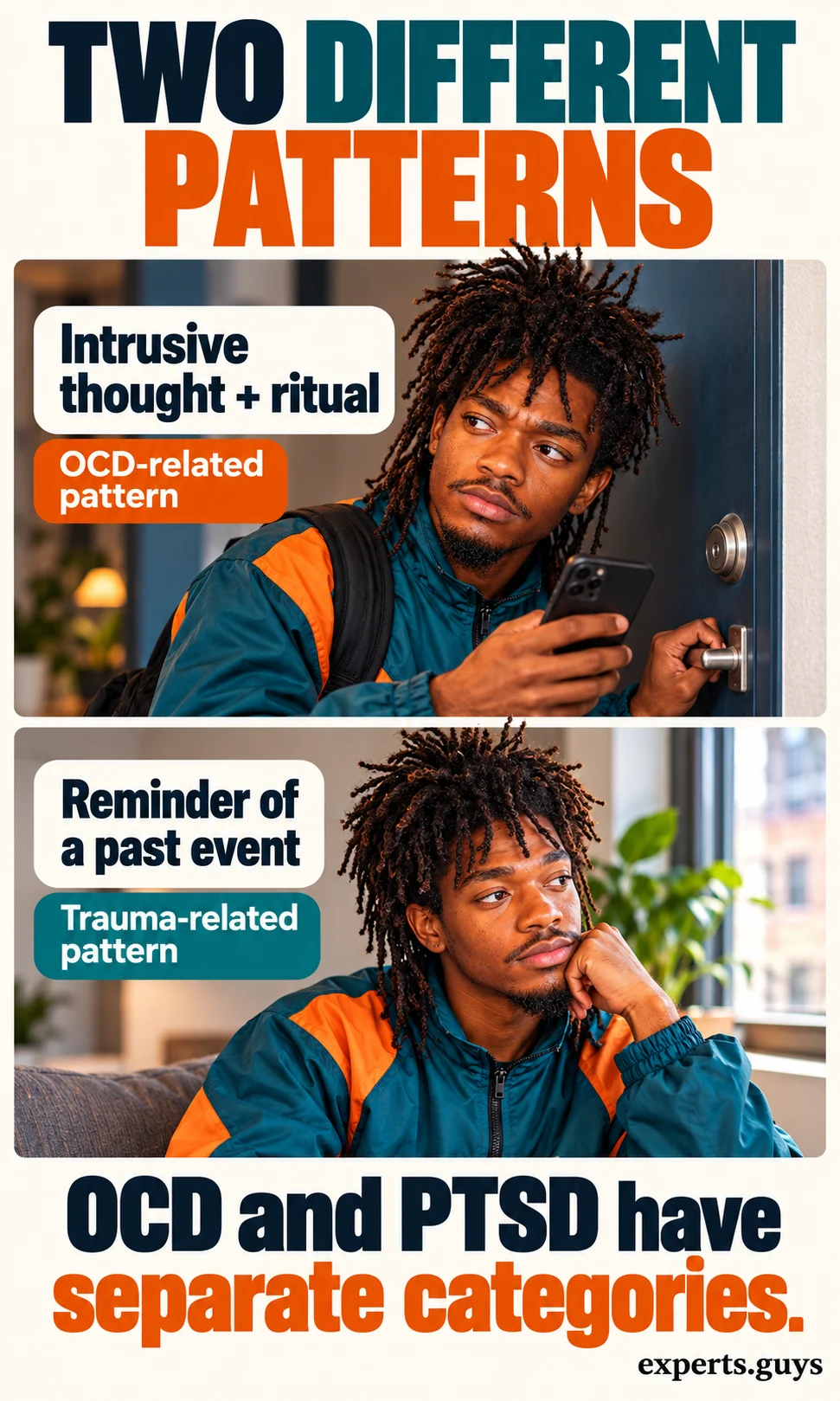
OCD sits within obsessive-compulsive and related disorders, while PTSD sits within trauma- and stressor-related disorders in the DSM classification. The American Psychiatric Association classification explanation makes this distinction explicit. Including them here reflects their anxiety-related symptoms, not a claim that they are bipolar subtypes.
Could the anxiety be part of a changing mood episode?
The feeling of anxiety alone cannot separate an anxiety disorder from a bipolar mood episode. Clinicians consider the wider pattern, including sleep, energy, activity, irritability and changes over time. Anxiety that also occurs during more settled mood periods is worth mentioning, but that detail does not establish a separate diagnosis.
| Observation | Why it matters | Next step |
|---|---|---|
| Worry or avoidance with otherwise familiar sleep and behaviour | An anxiety condition may need assessment even when mood seems settled. | Arrange assessment if it persists or limits daily life. |
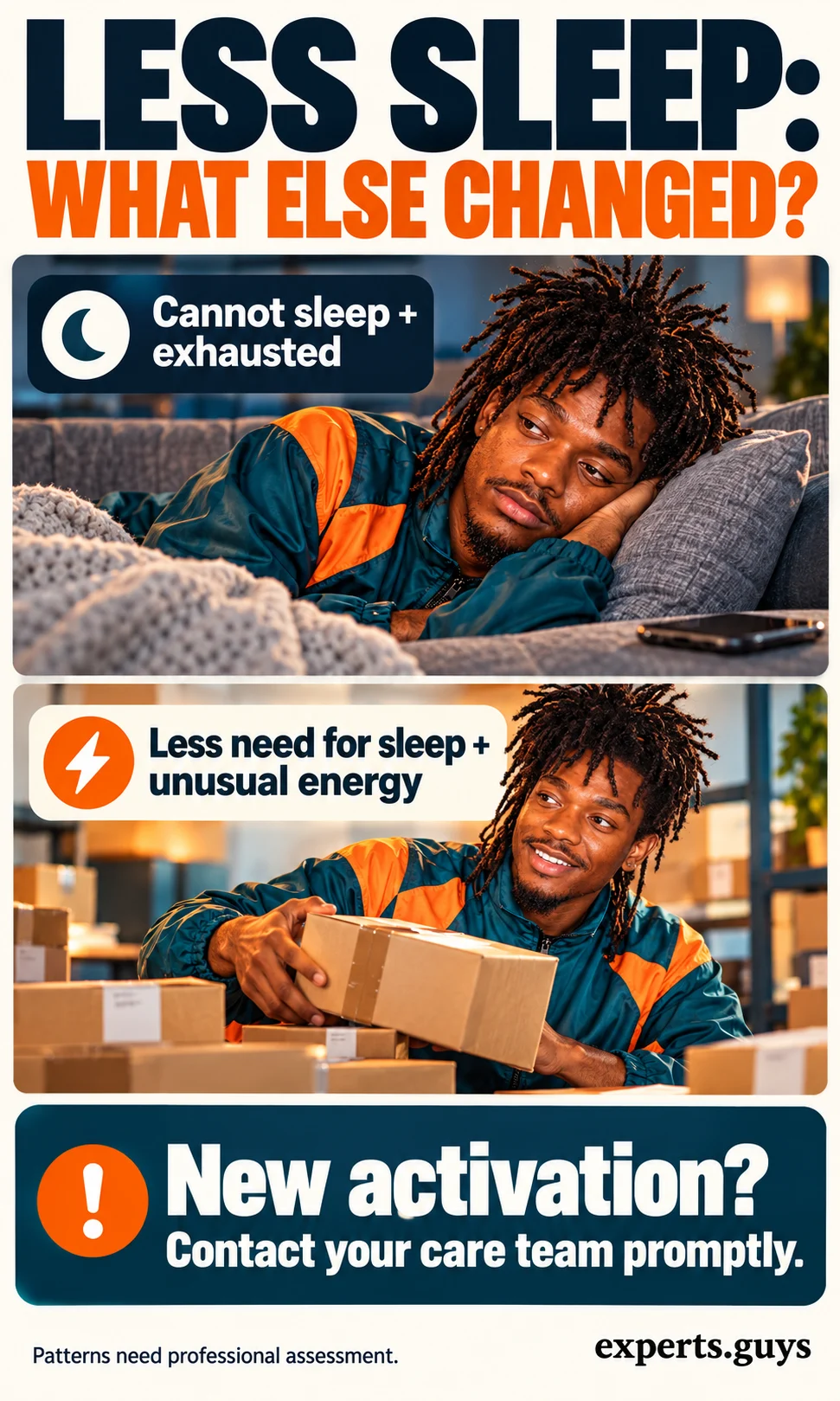
| Less sleep with unusual energy, rapid speech or impulsive behaviour | New activation may need prompt review in the context of bipolar disorder. | Contact the care team promptly and follow any agreed early-warning plan. |
| Anxiety and low mood together with agitation or increased activity | Several symptom types can coexist; distress alone does not identify the episode. | Describe the combination to the clinician rather than choosing one label. |
| New restlessness after starting or changing medicine | A medicine effect is one possibility among several. | Report timing and severity to the prescriber; do not adjust treatment yourself. |
Difficulty sleeping while feeling exhausted differs from needing unusually little sleep while feeling driven or energetic. This distinction is useful information for an assessment, not a home test for mania. Anxiety and mood symptoms can overlap, and tiredness does not rule out a mood episode.
If you already have a bipolar diagnosis, compare a current change with your own usual pattern rather than another person’s sleep needs or productivity. Do not wait for a specific number of bad nights before seeking advice about a concerning change. The existing early warning signs of a bipolar episode guide covers personal warning plans in greater depth.
Describe the change without starting a daily diary
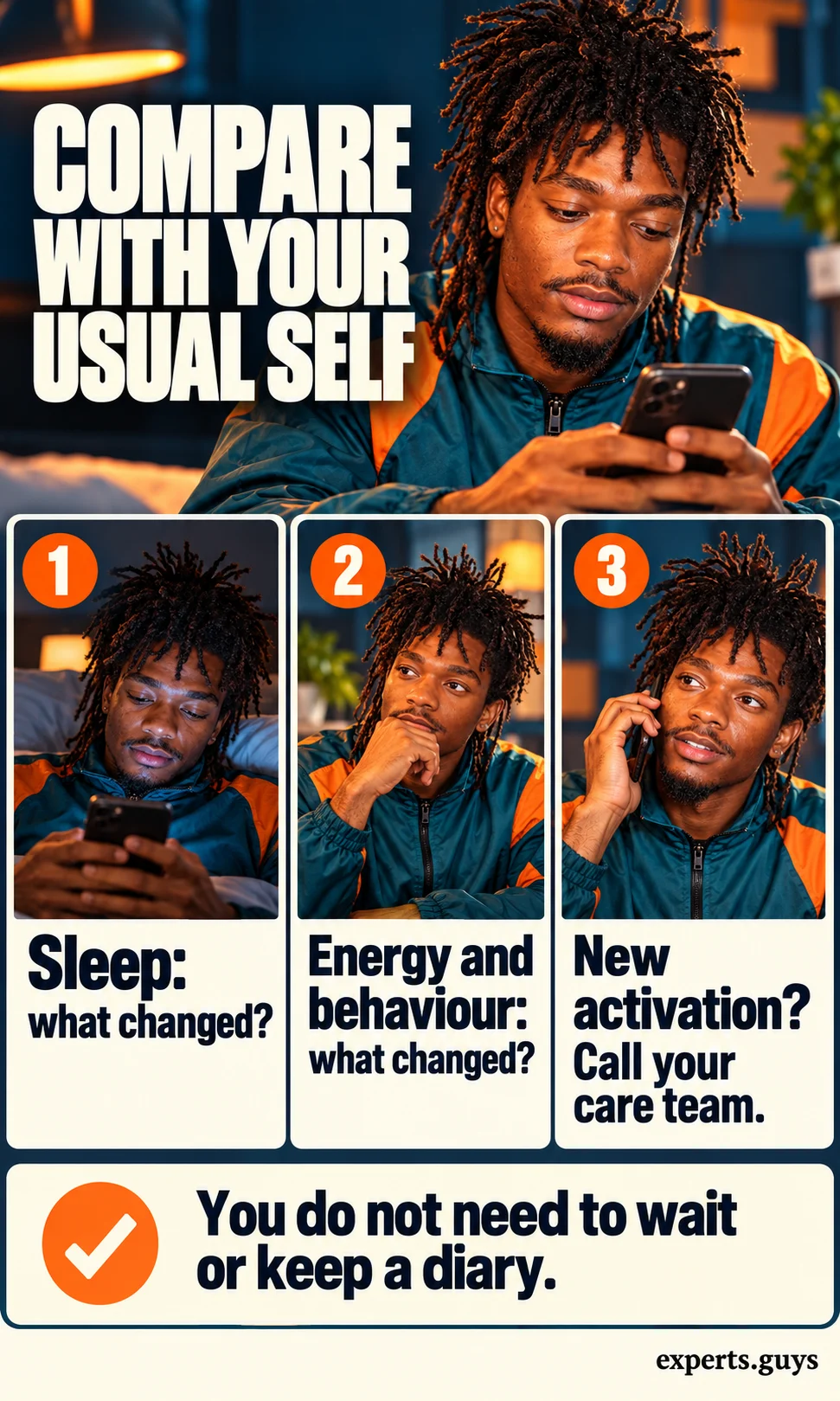
- Compare sleep. Tell the clinician whether you could not sleep or felt you needed less sleep than usual.
- Add energy and behaviour. Mention an observable difference such as unusually fast speech, new commitments or uncharacteristic spending.
- Use the contact route. If these changes suggest new activation, contact the care team promptly. A phone call is appropriate when waiting for a portal reply would delay needed advice.
For example: “I am sleeping less than usual and have taken on several tasks without feeling tired” gives more context than “I feel anxious.” If recalling details is difficult, describe the change aloud or ask someone you trust to help explain what they noticed. The checkpoint is getting appropriate advice, not producing a perfect record.
How can you explain the anxiety clearly at an appointment?
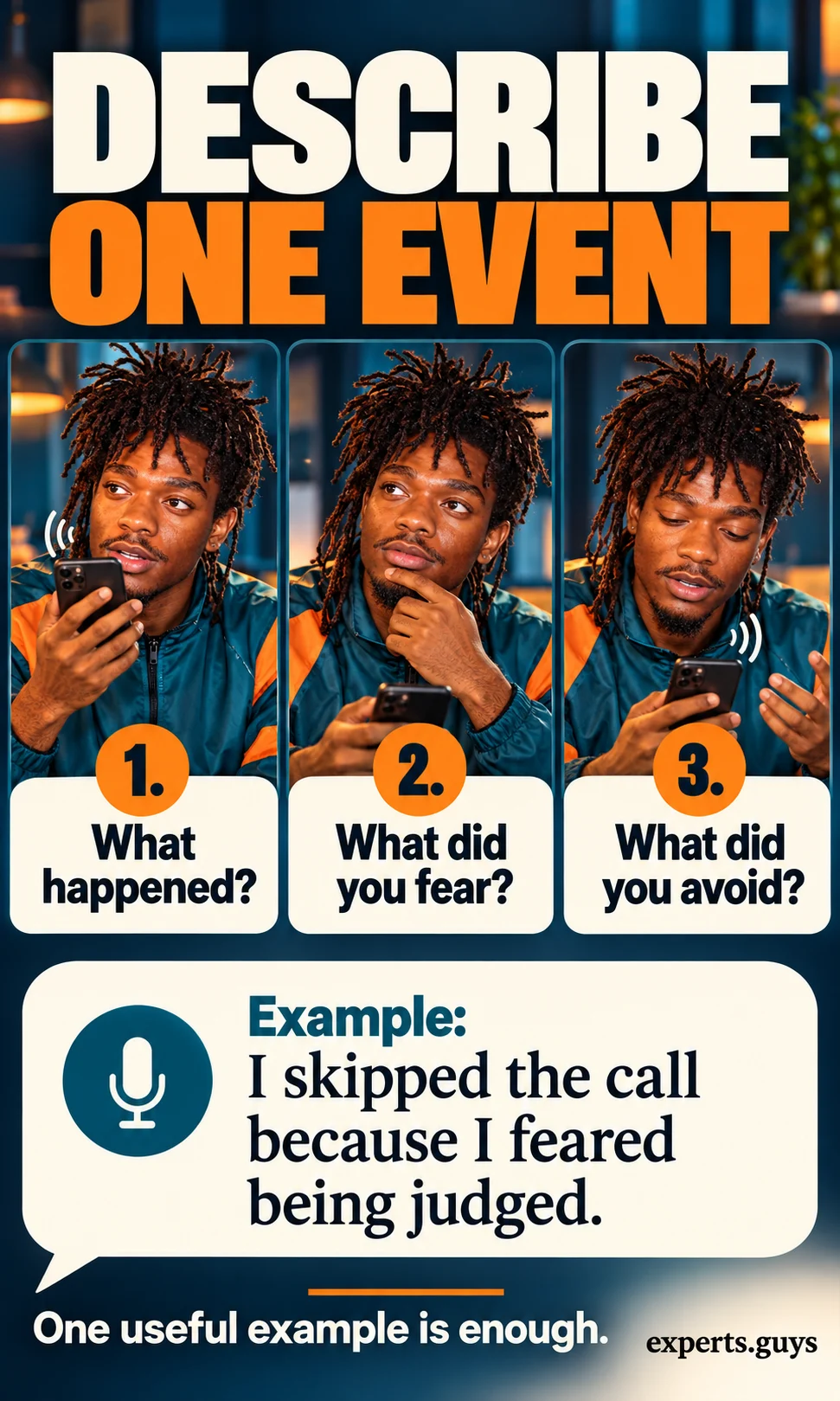
Choose one recent event and explain the situation, feared outcome and effect on what you did. This gives the clinician something concrete to explore without requiring you to choose a diagnostic label. It is an appointment-preparation method, not an anxiety treatment or a symptom score.
Use a private phone note, voice dictation or the clinic’s patient portal if you already have access. You do not need a new app, and you can simply say the example at the appointment if typing is difficult. Keep personal health details out of shared work notes or public messages.
Describe one event, then stop
- What happened? Choose a single situation, such as receiving a work-call invitation.
- What did you fear? Describe the expected outcome in ordinary words, without trying to prove it was rational.
- What did you avoid or change? Explain whether you skipped the call, repeatedly checked something or left a situation. If you did not avoid anything, say so.
A worked example is: “I skipped the call because I feared being judged.” You could add that the concern was being seen as incompetent, rather than the telephone itself. A clinician can then ask about recurrence, distress and other explanations instead of relying on the single word “anxiety.”
The common mistake is repeatedly rewriting the example until it feels perfectly accurate. Stop once the event, fear and practical effect are understandable; if the process increases distress, give a brief spoken description instead. When you can share one useful example, the task is complete.
You do not need to recount a traumatic event in detail to open a conversation about it. “This reaction seems connected to something that happened earlier” is enough to explain why you want a sensitive assessment. If you need everyday support while arranging care, the separate bipolar and anxiety article covers practical coping options while you arrange an assessment.
How should anxiety care fit with bipolar treatment?
Treatment needs to consider both the anxiety pattern and the current bipolar mood state. NICE recommends care for coexisting conditions alongside bipolar treatment, with attention to clinical judgment and possible interactions. A treatment described as suitable for anxiety in general is not automatically the right choice for every person with bipolar disorder.
Psychological approaches differ by the problem being treated. For example, exposure and response prevention is an established OCD treatment, while PTSD care can include trauma-focused psychotherapy. These are options to discuss with a trained clinician, not instructions to force exposure or revisit trauma on your own.
Medication decisions require the prescriber to consider the whole mood history. NIMH explains that antidepressants can trigger mania or rapid cycling and are not used alone in its bipolar treatment overview. Do not start, stop or change prescribed medicine because a symptom description in this article seems familiar.
Prepare a medicine-change summary if symptoms are new
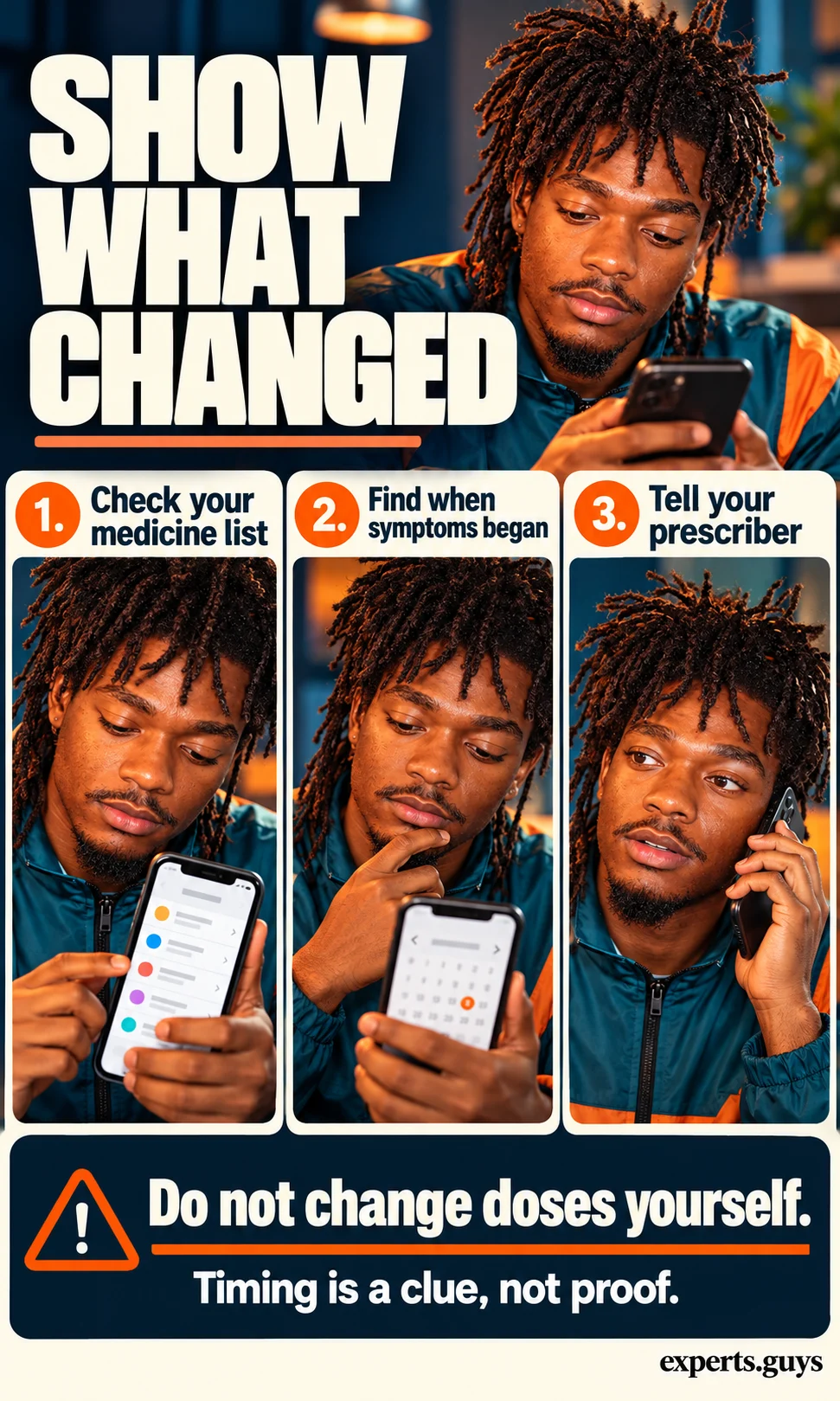
Use this step when symptoms began or worsened around a treatment change, not as a way to decide which medicine caused them. Some medicines can produce anxiety or restlessness; the NHS aripiprazole side-effect guidance provides one example. The timing helps the prescriber investigate, but does not prove causation.
- Check the medicine list. Use the prescription label, pharmacy record or patient portal for the name and prescribed dose; include nonprescription products and supplements. Do not guess missing details.
- Find the sequence. State when the treatment changed and when the new symptoms began. An approximate date is acceptable if clearly described as approximate.
- Tell the prescriber. Describe the symptom, its effect on daily life and any changes in sleep or behaviour. Seek prompt advice for severe restlessness or concerning activation rather than waiting for the next routine visit.
For example: “My prescription changed earlier this week, and since yesterday I have felt too restless to sit through a meal.” If dates are unclear, ask the pharmacy to confirm the dispensing record and tell the clinician what remains uncertain. A useful result is a clear question for the prescriber, not a reason to test the medicine yourself.
Leave the appointment with a clear follow-up route
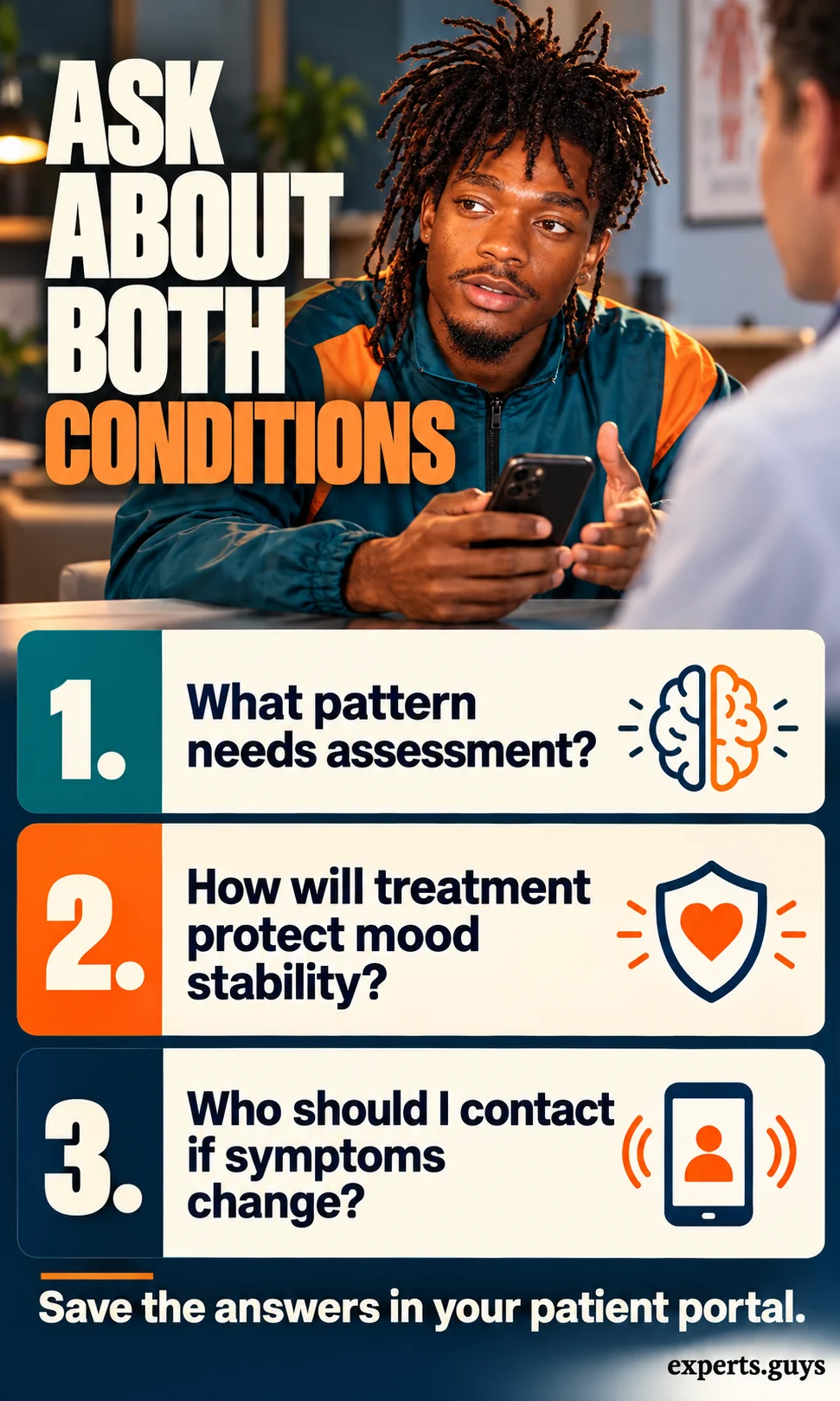
Open the note or portal message containing your example and choose the question that matters most to you. Ask the clinician to explain the answer in practical terms, including what to do if symptoms change before the next visit. The NIMH appointment-preparation guidance supports preparing questions and bringing an accurate medicine list.
- What pattern needs assessment, and what other explanation are you considering?
- How will the proposed anxiety treatment protect mood stability?
- Who should I contact if symptoms change, and which changes need urgent help?
Save the agreed answers in your patient portal or a private phone note, including the contact details the clinic provides. The common mistake is leaving with only a treatment name and no way to ask about a new problem. If remembering or typing is difficult, ask the clinic to send a visit summary.
The treatment overview how bipolar disorder is treated explains why care differs across illness phases. Use your symptom example to ask how anxiety care fits the existing plan. Neither a familiar example nor a matching image replaces an individual assessment.
Frequently asked questions
Does having anxiety mean I have bipolar disorder?
No. Anxiety occurs in many situations and disorders, and it does not establish a history of mania or hypomania. A clinician assesses the course of mood, energy and behaviour as well as the anxiety symptoms.
Can panic attacks happen if I already have another anxiety diagnosis?
Yes. Panic attacks can occur in more than one condition, including other anxiety disorders. Tell the clinician whether attacks are expected in a feared setting or occur unexpectedly; do not assume every attack means panic disorder.
Is avoiding people always social anxiety?
No. People may withdraw because they feel exhausted, depressed, overwhelmed or unsafe, as well as because they fear judgment. Describe the reason for avoiding the situation and how it affects daily life.
Should I wait until I know which pattern fits?
No. You can request assessment while uncertain, and you do not need to match every symptom on a list. Seek help sooner if the change is worsening, disrupting daily life or affecting safety.
Next steps
Use the comparison to find language for one experience, then bring that example to the appropriate clinician. Mention any new changes in sleep, energy or behaviour first, because those details can change the urgency of the conversation. The aim is coordinated care for the whole picture, not fitting yourself into one of six boxes.