
Anxiety can occur alongside bipolar disorder, but feeling anxious does not tell you whether the cause is a separate anxiety disorder, a mood episode or something else. The useful next step is to explain what changed, when it started and how it affects your usual activities. A short, specific account helps a clinician assess the pattern without asking you to diagnose yourself.
Act before collecting information: If you cannot stay safe, have thoughts of acting on suicide or self-harm, or are severely confused or losing touch with reality, seek urgent local emergency help. Much less sleep with unusual energy, rapidly escalating agitation or risky behavior warrants prompt care-team contact. Do not wait to complete the examples below.
- Name the experience: worried thoughts, fear, physical tension and an urge to move are different descriptions.
- Explain the timing: say whether this is new, comes with mood changes or continues between them.
- Bring relevant context: sleep, medicine changes and the effect on daily functioning matter.
- Ask for a next step: who should assess you, how soon and how to reach them if things worsen.
What does “anxious” mean in your particular experience?
Start with what you actually notice rather than choosing between diagnostic labels. “I keep imagining something bad will happen” describes thought content; “I cannot settle in a chair” describes a physical experience. Both may feel anxious, but they give a clinician different questions to investigate.
Anxiety, racing thoughts and restlessness can overlap with changes in mood and energy. They are not interchangeable terms, and a facial expression cannot distinguish them. A diagnosis depends on the wider history, not a photograph, one difficult evening or a checklist result.
| What you can describe | Useful extra detail | What it cannot establish alone |
|---|---|---|
| Repeated worry | What the thoughts concern and whether you can redirect attention | A particular anxiety disorder |
| Thoughts moving unusually fast | Whether speech, sleep, activity or decisions also changed | Mania or hypomania |
| Feeling driven to move | When it began and whether medicine changed nearby | A medicine side effect |
| Fear in a specific situation | What you avoid and how that affects daily life | The reason for that fear |
Keep observation separate from interpretation. “I stood up repeatedly during dinner” is an observation, while “my bipolar disorder is getting worse” is one possible interpretation. Share both if useful, but make clear which is the event and which is an explanation to investigate.

Describe one real moment
This approach fits a safe, non-emergency moment when you know something feels wrong but struggle to explain it. Use a private phone note or voice input; no special app or daily diary is required. Its purpose is clearer communication, not reducing symptoms or measuring their severity.
- Choose one recent situation, such as replying to messages or eating dinner.
- Describe what your mind or body did, using ordinary words.
- Add what became harder: finishing work, staying seated or leaving home.
- Keep the example available for the appointment or call.
Example: “I reread the same message because I worry I have upset someone, and I cannot finish my reply.” Avoid replacing the example with a score such as “anxiety 9/10” alone; the number does not explain the difficulty. If typing is too demanding, say one sentence aloud to your clinician, and stop once the example is understandable.

For immediate everyday coping options, the separate guide to bipolar and anxiety covers support when worry builds. Here, the task is preparing a clearer account for assessment. You do not have to complete both pages before asking for help.
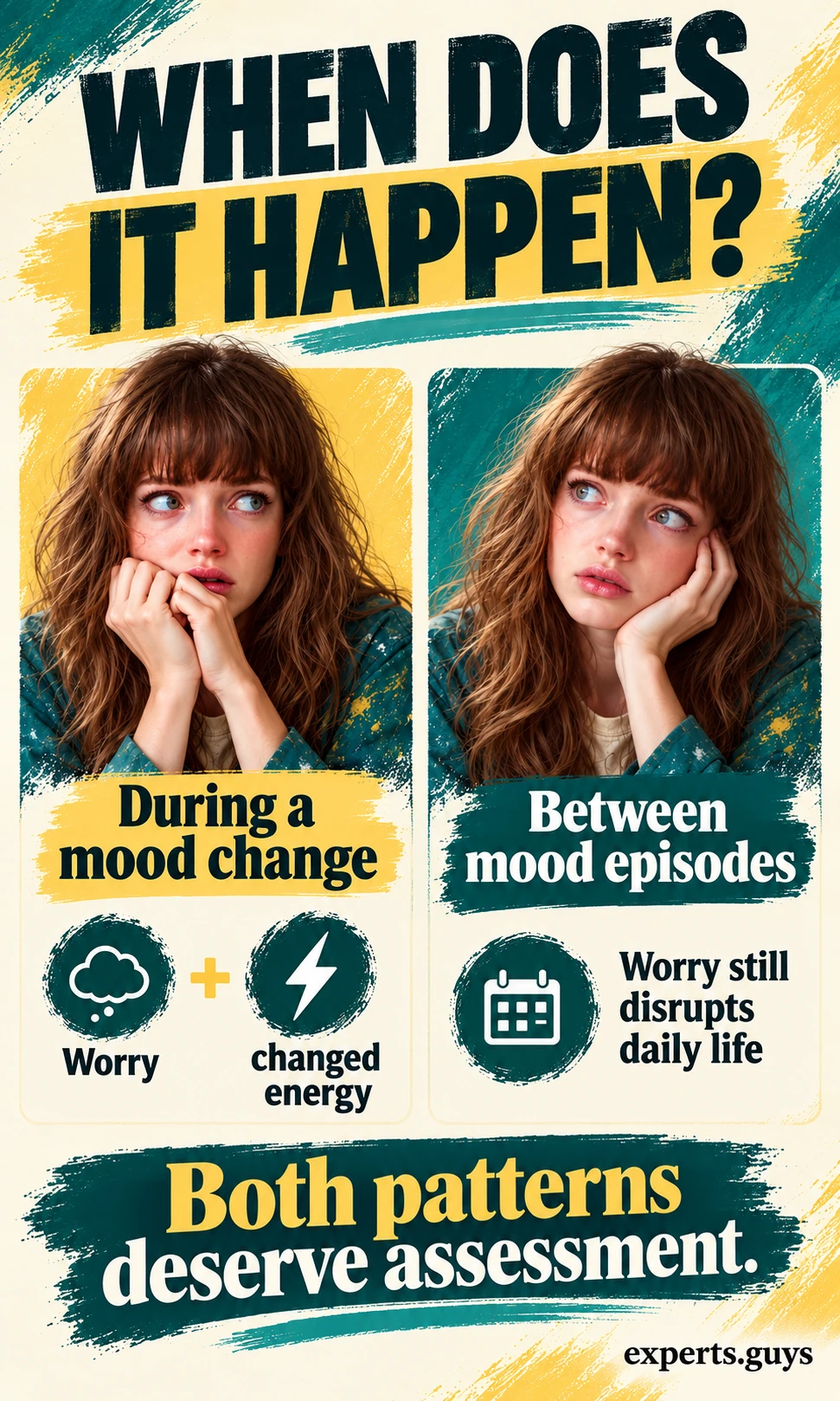
Does anxiety occur only with mood changes, or between them too?
Tell the clinician whether anxiety appears mainly during a change in mood or remains troublesome when your mood feels more settled. Both patterns are worth discussing; neither proves a diagnosis. The distinction helps keep persistent anxiety from disappearing from the conversation once the most obvious mood symptoms improve.
The NICE bipolar assessment recommendations include symptoms between episodes, earlier changes in behavior and treatment history. They also address care for coexisting anxiety disorders alongside bipolar treatment. This is why “treat the bipolar disorder and all anxiety will disappear” is too broad a promise.
Reconstruct a short sequence, then stop
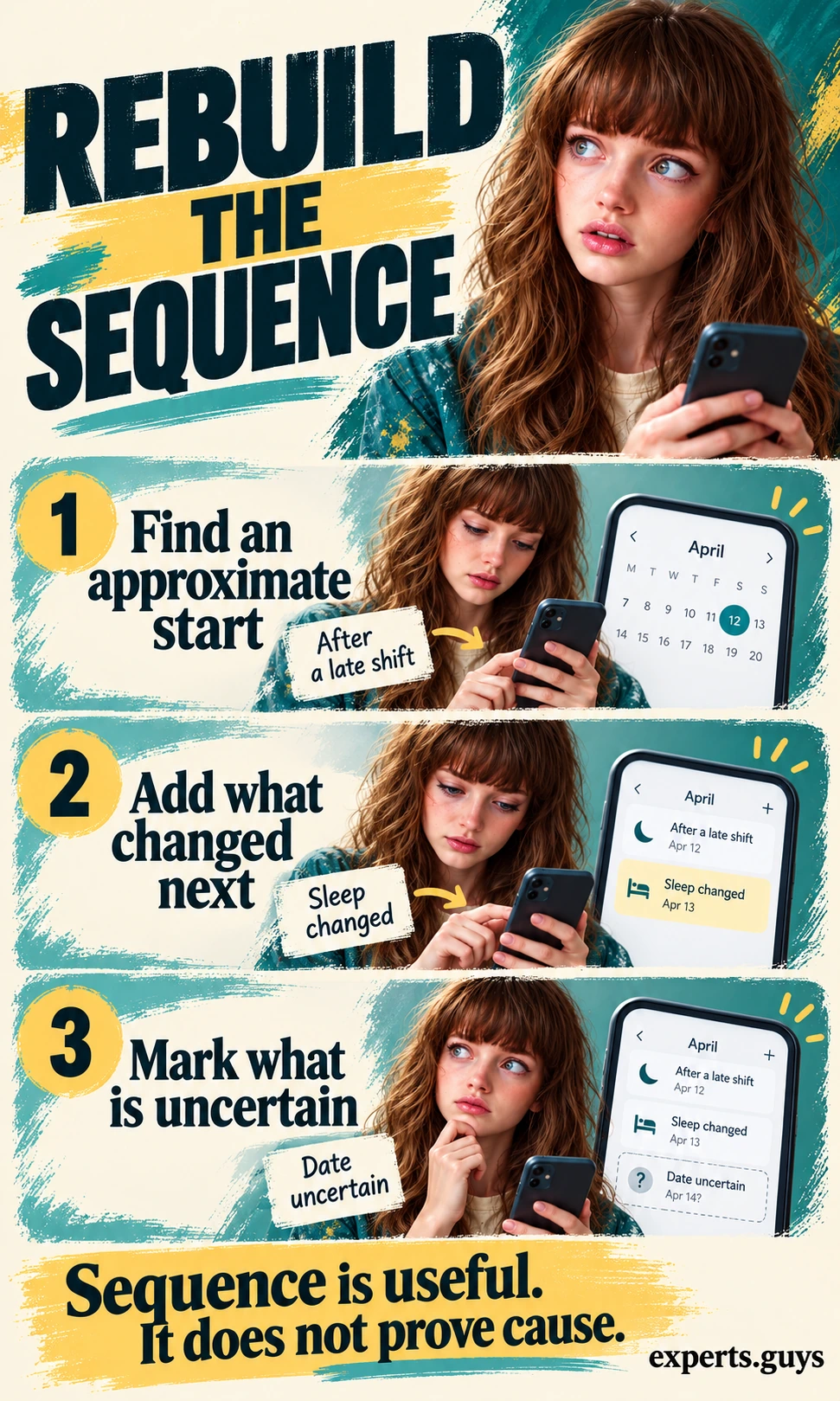
A brief sequence can clarify an unfamiliar change without creating an ongoing monitoring burden. Use a calendar event, shift schedule or existing appointment date as an approximate anchor. These are memory aids, not proof that an event caused the symptoms.
- Identify the earliest change you can reasonably remember.
- Add what followed, such as a sleep change, more worry or difficulty completing tasks.
- Say whether there were more settled periods in between.
- Mark uncertain details as approximate and share the sequence.
Example: “After a late shift, my sleep became disrupted; later that week I noticed more worry, but I am unsure which day it began.” The mistake is forcing an exact date or assuming the shift caused everything. If recall is difficult, give the one event you do remember; the useful endpoint is a clearer sequence, not a perfect timeline.
A clinician may need a longer history than this first account provides. Earlier periods of unusually changed energy or behavior can matter even if you sought help mainly for anxiety. The guide to early warning signs of a bipolar episode addresses personal relapse patterns; this page does not replace an agreed relapse plan.
Could sleep changes or a medicine change alter the explanation?
Yes: the same word, “anxious,” can hide different experiences that need different assessment. Explain the sleep pattern and any treatment changes rather than deciding which explanation must be correct. New symptoms after a medicine change deserve attention even when the medicine is intended to help mood.
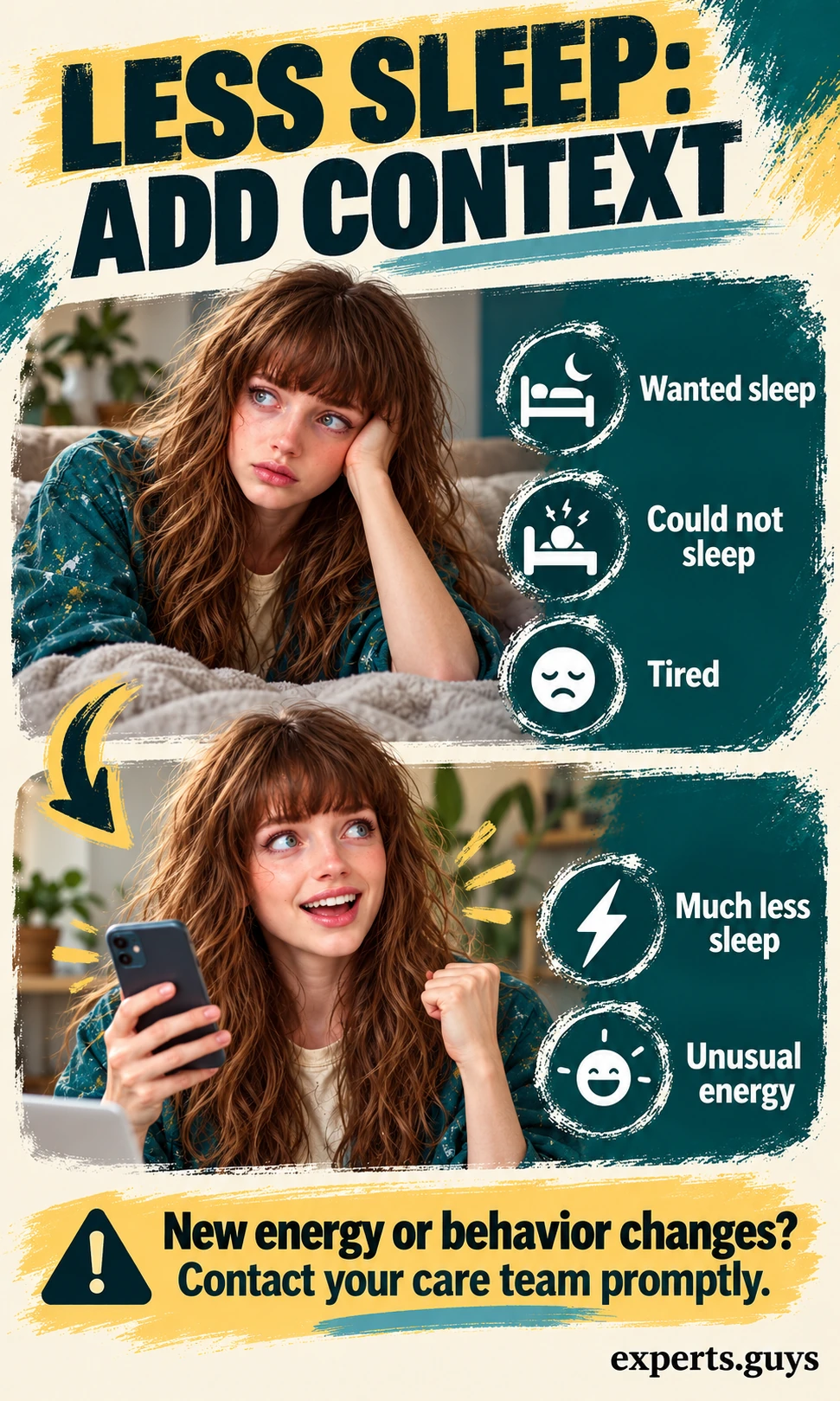
Separate sleep opportunity from sleep need
“I could not sleep and felt exhausted” differs from “I slept much less and felt unusually energized.” Also mention whether you had a realistic opportunity to sleep, because a late shift or disruption can shorten a night. Tiredness does not rule out a mood episode, and one short night cannot diagnose one.
The NIMH bipolar disorder overview explains that assessment considers symptoms over time, including energy, activity and sleep. It also describes why antidepressants used alone can trigger mania or rapid cycling in bipolar disorder. These points support sharing the whole pattern with a prescriber rather than selecting treatment from one symptom.
Bring a medicine history, not a medication experiment
Some medicines can themselves be associated with anxiety or restlessness. For example, NHS aripiprazole guidance lists these effects; this does not mean that every restless feeling is caused by that medicine. A close timing relationship is a clue for assessment, not a reason to stop treatment yourself.
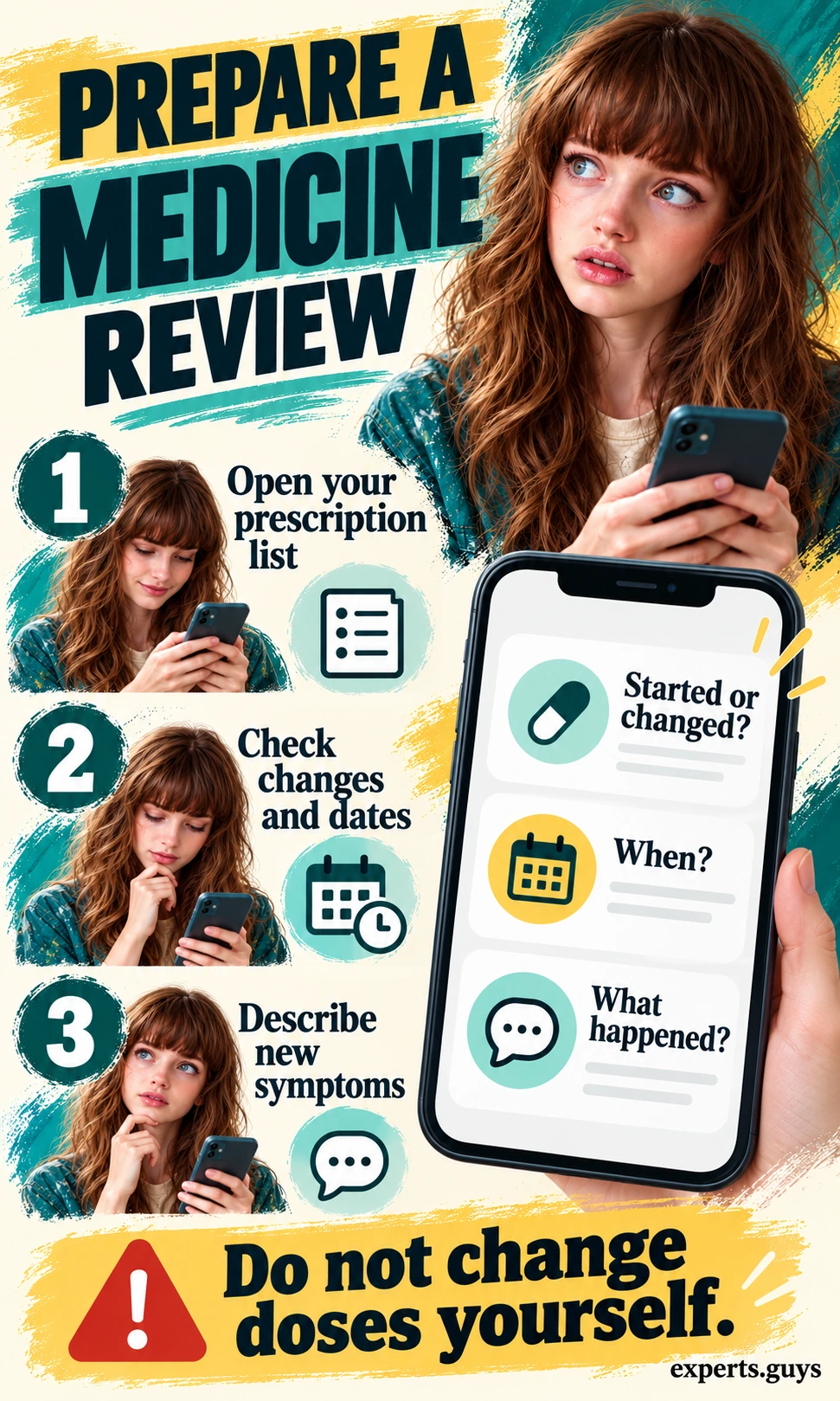
- Open your current prescription list or bring the medicine packaging to the appointment.
- Identify starts, stops, missed doses or dose changes that actually occurred; include approximate dates.
- Include nonprescription products, supplements, caffeine, alcohol or other substances when relevant.
- Describe the new experience and ask the prescriber or pharmacist how to obtain an appropriate review.
Example: “Since the dose changed, I feel driven to move and cannot sit through dinner.” Do not test the theory by skipping doses or taking an old medicine; tell the prescriber about the timing. If your list is incomplete, say so and ask the pharmacy to help verify it; do not delay urgent contact while reconstructing every detail.
The result you want is an accurate medication history and a review plan, not a self-selected dose. Treatment decisions also depend on the phase of bipolar disorder and previous response. The broader guide to how bipolar disorder is treated explains that context.
How can you turn the information into a useful care-team request?
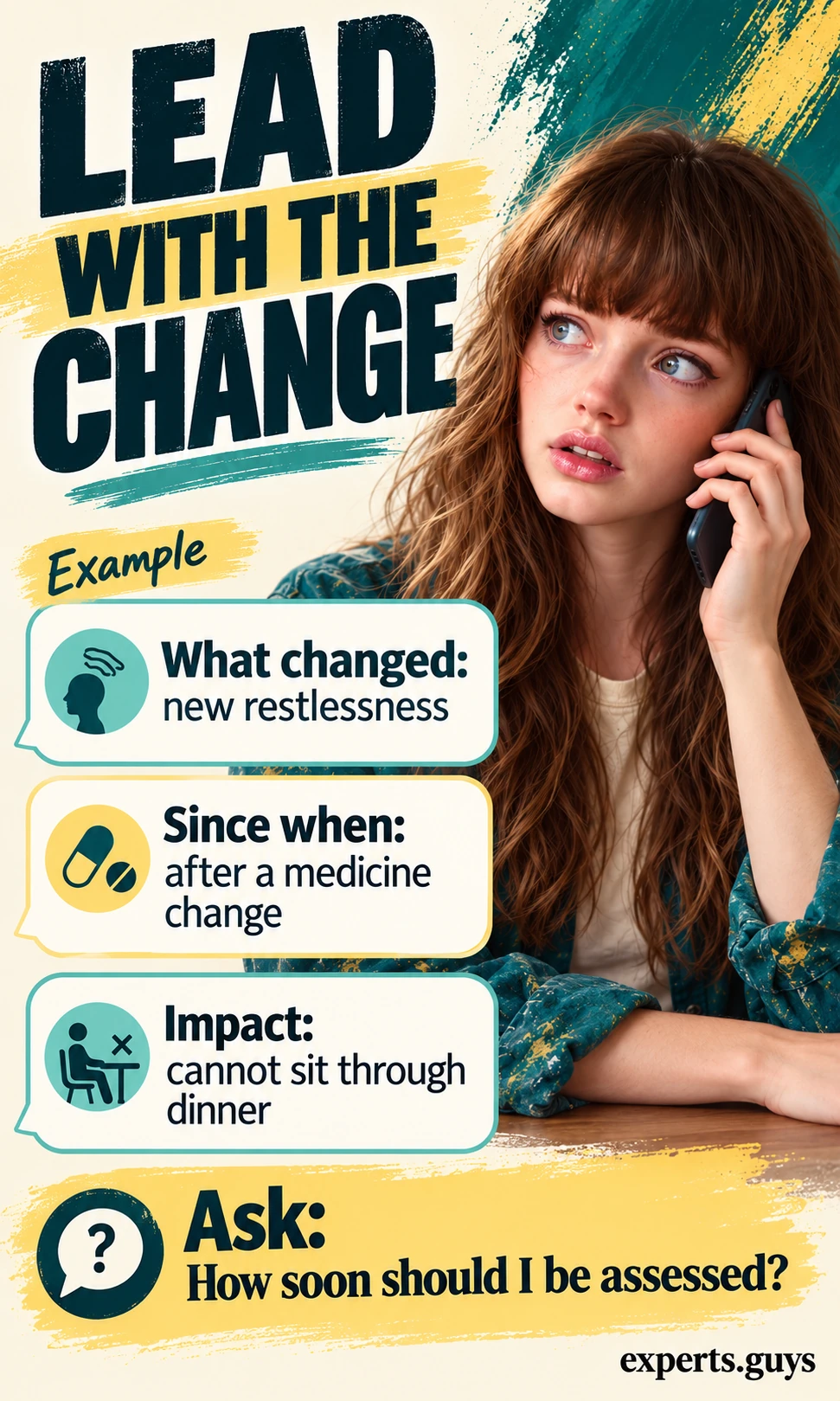
Lead with the change that is disrupting life, then give its timing and the most relevant context. Ask for the appropriate assessment route and timeframe rather than requesting a diagnosis by message. A concise request can be useful even when you do not know why the change happened.
Example message: “I have new restlessness and cannot sit through dinner. It started after a medicine change, although I am unsure of the exact date. How soon should I be assessed, and whom should I contact if it gets worse?”
Send it through the right route
Use your existing care plan or the service’s published contact arrangements. A patient portal may suit a routine question, but it may not be monitored continuously. If symptoms are rapidly changing, call the care team or local urgent service rather than waiting for a message notification.
- Choose the contact route that matches urgency; use emergency help for immediate danger.
- Give the short account, including any major sleep, energy or safety change.
- Ask when to expect a response and what to do if the situation worsens first.
- Confirm the next action, such as a call back or assessment, and keep those instructions accessible.
Common failure: assuming “message sent” means a clinician has seen it. If the response window passes, use the service’s follow-up route; if the situation becomes urgent, escalate sooner. If communication is difficult, a trusted person can help make the call with your agreement, without needing to interpret the symptoms for you.

The appointment-preparation steps above are editorial communication aids, not validated screening tests or treatment techniques. Success means the care team has a usable account and you understand the next action. It does not require immediate relief, an instant diagnosis or completing every example.
Frequently asked questions
Can an anxiety questionnaire diagnose bipolar disorder?
No. An anxiety questionnaire may help describe symptom burden, but it cannot establish bipolar disorder or identify the cause of restlessness. Share any result as one part of the clinical conversation, not a diagnosis.
What if I cannot remember when it started?
Give an approximate anchor, such as before or after a shift change, and state that you are uncertain. Existing messages or calendar entries may help. Missing dates should not prevent you from seeking assessment.
Can I bring someone to help explain the change?
You can ask the service about bringing a trusted person or including them in a call with your consent. Their concrete observations may add context. You can also ask to discuss sensitive details privately.
Do I need a special mood-tracking app?
No. A short phone note, voice input or spoken account can support the first conversation. Use a tracking system only if it serves an agreed purpose, and check privacy settings before storing sensitive information.
Your next action
- If symptoms are urgent, use the appropriate care route now.
- If you are safe, choose one concrete example and add an approximate start.
- Include important medicine, sleep or energy changes without guessing their cause.
- Ask who will assess the problem and how to get help if it changes before then.