



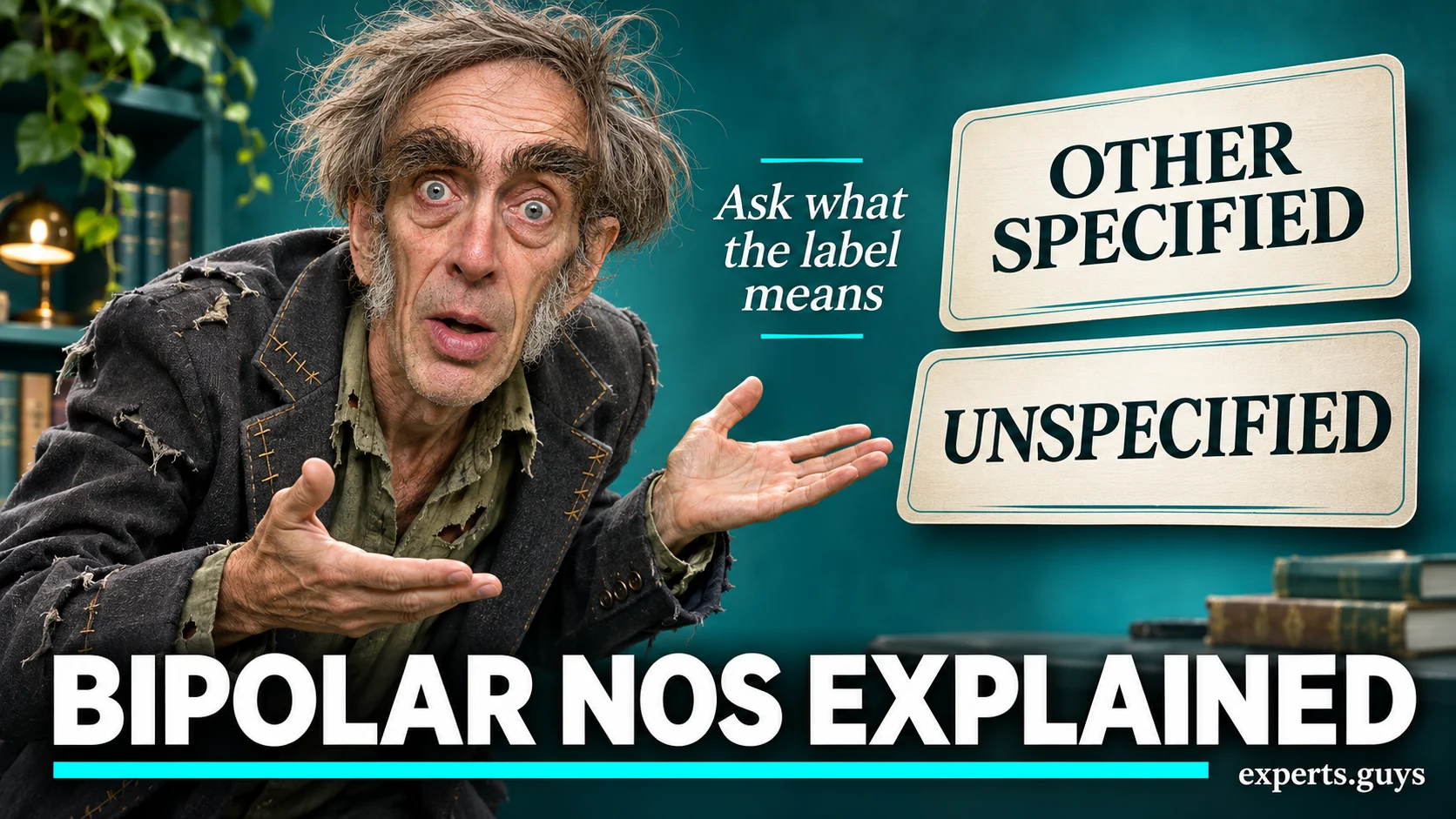
Bipolar disorder not otherwise specified (NOS) is an older diagnostic label used when bipolar features did not fit a more specific category. Current terminology includes “other specified” and “unspecified bipolar and related disorder,” but an old NOS entry does not tell you automatically which description applies now. The useful next step is to clarify what the clinician meant, what remains uncertain and how that affects your care.
Finding these words in a medical record can leave you with two separate questions: “What does this name mean?” and “What does it mean for me?” A terminology explanation can answer the first. The second requires the reasoning behind your own assessment, rather than translating the abbreviation into a new diagnosis yourself.
| Wording in the record | What the wording communicates | Useful clarification |
|---|---|---|
| Bipolar NOS | An older, broad diagnostic category; the surrounding assessment supplies its meaning. | Is this an old entry or the current assessment? |
| Other specified bipolar and related disorder | The clinician states why the presentation does not meet a particular full diagnostic pattern. | Which feature or criterion is different? |
| Unspecified bipolar and related disorder | The reason is not specified; insufficient information can be one reason. | What can be clarified now, and what needs follow-up? |
What does an old bipolar NOS diagnosis mean now?
The abbreviation belongs to a diagnostic vocabulary, not a description of someone’s personality. It does not mean “imaginary,” “unimportant” or “not worth treating.” It also does not reveal whether the original clinician had a detailed history, was working with limited information, or was describing a pattern that fell outside the better-known categories.
An older record can remain visible long after the appointment that produced it. A problem-list entry, a discharge summary and the explanation given during a later review may serve different purposes. If they appear inconsistent, ask the treating clinician to reconcile them. A person reading the record should not have to guess whether a label is historical, provisional or still the working diagnosis.
The American Psychiatric Association’s explanation of diagnostic changes describes examples covered by “other specified,” including hypomanic patterns that fall short on duration or symptom count. This is why replacing every old NOS entry with bipolar II would be inaccurate: different histories can sit behind similar shorthand.
Consider an illustrative record containing only “bipolar NOS” beside a date. That line cannot tell you which symptoms occurred together, what alternatives were considered or why a particular treatment was selected. A useful question is, “Could you explain the assessment behind this entry in everyday language?” The goal is an explanation, not a more impressive-sounding label.
If the old and current records use different terms, ask whether the change reflects newer terminology, additional information or a genuinely revised assessment. Those possibilities have different implications. Changing a name does not by itself prove that the earlier clinician was wrong, that the condition has worsened or that treatment must change.
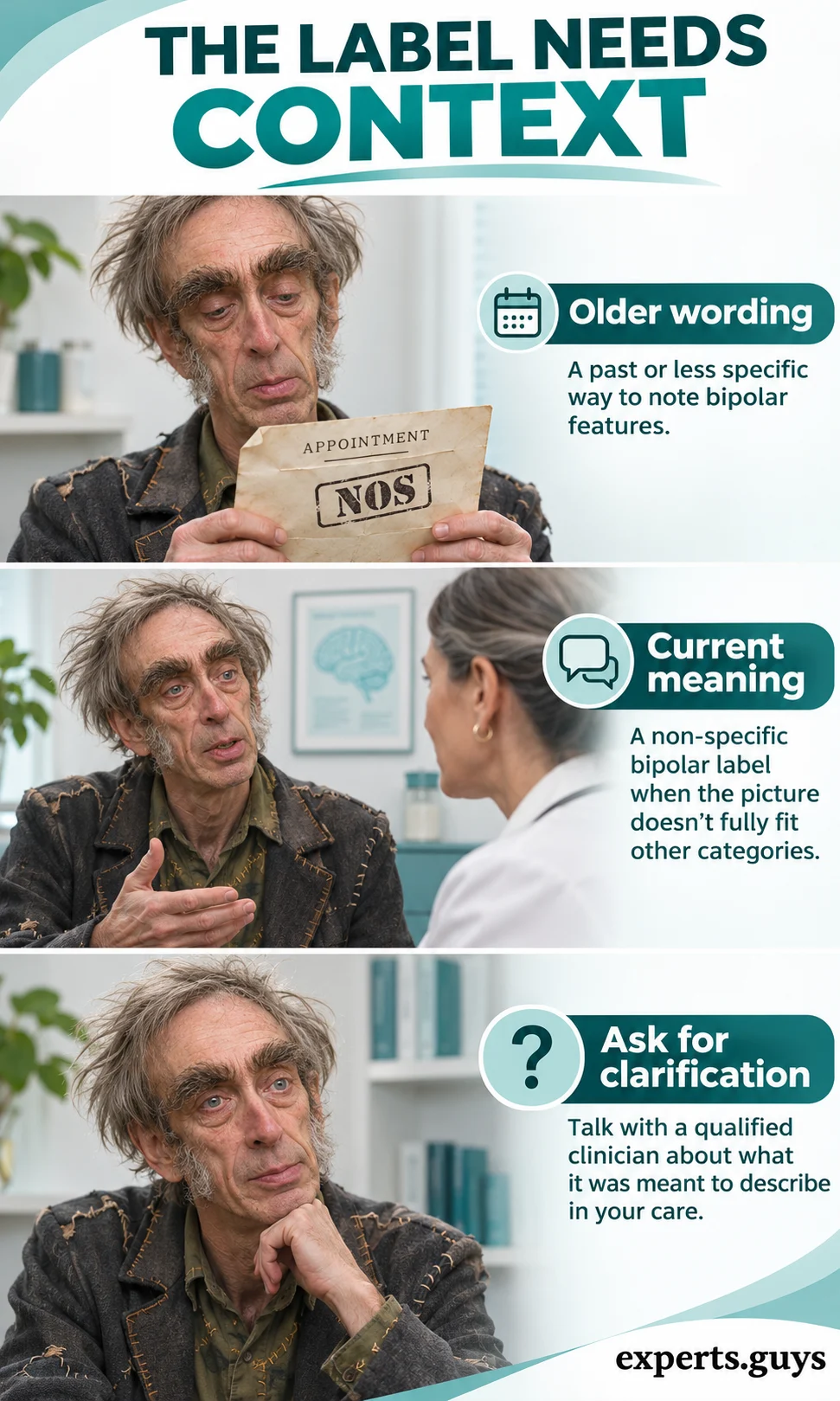
The practical takeaway is to connect the label with its explanation. You can ask this verbally during a routine appointment; you do not need to create a diary or prepare a written case. For the broader episode-based framework, the separate bipolar disorder overview covers the main diagnostic types and treatment purposes.
How do other specified and unspecified bipolar differ?
“Other specified” and “unspecified” are separate categories within bipolar and related disorders. Both concern clinically significant distress or impairment when the full criteria for a more specific bipolar category are not met. The key difference is whether the clinician specifies the reason that the presentation does not meet the criteria for another category. It is not a division between people who definitely need help and people whose distress can be ignored.
For example, a clinician may identify a shorter hypomanic pattern alongside a qualifying depressive history and explain the duration issue. Another assessment may establish significant bipolar-like symptoms without specifying why a more particular category cannot be used. These simplified examples explain the wording; they leave out the full criteria and cannot classify an individual.
Insufficient information is one possible reason for an unspecified diagnosis, particularly when the full history is not available. However, “unspecified” does not always promise that a more specific label will follow soon. Ask what the clinician knows and what is missing instead of assuming that the word automatically means temporary.
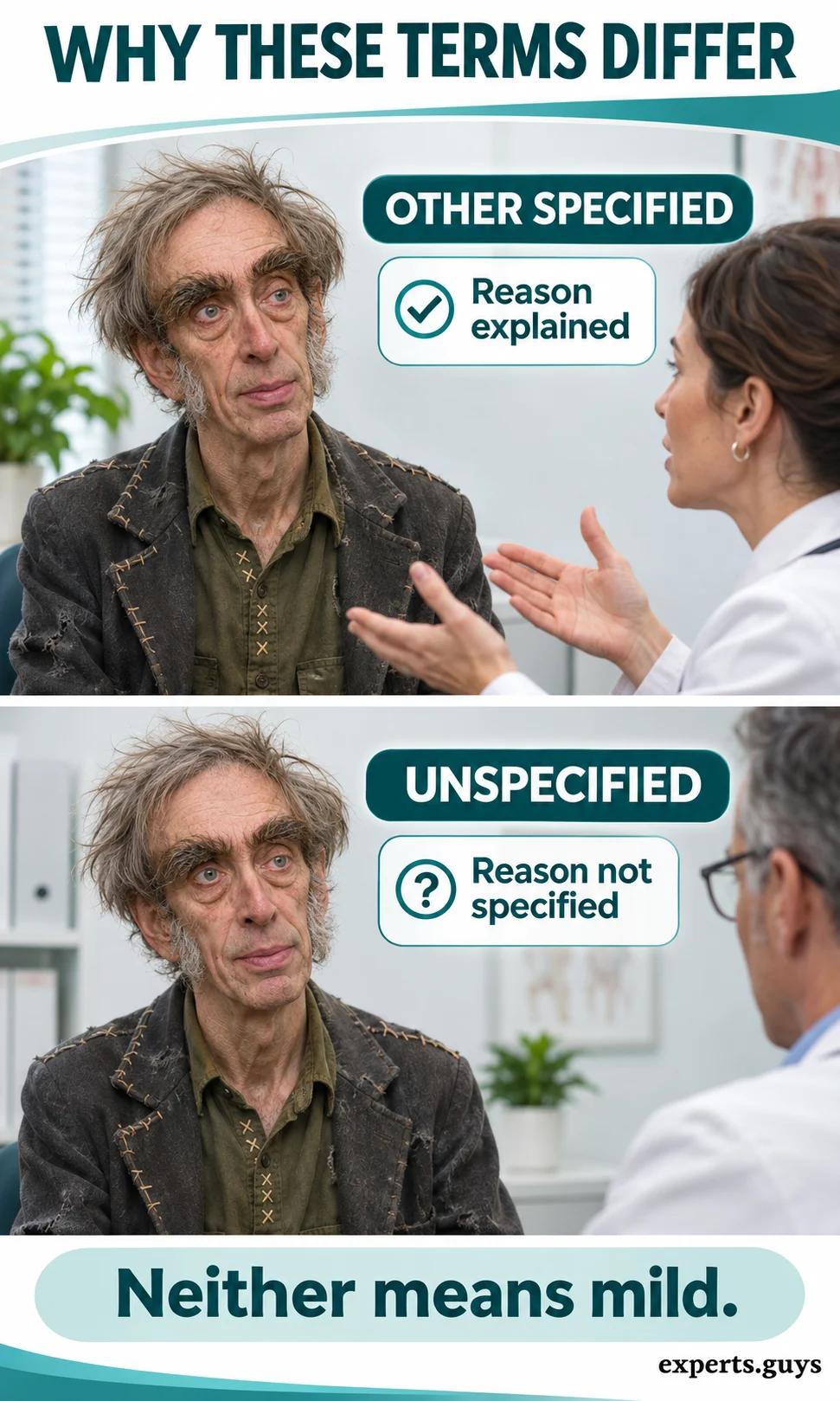
Neither term is a severity score. A less specific name can coexist with substantial difficulty at work, in relationships or with basic care. Conversely, a detailed diagnostic name does not describe how a person is functioning on every particular day. Current needs deserve their own discussion rather than being inferred from the precision of the label.
The distinction also does not create a guaranteed progression from NOS to bipolar II and then bipolar I. Those names are not stages on a ladder. Reassessment should follow the actual clinical history and any new evidence, rather than an expectation that every person will eventually receive the same diagnosis.
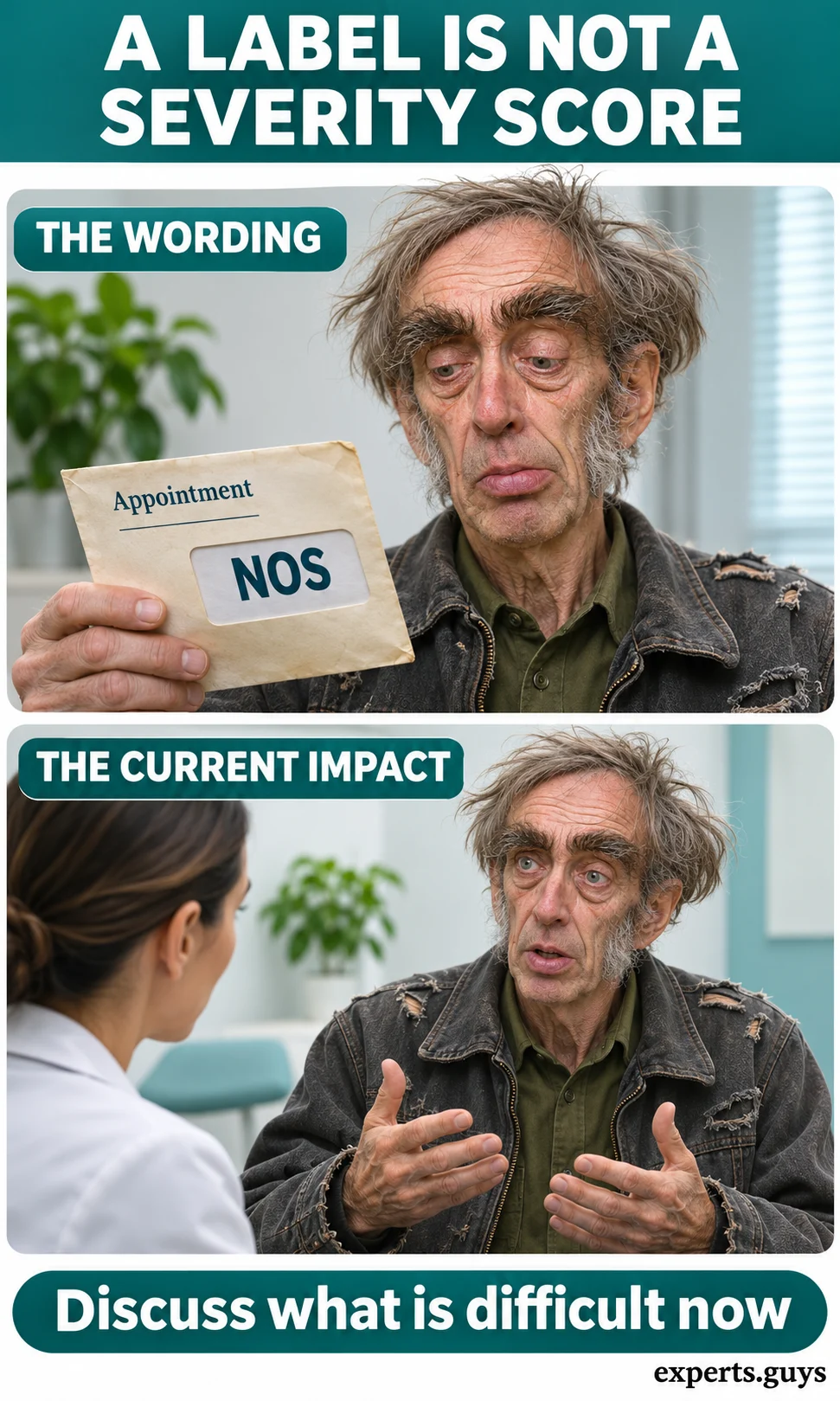
- Ask about meaning: “What does this wording describe in my assessment?”
- Ask about specificity: “Is the reason known, or is the information incomplete?”
- Ask about impact: “How are the difficulties I have now being addressed?”
Keep a separate question separate: a comparison with borderline personality disorder is not settled by the word “unspecified.” The guide to borderline personality disorder versus bipolar disorder explains that comparison in more detail. Here, the aim is to understand the diagnostic wording already being discussed.
Why can the diagnosis remain uncertain after an assessment?
Clinical assessment examines the pattern over time, including changes in mood and activity, their duration, their consequences and possible alternative explanations. Information may be incomplete because a past period was never assessed, dates are uncertain or different people noticed different aspects of the change. Uncertainty should be explained, rather than converted into a confident label by an online checklist.
Duration matters, but it works alongside other criteria. Standard descriptions distinguish hypomania lasting at least four consecutive days from mania lasting at least a week, or any duration when hospitalization is necessary. A short or unclear period still warrants attention when it is concerning; the thresholds are not instructions to postpone care. The APA’s patient guide provides the broader clinical context.
A helpful distinction is between a known short duration and an unknown duration. “It clearly lasted fewer days than the criterion requires” is different from “I cannot remember when it began or ended.” One describes the observed pattern; the other describes a gap in the information. Neither observation, by itself, establishes which diagnosis should be used.
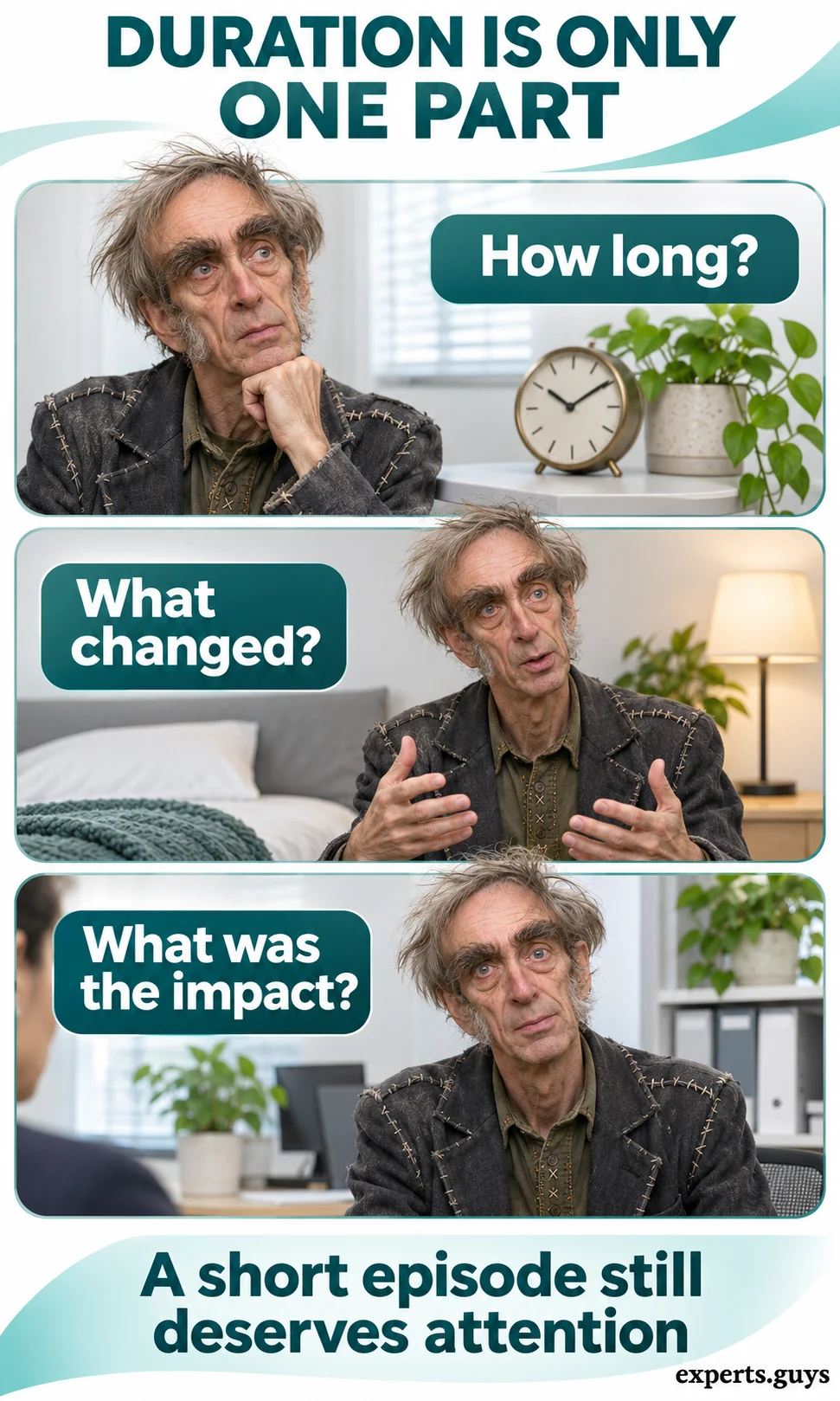
The same care is needed with symptom counts and descriptions. Several isolated experiences from unrelated periods cannot simply be combined into one episode. Equally, not remembering every detail is not proof that nothing happened. When you are unsure, saying “I do not know” preserves information more accurately than selecting dates or symptoms that seem to fit a category.
Other explanations and coexisting conditions may need consideration, including substance or medication effects, thyroid problems and other mental health conditions. A relevant timing relationship is something to discuss, not proof of cause. The NICE assessment recommendations support a full history and consideration of alternatives rather than diagnosing from one shared symptom.
If irritability within a depressive period is the main concern, the focused guide to irritability in bipolar depression explains that pattern. For an NOS label, the additional question is which part of the explanation remains unresolved and how the clinician proposes to resolve it.
How can you clarify the label without diagnosing yourself?
Use the next routine consultation to ask for a plain-language explanation and a concrete follow-up agreement. This is a communication sequence, not a treatment exercise or a validated diagnostic test. Its purpose is to leave you understanding the current working explanation and who is responsible for the next review; it does not require a changed mood or a new label.
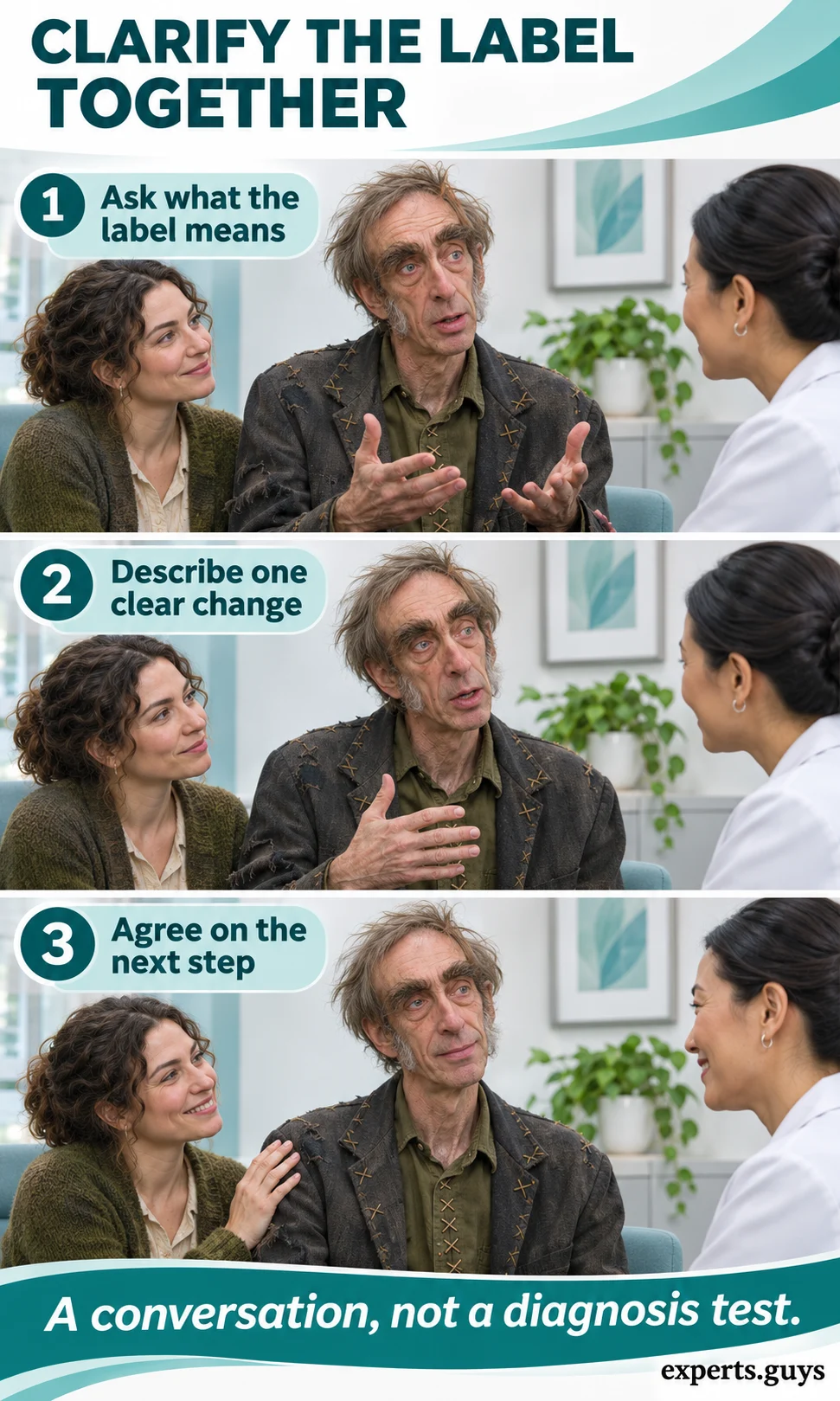
- Ask what the label means here. Say, “I have seen bipolar NOS in my record. Is that historical wording, or your current assessment?” Let the clinician explain before asking for a different term.
- Connect the explanation to the unresolved point. Ask, “Which part is clear, and which part is uncertain?” If a concrete change is relevant, describe one briefly or ask the clinician to explain how an already-discussed example fits. You do not need to repeat a complete history to answer this one question.
- Agree on the next step. Ask, “What happens next, who will review it, and what change should make me seek help sooner?” Repeat back the answer in your own words so the clinician can correct a misunderstanding.
An illustrative exchange might sound like this: “I understand that the record uses a broad term because the earlier period is unclear. Are we keeping that wording while you review the existing records, and will you explain the outcome at my follow-up?” That question makes the uncertainty and the responsibility visible. It does not pressure the clinician to confirm a preferred diagnosis.
If the conversation becomes overwhelming, use only the first question and ask for a shorter explanation. With your permission, a trusted person can help listen or supply relevant observations; their account should complement yours. If speaking is inaccessible, use an interpreter or your preferred communication support. Writing, phone logging and completing forms are not requirements of this sequence.
Avoid turning clarification into an argument about a label. If you disagree, identify the particular point: “That description does not match what I remember; can we go through why you think it applies?” If the explanation remains unclear, ask about a further review or second opinion. Do not deliberately change sleep, stop treatment or provoke symptoms to make the diagnosis easier to demonstrate.
Care decisions should address the actual symptoms, risks, history and preferences rather than the abbreviation alone. A diagnostic review and help for current difficulties can proceed together. Ask what each existing treatment is intended to do, and discuss adverse effects or concerning changes with the prescriber. Do not start, stop or change medication on the basis of this article.
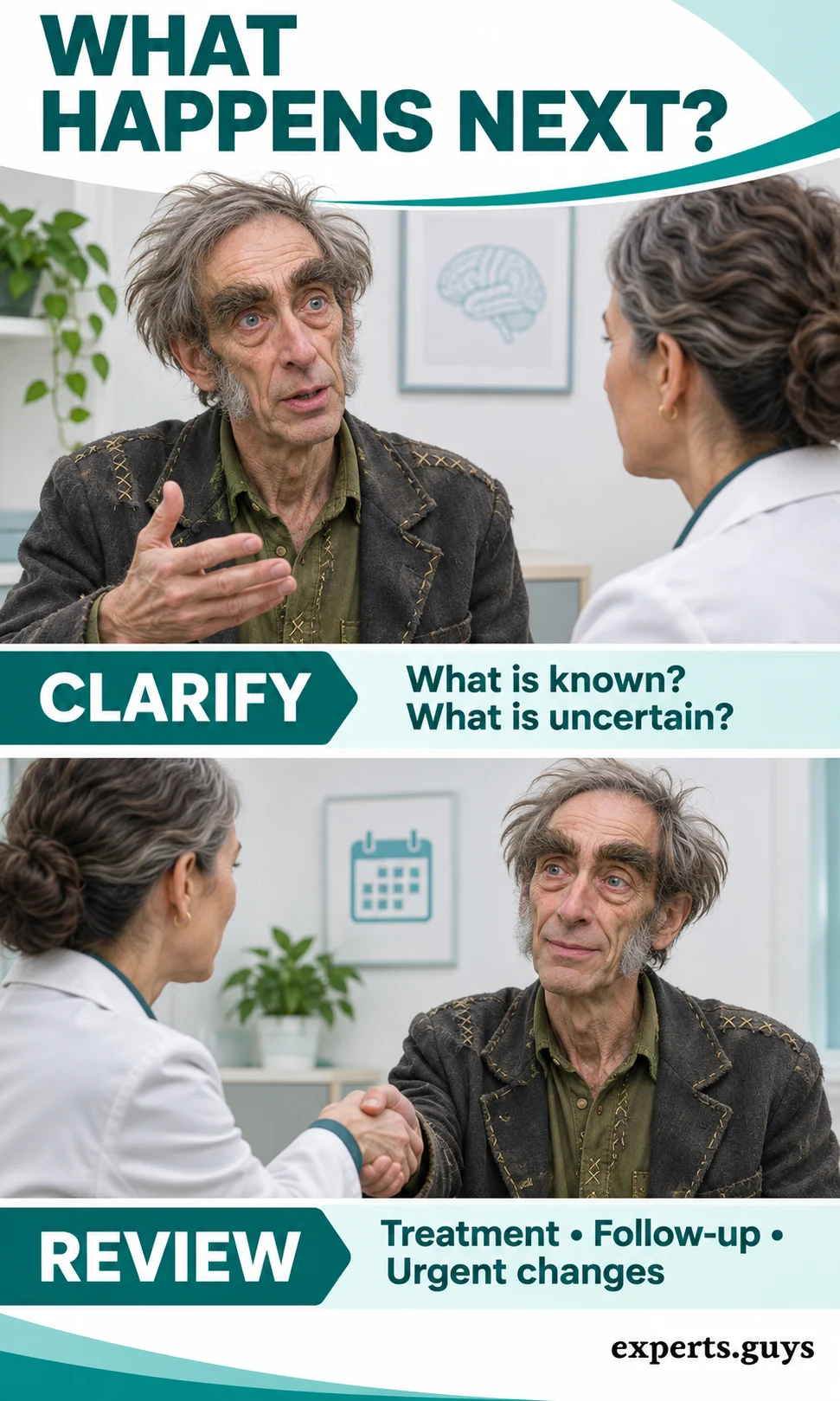
Before the consultation ends, check that “follow-up” means something usable: which service or clinician is responsible and how you will reach them if the situation changes. If you cannot access the suggested appointment because of cost, transport, language or availability, name that barrier during the discussion. An agreed next contact is more useful than leaving with a clearer definition but no way to act on it.
Frequently asked questions
Is bipolar NOS the same as bipolar II?
No. An old NOS label does not establish that the full bipolar II pattern was present. The assessment behind the label needs to be reviewed; a wording change should not substitute for that clinical reasoning.
Does unspecified mean the clinician thinks I am making it up?
No. The term concerns diagnostic classification, not honesty or character. If you feel dismissed, ask the clinician to explain both the uncertainty and how your present difficulties will be addressed.
Can the label stay the same after more appointments?
Yes. Further assessment does not always produce a more specific category. What matters is whether the explanation, care goals and follow-up are clear, rather than whether the label changes at every review.
Should I ask for an old entry to be deleted?
First ask how it relates to the current assessment and whether the record needs a clarification or correction. Historical information and a current working diagnosis can serve different purposes. The appropriate record process depends on the service and local rules.
Can an online quiz tell me which label is right?
No. A quiz cannot establish the full history, exclusions and clinical reasoning needed to assign these categories. Use a confusing result as a topic for discussion rather than a reason to change treatment.
Understand the wording and agree on the next step
An NOS entry is a starting point for clarification, not a complete account of your condition. Ask whether it is historical or current, what is known or uncertain, and how the explanation connects to care and follow-up. The useful result is a shared understanding of the next step-not a self-assigned diagnosis.









