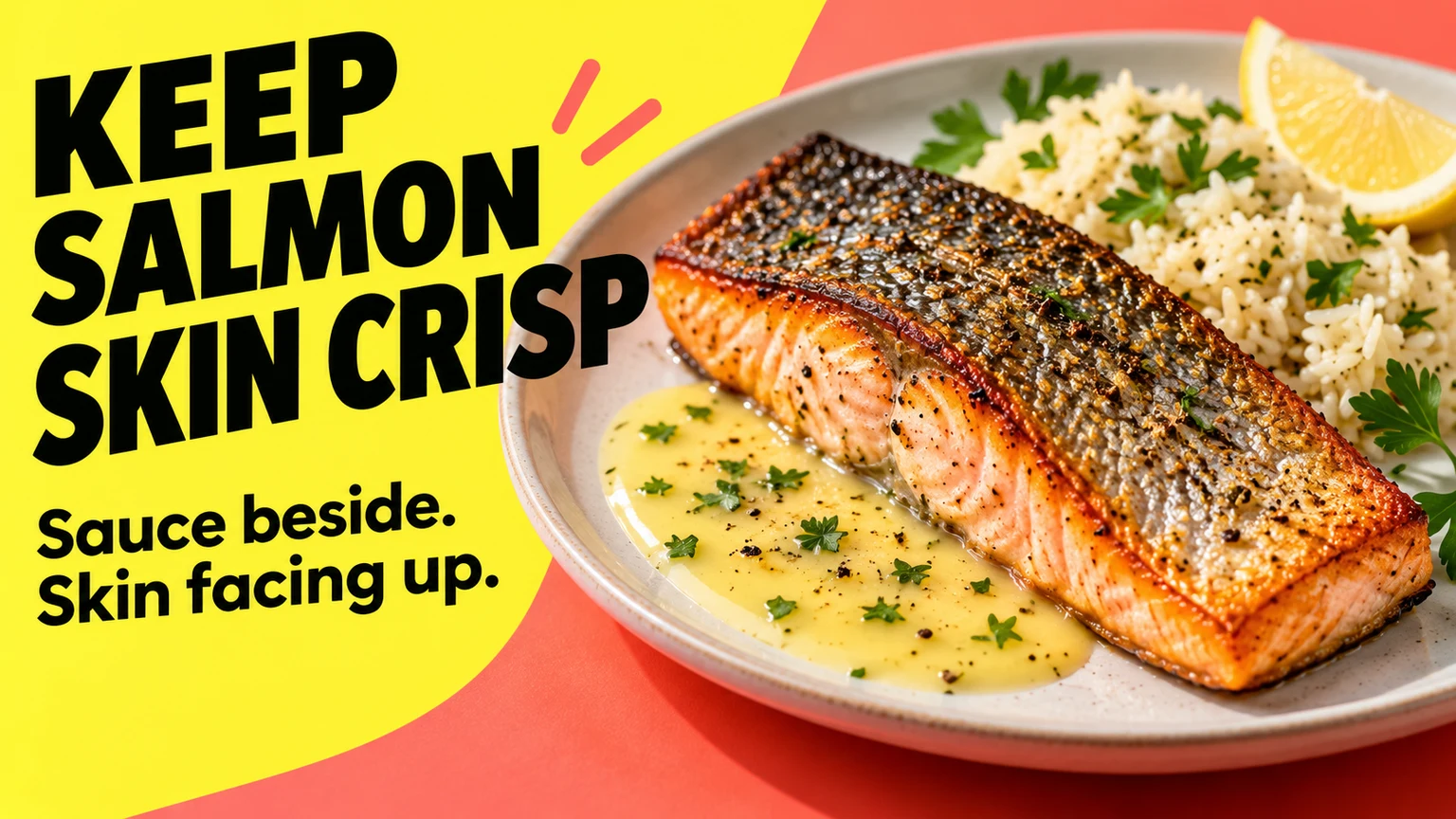
Salmon skin goes soggy under lemon butter sauce because the sauce wets a surface you have just worked to dry and crisp. Put the sauce beside the fillet, keep the skin facing up, and serve promptly; if the skin was chewy before you added sauce, the sear needs attention first.
The useful distinction is when the texture changed. Skin that softened on the plate points toward sauce contact, steam or a long wait, while skin that never crisped points toward the cooking stage. This guide helps you separate those problems without promising a measured dinner recipe or an exact number of minutes of crunch.
Find where the crispness disappeared
Look at the skin before trying to rescue the sauce. An oily sauce and soft skin can happen together, but they are different failures and need different adjustments. A smooth sauce can still wet the skin, and a dry plate cannot repair a patchy sear that never formed.
- Crisp in the pan, soft after saucing: change where the sauce touches the fish.
- Chewy before plating: check drying, steam and pan contact.
- Crisp at first, softer after waiting: shorten the delay and leave the skin uncovered.
- Only the edges crisp: look for curling that lifted the centre off the pan.
Why salmon skin goes soggy under lemon butter sauce
Lemon butter sauce is not simply a dry coating of fat. Lemon juice, stock or other liquid brings moisture into contact with the skin, even when the sauce looks rich and glossy. The practical consequence is straightforward: covering the crisp surface with sauce sacrifices some of that dry texture.
Sauce beside the fish gives you more control over each bite. Dip the flesh into the sauce and keep the skin above it, rather than placing the skin underneath in a puddle. This is a plating recommendation based on moisture contact, not a claim that the skin will stay crisp throughout an entire meal.
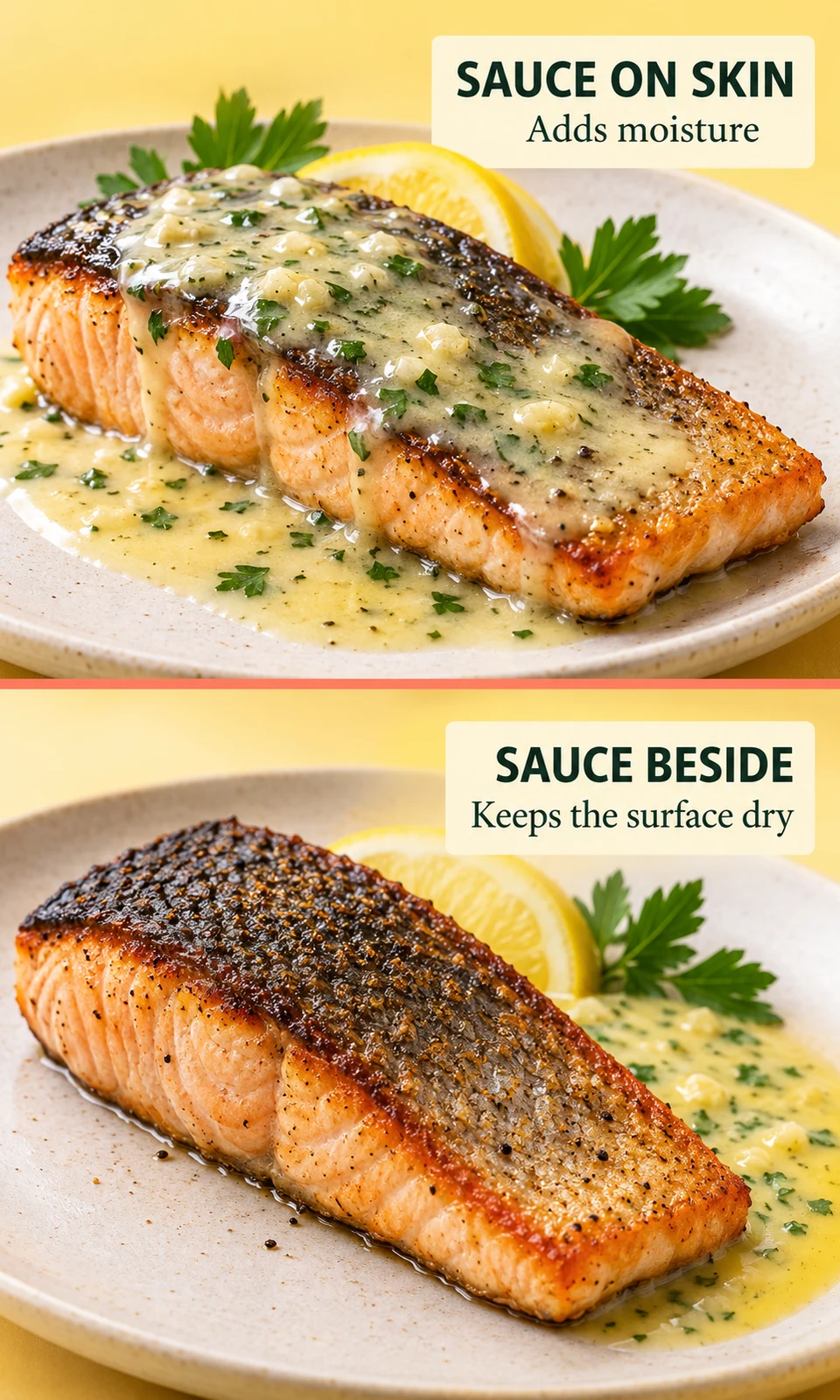
Sauce on the skin versus sauce on the plate
A small amount of sauce underneath the flesh can work if the fish sits skin-side up and the liquid does not reach around the edges. Beside is easier to control, especially with thin pieces that sit low on the plate. Keep the plate dry before serving, and add lemon juice to the sauce rather than squeezing it across the skin.
The pan mistakes that leave the skin chewy
The covered-pan shortcut works against the texture you want here. A lid traps the moisture released during cooking, so the skin can steam while you expect it to sear. If you need a different method to cook a thick fillet through, accept the texture trade-off rather than treating a lid as a crisping step.
Wet skin and curled fillets
For the underlying sear, Serious Eats’ pan-seared salmon method emphasizes drying, skin-side-down cooking and a brief press to maintain contact. These are technique cues rather than a universal timetable. Use doneness guidance suited to safety instead of borrowing the source’s lower-temperature preferences.
A curled fillet can brown at the edges while the middle stays pliable. Avoid solving that by turning the burner to maximum, which can burn the areas already touching the pan. Flatten the fish gently when it enters the pan, then let it cook without repeated lifting or forceful scraping.
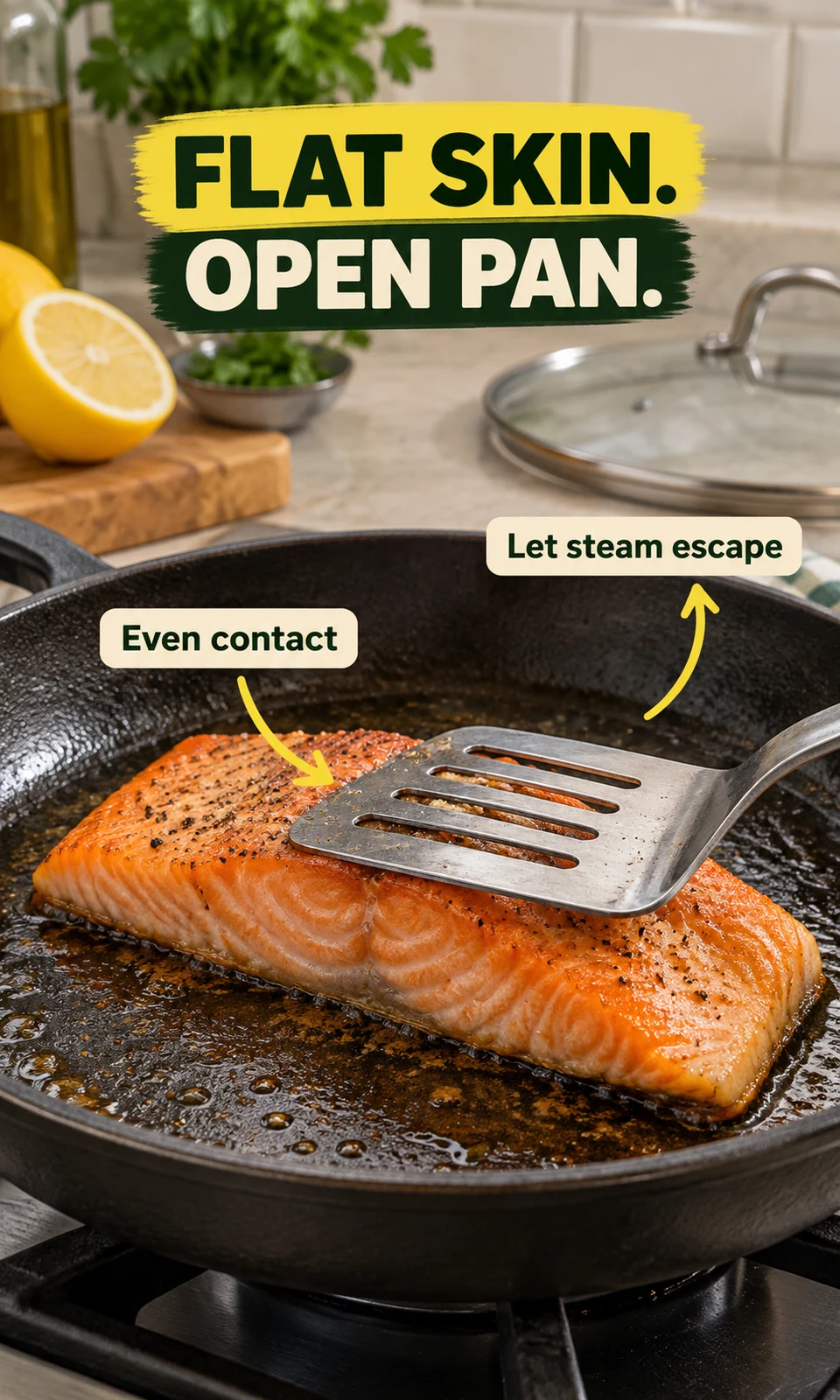
Let the skin release before forcing a flip
Sticking makes it tempting to pry the skin away immediately. Instead, distinguish resistance from burning: reduce excessive heat if needed and ease a flexible spatula under the edge without tearing. If the skin has already broken apart, save the fish and adjust the next batch rather than chasing a perfect crust at the expense of the flesh.
Keep lemon butter separate until serving
Making sauce in another small pan gives you control over heat and keeps added liquid away from the sear. A hot salmon skillet may contain tasty browned residue, but blackened garlic or burnt bits bring bitterness. For another dinner built around butter and garlic, see the garlic butter chicken guide, keeping its method separate from the fish.
When the sauce turns oily
Le Cordon Bleu’s butter-finishing advice is to whisk small, cold butter pieces into a sauce away from the heat. For an emulsified lemon butter sauce, stop a hard boil before incorporating the butter and serve without repeatedly boiling it. A simple melted-butter sauce is a different preparation and need not look like a stable creamy emulsion.
If your emulsified sauce separates, take it off the heat before making another change. Gently whisking in a little cold butter may help, but it does not guarantee recovery or remove a burnt flavour. Dark garlic, scorched residue or bitter white lemon pith call for a clean restart or a fresh ingredient check, not more butter poured over the fish.
Choose your next move in Crisp Skin Studio
Select when the skin softened, where you put the sauce, and what happened in the pan. The Studio connects those observations to practical next steps and lets you print a compact cooking sheet. Its suggestions concern texture; they do not determine whether your fish is safe to eat.
If the skin is already soft
Move the fish out of pooled sauce before adding more heat. A further skin-side sear may improve texture when the surface is dry enough, but it also cooks the flesh further and can splatter if sauce remains. With a thin tail piece or already dry salmon, accepting softer skin is often the better dinner decision.
Do not try to restore crunch by baking the fish under more sauce. The skin remains in contact with liquid, while the flesh continues cooking. If you reheat stored fish, treat safe reheating as a separate requirement and do not use a crisp-looking exterior as proof that the centre is hot enough.
Rice pilaf belongs beside the skin
Rice does not need to be dry or cold to sit on the same plate. The issue is contact: piling moist pilaf against the skin or resting the skin on rice exposes it to moisture. Keep the side next to the flesh, and have it ready before the fish so dinner does not wait under a cover.
If you swap pilaf for a vegetable rice side, the cauliflower fried rice guide covers a separate preparation. It does not supply a liquid ratio for grain rice. Whatever side you choose, drain loose moisture rather than transferring a puddle onto the salmon plate.
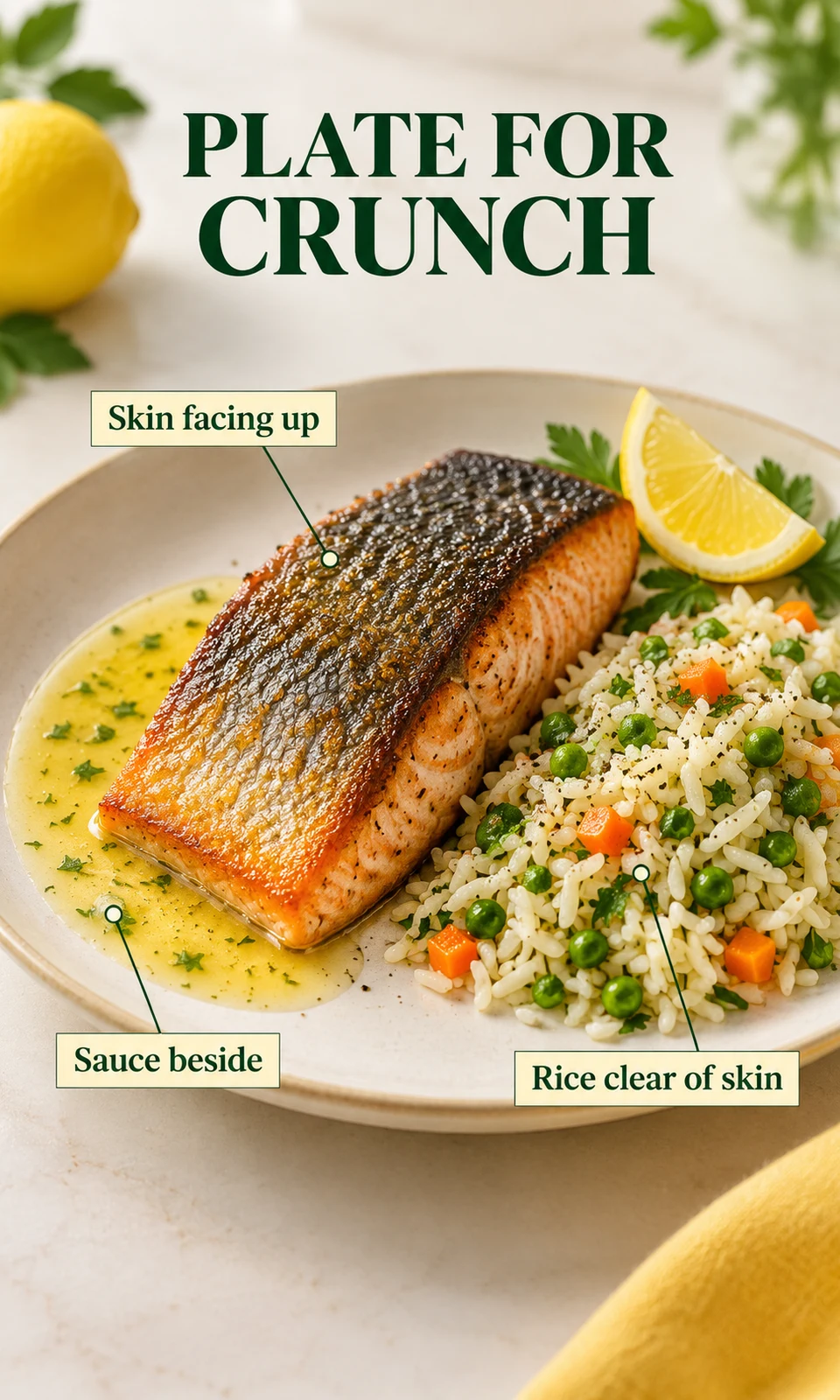
Match the observation to the adjustment
| What you notice | Likely check | Useful adjustment |
|---|---|---|
| Soft after saucing | Liquid touching the crisp surface | Put sauce beside skin-side-up fish. |
| Pale, flexible skin | Surface moisture or trapped steam | Dry the next fillet and leave the searing pan uncovered. |
| Crisp edges, soft centre | Curled skin or uneven contact | Press gently at the start; avoid scorching the edges. |
| Skin tears on lifting | Sticking or fragile cooked fish | Use a flexible spatula and avoid forceful scraping. |
| Oily butter sauce | Emulsion disrupted by heat | Take off the boil; incorporate cold butter gently. |
| Bitter sauce | Burnt aromatics or pith | Restart with clean ingredients and a clean pan. |
Keep texture advice separate from food safety
USDA FSIS lists 145°F (63°C) for fish; check the thickest part with a food thermometer. Colour and crisp skin do not establish a safe internal temperature. This guide does not recommend a raw or undercooked centre as an alternative doneness test.
For leftovers, USDA guidance calls for prompt chilling and use within three to four days under proper refrigeration. Refrigerate within two hours, or one hour above 90°F (32°C), and keep the refrigerator at 40°F (4°C) or below. Reheat leftovers to 165°F (74°C); separate sauce storage protects convenience and texture, not the storage deadline.
Frequently asked questions
Why is my salmon skin chewy rather than crispy?
First check whether it was chewy before sauce touched it. Wet skin, trapped steam and poor pan contact can all interfere with the sear. If it was crisp until plating, focus on sauce placement and waiting instead.
Should I pour lemon butter over the skin?
Keep it beside the fish when crisp texture is your priority. Pouring sauce over the skin adds moisture to that surface. You can still dip the flesh into sauce as you eat.
Should I flip salmon before the skin releases?
Avoid forcing a stuck fillet off the pan. Check that the heat is not burning the edges, then ease a flexible spatula underneath gently. Release is a handling cue, not a food-safety test.
Why did my lemon butter sauce split?
An emulsified butter sauce can separate when its heat and liquid balance are disrupted. Take it off a hard boil before gently incorporating cold butter. Burnt or persistently separated sauce may be better restarted.
Can I crisp salmon skin again after it softens?
A further dry skin-side sear may help, but it can overcook the flesh and does not guarantee the original texture. Remove excess sauce and avoid splashing liquid into hot oil. Re-crisping is not a way to make mishandled fish safe.
Do leftovers last longer if I store the sauce separately?
No. Separating fish, rice and sauce can make reheating easier, but does not extend the three-to-four-day window for properly chilled leftovers. Safe storage depends on prompt refrigeration and temperature control.
A better plate starts with the final contact
Keep the skin above wet ingredients and put the lemon butter where you can reach it with the flesh. If that fixes the plate, there is no need to change the whole dinner; if the skin never crisped, revisit the sear next time. The aim is a clear adjustment you can observe, rather than a promise of restaurant crunch regardless of the fish, pan or serving delay.