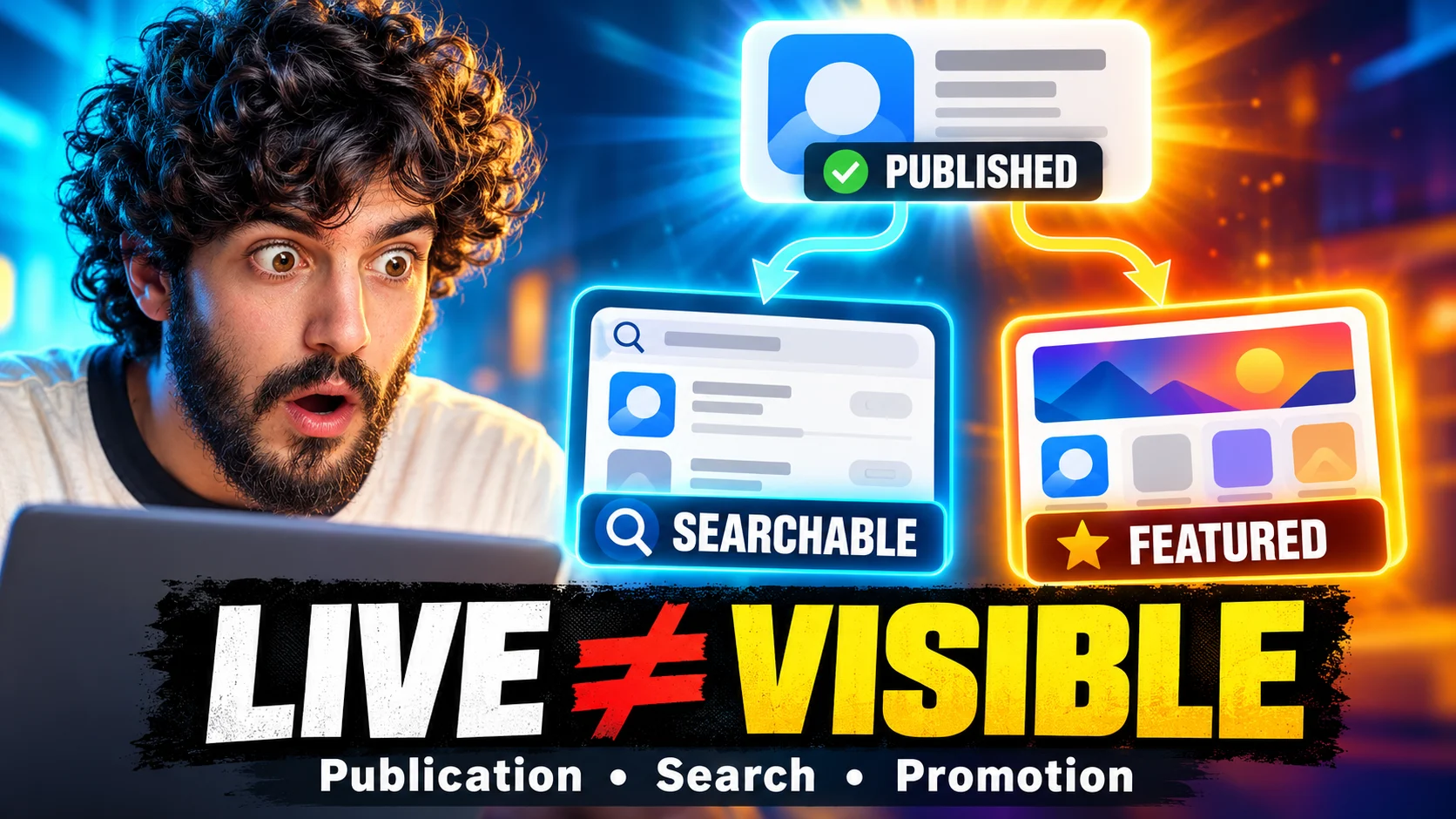
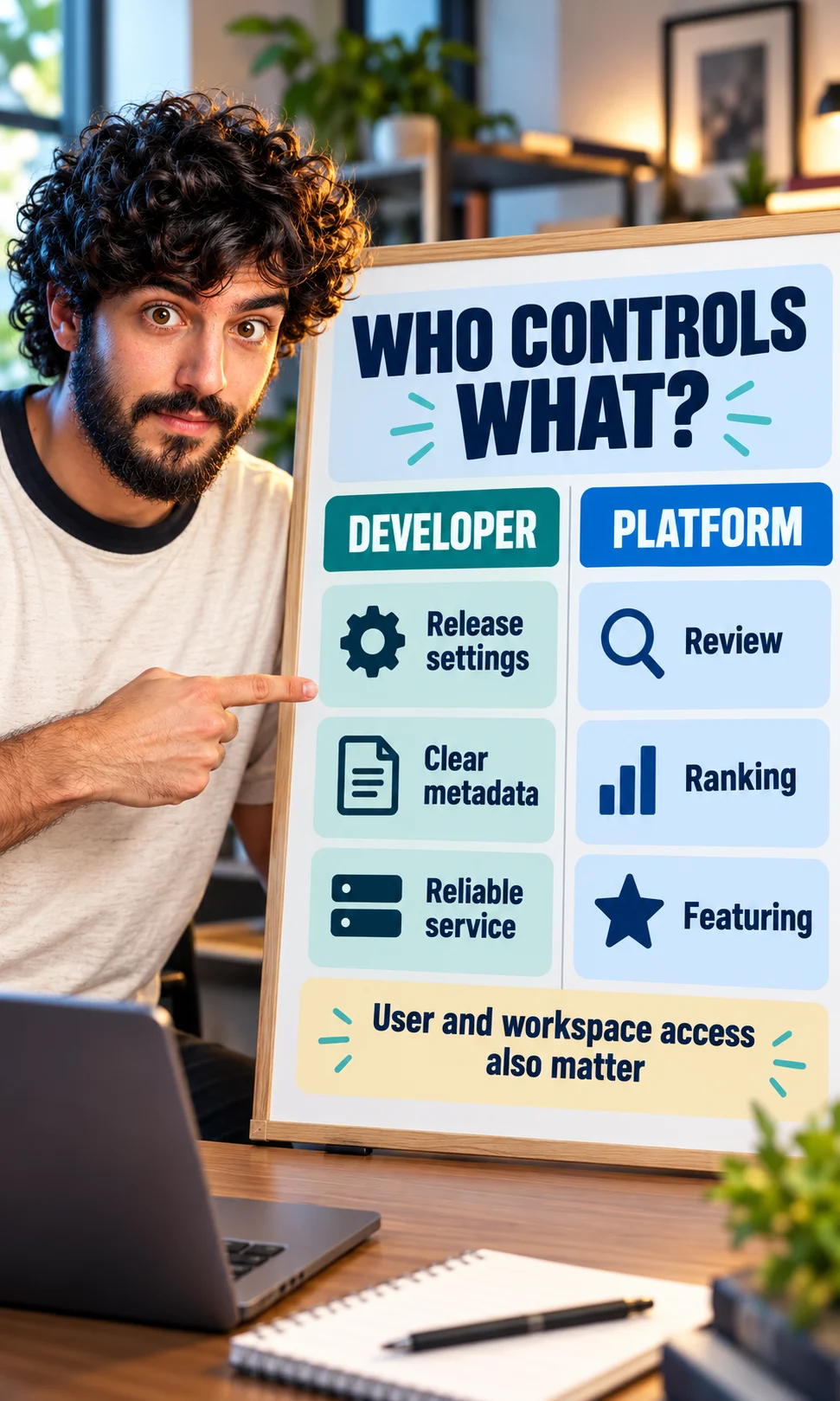
AI app store visibility control is shared: developers manage their release, product information and service quality, while platforms decide review outcomes and how listings are surfaced. A published app can be reachable by its direct link yet absent from a prominent browsing page, so identify which visibility layer is failing before changing the product.
Start with a specific observation: the listing cannot open, an exact-name search cannot find it, a category page does not show it, or an assistant does not select its action. Those observations point to different checks. Treating all of them as “the algorithm hiding my app” makes it harder to collect useful evidence or choose a sensible next step.
What AI app store visibility control actually means
The phrase covers several distribution systems rather than one universal store setting. An AI-powered mobile app, a conversational integration and a custom assistant may have different publication and access rules. Name the product type and the surface you are testing before applying a platform’s instructions.
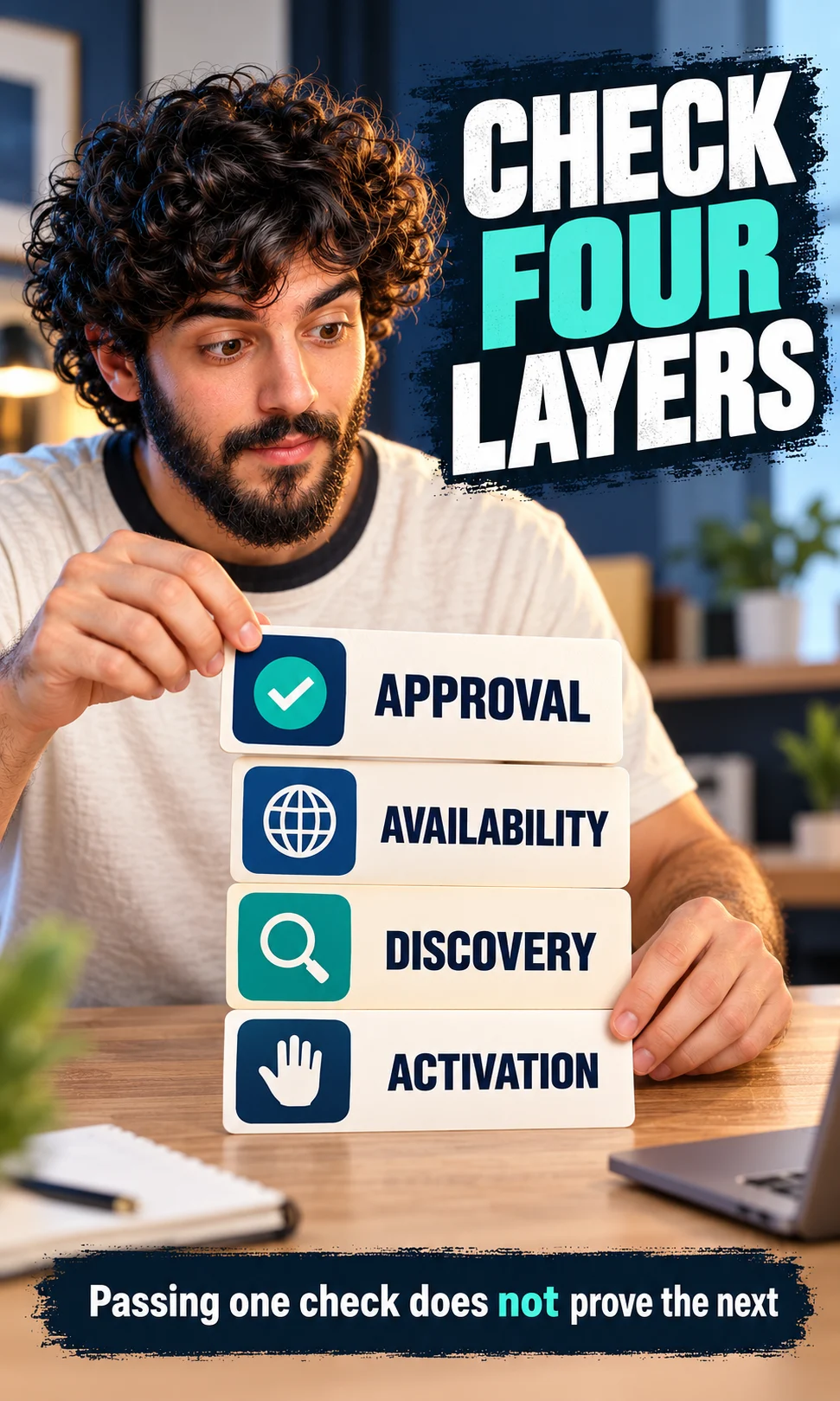
| Layer | What to verify | What a pass does not prove |
|---|---|---|
| Approval | The relevant release has cleared the required review. | That it has been published or released to the intended audience. |
| Availability | An eligible user can open the live listing. | That a search query will retrieve it. |
| Discovery | The listing appears for the recorded query or browsing surface. | That it receives prominent placement or will appear for every user. |
| Activation | A user can connect, open or invoke the intended capability. | That an assistant should select it for unrelated requests. |
Use these layers as an investigation framework, not as a description of a secret ranking pipeline. They help separate observable outcomes without claiming to know the platform’s internal weights. For example, a working listing is evidence of availability in that test context, while successful task completion is separate evidence about the product experience.
What developers can control
Developers can improve the accuracy of their listing, the clarity of their use case, release configuration and the reliability of the service behind it. These changes remove avoidable barriers and help users understand what they are choosing. They do not give the developer authority over a platform’s editorial selections or a guaranteed place in search.
The distinction matters commercially because release work and distribution work consume different resources. A team can repair a broken connection; it cannot schedule a platform’s featuring decision. The broader explanation of how ranking algorithms create digital hierarchies provides context for why inclusion and prominence should be evaluated separately.
- Release: verify the intended version and audience in the platform dashboard.
- Listing: describe the real task, supported context and meaningful limits.
- Service: test sign-in, permissions and the first useful action.
- Distribution: use an approved direct listing link in your own product documentation.
- Evidence: keep the release version and test conditions with each observation.
How the platforms differ
OpenAI’s current developer documentation calls its shared destination the Plugins Directory; older material may describe an app directory or app store. Approval and publication remain distinct: an approved plugin must be published before it can appear publicly. The official submission workflow is the appropriate place to confirm the live package rather than relying on an old tutorial’s labels.
OpenAI distinguishes published availability from enhanced distribution on its directory’s main pages. Its publication and distribution guidance says to verify publication using the exact publication name or the directory URL, and says developers cannot request enhanced distribution. Missing a prominent page alone therefore does not establish that publication failed.
| System | Useful first check | Avoid assuming |
|---|---|---|
| OpenAI plugin | Confirm published package, then exact publication name and directory URL. | That approval alone publishes it or that the main page lists every plugin. |
| Apple App Store | Check release availability, metadata and the relevant storefront. | That native-app keyword guidance describes conversational action selection. |
| Google Play | Confirm production publication, supported device and intended country. | That a closed/internal test is a public production release. |
Apple documents text relevance and customer behavior among the factors used in App Store search. Its discovery guidance also describes category selection and editorial surfaces. These are useful native-store distinctions, but they do not establish ranking weights for an AI assistant or a different marketplace.
Google Play’s visibility troubleshooting guidance distinguishes production publication, device compatibility and search behavior. It also notes that results can vary with user context. Consequently, a colleague’s different result is a reason to compare conditions before treating the difference as evidence of a platform penalty.
How to check a missing listing
Copy the direct listing URL from the relevant publication dashboard and test it with an eligible account. Confirm the listing identity and the visible release information where provided, then record whether the page opens and what it says. A dashboard preview or a private test installation is a different observation from a publicly available listing.
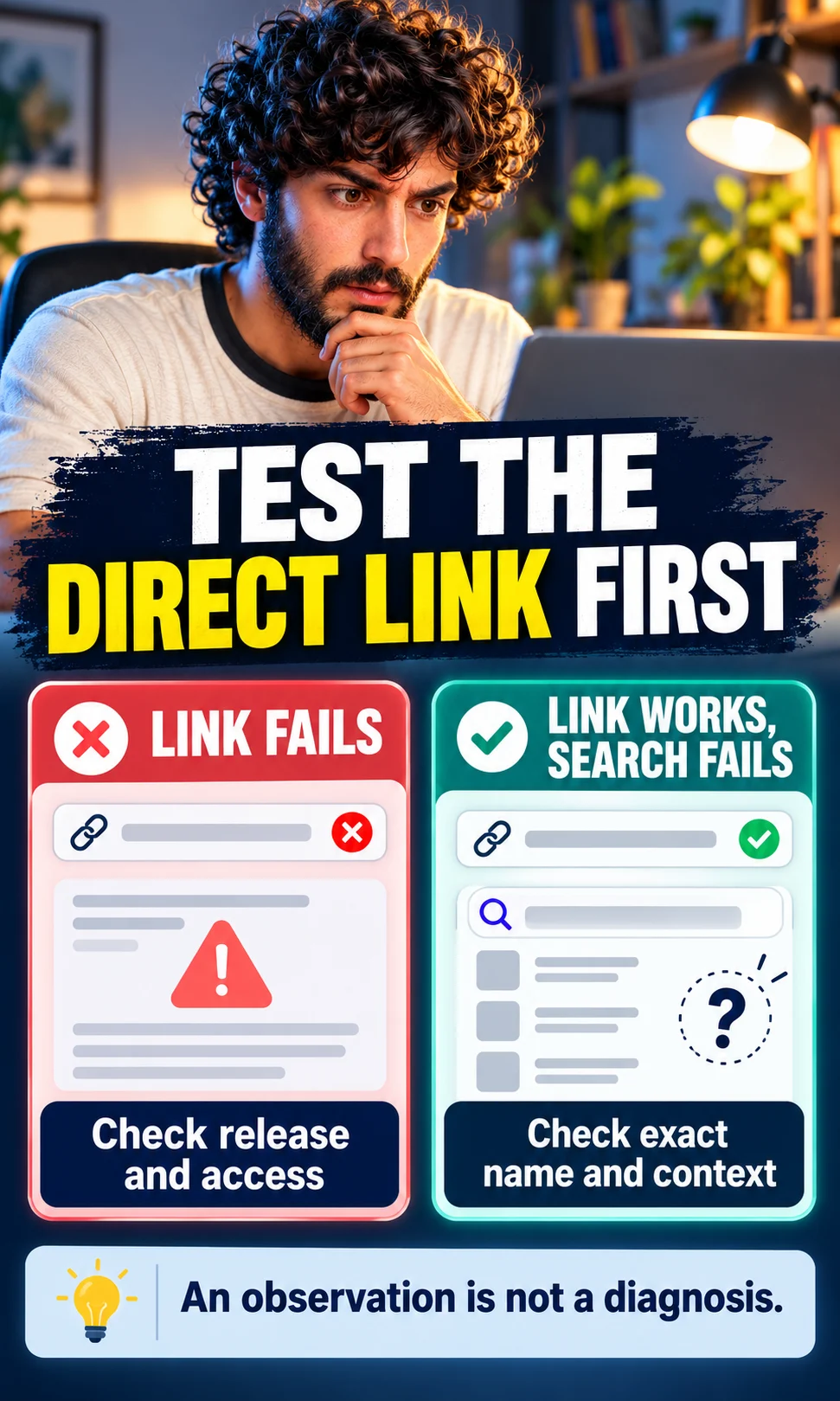
- If the direct link fails: inspect publication state, audience and applicable availability restrictions; record the exact error.
- If the link opens but exact-name search fails: confirm the published name and repeat under recorded conditions before escalating.
- If exact-name search works but browsing does not show it: investigate the specific browsing surface; do not assume it is a complete catalogue.
- If the listing works but connection fails: inspect sign-in, permissions and service errors rather than rewriting listing keywords.
Keep the first test narrow enough to reproduce. Change one condition at a time and note the result rather than switching country, account and device together. If the platform displays a review or processing estimate, use that guidance; there is no single waiting period that applies to every store and every release type.
Why the same app looks different to different users
Two people can be testing different storefronts, devices or account contexts without realizing it. In a managed environment, an administrator’s allowed integrations and the user’s own connection permissions are also relevant checks. Record those facts without trying to bypass the organization’s controls or assuming that every platform offers the same access settings.
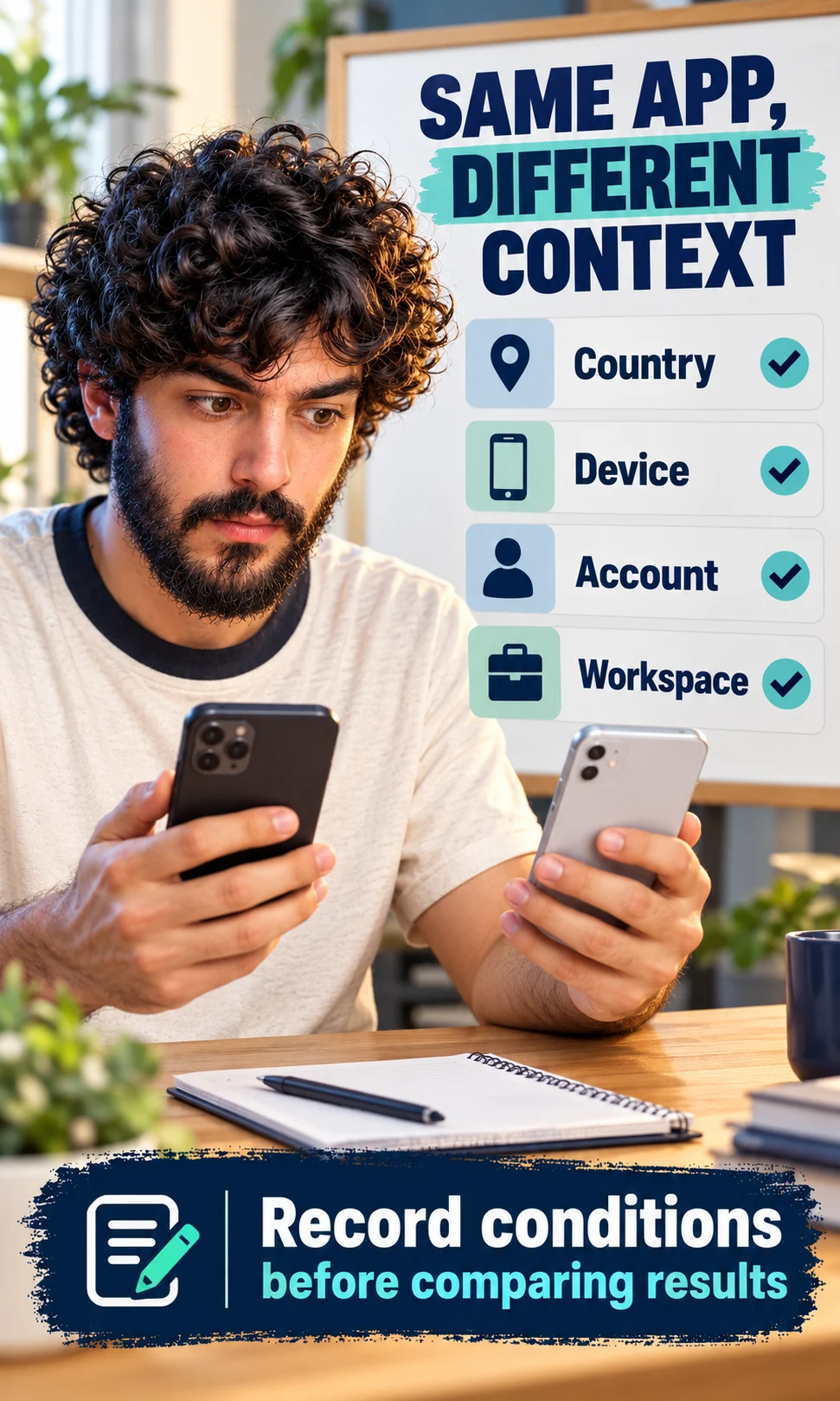
Use a small comparison record containing platform, country or storefront, device and operating system, account type, workspace and exact query. Record the time and timezone as well, since release state may change between tests. A privacy question is separate from a discovery question; the guide to Google administrator visibility into ChatGPT activity helps readers investigate that related concern.
How to test metadata without chasing a score
For conversational integrations, metadata helps the system understand when a capability fits a request. OpenAI’s metadata guidance recommends direct, indirect and negative prompt cases, together with recording which action ran. This is a relevance test, not a promise that adding particular words will win a directory position.
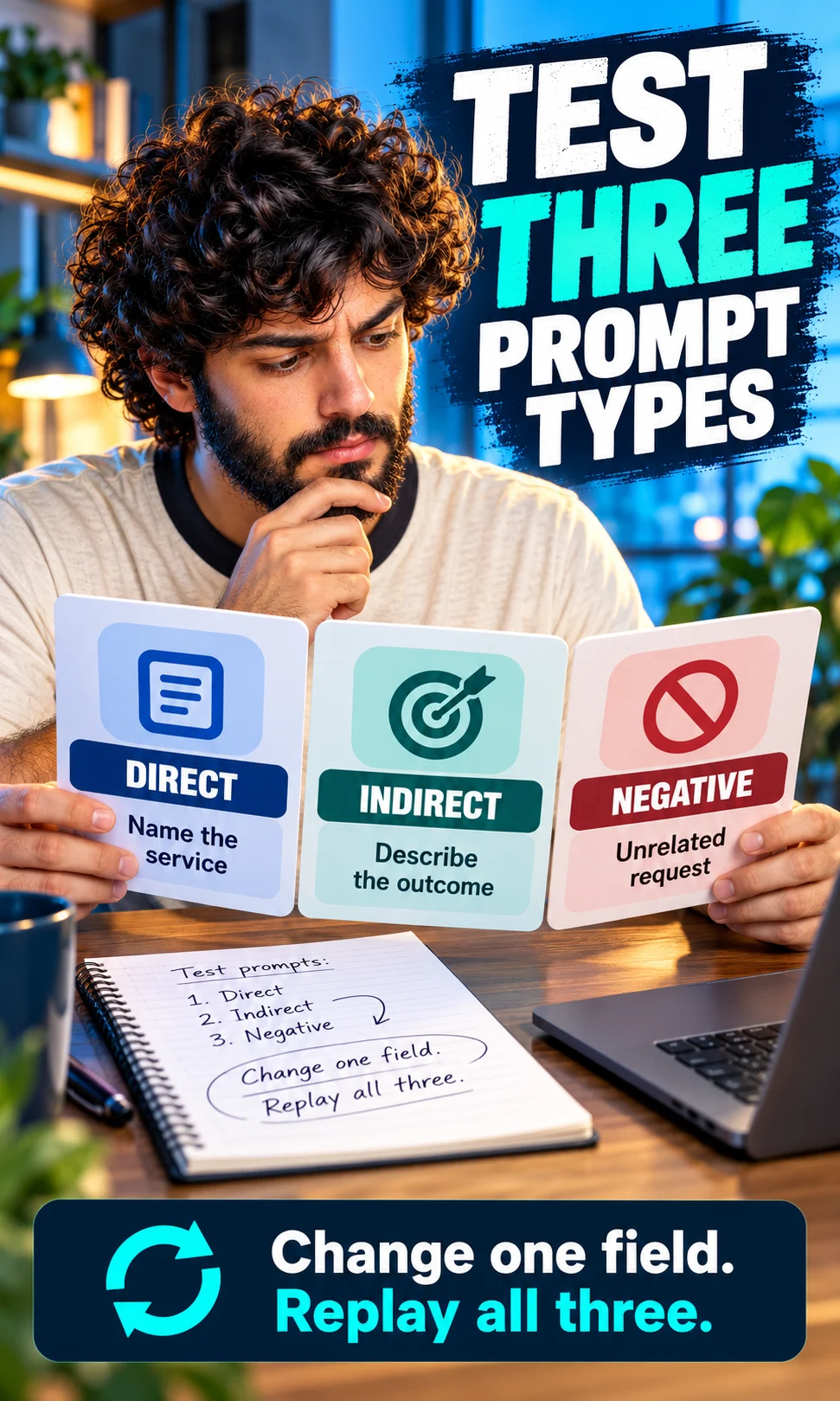
| Case | Example for a hypothetical booking service | Expected behavior to record |
|---|---|---|
| Direct | Use Example Booking to find an available appointment. | Whether the named, connected service is selected appropriately. |
| Indirect | Find an appointment that matches my stated location and time. | Whether the service fits the request and receives usable arguments. |
| Negative | Explain what an appointment confirmation means. | Whether an explanation can be given without an unnecessary service call. |
Write expected behavior before running the tests, then change one relevant description or parameter explanation and replay the set. Save both successes and wrong selections so a perceived improvement does not hide a new error. Use truthful capability boundaries; broad claims that a service handles everything make evaluation less informative.
Separate listing discovery from action selection in your records. A directory impression, a listing visit, a completed connection and a successful task are different events with different denominators. Measure whichever events you can actually observe, and leave unavailable figures unknown rather than turning a few manual checks into a claimed market-wide visibility percentage.
When to escalate a visibility problem
Escalate when you have a reproducible mismatch between the published state and the outcome expected for an eligible user, or when the platform dashboard identifies an issue that needs its support process. Include the listing identifier, version, observation time, context, query and exact error. Remove private credentials and unrelated personal information from the evidence you send.
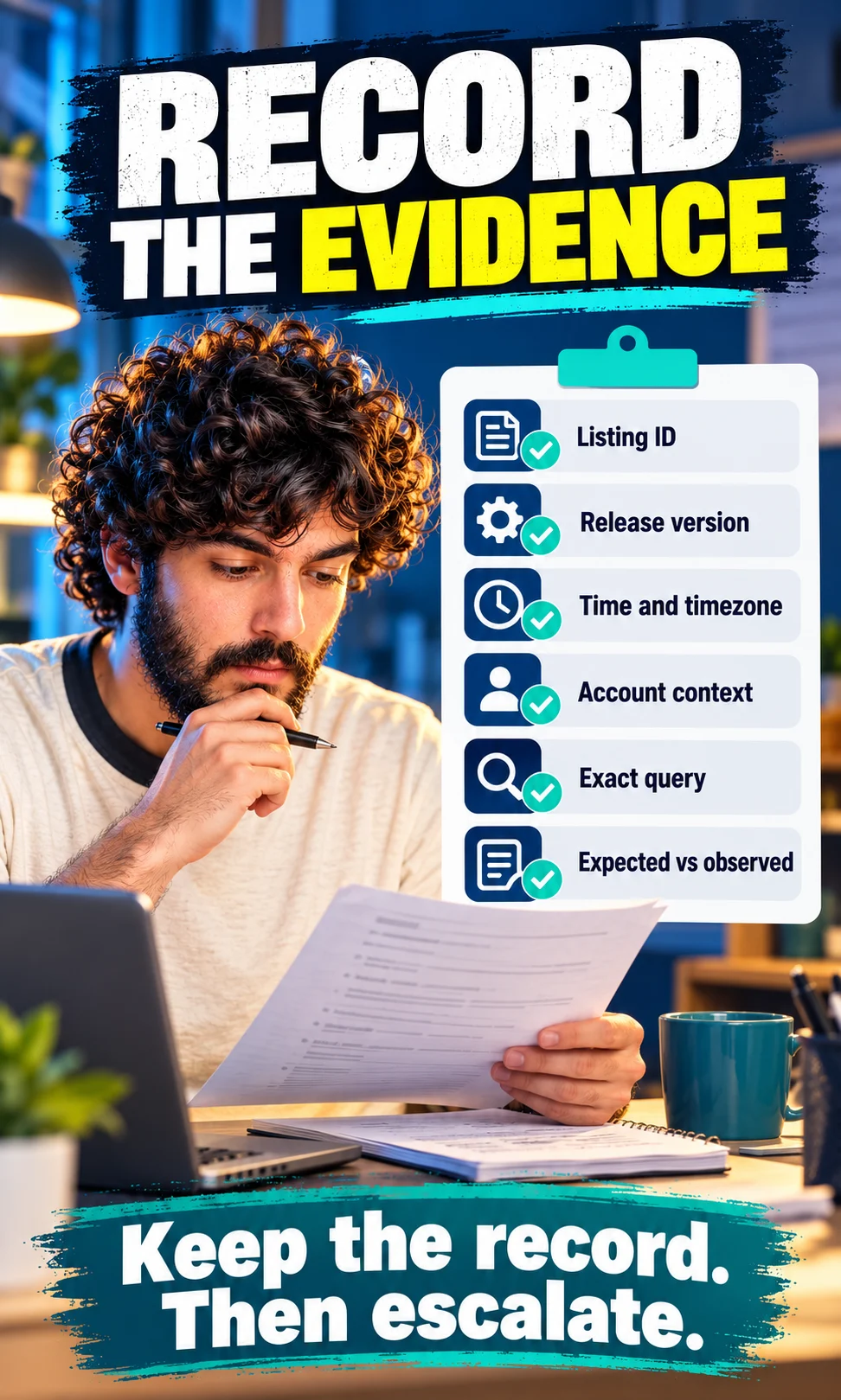
An evidence record should distinguish a fact from an explanation. “The exact-name search returned no result for this account at this time” is a reproducible observation; “the platform suppressed us” is an unproven interpretation. A clear record lets the next investigator repeat the test and decide whether the issue concerns access, publication, retrieval or service behavior.
Create your next-check record
Use Visibility Check Studio to turn the observations you already have into an ordered checklist. It does not query a live store, inspect your account or predict ranking; unknown answers remain explicit. Review the output, run the suggested check and save the A4 record if you need a handover for a colleague or support team.
From observation to next action
Visibility Check Studio
Find the next check for your listing, access or activation issue.
No ranking score A4 handoverSelf-reported observations only. This does not inspect a live store or guarantee approval, placement or recommendations. Entries are not uploaded or saved by this experience.
Reduce dependence on one discovery surface
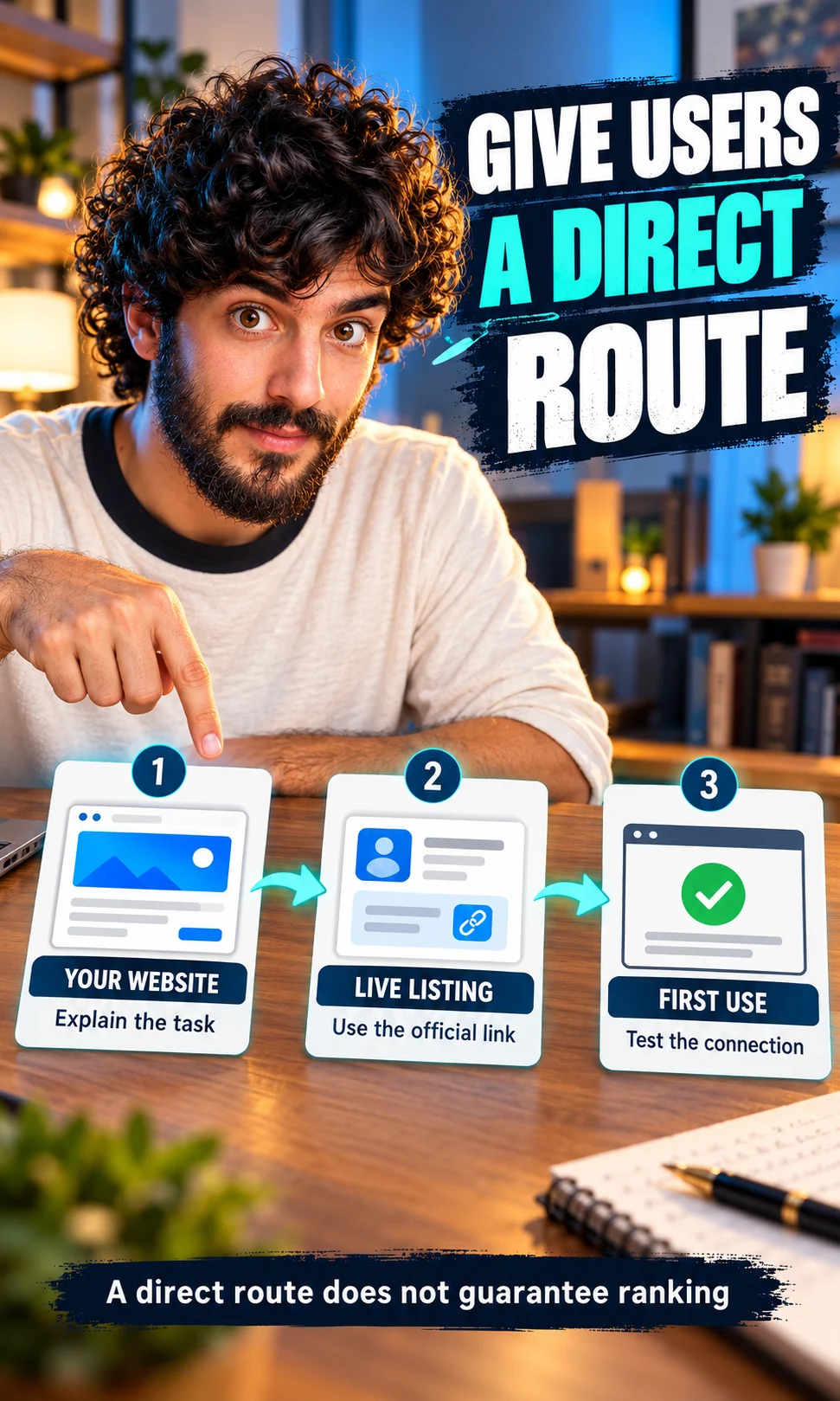
A direct listing link and a useful product website give interested users a route that does not depend entirely on browsing placement. Explain the supported task and connection steps on pages you control, then test whether those instructions lead to successful use. This improves the handoff even when the platform’s distribution choices remain outside your control.
Keep paid exposure, editorial promotion and organic discovery separate in reporting. Spending money on traffic does not by itself demonstrate improved organic placement, and a featured period does not guarantee durable demand. For the broader commercial distinction, see how ad allocation models price visibility and why digital marketplaces become concentrated.
Frequently asked questions
Does approval mean an AI app will appear on the main directory page?
No. Approval, publication and prominent placement are different states. OpenAI requires publication after approval and reserves main-page placement for selected plugins with enhanced distribution, so check the exact publication name or direct directory URL before concluding that the release is missing.
Why can one user find an app while another cannot?
Users may be testing different devices, storefronts, accounts or managed environments. Google Play explicitly documents several context-dependent differences, while other platforms have their own availability rules. Compare recorded conditions and applicable access settings before attributing the difference to ranking.
Can better metadata guarantee an assistant will recommend my app?
No. Metadata can make a capability’s purpose clearer, but it does not establish a guaranteed recommendation or a fixed ranking position. Test direct, indirect and negative prompts, record actual behavior and check that any improvement does not introduce unrelated calls.
What should I collect before contacting platform support?
Collect the listing identifier, published version, time and timezone, account or workspace context, exact query and expected versus observed behavior. Include the direct-link result and any relevant error. Keep credentials and unrelated personal information out of the report so the investigation can focus on a reproducible issue.
The useful next decision
Locate the earliest check you cannot yet verify and work forward from there. Fix confirmed release or access problems before testing discovery, and test discovery before interpreting missing recommendations. Keep each conclusion tied to evidence from the actual platform, audience and version you are investigating.