

The Myth of Neutral Sorting
Most digital platforms appear neutral.
Search results look like lists.
Feeds look chronological.
Recommendations look personalized.
But beneath the surface, ranking systems determine exposure.
Exposure determines visibility.
Visibility determines engagement.
Engagement determines future ranking.
This cycle creates hierarchy.
Hierarchy does not require intention. It emerges from optimization.
When platforms shift from chronological sorting to algorithmic ranking, neutrality declines. The system no longer asks, “What came first?” It asks, “What is most likely to perform?”
Performance replaces sequence.
Predictability replaces neutrality.
And predictability clusters attention.
What Is a Ranking Algorithm?
A ranking algorithm is a decision system that orders content, profiles, or information based on weighted variables.
Common variables include:
- Engagement likelihood
- Click probability
- Interaction history
- Activity frequency
- Content similarity
- Behavioral signals
The algorithm assigns weight to each signal. The weighted score determines ordering.
Ordering determines exposure.
Exposure determines outcome probability.
This is true for:
- Search engines
- Social feeds
- Video platforms
- Marketplaces
- Dating platforms
This structure is visible in exposure asymmetry in digital dating systems where match probability shifts based on algorithmic ranking. The same mechanism applies across multiple digital environments.
Neutrality vs Predictability
Neutrality implies equal exposure opportunity.
Predictability implies exposure weighted by expected performance.
Platforms optimize for predictability.
Why?
Because predictability reduces uncertainty.
Reduced uncertainty increases:
- Engagement consistency
- Revenue stability
- User retention
When engagement becomes the primary metric, ranking systems prioritize content or profiles most likely to generate interaction.
This does not require moral bias.
It requires probability estimation.
Probability estimation amplifies patterns.
Patterns create concentration.
Amplification Through Feedback Loops
Ranking systems learn from user behavior.
If a piece of content receives:
- High click-through rate
- Long dwell time
- Strong engagement signals
The algorithm increases its distribution.
Increased distribution increases interaction probability.
Increased interaction reinforces ranking weight.
The loop strengthens.
This feedback mechanism is mathematically efficient.
But efficiency produces clustering.
Clustering produces hierarchy.
Hierarchy appears organic but is structurally reinforced.
The Concentration Effect
In open digital systems, attention tends to concentrate.
Small performance differences early in exposure can compound rapidly.
If two pieces of content differ slightly in engagement probability, the higher-performing one receives more visibility.
More visibility generates more engagement.
More engagement strengthens algorithmic confidence.
Confidence increases distribution.
The difference widens.
This phenomenon resembles network amplification in economic markets.
This amplification occurs within a broader competition for finite attention where engagement metrics determine visibility. When attention is scarce, algorithms prioritize predictability over neutrality.
Concentration is not accidental.
It is a statistical outcome.
Hierarchy Without Intention
Digital hierarchy does not require explicit favoritism.
It emerges when:
- Engagement determines distribution
- Distribution determines exposure
- Exposure determines performance
- Performance determines future distribution
The cycle self-reinforces.
Participants at higher exposure tiers accumulate advantage.
Participants at lower tiers face reduced probability.
The system does not “prefer” individuals.
It prefers outcomes that maximize measurable engagement.
Over time, this preference produces visible tiers.
Tiers resemble hierarchy.
Hierarchy influences perception.
Perception of Inequality
When exposure differs, participants often interpret the difference socially.
They may attribute it to:
- Personal merit
- Popularity
- Quality
- Bias
While quality and merit matter, structural ranking also plays a role.
Small algorithmic advantages can compound.
Compounding magnifies initial differences.
The magnification becomes visible as inequality of attention.
Understanding this mechanism clarifies why digital ecosystems often exhibit winner-take-most dynamics.
How Algorithms Decide What Matters
Ranking systems do not treat all signals equally.
Each platform assigns weight to variables based on historical correlation with engagement. Some signals are strong predictors. Others are weak. Over time, systems adjust weight dynamically.
Common ranking signals include:
- Click-through rate
- Dwell time
- Completion rate
- Interaction density
- Response latency
- Activity consistency
The algorithm calculates a composite score.
Composite score determines position.
Position determines exposure.
Exposure determines probability.
Probability determines outcome.
When certain signals consistently correlate with engagement, their weight increases. Increased weight amplifies the behaviors associated with those signals.
This is how engagement bias emerges.
Not from opinion.
From correlation reinforcement.
The Cold-Start Problem
New participants in a ranking system face uncertainty.
Without prior engagement data, the algorithm lacks confidence.
This creates the cold-start problem.
To solve it, platforms may:
- Assign neutral baseline exposure
- Use proxy signals
- Test small distribution batches
- Analyze early engagement velocity
Early performance becomes disproportionately influential.
If initial engagement is strong, distribution expands.
If initial engagement is weak, exposure may contract.
Small early differences compound.
This creates divergence.
Divergence becomes tier separation.
Tier separation becomes perceived hierarchy.
Engagement Bias Amplification
When systems prioritize engagement probability, certain content patterns rise repeatedly.
For example:
- Visually striking thumbnails
- Emotionally charged language
- High-contrast presentation
- Rapid pacing
These patterns are not selected for ideology. They are selected for measurable interaction probability.
Once selected, they become common.
Common patterns become optimized templates.
Optimized templates increase engagement likelihood further.
The loop compounds.
This reflects broader engagement optimization mechanics central to the attention economy. When duration and interaction drive revenue, design converges around performance signals.
Over time, platforms may appear homogeneous.
Similarity is not coincidence.
It is metric alignment.
The Invisible Advantage
Users see:
- Their own engagement
- Public interaction metrics
- Surface-level ranking
Platforms see:
- Cross-user engagement matrices
- Signal strength distributions
- Prediction confidence scores
- Comparative performance clusters
- Retention likelihood curves
This asymmetry gives platforms superior situational awareness.
If a content piece slightly outperforms baseline by 3 percent, the system detects it instantly.
If user behavior deviates from predicted path, models recalibrate.
Users cannot observe this recalibration directly.
They experience outcome shifts without seeing causal structure.
Opacity intensifies perception of unpredictability.
But the system itself is probabilistic, not arbitrary.
Optimizing for Visibility
Participants within ranking systems adapt behavior strategically.
Content creators optimize:
- Titles
- Thumbnails
- Pacing
- Emotional hooks
Profile users optimize:
- Visual presentation
- Response timing
- Activity consistency
- Interaction patterns
Optimization behavior is rational.
If exposure probability increases through adaptation, participants adjust.
This creates ecosystem-level convergence.
Similar profile optimization behavior in ranking systems is visible in swipe-based dating platforms. When exposure probability changes match likelihood, presentation becomes strategic.
Strategy reinforces engagement signals.
Engagement signals reinforce ranking weight.
Ranking weight reinforces hierarchy.
The Illusion of Meritocracy
Ranking systems often appear merit-based.
High-performing content rises. Low-performing content sinks.
However, performance measurement is engagement-weighted.
Engagement does not equal universal value.
It equals measurable interaction.
If a content piece generates high click-through but low long-term satisfaction, engagement metrics may still reward it.
Metric design determines merit perception.
If metrics reward short-term intensity, short-term intensity rises.
If metrics reward sustained quality, sustained quality rises.
Thus, the appearance of meritocracy depends on metric selection.
Signal Drift and System Evolution
Ranking systems are not static.
Platforms continuously:
- Adjust signal weights
- Introduce new engagement metrics
- Penalize low-quality patterns
- Promote new content formats
These adjustments shift exposure dynamics.
Participants must adapt repeatedly.
Frequent adjustments prevent equilibrium stagnation.
But they also introduce volatility.
Volatility increases perception of instability.
Instability intensifies strategic behavior.
Strategic behavior amplifies optimization.
Optimization amplifies hierarchy.
When Amplification Becomes Structure
Ranking systems do not merely sort information. Over time, they shape ecosystem composition.
When exposure consistently favors higher engagement probability, several structural shifts occur:
- High-visibility participants accumulate disproportionate attention
- Mid-tier participants compete intensely for incremental gains
- Lower-tier participants struggle for baseline exposure
These tiers may not be officially defined, but they become statistically visible.
Statistical visibility influences strategic behavior.
Strategic behavior increases signal optimization.
Signal optimization further stabilizes tier boundaries.
Hierarchy transitions from emergent to persistent.
Persistence creates structure.
Structure influences entry barriers.
Winner-Take-Most Dynamics
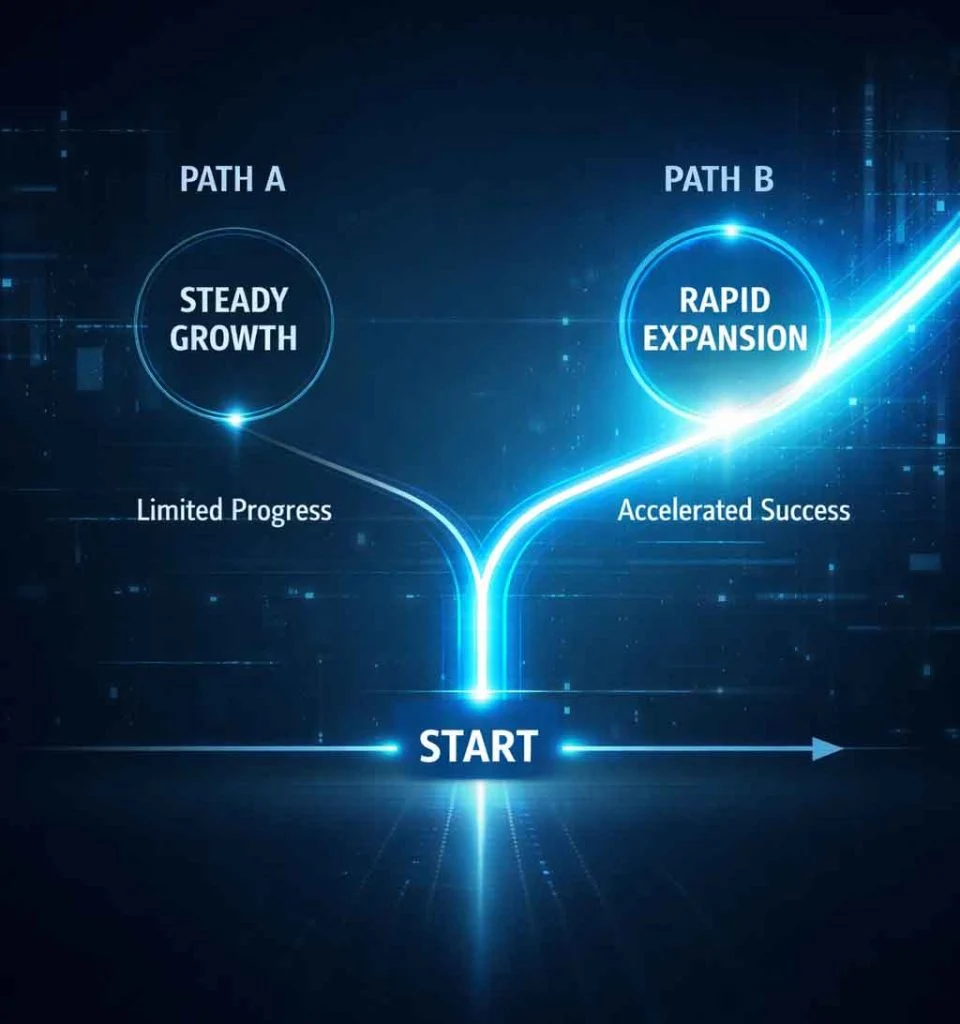
Digital ecosystems frequently display winner-take-most patterns rather than perfect equality.
The reason is mathematical, not moral.
When engagement-weighted systems amplify small advantages, cumulative gain accelerates.
For example:
If two creators differ slightly in engagement rate – even by a few percentage points – distribution algorithms favor the higher performer. That performer receives more exposure. More exposure produces more engagement. The gap widens.
The process resembles compound interest.
Small early gains generate larger future returns.
Compounding increases concentration.
Concentration creates dominance.
Dominance shapes perception of authority.
The Optimization Dilemma
Ranking systems balance two competing objectives:
- Stability – Deliver content most likely to satisfy engagement metrics
- Fairness – Provide equitable exposure opportunity
If stability dominates, concentration intensifies.
If fairness dominates, engagement efficiency may decline.
Platforms optimize within this tension.
High predictability improves user satisfaction in the short term because relevant content surfaces quickly.
However, high predictability can reduce exposure diversity.
Diversity reduction can reinforce echo effects.
Echo effects increase engagement predictability further.
The system favors stability.
Neutrality becomes mathematically expensive.
Algorithmic Lock-In
As ranking systems mature, historical engagement data accumulates.
Historical data influences future prediction.
Prediction influences exposure.
Exposure influences future data.
This feedback loop creates algorithmic lock-in.
Participants who achieve early success benefit from historical weight.
Participants who underperform early may face reduced exposure probability long term.
Lock-in does not require intentional favoritism.
It arises from data accumulation.
Once entrenched, it becomes difficult to disrupt without system redesign.
Exposure as Power
Visibility is not merely aesthetic.
It influences:
- Economic opportunity
- Social influence
- Narrative reach
- Brand formation
- Authority perception
When ranking systems determine exposure, they indirectly influence power distribution.
Power concentration often mirrors attention concentration.
This concentration reflects the scarcity of human attention that defines the attention economy. When attention is finite, algorithms allocate it strategically.
Strategic allocation creates hierarchy.
Hierarchy influences perceived legitimacy.
Interpretation Without Transparency
Users do not observe ranking calculations.
They observe outcomes.
When outcomes fluctuate:
- Visibility changes
- Engagement spikes or drops
- Distribution appears unpredictable
Without transparency, participants infer causes.
Some attribute changes to quality shifts.
Others attribute them to bias.
While bias can exist in data inputs, many shifts reflect metric recalibration or engagement probability updates.
Opacity increases speculation.
Speculation increases perception of arbitrariness.
But the underlying system remains probability-driven.
Structural Limits of Neutral Ranking
True neutrality would require equal exposure independent of engagement.
Equal exposure would reduce optimization efficiency.
Reduced optimization efficiency would lower engagement metrics.
Lower engagement metrics would impact monetization.
Monetization constraints limit neutrality implementation.
Thus, neutrality faces structural limits in engagement-driven systems.
This does not imply deliberate unfairness.
It implies economic alignment.
When platforms rely on engagement metrics, ranking becomes performance-weighted by necessity.
Cross-Domain Consistency
The same structural patterns appear across domains:
- Social media feeds
- E-commerce marketplaces
- App stores
- Streaming recommendations
- Dating platforms
Ranking-driven match distribution demonstrates identical hierarchy formation in swipe-based systems. The domain changes. The structure remains consistent.
Predictability amplifies patterns.
Amplified patterns cluster attention.
Clustered attention forms hierarchy.
Can Ranking Systems Reduce Hierarchy?

Ranking systems are not permanently fixed.
Platforms can introduce corrective mechanisms, such as:
- Freshness boosts for new participants
- Exposure rotation policies
- Diversity-weighted ranking factors
- Demotion of repetitive patterns
- Quality-adjusted engagement scoring
These adjustments attempt to rebalance concentration without abandoning engagement optimization.
However, each correction introduces trade-offs.
If exposure is equalized too aggressively, engagement predictability declines.
If diversity weighting is too strong, user satisfaction may fluctuate.
Platforms continuously test equilibrium between efficiency and distribution fairness.
Equilibrium remains dynamic.
Increasing Precision, Increasing Concentration?
Artificial intelligence enhances ranking precision.
Precision improves:
- Relevance prediction
- Engagement probability
- Behavioral forecasting
- Retention likelihood
As precision increases, exposure becomes more tightly calibrated.
Tighter calibration can increase concentration if high-performing nodes consistently outperform others.
However, AI can also be trained to incorporate fairness signals or novelty weighting.
Model design determines outcome trajectory.
Precision does not automatically equal inequality.
But precision amplifies whatever metric is prioritized.
If engagement remains dominant metric, concentration tendencies persist.
Stabilization or Escalation?
Over time, ranking ecosystems may stabilize as:
- Users learn optimization strategies
- Platforms adjust fairness parameters
- Regulatory frameworks influence transparency
- Market competition introduces alternative models
Stability emerges when:
- Engagement efficiency remains high
- User churn remains manageable
- Concentration does not trigger abandonment
- Perceived fairness remains acceptable
Escalation occurs when:
- Concentration becomes extreme
- Trust declines
- Visibility feels inaccessible
- Alternative platforms gain traction
Ranking systems therefore operate under constant balancing pressure.
The goal is not pure neutrality.
The goal is sustainable engagement equilibrium.
Predictability as Primary Force
Across search engines, feeds, marketplaces, streaming platforms, and dating apps, one pattern remains constant:
Predictability drives ranking.
Predictability drives exposure.
Exposure drives opportunity.
Opportunity compounds.
Compounding creates hierarchy.
Hierarchy influences perception.
Perception influences behavior.
Behavior generates new data.
Data strengthens prediction.
The loop continues.
Ranking systems are not chaotic.
They are probability-driven engines responding to measurable signals.
When engagement is prioritized, neutrality declines naturally.
When neutrality declines, hierarchy emerges statistically.
A Balanced Conclusion
Digital hierarchies do not require explicit favoritism.
They require engagement-weighted ranking under finite attention.
When engagement becomes the dominant metric:
- High-performing nodes receive more exposure
- Exposure amplifies performance
- Performance reinforces ranking
- Ranking stabilizes hierarchy
This mechanism operates quietly.
It does not declare tiers.
It calculates probabilities.
Understanding the structure clarifies the outcome.
The question is not whether ranking algorithms create hierarchy.
The question is which metrics shape the hierarchy.
Metrics define optimization.
Optimization defines distribution.
Distribution defines influence.
Influence defines ecosystem structure.
In engagement-driven systems, neutrality is mathematically limited.
Predictability becomes the organizing principle.
FAQs
What is a ranking algorithm?
A ranking algorithm is a system that orders content, profiles, or products based on weighted engagement and behavioral signals to predict which items are most likely to generate interaction.
Why do ranking systems create digital hierarchies?
When exposure is based on engagement probability, small performance differences can compound over time, leading to concentration of visibility among higher-performing participants.
Are ranking algorithms intentionally biased?
Most ranking systems prioritize measurable engagement signals rather than intent. Bias can emerge structurally from data patterns, but hierarchy formation often results from probability weighting rather than explicit favoritism.
Can platforms reduce exposure inequality?
Platforms can introduce fairness or diversity weighting mechanisms, but increasing neutrality may reduce engagement efficiency. Most systems balance both factors dynamically.