



The Interface That Rewrote Courtship
Dating did not disappear. It became software.
The shift did not occur through speeches, laws, or cultural manifestos. It occurred through interface design. A simple gesture – swipe right or swipe left – introduced a decision architecture that compressed human evaluation into milliseconds. That gesture became habitual. That habit became normalized. And normalization reshaped expectations.
Dating apps did not simply make introductions easier. They restructured incentives.
What appears to be a neutral platform for meeting people is, in reality, a layered system composed of ranking algorithms, engagement optimization, monetization triggers, and behavioral reinforcement loops. These systems influence not only how users choose partners, but how they evaluate themselves, how they interpret attention, and how they perceive abundance.
The phrase “dating apps are creating cultural change” is not an exaggeration. It is an understatement. The cultural shift is not loud. It is quiet, systematic, and mathematically optimized.
To understand the impact, we must move beyond surface commentary and examine the mechanism itself.
The Swipe Mechanic – Micro-Decisions at Scale
Swipe-based interaction appears simple. But simplicity masks architecture.
A swipe compresses:
- Visual assessment
- Perceived attractiveness
- Status inference
- Intent assumption
- Social projection
into a two-direction gesture.
This mechanic reduces social friction. But it also accelerates evaluation speed. The faster evaluation becomes, the less context matters. Over time, users adapt to this compression. They begin to internalize faster judgment cycles.
The interface trains the brain.
Repetition builds familiarity. Familiarity builds expectation. Expectation shapes perception.
When evaluation becomes instantaneous, patience declines. When options appear endless, scarcity perception shifts. When scarcity shifts, valuation changes.
The app did not change biology. It changed environment.
And environment drives behavior.
Invisible Hierarchies
Most users assume dating apps display profiles randomly. They do not.
Profiles are filtered, ranked, and distributed based on multiple signals:
- Activity frequency
- Response rate
- Engagement probability
- Location density
- Swipe behavior
- In-app purchase behavior
The system attempts to predict which profiles are most likely to generate interaction. Interaction equals retention. Retention equals monetization.
This is not unique to dating platforms. It is consistent with engagement-driven software models.
This ranking process is not purely neutral – it reflects optimization logic similar to algorithmic bias systems used across digital platforms. When engagement is the goal, neutrality becomes secondary to predictability.
Gamification and Reward Loops
Swipe interfaces resemble micro-reward systems.
Each match delivers:
- A notification
- A dopamine spike
- A validation cue
Intermittent rewards – unpredictable matches – are especially powerful. Behavioral research consistently shows that intermittent reinforcement sustains engagement longer than predictable rewards.
Dating apps therefore operate within the same reward framework used by:
- Social media feeds
- Short video platforms
- Mobile games
These mechanisms align closely with attention economy models that prioritize user retention over user clarity. The longer users remain inside the loop, the more predictable their behavior becomes.
The Illusion Effect
Traditional dating environments had natural friction:
- Physical proximity limits
- Social network overlap
- Community visibility
Apps removed friction. But they replaced it with perceived abundance.
When profiles scroll infinitely, the brain interprets availability as scale. Scale alters decision thresholds. Users become more selective. Selectivity increases churn. Churn increases swiping. Swiping increases data. Data improves algorithm predictions.
The loop tightens.
Abundance changes psychology.
But abundance is not the same as compatibility. It is simply presentation density.
The Premium Incentive Layer
Dating apps do not monetize through introductions alone. They monetize through visibility manipulation.
Common monetization tools include:
- Boost visibility
- See who liked you
- Priority placement
- Extended swipes
- Rewind options
Each paid feature alters exposure probability.
Exposure probability influences match probability.
Match probability influences perceived desirability.
Perceived desirability influences self-perception.
This is where technology intersects with identity.
These monetization layers reflect broader platform revenue optimization strategies used across subscription-based digital ecosystems. Visibility becomes a purchasable variable rather than a purely organic outcome.
Expectation Inflation
When:
- Matches become numbers
- Swipes become routine
- Visibility becomes purchasable
- Ranking becomes algorithmic
Dating transitions from social ritual to digital optimization.
Expectations inflate.
If matches are abundant, each match feels less rare. If options appear limitless, commitment appears optional. If validation is quantifiable, worth becomes measurable.
This is not moral commentary. It is structural analysis.
The system does not force entitlement. It creates conditions where entitlement becomes statistically easier to develop.
And systems shape behavior over time.
Environment Before Emotion
The key insight:
Dating apps did not directly change values. They changed incentives.
When incentives shift:
- Decision speed changes
- Scarcity perception changes
- Reward cycles change
- Validation patterns change
- Attention patterns change
Over time, culture adapts to incentives.
The conversation about dating apps often focuses on emotional outcomes. But emotional outcomes are downstream effects. The upstream driver is interface architecture.
To understand cultural change, we must study mechanism first.
Self-Perception in a Ranked Environment
Once interaction becomes algorithmically filtered, perception adjusts accordingly.
Dating apps are not merely directories of people. They are ranked environments. Even if users cannot see their “score,” the ranking logic operates invisibly in the background. Profiles are shown to certain users more often than others. Response rates influence visibility. Engagement patterns affect distribution.
In a ranked environment, feedback becomes quantifiable.
- Match count becomes a metric
- Response delay becomes a signal
- Message length becomes perceived interest
- Visibility fluctuations become interpreted meaning
Users begin interpreting platform behavior as personal evaluation.
The psychological shift does not require overt scoring. Subtle visibility differences are enough. When matches increase after a paid boost, users perceive improvement. When matches decline during inactivity, users interpret decreased desirability.
The system is dynamic, and users respond to that dynamism.
In traditional offline environments, rejection was contextual and often ambiguous. In digital environments, rejection becomes statistical. Low engagement feels measurable.
And measurable outcomes alter internal narratives.
Behavior Shapes Visibility
Dating platforms rely on engagement prediction models. These models learn from user behavior.
If a user:
- Swipes selectively
- Messages consistently
- Responds quickly
- Stays active daily
The algorithm classifies that user as high engagement potential.
High engagement potential often increases visibility exposure because engagement sustains ecosystem activity.
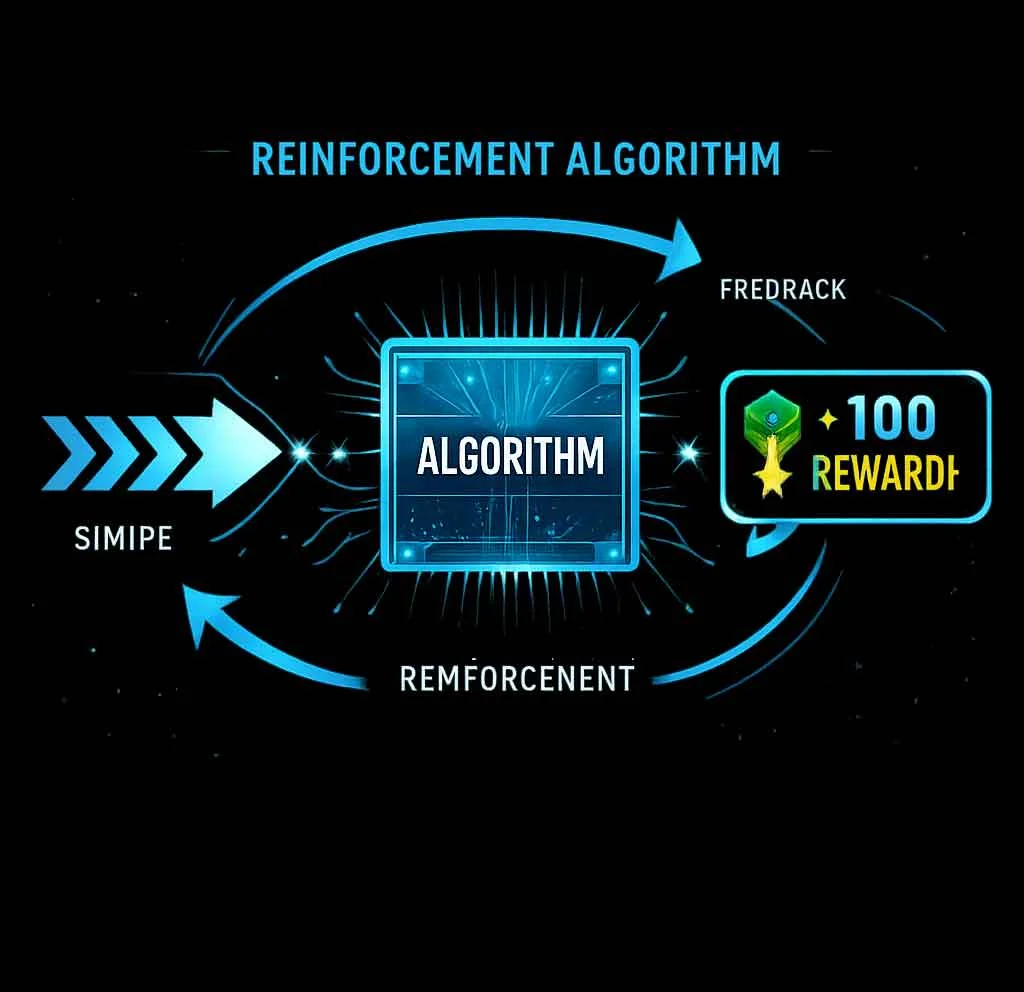
This creates a feedback loop:
- User engages actively
- Algorithm increases exposure
- Increased exposure leads to more matches
- More matches reinforce engagement
- Engagement signals increase algorithm confidence
The loop compounds.
Conversely:
- User disengages
- Exposure decreases
- Matches decline
- Motivation drops
- Engagement falls further
These feedback loops are not moral systems. They are optimization systems.
Optimization systems reward predictable participation.
Uneven Exposure
No large-scale matching platform distributes exposure equally.
Distribution tends to concentrate attention.
In most digital ecosystems, engagement follows power-law patterns:
- A small percentage of users receive a disproportionate amount of attention
- A large percentage receive moderate to low attention
This is not unique to dating platforms. It mirrors social media dynamics, content platforms, and marketplace economies.
Similar patterns are observed in digital marketplace concentration dynamics where visibility and engagement cluster toward high-performing nodes. Once concentration begins, algorithms amplify it because engagement likelihood increases.
This amplification creates perceived hierarchy.
Hierarchy shapes user strategy.
Users adapt their profiles, photos, and communication styles based on perceived competitive environment.
The system does not explicitly state hierarchy. It emerges statistically.
The Illusion of Infinite Optionality
Infinite scroll alters commitment calculus.
In traditional dating contexts, opportunity cost was limited by geography and social circle size. Digital platforms expand visible options beyond local boundaries.
But visible option count does not equal meaningful compatibility.
The illusion of infinite optionality produces:
- Decision deferral
- Comparison fatigue
- Reduced threshold for dismissal
- Heightened standards based on visibility abundance
When the next option is one swipe away, the brain assigns lower weight to current interaction.
This behavioral shift is not rooted in entitlement alone. It is influenced by interface pacing.
Pacing influences urgency. Urgency influences attachment.
Apps remove urgency.
And when urgency disappears, investment declines.
Structural, Not Moral
Large-scale behavioral data from dating platforms indicates asymmetry in swipe behavior and response distribution. However, this analysis must remain structural rather than moral.
Behavior patterns often reflect:
- Differential selectivity
- Differential response rates
- Differential messaging initiation
These asymmetries affect algorithmic ranking.
If one user group swipes more broadly and another more selectively, match probability shifts accordingly. The algorithm does not judge intent. It optimizes based on response likelihood.
This creates emergent outcomes:
- Higher visibility for certain profile traits
- Reduced exposure for lower engagement patterns
- Strategic adaptation of profile presentation
These outcomes may be interpreted socially, but they originate algorithmically.
The platform responds to behavior patterns. Behavior patterns adapt to platform response. Over time, the feedback loop stabilizes into predictable distribution curves.
Profile as Product
When exposure probability is algorithmically mediated, profile presentation becomes strategic.
Users experiment with:
- Image framing
- Bio wording
- Humor tone
- Lifestyle signaling
- Professional cues
Profile construction becomes iterative.
Iteration is a hallmark of digital product optimization. In that sense, dating profiles begin resembling micro-brands.
This transformation parallels the logic of personal branding in digital ecosystems where identity presentation influences engagement metrics. Identity becomes partially performance-based within the constraints of algorithmic filtering.
Over time, identity optimization may influence self-concept.
When profile experiments produce different engagement outcomes, users may internalize those outcomes as feedback about personal value rather than platform preference shifts.
The Platform Knows More
Users see:
- Matches
- Messages
- Swipes
The platform sees:
- Swipe ratios
- Engagement dwell time
- Scroll speed
- Conversation length
- Drop-off points
- Purchase likelihood
This asymmetry gives the platform superior predictive capacity.
Predictive systems do not require full understanding of human emotion. They require correlation strength.
If a certain photo type increases right swipes by 12 percent, that variable becomes statistically meaningful. If evening activity increases match probability, timing becomes weighted.
The result is a highly adaptive system that continuously recalibrates exposure.
Users experience outcomes without seeing recalibration logic.
Opacity intensifies perception shifts.
The Narrative Layer
When outcomes change but mechanisms remain invisible, narratives emerge.
Users attribute:
- Low matches to societal standards
- High matches to desirability
- Inconsistent responses to cultural decline
- Abundance to empowerment
While some interpretations may contain elements of truth, they often overlook the algorithmic environment shaping distribution.
Cultural discourse forms around experience. Experience forms within systems.
Understanding the system clarifies the discourse.
Midpoint Mechanism Summary
At this stage, the analysis reveals:
Dating apps function as:
- Engagement-optimized ecosystems
- Ranked exposure systems
- Intermittent reward loops
- Monetized visibility structures
- Feedback-driven adaptive environments
These characteristics influence:
- Self-perception
- Expectation thresholds
- Behavioral pacing
- Identity presentation
- Commitment calculus
The cultural shift often described as entitlement may instead be a rational response to a system that signals abundance, quantifies validation, and reduces friction.
The system precedes the behavior.
Behavior follows the system.
Dating as a Two-Sided Platform
Dating apps are not just social tools. They are two-sided marketplaces.
On one side: users seeking connection.
On the other side: users providing attention.
The platform acts as intermediary, optimizing match probability while maintaining user retention.
In traditional markets, design determines participant behavior. In digital markets, design determines participant exposure.
Dating platforms operate under similar economic principles as ride-sharing platforms or content marketplaces:
- Supply must remain engaged
- Demand must remain active
- Matching efficiency must feel plausible
- Dissatisfaction must not reach abandonment
If matching were perfect and immediate, users would leave.
If matching were impossible, users would leave.
Therefore, the system balances hope and uncertainty.
Hope drives engagement.
Uncertainty sustains return visits.
This balance is economically rational.
The Subtle Hook
Retention mechanics are not obvious. They are layered.
Common retention elements include:
- Limited daily swipes
- Notification timing optimization
- “Someone liked you” teasers
- Periodic exposure boosts
- Inactivity reminders
Each mechanic nudges users back into the loop.
Retention is the backbone of platform valuation.
These retention layers resemble subscription-driven retention systems where user return frequency determines lifetime value. The longer a user remains active, the more predictable their monetization pathway becomes.
Retention engineering does not require manipulation. It requires incentive alignment.
The incentive alignment is simple:
- Users seek connection.
- Platforms seek sustained engagement.
Alignment persists as long as users perceive potential success.
Conditioning Through Repetition
Repetition shapes expectation.
If a user swipes 200 times in a week, they have trained themselves into rapid judgment cycles. The pace becomes normal.
When offline interactions occur, slower pacing may feel unfamiliar.
Digital environments recalibrate tolerance levels:
- Tolerance for delayed response decreases
- Tolerance for ambiguity decreases
- Tolerance for limited options decreases
Over time, expectation inflation can occur not because individuals demand more, but because the system normalizes abundance signals.
Conditioning is cumulative.
Even subtle shifts, repeated daily, produce behavioral adaptation.
Time Compression and Attention Fragmentation
Dating apps compress interaction stages:
- Introduction
- Interest validation
- Initial conversation
- Evaluation
- Transition decision
Each stage is accelerated.
Acceleration affects emotional pacing.
When pacing accelerates:
- Reflection windows shrink
- Impulse responses increase
- Depth can decline
This does not mean depth is impossible. It means depth requires conscious effort against system momentum.
System momentum favors speed.
Speed favors turnover.
Turnover sustains platform engagement.
The Economics of Visibility

Visibility is currency.
If visibility increases match probability, then visibility holds economic value.
Paid boosts transform visibility into a purchasable commodity. That dynamic mirrors advertising markets.
This mechanism parallels digital advertising allocation models where visibility can be bid for and redistributed. Exposure becomes a strategic lever rather than a neutral baseline.
When visibility is stratified, perceived desirability may correlate with platform positioning rather than purely personal traits.
This distinction matters.
It reframes certain social interpretations as structural outcomes.
Platform Incentives vs Social Norms
Social norms evolve slowly. Platform incentives adjust rapidly.
If an app modifies its ranking algorithm, exposure distribution changes within days. User adaptation follows quickly.
This creates an environment where micro-adjustments in code produce macro-adjustments in behavior.
In physical communities, cultural change required generational turnover. In digital ecosystems, change can occur within update cycles.
That speed amplifies influence.
Yet the influence is subtle because it is procedural, not declarative.
No one announces cultural redesign. It happens through interface adjustments.
Emotional Framing Without Medical Claims
It is important to remain precise.
Dating apps do not inherently cause emotional harm.
They create incentive structures.
Users respond differently based on personal resilience, expectations, and context.
However, when:
- Validation becomes quantifiable
- Visibility becomes variable
- Feedback becomes statistical
Some users may interpret fluctuations deeply.
Interpretation is human.
Mechanism is technological.
Understanding the distinction prevents exaggerated narratives.
Long-Term Behavioral Adaptation
Over years of use, adaptation can influence:
- Approach style
- Risk tolerance
- Communication brevity
- Visual emphasis over narrative depth
The adaptation may not be intentional. It may emerge from repeated micro-decisions.
The broader question is not whether dating apps are good or bad.
The structural question is:
What behaviors do their incentives reward?
If the incentives reward rapid engagement, high swiping frequency, and repeat logins, those behaviors will increase.
If the incentives reward long-form communication and sustained conversation, those behaviors would increase instead.
Platform architecture guides behavioral frequency.
Frequency shapes culture.
Systemic Neutrality vs Perceived Morality
Cultural commentary often frames dating app dynamics in moral language. However, most design decisions are economically motivated.
Economic motivation does not equate to moral intention. It equates to optimization for metrics:
- Daily active users
- Session length
- Conversion rate
- Revenue per user
Metrics guide iteration.
Iteration shapes interface.
Interface shapes interaction.
Interaction shapes interpretation.
Recognizing this chain clarifies where influence originates.
Digital Courtship as Infrastructure
Dating apps have transitioned from optional novelty to infrastructure.
When infrastructure embeds itself into daily life, its design influences baseline expectations.
Infrastructure rarely feels revolutionary because it operates quietly.
But infrastructure alters:
- Access patterns
- Social introduction routes
- Norm formation channels
- Attention allocation
Once infrastructure stabilizes, reversal becomes unlikely.
Instead, adaptation deepens.
AI-Driven Compatibility Modeling
Swipe mechanics were version one.
The next phase is predictive modeling.
Modern dating platforms increasingly integrate:
- Behavioral clustering
- Conversation tone analysis
- Response latency modeling
- Location movement signals
- Engagement persistence scoring
As artificial intelligence systems mature, compatibility prediction shifts from simple preference matching to behavioral similarity modeling.
This evolution mirrors broader predictive AI modeling systems that optimize outcomes based on large-scale behavioral datasets. The goal is no longer random introduction – it is probability calibration.
Probability calibration does not guarantee compatibility. It improves likelihood based on observable patterns.
As datasets expand, the system may begin detecting subtle correlations:
- Communication style alignment
- Lifestyle rhythm similarity
- Value signal overlap
- Response timing compatibility
These variables are not visible to users, yet they influence exposure weighting.
From Swipe Economy to Data Economy
The early stage of dating apps emphasized interface simplicity. The current stage emphasizes data depth.
Each interaction becomes a data point:
- Which profiles were viewed longer
- Which bios triggered conversation
- Which matches converted to offline meetings
- Which subscriptions correlated with extended usage
Data density increases prediction precision.
Prediction precision increases algorithm confidence.
Algorithm confidence increases exposure filtering.
The ecosystem becomes more selective without users explicitly noticing the tightening.
Regulation and Transparency Considerations
As digital platforms increasingly influence social introduction pathways, regulatory scrutiny may expand.
Key areas of potential focus include:
- Algorithmic transparency
- Data usage disclosure
- Paid visibility labeling
- Match probability explanation
- Subscription fairness
Greater transparency could reshape user expectations.
However, transparency alone does not remove incentive design. It clarifies it.
The core architecture – engagement optimization – is unlikely to disappear because it is foundational to digital platform economics.
The Cultural Reframing
The question is not whether dating apps are creating entitlement.
The structural question is:
What behaviors do algorithmic incentives amplify?
If the system amplifies rapid evaluation, rapid evaluation increases.
If the system amplifies constant exposure, constant exposure becomes normal.
If the system amplifies validation metrics, validation becomes measurable.
Cultural commentary often begins at outcomes.
Structural analysis begins at incentives.
Understanding incentives clarifies outcomes without moral escalation.
Conclusion – System Before Story
Dating apps represent a convergence of:
- Behavioral design
- Algorithmic ranking
- Economic optimization
- Data modeling
- Engagement engineering
Their influence is neither purely positive nor purely negative. It is systemic.
They changed how introductions occur.
They changed how validation appears.
They changed how scarcity is perceived.
They did not rewrite human nature.
They rewrote environmental incentives.
Environment precedes adaptation.
Adaptation precedes cultural shift.
This is not revolution through ideology.
It is evolution through interface.
FAQs
How do dating app algorithms decide which profiles to show?
Most dating apps do not show profiles randomly. They typically rank and filter profiles using engagement signals such as activity frequency, swipe behavior, response patterns, and predicted interaction likelihood to increase matches and keep users active.
Do paid boosts and premium features change match results?
Paid boosts usually increase visibility, which can raise exposure and match volume. They do not guarantee compatibility, but they can change who sees a profile and how often it appears, which can affect outcomes.
Why do dating apps feel like endless options even when good matches are rare?
Infinite scroll and swipe design can create a perception of abundance. More visible profiles can raise comparison behavior and decision deferral, even though visibility and compatibility are not the same thing.
Are dating apps changing social expectations around dating?
Dating apps can influence expectations by accelerating evaluation speed, quantifying attention through matches and messages, and reducing friction to meet new people. Over time, incentive design can shape what feels normal in digital courtship.
Is AI-based matchmaking the future of dating apps?
Many platforms are moving toward more data-driven matching that uses behavioral signals, conversation patterns, and engagement history to calibrate match likelihood. These models can refine predictions, but they cannot fully capture human context.
What is the biggest difference between offline dating and app-based dating?
Offline dating is shaped by social visibility and natural friction, while app-based dating is shaped by algorithmic ranking, fast interface pacing, and visibility incentives. This changes how quickly people evaluate options and how attention is distributed.