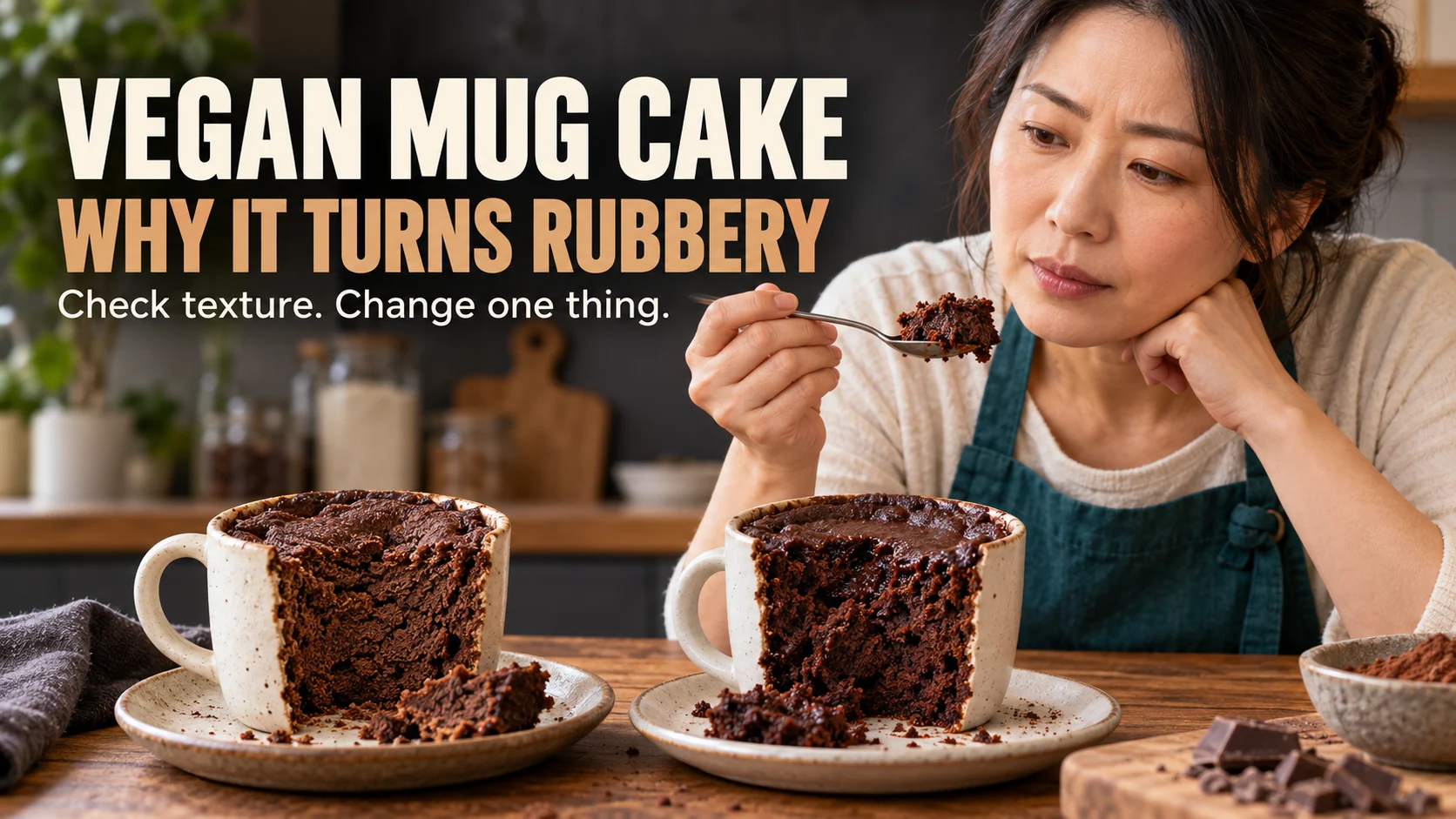
A vegan mug cake can turn rubbery when it cooks too long, when wheat-flour batter is overmixed, or when substitutions change the balance of the recipe. A dry, tough cake needs a different check from a moist, pasty center, so start with the texture rather than automatically adding more milk or microwaving it longer. Change one factor on the next batch so you can tell whether it helped.
Match the texture to the first check
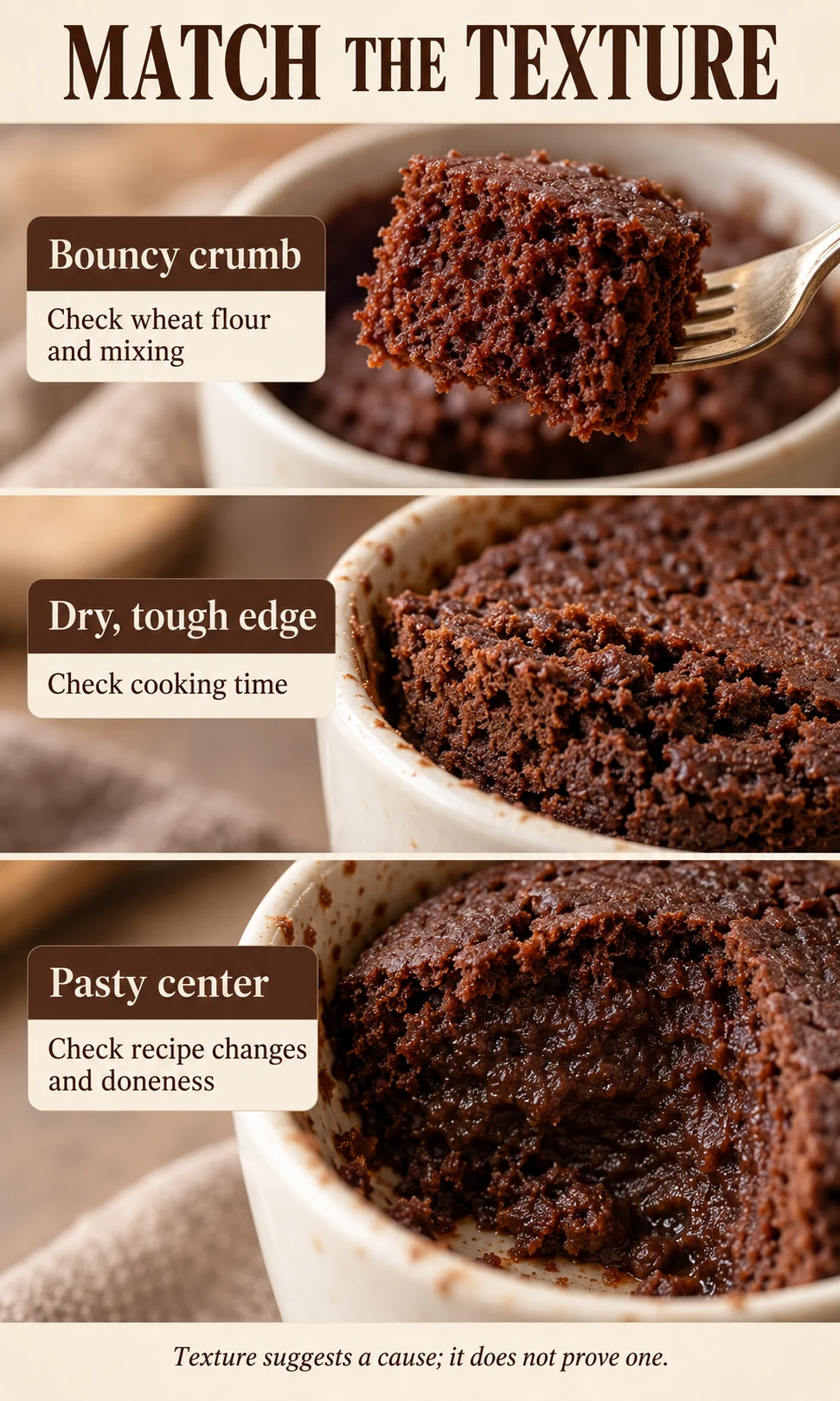
“Rubbery” covers several failures that feel different on the spoon. Break open the cake after the recipe’s standing time and compare the center with the edge, without tasting uncooked batter. Treat the pattern as a clue, then check the ingredient quantities and cooking instructions before deciding what to change.
| What you see | What to check first | Next batch |
|---|---|---|
| Bouncy or elastic crumb | Wheat flour, excessive mixing, or an altered formula | Combine thoroughly, then stop beating; keep the written formula. |
| Dry rim and tough crumb | Extra cooking, too much flour, or reduced fat | Measure consistently and follow the recipe’s endpoint; do not chase a bone-dry surface. |
| Pasty center with a firm edge | Undercooking, extra puree, or unsuitable flour substitution | Check completion instructions and restore the recipe’s ingredient ratios. |
| Liquid batter in the middle | Incomplete cooking or an unsuitable mug / quantity | Do not eat it; complete cooking as directed, or discard an unsuccessful batch. |
| Overflow or a collapsed cake | Insufficient headroom, excess batter, or extra leavener | Use the specified container and verify the baking-powder quantity. |
Why a vegan mug cake is rubbery
Removing the egg does not remove every route to a chewy cake. Flour, liquid, fat, mixing and heating still control the structure, and a small microwave dessert gives you little room for error. A recipe that works in one mug can fail after you change the flour, make a larger portion or use a microwave with a different output.
Overmixing wheat flour
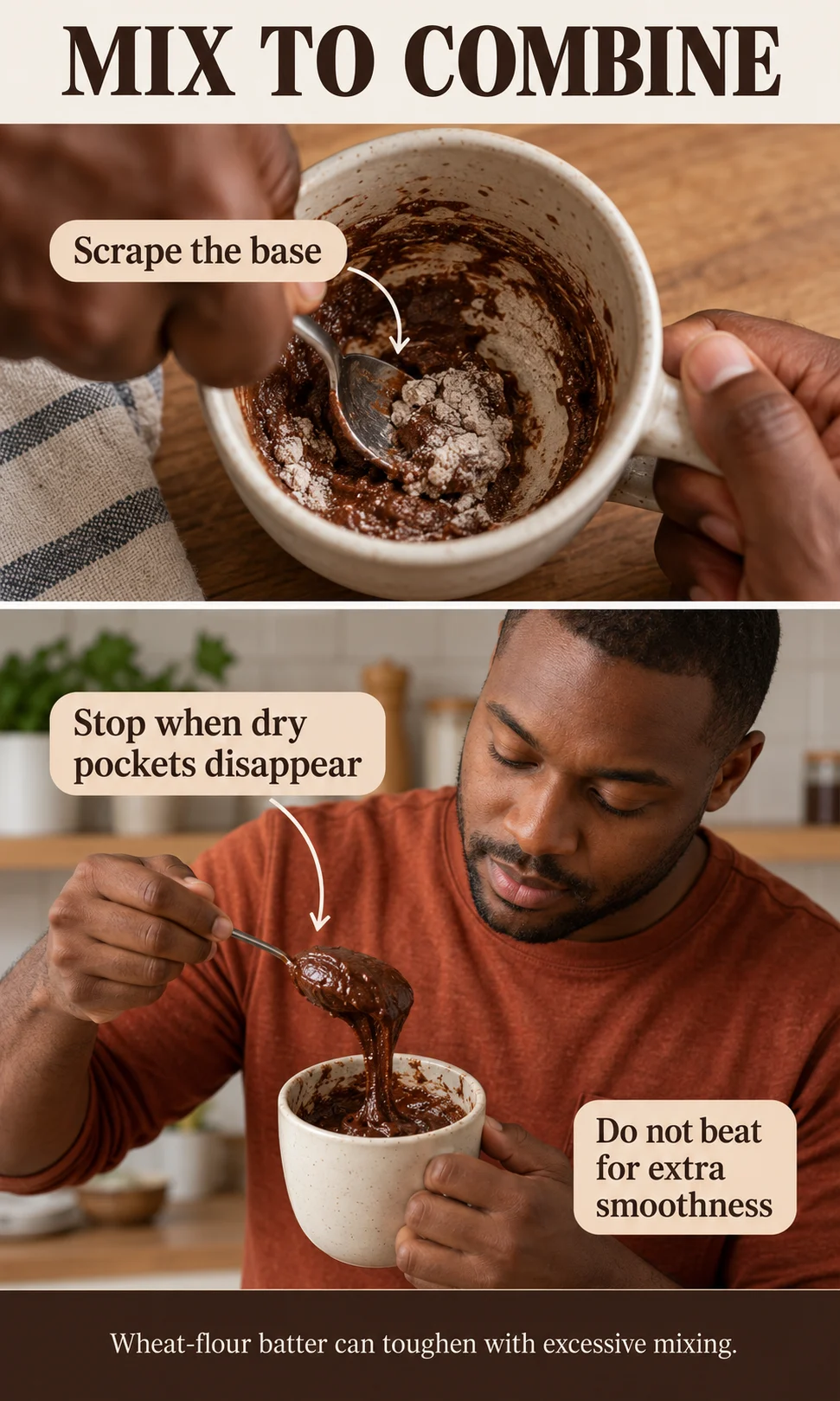
Wheat flour develops gluten when it meets liquid and is worked. That structure is useful for bread, but too much can make a cake less tender; the difference between cake flour and all-purpose flour explains why protein content matters. This is a plausible contributor when a wheat-flour batter was beaten well beyond the point of combining, not proof that mixing caused every tough cake.
Mix the dry ingredients before adding the liquid so cocoa, flour and leavener are distributed. Once the liquid is in, scrape the base and corners of the mug until no dry flour pockets remain. Stop there instead of continuing to whisk for an exceptionally smooth batter; leaving unmixed flour at the bottom is not the solution to overmixing.
Too much cooking, then a firmer cake as it cools
Microwave cooking can remove enough moisture to turn a tender crumb dry and tough. Heat also continues moving through food during standing, so extra cooking at the end can matter even when the cake looked soft as the microwave stopped. The USDA’s microwave guidance explains why wattage, uneven heating and standing time belong in the cooking process.
A cake may feel firmer after cooling because its temperature and moisture distribution have changed. If it was already dry at the rim, repeatedly reheating it can make the loss of moisture worse. Compare batches after the same standing time rather than comparing one cake piping hot with another that has sat on the counter.
The substitution changed the batter
Banana, applesauce and hydrated flax are ingredients, not interchangeable switches marked “egg replacement.” They contribute different amounts of water, solids and thickening, and extra puree can leave a small cake dense or pasty. An already eggless recipe may not need any additional egg substitute, so start with what its developer actually specifies.
Removing oil at the same time makes the comparison even harder to interpret. Puree can add moisture without reproducing all the tenderness that fat provides, while protein powder, coconut flour and nut flour change the formula in other ways. Return to the written quantities before trying to repair the result through cooking time alone.
How long should you microwave a vegan mug cake?
Use the timing in a reliable recipe developed for the same batter quantity, mug and microwave output, then follow its doneness and standing instructions. A blanket “60–90 seconds” is not a dependable rule for every mug cake. There is no tested timing table for this article, and a set edge or slightly moist-looking center is a texture observation rather than a food-safety test.
What 700 watts changes compared with 1,200 watts
The microwave’s cooking output matters more than a number showing its electrical power consumption. A lower-output microwave will generally need longer than a higher-output model for a comparable task, but mug shape, starting temperature and batter quantity also change the result. Check the appliance label or manual and the recipe’s reference wattage before interpreting its time.
For example, a recipe developed at 1,200 watts should not be assumed to finish at the same moment in a 700-watt microwave. An inverse-wattage calculation can estimate energy exposure, but it does not validate a mug cake’s texture or safety. Use recipe-specific guidance rather than turning that arithmetic into an exact cooking promise.
Use the endpoint without eating raw batter
Follow the recipe’s complete cooking instructions and any specified standing time before eating. Do not taste the center to decide whether flour batter is done, and do not treat a firm outer edge as proof that the middle is safe. The FDA’s raw-flour guidance applies even when a batter contains no eggs, because flour itself can carry harmful bacteria.
If the middle remains liquid while the outside becomes hard, the current recipe and setup are not working together. Complete cooking according to the recipe if you can do so properly; discard the batch if you cannot finish it without burning it or have doubts about contamination. On the next attempt, correct the mug, quantity or formula instead of deliberately aiming for a raw center.
What to change on the next mug
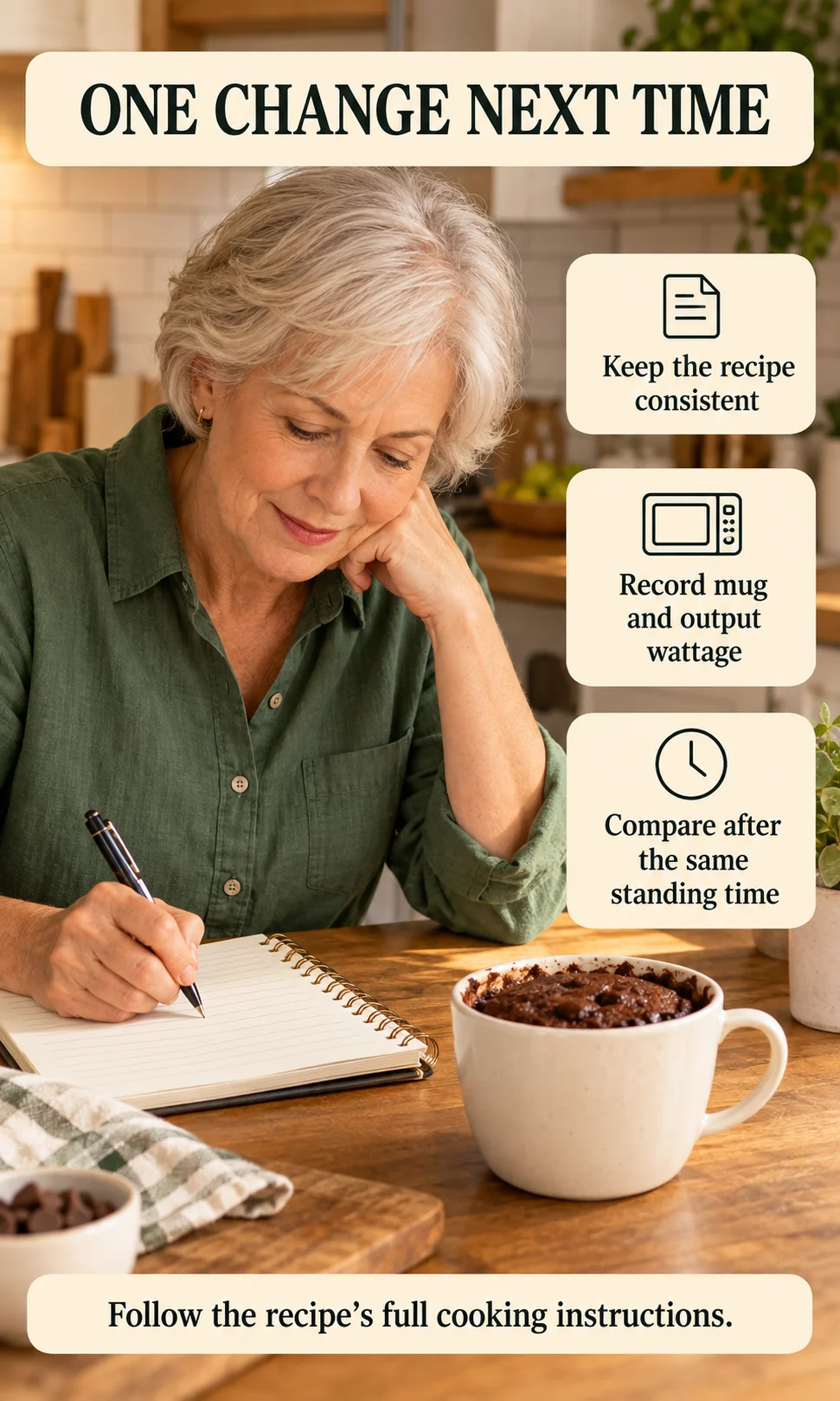
The useful comparison is a repeat batch with one documented change. Keep the same recipe, ingredient measurements, microwave setting and evaluation time while testing the factor that best matches the failure. Record enough detail to repeat the result, rather than relying on “a little less” and “a few seconds more.”
- Dry throughout: check whether you added extra cooking after the recipe’s endpoint, and restore any removed fat.
- Bouncy wheat-flour crumb: combine completely, then stop unnecessary beating.
- Pasty after a substitution: restore the written puree or flour amount, or use a recipe developed for that ingredient.
- Firm rim with liquid batter: check the mug and batch quantity; never use a raw center as a tenderness strategy.
- Record: recipe source, flour, output wattage, mug capacity and shape, mixing, cooking time, standing time and texture.
Mug shape and headroom
A tall, narrow mug creates a deeper layer of batter than a wider mug holding the same amount. That difference can leave the edge firm before the middle catches up, and adding a second portion makes the recipe harder to reproduce. Use a microwave-safe container and the recipe’s stated capacity and fill limit; a mug that looks half full can still overflow when the batter rises.
Cook one mug at a time unless the recipe was developed for a multiple-mug batch. Check whether self-rising flour introduced leavener on top of separately added baking powder, and do not increase leavener simply because a previous cake was dense. If the baking powder is questionable, use a hot-water freshness check rather than assuming the cake needs more time.
Choose your first change with Tender Crumb Check
Use the check below to turn your last batch into a specific next action. It considers the texture, flour, ingredient changes, mixing and container, then explains which adjustment deserves attention first. The result is a possible-cause check, not a tested recipe, a certainty score or permission to eat uncooked batter.
EGGLESS DESSERT TROUBLESHOOTING
Tender Crumb Check
Match the texture to a practical next-batch change.
Use your finished cake and recipe notes to choose a first check. These are possible causes, not a recipe test or a food-safety verdict.
Keep your comparison useful
Record the recipe, flour, output wattage, mug size, mixing method, cooking time and standing time. Do not infer safety from a set edge or a shiny top. Follow a reliable recipe’s full cooking instructions.
What this cannot fix
A gluten-free blend does not become suitable for a wheat-flour recipe simply because both ingredients are called flour. Oat flour contains no wheat gluten to develop, yet a formula with too much moisture or too little structure can still be pasty. Use a recipe developed for the exact flour, and choose appropriately labelled gluten-free ingredients when that distinction matters.
Vegan describes the absence of animal ingredients; it does not automatically mean gluten-free or sugar-free. Wheat flour contains gluten and granulated sugar is added sugar, while chocolate, milk alternatives and toppings need their own ingredient checks. If those labels are confusing, the difference between veganism and vegetarianism provides the broader dietary context.
This check also cannot repair an unsafe mug or a damaged microwave. Stop cooking if there are sparks, metal trim or suspected appliance damage, and follow the manufacturer’s instructions before using the appliance again. Let equipment cool before cleaning spills; a failed dessert is not a reason to keep running a questionable setup.
A microwave cake also has a different texture target from an oven-baked dessert. The guide to how different cooking methods change texture explains why the heating method changes what you should expect. If you want a larger vegan chocolate dessert instead of a one-mug comparison, the black bean oat brownies page covers a separate oven-baked option; its quantities and timing should not be transferred into a mug.
Frequently asked questions
Why is my mug cake rubbery if it has no egg?
Eggless cake can still toughen through excessive cooking, wheat-gluten development or an unsuitable ingredient balance. First separate a dry crumb from an elastic crumb and a pasty center. Then check one relevant factor rather than using an egg-based fix.
Why does my mug cake get harder after it cools?
Cooling and moisture changes can make the crumb feel firmer, especially after excessive cooking. Compare cakes after the same standing time so temperature does not confuse the result. Repeated reheating can further dry a cake that already lost too much moisture.
Why is the middle raw and the edge tough?
The batter may be too deep, the batch too large, or the cooking instructions unsuitable for your microwave. Do not eat liquid flour batter or assume the cooked edge makes the center safe. Follow the recipe’s completion instructions, and use its specified mug and quantity on the next batch.
Can banana make a vegan mug cake dense?
Yes, extra banana can change the moisture and solids enough to leave a cake dense or pasty. It is not a universal substitute for oil or every egg replacement. Use the amount in a recipe developed for banana instead of adding it to an already eggless formula.
Why did it overflow when the mug was only half full?
The apparent fill level does not describe how much headroom the batter needs as it rises. Mug shape, extra batter and too much leavener can all contribute. Check the recipe’s container requirements and whether self-rising flour added an unintended extra source of leavening.
Does oat flour make a mug cake gummy?
Oat flour can give a pasty result in an unsuitable formula, but the cause is not wheat-gluten development. Moisture balance, batter depth and incomplete cooking still matter. Use an oat-flour microwave recipe rather than assuming the same spoon count and time as wheat flour.
Your next batch
Start with a reliable recipe and the first check that matches the failure. Record the setup, make one change and evaluate the finished cake after the same standing time. A more useful note than “still rubbery” is “same recipe and mug, no extra beating, less elastic crumb,” because that observation tells you what to keep and what to check next.
Vegan MUG CAKES Recipe
Equipment
Microwave-safe mug
Measuring spoons
Whisk or fork
Ingredients
4 tbsp all-purpose flour
3 tbsp granulated sugar
1 tbsp cocoa powder
1/4 tsp baking powder
Pinch of salt
3 tbsp non-dairy milk
1 tbsp vegetable oil
1/4 tsp vanilla extract