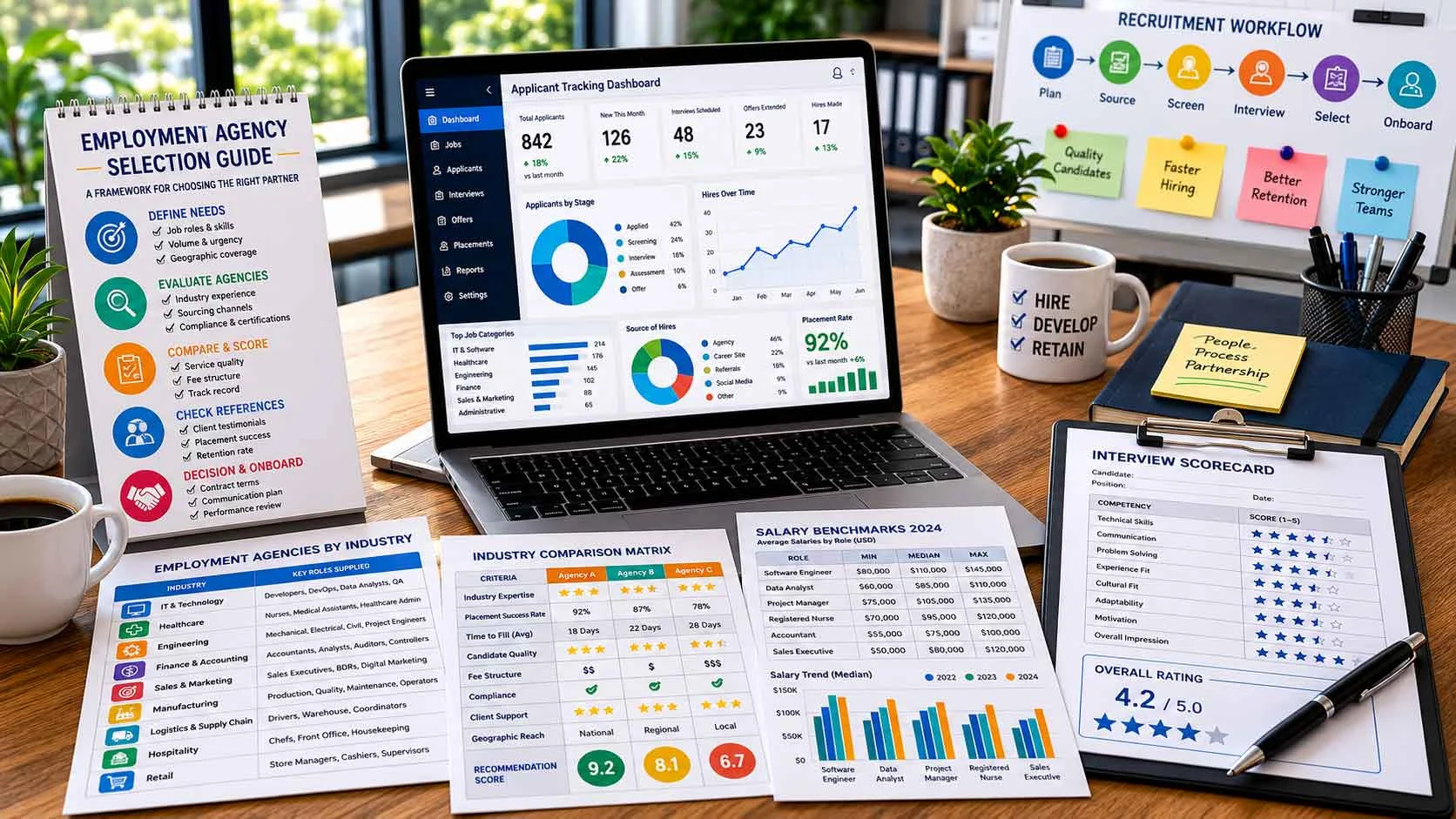

Hiring success is rarely determined by the size of a recruitment agency. More often, it depends on how well the recruiter understands the industry, its hiring challenges, technical requirements, salary expectations, and available talent.
A recruiter who specialises in healthcare understands licensing requirements and workforce shortages. An engineering recruiter recognises the difference between civil, mechanical, electrical, and software engineering roles. Finance recruiters know how to evaluate accounting qualifications, compliance experience, and financial reporting expertise. These industry-specific insights help employers hire more effectively while giving job seekers access to opportunities that match their professional backgrounds.
Industry-specialist employment agencies do far more than collect resumes. They build long-term relationships with employers, maintain networks of experienced professionals, monitor labour market trends, and understand how recruitment differs across sectors. Their expertise often results in faster hiring, stronger candidate matches, lower employee turnover, and a better recruitment experience for everyone involved.
This guide explains how industry-specific employment agencies operate, why specialist recruiters outperform general recruitment firms in many situations, and how both employers and job seekers can identify the right recruitment partner for their industry.
Why Industry Specialisation Matters
Many employers assume that any recruitment agency can fill any vacancy. While general staffing firms can successfully recruit administrative, customer service, and entry-level positions, specialist industries often require much deeper technical knowledge.
Recruiters working within a specific industry understand far more than job titles. They recognise professional certifications, licensing requirements, salary benchmarks, career progression paths, regulatory obligations, emerging skill shortages, and employer expectations. This allows them to identify qualified candidates more accurately and avoid costly hiring mistakes.
Before comparing specialist recruiters, it helps to understand how staffing agencies work across temporary, permanent, contract, and executive hiring models.
Industry specialisation also improves communication. Candidates feel more confident speaking with recruiters who understand their profession, while employers receive applicants whose experience genuinely matches the role.
For businesses hiring specialist talent, choosing an industry-focused recruitment agency often results in shorter hiring timelines, better retention, and stronger long-term workforce performance.
What Is an Industry-Specific Employment Agency?
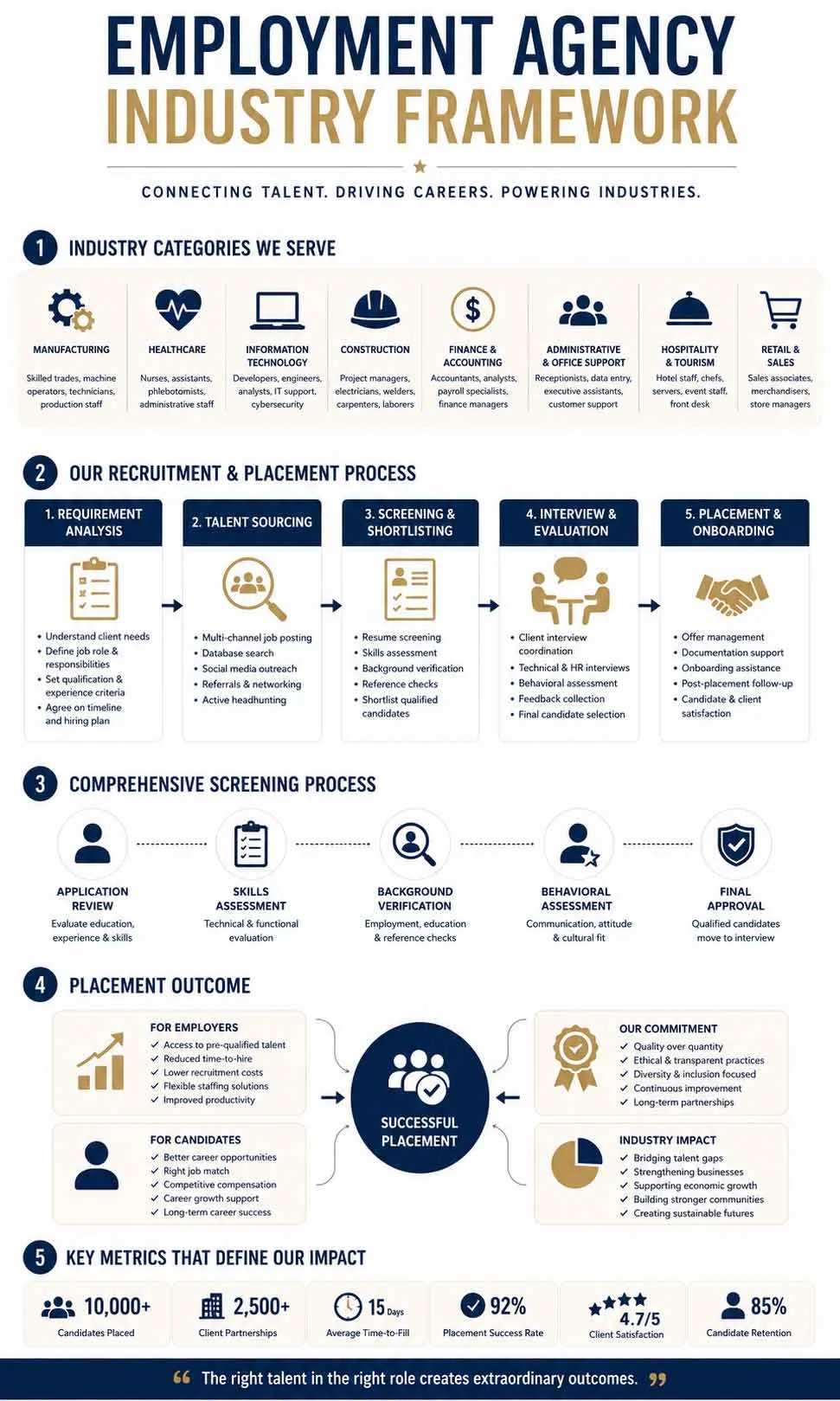
An industry-specific employment agency focuses its recruitment services on one or several related sectors rather than attempting to recruit across every profession.
Instead of maintaining a broad candidate database, these agencies build talent communities within their chosen industries. Recruiters develop relationships with professionals, attend industry events, monitor hiring trends, and understand the technical language used by employers.
For example:
- A healthcare recruiter understands nursing registrations, allied health certifications, hospital credentialing, and workforce compliance.
- An engineering recruiter evaluates technical disciplines, project experience, software proficiency, and professional accreditation.
- A finance recruiter recognises accounting standards, auditing requirements, tax expertise, financial reporting, and regulatory compliance.
- A hospitality recruiter understands seasonal staffing, event operations, hotel management, food service, and customer experience.
Because specialist recruiters understand the unique requirements of each industry, they can identify suitable candidates much more efficiently than agencies attempting to recruit across every profession.
Benefits of Choosing a Specialist Recruiter
Working with an industry-focused recruitment agency offers advantages for both employers and candidates.
For employers, specialist recruiters reduce hiring risk because they understand the qualifications, experience, and technical competencies required for each role. They are more likely to identify candidates who can contribute immediately while fitting the organisation’s culture and long-term objectives.
For job seekers, specialist recruiters provide valuable career guidance, realistic salary advice, interview preparation, and access to vacancies that may never appear on public job boards.
Other benefits include:
- Larger industry-specific candidate networks.
- Better understanding of salary expectations.
- Faster shortlisting of qualified applicants.
- Higher-quality technical screening.
- Stronger employer relationships.
- Better awareness of market trends.
- Improved long-term placement success.
- Reduced employee turnover.
- Access to confidential executive opportunities.
- Ongoing career advice and networking opportunities.
Businesses recruiting highly skilled professionals often achieve significantly better hiring outcomes when partnering with recruiters who understand the industry’s challenges rather than relying solely on general employment agencies.
Employment Agencies by Industry
Different industries face different recruitment challenges. Healthcare organisations often struggle with workforce shortages and regulatory compliance. Engineering firms compete for highly specialised technical talent. Hospitality businesses need flexible seasonal staffing, while technology companies search globally for professionals with niche digital skills.
ExpertsGuys Industry Recruitment Match Engine
Find the Right Employment Agency by Industry
Compare recruitment models, industry hiring difficulty, agency fit, candidate availability, hiring timeline, and nearby specialist employment agencies.
Because of these differences, employers often achieve better hiring outcomes when they work with recruiters who specialise in their sector rather than general recruitment agencies. Likewise, job seekers benefit from recruiters who understand industry career paths, salary expectations, certifications, and employer requirements.
Below are the industries where specialist employment agencies provide the greatest value.
Healthcare Recruitment Agencies

Healthcare recruitment is one of the most specialised sectors within staffing. Hospitals, clinics, aged care providers, laboratories, pharmaceutical companies, and allied health organisations must recruit professionals who meet licensing requirements, clinical competency standards, and regulatory obligations.
For a deeper look at credential checks, clinical hiring, and medical workforce planning, read our guide to choosing a healthcare staffing agency.
Healthcare recruiters commonly place:
- Registered Nurses
- Nurse Practitioners
- Doctors
- Allied Health Professionals
- Pharmacists
- Medical Technologists
- Radiographers
- Physiotherapists
- Occupational Therapists
- Healthcare Administrators
Healthcare recruiters frequently verify professional registrations, certifications, immunisation records, background checks, and compliance documentation before presenting candidates to employers.
Healthcare employers often value recruiters who understand workforce shortages, credentialing requirements, and urgent staffing situations.
Engineering Recruitment Agencies

Engineering recruitment requires technical knowledge that extends beyond reading resumes.
Engineering recruiters understand disciplines such as:
- Civil Engineering
- Mechanical Engineering
- Electrical Engineering
- Structural Engineering
- Chemical Engineering
- Process Engineering
- Software Engineering
- Environmental Engineering
- Mining Engineering
- Project Engineering
Rather than matching keywords alone, specialist recruiters evaluate technical software proficiency, project experience, professional licensing, safety awareness, and engineering methodologies.
Employers hiring technical professionals can also review our detailed guide to choosing an engineering staffing agency.
Engineering employers often rely on specialist recruiters because experienced engineers are frequently passive candidates who are not actively searching for jobs.
Information Technology Recruitment Agencies

Technology recruitment continues evolving rapidly due to digital transformation, cybersecurity demands, cloud computing, artificial intelligence, and software development.
IT recruiters commonly recruit:
- Software Developers
- Cybersecurity Specialists
- Cloud Engineers
- DevOps Engineers
- Data Scientists
- AI Engineers
- Network Engineers
- Database Administrators
- IT Project Managers
- Technical Support Specialists
Technology recruiters often assess technical portfolios, certifications, coding ability, programming languages, cloud platforms, and project experience before recommending candidates.
Because technology skills evolve quickly, specialist recruiters remain continuously updated on changing market demand.
Finance and Accounting Recruitment Agencies

Finance recruitment requires a thorough understanding of accounting standards, financial regulations, taxation, auditing, compliance, and corporate governance.
Typical placements include:
- Accountants
- Auditors
- Financial Controllers
- Finance Managers
- Tax Specialists
- Payroll Professionals
- Financial Analysts
- Investment Analysts
- Risk Managers
- Chief Financial Officers
Finance recruiters also understand busy recruitment periods such as year-end reporting, audit seasons, and taxation deadlines, allowing employers to plan workforce requirements more effectively.
Hospitality Recruitment Agencies
Hospitality recruitment focuses heavily on customer service, flexibility, and seasonal staffing.
Hospitality employers can compare seasonal hiring, customer service roles, and event staffing models in our hospitality recruitment agencies guide.
Common placements include:
- Hotel Managers
- Restaurant Managers
- Chefs
- Sous Chefs
- Kitchen Staff
- Bartenders
- Wait Staff
- Housekeeping Teams
- Event Coordinators
- Front Office Personnel
Hospitality recruiters often maintain large candidate databases because businesses may require hundreds of temporary employees during peak seasons, conferences, sporting events, or holiday periods.
Manufacturing and Industrial Recruitment Agencies
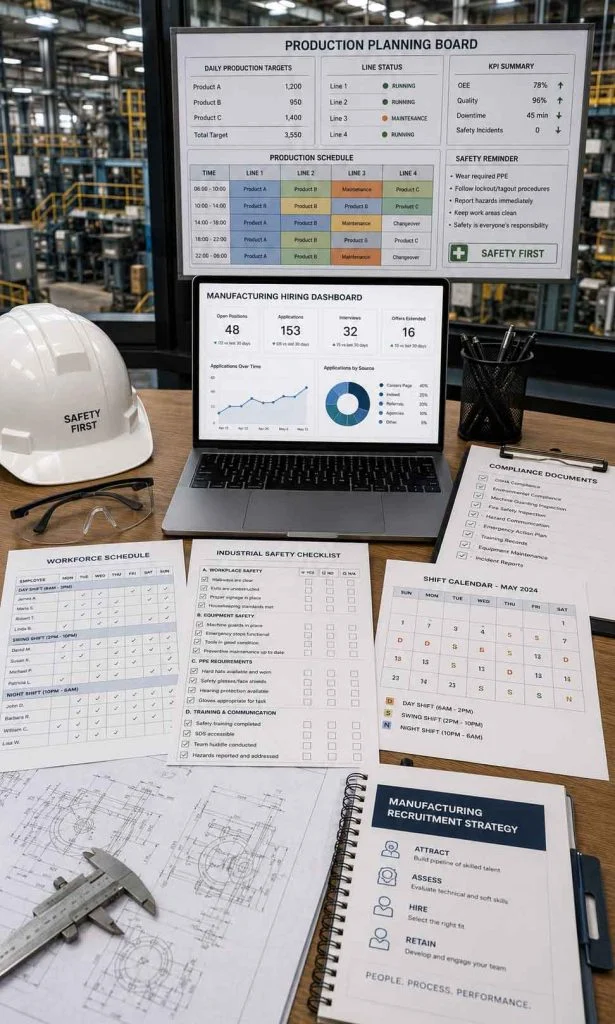
Manufacturing businesses often require high-volume recruitment while maintaining strict quality and workplace safety standards.
Typical roles include:
- Machine Operators
- Production Supervisors
- Welders
- CNC Machinists
- Maintenance Technicians
- Electricians
- Forklift Operators
- Warehouse Supervisors
- Quality Inspectors
- Production Planners
Industrial recruiters frequently verify safety certifications, machinery experience, shift availability, and physical capability before recommending candidates.
Logistics and Supply Chain Recruitment Agencies
Modern supply chains require professionals who understand inventory management, transportation, warehousing, procurement, customs compliance, and distribution networks.
Specialist recruiters commonly place:
- Logistics Coordinators
- Supply Chain Managers
- Warehouse Managers
- Procurement Specialists
- Inventory Controllers
- Distribution Managers
- Fleet Managers
- Transport Coordinators
Recruitment demand often increases significantly during seasonal retail periods and major product launches.
Construction Recruitment Agencies
Construction recruitment combines technical hiring with strict safety compliance.
Recruiters frequently source:
- Project Managers
- Site Engineers
- Quantity Surveyors
- Site Supervisors
- Architects
- Electricians
- Plumbers
- Carpenters
- Heavy Equipment Operators
- Construction Labourers
Construction recruiters understand licensing requirements, trade certifications, and project-based workforce planning.
Retail Recruitment Agencies
Retail employers frequently experience changing staffing requirements throughout the year.
Recruitment commonly focuses on:
- Store Managers
- Assistant Managers
- Sales Associates
- Customer Service Representatives
- Visual Merchandisers
- Inventory Controllers
- Regional Managers
Retail recruitment agencies specialise in high-volume hiring while balancing customer service quality and operational efficiency.
Executive Search Firms
Executive search differs significantly from traditional recruitment.
Rather than advertising vacancies publicly, executive recruiters proactively identify senior professionals through confidential market research and direct outreach.
Executive searches often include:
- Chief Executive Officers
- Chief Financial Officers
- Chief Technology Officers
- Chief Operating Officers
- Managing Directors
- Board Members
- Vice Presidents
- General Managers
Executive recruitment typically involves leadership assessments, confidential interviews, succession planning, and extensive reference verification.
Industry Recruitment Comparison
| Industry | Typical Hiring Difficulty | Recruitment Speed | Best Recruitment Model | Employer Demand |
|---|---|---|---|---|
| Healthcare | Very High | Moderate | Specialist Healthcare Agency | Very High |
| Engineering | High | Moderate | Engineering Recruitment Specialist | High |
| Information Technology | Very High | Moderate | IT Recruitment Agency | Very High |
| Finance & Accounting | High | Moderate | Finance Recruitment Agency | High |
| Hospitality | Moderate | Fast | Hospitality Staffing Agency | High |
| Manufacturing | Moderate | Fast | Industrial Staffing Agency | High |
| Logistics | Moderate | Fast | Supply Chain Recruitment | High |
| Construction | High | Moderate | Construction Recruitment Agency | High |
| Retail | Low to Moderate | Fast | Retail Staffing Agency | Seasonal High |
| Executive Leadership | Very High | Slow | Executive Search Firm | Strategic |
Which Industry Benefits Most from Specialist Recruiters?

While every business can benefit from recruitment expertise, specialist agencies create the greatest value in industries where hiring mistakes are expensive, qualifications are highly regulated, or technical skills are difficult to assess.
Industries that typically receive the highest return from specialist recruitment include:
- Healthcare
- Engineering
- Information Technology
- Finance
- Executive Leadership
- Construction
In these sectors, technical expertise, regulatory compliance, and talent shortages make specialist recruiters significantly more effective than general employment agencies.
How Specialist Recruiters Find Better Candidates
One of the biggest advantages of working with an industry-specific employment agency is the quality of candidates presented during the hiring process. While many people assume recruiters simply search online job boards, experienced specialist recruiters use multiple sourcing strategies that are rarely visible to employers or job seekers.
Instead of waiting for applications, specialist recruiters actively build long-term talent networks. They maintain relationships with professionals throughout their careers, monitor industry movements, attend networking events, participate in professional associations, and continuously update their candidate databases. As a result, many of the strongest candidates are identified before a vacancy is even advertised.
For employers, this means access to highly qualified professionals who may never submit applications through traditional recruitment channels. For job seekers, it creates opportunities that are often unavailable on public job boards.
Building Long-Term Talent Communities
Rather than recruiting only when a vacancy appears, specialist agencies invest time in developing talent communities within their chosen industries.
Recruiters regularly maintain contact with:
- Experienced professionals
- Passive candidates
- Industry leaders
- Graduating students
- Former placements
- Professional associations
- Certification bodies
- Referral networks
These long-term relationships allow recruiters to respond much faster when employers require new talent.
Understanding Industry Requirements
General recruiters often evaluate resumes based on keywords.
Specialist recruiters look much deeper.
For example, an engineering recruiter evaluates:
- Engineering discipline
- Design software proficiency
- Industry certifications
- Project complexity
- Safety experience
- Regulatory knowledge
- Professional registration
A healthcare recruiter reviews:
- Clinical licences
- Hospital experience
- Medical specialties
- Credential verification
- Compliance requirements
- Continuing education
- Patient care experience
This deeper understanding produces significantly more accurate candidate matching.
Identifying Passive Candidates
Many highly skilled professionals are already employed and are not actively searching for new opportunities.
These individuals are known as passive candidates.
Specialist recruiters maintain ongoing relationships with passive candidates through networking, referrals, industry conferences, professional communities, and previous placements.
Because passive candidates often represent some of the strongest talent in the market, employers working with specialist agencies gain access to a much broader recruitment pool than public job advertisements alone.
Technical Screening Before Employer Interviews
Professional recruitment agencies reduce employer workload by completing several screening stages before introducing candidates.
These commonly include:
- Resume evaluation
- Employment history verification
- Technical interviews
- Behavioural assessments
- Skills testing
- Reference checks
- Qualification verification
- Salary expectation review
- Availability confirmation
- Work eligibility checks
This process allows hiring managers to spend more time interviewing genuinely suitable candidates instead of filtering large numbers of unsuitable applications.
Salary and Labour Market Intelligence
Industry recruiters continuously monitor hiring activity within their specialist sectors.
This enables them to advise employers on:
- Current salary benchmarks
- Candidate availability
- Skills shortages
- Recruitment competition
- Notice periods
- Market demand
- Emerging technical skills
For candidates, recruiters provide realistic salary expectations and career guidance based on current labour market conditions rather than outdated assumptions.
Employer Branding Support
Many employers underestimate how much company reputation influences recruitment success.
Specialist recruiters help organisations improve candidate attraction by advising on:
- Job advertisements
- Position descriptions
- Salary competitiveness
- Career progression opportunities
- Company culture
- Flexible working arrangements
- Employer value proposition
Stronger employer branding generally results in better candidate engagement and improved offer acceptance rates.
Candidate Experience
Today’s candidates evaluate employers just as carefully as employers evaluate candidates.
Professional recruiters improve the candidate experience by providing:
- Clear communication
- Interview preparation
- Regular updates
- Salary guidance
- Honest feedback
- Offer negotiation support
- Onboarding assistance
Positive candidate experiences strengthen employer reputation while increasing future recruitment success.
How Specialist Recruiters Compare with General Recruiters
| Recruitment Area | General Recruiter | Industry Specialist Recruiter |
|---|---|---|
| Industry Knowledge | Basic understanding across multiple sectors | Deep expertise within one or several specialist industries |
| Candidate Network | Broad but general | Highly targeted industry-specific talent community |
| Technical Screening | Limited | Detailed technical and competency evaluation |
| Salary Benchmarking | General market knowledge | Current industry-specific salary intelligence |
| Candidate Quality | Varies | Typically higher for specialist positions |
| Recruitment Speed | Suitable for general roles | Faster for technical and specialist hiring |
| Employer Advice | General recruitment guidance | Strategic workforce and labour market advice |
| Long-Term Relationships | Often transactional | Continuous employer and candidate partnerships |
Temporary vs Permanent Industry Recruitment
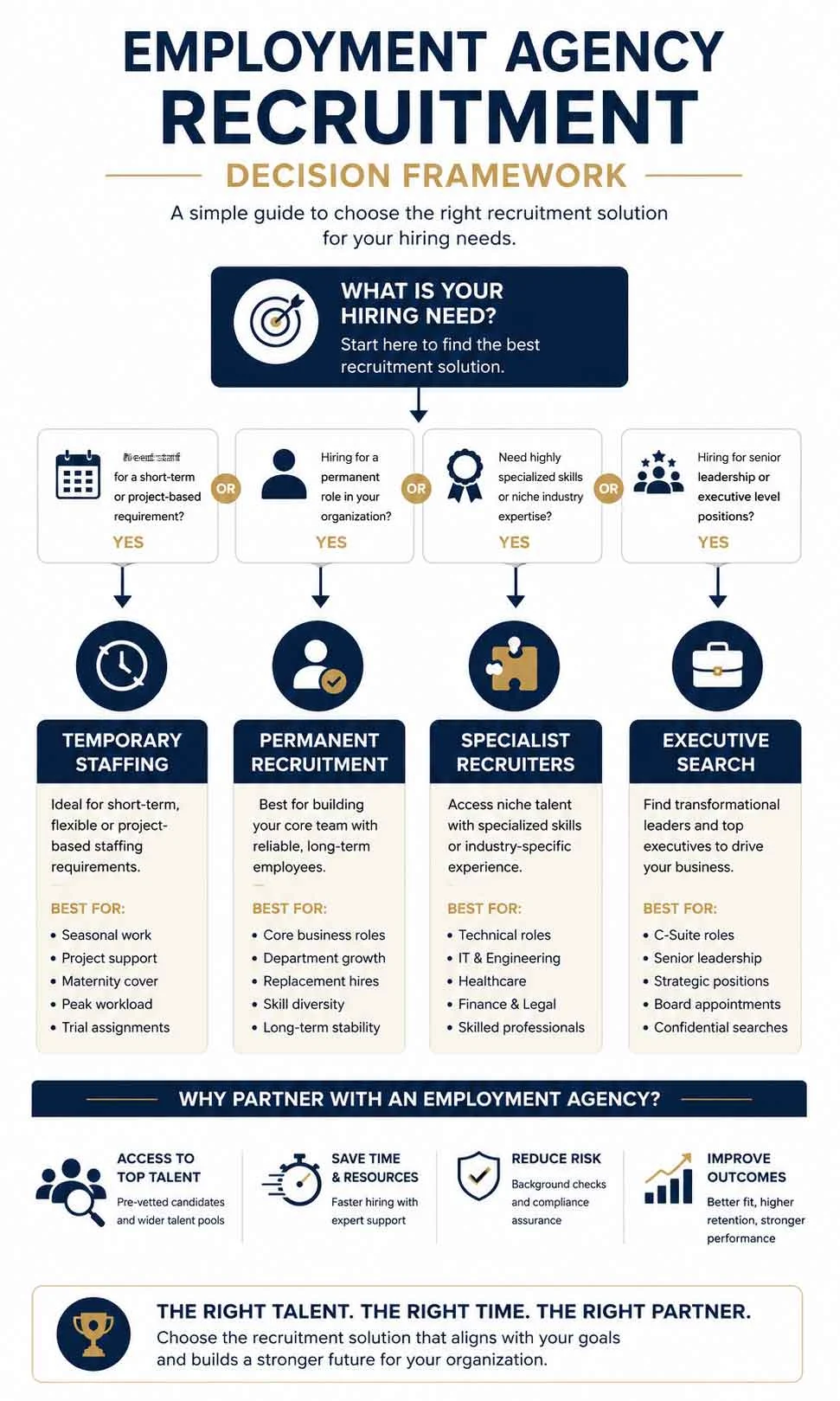
Choosing between temporary and permanent recruitment depends on business objectives rather than simply hiring costs. Different industries use different staffing models depending on operational requirements, project duration, workforce flexibility, and long-term growth plans.
Temporary recruitment is commonly used when organisations require additional workers for seasonal demand, employee leave, special projects, or unexpected workload increases. Permanent recruitment focuses on building stable teams and retaining long-term expertise.
Industries such as hospitality, logistics, manufacturing, and retail frequently rely on temporary staffing during peak periods, while engineering, healthcare, finance, and executive leadership generally prioritise permanent recruitment due to the investment required in specialist skills and organisational knowledge.
Temporary Recruitment
Temporary recruitment offers flexibility and speed.
It is commonly used for:
- Seasonal demand
- Holiday periods
- Major events
- Maternity leave
- Project-based work
- Emergency workforce shortages
- Temporary skill gaps
Advantages include faster hiring, workforce flexibility, and reduced long-term employment commitments.
Permanent Recruitment
Permanent recruitment focuses on building stable, long-term teams.
It is often preferred for:
- Leadership positions
- Technical specialists
- Licensed professionals
- Client-facing roles
- Strategic business functions
- Management positions
Permanent employees usually receive greater investment in training, career development, and organisational integration.
Temporary vs Permanent Recruitment Comparison
| Factor | Temporary Recruitment | Permanent Recruitment |
|---|---|---|
| Hiring Speed | Fast | Moderate to slower |
| Workforce Flexibility | Very High | Moderate |
| Long-Term Stability | Lower | High |
| Initial Recruitment Time | Short | Longer |
| Training Investment | Lower | Higher |
| Organisational Knowledge | Limited | Strong |
| Best For | Seasonal work, projects, workforce fluctuations | Business growth, leadership, specialist expertise |
| Common Industries | Hospitality, logistics, retail, manufacturing | Healthcare, engineering, finance, executive leadership |
Professional Perspective
The most successful organisations rarely rely on a single recruitment model. Instead, they combine specialist recruitment expertise with the appropriate staffing strategy for each role. Temporary staffing provides flexibility during periods of changing demand, while permanent recruitment builds long-term organisational capability. By understanding how specialist recruiters source talent, evaluate technical skills, and monitor labour market trends, employers can make more informed hiring decisions and develop stronger, more resilient workforces.
Questions Employers Should Ask Before Hiring an Industry Recruitment Agency
Choosing an employment agency should involve more than comparing recruitment fees. Employers should evaluate whether the agency understands their industry, recruitment challenges, compliance obligations, and long-term workforce goals. Asking the right questions before signing an agreement helps prevent costly hiring mistakes and establishes clear expectations from the beginning.
Do You Specialise in My Industry?
The first question should always be about industry expertise.
A recruitment agency that specialises in your sector is more likely to understand:
- Technical job requirements
- Industry terminology
- Professional certifications
- Licensing requirements
- Salary expectations
- Labour shortages
- Employer competition
- Candidate availability
Ask the recruiter to provide examples of recent placements within your industry and explain how they identify suitable candidates.
What Types of Roles Do You Recruit?
Some agencies focus on entry-level positions, while others specialise in executive leadership, technical professionals, or temporary staffing.
Clarify whether they recruit for:
- Permanent employees
- Temporary workers
- Contract professionals
- Executive leadership
- Project-based specialists
- Graduate recruitment
- International talent
Choosing an agency with experience recruiting similar positions generally improves hiring outcomes.
How Do You Source Candidates?
Strong recruitment agencies rely on multiple sourcing methods rather than simply posting advertisements.
Common sourcing channels include:
- Internal talent databases
- Professional networking
- Industry referrals
- Social media recruitment
- Passive candidate outreach
- University partnerships
- Professional associations
- Industry conferences
- Employee referral programmes
Agencies with diverse sourcing strategies often access higher-quality candidates who are unavailable through traditional job boards.
How Do You Screen Candidates?
Candidate screening directly affects recruitment quality.
Ask recruiters whether they perform:
- Resume evaluation
- Skills assessments
- Technical interviews
- Behavioural interviews
- Reference checks
- Qualification verification
- Background screening
- Work eligibility verification
- Salary expectation discussions
A thorough screening process reduces interview time while improving hiring accuracy.
What Recruitment Metrics Do You Measure?
Professional recruitment agencies continuously monitor their own performance.
Useful recruitment metrics include:
- Time-to-fill
- Time-to-hire
- Placement success rate
- Employee retention
- Offer acceptance rate
- Candidate satisfaction
- Employer satisfaction
- Interview-to-placement ratio
These measurements provide valuable insight into an agency’s overall effectiveness.
What Happens If a Placement Does Not Work Out?
Even with careful recruitment, not every placement succeeds.
Employers should understand:
- Replacement guarantees
- Refund policies
- Candidate replacement procedures
- Contract terms
- Time limitations
Clarifying these details before recruitment begins reduces future disputes.
How Often Will You Provide Updates?
Communication is one of the most important elements of successful recruitment.
Ask how frequently recruiters will provide updates regarding:
- Candidate sourcing
- Interview scheduling
- Market feedback
- Salary expectations
- Hiring challenges
- Recommended adjustments
Consistent communication allows employers to make faster decisions while maintaining a positive candidate experience.
Employer Evaluation Checklist
| Question | Why It Matters |
|---|---|
| Do you specialise in my industry? | Improves technical candidate matching |
| Have you recruited similar positions before? | Demonstrates relevant experience |
| How do you source candidates? | Indicates recruitment capability |
| What screening methods do you use? | Improves hiring quality |
| Which recruitment metrics do you track? | Measures agency performance |
| What guarantees do you provide? | Reduces recruitment risk |
| How frequently will you communicate? | Improves hiring efficiency |
| Can you support future recruitment growth? | Builds long-term workforce partnership |
Questions Job Seekers Should Ask Employment Agencies
Recruitment is a partnership. While employers evaluate staffing agencies, job seekers should also assess whether a recruiter can genuinely support their career development.
If location is your first priority, our guide to the best employment agencies near me explains how to compare local recruiters before registering.
Professional recruiters appreciate informed candidates who ask thoughtful questions because it demonstrates genuine interest and helps establish realistic expectations.
What Types of Employers Do You Work With?
Understanding the recruiter’s client base helps determine whether their opportunities align with your career goals.
Ask whether they recruit for:
- Small businesses
- Multinational corporations
- Government agencies
- Healthcare organisations
- Engineering firms
- Financial institutions
- Technology companies
- Hospitality groups
A recruiter working with employers in your preferred sector is more likely to present relevant opportunities.
What Types of Positions Do You Recruit?
Clarify whether the agency specialises in:
- Permanent employment
- Temporary work
- Contract roles
- Executive recruitment
- Graduate programmes
- Remote employment
- International opportunities
Different agencies have different strengths.
What Skills Are Employers Currently Looking For?
Recruiters continuously monitor hiring trends.
They can often advise candidates about:
- Technical skills in demand
- Emerging certifications
- Salary expectations
- Skills shortages
- Professional development opportunities
- Career progression trends
This information helps candidates remain competitive within their chosen industry.
How Can I Improve My Resume?
Before contacting agencies, update your professional CV so recruiters can quickly match your skills with relevant employers.
Recruiters can only recommend suitable roles when they understand your professional story, which is why your career background should be clear before applying.
Experienced recruiters review hundreds of resumes every month.
Request feedback regarding:
- Resume layout
- Professional summary
- Technical skills
- Career achievements
- Employment history
- Industry keywords
- Quantifiable accomplishments
Small improvements often increase interview opportunities significantly.
What Interview Preparation Support Do You Provide?
Candidates can also practise these interview preparation questions before meeting employers recommended by recruitment agencies.
Many professional recruitment agencies assist candidates by providing:
- Interview guidance
- Employer insights
- Company background
- Common interview questions
- Salary negotiation advice
- Presentation tips
Candidates who prepare thoroughly generally perform more confidently during interviews.
Will You Continue Supporting My Career?
The best recruiters build relationships that extend beyond one placement.
Ask whether they:
- Maintain candidate profiles
- Notify previous candidates about future opportunities
- Provide career advice
- Monitor market trends
- Offer ongoing networking opportunities
Long-term recruiter relationships often produce multiple career opportunities over many years.
Job Seeker Evaluation Checklist
| Question | Why It Matters |
|---|---|
| Which industries do you specialise in? | Better career alignment |
| What employers do you recruit for? | Understand available opportunities |
| What skills are currently in demand? | Supports career planning |
| Can you review my resume? | Improves interview opportunities |
| Do you provide interview coaching? | Increases hiring success |
| Will you contact me about future roles? | Builds long-term career support |
| How often should I update my profile? | Keeps candidate information current |
| How do you protect candidate information? | Supports privacy and data security |
Professional Recommendation
Whether you are hiring employees or searching for your next career opportunity, asking informed questions creates stronger recruitment partnerships. Employers gain a clearer understanding of an agency’s expertise and recruitment capabilities, while job seekers learn whether a recruiter genuinely understands their profession and long-term career aspirations.
Successful recruitment begins long before the first interview. It starts with selecting a recruitment partner that understands your industry, communicates transparently, and is committed to achieving sustainable long-term success rather than simply making the next placement.
How Recruitment Fees Differ Between Industries
Recruitment fees are influenced by far more than the job title. Agencies consider the difficulty of sourcing qualified candidates, the level of technical expertise required, labour market conditions, hiring urgency, geographic location, and the amount of screening needed before a successful placement can be made.
A receptionist and a cybersecurity architect require very different recruitment processes. Likewise, filling ten seasonal warehouse positions differs significantly from recruiting a Chief Financial Officer or a specialist surgeon.
Understanding why recruitment fees vary helps employers evaluate value rather than simply comparing percentages.
What Influences Recruitment Costs?
Professional recruitment agencies typically consider several factors when pricing their services.
These include:
- Candidate availability
- Industry talent shortages
- Position seniority
- Technical complexity
- Salary level
- Geographic location
- Number of vacancies
- Recruitment timeline
- Background verification requirements
- Compliance obligations
- Executive search requirements
The more difficult a position is to fill, the greater the recruitment effort required.
Healthcare Recruitment
Healthcare recruitment often requires:
- Licence verification
- Clinical credential checks
- Compliance documentation
- Background screening
- Shift availability
- Urgent placements
Because of these additional responsibilities, healthcare recruitment generally requires more administrative work than many general office positions.
Engineering Recruitment
Engineering recruitment often involves:
- Technical screening
- Software knowledge assessment
- Professional registration verification
- Project experience evaluation
- Industry-specific interviewing
Highly specialised engineering disciplines may require international candidate sourcing, increasing recruitment effort.
Information Technology Recruitment
Technology recruitment has become increasingly competitive due to skills shortages.
Recruiters often spend considerable time identifying passive candidates with expertise in:
- Artificial Intelligence
- Cloud Computing
- Cybersecurity
- DevOps
- Software Development
- Data Engineering
These specialised searches frequently require proactive headhunting rather than waiting for applications.
Finance and Accounting Recruitment
Finance recruitment generally includes:
- Qualification verification
- Professional memberships
- Regulatory compliance
- Financial reporting expertise
- Audit experience
- Industry knowledge
Senior finance leadership positions may involve confidential recruitment projects requiring extensive market research.
Hospitality Recruitment
Hospitality agencies frequently recruit high volumes of candidates within short timeframes.
Although individual positions may be filled quickly, agencies often manage:
- Seasonal demand
- Event staffing
- Large workforce mobilisation
- Flexible scheduling
- High employee turnover
Pricing may therefore reflect recruitment volume rather than individual technical complexity.
Executive Search
Executive recruitment usually represents the most comprehensive recruitment service.
Executive search projects often include:
- Market mapping
- Confidential research
- Leadership assessment
- Competitor analysis
- Succession planning
- Executive interviewing
- Board-level consultation
- Compensation benchmarking
Because executive recruitment may continue for several months, fee structures commonly differ from traditional contingency recruitment.
Recruitment Fee Comparison
| Industry | Recruitment Complexity | Typical Recruitment Effort | Relative Recruitment Cost |
|---|---|---|---|
| Hospitality | Moderate | High-volume sourcing | Moderate |
| Retail | Low to Moderate | Fast hiring | Lower |
| Manufacturing | Moderate | Shift-based recruitment | Moderate |
| Logistics | Moderate | Seasonal workforce planning | Moderate |
| Healthcare | High | Compliance and credential verification | High |
| Engineering | High | Technical candidate assessment | High |
| Information Technology | Very High | Passive candidate sourcing | High |
| Finance | High | Specialist qualification verification | High |
| Executive Search | Very High | Confidential market research | Highest |
Note: Recruitment fees vary significantly by country, position level, recruitment model, and agency agreement. Employers should evaluate the overall value delivered—including candidate quality, retention, and hiring efficiency—rather than comparing fee percentages alone.
Common Red Flags When Choosing an Employment Agency
Not every employment agency provides the same level of professionalism. While many agencies build long-term relationships based on trust and successful placements, others focus on volume rather than quality.
Recognising warning signs early can save employers and candidates considerable time, money, and frustration.
Limited Industry Knowledge
If recruiters struggle to understand technical terminology, qualifications, or basic responsibilities within your profession, they may not have sufficient industry expertise.
Specialist recruiters should confidently discuss:
- Industry trends
- Technical requirements
- Salary expectations
- Skills shortages
- Recruitment challenges
A lack of industry understanding often results in unsuitable candidate recommendations.
Poor Communication
Communication problems frequently become larger recruitment problems later.
Warning signs include:
- Slow responses
- Missed deadlines
- Unclear recruitment updates
- Inconsistent information
- Difficulty reaching recruiters
Professional agencies communicate regularly throughout the recruitment process.
Unrealistic Promises
Employers should be cautious of agencies claiming they can:
- Fill every vacancy immediately
- Guarantee perfect candidates
- Recruit highly specialised professionals within unrealistic timeframes
Likewise, candidates should avoid recruiters promising guaranteed employment without proper interviews or assessments.
Successful recruitment depends on market conditions, candidate availability, and employer decision-making.
Lack of Transparent Recruitment Process
Professional agencies clearly explain:
- Recruitment stages
- Screening methods
- Placement timelines
- Fee structures
- Replacement policies
- Candidate communication
If these details remain vague, employers should request clarification before proceeding.
Weak Candidate Screening
Employers should ask how candidates are evaluated before being presented.
Warning signs include:
- No reference checks
- Minimal interviewing
- Limited qualification verification
- Poor technical screening
- Little understanding of cultural fit
Effective screening improves hiring quality while reducing recruitment risk.
No Long-Term Partnership Approach
Exceptional recruitment agencies invest in ongoing relationships.
Instead of focusing only on today’s vacancy, they seek to understand:
- Business growth plans
- Workforce strategy
- Future recruitment needs
- Organisational culture
- Employer branding
- Long-term hiring objectives
Recruiters who think strategically often become valuable business advisors rather than simply recruitment suppliers.
Employment Agency Red Flag Checklist
| Warning Sign | Why It Matters | Better Alternative |
|---|---|---|
| Limited industry knowledge | Poor candidate matching | Choose specialist recruiters |
| Slow communication | Delayed hiring decisions | Agencies providing regular updates |
| Unrealistic hiring promises | Unmet expectations | Recruiters setting realistic timelines |
| Unclear pricing | Budget uncertainty | Transparent recruitment agreements |
| Weak candidate screening | Increased hiring risk | Comprehensive assessment processes |
| No replacement policy | Greater financial risk | Agencies offering placement guarantees |
| High recruiter turnover | Inconsistent service | Stable recruitment teams |
| Transactional approach | Limited long-term value | Strategic workforce partnership |
Future of Industry Recruitment
Industry recruitment is entering a new era driven by artificial intelligence, workforce analytics, automation, and changing employee expectations. However, while technology will streamline administrative tasks, successful recruitment will continue to rely on human expertise, relationship building, and strategic judgement.
Several trends are expected to shape specialist recruitment over the next decade:
- AI-assisted candidate sourcing and matching.
- Skills-based hiring replacing degree-focused recruitment in many sectors.
- Increased demand for remote and international talent.
- Greater use of workforce analytics for hiring decisions.
- Stronger employer branding to attract specialist candidates.
- Continuous talent communities rather than one-time recruitment campaigns.
- More personalised candidate experiences supported by automation.
- Increased emphasis on diversity, inclusion, and long-term employee retention.
The recruitment agencies that succeed will combine advanced technology with experienced consultants who understand industries, labour markets, and business strategy.
Technology will improve recruitment efficiency, but trusted recruiters who understand people, organisations, and long-term workforce planning will remain essential.
Professional Perspective
Industry-specific recruitment is no longer simply about filling vacancies. It has become a strategic business function that directly influences organisational performance, innovation, and long-term competitiveness.
Employers that partner with specialist recruiters gain access to deeper labour market intelligence, stronger candidate networks, and more informed hiring advice. Job seekers benefit from recruiters who understand their profession, advocate for their skills, and connect them with meaningful career opportunities.
As labour markets continue evolving, businesses and professionals who build lasting relationships with knowledgeable recruitment agencies will be better positioned to respond to skills shortages, economic change, and emerging employment trends.
Summary
Choosing an employment agency based on industry expertise is one of the most effective ways to improve recruitment outcomes. Specialist recruiters understand the technical requirements, certifications, hiring challenges, and workforce dynamics that define individual sectors, allowing them to identify stronger candidates and provide more strategic advice.
Whether you operate in healthcare, engineering, finance, hospitality, logistics, manufacturing, technology, or executive leadership, working with recruiters who understand your industry can shorten hiring timelines, improve candidate quality, reduce recruitment risk, and support long-term business success.
For job seekers, industry-specific recruiters provide career guidance, salary insights, interview preparation, and access to opportunities that are often unavailable through general job boards.
Ultimately, the right recruitment partner does more than fill vacancies—they help build successful careers, stronger organisations, and resilient workforces.
Frequently Asked Questions
What are employment agencies by industry?
Employment agencies by industry are specialist recruitment firms that focus on specific sectors such as healthcare, engineering, finance, technology, hospitality, manufacturing, logistics, construction, retail, or executive hiring. They understand industry requirements, candidate qualifications, salary expectations, and hiring challenges better than general recruiters.
Why should employers choose an industry-specific recruitment agency?
Employers should choose an industry-specific recruitment agency when they need recruiters who understand technical skills, compliance requirements, salary benchmarks, candidate shortages, and professional qualifications within their sector. This usually improves candidate quality and reduces hiring risk.
Which industries use specialist employment agencies the most?
Healthcare, engineering, information technology, finance, accounting, construction, manufacturing, logistics, hospitality, retail, and executive leadership commonly use specialist employment agencies because these sectors often require technical screening, industry knowledge, compliance checks, or high-volume hiring support.
Are specialist recruitment agencies better than general employment agencies?
Specialist recruitment agencies are often better for technical, regulated, senior, or hard-to-fill roles because they understand industry requirements and maintain targeted candidate networks. General employment agencies may still be suitable for broad administrative, retail, customer service, or entry-level roles.
How do industry recruiters find better candidates?
Industry recruiters find better candidates by maintaining specialist talent networks, contacting passive candidates, using referrals, reviewing technical qualifications, checking certifications, monitoring salary trends, and understanding the skills employers need within a specific sector.
Do job seekers benefit from industry-specific employment agencies?
Yes. Job seekers benefit from industry-specific employment agencies because specialist recruiters understand career paths, employer expectations, salary ranges, certification requirements, and hidden job opportunities within their profession.
How do recruitment fees differ between industries?
Recruitment fees differ between industries because some roles require deeper screening, technical assessment, compliance checks, passive candidate sourcing, or confidential executive search. Healthcare, engineering, technology, finance, and executive hiring often involve higher recruitment effort than general entry-level roles.
What questions should employers ask industry recruitment agencies?
Employers should ask whether the agency specialises in their industry, what roles they have recently filled, how they source candidates, how they screen applicants, what recruitment metrics they track, what fees apply, and what happens if a placement does not work out.
What questions should job seekers ask employment agencies?
Job seekers should ask which employers the agency works with, what roles they recruit for, what skills are currently in demand, whether they provide resume feedback, how they prepare candidates for interviews, and whether they continue supporting candidates after placement.
What are red flags when choosing an employment agency?
Red flags include poor communication, vague pricing, unrealistic hiring promises, weak industry knowledge, unclear screening methods, no replacement policy, pressure tactics, and requests for suspicious upfront fees from job seekers.