



Healthcare hiring is different from ordinary recruitment. A hospital, clinic, aged care provider, laboratory, or allied health organisation cannot simply hire someone because the resume looks strong. Healthcare roles often involve licensing, credential verification, patient safety, clinical experience, compliance requirements, shift coverage, and urgent workforce gaps that directly affect service quality.
That is why healthcare staffing agencies play such an important role. A strong healthcare recruitment partner helps employers source qualified nurses, allied health professionals, medical technicians, healthcare administrators, and specialist clinicians while reducing the risk of credential mismatches, staffing delays, and unsuitable placements. For job seekers, the right agency can provide access to temporary assignments, permanent roles, travel healthcare opportunities, career advice, and employers that may not advertise openly.
However, not every healthcare staffing agency provides the same level of screening, compliance support, communication, or industry knowledge. Employers need to know whether an agency understands clinical requirements, local regulations, workforce shortages, and patient-care environments. Healthcare workers need to know whether recruiters are transparent about assignments, pay expectations, schedules, credential requirements, and long-term career options.
This guide explains how healthcare staffing agencies work, what employers should evaluate, what job seekers should ask, where risks commonly appear, and how to choose a healthcare recruitment partner that supports safe, reliable, and long-term workforce success.
What Is a Healthcare Staffing Agency?
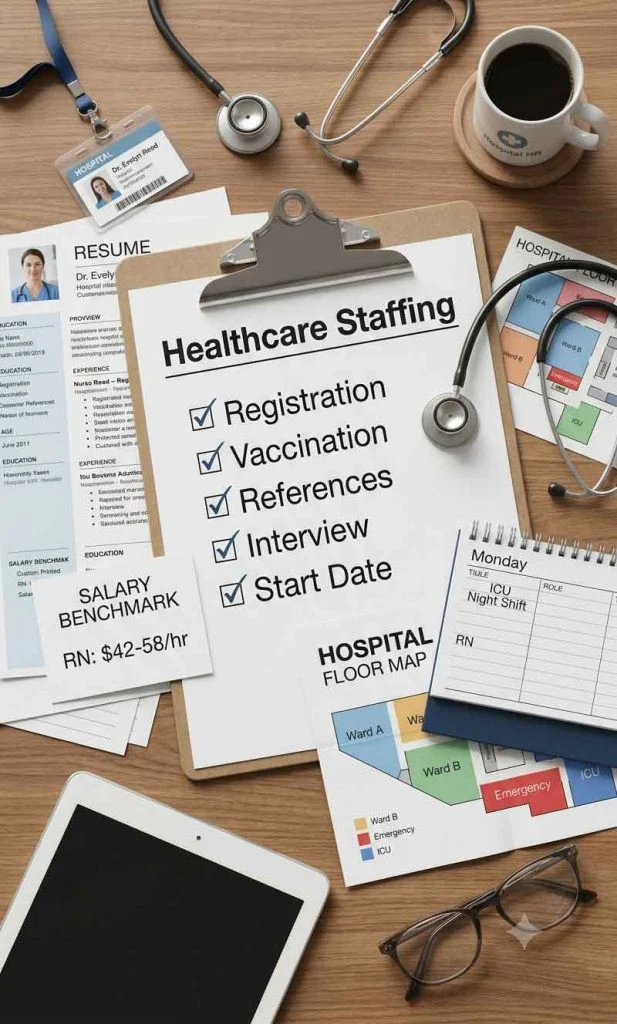
A healthcare staffing agency is a recruitment firm that connects healthcare employers with qualified medical, clinical, administrative, and allied health professionals. These agencies may provide temporary staff, permanent placements, contract workers, locum professionals, travel nurses, allied health specialists, or executive healthcare leaders depending on the employer’s needs.
ExpertsGuys Healthcare Recruitment Intelligence Engine
Build Your Healthcare Staffing Strategy
Compare healthcare staffing agency fit, compliance readiness, hiring urgency, career readiness, shift preferences, credential preparation, nearby recruiters, and personalised next steps.
' + '
Use this checklist before contacting healthcare staffing agencies. Missing documents can delay placement even when demand is high.
' ); makeCard( 'Hospital Comparison Builder', '
| Factor | Hospital A | Hospital B | Hospital C |
|---|---|---|---|
| Salary / hourly rate | Compare | Compare | Compare |
| Shift pattern | Compare | Compare | Compare |
| Commute / location | Compare | Compare | Compare |
| Career growth | Rate 1–5 | Rate 1–5 | Rate 1–5 |
| Workplace culture | Rate 1–5 | Rate 1–5 | Rate 1–5 |
| Training support | Rate 1–5 | Rate 1–5 | Rate 1–5 |
' ); makeCard( 'Healthcare Career Growth Planner', '
- ' +
'
- Graduate or entry-level healthcare professional ' + '
- Clinical experience building stage ' + '
- Specialist certification or advanced practice pathway ' + '
- Senior clinician, senior nurse, or department specialist ' + '
- Team leader, nurse manager, clinical educator, or operations role ' + '
- Healthcare leadership, workforce planning, or executive pathway ' + '
' ); makeCard( 'Salary Benchmark Awareness', '
Healthcare salaries vary by country, employer type, specialty, licensing level, shift pattern, and experience.
' + '
- ' +
'
- Compare base salary or hourly rate. ' + '
- Check night shift, weekend, locum, or travel allowances. ' + '
- Review overtime rules and benefits. ' + '
- Ask whether training, registration, or relocation support is included. ' + '
' ); if (location !== '') { makeCard( 'Nearby Healthcare Recruiters', '
Compare healthcare recruiters near ' + location + '.
' + '
- ' +
'
- Healthcare staffing agency near ' + location + ' ' + '
- Medical recruiters near ' + location + ' ' + '
- Nurse staffing agency near ' + location + ' ' + '
- Hospital recruitment agency near ' + location + ' ' + '
' ); } makeCard( 'Personalised Healthcare Recruitment Strategy', '
Recommended agency type: ' + agencyType + '
' + '
Compliance score: ' + complianceScore + '/100
' + '
Specialty demand: ' + specialtyScore + '%
' + '
Estimated timeline: around ' + timeline + ' days
' + '
Professional advice: Choose a healthcare staffing agency that verifies credentials carefully, understands clinical environments, communicates clearly, and supports long-term workforce or career outcomes.
' ); makeCard( 'Action Plan', '
- ' +
'
- Prepare all healthcare documents before contacting recruiters. ' + '
- Shortlist healthcare staffing agencies with genuine clinical recruitment experience. ' + '
- Ask how licences, references, vaccinations, and mandatory training are verified. ' + '
- Compare agency communication, employer network, assignment quality, and placement support. ' + '
- Review salary, shift pattern, compliance requirements, and career development opportunities before accepting any role or candidate. ' + '
' ); makeCard( 'Recommended ExpertsGuys Articles', '
- ' +
'
- Staffing Agencies Explained ' + '
- Employment Agencies by Industry ' + '
- Best Employment Agencies Near Me ' + '
- Engineering Staffing Agency ' + '
- Why Recruiters Need to Understand Your Background ' + '
- Professional CV Guide ' + '
' ); makeCard( 'Important Healthcare Note', '
This tool provides educational recruitment guidance only. Healthcare employers should verify all licences, compliance documents, employment laws, credentialing requirements, payroll terms, insurance requirements, and clinical suitability before making hiring decisions. Healthcare professionals should verify agency legitimacy and assignment details before sharing sensitive personal information.
' ); result.scrollIntoView({behavior:'smooth', block:'start'}); }
Healthcare staffing is more specialised than general recruitment because many roles require professional licences, certifications, clinical experience, compliance checks, background screening, and documentation before a worker can begin. A general employment agency may be able to fill broad administrative roles, but clinical hiring usually requires recruiters who understand healthcare workforce standards.
Before choosing a medical recruiter, it helps to understand how staffing agencies work across temporary, permanent, contract, and specialist hiring models.
Healthcare staffing agencies commonly support:
- Hospitals
- Clinics
- Aged care facilities
- Rehabilitation centres
- Laboratories
- Diagnostic imaging centres
- Pharmacies
- Dental practices
- Mental health organisations
- Home healthcare providers
- Public health programmes
- Healthcare technology companies
The agency’s role is not only to find available candidates. It is to reduce hiring risk, protect patient-care continuity, and help employers maintain staffing levels in environments where vacancies can quickly affect operations.
How Healthcare Staffing Agencies Work

Healthcare staffing agencies usually follow a structured recruitment workflow because employers need more than basic resume matching. The process begins with understanding the role, department, shift requirements, clinical environment, patient population, required qualifications, salary or hourly rate, and expected start date.
After receiving the hiring brief, recruiters search their candidate database, contact healthcare professionals, advertise roles, request referrals, and approach passive candidates. For urgent staffing needs, agencies may prioritise professionals who already have verified credentials and are ready for assignment.
Candidate screening is one of the most important stages. Recruiters may review licences, certifications, work history, clinical experience, references, immunisation records, background checks, right-to-work status, and availability. In some cases, employers may require skills assessments, competency checks, or additional compliance documentation before approving a placement.
Once candidates are shortlisted, the employer reviews profiles, conducts interviews where necessary, and confirms placement terms. For temporary or contract staffing, the agency may also handle payroll, timesheets, onboarding coordination, and assignment follow-up. For permanent hiring, the employer usually hires the candidate directly after the recruitment process is completed.
A strong healthcare staffing agency continues supporting both sides after placement. This follow-up matters because healthcare work environments can be demanding, and early communication helps prevent scheduling issues, compliance gaps, or retention problems.
Types of Healthcare Staffing Agencies

Healthcare staffing is not a single service. Different agencies specialise in different workforce needs, medical disciplines, employment arrangements, and healthcare environments. Choosing the right agency depends on the type of professionals required, how quickly vacancies need to be filled, compliance obligations, and whether the organisation is recruiting for short-term support or long-term workforce growth.
Healthcare recruitment is one specialist category within the wider landscape of employment agencies by industry, where each sector requires different hiring expertise.
Understanding these different agency models helps employers make better hiring decisions while allowing healthcare professionals to register with recruiters that match their qualifications and career ambitions.
Temporary Healthcare Staffing Agencies
Temporary healthcare staffing agencies provide qualified professionals for short-term assignments when healthcare organisations experience sudden workforce shortages.
Common situations include:
- Staff sickness
- Annual leave coverage
- Maternity leave
- Unexpected patient demand
- Seasonal illness outbreaks
- Emergency workforce shortages
- Large public health programmes
Healthcare employers benefit because temporary staff can often begin work quickly after completing required compliance checks.
Professionals commonly recruited include:
- Registered nurses
- Enrolled nurses
- Healthcare assistants
- Medical receptionists
- Allied health professionals
- Ward clerks
- Administrative support staff
Temporary staffing helps healthcare organisations maintain patient care without committing to permanent recruitment immediately.
Permanent Healthcare Recruitment Agencies
Permanent healthcare recruitment agencies focus on filling long-term positions where retention, cultural fit, and clinical competence are essential.
Unlike temporary staffing providers, these recruiters spend more time evaluating:
- Clinical experience
- Professional licences
- Specialist qualifications
- Leadership capability
- Career objectives
- Employer culture
- Long-term workforce planning
Permanent recruitment is commonly used for:
- Registered Nurses
- Clinical Nurse Specialists
- Pharmacists
- Physiotherapists
- Occupational Therapists
- Medical Laboratory Scientists
- Radiographers
- Practice Managers
- Healthcare Administrators
Employers often choose permanent recruitment when continuity of patient care and workforce stability are priorities.
Travel Healthcare Staffing Agencies
Travel healthcare staffing agencies recruit professionals willing to work in different cities, regions, or countries for fixed-term assignments.
Travel opportunities commonly include:
- Rural healthcare
- Remote communities
- Regional hospitals
- Disaster response
- Seasonal workforce shortages
- International healthcare programmes
Travel healthcare professionals often receive:
- Accommodation support
- Travel reimbursement
- Flexible contracts
- Higher hourly rates
- Diverse clinical experience
For healthcare workers seeking professional development and flexibility, travel staffing agencies provide opportunities that may not be available through traditional employers.
Locum Medical Recruitment Agencies
Locum recruitment agencies specialise in placing doctors and other licensed healthcare professionals into temporary clinical positions.
Typical locum placements include:
- General Practitioners
- Emergency Physicians
- Anaesthetists
- Surgeons
- Psychiatrists
- Radiologists
- Medical Specialists
Healthcare organisations frequently rely on locum professionals to maintain medical services while permanent recruitment is underway or during periods of increased patient demand.
Because these roles directly affect patient safety, locum agencies generally apply rigorous credential verification and compliance procedures before confirming placements.
Allied Health Recruitment Agencies
Allied health recruitment agencies focus on professionals who provide essential diagnostic, rehabilitation, therapeutic, and support services.
Common placements include:
- Physiotherapists
- Occupational Therapists
- Speech Pathologists
- Dietitians
- Psychologists
- Social Workers
- Exercise Physiologists
- Medical Imaging Professionals
- Sonographers
- Respiratory Therapists
Recruiters specialising in allied health understand licensing requirements, professional registration, continuing education expectations, and employer preferences within each discipline.
Aged Care Staffing Agencies
Population ageing continues to increase demand for experienced aged care professionals.
Specialist aged care recruitment agencies commonly recruit:
- Registered Nurses
- Enrolled Nurses
- Personal Care Assistants
- Care Coordinators
- Lifestyle Coordinators
- Facility Managers
- Dementia Specialists
Employers often seek candidates with experience supporting older adults, strong communication skills, and knowledge of aged care regulations.
These agencies also understand workforce challenges such as shift coverage, continuity of care, and staff retention within residential and community care environments.
Executive Healthcare Recruitment Agencies
Executive healthcare recruitment firms specialise in senior leadership appointments across hospitals, healthcare organisations, and medical businesses.
Typical executive searches include:
- Chief Executive Officer (CEO)
- Chief Medical Officer (CMO)
- Chief Nursing Officer (CNO)
- Hospital Director
- Clinical Director
- Operations Director
- Healthcare Finance Director
- Human Resources Director
Executive recruitment usually involves confidential searches, leadership assessments, succession planning, and extensive stakeholder consultation.
Because executive appointments significantly influence organisational performance and patient outcomes, recruitment timelines are generally longer than standard hiring projects.
Which Healthcare Staffing Agency Is Right for You?
The most suitable healthcare staffing agency depends on your specific objectives.
Healthcare employers should evaluate:
- Type of vacancy
- Urgency
- Clinical speciality
- Compliance requirements
- Workforce planning
- Recruitment budget
- Long-term staffing strategy
Healthcare professionals should consider:
- Career goals
- Preferred employment type
- Geographic flexibility
- Clinical speciality
- Desired work-life balance
- Professional development opportunities
Choosing a recruiter with genuine healthcare expertise often leads to stronger placements, better communication, and improved long-term career or workforce outcomes compared with relying on a general recruitment agency unfamiliar with the complexities of healthcare hiring.
How to Choose the Right Healthcare Staffing Agency
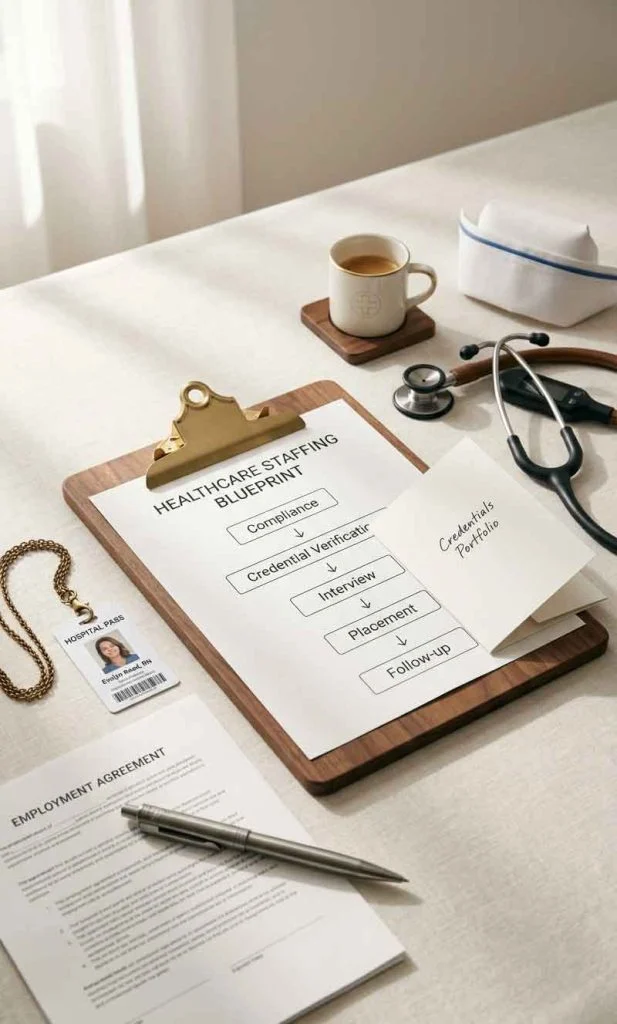
Selecting a healthcare staffing agency involves much more than comparing placement fees or reading online reviews. Healthcare recruitment directly affects patient safety, workforce stability, regulatory compliance, and the quality of care delivered by medical organisations. A recruitment partner should therefore be evaluated based on its ability to consistently supply qualified healthcare professionals while understanding the complexities of clinical environments.
For healthcare professionals, the right agency should provide transparent communication, suitable career opportunities, professional guidance, and long-term support rather than simply filling the next available vacancy.
If location is your first priority, compare local recruiters using our guide to the best employment agencies near me before selecting a healthcare staffing partner.
The following factors help both employers and job seekers identify healthcare staffing agencies that deliver lasting value.
Choose an Agency That Specialises in Healthcare
Healthcare recruitment differs significantly from general employment because many positions require professional registration, licences, certifications, immunisation records, continuing education, and compliance documentation.
A specialist healthcare staffing agency understands:
- Clinical qualifications
- Professional licensing requirements
- Healthcare regulations
- Workforce shortages
- Shift scheduling
- Hospital credentialing
- Patient safety standards
- Healthcare workplace culture
Recruiters who focus exclusively on healthcare are generally better equipped to identify qualified professionals than agencies recruiting across multiple unrelated industries.
Evaluate Their Candidate Screening Process
A strong healthcare staffing agency should explain exactly how candidates are assessed before being recommended.
Professional healthcare screening commonly includes:
- Professional licence verification
- Clinical qualification checks
- Employment history verification
- Reference checking
- Criminal background screening
- Right-to-work verification
- Immunisation records
- Mandatory compliance training
- Clinical competency assessment
Employers should avoid agencies that cannot clearly explain how healthcare professionals are screened before placement.
Assess Their Healthcare Employer Network
Healthcare recruitment agencies often build long-term relationships with hospitals, clinics, aged care providers, rehabilitation centres, laboratories, and specialist healthcare organisations.
A broad employer network benefits both employers and candidates.
Employers gain access to recruiters with established healthcare relationships, while healthcare professionals may discover positions that never appear on public job boards.
Ask recruiters which healthcare sectors they regularly support and how many active healthcare employers they currently work with.
Understand Their Compliance Expertise
Healthcare recruitment involves extensive regulatory requirements.
Depending on the country and healthcare setting, agencies may assist with:
- Professional registration
- Licence renewal
- Background checks
- Vaccination compliance
- Continuing education records
- Workplace safety requirements
- Credential verification
- Occupational health documentation
Agencies experienced in healthcare compliance help employers reduce hiring risk while ensuring healthcare professionals remain eligible to practise.
Review Communication Standards
Healthcare staffing often moves quickly, particularly during workforce shortages or emergency situations.
Strong healthcare recruiters should provide:
- Prompt responses
- Regular hiring updates
- Interview coordination
- Schedule confirmation
- Compliance reminders
- Assignment information
- Employer feedback
- Career guidance
Consistent communication reduces confusion while improving placement success for both employers and healthcare professionals.
Compare Placement Support
The recruitment process should not end once a healthcare professional begins work.
Leading healthcare staffing agencies continue providing support through:
- Onboarding assistance
- Assignment follow-up
- Employer feedback
- Workforce planning
- Career advice
- Future placement opportunities
- Professional development guidance
Long-term support often improves employee retention while helping healthcare organisations maintain stable workforces.
Consider Workforce Planning Services
Many healthcare staffing agencies now provide strategic workforce consulting rather than simply filling vacancies.
Additional services may include:
- Workforce forecasting
- Salary benchmarking
- Talent mapping
- Succession planning
- Shift coverage planning
- High-demand speciality analysis
- Recruitment reporting
- Healthcare labour market insights
These services help healthcare organisations prepare for future workforce challenges instead of reacting only after staffing shortages occur.
Questions Every Employer Should Ask
Before selecting a healthcare staffing agency, employers should ask:
- How long have you specialised in healthcare recruitment?
- Which healthcare professions do you recruit most frequently?
- How are licences and credentials verified?
- What compliance checks are completed before placement?
- What replacement guarantee do you provide?
- How quickly can you supply qualified staff?
- How often will we receive recruitment updates?
- Which healthcare organisations do you currently support?
Clear, detailed answers usually indicate an agency with genuine healthcare expertise.
Professional Recommendation
The best healthcare staffing agencies are not simply recruitment providers—they become long-term workforce partners. Employers should prioritise agencies that demonstrate strong clinical knowledge, rigorous compliance standards, transparent communication, and proven healthcare recruitment experience. Healthcare professionals should choose recruiters who understand their career goals, clinical speciality, and preferred working environment, creating partnerships that support both immediate opportunities and long-term professional development.
Questions Employers and Healthcare Professionals Should Ask

Choosing a healthcare staffing agency is a long-term decision rather than a one-time transaction. Employers rely on recruiters to protect patient care by supplying qualified professionals, while healthcare workers depend on recruiters to introduce suitable career opportunities, explain assignment expectations, and provide honest guidance throughout the recruitment process.
The first conversation with a healthcare recruiter should therefore be treated as a professional consultation. Asking the right questions helps both employers and healthcare professionals understand whether the agency has the experience, compliance knowledge, and industry connections required for successful placements.
Questions Employers Should Ask
Which Healthcare Professions Do You Recruit?
Healthcare recruitment covers a wide range of disciplines, and not every agency recruits for every profession.
Ask whether the agency regularly places:
- Registered Nurses
- Enrolled Nurses
- Nurse Practitioners
- Physicians
- Allied Health Professionals
- Pharmacists
- Medical Laboratory Scientists
- Radiographers
- Healthcare Administrators
- Aged Care Professionals
Recruiters with deep experience in your specific workforce requirements are generally better equipped to recommend suitable candidates.
How Do You Verify Licences and Credentials?
Credential verification is one of the most important responsibilities of a healthcare staffing agency.
Professional recruiters should clearly explain how they verify:
- Professional licences
- Registration status
- Educational qualifications
- Clinical certifications
- Continuing professional education
- Employment history
- Right-to-work documentation
- Identity verification
Employers should never assume these checks have been completed without confirmation.
What Compliance Checks Do You Complete?
Healthcare recruitment involves strict compliance standards designed to protect patients and healthcare organisations.
Ask recruiters whether they perform:
- Criminal background checks
- Vaccination verification
- Occupational health screening
- Reference checks
- Mandatory training verification
- Clinical competency assessments
- Drug screening where applicable
- Regulatory documentation reviews
A structured compliance process reduces organisational risk while supporting safe clinical practice.
How Quickly Can You Fill Vacancies?
Healthcare staffing requirements often arise unexpectedly.
Instead of asking whether positions can be filled immediately, discuss realistic expectations based on:
- Healthcare profession
- Local workforce availability
- Required qualifications
- Shift requirements
- Geographic location
- Compliance documentation
- Candidate availability
Recruiters who provide realistic timelines are generally more reliable than those making unrealistic promises.
What Happens If a Placement Does Not Work Out?
Even well-managed recruitment projects occasionally require replacement.
Before signing any agreement, employers should understand:
- Replacement guarantees
- Candidate replacement process
- Refund policies
- Post-placement support
- Performance follow-up
- Ongoing communication procedures
Clear policies reduce uncertainty if recruitment outcomes differ from expectations.
Questions Healthcare Professionals Should Ask
What Types of Healthcare Employers Do You Work With?
Healthcare agencies often specialise in different employer groups.
These may include:
- Public hospitals
- Private hospitals
- Community healthcare providers
- Aged care organisations
- Rehabilitation centres
- Mental health services
- Medical laboratories
- Specialist clinics
- Home healthcare providers
Understanding the agency’s employer network helps candidates identify recruiters aligned with their professional interests.
What Employment Opportunities Are Available?
Healthcare professionals should ask about the range of employment models available.
These may include:
- Permanent positions
- Temporary assignments
- Contract work
- Locum opportunities
- Travel healthcare
- Casual shifts
- Leadership positions
Knowing these options allows candidates to choose opportunities that match both their lifestyle and long-term career goals.
How Can I Improve My Placement Opportunities?
Experienced recruiters often provide valuable career advice beyond introducing vacancies.
Healthcare recruiters can only recommend suitable roles when they clearly understand your career background, clinical experience, certifications, and long-term goals.
Healthcare professionals should ask for recommendations regarding:
- Resume improvements
- Clinical certifications
- Continuing education
- Professional registration
- Interview preparation
- Specialist training
- Career progression
- Salary expectations
Candidates who actively seek professional feedback generally become stronger applicants over time.
Will You Provide Interview Feedback?
Constructive interview feedback helps healthcare professionals continue improving throughout their careers.
Candidates can also practise common interview preparation questions before meeting hospitals, clinics, or healthcare employers introduced by recruiters.
Useful feedback may include:
- Clinical strengths
- Communication skills
- Technical knowledge
- Employer expectations
- Cultural fit
- Professional presentation
- Areas requiring improvement
Even unsuccessful interviews can contribute significantly to future career success when recruiters provide meaningful guidance.
How Often Should I Stay in Contact?
Healthcare recruitment is constantly changing as hospitals, clinics, and healthcare providers experience shifting workforce demands.
Candidates should ask recruiters:
- How frequently should I update my availability?
- Should I report new certifications?
- Should I notify you after changing employers?
- How often should I check for new assignments?
- What information helps you recommend better opportunities?
Maintaining regular communication allows recruiters to match healthcare professionals with suitable roles more efficiently.
Professional Perspective
Strong healthcare recruitment partnerships begin with open communication. Employers should look beyond placement speed and evaluate an agency’s clinical expertise, compliance standards, and workforce knowledge. Healthcare professionals should work with recruiters who understand their speciality, career aspirations, and professional development goals. Agencies that invest time in asking detailed questions before making recommendations are often the ones most capable of delivering safe, successful, and long-term healthcare placements.
Common Mistakes When Working With a Healthcare Staffing Agency

A successful healthcare recruitment partnership depends on preparation, communication, and realistic expectations from both employers and healthcare professionals. Even experienced organisations occasionally make decisions that delay recruitment, increase hiring costs, or reduce placement quality. Likewise, healthcare workers can unintentionally limit their own opportunities by overlooking important steps during the recruitment process.
Understanding these common mistakes helps both employers and candidates build stronger relationships with healthcare staffing agencies while improving long-term recruitment outcomes.
Choosing an Agency Based Only on Cost
Recruitment fees are an important consideration, but selecting the lowest-priced agency does not always deliver the best value.
A healthcare staffing agency with experienced recruiters, rigorous compliance procedures, and strong clinical networks may reduce:
- Recruitment delays
- Candidate turnover
- Compliance risks
- Patient care disruption
- Repeat hiring costs
For healthcare organisations, the overall quality of recruitment often has a much greater financial impact than small differences in placement fees.
Not Defining the Role Clearly
Healthcare recruiters can only identify suitable candidates when employers provide a detailed hiring brief.
Important information includes:
- Job title
- Clinical speciality
- Required qualifications
- Professional registration
- Shift pattern
- Employment type
- Salary range
- Start date
- Workplace location
- Team structure
Vague job descriptions frequently result in unsuitable applicants, longer recruitment timelines, and unnecessary interviews.
Ignoring Compliance Requirements
Healthcare recruitment is highly regulated.
Employers should never assume every applicant automatically meets clinical and legal requirements.
Compliance may include:
- Professional licences
- Registration status
- Background screening
- Vaccination records
- Mandatory training
- Right-to-work documentation
- Occupational health requirements
- Continuing professional education
Ignoring these requirements can delay onboarding and expose organisations to significant operational and regulatory risks.
Delaying Hiring Decisions
Healthcare professionals are often in high demand.
Strong candidates may receive multiple offers within a short period, particularly in nursing, allied health, medical imaging, pharmacy, and specialist clinical disciplines.
Employers that delay interviews, approvals, or employment offers may lose qualified candidates to competing healthcare organisations.
Maintaining efficient communication with recruiters helps reduce this risk.
Failing to Maintain Communication
Successful recruitment depends on regular communication throughout the hiring process.
Employers should provide timely updates regarding:
- Interview outcomes
- Hiring decisions
- Workforce changes
- Budget adjustments
- Timeline revisions
Healthcare professionals should also keep recruiters informed about:
- Availability
- Professional registration renewals
- New certifications
- Employment changes
- Relocation plans
- Career interests
Accurate information allows recruiters to recommend more suitable opportunities and avoid unnecessary delays.
Before contacting healthcare agencies, update your professional CV so recruiters can quickly understand your clinical experience, licences, certifications, and preferred work settings.
Registering With Only One Agency
Many healthcare professionals assume registering with a single recruitment agency provides sufficient career opportunities.
While building a strong relationship with one specialist recruiter is valuable, registering with several reputable healthcare staffing agencies may increase access to:
- Exclusive vacancies
- Different healthcare employers
- Temporary assignments
- Regional opportunities
- Travel healthcare contracts
- Specialist clinical positions
Healthcare workers should maintain consistent communication with each recruiter while avoiding duplicate applications for the same position.
Neglecting Professional Development
Healthcare recruitment is increasingly competitive.
Professionals who continue developing their skills often become more attractive candidates.
Examples include:
- Advanced clinical certifications
- Leadership training
- Continuing education
- New clinical competencies
- Digital healthcare systems
- Patient safety programmes
- Speciality qualifications
Recruiters frequently recommend candidates who demonstrate ongoing professional development because employers value continuous learning and adaptability.
Treating Recruiters as Transactional Contacts
The strongest healthcare recruitment relationships are built over time.
Healthcare recruiters who understand a candidate’s experience, strengths, career goals, and preferred working environments can recommend more suitable opportunities as new positions become available.
Similarly, employers who build long-term relationships with trusted healthcare staffing agencies often benefit from:
- Faster recruitment
- Better workforce planning
- Improved candidate quality
- Market intelligence
- Salary benchmarking
- Future hiring support
Viewing recruiters as long-term workforce partners rather than short-term service providers often produces significantly better recruitment outcomes.
Professional Perspective
Most recruitment challenges are not caused by a shortage of candidates alone. They often result from unclear expectations, delayed communication, incomplete compliance preparation, or weak collaboration between employers, healthcare professionals, and recruiters. Organisations that invest in long-term partnerships with specialist healthcare staffing agencies consistently place themselves in a stronger position to attract qualified professionals, maintain workforce stability, and deliver safe, high-quality patient care.
Healthcare Staffing Agency vs General Recruitment Agency
Many employers assume that any recruitment agency can successfully hire healthcare professionals. While general recruitment agencies may be suitable for administrative, customer service, retail, or office-based positions, healthcare recruitment involves a far greater level of technical knowledge, regulatory compliance, and workforce planning.
Similar industry-specific hiring challenges also appear in technical recruitment, where employers often need an engineering staffing agency rather than a general recruiter.
Choosing between a healthcare staffing agency and a general recruitment agency depends on the complexity of the role, the qualifications required, and the level of patient responsibility involved. Understanding these differences helps employers select the right recruitment partner while helping healthcare professionals decide which recruiters are most likely to support their long-term careers.
Healthcare Recruitment Requires Industry Expertise
Healthcare professionals work in highly regulated environments where patient safety, professional standards, and legal compliance are fundamental.
Healthcare staffing agencies understand:
- Professional licensing
- Clinical specialties
- Healthcare regulations
- Hospital credentialing
- Workforce shortages
- Shift scheduling
- Clinical competencies
- Continuing professional education
General recruitment agencies may understand recruitment processes, but they often lack the specialist clinical knowledge required to evaluate healthcare professionals accurately.
Candidate Screening Is More Comprehensive
Healthcare recruitment involves considerably more than reviewing resumes.
Specialist healthcare recruiters commonly verify:
- Professional registration
- Medical licences
- Clinical certifications
- Immunisation records
- Employment history
- Professional references
- Criminal background checks
- Mandatory compliance training
- Clinical competency documentation
General recruitment firms may perform reference checks and employment verification, but they may not have the expertise to assess healthcare-specific compliance requirements.
Employer Networks Are Different
Healthcare staffing agencies typically work with organisations such as:
- Public hospitals
- Private hospitals
- Community health services
- Aged care providers
- Medical centres
- Specialist clinics
- Rehabilitation facilities
- Mental health organisations
- Home healthcare providers
- Diagnostic laboratories
General recruitment firms usually maintain broader employer networks covering multiple industries rather than specialising in healthcare.
For employers seeking experienced clinical professionals, specialist healthcare agencies often have stronger candidate pipelines within the healthcare sector.
Recruitment Speed During Workforce Shortages
Healthcare organisations frequently experience urgent staffing requirements due to:
- Patient demand
- Seasonal illness
- Emergency situations
- Staff leave
- Workforce shortages
- New healthcare programmes
Healthcare staffing agencies often maintain active databases of credentialed professionals who are available for immediate placement.
Because compliance documentation has often been verified in advance, recruitment timelines can be significantly shorter than starting a completely new recruitment campaign.
Career Support for Healthcare Professionals
Healthcare recruiters understand that career progression often depends on:
- Clinical experience
- Professional registration
- Advanced certifications
- Specialist training
- Leadership development
- Continuing education
- Preferred healthcare settings
As a result, healthcare staffing agencies frequently provide career advice tailored specifically to nurses, allied health professionals, pharmacists, medical technologists, healthcare administrators, and physicians.
General recruitment agencies usually provide broader career advice that may not address profession-specific healthcare requirements.
Workforce Planning Beyond Recruitment
Many healthcare staffing agencies now support employers with long-term workforce planning rather than only filling vacancies.
Their services may include:
- Workforce forecasting
- Talent mapping
- Salary benchmarking
- Succession planning
- Shift coverage analysis
- High-demand specialty reporting
- Healthcare labour market intelligence
- Recruitment analytics
These strategic services help healthcare organisations prepare for future workforce challenges while improving recruitment efficiency.
Which Agency Should Employers Choose?
General recruitment agencies remain useful for many business roles within healthcare organisations, including:
- Reception
- Customer service
- Finance
- Human resources
- Marketing
- Procurement
- Administrative support
However, organisations recruiting licensed clinical professionals usually achieve better outcomes by partnering with specialist healthcare staffing agencies that understand clinical practice, compliance obligations, and healthcare workforce dynamics.
Which Agency Should Healthcare Professionals Choose?
Healthcare professionals generally benefit from registering with recruiters who specialise in their profession because these agencies better understand:
- Career pathways
- Clinical specialisations
- Salary expectations
- Licensing requirements
- Employer preferences
- Professional development opportunities
Many experienced clinicians maintain relationships with both specialist healthcare recruiters and broader recruitment firms, allowing them to access a wider range of career opportunities while still benefiting from specialist guidance.
Professional Perspective
Healthcare recruitment is fundamentally different from general recruitment because every hiring decision has the potential to influence patient care, workforce stability, and clinical outcomes. Employers should prioritise healthcare staffing agencies that demonstrate strong compliance processes, deep industry knowledge, and established healthcare networks. Healthcare professionals should likewise choose recruiters who understand their clinical specialty, long-term career ambitions, and professional development needs, creating partnerships that extend well beyond a single placement.
Future Trends in Healthcare Staffing and Medical Recruitment

Healthcare recruitment is changing rapidly as healthcare systems face ageing populations, workforce shortages, rising patient expectations, technological innovation, and evolving regulatory requirements. Hospitals, clinics, aged care providers, and community healthcare organisations are no longer looking only for recruiters who can fill vacancies quickly. They increasingly seek workforce partners who can help predict future staffing needs, improve employee retention, and build sustainable healthcare teams.
Healthcare professionals planning international career pathways may also compare medical education options such as Aureus University College Of Medicine when evaluating long-term clinical development.
The healthcare staffing agencies that will thrive over the next decade are those combining specialist recruitment expertise with workforce analytics, digital technology, and personalised career support.
Artificial Intelligence Is Improving Recruitment Efficiency
Artificial intelligence is becoming an important tool in healthcare recruitment, helping agencies manage administrative tasks while allowing recruiters to spend more time supporting employers and healthcare professionals.
Modern healthcare staffing agencies may use AI to assist with:
- Resume screening
- Candidate matching
- Shift planning
- Workforce forecasting
- Credential tracking
- Interview scheduling
- Skills analysis
- Recruitment reporting
These technologies improve efficiency, but they do not replace experienced healthcare recruiters. Human judgement remains essential when assessing communication skills, cultural fit, clinical judgement, leadership potential, and patient-centred care.
Healthcare Workforce Shortages Will Continue
Many countries continue experiencing shortages across numerous healthcare professions.
Demand remains particularly strong for:
- Registered Nurses
- Nurse Practitioners
- Aged Care Nurses
- Emergency Department Staff
- Intensive Care Nurses
- Mental Health Professionals
- Allied Health Practitioners
- Medical Laboratory Scientists
- Radiographers
- Sonographers
Healthcare staffing agencies play an increasingly important role by helping employers access qualified professionals while supporting healthcare workers with flexible employment opportunities and career progression.
International Healthcare Recruitment Is Expanding
As local talent shortages grow, healthcare organisations are increasingly recruiting qualified professionals from overseas.
Healthcare staffing agencies often assist international candidates with:
- Professional registration
- Licence recognition
- Immigration documentation
- Employment contracts
- Relocation guidance
- Workplace orientation
- Cultural transition
- Continuing professional education requirements
For employers, international recruitment expands access to skilled professionals while helping maintain workforce stability during periods of high demand.
Flexible Working Models Are Increasing
Healthcare professionals are seeking greater flexibility than ever before.
Many agencies now recruit for:
- Casual shifts
- Weekend work
- Part-time employment
- Contract positions
- Locum assignments
- Travel healthcare
- Remote clinical support
- Hybrid healthcare administration roles
Flexible employment models allow healthcare organisations to respond more effectively to changing patient demand while helping professionals achieve a better work-life balance.
Workforce Analytics Are Becoming Essential
Healthcare recruitment is moving beyond vacancy filling towards long-term workforce planning.
Leading agencies increasingly provide employers with workforce intelligence such as:
- Time-to-hire analysis
- Staff turnover trends
- Salary benchmarking
- High-demand specialties
- Regional workforce availability
- Recruitment forecasting
- Candidate supply analysis
- Retention insights
These reports help healthcare organisations make proactive staffing decisions rather than reacting only when shortages occur.
Candidate Experience Is More Important Than Ever
Highly qualified healthcare professionals often receive multiple employment offers.
As a result, recruitment agencies are investing more heavily in candidate experience through:
- Faster communication
- Simplified application processes
- Digital onboarding
- Interview preparation
- Career coaching
- Salary guidance
- Professional development planning
- Regular follow-up after placement
Healthcare employers also benefit because positive candidate experiences strengthen employer reputation and improve offer acceptance rates.
Healthcare Staffing Agencies Are Becoming Strategic Workforce Partners
Modern healthcare staffing agencies now support organisations beyond recruitment alone.
Many provide additional services including:
- Workforce planning
- Succession planning
- Leadership recruitment
- Talent mapping
- Healthcare labour market reporting
- Employer branding
- Retention strategies
- Recruitment technology consulting
This broader role allows agencies to contribute to organisational planning, helping healthcare providers prepare for future workforce challenges before they become critical.
Human Expertise Remains the Competitive Advantage
Despite advances in automation, healthcare recruitment remains centred on people.
Recruiters must understand:
- Clinical practice
- Healthcare culture
- Professional ethics
- Patient-centred care
- Team dynamics
- Leadership capability
- Career aspirations
Technology can improve efficiency, but successful healthcare recruitment still depends on trust, communication, experience, and professional judgement.
Professional Perspective
The future of healthcare staffing is not about replacing recruiters with technology. It is about combining intelligent workforce analytics, artificial intelligence, regulatory expertise, and experienced healthcare consultants to create stronger recruitment decisions. Employers should partner with agencies that understand both today’s staffing challenges and tomorrow’s workforce needs, while healthcare professionals should build long-term relationships with recruiters who actively support career development, continuous learning, and professional growth throughout every stage of their healthcare journey.
Summary
Healthcare staffing agencies play a vital role in connecting qualified healthcare professionals with organisations that depend on skilled, reliable, and compliant workforces. Unlike general recruitment agencies, healthcare recruiters understand clinical qualifications, professional licensing, regulatory requirements, workforce shortages, and the unique challenges of delivering safe patient care.
For healthcare employers, choosing the right staffing agency can improve recruitment quality, reduce hiring delays, strengthen workforce planning, and increase employee retention. Agencies that specialise in healthcare are often better equipped to verify credentials, assess clinical experience, manage compliance requirements, and recommend candidates who fit both the technical and cultural needs of an organisation.
Healthcare professionals also benefit from working with specialist recruiters. Experienced healthcare staffing agencies provide access to permanent positions, temporary assignments, locum opportunities, travel healthcare roles, and career guidance that aligns with professional goals. Beyond introducing vacancies, strong recruiters offer interview preparation, salary insights, professional development advice, and long-term career support.
As healthcare continues evolving through artificial intelligence, workforce analytics, international recruitment, and changing patient demands, recruitment agencies are becoming strategic workforce partners rather than simple placement providers. Employers increasingly rely on them for workforce forecasting, talent mapping, succession planning, and labour market intelligence, while healthcare professionals benefit from stronger career planning and wider employment opportunities.
Selecting the right healthcare staffing agency therefore involves much more than comparing recruitment fees or online reviews. The most valuable recruitment partnerships are built on industry expertise, transparent communication, rigorous compliance standards, and a shared commitment to delivering high-quality healthcare outcomes.

Conclusion
Healthcare recruitment is ultimately about people. Every successful placement contributes to stronger healthcare teams, improved patient experiences, and more resilient healthcare organisations. Whether an employer is recruiting specialist clinicians or a healthcare professional is planning the next stage of a medical career, working with a healthcare staffing agency that understands the realities of clinical practice can significantly improve long-term outcomes.
Rather than focusing solely on recruitment speed, employers should evaluate agencies based on healthcare expertise, credential verification, compliance processes, communication quality, workforce planning capabilities, and proven placement success. Healthcare professionals should look for recruiters who invest time in understanding their qualifications, career ambitions, preferred working environments, and ongoing professional development.
As the healthcare sector continues facing workforce shortages and growing service demands, organisations and professionals who build lasting relationships with trusted healthcare staffing agencies will be better positioned to respond to future challenges, adapt to changing workforce needs, and continue delivering safe, high-quality care. Choosing the right recruitment partner today is not simply about filling the next vacancy—it is an investment in long-term workforce success and better healthcare for the communities those organisations serve.
Frequently Asked Questions
What is a healthcare staffing agency?
A healthcare staffing agency is a specialist recruitment company that connects hospitals, clinics, aged care providers, laboratories and other healthcare organisations with qualified healthcare professionals. These agencies recruit for permanent, temporary, contract, locum and travel healthcare positions while helping employers manage credential verification, compliance requirements and workforce planning.
How is a healthcare staffing agency different from a general recruitment agency?
Healthcare staffing agencies specialise in recruiting medical and healthcare professionals. They understand licensing requirements, credential verification, healthcare regulations, clinical experience, patient safety standards and compliance obligations that general recruitment agencies may not routinely manage.
What healthcare professionals do staffing agencies recruit?
Healthcare staffing agencies recruit a wide variety of professionals including registered nurses, enrolled nurses, doctors, pharmacists, physiotherapists, occupational therapists, radiographers, medical laboratory scientists, aged care professionals, healthcare administrators, home care staff and many other clinical specialists.
Can healthcare staffing agencies help with temporary and permanent positions?
Yes. Many healthcare staffing agencies recruit for temporary, contract, permanent, locum, travel healthcare and executive leadership positions. The available opportunities depend on the agency’s healthcare specialisations and employer network.
What should employers consider before choosing a healthcare staffing agency?
Employers should evaluate healthcare recruitment experience, compliance procedures, credential verification, communication standards, workforce planning capabilities, employer references, replacement guarantees, recruitment timelines and the agency’s experience within specific clinical specialties.
How can healthcare professionals improve their chances of being placed?
Healthcare professionals should maintain an updated resume, keep professional licences current, prepare references, complete mandatory training, communicate career goals clearly and remain in regular contact with recruiters regarding availability, new certifications and preferred healthcare settings.
Do healthcare staffing agencies verify licences and certifications?
Most specialist healthcare staffing agencies verify professional licences, registrations, qualifications, employment history, references and other compliance documents before recommending candidates to employers. The exact verification process may vary depending on local regulations and employer requirements.
How long does healthcare recruitment usually take?
Recruitment timelines depend on the healthcare profession, employer requirements, workforce availability, compliance documentation and interview process. Temporary assignments may be filled within days, while specialist or executive healthcare positions often require several weeks or longer.
Are healthcare staffing agencies only for hospitals?
No. Healthcare staffing agencies also recruit for clinics, aged care facilities, rehabilitation centres, community healthcare providers, diagnostic laboratories, pharmacies, mental health organisations, home healthcare services and healthcare technology companies.
Will artificial intelligence replace healthcare recruiters?
Artificial intelligence is helping healthcare recruiters improve candidate matching, scheduling and recruitment administration, but experienced recruiters continue to provide professional judgement, compliance oversight, workforce planning, relationship building and career guidance that remain essential for successful healthcare recruitment.